

During a recent road journey from Jaipur to Delhi, I decided to avoid the conventional highway on my return journey – one which did not have many worthwhile places to be seen on the way. And it had been traversed numerous times over the years. The alternate route was the Jaipur-Agra National Highway 21, on which were many not-so-well known archeological marvels. And the distance was only about 90 km longer than the direct route. Though this translated into a longer driving time, as I came to experience later! Mainly due to having to use minor roads on this route. But then it was well worth the extra effort.
.

.
Ghat Ki Guni
.
At the start of the journey itself one drove through the picturesque surroundings of the winding road between the Aravalli hill range bordering Jaipur on its eastern side, on the road leading to Agra. Known as the Ghat Ki Guni, the area is a conglomeration of terraced gardens, temples, havelis and garden havelis. Since the 10th century, Ghat Ki Guni served as a gateway to the Dundhar Kingdom of the Kachchawaha Rajputs. Before Akbar visited Amber state on his way from his capital Agra to Ajmer, it was a mere cobblestoned street. It then evolved into an impressive complex to display the grandeur of Amber state to the Mughal Emperor. Ghat ki Guni was developed by Maharaja Sawai Jai Singh II, the founder of Jaipur city, in 1739. The layout plan of the area envisaged laying out Mughal style terraced gardens.
.

.
Apart from these gardens, there were dwelling units, Havelis and many temples lining both sides of the road. However, over a period of time, people have moved out of these buildings and they are now they are deserted. The Agra road winds through this beautiful facade lining both sides, adorned by jharokhas and chhatris, a hallmark of Jaipur architecture.
.
Dausa
.
Dausa is located on NH 21 and has a host of ancient archeological sites in its vicinity. It is a small ancient town named after a Sanskrit word Dhau-sa meaning Beautiful like Heaven. Also referred as Deva Nagri, it is located around 55 km from Jaipur on National Highway 21. The city was the first headquarters of the former Kachhawaha Dynasty and has much history and archaeological importance linked to it. Situated away from the bustling cities, the town of Dausa offers an authentic rural experience in Rajasthan.
.
.
Dausa is situated in a region widely known as Dundhar. The Chouhans, Meenas & Raos ruled this land in the 10th century CE. Dausa had the privilege to become the first capital of the then Dundhar Region. The Chouhan Raja Soodh Dev founded Dausa and ruled this region from 996 to 1006 CE. Later, from 1006 to 1036 CE, Raja Dule Rai ruled for 30 years.
.
.
Dulha Rai, the real conqueror of Dhundar, was a youth of remarkable beauty and valour and hence got his name “Dulha Rai” or the “bride groom prince”. His fame attracted to his banner the voluntary support of all the spirited chiefs in the neighbourhood. Dulha married the daughter of Ralhansi, the Chouhan Raja of Lalsot, and received as his wife’s dowry half the share of the fort of Dausa, on a nearby hill, which his father-in-law owned. The other half belonged to a Badgujar family. The fort was constructed by the Badgujar kings and had been under the occupation of Budgurjaro for a long period of time.
.
.
After securing half of Dausa fort by marriage, Dulha Rai, with the armed help of his wife’s kinsmen expelled the Bargujars from their portion of Dausa, and this city became the first capital of the Kachhawahas in Dhundar land.
Dausa town is surrounded by Mahadev (Shiva) in five directions – Nilkanth, Gupteshwer, Sahajnath, Somnath and Baijnath. Dausa is also known as Devnagari from the nearby Devagiri hill. On the hill is the famous Neelkanth Mahadev temple, which celebrates the popular annual Lakhi fair held in Sawan.
.

.
Dausa has many places of historical importance that remind us of the ancient kingdom here. After independence, the first tricolour flag which was hoisted at Red Fort, Delhi, was made in village Aluda, 10 km from Dausa.
.
Attractions & Places To Visit And Explore In Dausa
.
Neelkanth Mahadev Temple
.
.
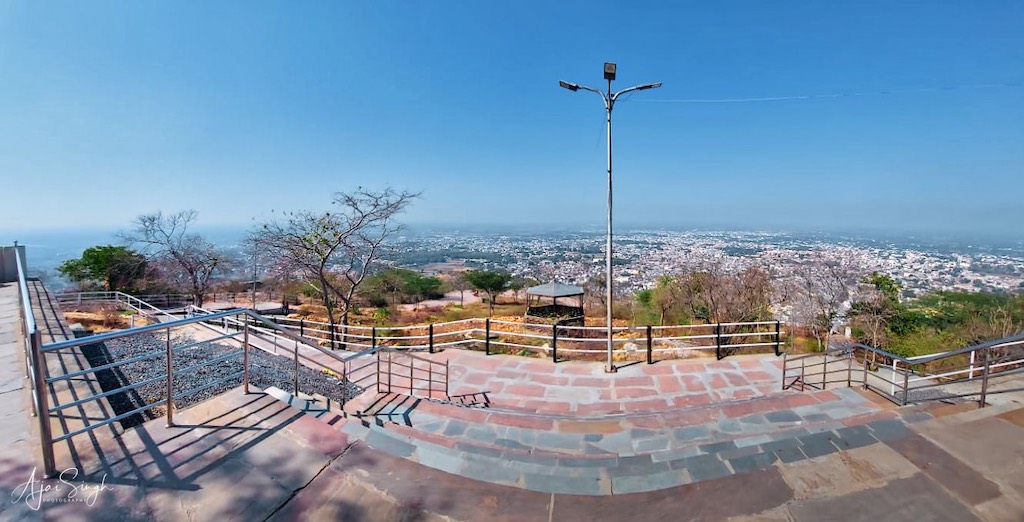
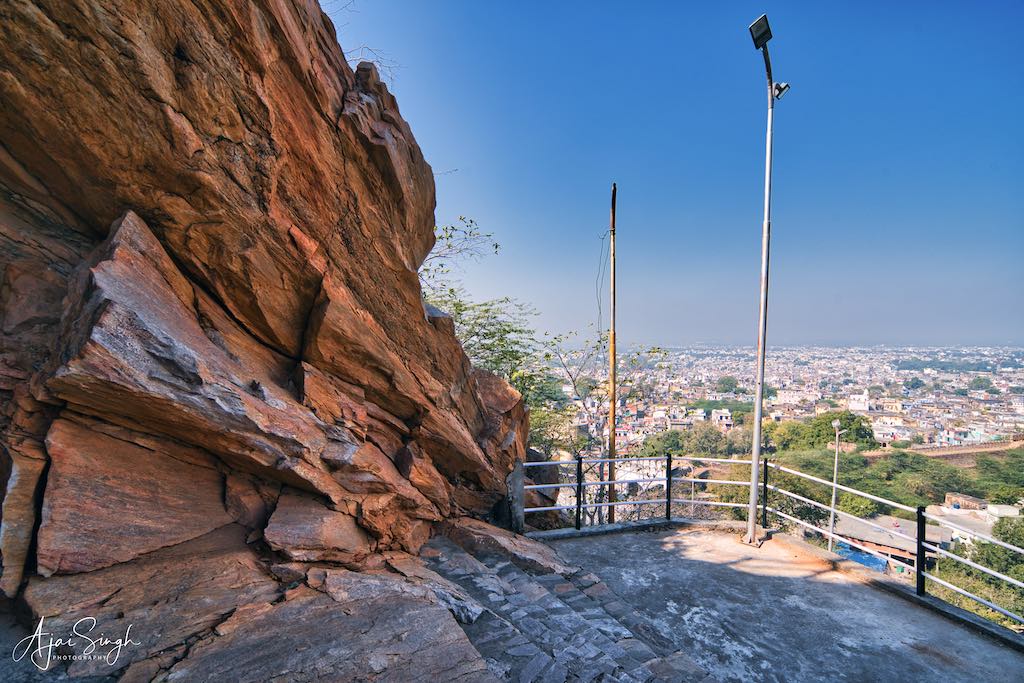
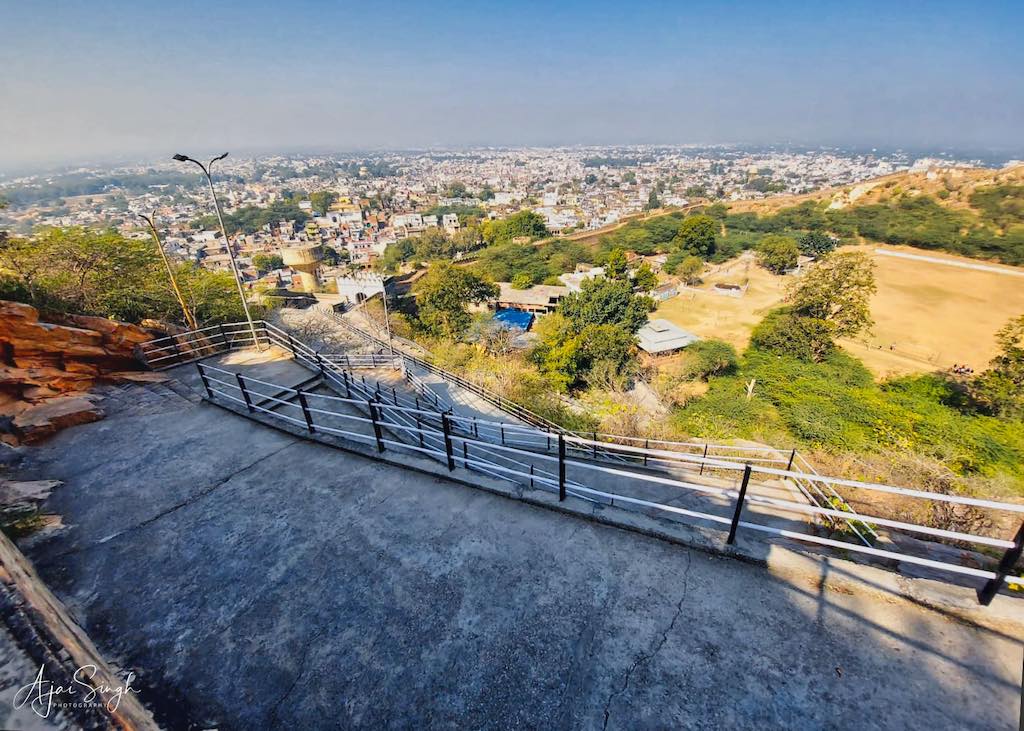
The fort walls run around the base of the hill bordering the town and only remnants of it remain. What looked like an arduous climb up the hill turned out to be relatively easy. Surprisingly, the path uphill was freshly paved with stone and very wide, making the climb comfortable.
.

.
I wondered how such a remote and relatively unknown shrine had such an excellent path leading to it, which would rate better than what existed for even more famous holy places! Probably, this was to cater for the hugely attended mela during Shivaratri. During the climb, I crossed only few other visitors on the path, even though it was a Sunday.
.
.
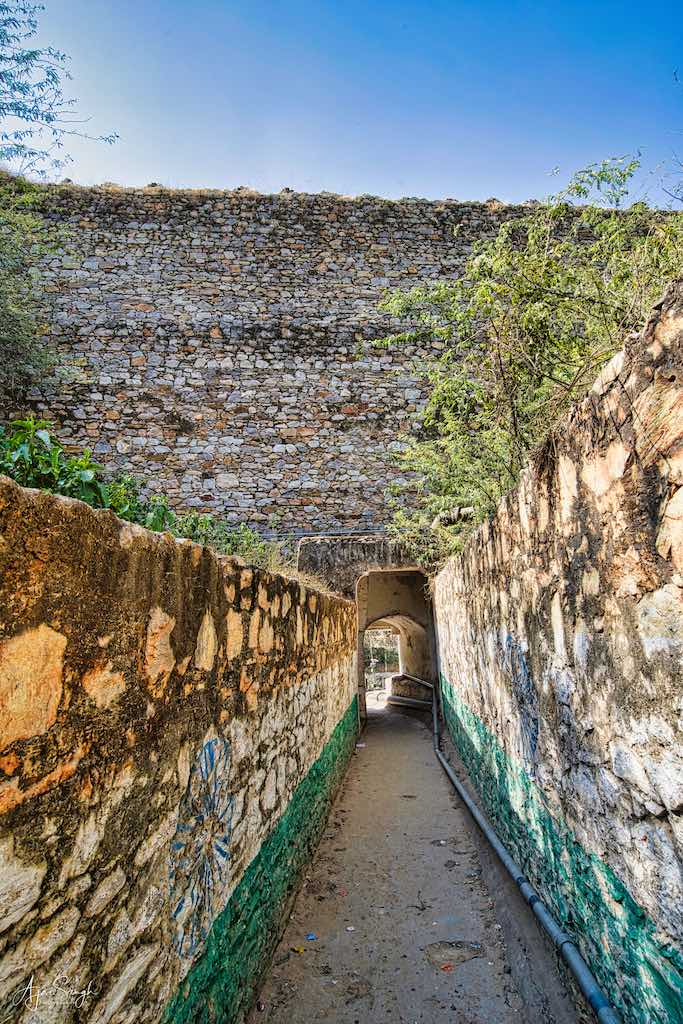
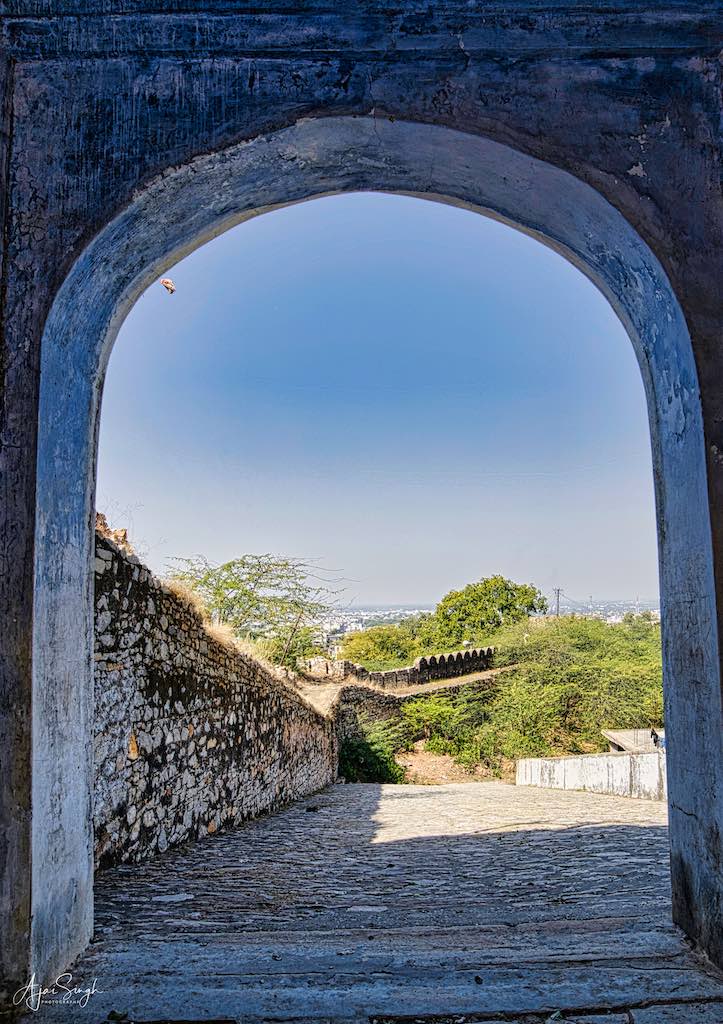
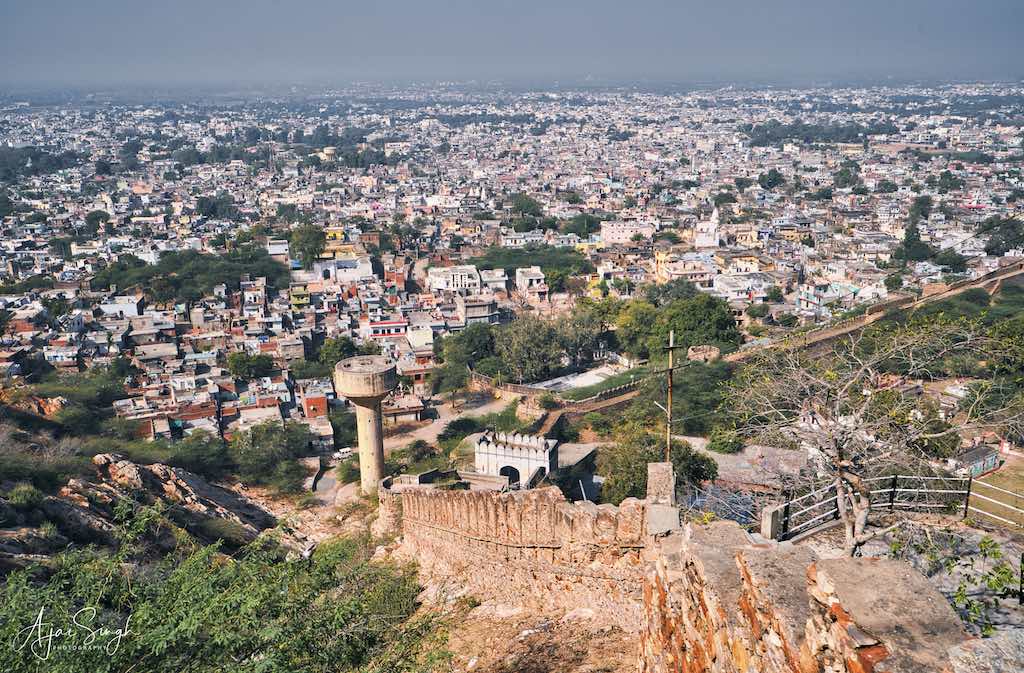
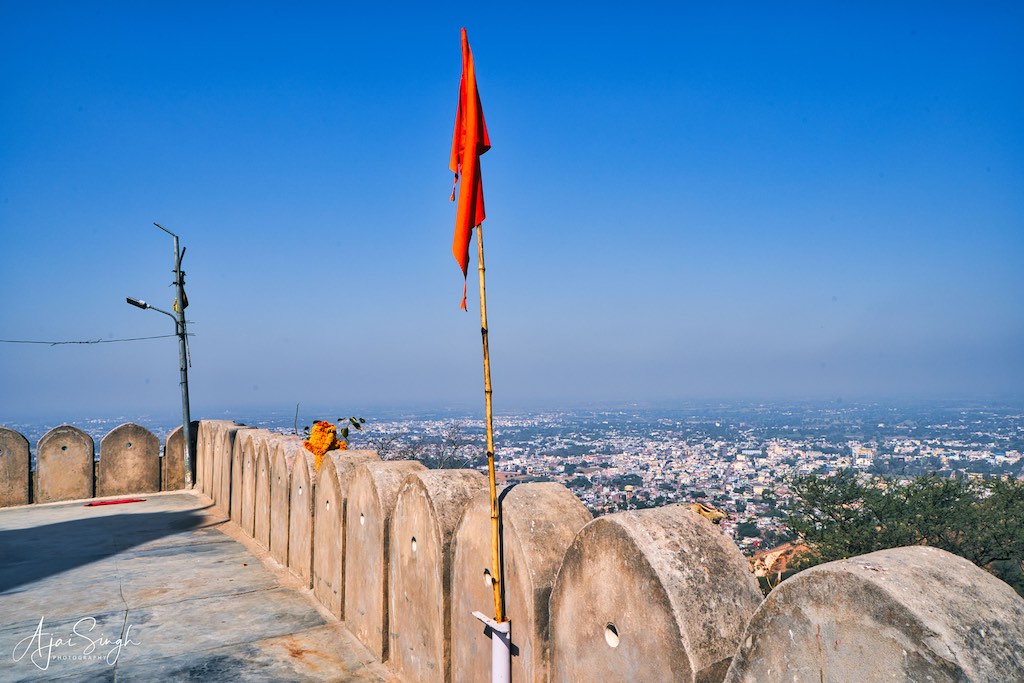
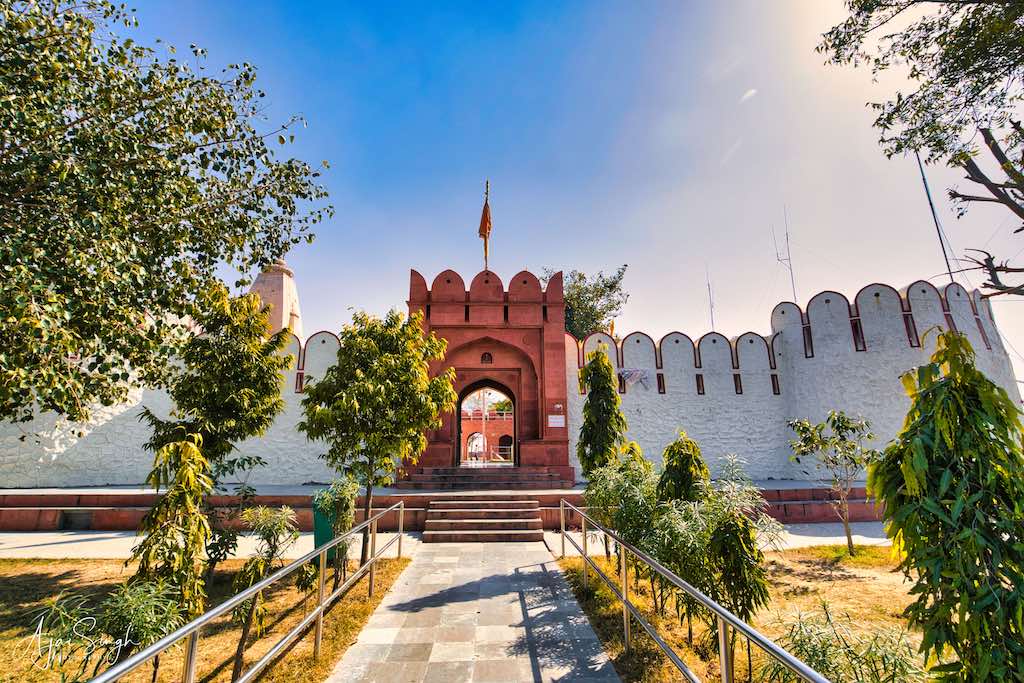
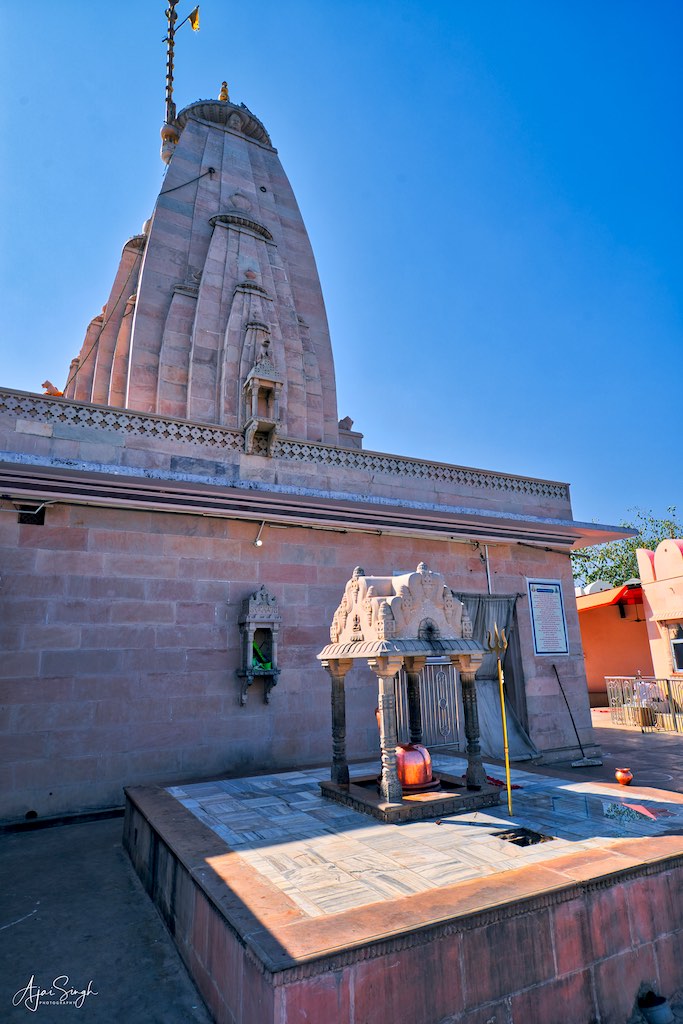
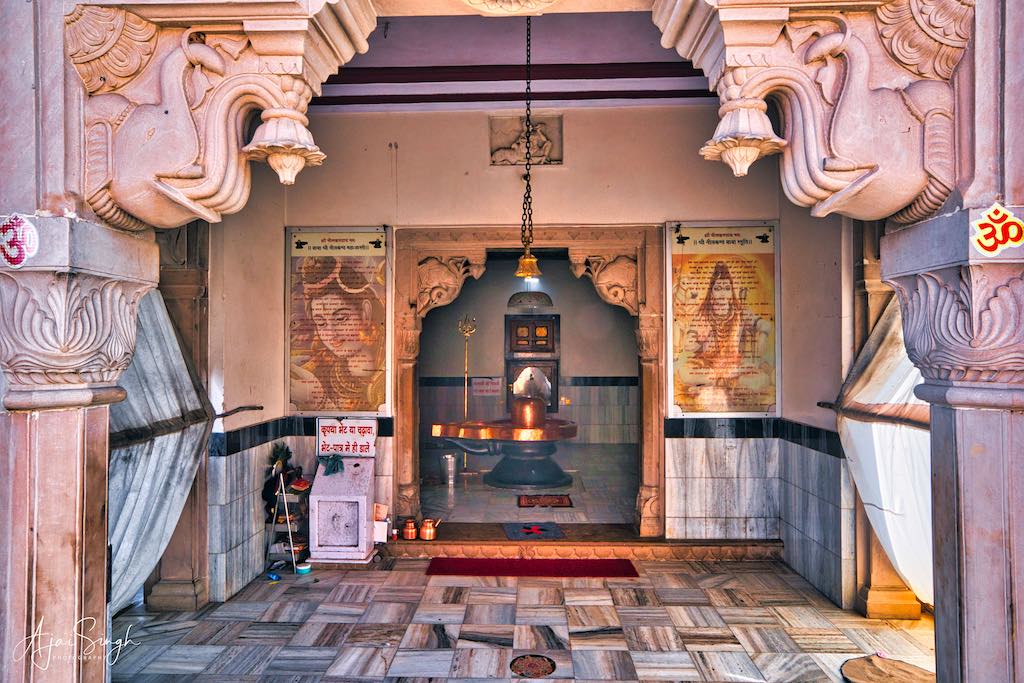
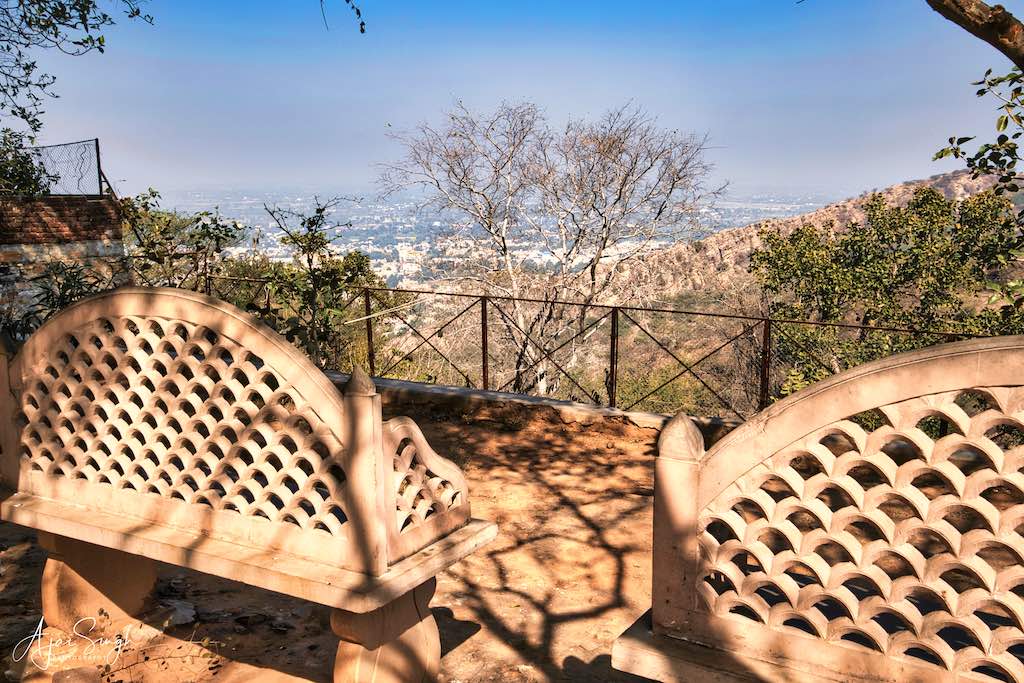
The Neelkanth Mahadev Temple looked recently renovated, and was in pristine condition. The climb commenced at the foot of the hill through a small pedestrian gate in the massive fort walls, which were in good condition. The original path appeared to be a flight of steep steps along one side of the fort wall. This was still usable, though the gently sloping and wide stone-paved ramp made the climb much easier. Inside the fort walls at the base was a sports stadium, full with Sunday boys’ teams busy with their sport activities. As one climbed higher, the views of the town and surrounding areas became spectacular, this being the only hill in the area.
.

.
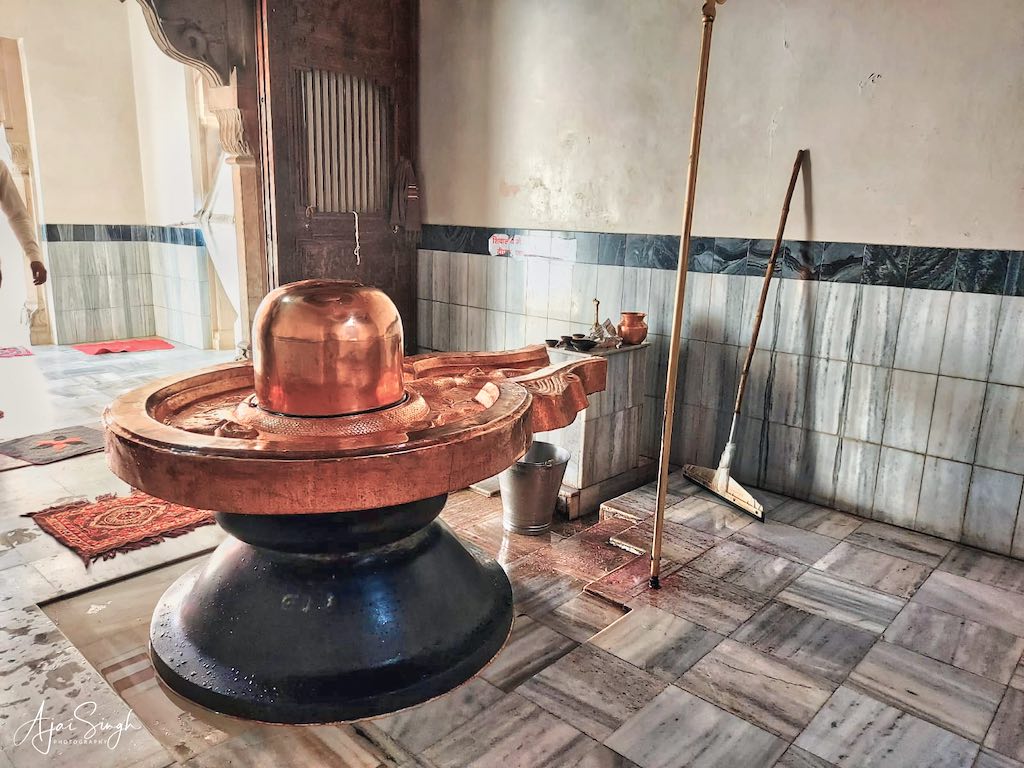
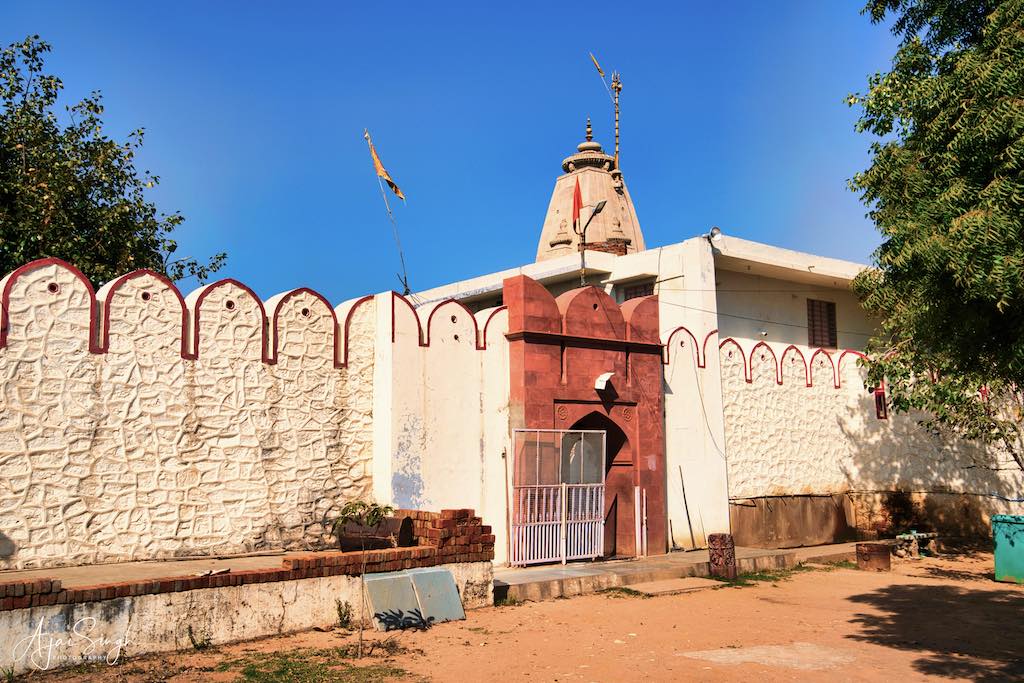
The top of the hill has a two-tiered construction with a boundary wall; the inner one being similar in design to the ramparts of a fort. The entrance through the mini-fort wall was a traditional huge wooden doorway. A temple caretaker informed us that the original temple had been recently clad with pink stone and hence gave the appearance of a new construction. There was a smaller shrine of Hanuman in front of the main shrine, along with the omnipresent Nandi. By the side, another Shivalinga with a serpent coiled around it was placed under a small stone canopy. The Shivalinga inside the garbh grihya was quite large, and clad with copper sheets. The temple had no pujari and one was free to perform their puja for any length of time. The quiet and clean surroundings radiated peaceful energy and it was the perfect place to spend a while in meditation.
.
.
Abhaneri
.
Abhaneri is located in Dausa District and is one of the famous destinations of Rajasthan. It is famous for its Post-Gupta or earlier period monuments. It is situated about 33 Kms from Dausa, towards Bandikui and is popularly known for the Chand Baori step-well and the famous Harshat Mata Temple. Initially, Abhaneri was known as “Abha Nagri” which means the ‘ the city of brightness’. Later on, this village came to be known as Abhaneri.
.
.
Originally ruled by the Chahamanas of Shakambhari, the area was later conquered by Muslim invasions under Mahmud of Ghazni and later ruled by the Mughals. Thereafter the Marathas conquered the area and then later it became a part of Jaipur State until independence.
The Archaeological Survey of India (ASI) has inscribed an ancient mound in the area in 1951 with excavated red and grey slipware.
.
Chand Baori Step-well
.
.
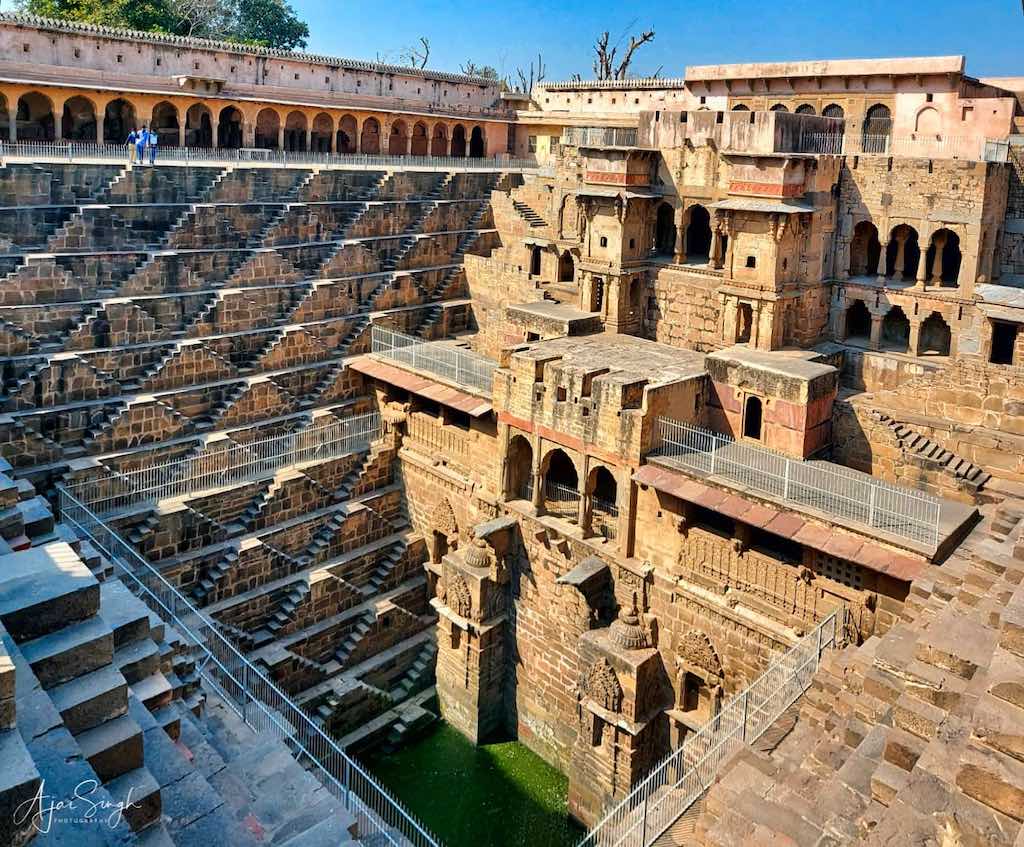
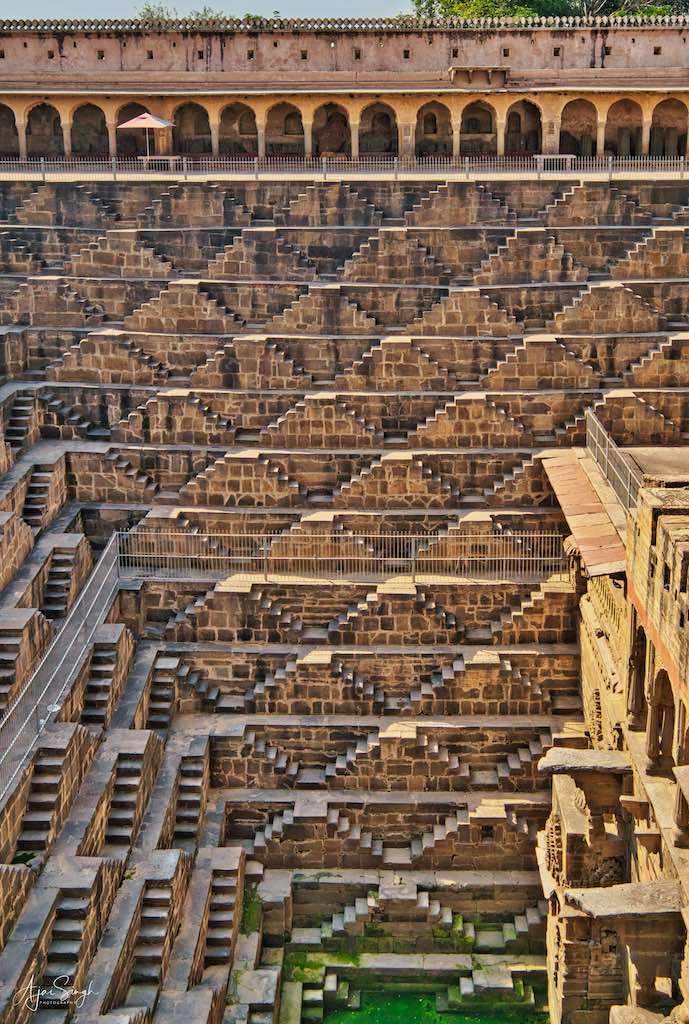
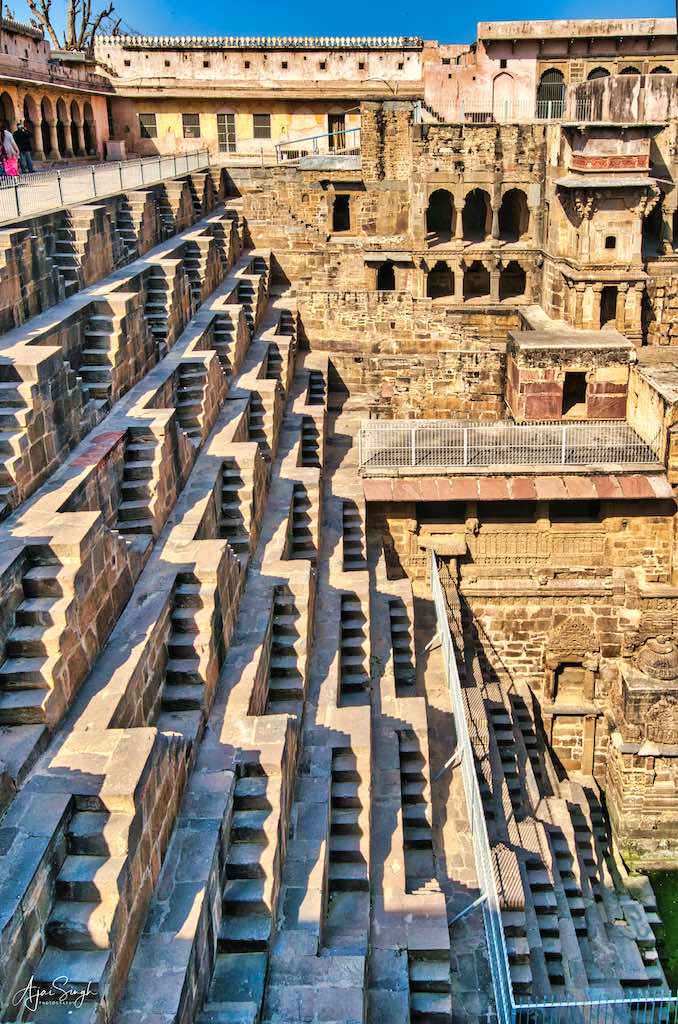
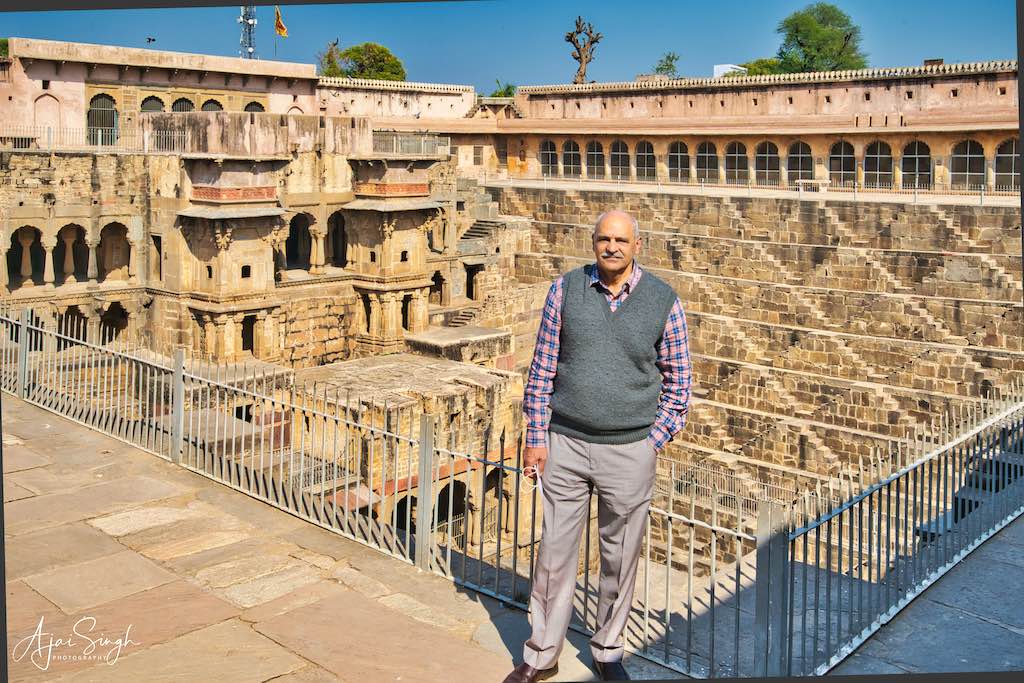
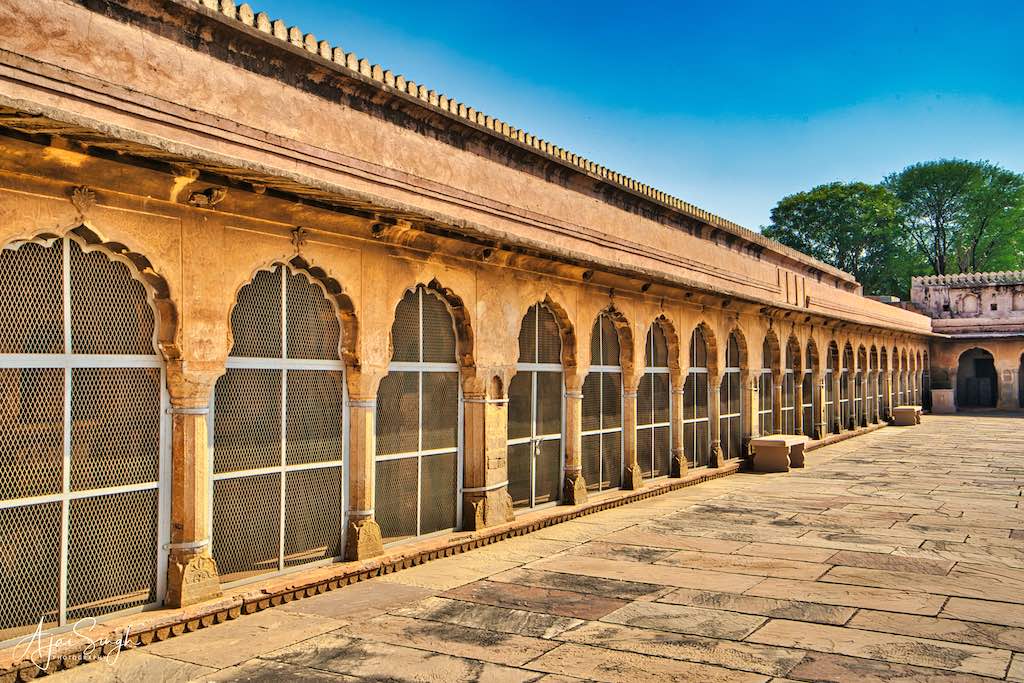
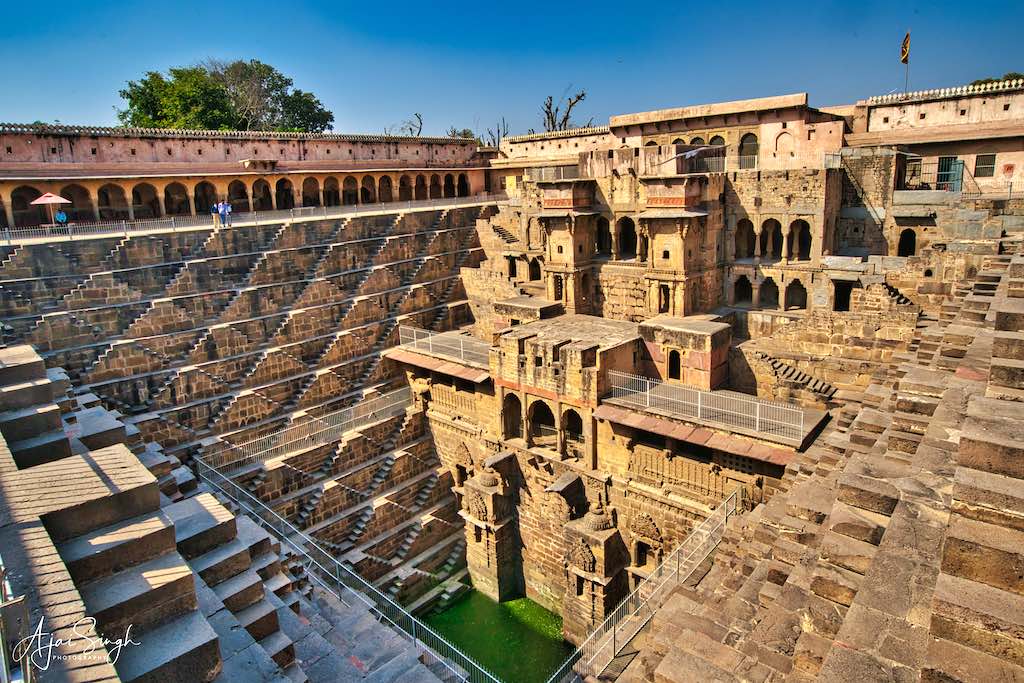
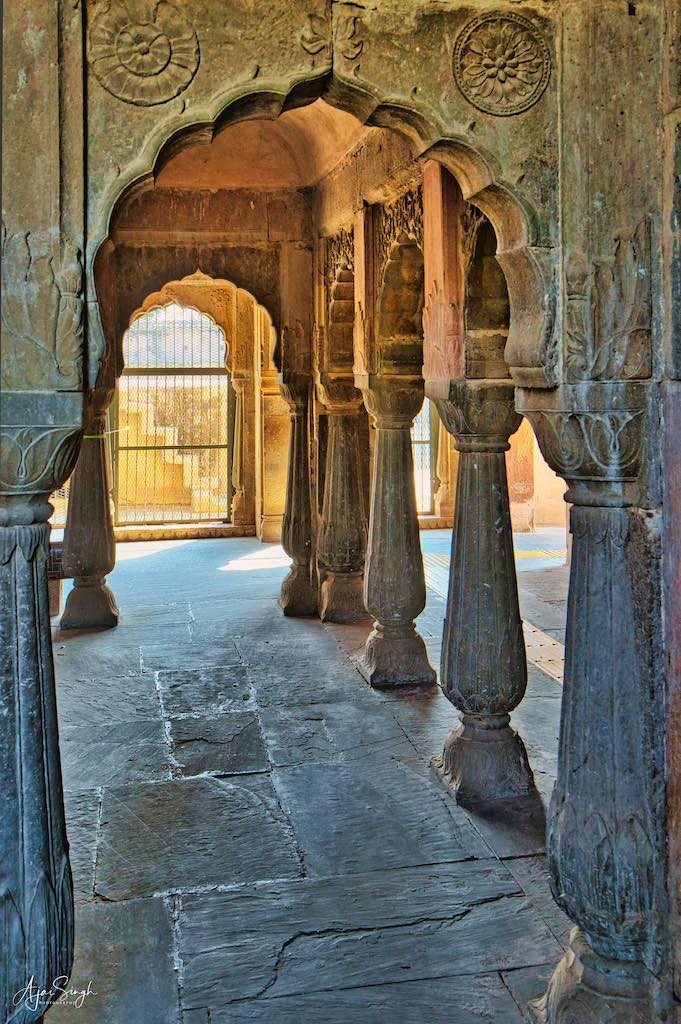
One of the best examples of architecture in the country, this magnificent step well was built by Raja Chand or Chandra, a Nikumbh Rajput of the Chouhan dynasty who was ruling Abhanagri during 8th – 9th century CE. This is one of the oldest baoris in Rajasthan, and these were constructed to conserve water since historical times. Additions were made to it in the 18th century. It is about 100 ft deep and is square in plan and closed by pillared verandas with an entrance on the north side. The step-well has a double flight of steps on its 13 landings (stories) on the south, east and west, while a multi-storeyed pillared royal pavilion is approached by a flight of steps on the north side. It is the exquisite geometry of the design that draws local and international visitors to it.
.
.


.
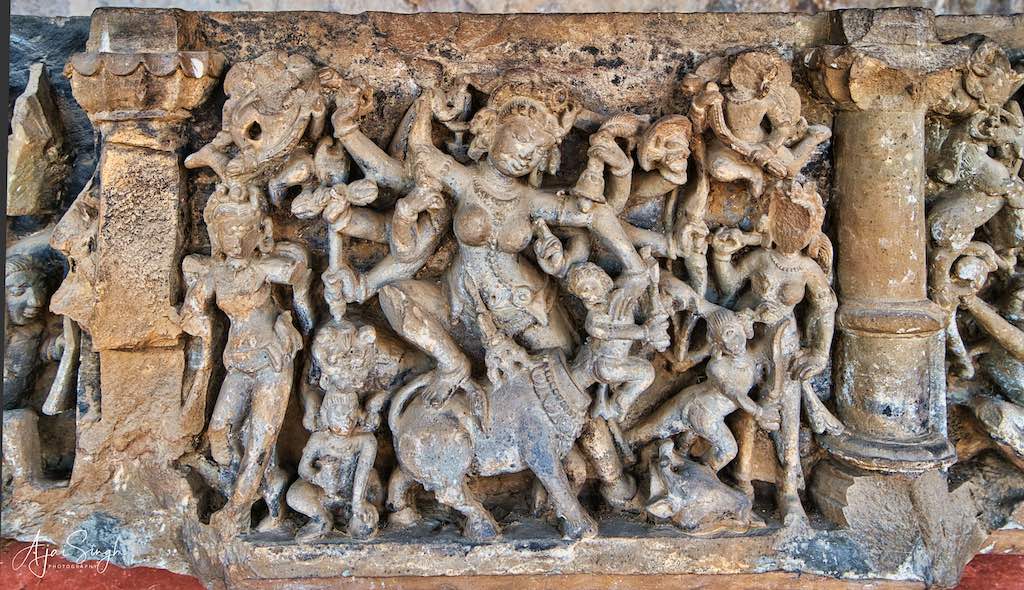
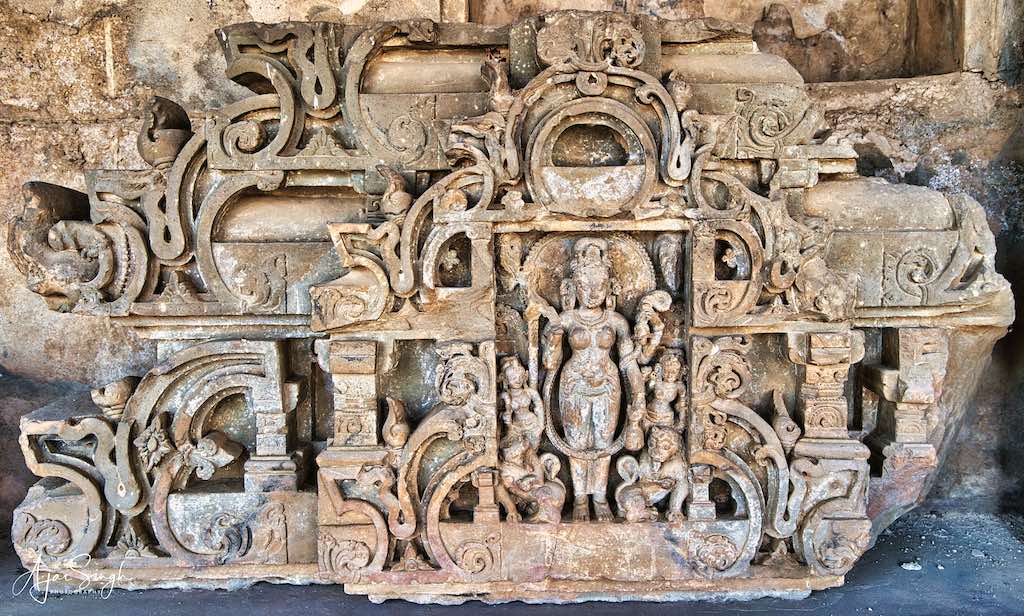
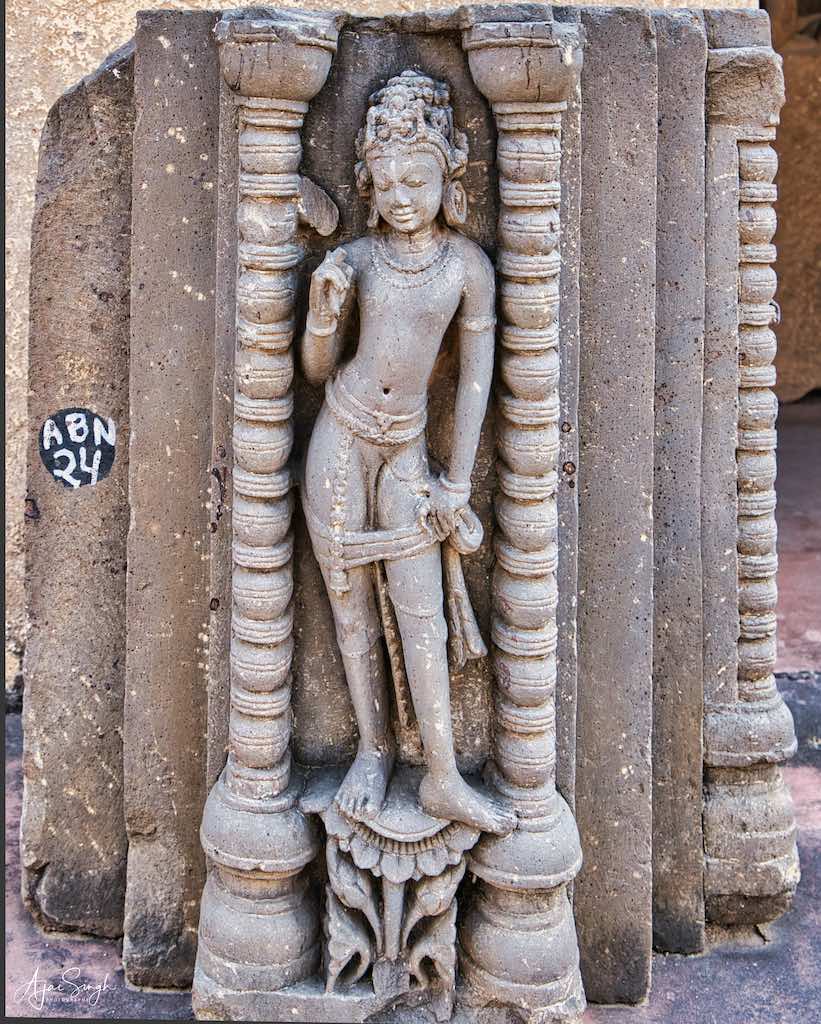
Two projected niches on the lower storey of the pavilion enshrine the image of Mahishasura Mardini and Ganesha. Separate changing rooms for ladies and gents are provided. The baori has a total of 3,500 steps. It is said that on a full moon night, this place has a mesmerising effect. Ancient idols and sculptures which were recovered from the precincts of the destroyed Harshat Mata temple have now been displayed inside the verandas of Chand Baori.
.
.
Various sculptures of Harihara, Ardhanarishwara, Ganesha, Vishnu, Shiva, Bhairava, etc are found here. These exquisite sculptures are full of beauty, radiance and liveliness and display the high level of talent and finesse achieved by the craftsmen of that period. On the outer periphery of Chand Baori, a beautiful garden has been developed for tourists.
.
.
The baori never goes dry, even in the worst summer conditions. Banganga River splits into two streams to the north-east of the Abhaneri and these waterways run to the north and the south of the baori, keeping the step-well always fed with water.
.

.
Harshat Mata Temple
.
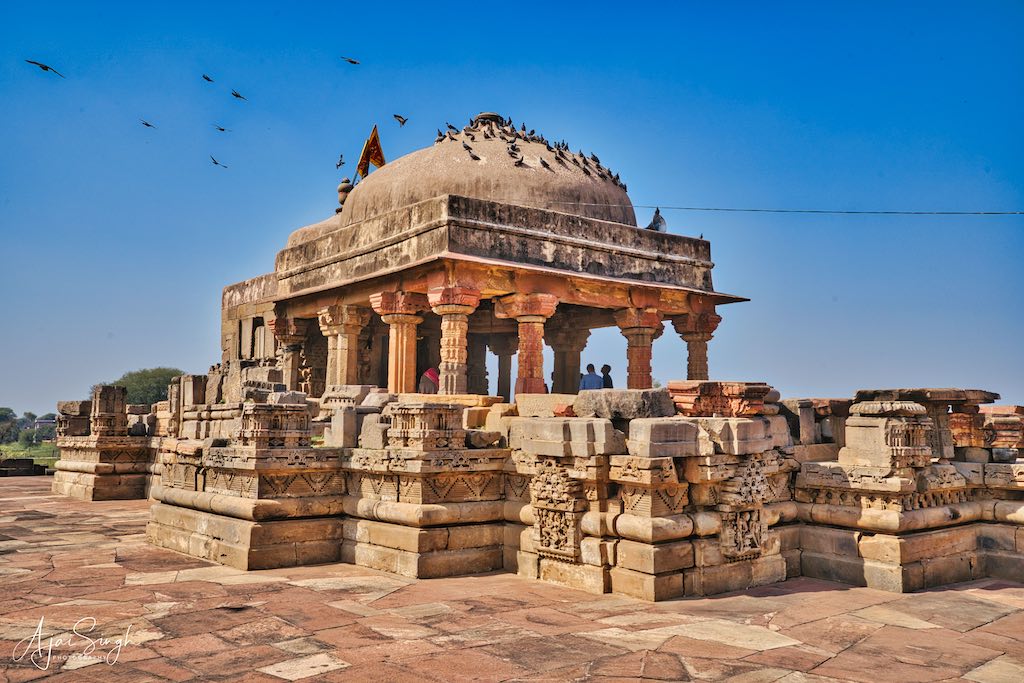
The Harshat Mata Temple is located near Chand Baori. It was a ritual to wash hands and feet at Chand Baori before visiting the temple. It is dedicated to Harshat Mata, the Devi of Joy and Happiness. The temple of Harshat Mata, originally dedicated to Vishnu, is in a ruined condition but it represents the haunting pristine glory of the early Pratihara period (8th – 9th century CE). This temple was built by King Chand or Chandra of Nikumb Rajputs of Chouhan dynasty who was ruling at Abhanagri during the 8th and 9th century CE. Art historian Michael W Meister of University of Pennsylvania dates the temple complex to c. 800–825 CE based on its architectural details.
.
.
.
.
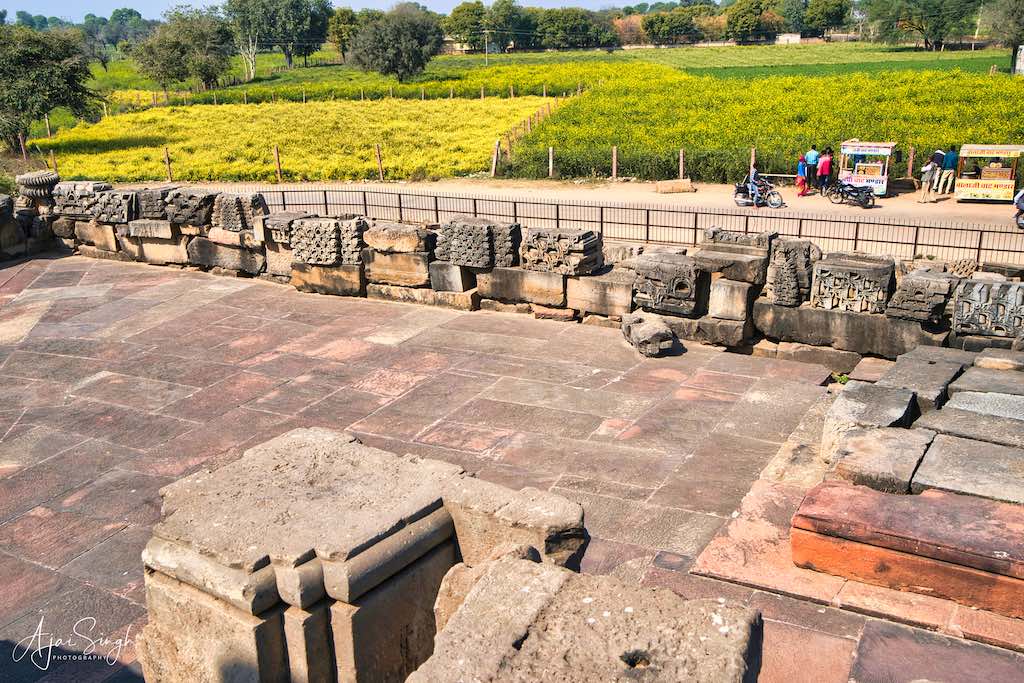
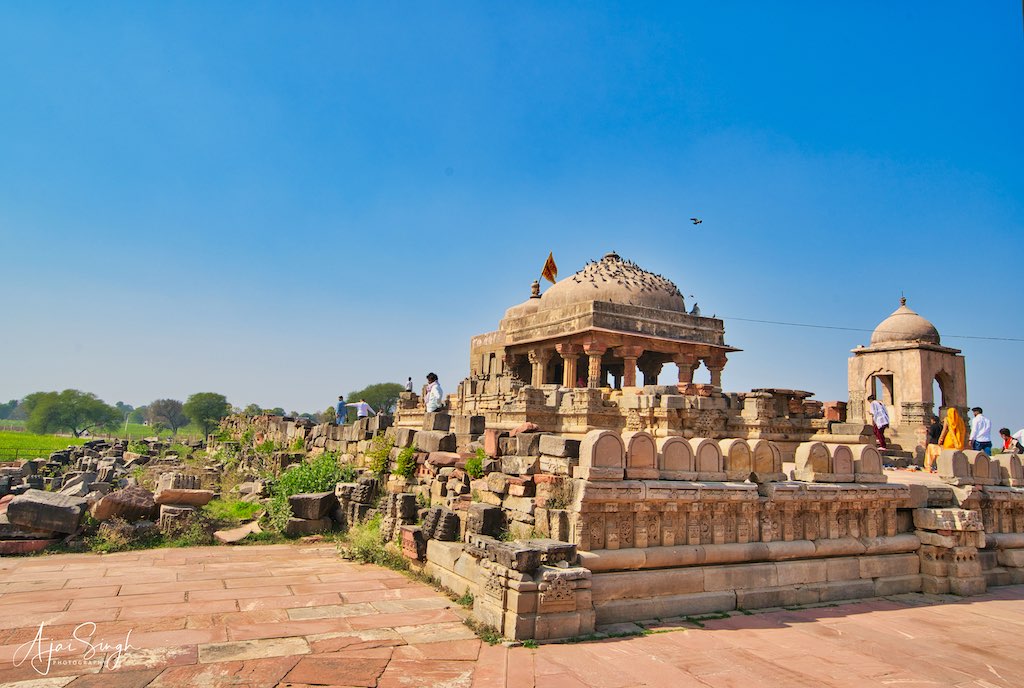
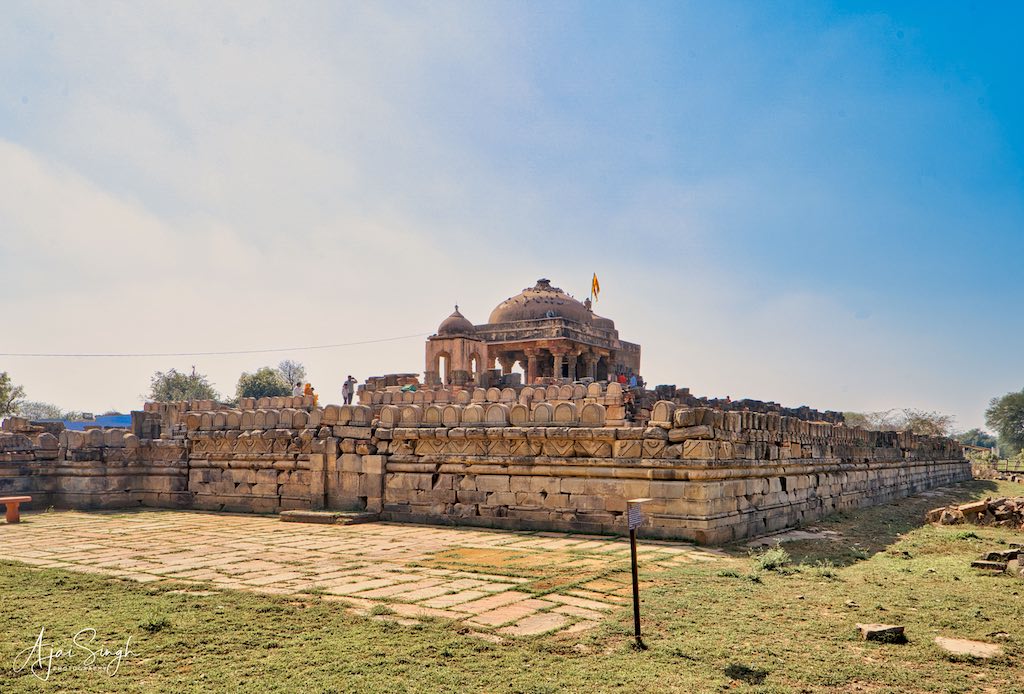
Substantially destroyed by Islamic invaders in the 10th century, the remains of the temple still boasts of the architectural and sculptural styles of 10th century India. The temple is built on a raised platform from where unrestricted views of the surrounding fertile region can be seen.
.


.
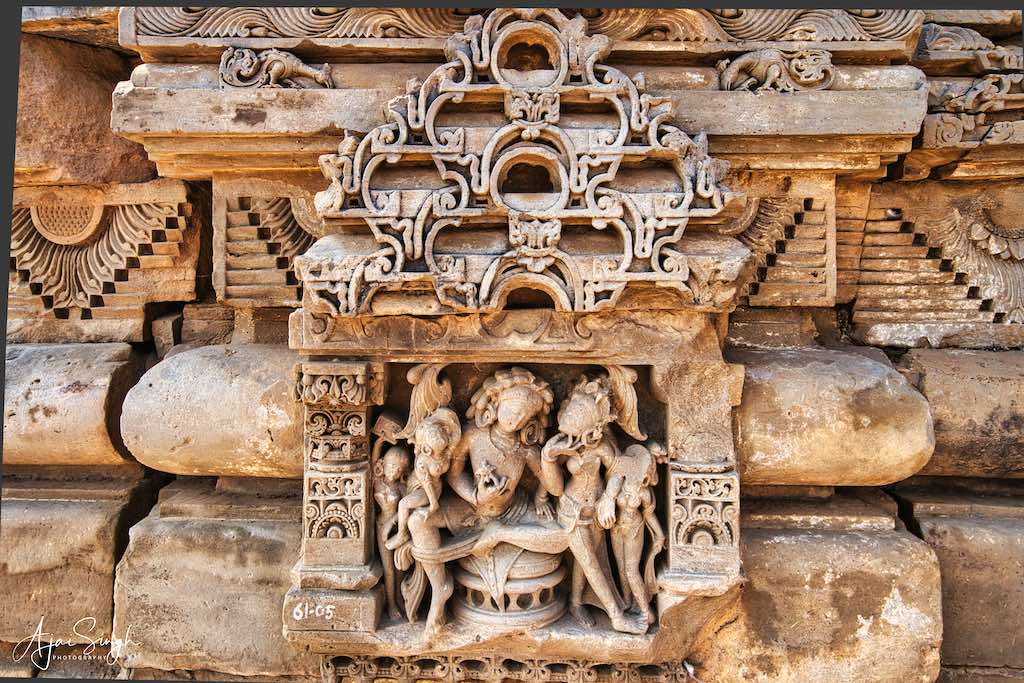
According to the locals, the village is so called because the local Devi Harshat Mata is shown portrayed in a joyous mood and spreads “abha” or brightness all around. Daily worship continues to be offered to the deity in the temple.
.
.


.
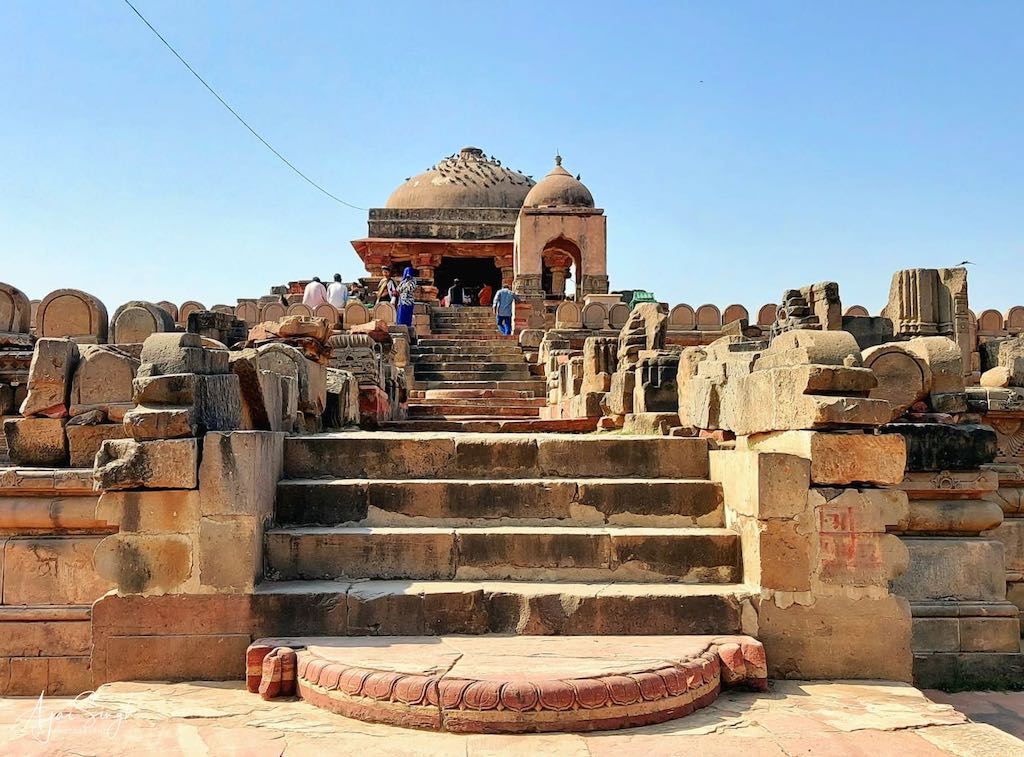
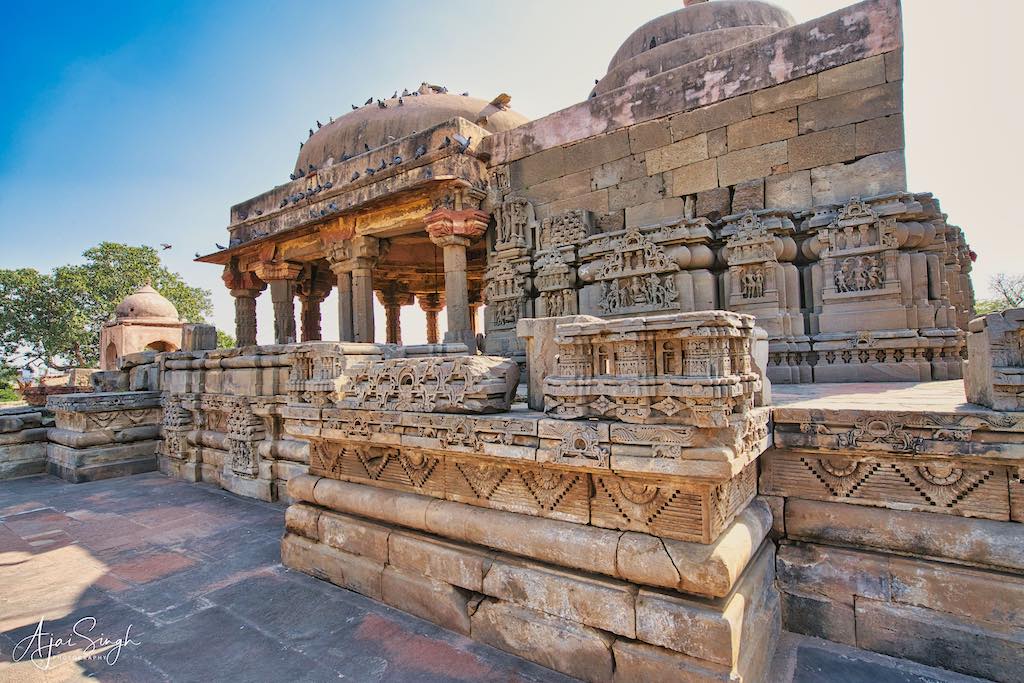
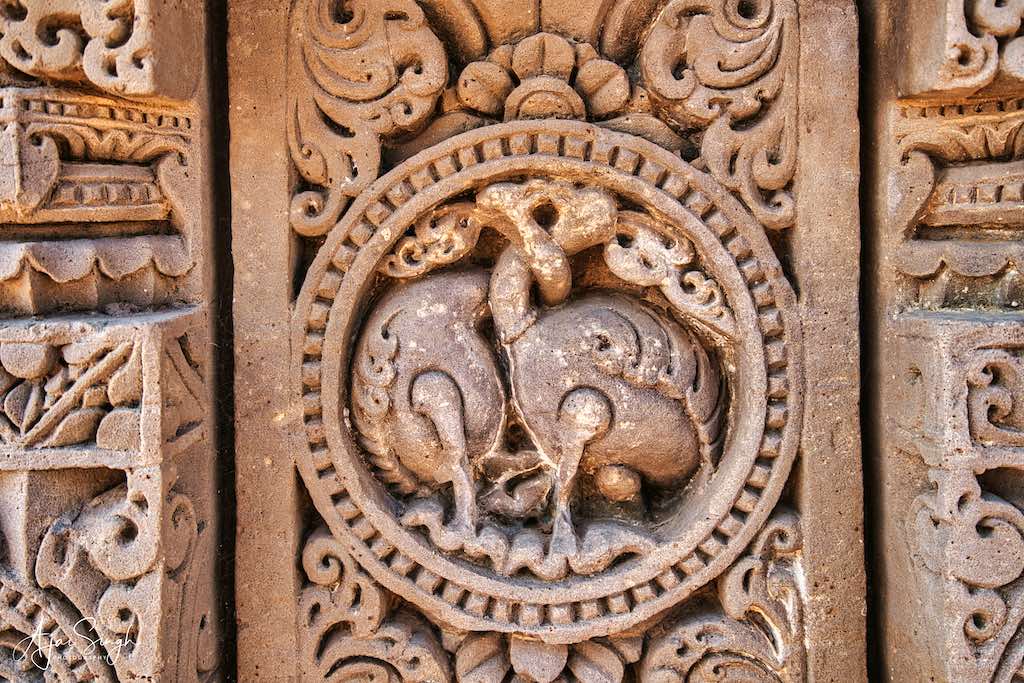
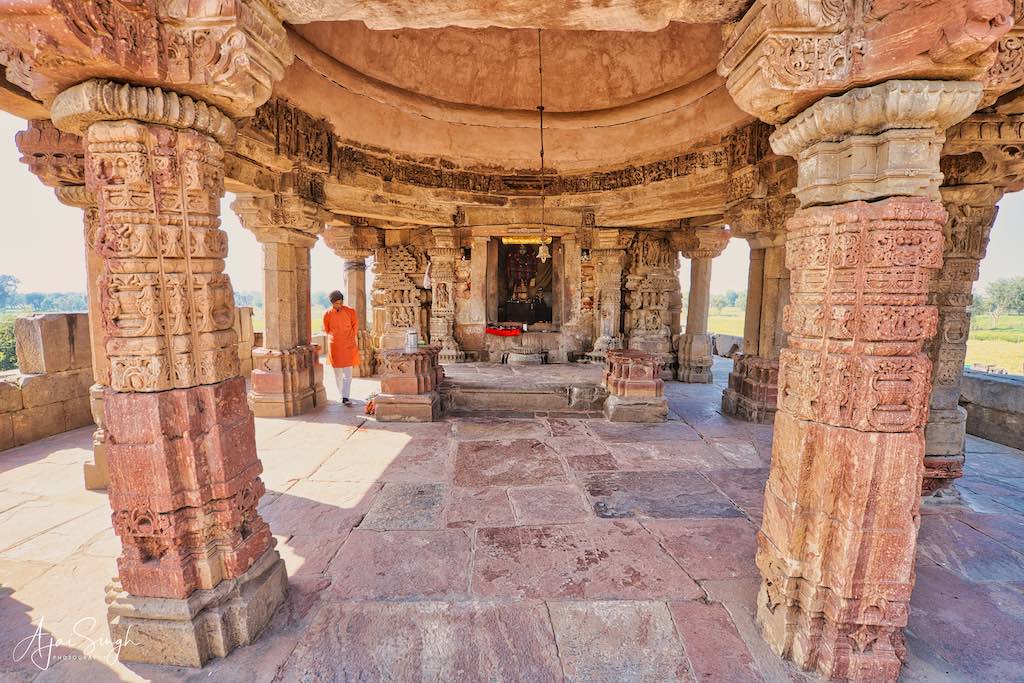
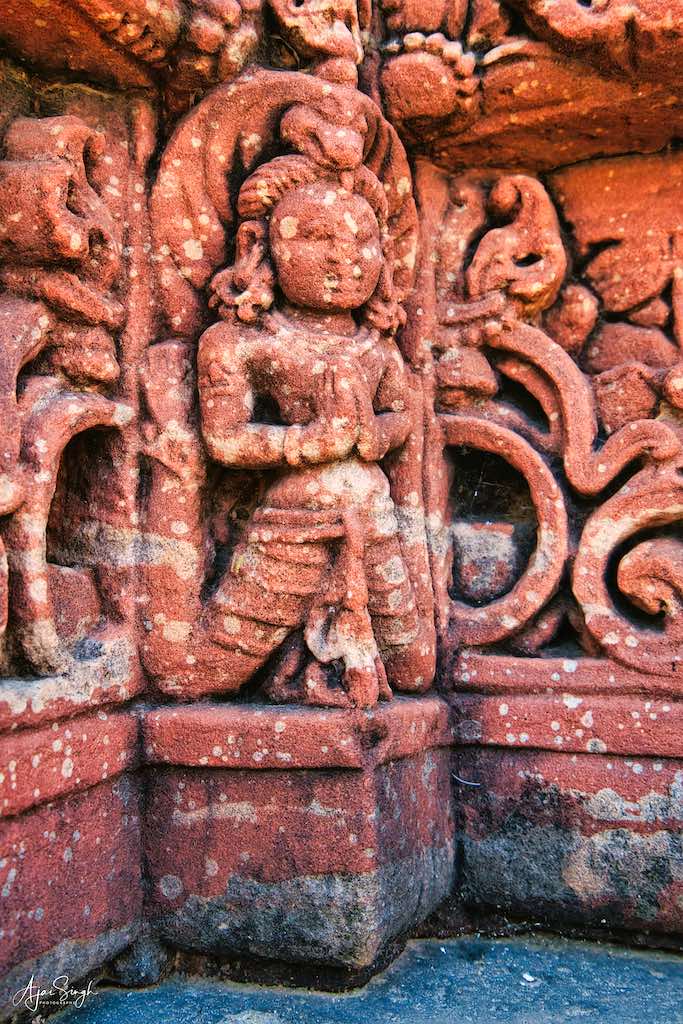
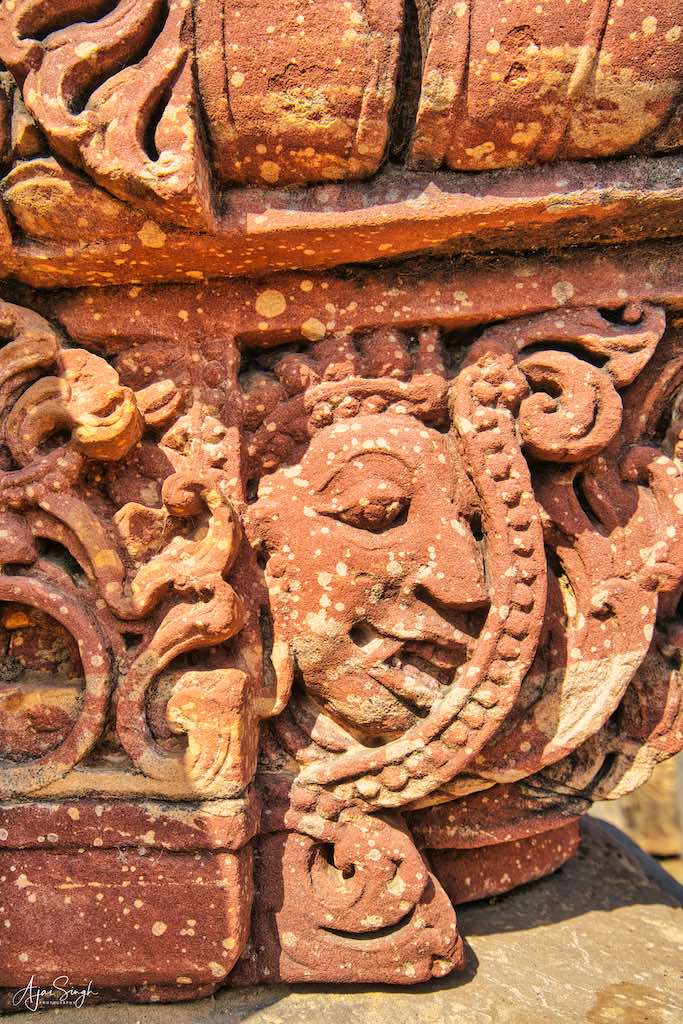
The original temple was built in the panchayatana style, which features a main shrine surrounded by four subsidiary shrines. Only parts of the main shrine now survive and they have been destroyed and modified over several centuries, with the tall shikhara tower replaced by a simple domed roof. Much of the platform survives, and carved stones from the original structure lie around it. However, many of the broken sculptures have been removed to the museums in Amber and the Central Museum, Jaipur, while some are now displayed in the Chand Baori. A large number of sculptures also lie strewn around in the temple complex in disarray.
.
.
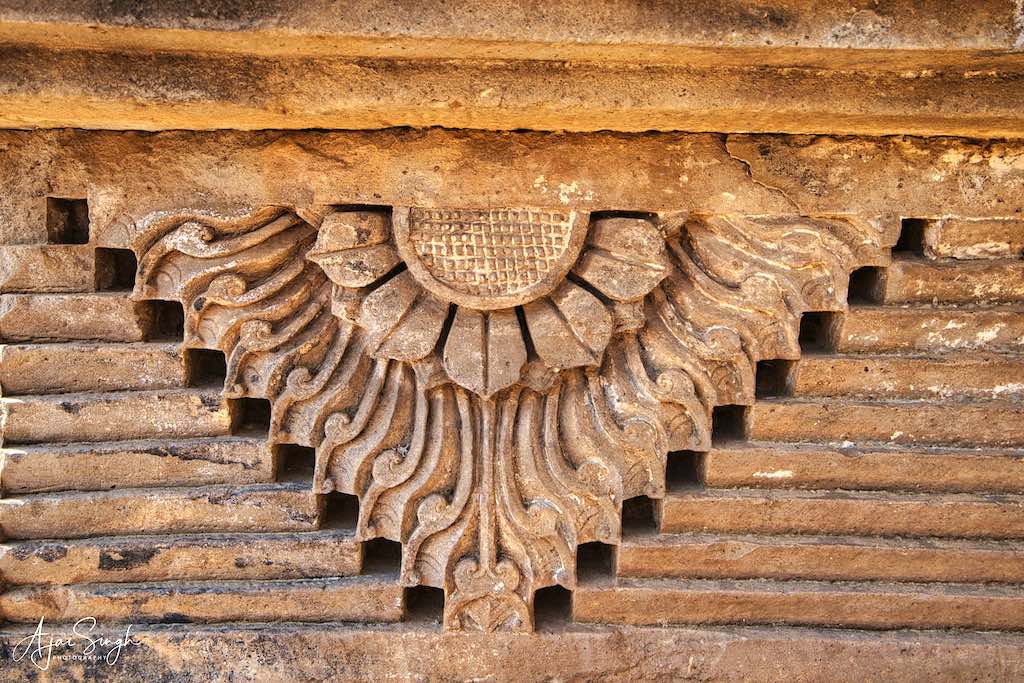
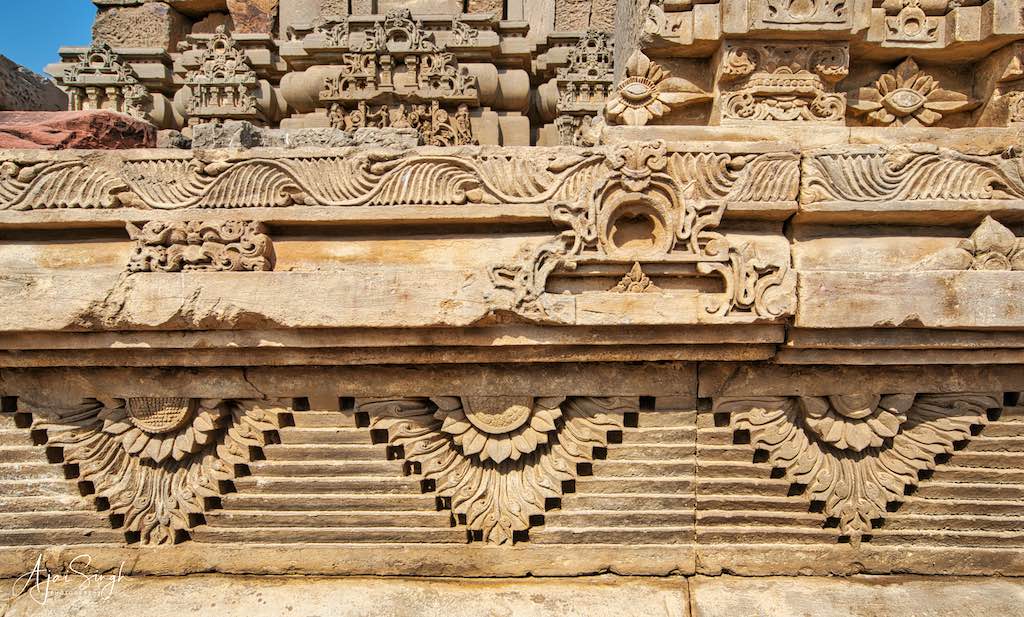
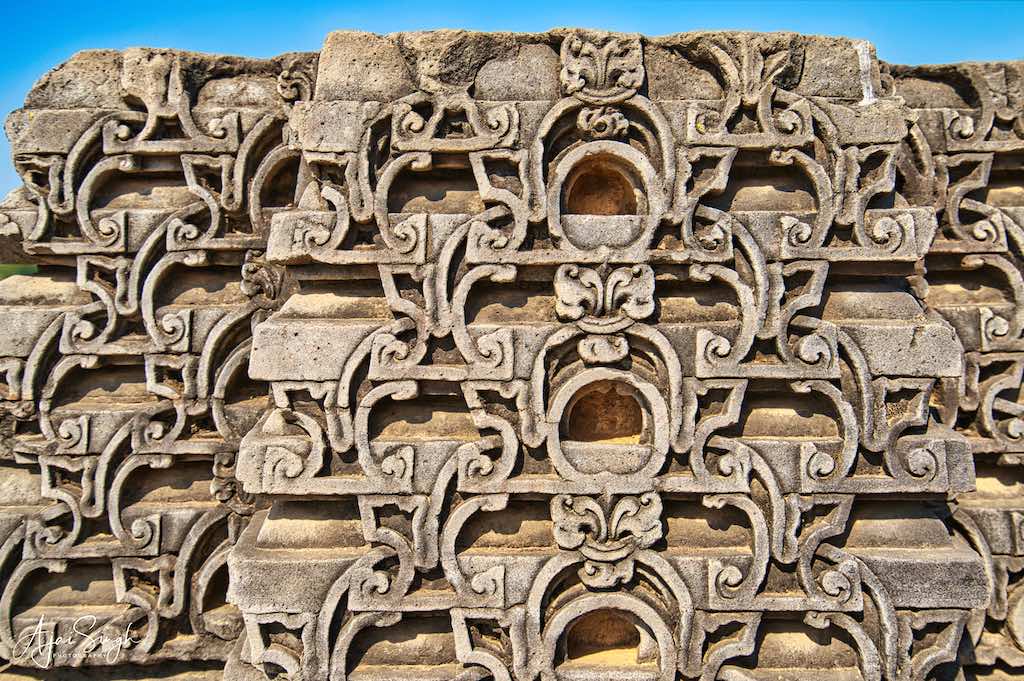
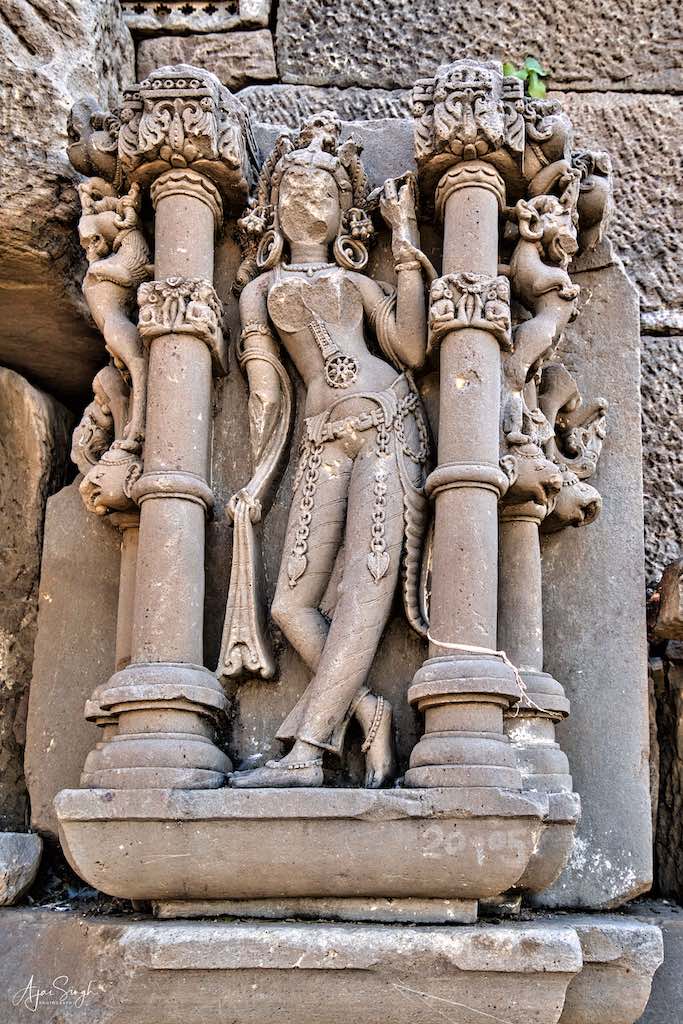
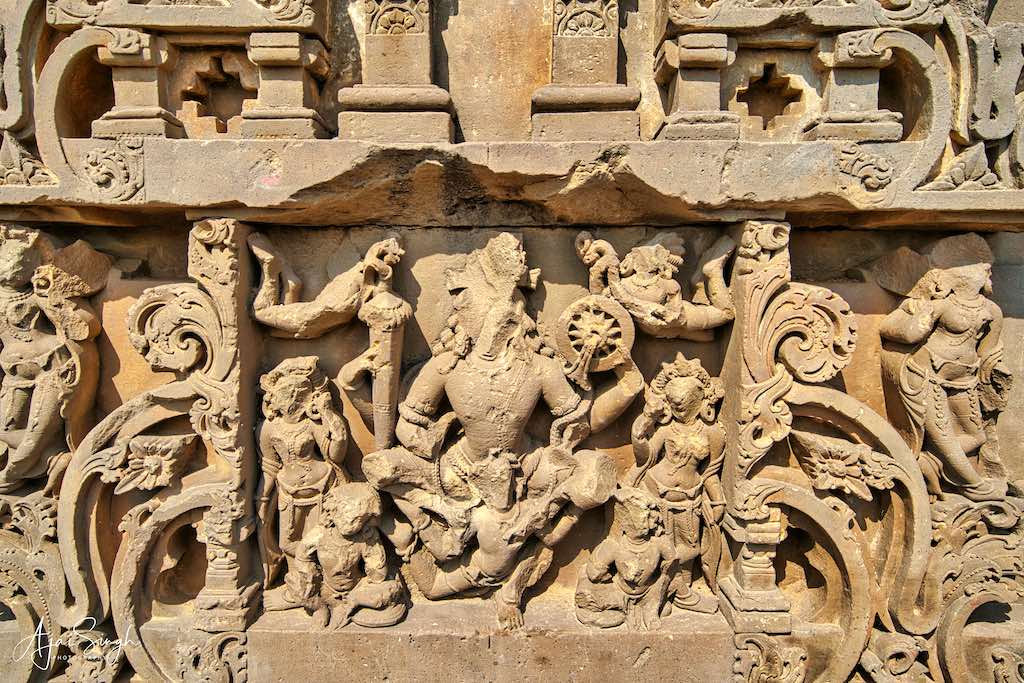
The entrance of the temple faces east, towards the rising sun. The temple complex is built on two broad stepped terraces (jagati), which originally included a circumambulatory path, which are now partially in ruins. The boundary of the lower terrace has a relatively plain set of foundation and base mouldings (vedibandha), which have decorative patterns at the top. The ruins of two small shrines flank the entrance stairway. The upper terrace is far more decorated, but is largely destroyed. Each niche of the buttress of the garbhagriha has beautiful deities and sculptures carved in deep relief, fixed in niches around the plinth of the upper terrace and which form the main attraction of the temple.
.
.
Two fragments of a Durga sculpture discovered in the Chand Baori compound may have belonged to the main idol of the original temple. This sculpture appears to have been a 1.5-metre (4 ft 11 in) high statue of Durga in her Mahishasura-mardini (killer of the buffalo demon) form. The bigger fragment shows the lower part of Durga’s torso with her left leg, her lion vahana, a male attendant, and a beheaded buffalo. The smaller fragment shows six right arms of the multi-armed Durga, with one of the arms pulling an arrow from the quiver; it also features the remains of a halo in the form of a lotus leaf, and two gandharvas.
.

.
An annual fair held in honour of Harshat Mata lasts three days and a large number of devotees and merchants gather from neighbouring villages for the event.
.
.
Homebound
.
The rest of the journey – Google maps showed the driving time to be 5 hours 30 minutes to Noida when I finished seeing the Chand Baori – was a non-stop drive as it was already late afternoon when I started on the final leg. The initial part, till I got back on NH 21 was through narrow village roads, and after crossing the Banganga River near Chand Baori I got stuck in a traffic jam when traffic on both sides refused to back-off on the narrow road through a village – a common phenomenon in India! Best to enjoy watching the locals walk past in such a situation. It was only when I got on to the Agra-Noida Expressway, after driving on the lesser highways through Bharatpur and Vrindavan, did the drive become comfortable. By then it was getting dark and this was a relief.
.
Conclusion
.
The trip, planned on a last-minute hunch of doing something different, was an eye opener. The exquisite craftsmanship I saw was amazing. That too in such an unknown and isolated place, off the normal tourist beat. It is another reminder of the vast treasure of amazing wonders which exist in every nook and cranny of Bharat. One just has to spend some time to discover these hidden gems. It really is “Incredible India”!
.

.
This trip also brought out starkly the fact that Muslim invaders, and the following colonialists, did not spare temples and other ancient monuments even in remote places. The trail of destruction was not limited only to famous shrines or bigger cities. Though the Archeological Survey of India is doing a reasonable job of maintaining the places it has under its charge, these are restricted to a small percentage of existing ancient sites. Probably, the scale of the task is unmanageable and so are the resources. Alternate ways will need to be explored how monuments in remote areas can be protected, and maintained. Not an easy task.
.
.
References
.
- https://en.wikipedia.org/wiki/Dausa
- https://en.wikipedia.org/wiki/Abhaneri
- https://en.wikipedia.org/wiki/Harshat_Mata_Temple
- https://en.wikipedia.org/wiki/Chand_Baori
- A Mathematical Marvel called Chand Baori https://www.proquest.com/docview/1893096678/citation/D253D532C08D4BC5PQ/1
- https://web.archive.org/web/20080131224345/http://dausa.nic.in/
- Sculptural Art of Abaneri https://books.google.co.in/books?id=SejVAAAAMAAJ&redir_esc=y
- https://www.tourism.rajasthan.gov.in/dausa.html
- https://www.rajras.in/rajasthan/districts/dausa/
- https://truerajasthan.com/dausa-district-rajasthan/#Neelkanth_Panch_Mahadev
- https://www.rajasthandirect.com/tourism/abhaneri
- https://www.rajasthandirect.com/tourism/abhaneri/places-to-see-in-abhaneri
- https://www.patrika.com/dausa-news/dausa-mahwa-fort-history-rajasthan-forts-4236766/
- https://jaipurthrumylens.com/2015/10/08/ghat-ki-guni-jaipur/
- https://www.dronahfoundation.org/ghat-ki-guni-jaipur-rajasthan/
.
Note: All photographs displayed above are my exclusive property and copyright; their use is prohibited without explicit consent, in writing.


15 Responses
Spectacular clicks Sir and very nicely explained.
Whenever I visit jaipur next, these places shall be on the list.
Thanks. Yes, these places are a must visit!
Chand Baori and Harsh Mata Temple should be added to the Must Do list of Rajasthan!
Amazing architecture. Thanks for sharing these wonderful finds!
Chand Baori is known, but being on a limb from any big city, not that well visited.
Excellent coverage of places ajai. Nice reading and congratulations.
Thank you.
My dear AP.
EXCELLENT Coverage of your journey on the less visited route. The Temples are beautiful. I hope that they are adequately covered in our Books. Beautiful Architectural work. Thanks for bringing it to our notice. Good show. Regards. Tejpal Chowdhury
Thank you!
Im pleasantly mind-blown sir. (Applause). Great read and an amazing itinerary to follow. Chand Baori architecture would leave anyone spellbound. Thank you for sharing this through your jottings.
Wishing more power to your thoughts, pen and zeal alike. … regards
Thank you. We all should make efforts to explore more of our heritage.
Nice sir, for greater purpose put on youtube or instagram !
Thanks. Photos of the trip are already on Instagram.
Hi ajai nice to read about the expedition.
Spellbound! This is Our Bharat- countless destructions still takes us back centuries into our rich Heritage.
Jai Ho Bharat Mata ki
Great dedication Ajay , remarkable compilation ‼️
Thanks!