
.
Introduction
.
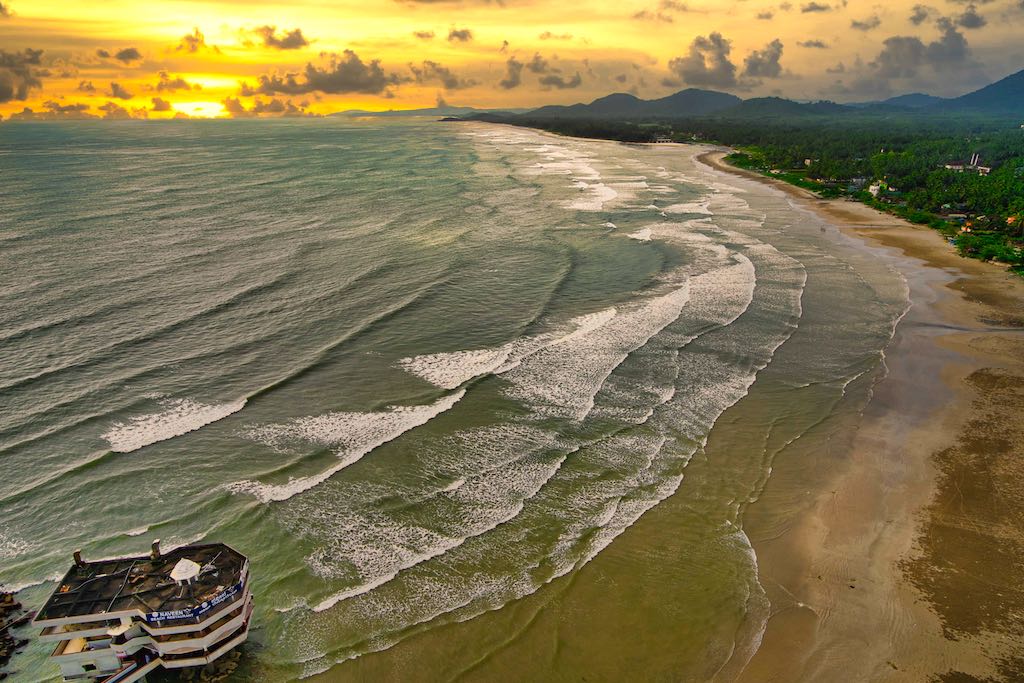
Uttara Kannada or North Canara is a beautiful coastal district of Karnataka, flanked by the beautiful Arabian Sea on the west and the Western Ghats on the east. Dakshina Kannada, Udupi, and Kasargod are often referred to as Tulu Nadu as Tulu is one of the main languages spoken in this region. The region is home to a number of famous temples, and many of these have unique legends, beliefs, and stories associated with them and hence have high religious significance.
.
.
After completing the group tour with the Brhat team at Udupi, the three of us – Nidhi, Jayalaxmi, and self – continued with our journey up coastal Karnataka to explore the remote and lesser-known temples that dot the region in profusion. This part of the journey was partly ad-hoc and we planned to catch taxis and explore local hotels as we progressed up the coast – an open-ended itinerary. Our return flight from Goa was four days hence, the only deadline we had.
The journey to Udupi (from Hasan and including Sringeri, Udupi, Barkur, etc) can be explored in my previous blog, link is given below.
.
.
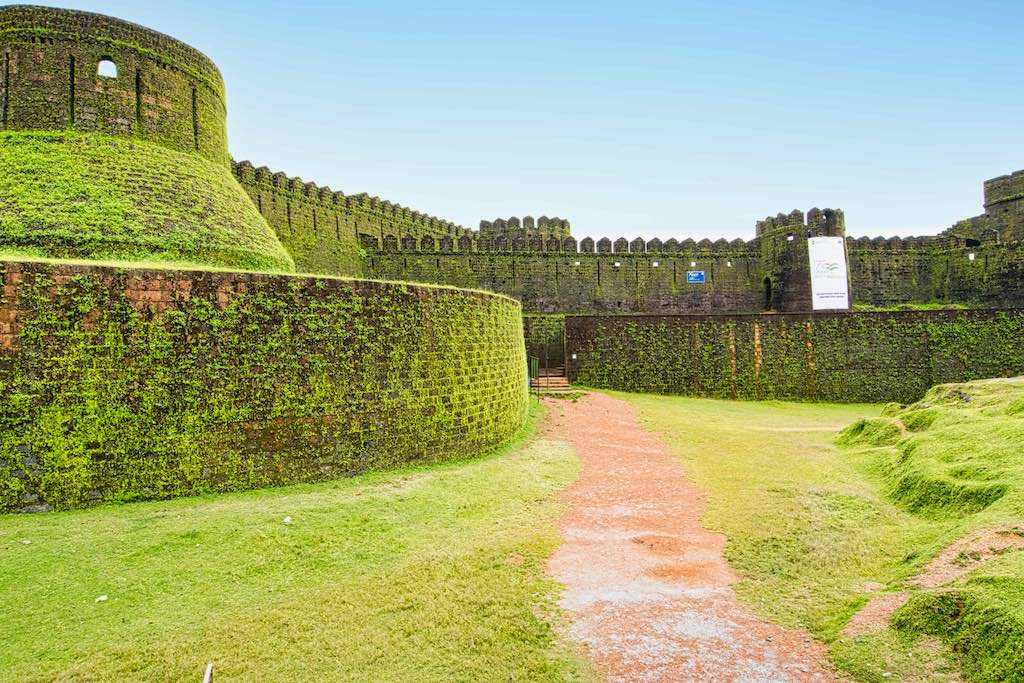
On the journey from Udupi to Goa, we visited the following places: –
- Anegudde Vinayaka Temple
- Sri Chandika Durga Parameshwari Temple
- Murudeshwar
- Maha Ganapati Temple, Idagunji
- Gunvanteshwar Temple, Gunavante
- Shri Dharanath Temple, Dhareshwar
- Mirjan Fort
- Temples at Gokarna – The temple town of Gokarna has a profusion of ancient temples and is called the “Kashi of the South”. Gokarna will be covered in a separate blog post.
.
.
Anegudde Vinayaka Temple
.
.
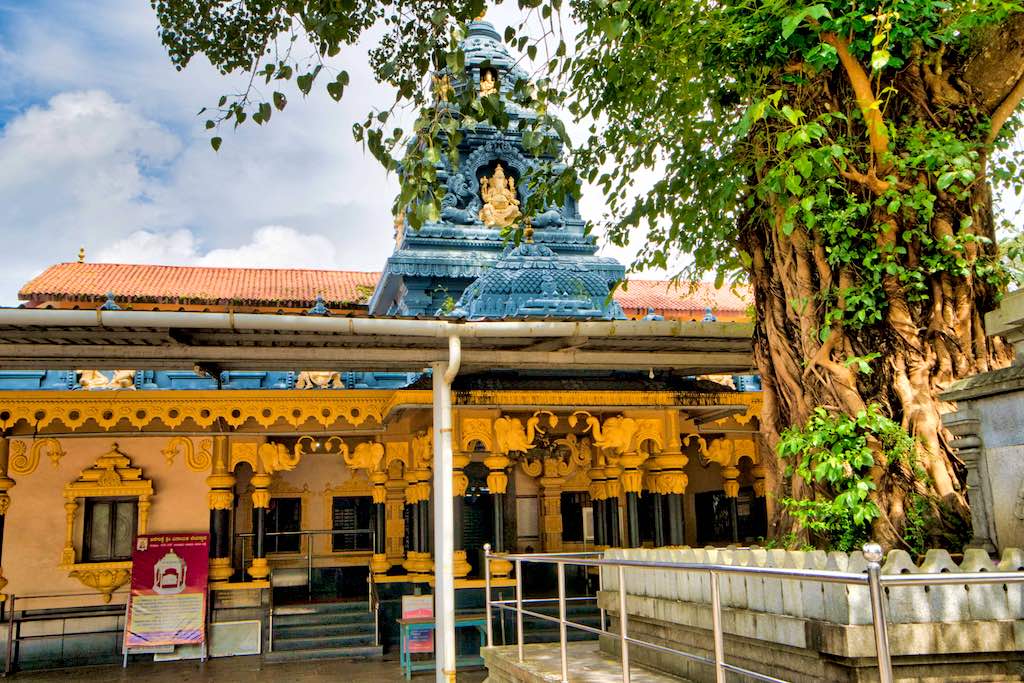
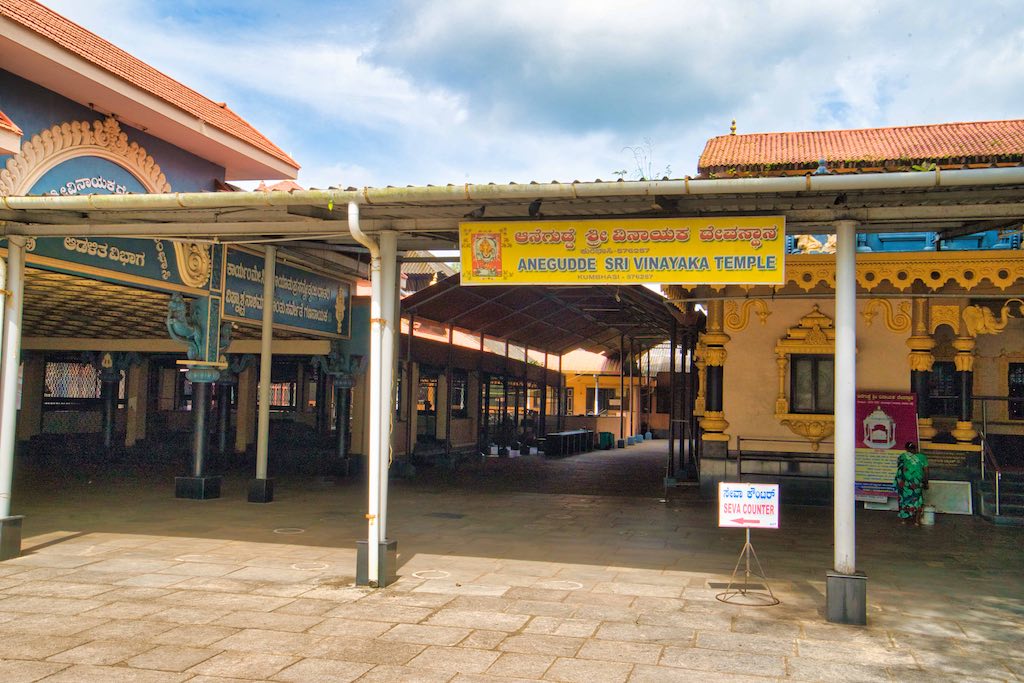
This was the first temple we visited. Located in the hamlet of Kumbashi, 33 km from Udupi. Anegudde is regarded as one of the seven ‘Mukti Sthalas’ of Parashurama Kshetra. The temple at Anegudde is dedicated to Lord Vinayaka (Ganesha). Anegudde is the combination of two words – ‘Aane‘ meaning ‘Elephant’ and ‘Gudde‘, which stands for ‘hillock’ as it is the abode of the elephant-headed god, Lord Vinayaka. Anegudde’s famous Siddhi Vinayaka temple has a history dating back centuries.
.
.
According to legend, when this area was hit by famine and lack of rain, Rishi Agasthya performed a yagna to appease Varuna, the rain God. During the yagna, a demon named Kumbhasura started disrupting the prayers. In order to defeat the demon, Bheemasena of the Pandavas prayed to Ganesha and obtained a weapon to kill him. The name of the place Kumbashi, therefore, is derived from the name of the demon Kumbhasura.
The temple itself is highly revered in the area and attracts a large number of devotees. The presiding deity here is known as ‘Sarva Siddhi Pradaayaka’ which means the provider of boons and is believed to fulfill all the wishes of pilgrims.
.
Temple Architecture
.
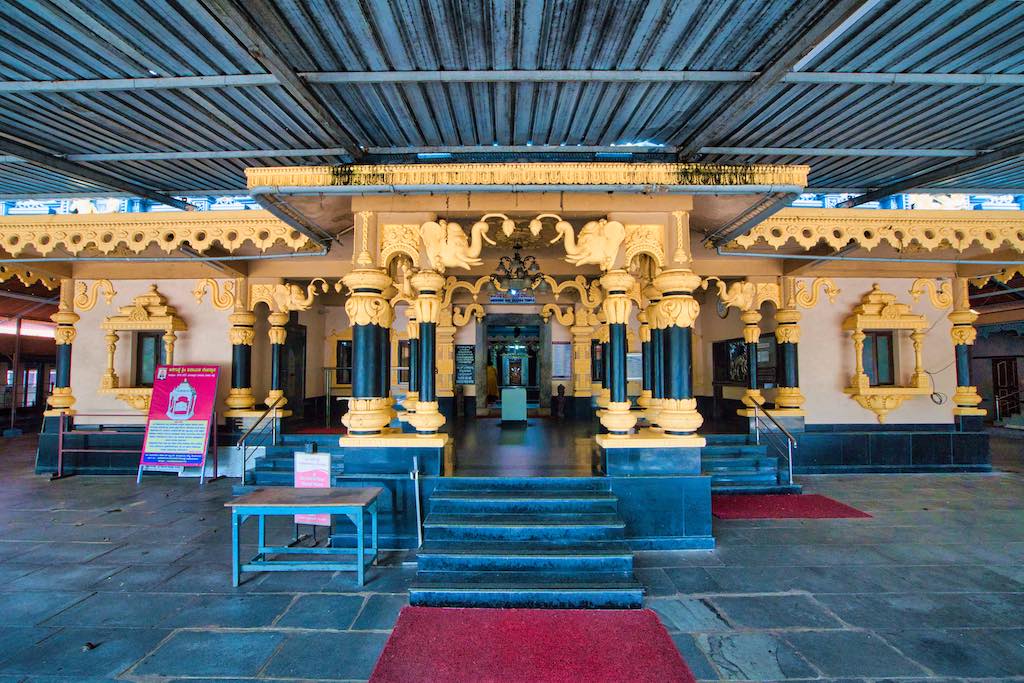
In Anegudde, Lord Ganesha is in the standing position with four hands in the Sanctorum. The two hands held up, known as the Varad Hasta (offering divine boons). The other two hands are pointing downwards, which means salvation. The Ganesha murti has silver armour. The temple is mentioned in many scriptures that are related to the ancient Puranas.
.
.
The ‘Mudi Akki Kadubu’ seva which is a special offering of steamed rice dumplings is considered highly sacred.
At this temple, people come to worship a not-so-deep pit that is filled by the Bhagirathi river water. Located in the hills, the temple provides a view of a beautiful lake. The lake’s right side is known by the name, Surya Pushkarini, while the left side represents Chandra Pushkarini.
.

.
Ganesh Chaturthi is the main festival celebrated at Anegudde temple and Sankashta Chaturthi is also celebrated with great devotion. On the Chauthi / Chaturthi (the 4th day after the full moon) of every lunar month, special poojas are held at the temple. The annual Rathostava or car festival held during the month of December is celebrated with great fervor and pomp
.
Special Offerings
.
Devotees do Tulabharam, by weighing sugar, coconut, jaggery, and rice against their weight.
.
Sri Chandika Durga Parameshwari Temple
.
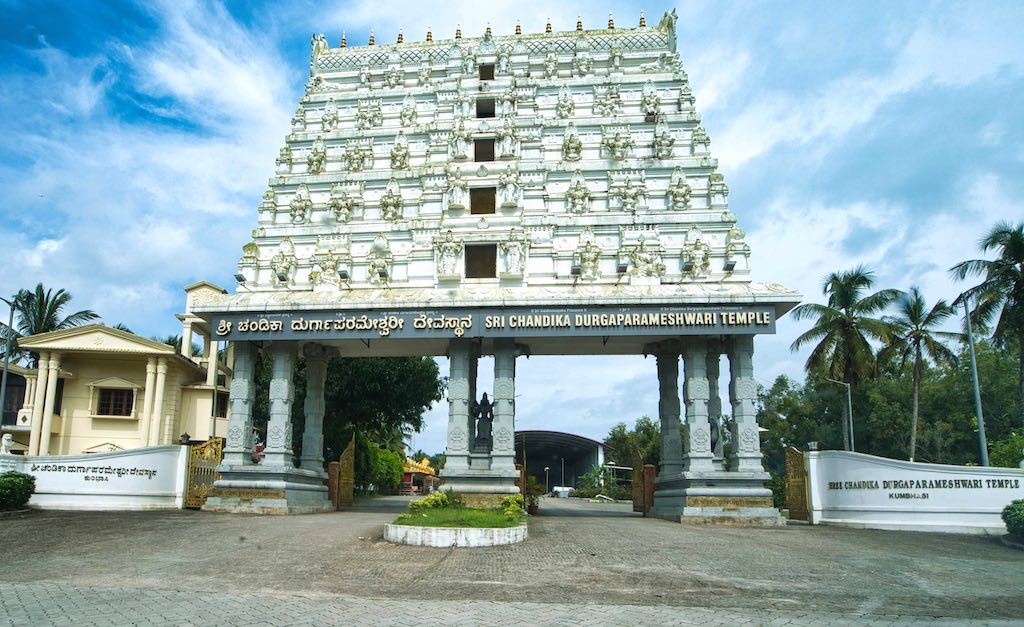
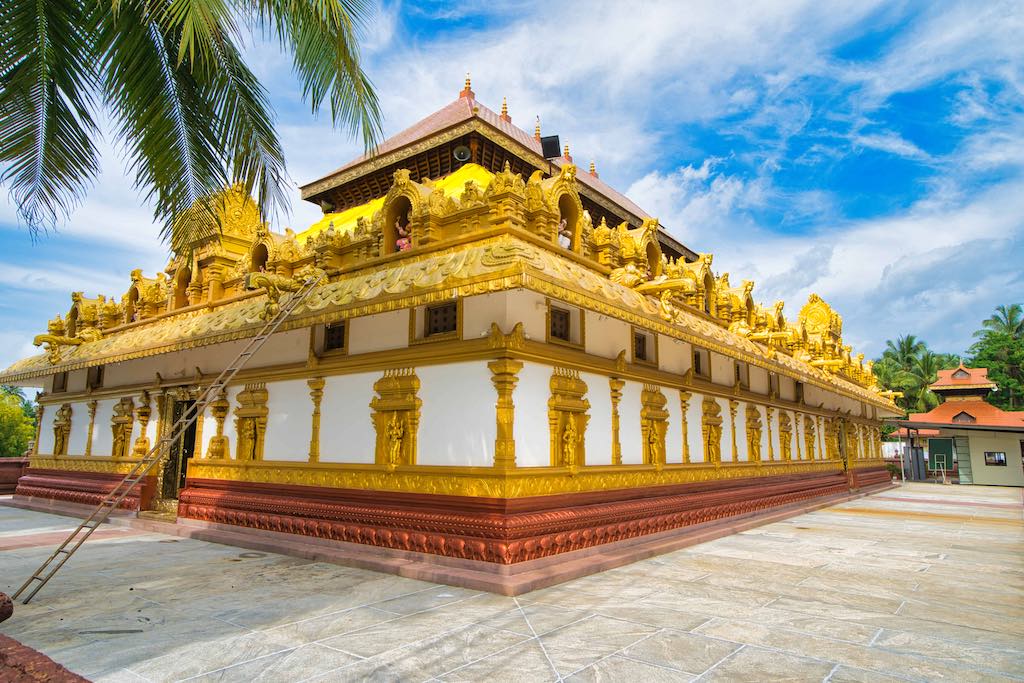
Kumbhashi Durga Temple at Kundapura in Karnataka is a Parashurama Kshetra, and was one among the seven temples founded by Parashuram. The original shrine was known as Goddess Adishakti Mahamaya Sri Chandika Durga Parameshwari Temple.
.
.
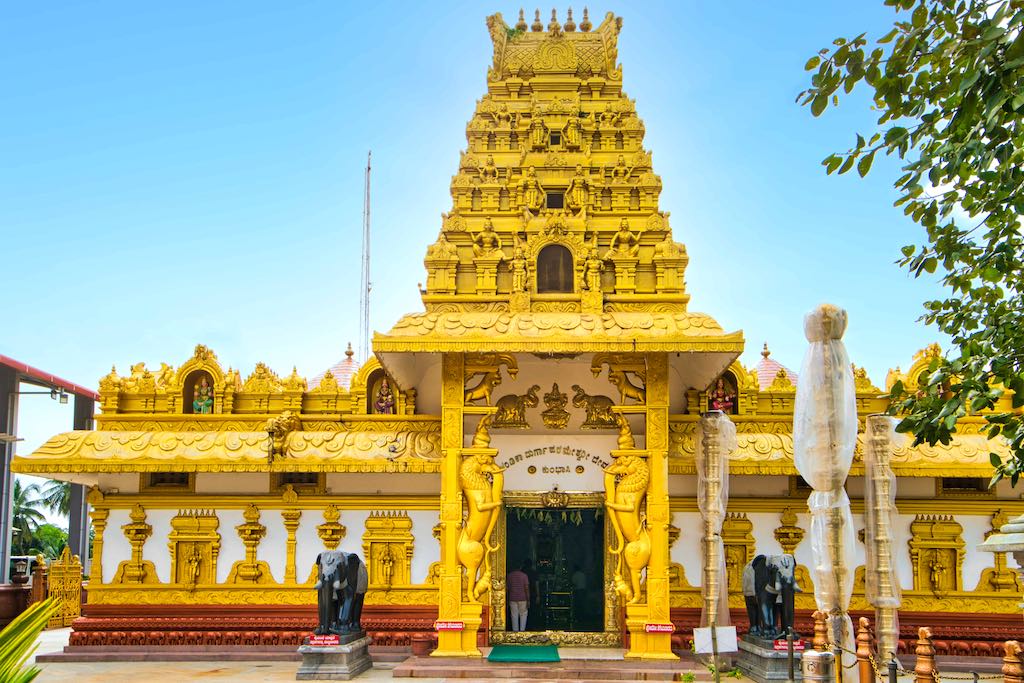
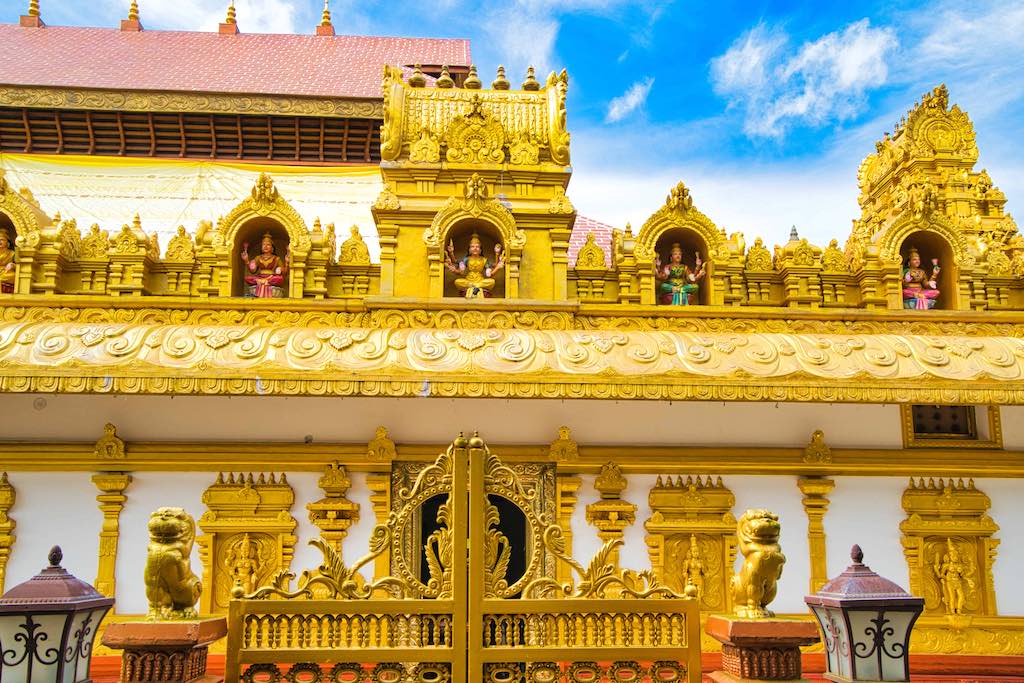
The murti of the Mother Goddess worshipped here is Sri Chandika Durga Parameshwari, seated on the lion’s back, holding the Trishul in the right hand, chakra in the left hand, with Abhaya and Varada Hastas.
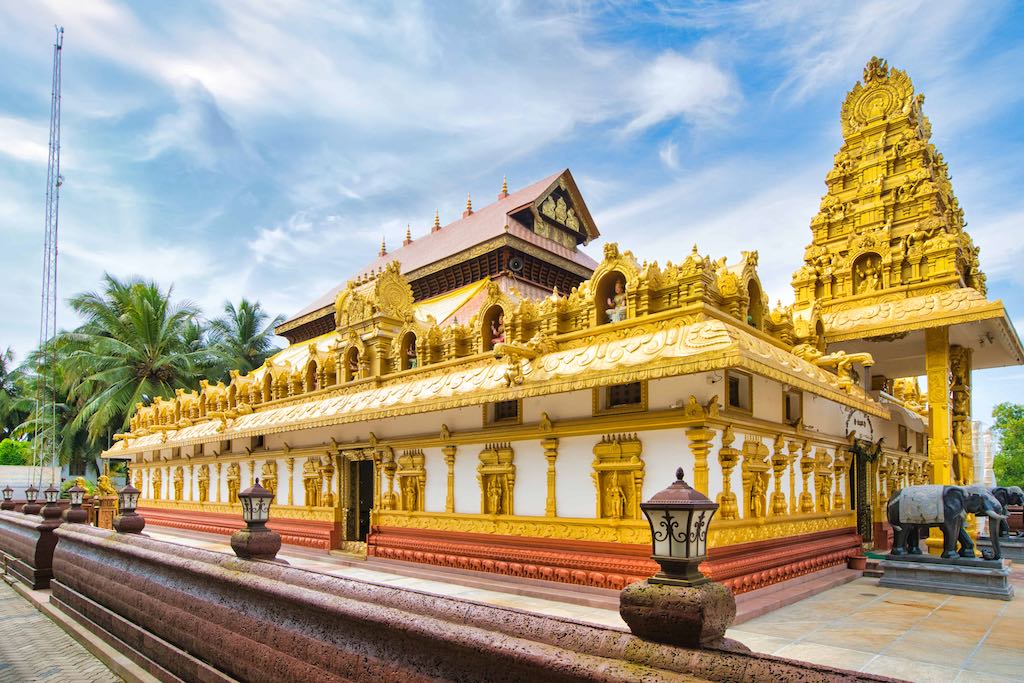
The temple is a new shrine and was consecrated in 2018. The temple is located in Kumbhasi, Kundapur Taluk, Udupi District of Karnataka.
.
.
History Of Kumbhashi Durga Temple
.
Sri Devaraya Manjunath Sheregar, a well-known industrialist, had built a house in Kundapura. In due course, he bought the land attached to it. However, Goddess Shakti began to appear in his dreams telling him that it is Her place and he should build a temple for her on the newly purchased land.
.
.
Through the Ashtamangala Prashna, it was found that the ancestors of the family had been working as soldiers under the kings of the region. On auspicious occasions and during wartime they used to pray to Sri Devi Kalika Mata, keeping down their weapons in front of the Goddess. Sri Kalika Parameshwari was the family deity of the Ramakshatriya community.
.

.
It was also found through the Prashna that the spirit of the Goddess whom their ancestors had worshipped has been protecting Sri Devaraya Seregar and his family throughout and therefore it is his duty to reserve a place for the Goddess. There was also a very close relationship between the land that he purchased and the Hoovinakere Vadiraja Matha. The Brahmin family which lived there earlier used to worship Sreedevi given to them by Sri Vadiraja. Sri Devaraya was a staunch devotee of Kollur Sri Mookambika. Thus the spirits of Sri Mahakali, Mahalaxmi, and Maha Saraswathi dwelt in his house in unison. After the departure of the Brahmin family, the spirit of the Goddess whom he worshipped also settled there.
.
.
Thus it was ordained that a place should be given for all the three deities:
- First – Sri Kalika Parameshwari, Devaraya’s family Goddess.
- Second – Sri Chamundeshwari who came along with him, and
- Third – Sri Durga whom the Brahmin family worshipped.
.
.
Location & Architecture of Kumbhashi Durga Temple
.
- This beautiful temple is located on the Udupi Kundapura highway and is a kilometer before the famous Anegudde Vinayaka Temple.
- The sanctum sanctorum of the temple is built in stone.
- Except for the main sanctum, the interiors are decorated with intricate wooden carvings, influenced by Kerala-style temple architecture.
- The external gopura is gold-plated.
.
Murudeshwar
.
.
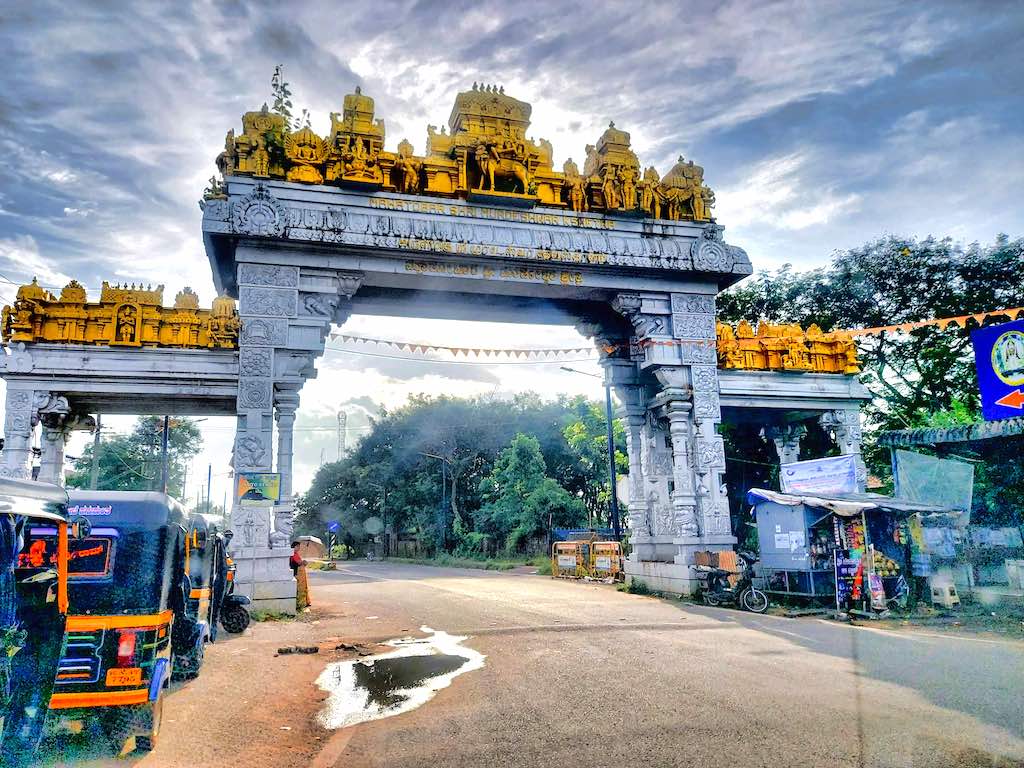
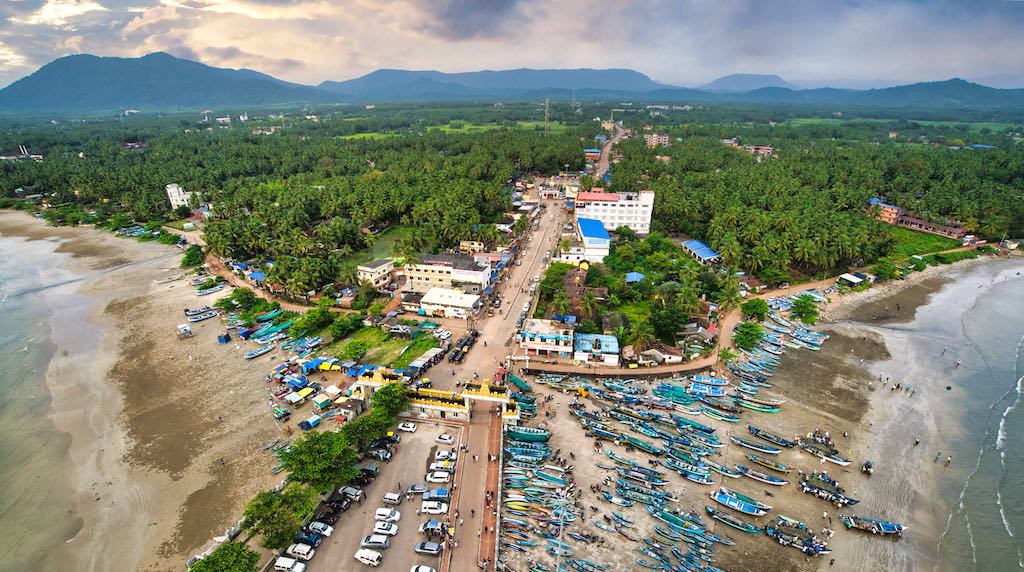
Situated in Bhatkal Taluk in Uttara Kannada district in Karnataka, Murudeshwar is a famous town, where is located one of the tallest Shiva statues in the world. The Murudeshwar temple is just 13 km from Bhatkal and is ideally positioned on the Arabian Sea coast. The stunning statue of Lord Shiva in a sitting position stands next to the Kailashnath Mahadev Statue in Nepal.
.

.
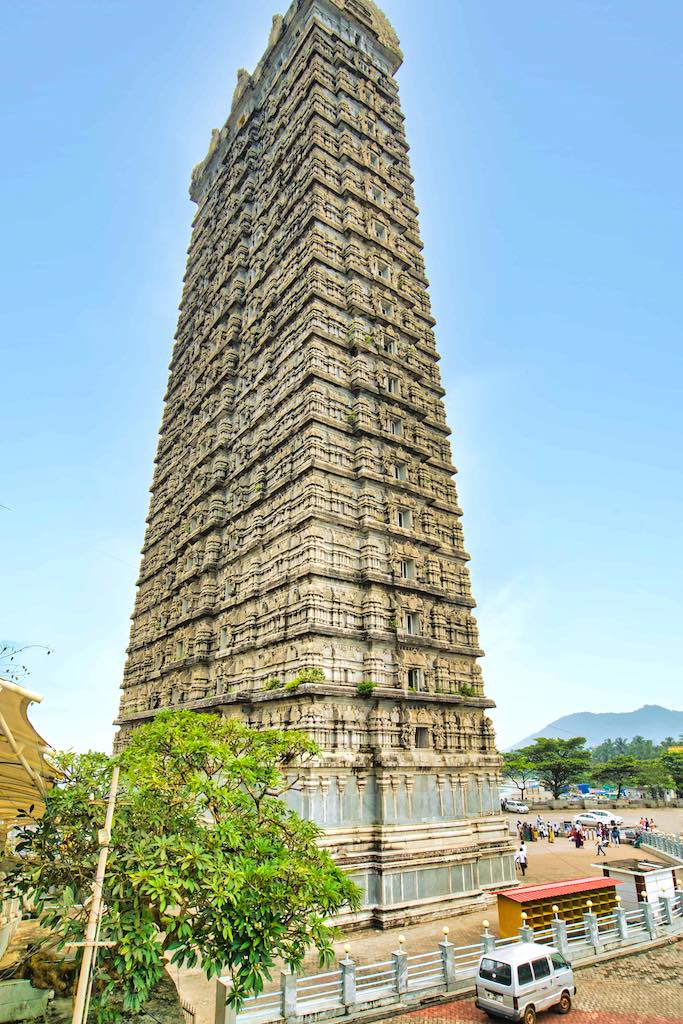
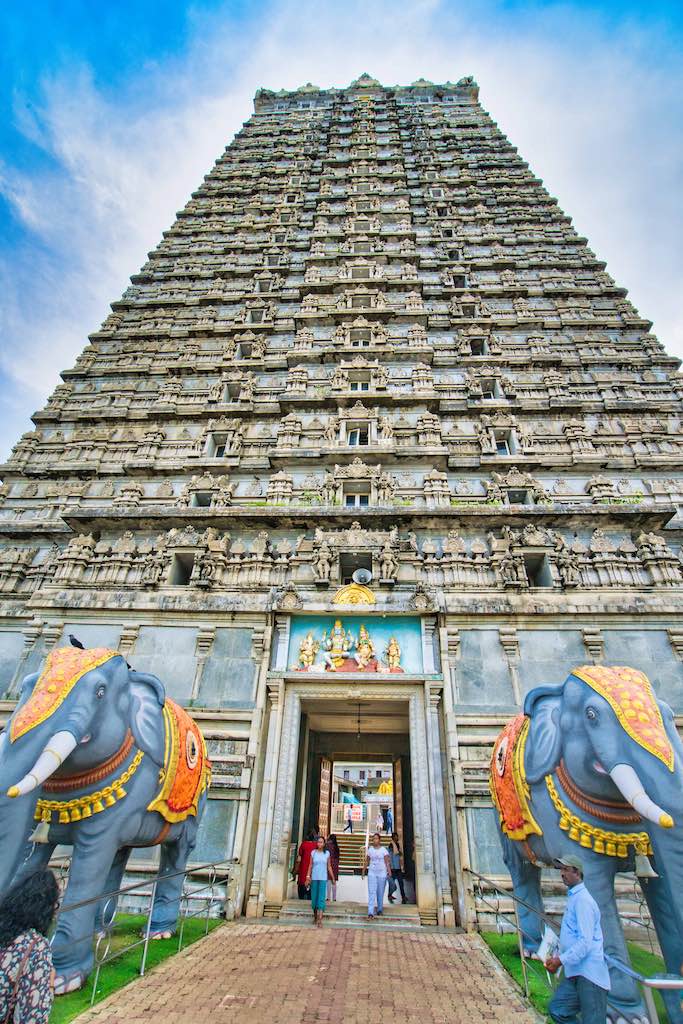
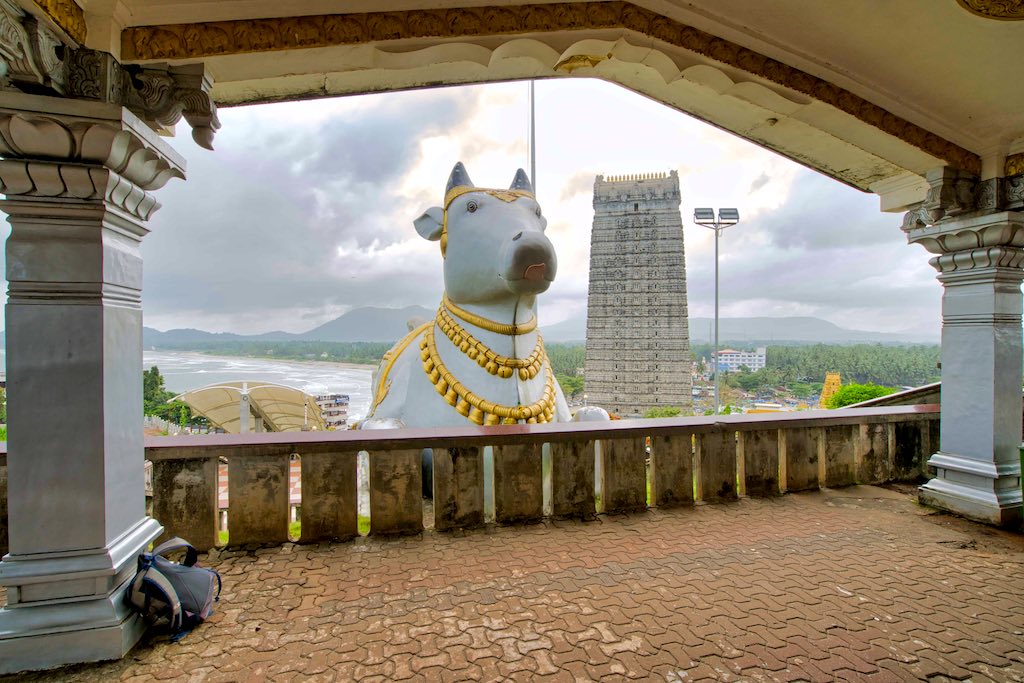
The Murudeshwar temple has the captivating Raja Gopuram (King of Towers), which is 249 feet high having 20 floors. Built on Kanduka Hill, the temple is dedicated to Sri Lokankara and offers scintillating views of the Arabian Sea on all three sides. The Raja Gopuram is climbed by using the elevator. The temple also has a Rameshwara linga below the hill for devotees to offer prayers to Lord Shiva.
.
.


The view of the coastline and the town from the top of the Raja Gopura
.
History of Murudeshwar Temple
.
The history of the Murudeshwar temple has great significance in its origin. The name ‘Murudeshwar’ is believed to have its origin in the time of Ramayana. The gods achieved immortality and indomitability worshipping ‘Atma-Linga’, which is a divine Linga. Ravana, the demon king of Lanka, wished to attain immortality and for this, he performed intense austerity to please Shiva.
.

.
Being the master of Vedas and Shastras, Ravana’s devotion and intense prayers for years pleased Maheshwara. He appeared before Ravana and asked him what he wished for. Ravana asked for the Atma-Linga, which Shiva agreed to give; he also made a condition that Ravana should carry it without placing it on the ground. In case he does, it will get stuck to the ground at that spot.
Delighted, Ravana started his journey back to Lanka carrying the Atma-Linga. Vishnu knew that Ravana would use the Atma-Linga for obtaining immortality and invincibility and destroying the world. To prevent this catastrophe, he met Ganesha and asked him to stop Ravana. Ganesha knew that Ravana never failed to perform rituals in the mornings and evenings, and decided to trick him so that he cannot carry the Atma-Linga to Lanka. The divine minstrel, Narada Muni played the messenger in conveying the messages between the gods.
Do you know that when Shiva appeared to grant a boon, pleased with Ravana’s austerities, Ravana with his ego asked for Parvati’s hand!! Read what transpired in the blog on Gokarna!
.

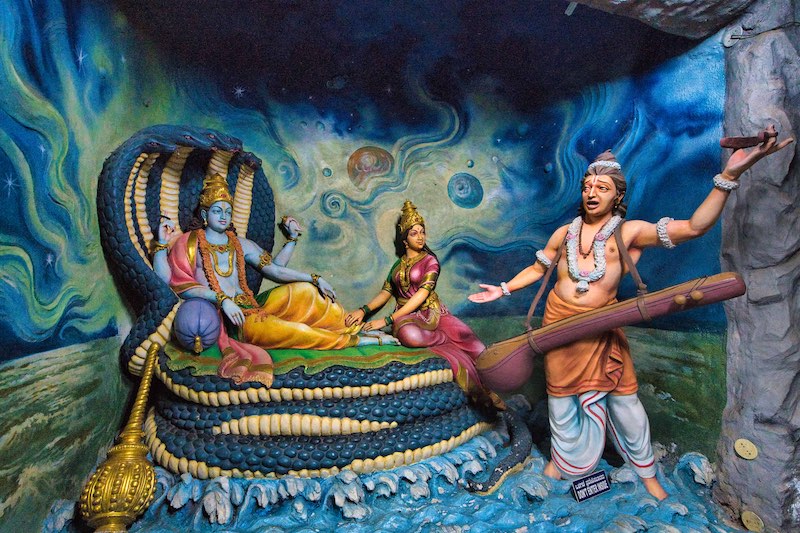
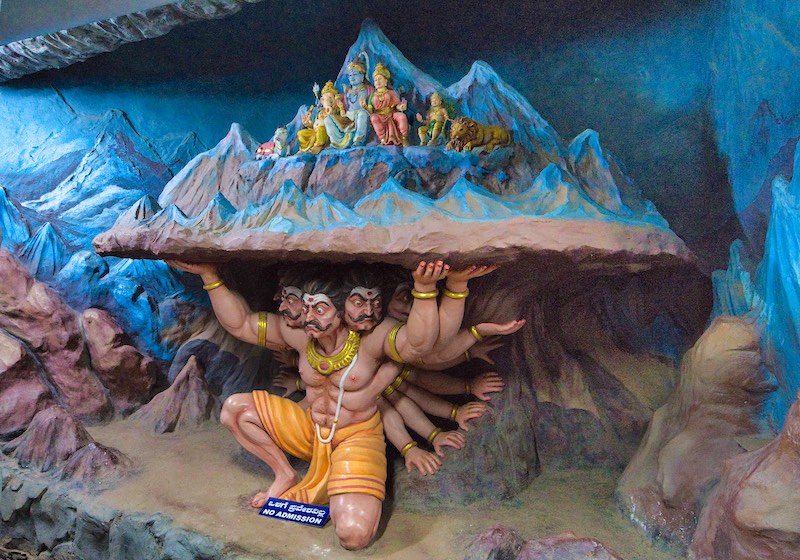
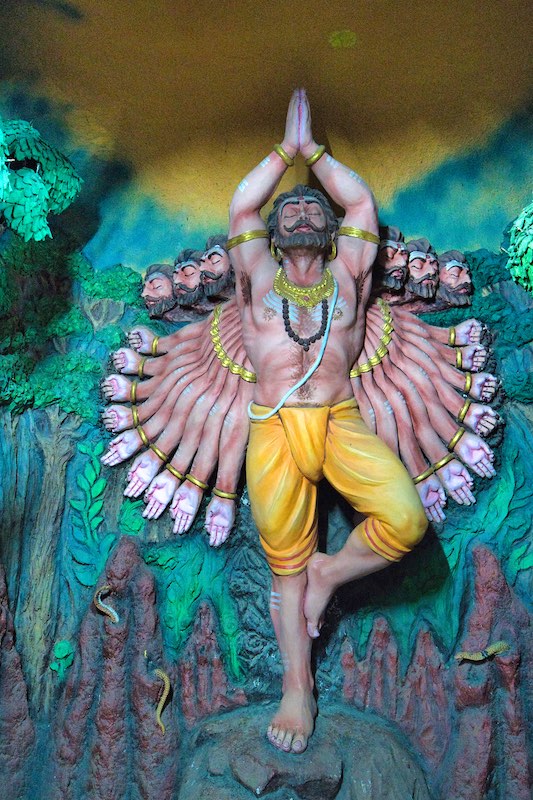
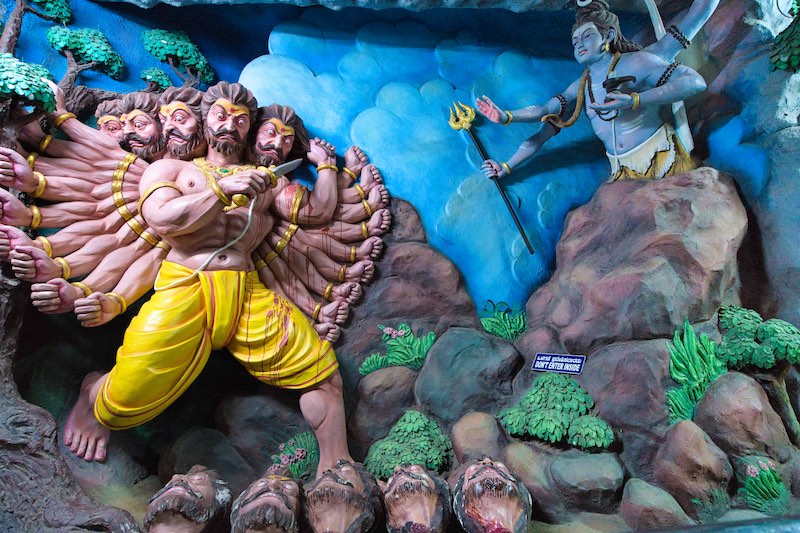
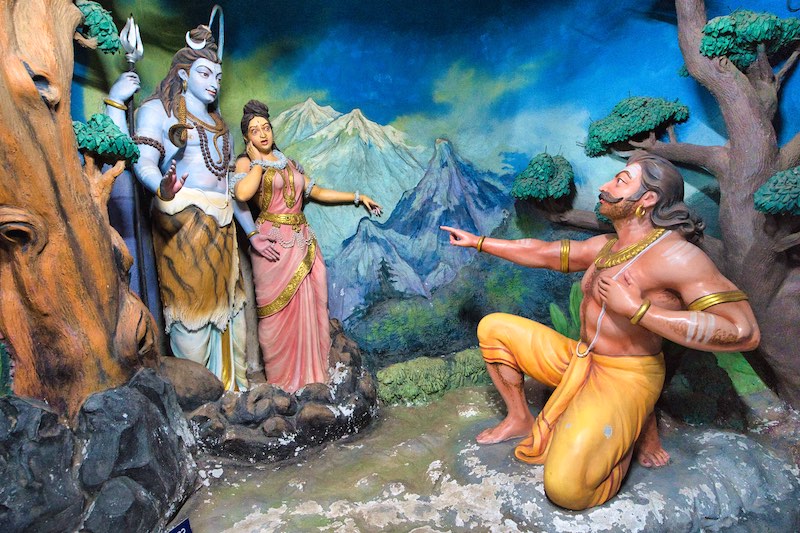
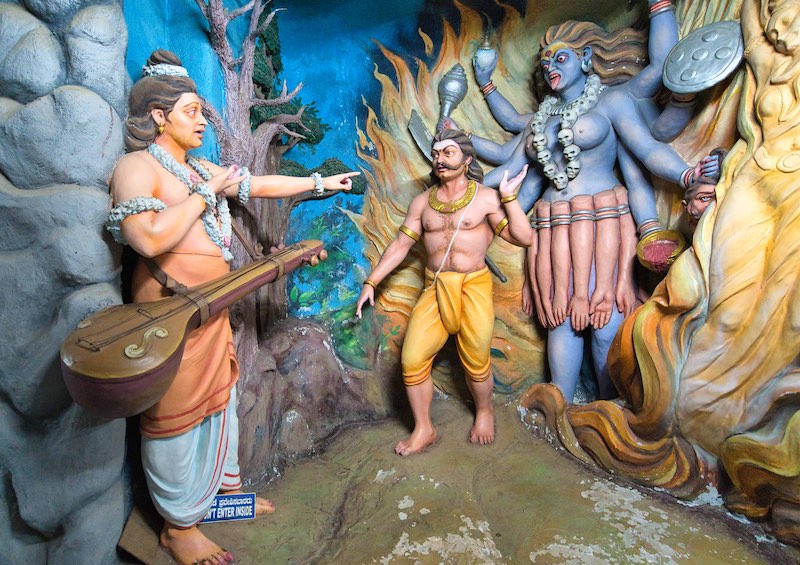
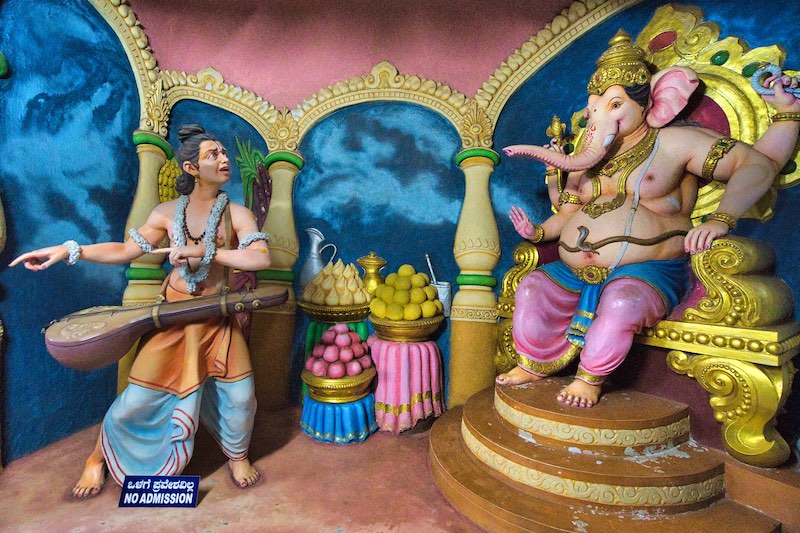
The story of Atma-Linga displayed in the gallery from the time when Ravana undertook intense prayers to obtain the Atma-Linga as a boon from Shiva, till he tried to break the same Linga when he realized he was tricked to prevent him from getting it to Lanka
.
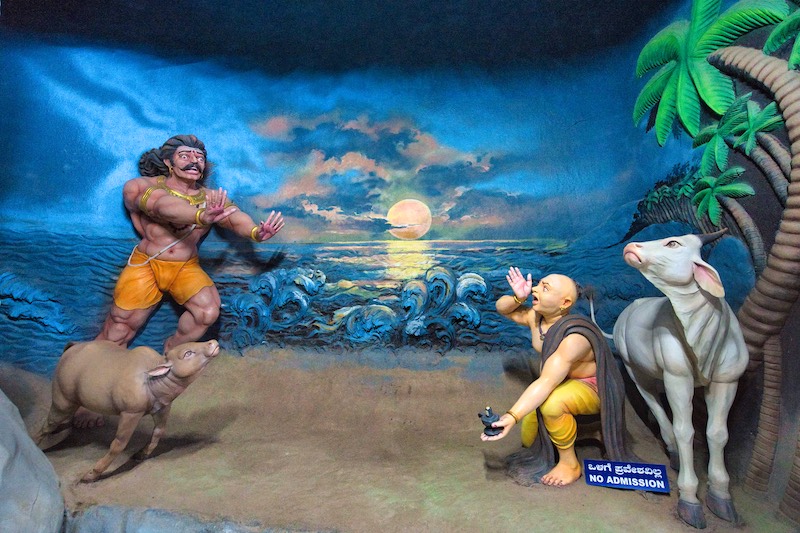
When Ravana reached Gokarna, he saw the sun setting and it was going to be dusk. He was actually misled by Vishnu, who had hidden the sun with his Sudarshan chakra. Ravana looked around for help to perform his prayer rituals. Ganesha approached him in the guise of a Brahmin boy. Ravana sought his help to hold the Atma-Linga until he had performed his rituals.
He however warned Ganesha not to place the Linga on the ground. Ganesha agreed to his request, but with the condition that he would call Ravana thrice if he had to place it on the ground. When Ravana had gone to perform the rituals, Ganesh called out his name thrice rapidly at a time when Ravana could not leave the ceremony in between. Ganesh then placed the Atma-Linga on the ground and vanished from there with his cows. Ravana tried to chase them but got hold of only one of the cow’s ears. The rest of the cow’s body disappeared and he was left only with the ear in a petrified form.
By then, the sun reappeared when Vishnu withdrew his chakra. Ravana saw the bright sunlight and understood that he had been tricked by the Gods.
.


.
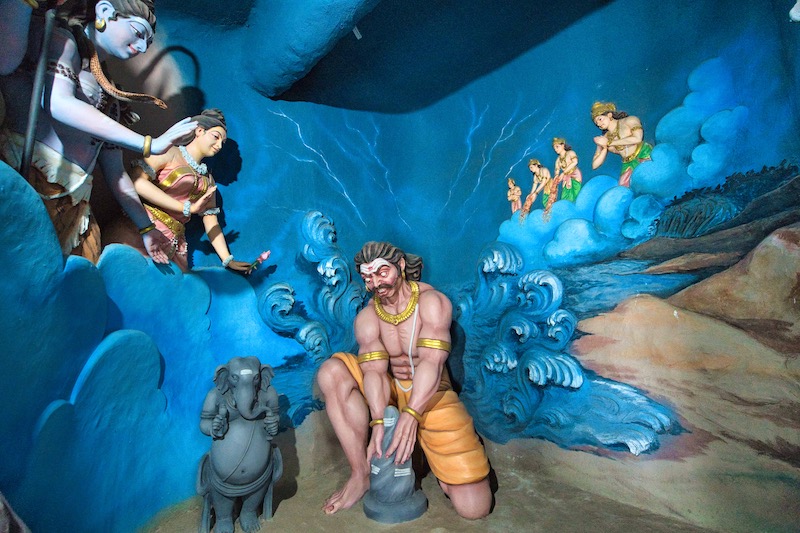
He became furious. He tried to uproot the Linga with all his might but did not budge. The linga’s shape now looked like a cow’s ear. Hence, the place is known as Gokarna – Go means cow and karna means ear in Sanskrit. The crestfallen Ravana was deeply upset and beat the murti on the head. In anger, he pulled and threw the case of the linga, which fell 23 miles away at Sajjeshwar. He threw the lid to the south 27 miles away, which landed at Gunteshwar in the form of “Vamdev Linga”. He threw the cloth wrapped to the linga to the south, 32 miles away at Kanduka hills. It took the form of “Aghora” at Mrideshwar located in Kanduka Giri. This Mrideshwar later became Murudeshwar. The thread winding the murti was flung to the south and landed at Dhareshwara, where it came to be known as “Tathpurusha Linga”.
The Atma-Linga was now rooted in Gokarna and was immovable. Ravana then gave the name “Mahabaleshawar” to the Atma-Linga meaning “all-powerful”.
Shiva learned all this from Vayu, the God of the Wind. He came on earth with Parvathi and Ganesha and visited all these five places and worshipped the Linga. He declared that these would be his Panchakshetras and those who worshipped the lingas at these places would be free from all sins and their wishes would be fulfilled and they would ultimately reach the abode of Shiva.
.
The Architecture of Murudeshwar Temple
.
.
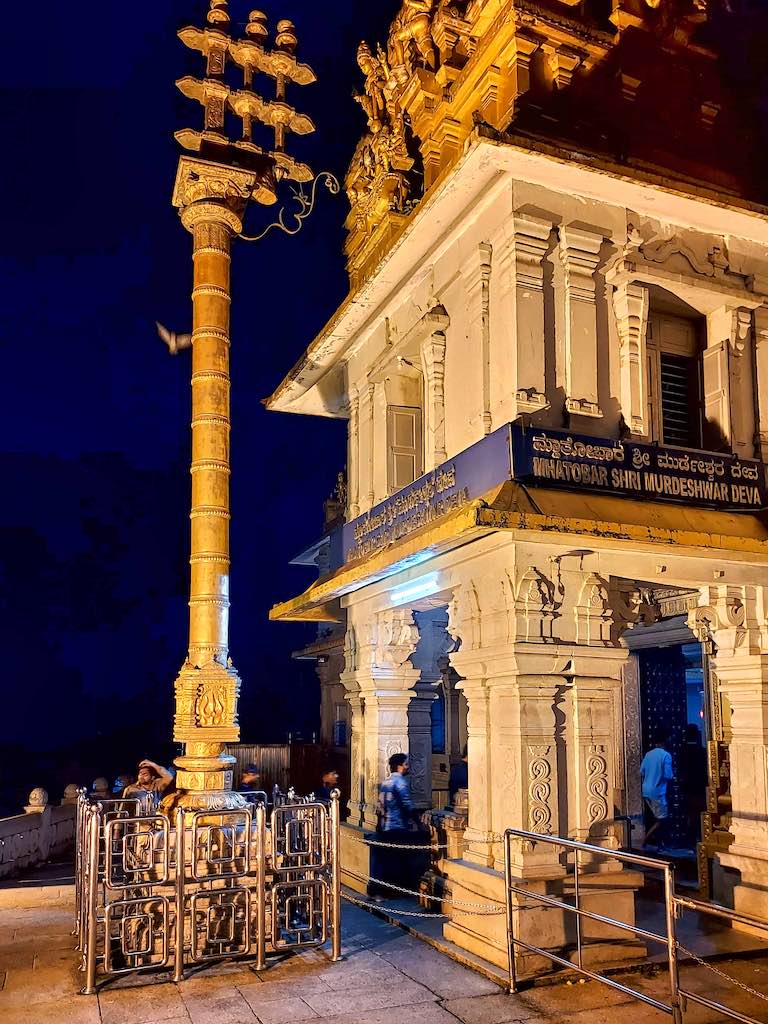
The Murudeshwar temple and the Raja Gopuram, as well as the Shiva statue, have been recently constructed. The Rameshwara linga is at the bottom of the hill. The main deity is Sri Mridesa Linga, also called Murudeshwar. The Linga is believed to be a piece of the original Atma-Linga and is about two feet below ground level. A Shaneswar temple has been built next to the idol of Sri Akshayaguna.
.


.
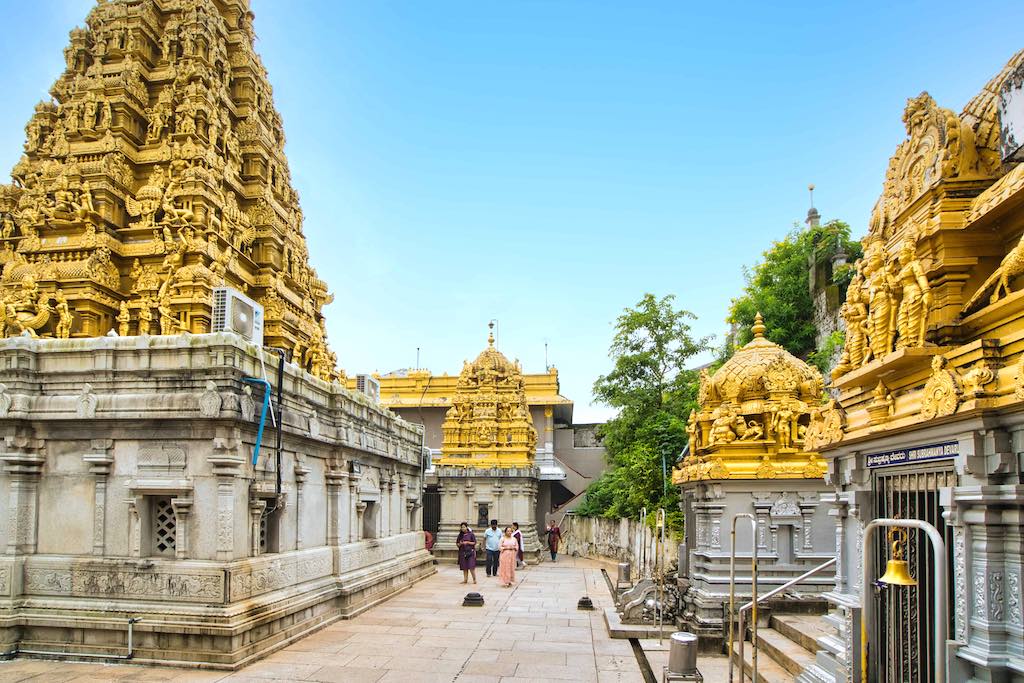
The temple plan is square-shaped, with tall and short spires, which are of kutina design. They have a pyramidal shape. There is a parapet of mini shrines and a dome-shaped cupola on the top of the tower, as well as a finial.
.
.
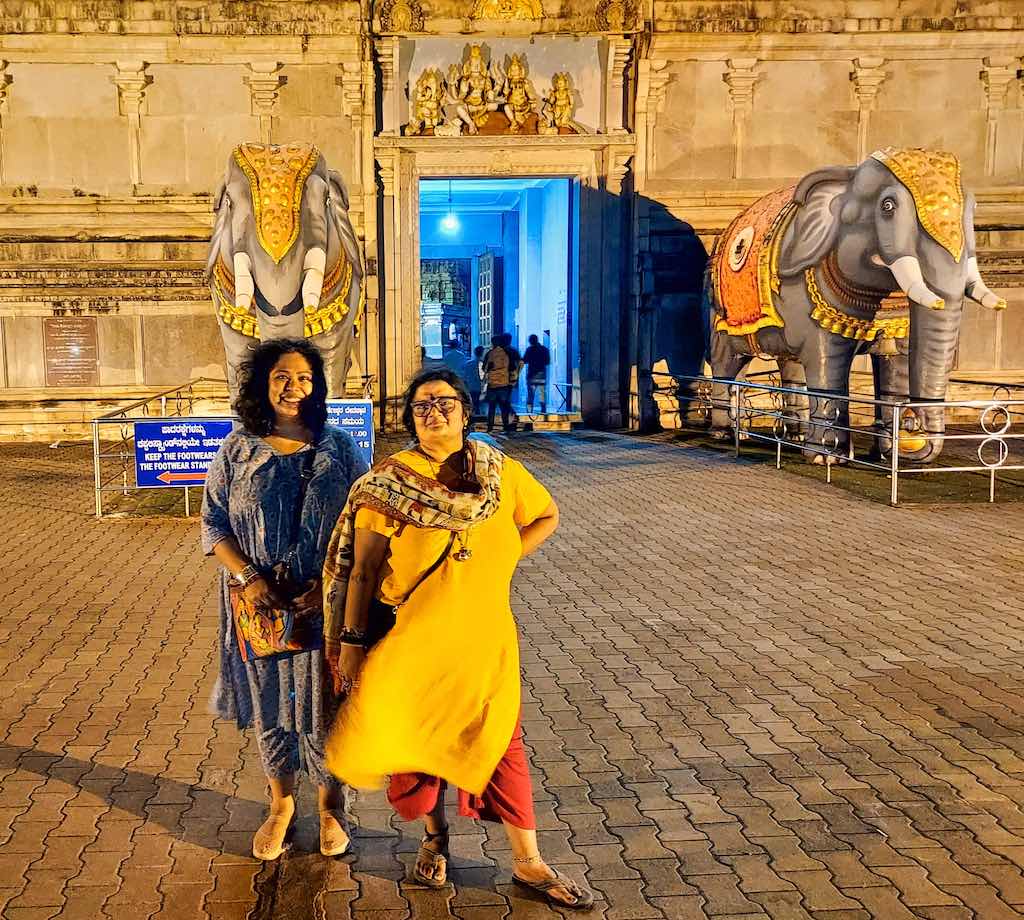
The temple has been built with Chalukya and Kadamba sculptures in the Dravidian style. The temple is built of granite. It has a 20-storey high Gopura guarded by two life-size concrete elephants at the steps leading into the temple. The tower is 249 feet tall and is considered the tallest Gopura in the world. The entire temple complex, including the Raja Gopura was constructed by businessman and philanthropist Mr. RN Shetty. Murudeshwar temple at one stage had started to collapse and hence there was a requirement for renovation. The locals tried rebuilding the sanctum sanctorum earlier, but it did not last long. Sri. RN Shetty then started renovation in 1977 with a team of craftsmen and artisans brought in from Tamil Nādu.
.
.
The Kanduka hill on which the temple is situated is surrounded by the Arabian Sea on three sides.
.
Statue Park
.

.
.
The Statue Park consists of two parts. The first part has the huge 123 ft high Shiva, which took two years to build. There are also statues of Geetopadesha, Ravana with the Ganesha in the disguise of a shepherd boy and the cow, the Sun God in his chariot, and the Golden chariot of Arjuna with Krishna in the front. These are all huge statues.
.

.
The second part is the series of statues inside the cave Museum under the Shiva statue. The colourful statue gallery tells the story of Murudeshwar, of Ravana getting the Athma-Linga from Shiva, asking Parvathi’s hand, Ganesha trying to get the Atma-Linga in the disguise of a shepherd boy, etc. The gallery is well-illuminated and has running audio commentary. It is worth visiting.
There is a huge fort behind the temple, said to have been renovated by Tipu Sultan.
.
Festivals Celebrated at Murudeshwar Temple
.

.
Being a temple dedicated to Lord Shiva, the temple celebrates Maha Shivaratri, which falls in the month of February or Phalgun. It is said that the popular Shivaratri falls on the fourteenth day or ‘Chaturdashi Tithi’ of ‘Krishna Paksha’ every month. Devotees, on this day, visit the Murudeshwar temple and offer prayers to both Lord Shiva and Goddess Parvathi.
.

.
Another festival celebrated here is Karthik Purnima and this is conducted in November or December. A legend says that Lord Shiva destroyed the three magical cities built by the demon Tripurasura and another legend says the festival signifies the birth of Sri Murugan, the son of Lord Shiva.
.

.
Maha Ganapati Temple Idagunji
.
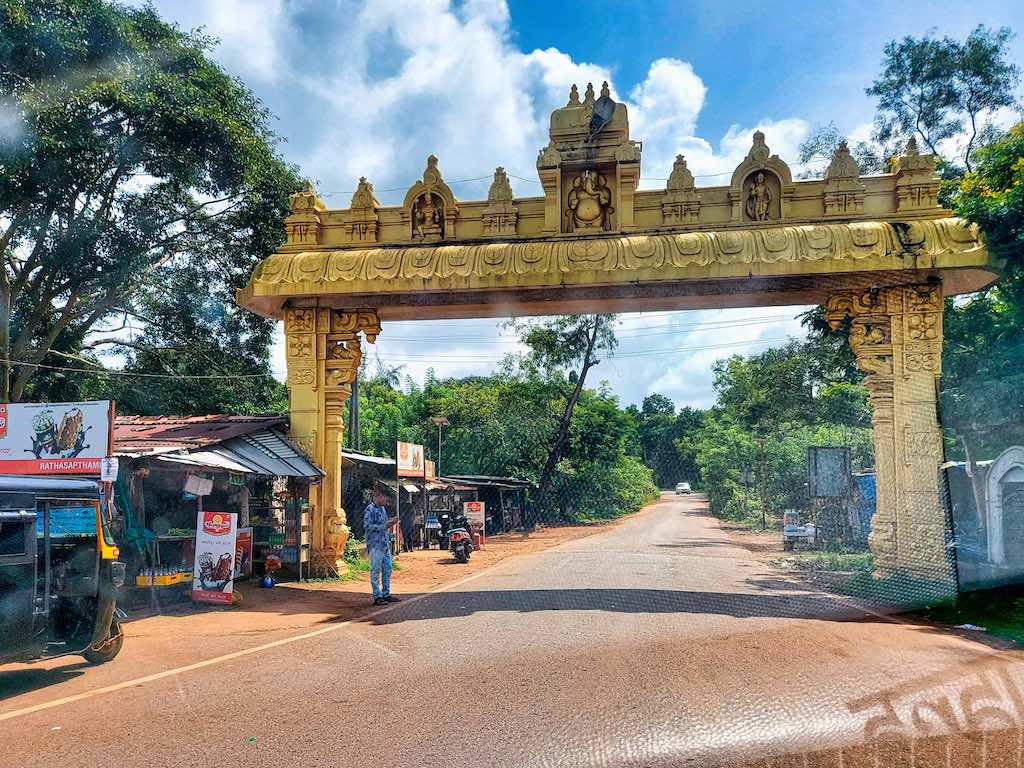
The naughty, powerful, witty Ganesha is unique even in his looks. For Hindus, no prayer or work can start without Ganesha’s invocation! Such is the affection and belief we have for him.
.
.
The Shri Idagunji Maha Ganapati Temple is dedicated to the Ganesha, It is one of the religious destinations near Murudeshwara. It is located in Idagunji town on the Karavali coast. The temple’s popularity as a religious place is recorded by about 1 million devotees visiting it annually. The temple was constructed around the 4th-5th century.
It is one of the six famous Ganesha temples on the west coast of India, which is also popularly called the “Ganesha Coast”. The importance of Edakunj kshetra has been mentioned in the Sahyadri Khand of the Skandapuran. ‘Eda’ (Wamnadi) means ‘to the left’ and ‘kunj’ means garden. The place thus got its name, as it is located on the left bank of the river Sharawati.
.

.
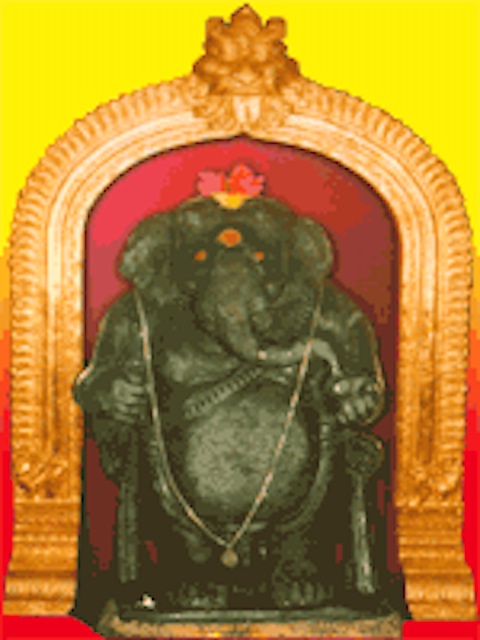
The temple is quite big. The Lord Vinayaka murti is in a standing position, is a rare posture, with extremely short legs, and has a depression on the head. The “Dwibhuja Ganapathy” or two-handed Ganesha is holding Modaka and Padma (Lotus) in his hands. The murti is of black stone.
Idagunji is located in a small village on the west coast of India close to the Sharvathi River which joins the Arabian Sea. It is close to Manki (Mavinakatte) and is about 14 km from Honnavara, 65 km from Gokarna, and 5 km inside the jungles from a road that branches from National Highway 17.
.
Legend and Historical Significance
.
At the end of Dwapara Yuga, great rishis were praying to the Sutha-Pouranika at Badarikashrama. Shri Krishna had implied to eliminate the impending doshas of ‘Kaliyuga’. The divine saint, Valakhilya initiated narrating the significance of Kunjavana.
Valakhilya along with other immortal Rishis were performing penitential activities in a forest. They started experiencing hindrances in these activities. The rishis were agitated by these obstacles. To seek solace, the rishi prayed to Krishna. Narada then approached Valakhilya. Valakhilya explained the situation to the divine Rishi and requested him to suggest a solution to deal with the obstacles. Narada advised him to pray to Vigneshwara (the remover of obstacles) before starting penance again.
Valakhilya requested Narada to show him an appropriate place to worship the deity. Narada along with Valakhilya and other rishis wandered westward in search of a suitable place. They came across the Sharavati River which gracefully caressed and merged with the ocean.
.

.
Narada marked the exact place, which was located a few miles to the left of Sharavati. The place was named Kunjaranya. To add up to the significance of the place, Narada explained that in the past from time to time the Holy Trinity – Hari, Har, and Brahma had come to this place for penance for the destruction of the asuras (demons). They also created lakes called “Chakratirtha” and “Brahmatirtha”.
After this Narada, with the help of the rishis made another lake named “Devatirtha”. He then offered to bring Ganapathi (Vinayaka) along with other deities, including the Holy Trinity. Narada approached Brahma, Vishnu, and Maheshwara to attend the “Puja” at Kunjaranya offered by the rishis. He also took the liberty of requesting Parvathi to send her son, Ganapathi to the rishis for removing the obstacles.
Narada’s request led all the deities and Ganapathi to attend the grand yagna. The temple dedicated especially to this purpose was decorated with enormous glittering diamonds and stones. Ganapathi received the rites, rituals, and ceremonious formalities.
The rishis and divine beings chanted hymns in praise of Lord Ganapathi. Ganapathi, magnificently attired, was holding “Modaka” and “Padma” in his hands. Immensely pleased by the devotion showered on him, Ganapathi expressed his desire to grant the wishes of his devotees. The other deities were honoured with similar devotion. They also blessed the worshippers. The other deities then expressed their desire to go to their dwelling places. Ganapathi announced his decision to stay to gratify the desires of his devotees. He also requested the deities to leave behind a part of their omniscient power in the various existing lakes.
.
.
The devotees can have their wishes answered by taking a dip in the different tirthas and by offering pujas to Him. A lake was bestowed to provide water for bathing at Ganapathi’s request. It was named “Ganeshtith”. Thus, according to this Purana, Ganapathi remained in the place of Kunjaranya, which is now renowned as Idagunji.
Mhatobar Shree Vinayaka Devaru has been granting the wishes of millions of people who regularly visit this place every year. Interestingly, there are a total of six temples on the coast, between Gokarna and Kasargod, all of which show Ganesha in the same posture. These temples are located at Idagunji (66 Km), Anegudde (150 Km), Hattiangady (142 Km), Mangalore (Sharavu Mahaganapathy, 230 Km), and Kasargod (Madhur Mahaganapathy 280 Km).
Panchakhadya is prepared for Lord Ganapathi, a special prasada of this temple.
.
Shri Gunavanteshwar Temple Gunavante
.
.
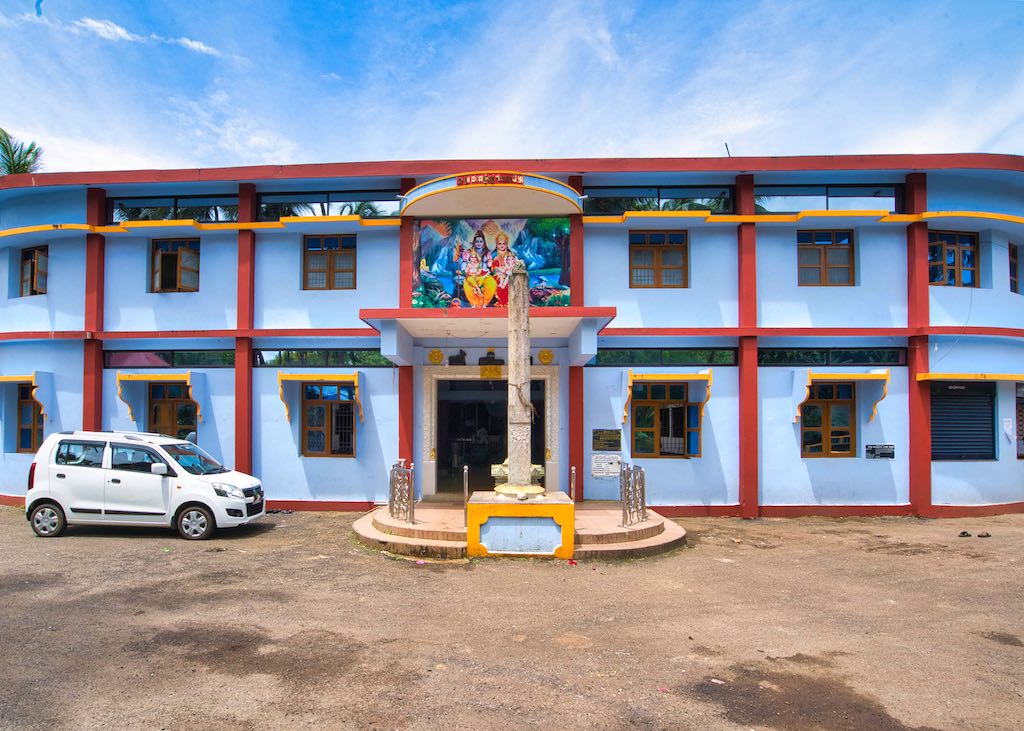
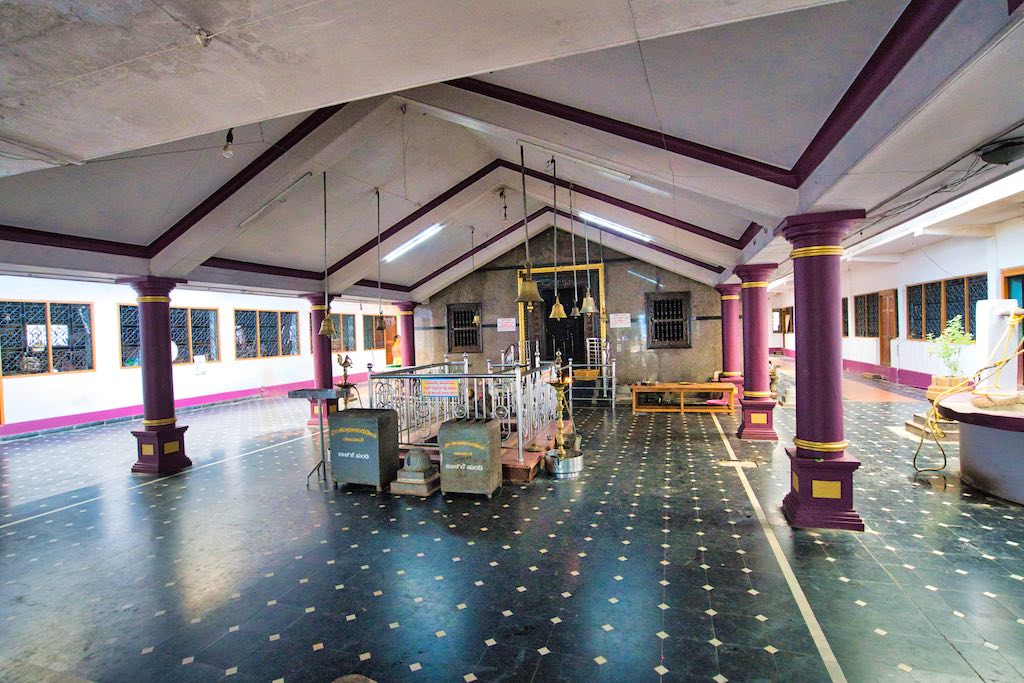
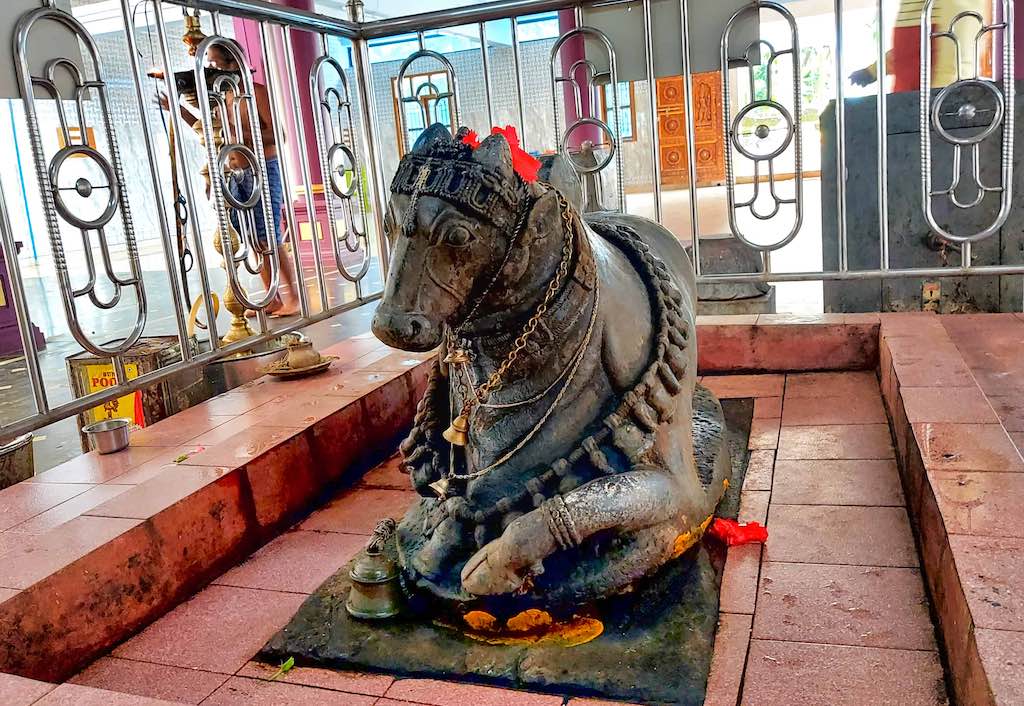
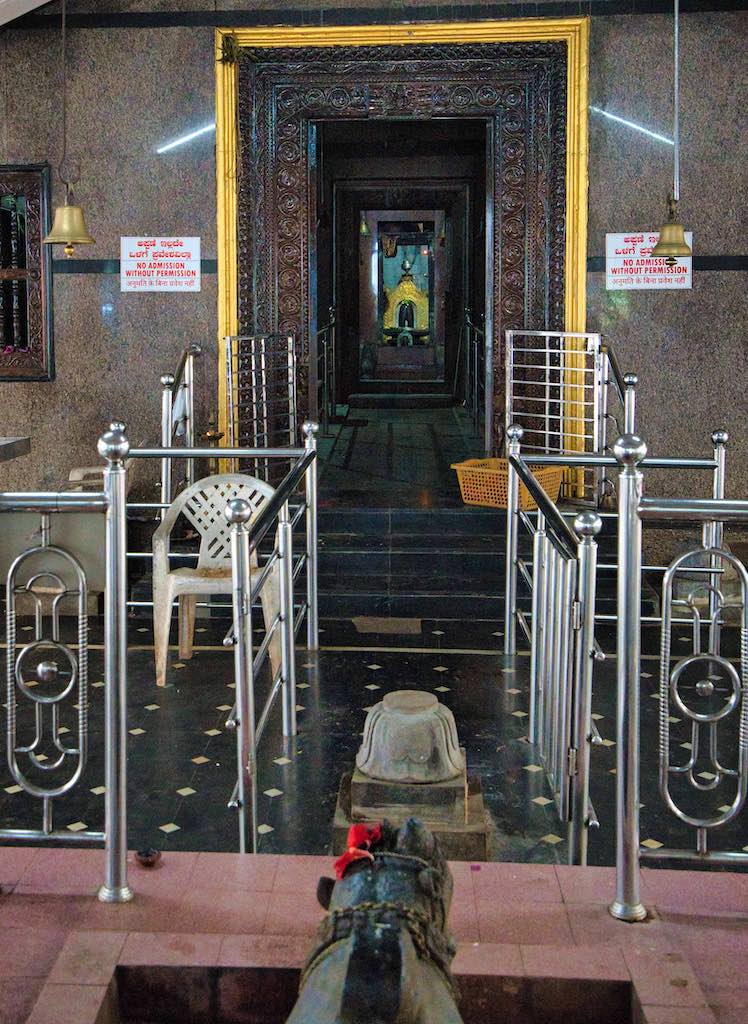
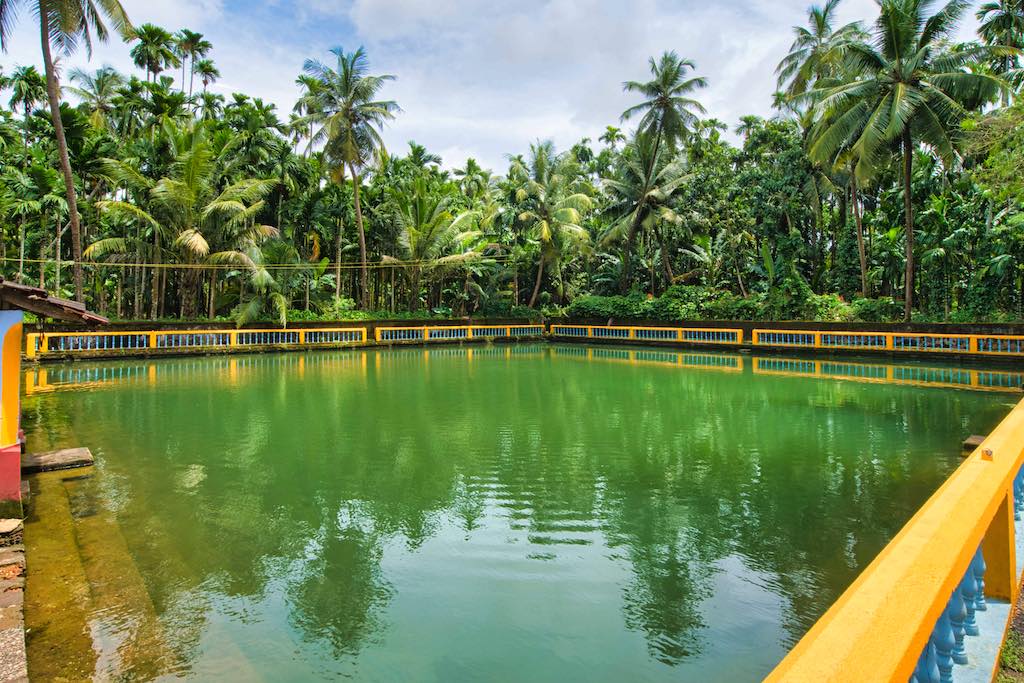
The Shri Gunavanteshwar Temple is located at Gunavante, half a kilometer off NH17. It is at a distance of 18 km from Murdeshwar and just 4 km from Idagunji Ganesha Devasthaana. This is one of the Pancha Linga Kshetras. This is a big temple and well-maintained. This temple has a huge pond nearby.
.
.
“Guneshwara” is another name for Shiva. The temple is also called Shambhulingheshwara Kshetra by the locals.
.
.
When Ravana came to know he had been tricked and the Atma-Linga had been placed on the ground, he tried to destroy the Linga in his anger. Though he could not budge it, some pieces landed in nearby places. This is the place where the lid of the casket, in which the Athma-Linga was carried, fell. Ravana flung off all the accessories the Linga had, and as each of them touched the ground, they turned into a Linga.
.
.
The present temple building is from the late 20th century, though the location is from a bygone epoch – Treta Yuga where ancient temples existed in the past.
Devotees visit the temple in thousands on Mahashivaratri day.
.
Shri Dharanath Temple Dhareshwar
.
.
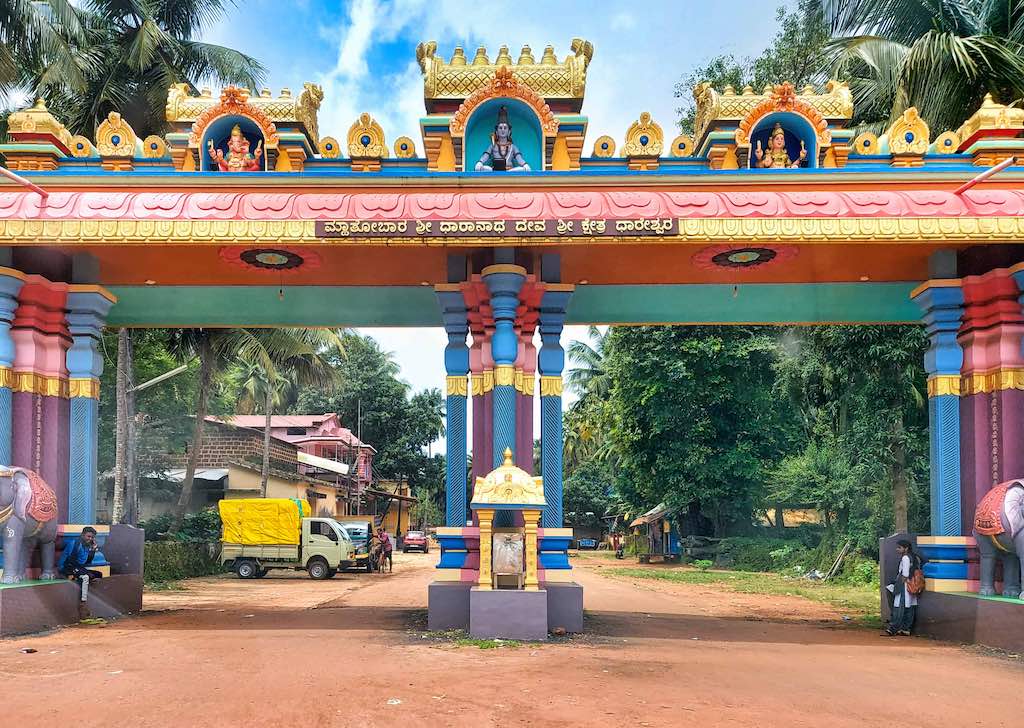
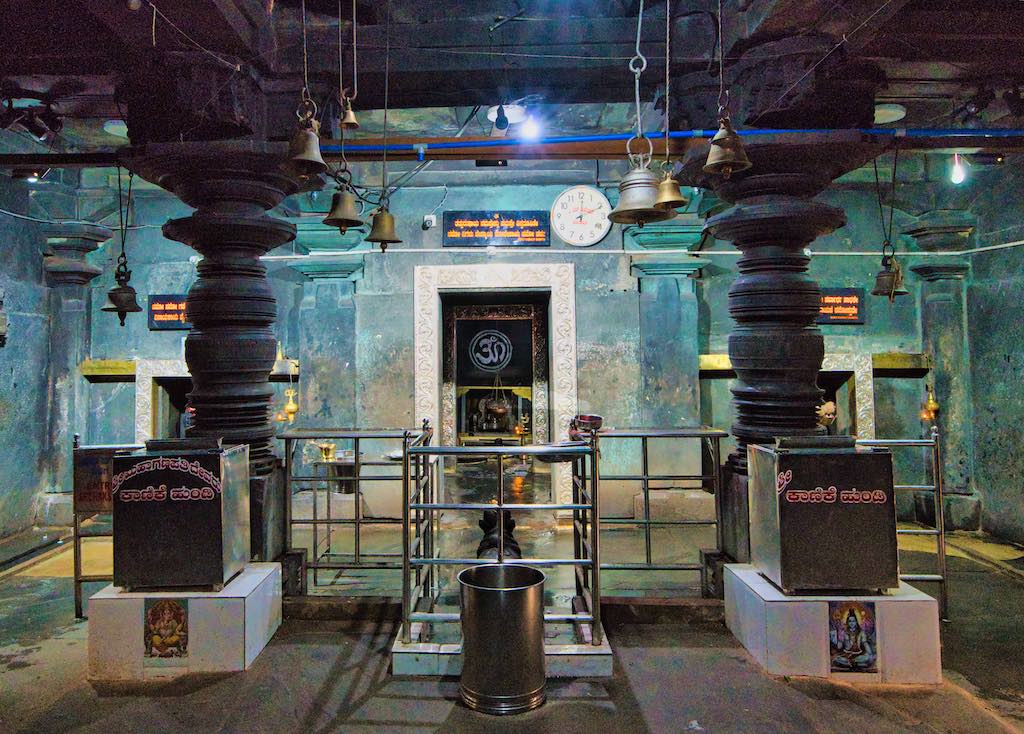
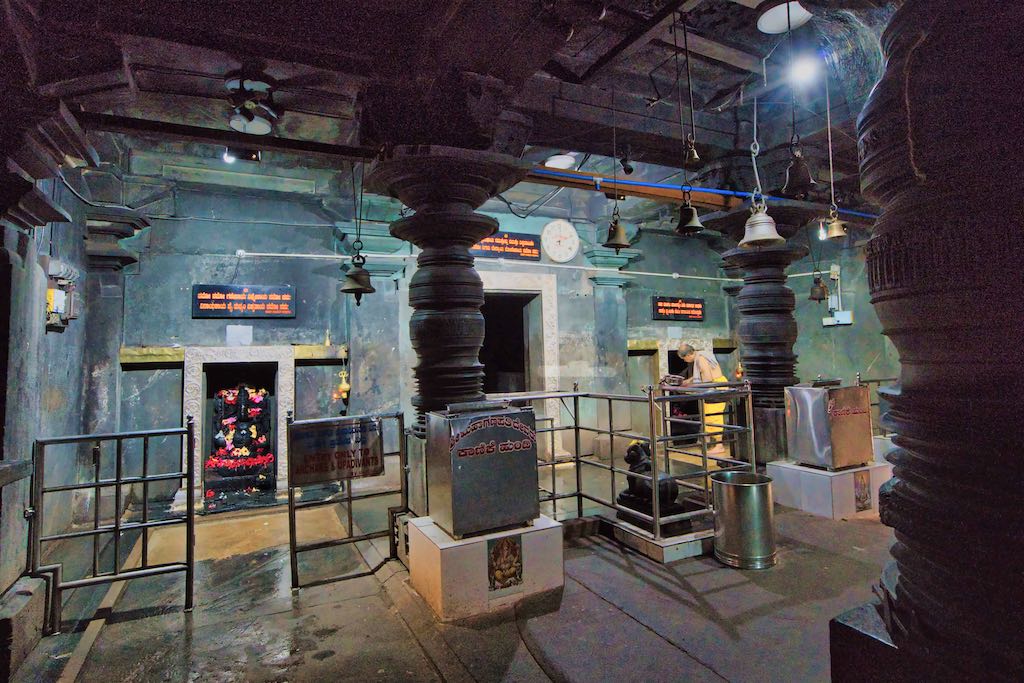
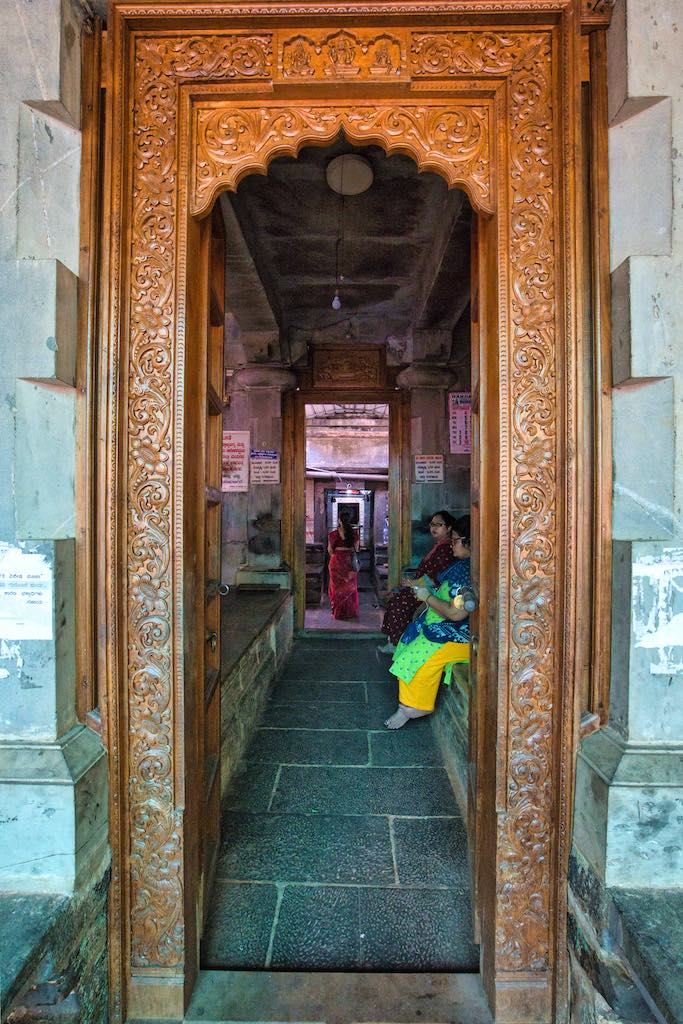
Shri Dharanath Temple is located at Dhareshwar, at a distance of 40 km from Gokarna and 47 km from Murdeshwar. It is located in serene surroundings though very close to the National Highway.
.

.
It is one of the Pancha Aathmalinga Kshetras. The five Lingas are Mahabaleshwar-Gokaran, Sajjeshwar-Karawar, Gunavnteshwar-Gunavante Honnavar, Dhareshwar-Dhareshwar, and Murdeshwar-Murdeshwar.
.
.

.
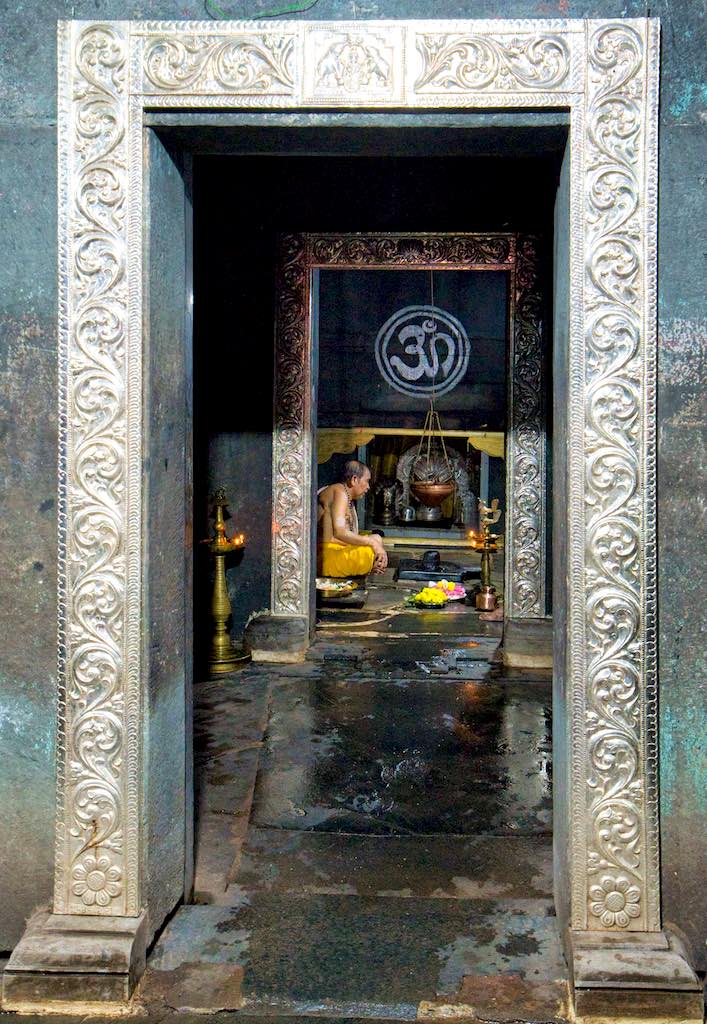
When Ravana came to know he had been tricked and the Atma-Linga had been placed on the ground, he tried to destroy the Linga in his anger. Though he could not budge it, some pieces landed in nearby places. The poonal of the Mahabaleshwar Athma-Linga was flung south by Ravana and landed at Dhareshwara, which came to be known as “Tathpurusha Linga”.
.
.
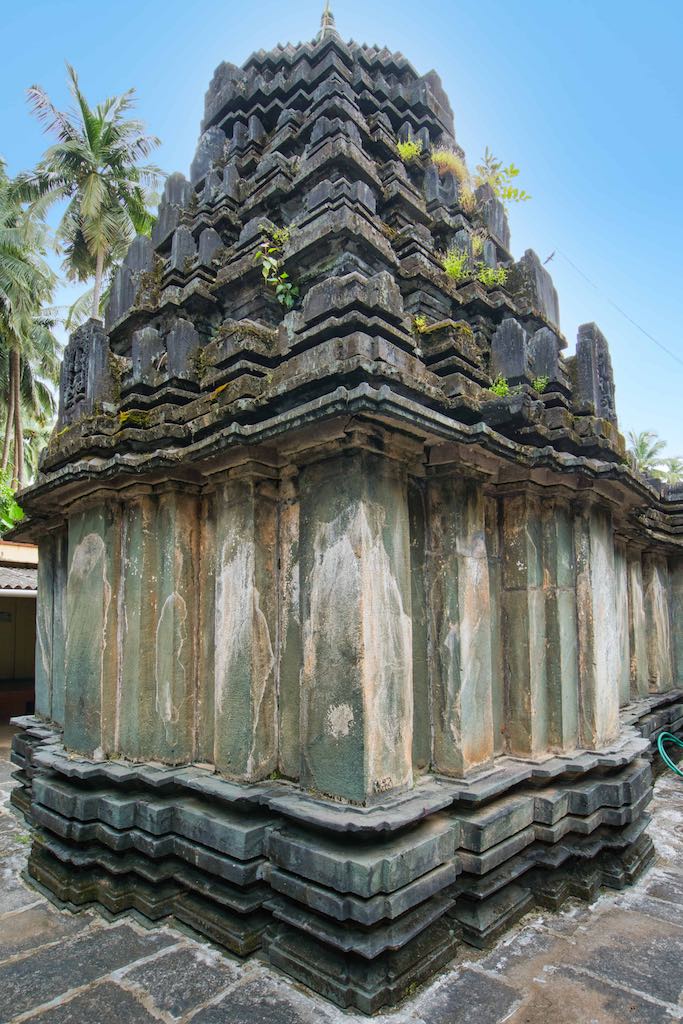
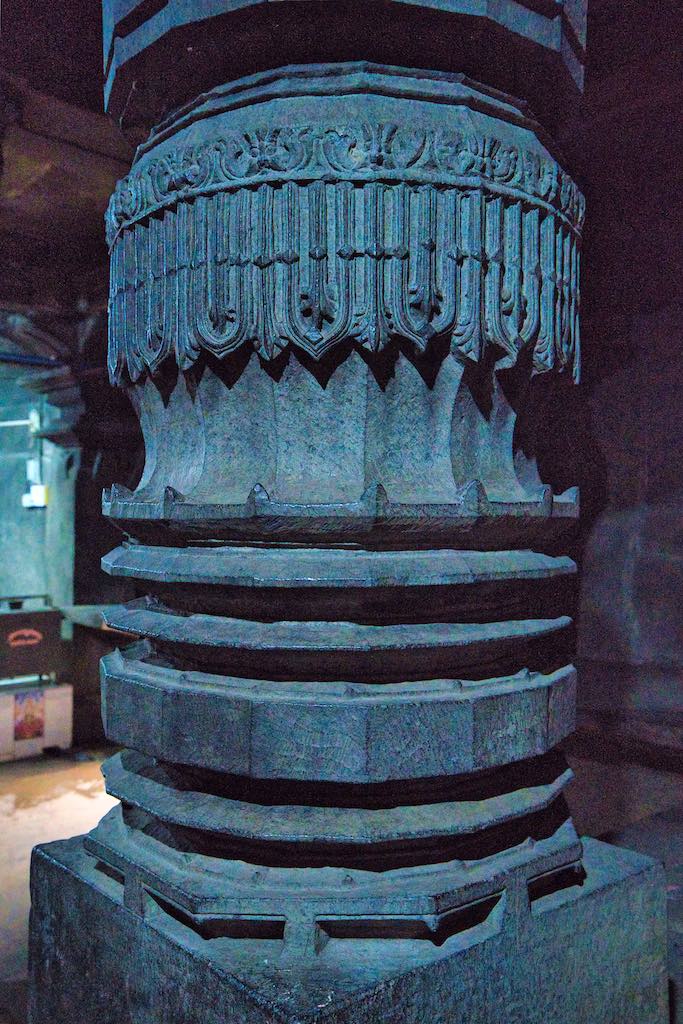
On the hill slope is the Mahadev temple, said to be around 800 years old. There are four inscribed tablets in the temple. It appears that the construction of the temple was started by Rudroji Pandit and completed by Sonappa somewhere between 1500 and 1559. The temple is built of black stone and its walls are ornamented with sculptures. The Shiva murti here (Dharanaatheshwara) is said to be one of the prominent murtis in south India.
.
.
The temple is surrounded by five holy ponds – Rudra kund, Chakra, Shankh, Vasudha, and Nagatirth. A fair is held every year in the middle of January.
.

.
Mirjan Fort
.
.
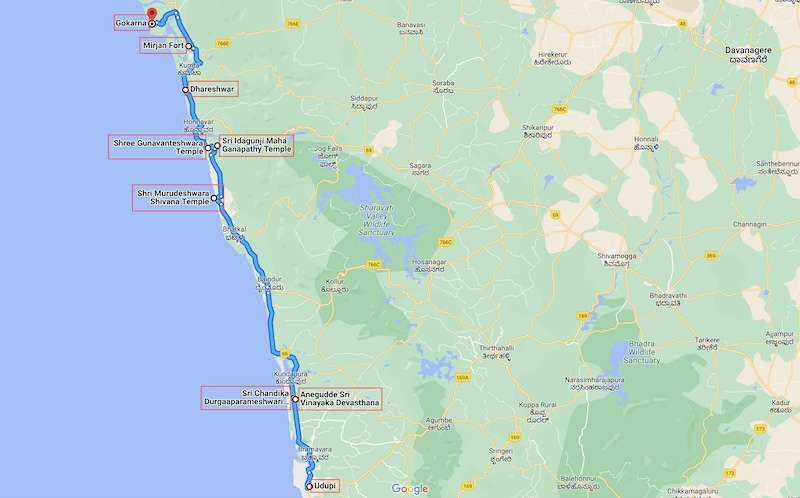
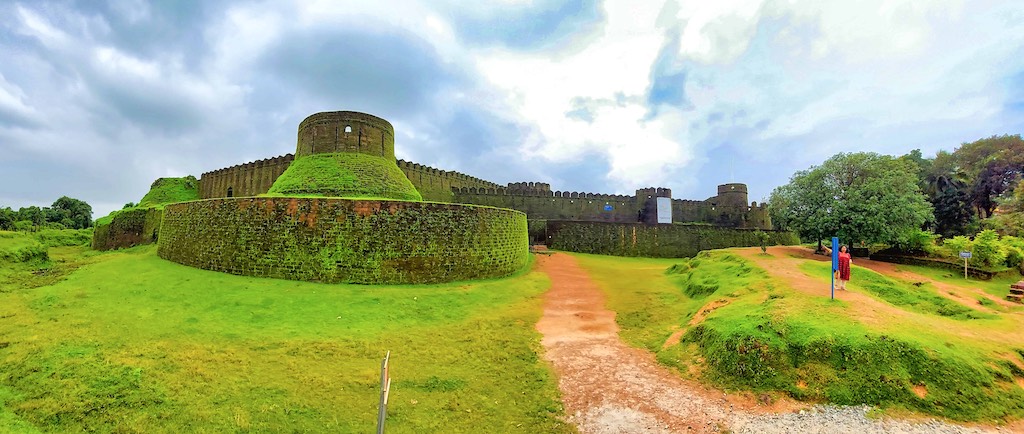
In between the temple visits, we came across this fort. Mirjan Fort boasts of cultural glory and is known for its triumphant history and architectural elegance. This ancient landmark is a forgotten jewel in the country’s tourism scene. Nestled in the green foothills of Sahyadri and flanked by paddy fields, a lazy creek, and a nonchalant river, this nondescript setting of the Fort belies its once-hallowed past and historic importance. Its strategic location near the confluence of the Angnanishi River (a tributary of Sharavathi) and the Arabian Sea, underlines its significance as the key bastion of power and commerce during its heydays.
.
.
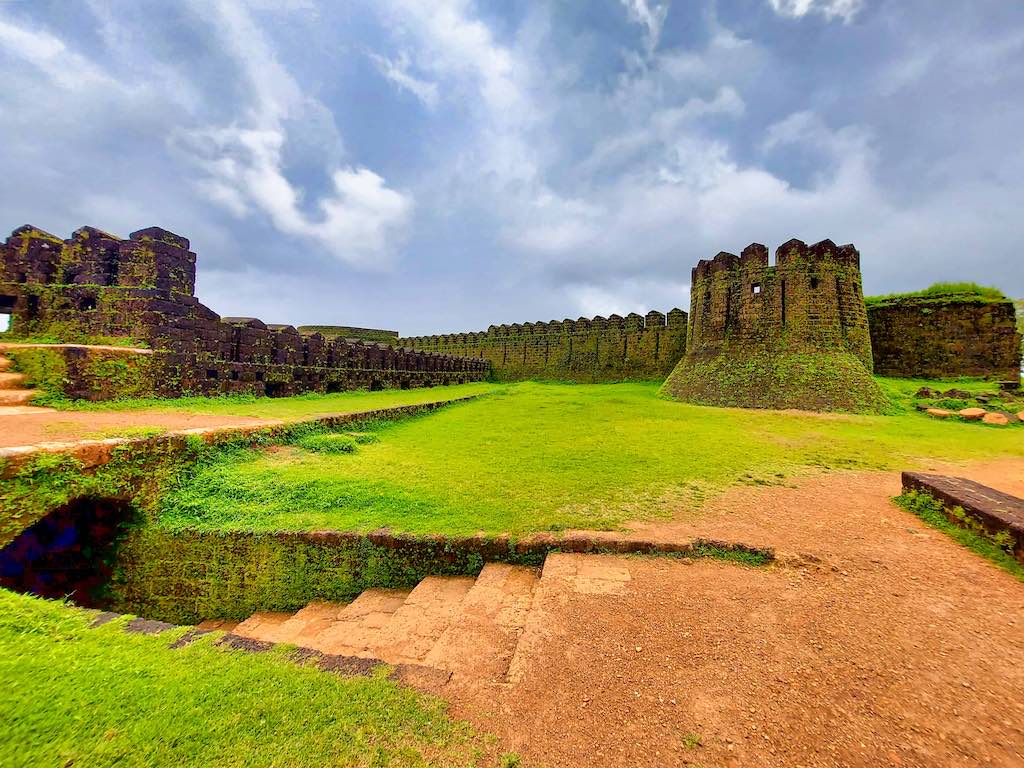
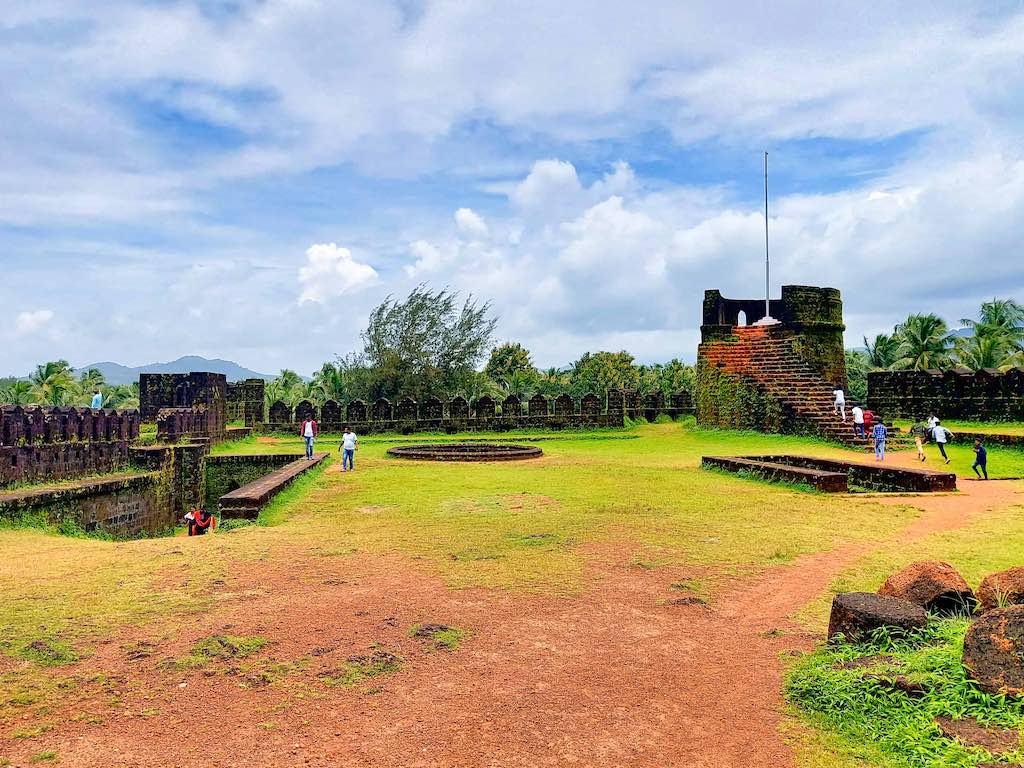
The fort is known for its architectural elegance and was the site of several battles in the past. It is about 0.5 km from National Highway 66 and 21 km from Gokarna. The fort is built over an area of about 4.1 hectares (10 acres). It is built with laterite stones. It was built with high walls and bastions. The fort has four entrances (one main and three subsidiary entrances) and many wells, which are interlinked and with access channels leading to the circular moat that once surrounded the fort.
The aroma of spices and herbs attracted fleets of merchant ships to the shores of medieval India, especially the western coast. The trade was so lucrative that everyone wanted a share of it. While most of this legacy has vanished into oblivion, there are a few remnants of the communities and the edifices they fashioned that serve as a vague reminder of the richly flavoured life on the spice coast.
.
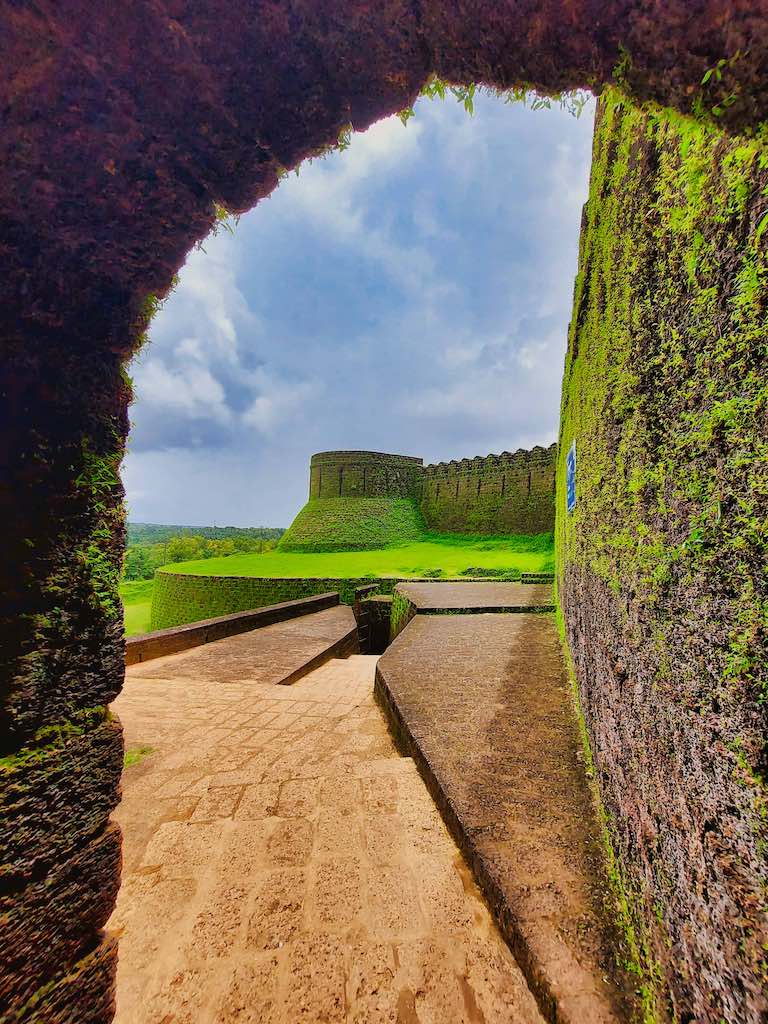
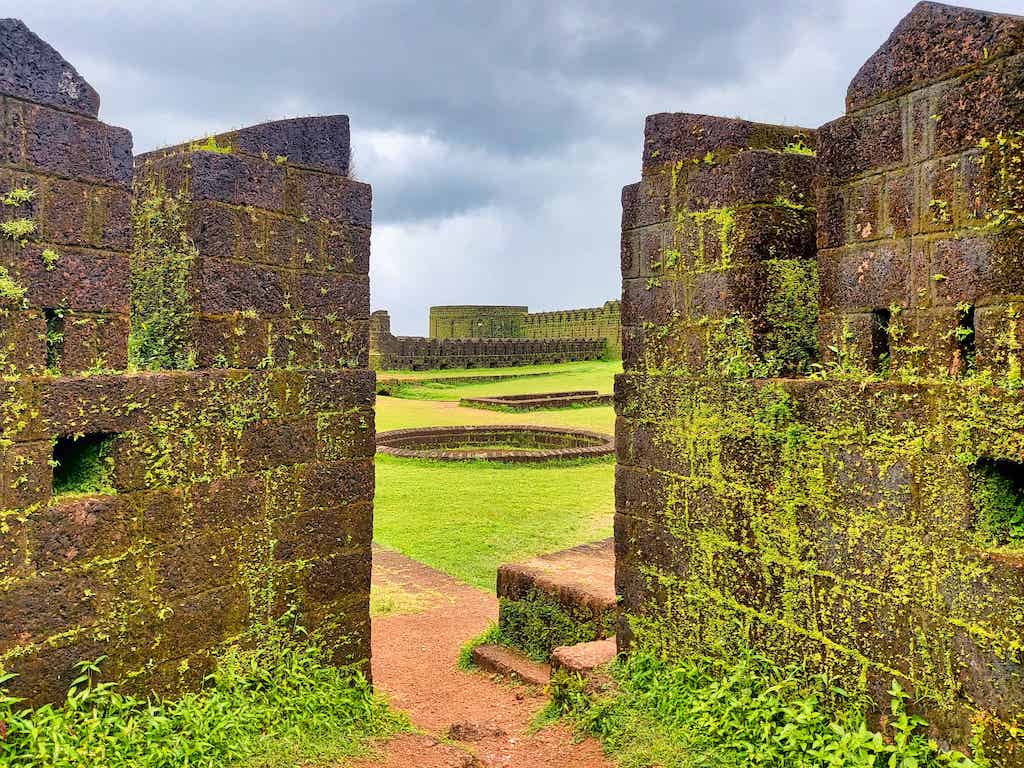
The fort is an architectural masterpiece
.
One of the most prominent of these remnants is the Mirjan Fort in Karnataka’s Uttara Kannada district, which is not just a symbol of ruined power but one of the last remaining signs of a flourishing civilization about which very little is known. Lost in the delightful greenery and tranquil air of river valleys and hamlets along the coast, it is hard to imagine the feverish mercantile activity that took place from here for centuries. This laidback locale attracted some of the biggest ships and richest merchants of the time. But, standing on the broad ramparts of the sprawling Mirjan Fort, looking at the flowing creek below, those images of the past glory slowly begin to appear. It is reported that this was one of the busiest ports for international spice trade between the Dutch, Portuguese, and British.
Rani Chennabhairadevi of Gersoppa (under the Vijayanagara Empire) was initially credited with building the Mirjan Fort in the 16th century. She ruled for 54 years and also lived in the fort. During her reign, the port at Mirjan, which is 32 km to the southeast of Karwar, was used for shipping pepper, saltpeter, and betel nut to Surat. Gersoppa was famous for the pepper exported from this region. Consequently, the Portuguese gave the epithet “Rani, the Pepper queen” (Rainha de Pimenta) to the Queen of Gersoppa.
.
.
She was a devout Jain and during her rule constructed many Jain basadis. She ruled in conformity with the doctrine of succession Aliyasantana or Matriarchal, a tradition followed in the coastal belt of Konkan and Kerala. Her domain covered North and South Kanara districts and south Goa, which had important ports such as Malpe, Bidnoor, Mirjan, Honnavar, Ankola, and Karwar from where the pepper, the most important produce of the region, was shipped to Europe.
One can visualize the mighty Pepper Queen holding ships across the waters of the north and south Kanara under her tight control. Caravans of intricately-caparisoned elephants and bullock carts loaded with nutmeg, peppers and cloves passing through the giant gates would have been a sight to behold. On the banks of the creek that bends around the fortress, shiny Arabian horses would have been carefully disembarked from the dhows hailing from Yemen and Persia.
.

To protect your personal data, your connection to YouTube has been blocked.
Click on Load video to unblock YouTube.
By loading the video you accept the privacy policy of YouTube.
More information about YouTube’s privacy policy can be found here Google – Privacy & Terms.
.
However, Rani Chennabhairadevi suffered reverses after the Talikota War in which the Vijayanagar Empire was routed. She then shifted from Mirjan Fort to a safe location on an island in the middle of the Sharavathi River. In 1676, the Keladi queen Chennamma captured the territory up to Mirjan. In 1757, the Marathas seized the Mirjan Fort. The event that led to the capture of the fort was due to the death of Basappa Naik, the last ruler of Bednur, in 1755.
.
Conclusion
.
Uttara Kannada District is one of the largest districts in Karnataka with abundant natural resources and varied geographical features. It has thick evergreen forests, perennial rivers, home to some of India’s finest beaches, adventure destinations, and waterfalls.
Uttara Kannada is a tropical paradise replete with myths and legends. Nature has gifted this strip of land between the Arabian Sea and the Western Ghats with the monsoons. This has resulted in thick evergreen forests, perennial rivers, home to some of India’s finest beaches, adventure destinations, and waterfalls.
The natural luxuriance has filled its art forms with a lushness visible in the carvings that embellish the temples and in the gold jewelry that women wear which picks its design from seeds, buds, flowers, snakeheads, and tiger claws. As also as the vibrant costumes of the Yakshagana performers which reflect the colors of nature itself.
.
References
.
- Do not miss to visit these beautiful temples in South Canara https://timesofindia.indiatimes.com/travel/destinations/do-not-miss-to-visit-these-beautiful-temples-in-south-canara/gs50621857.cms
- Anegudde Sri Vinayaka Devasthana Kumbashi https://www.anegudde.in
- Anegudde – The Abode of Lord Vinayaka https://www.karnataka.com/udupi/anegudde/
- Sri Chandika Durgaparameshwari Temple – Kumbhashi
- Kumbhashi Durga Temple At Kundapura In Karnataka https://www.hindu-blog.com/2019/08/kumbhashi-durga-temple-at-kundapura-in.html
- Murudeshwar Temple, Karnataka https://www.templepurohit.com/hindu-temple/murudeshwar-temple-karnataka/
- Murudeshwar Temple | History, Architecture, Facts of Murudeshwar https://www.shivamahadeva.net/2020/07/murudeshwar-temple.html
- Ganesha Temple, Idagunji https://en.wikipedia.org/wiki/Ganesha_Temple,_Idagunji
- Welcome to Idugunji Devasthana http://www.idagunjidevaru.com/index.htm
- Ganapathi Bappa Moriya: A Soul-Stirring Trip to Vinayaka Temple in Idagunji https://www.nativeplanet.com/travel-guide/vinayaka-temple-in-idagunji-honnavar-002413.html?story=5
- Gunvanteshwar Temple https://www.nativeplanet.com/travel-guide/vinayaka-temple-in-idagunji-honnavar-002413.html?story=5
- Shri Dharanath Temple ಶ್ರೀ ಧಾರಾನಾಥ ದೇವಸ್ಥಾನ, https://indiapl.com/karnataka/shri-dharanath-temple-205793
- Top 100 Temples in Coastal Karnataka -Part 3 of 4 – Pancha linga Kshetras and Mahalingeshwara temples
- Mirjan Fort https://en.wikipedia.org/wiki/Mirjan_Fort
- India’s Mirjan Fort: The emerald citadel in Karnataka’s Uttara Kannada district https://gulfnews.com/world/asia/india/indias-mirjan-fort-the-emerald-citadel-in-karnatakas-uttara-kannada-district-1.88105620
- Atma Linga https://www.templepurohit.com/atma-linga/
.

.
Note: All photographs displayed above (except those sourced and acknowledged) are my exclusive property and copyright; their use is prohibited without explicit consent, in writing.
.


4 Responses
Amazing blog. A suggestion. When possible, please put the time (year or general timeframe) when the temple was built.
Thank you. Your suggestion is noted.
Hi Ajay uttara kannada district is north canara and not south canara. Please make the change. Ramakrishna
Thanks for pointing it out. Corrected.