
A smooth sea does not make a skilled sailor!
Introduction
A background on the inception of sailing in the country and the singular role played by the Corps of Engineers in developing the sport has been covered by me in the previous blog, written on the country’s first voyage in a sailboat to foreign shores on the Seabird Albatross in 1977. To read about this adventure, click here.
.

.
The pivotal role played by the Sapper Adventure Foundation and the College of Military Engineering, Pune in promoting adventure in the Corps, and in the country, cannot be stressed enough. The 68-day 7,000 km Seabird voyage to the Persian Gulf in 1977 was one of the early major ventures by the Corps, and the country, in venturing out into the open seas. The first attempt had been completed successfully, and now the Corps looked forward to the more ambitious venture of circumnavigating the globe in a sailboat. A feat no Indian had achieved before.
Three crew of the 1977 expedition on Albatross volunteered for the circumnavigation, carrying forward the experience gained. They were Maj KS Rao – who became the Skipper – and Capts AK Singh and myself.
.
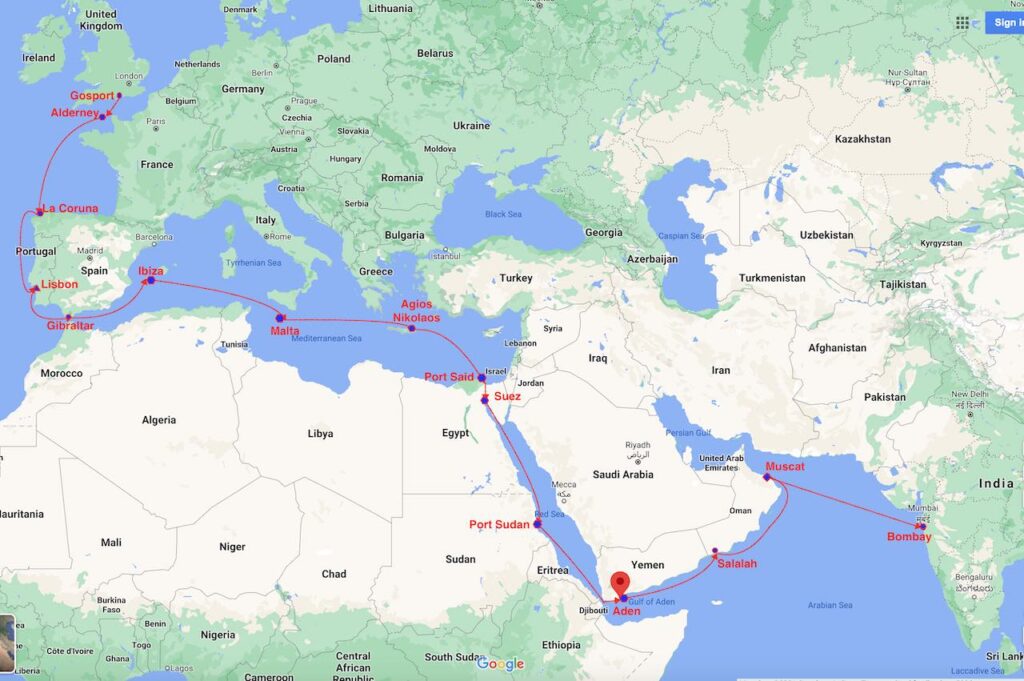
.
The Paperwork & Sanction
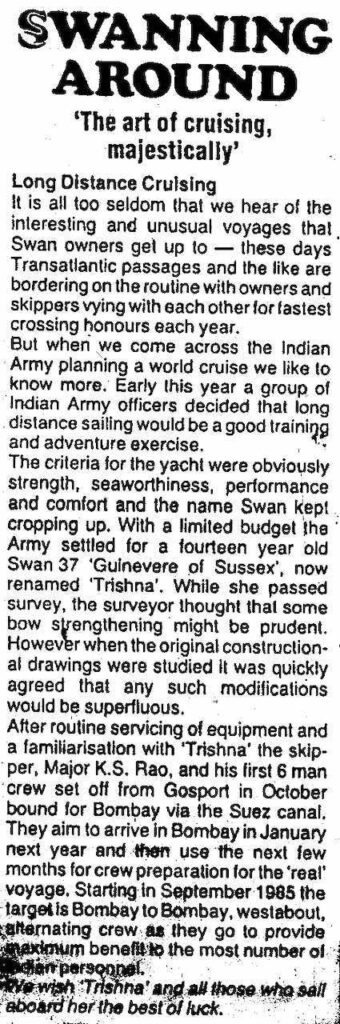
The pre-expedition paperwork for the expedition posed the first challenge for the organizers. This covered two aspects – planning the expedition in detail, and getting the official approvals. Finalizing the route based on weather conditions in different oceans, halts (keeping in mind the water storage capacity of the boat), arriving at a tentative budget (including the cost of a boat) etc were some of the numerous imponderables before us. And there was no Google Guru or the internet those days to answer our queries. The only source of information were the libraries or advertisements in yachting magazines!
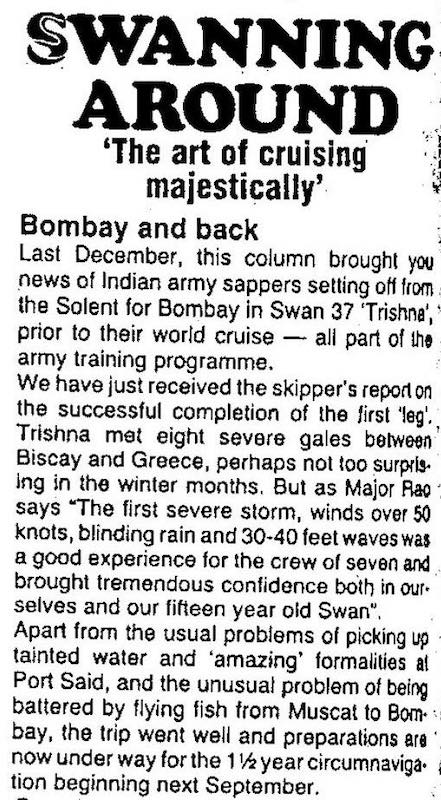
Getting the Army’s/Government’s approval for a first-of-its-kind venture was not easy. There were many questions raised on the utility of army officers taking to the sea for such an extended duration. The ministries/ departments/organisations involved – and there were many viz. Defence, External Affairs, Finance, Commerce (DGFT), Information & Broadcasting, RBI to name a few – each had their own queries. To cut a long story short, the paperwork that commenced around 1980, ultimately fructified in 1984! That too with the specific condition that the government will not provide funding. Consequently, the crew were not sanctioned “duty” and hence they were not eligible for any official support or allowances from the Indian missions in the countries they touched. It was a big blow for us, as our meagre budget (a princely sum of $2 per day per crewmember while sailing and $10 per day per crewmember during port halts) was a pittance; it was only because of the hospitality of the armed forces of the countries we touched, or of the local Indian community where available, were we able to sustain ourselves during the voyage. Sponsorship was frowned on in those days, and thus it was left to the Corps to find the required funds from within its own resources. Naturally, the budget had to be kept to the absolute bare minimum.
The availability of a suitable yacht was the next concern. The sport of sailing had a very limited following in India in the 1980s, and ocean-going yachts were a rarity. Thus it was decided that the best option was to scour the second-hand yacht market in the UK, which was one of the best (and cheapest) markets in the world. A new yacht had been ruled out due to lack of funds.
A hiccup occurred in 1981 when indications were received from the corridors of power in New Delhi that the expedition was likely to be approved by the Government. There was a flurry of activity and a 2-week training capsule was organised with the Navy at INS Venduruthy, Cochin, their training establishment. They were kind enough to arrange for us to get exposure to a variety of subjects required for venturing out in the oceans. This capsule further highlighted the mammoth task ahead of us, and that it was up to us to master the required knowledge on our own, to be able to complete the expedition successfully.
The hiccup turned out to be just that – a false alarm – as new objections had been raised by the babus in South Block, and our expedition file when back to tracing the circular path between the Ministries, Army Headquarters and the Engineer-in-Chief’s Branch. We settled down to our routine in daily life and waited for the next burp! This occurred after 3 years, in 1984! Creditably, the Corps persevered all these years without let-up – a testimony to their commitment.
Once the final sanction came through, no doubt with the active help of the Minister of State for Defence, Shri KP Singh Deo, a sportsman himself, things started moving again from the beginning of 1984. Meanwhile, Maj PS Pammi, the skipper of the 1977 Albatross expedition to Iran had since retired from service and hence was not in consideration, a big loss with his experience and knowledge. A few other earlier volunteers dropped out because of the delay in getting the final sanction due to professional or personal reasons. There were, however, a list of 40 volunteers from within the Corps, and keeping the directions of giving a chance to young talent in mind, six crew members were selected.
.
The UK Sojourn – Acquiring a Yacht & Training
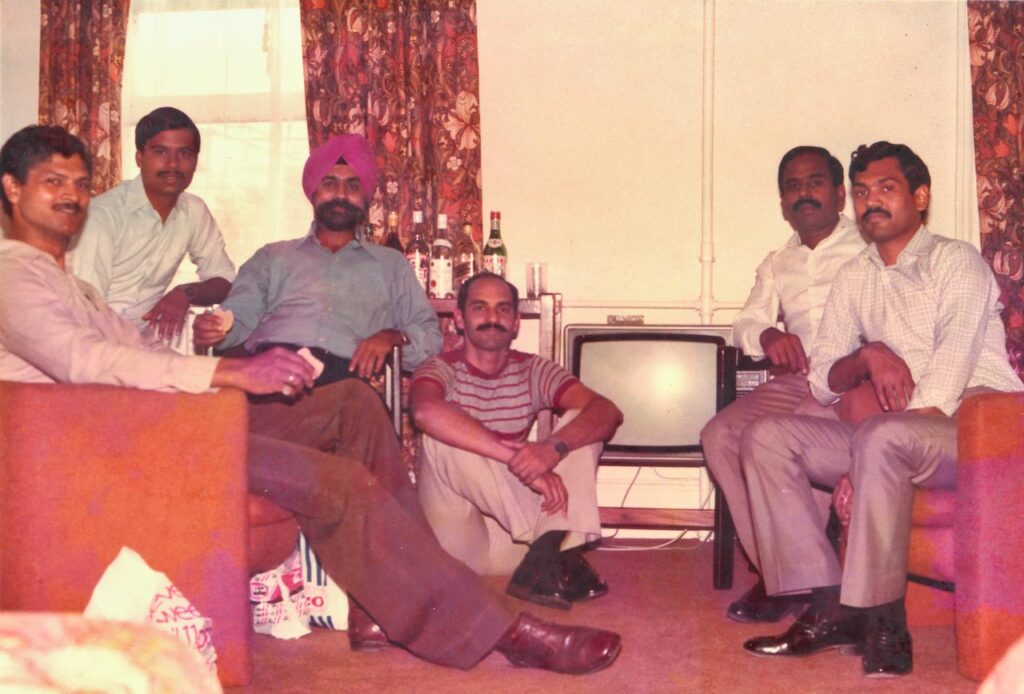
An extensive search of the second-hand market was carried out by the advance team comprising of Lt Col TPS Chowdhury and Capt AK Singh and a 13-year old 1970-vintage 37-foot yacht was shortlisted; the balance four crew members flew to the UK on 9 August 1984. The crew were to undergo a short training capsule with the British Army on sea sailing, both the theory portion and through practice sailing on the Solent, accompanied by a few English Channel crossings. None of the crew had sailed big yachts before.
.
.
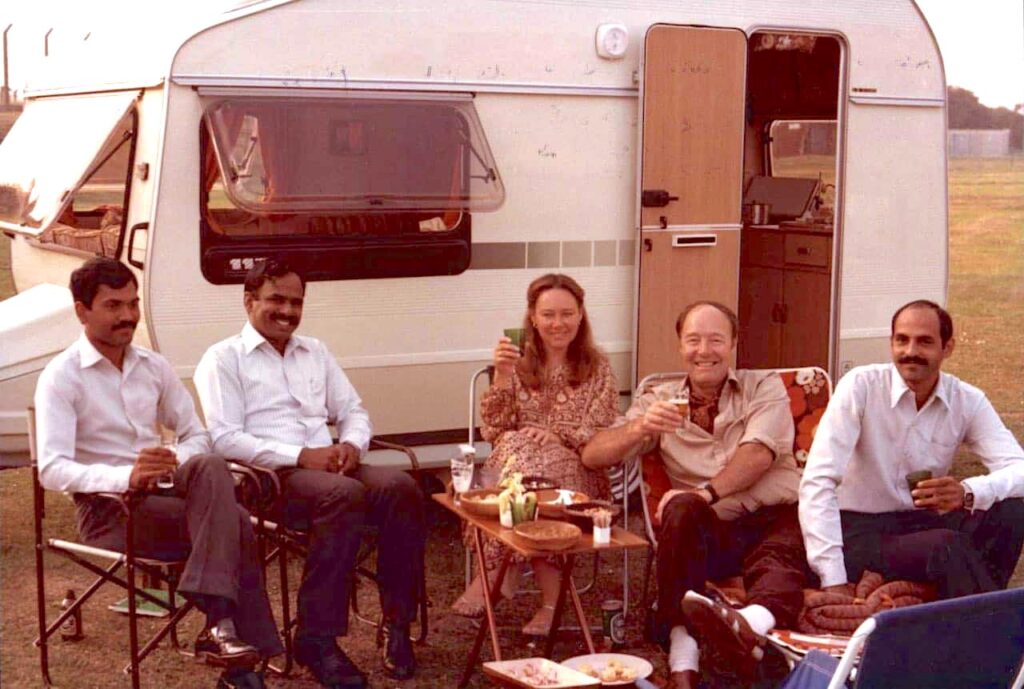
Our stay and training had been organised through the Sapper network (remember, no government or diplomatic channel was available to us) between the Indian and British Engineer-in-Chief’s and was coordinated by Brig Neil Carlier, Royal Engineers, himself an Olympic sailor, then commanding the 11 Engineer Group. He had arranged for our stay at the Officers Mess of the 20 Maritime Regiment at St George Barracks, Gosport, with whom we underwent a short course on navigation at sea (on which a week was devoted), meteorology, safety at sea, rules of the road, etc. The Royal Corps of Transportation operated landing craft for the British Army, and for maintaining that offshore capability, it had a Marine Division. Our interaction in the school was an eye-opener in methods of instruction. Five courses were running at the time – from one on marine engineering to others in handling small boats – with the total staff of the school comprising of just one serving officer, one retired officer and nine other NCOs (which included their office staff).
.
.
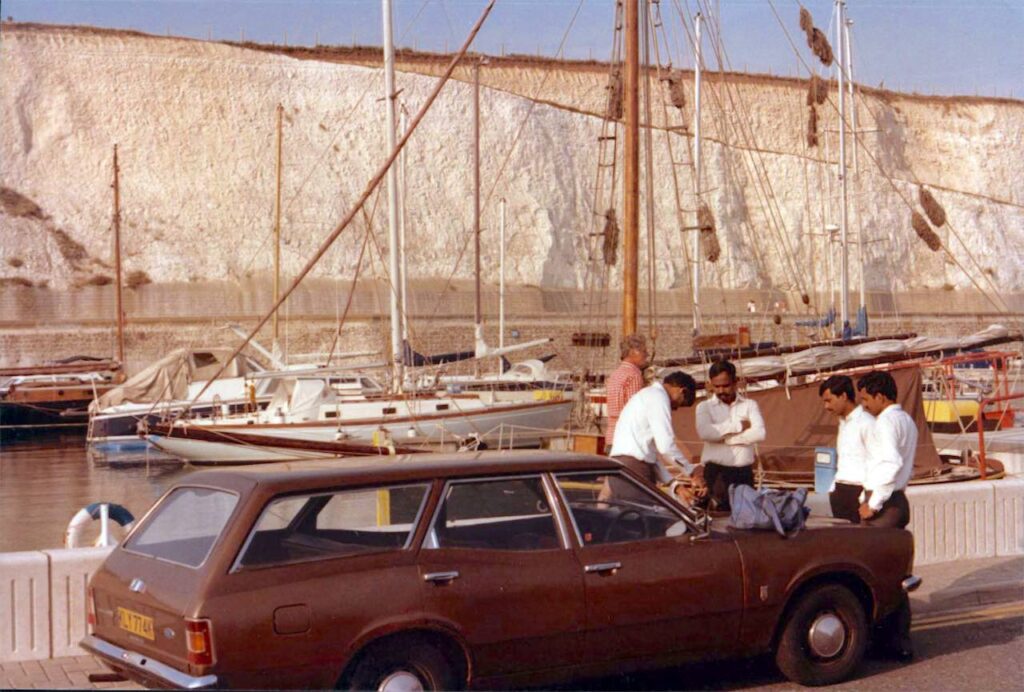
The boat which had been short-listed was the Guinevere of Sussex. She had been used primarily for family outings and was in good condition, despite her age. It was moored at the Brighton Marina and before finalising the deal, a marine surveyor was engaged to give us a report on its condition and seaworthiness. Though the surveyor charges made a considerable dent to our finances, it was imperative to the success of our expedition since we were buying a second-hand boat. It was a relief for us when the report certified the condition of the boat, especially the fibreglass hull about which we were most concerned. It was fascinating to see the marine surveyors’ work, which including drilling miniature bores through the hull for checking the physical condition of the core – the only way to actually know the condition of the hull.
.
.
Since there was a considerable amount of commuting by the crew in Gosport and to other locations, it was considered appropriate to buy an old Ford Station Wagon for £200, which Col Chowdhury and AK purchased when they had gone initially. The station wagon could accommodate the six of us and it definitely cut down on our travelling expenses. The car was left with the Defence Attache to dispose of when we sailed off, though we did not hear about it subsequently. AK went a step ahead and purchased a moped for £50, which was a great help in the frenetic activity in the days leading up to the departure. He even found a buyer for it before we sailed, who paid him the same amount for it!
.
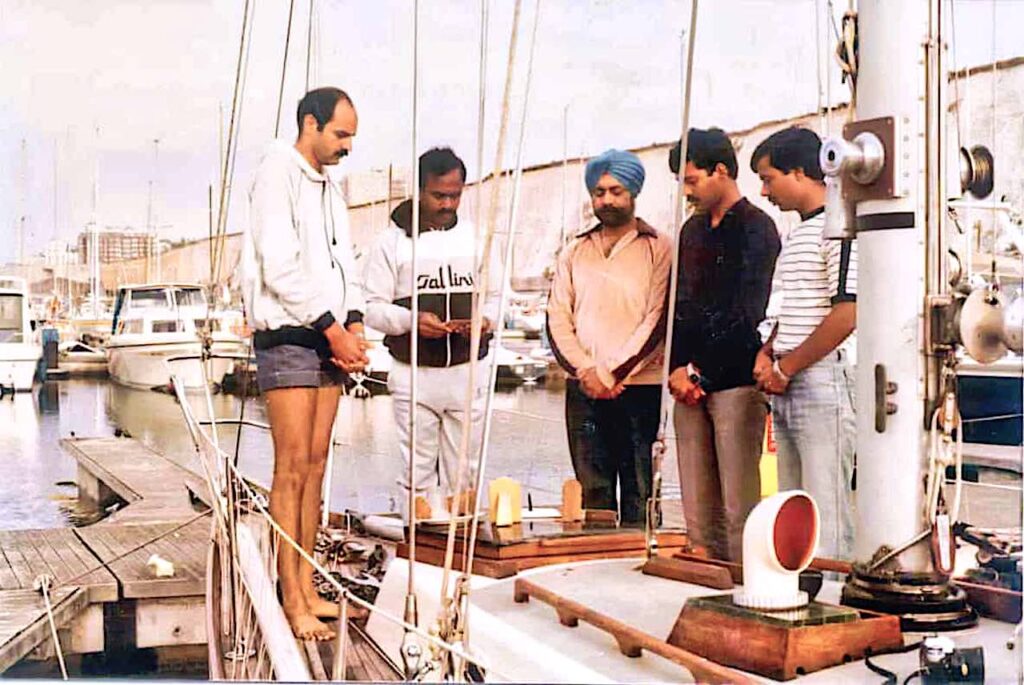
(From left: AP, KS, Tipsy, Bharti & Shekhar)
.
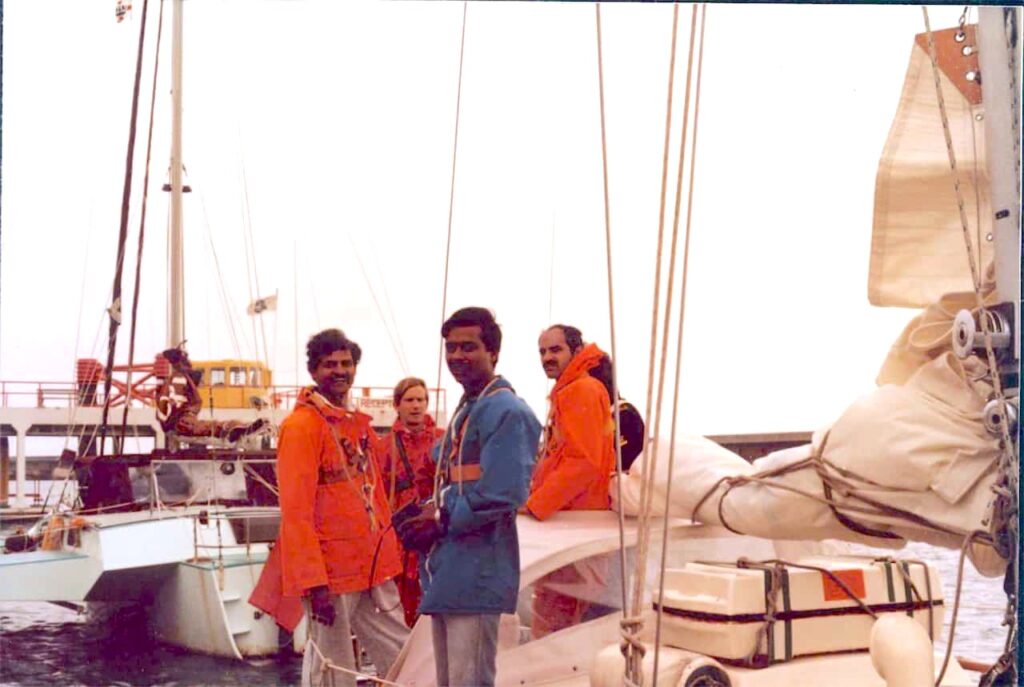
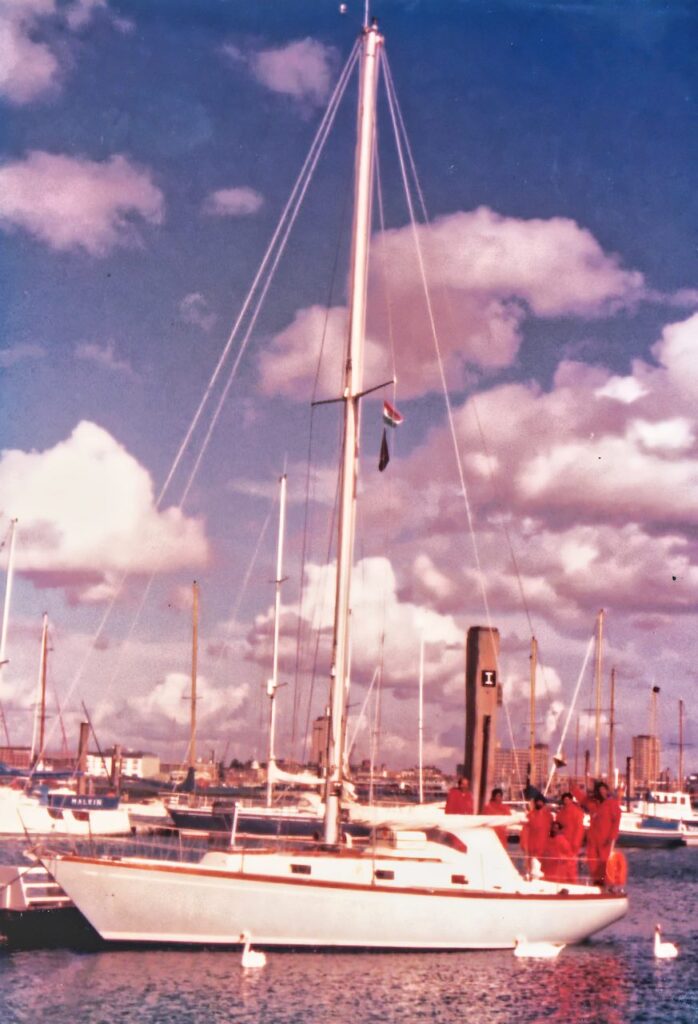
We drove down to Brighton for signing the sale documents and taking over the boat on the bright sunny morning of 28 Aug 1984. The owners raised a toast to the boat and the new owners one last time before handing over the “keys”. We were particularly satisfied with our new possession. The price tag of £29,000 for the boat was a steal. Swan Class of boats, manufactured by Nautors of Finland and designed by the legendary Sparkman & Stevens, are rated among the best yachts in the world; the size was the minimum suitable for accommodating a 6-man crew.
.
.
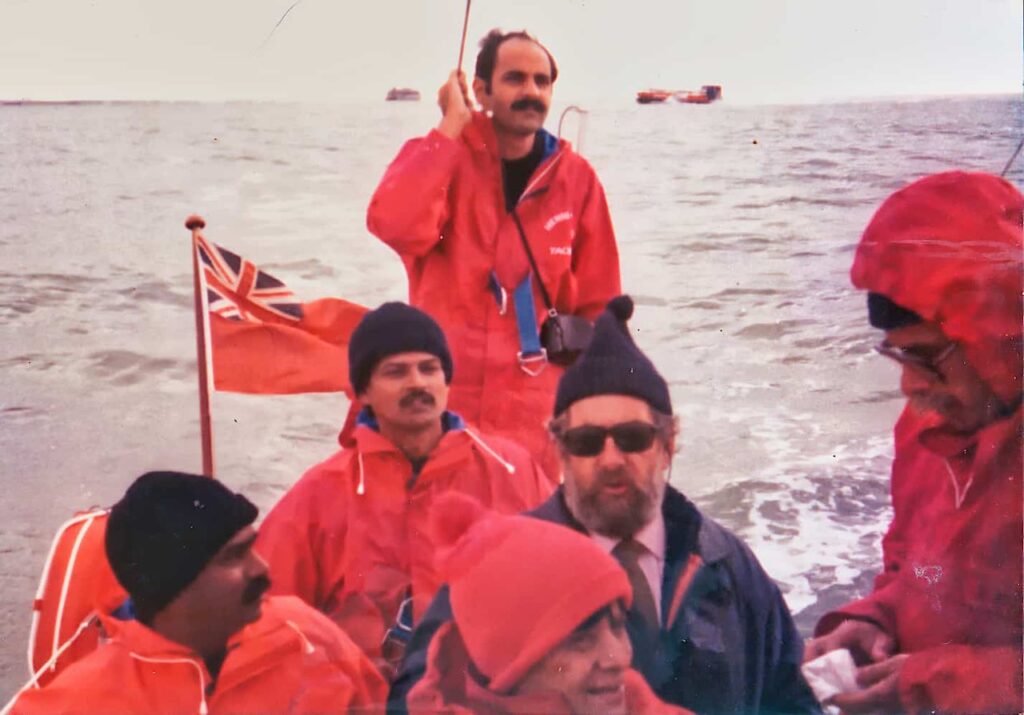
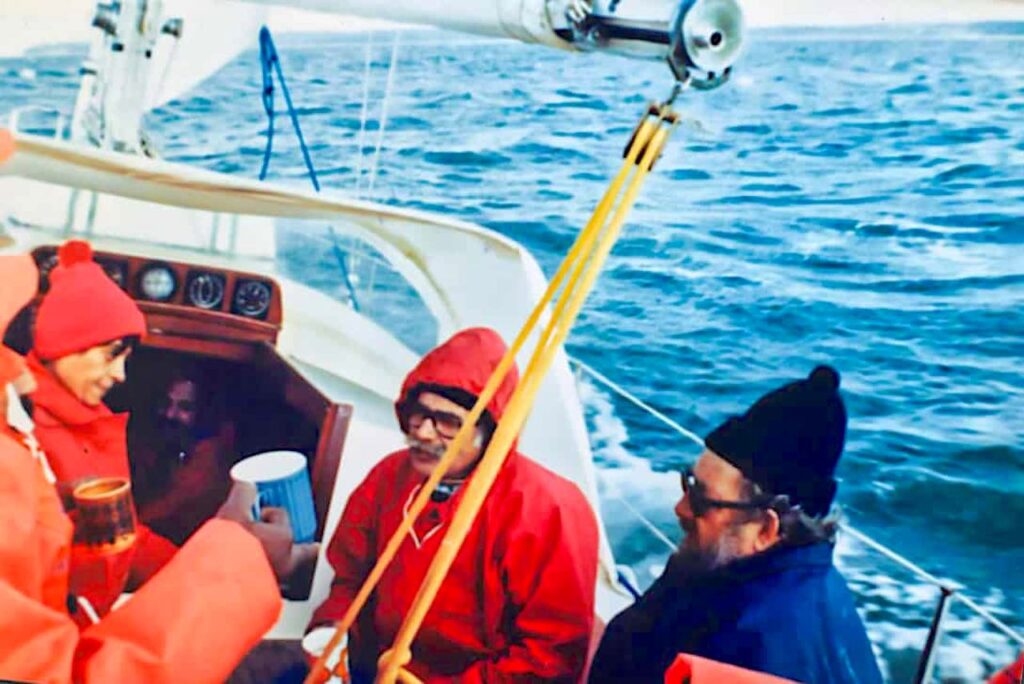
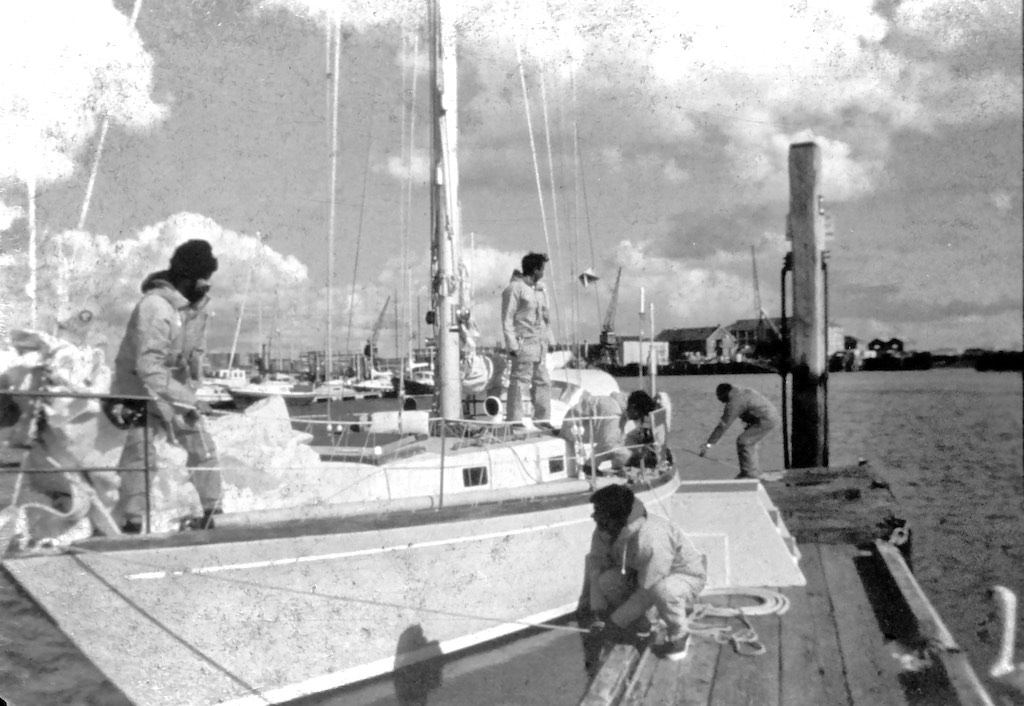
Our first sail on the boat was quite hilarious. It was about 40 nautical miles from Brighton to Gosport. Used to sailing conditions in India – barefoot, in shorts and T-shirt – no one had thought of the notorious weather of Britain. I had raced in the Fireball Class dinghy in the UK and Ireland in 1981 but thought it would be comfortable on a sunny day in a big boat. Not realising that the winds offshore were always chilly and that body temperature dropped alarmingly with exposure. Since this was our first sail in a big yacht, a sailing instructor had been arranged from the Joint Services Sailing Centre (JSSC) to accompany us and show us how to handle a yacht. By chance (?), he had brought with him a bag full of protective sailing gear – we had yet to buy ours. After an obvious, though unheard, deep exhalation of his breath on seeing our bare feet and T-shirts, he gave us our first lesson in sea sailing. To be always well protected from the elements, even on a sunny day, and that over-protection was better than under! We put on a mix-and-match of gear he had bought and set forth on our first sail on the boat.
.
.
It was exhilarating, to say the least. Finally, we had our boat and the dream of sailing around the globe was one (small) step closer. It was late evening by the time we reached the jetty at Gosport and quite chilly. I wondered what would have happened if we had sailed bare feet and in T-shirts…..well, some questions are better left unanswered!
.
.
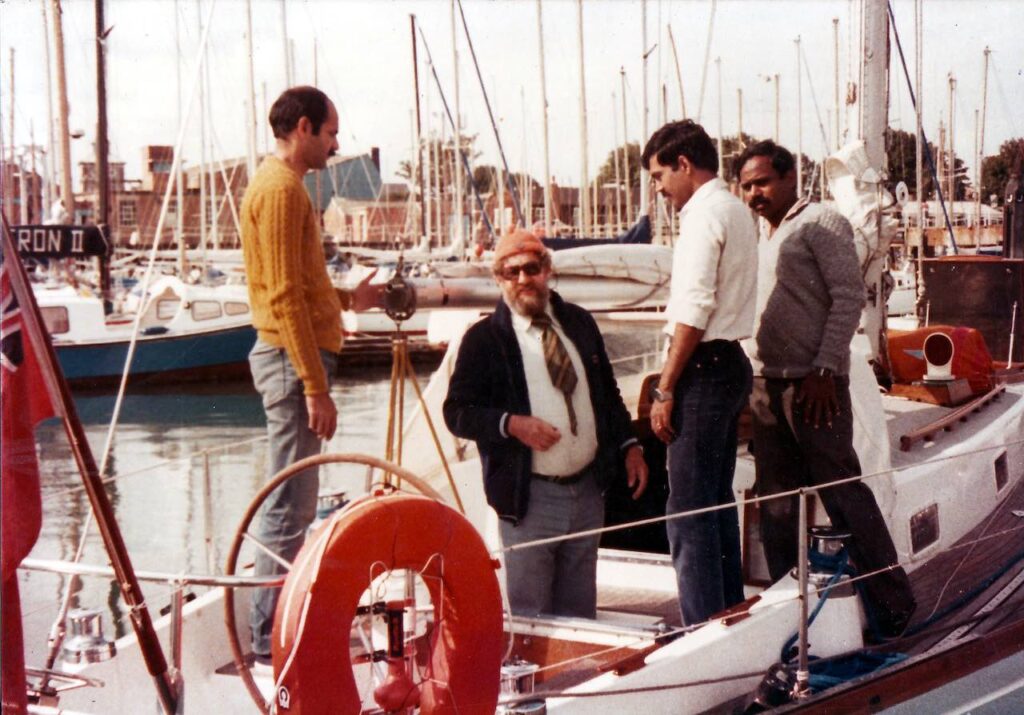
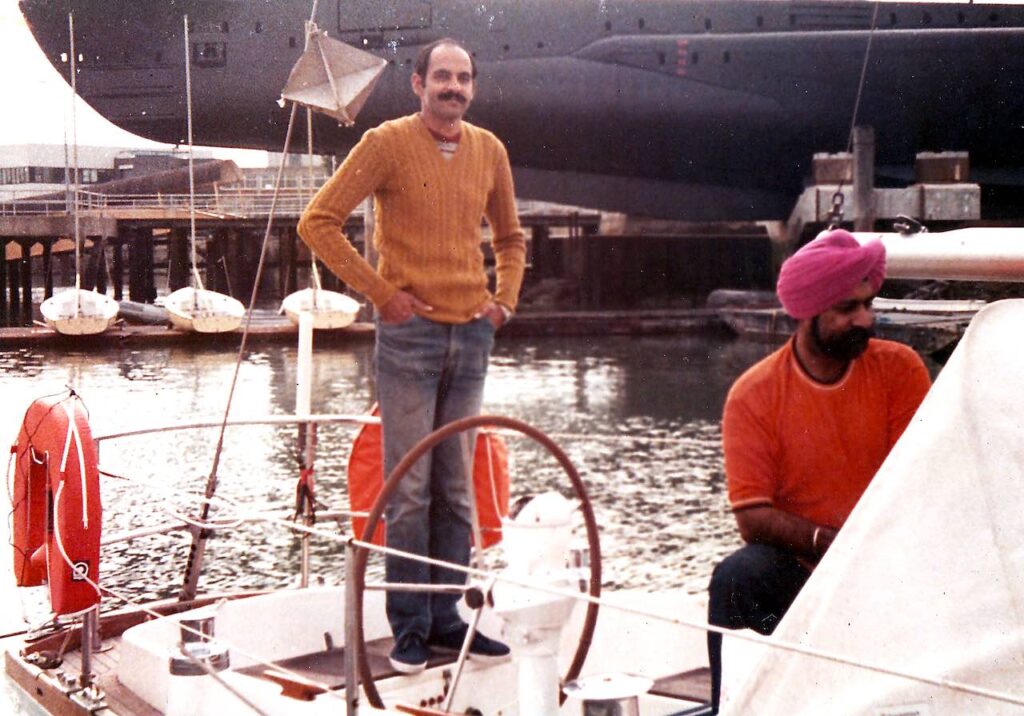
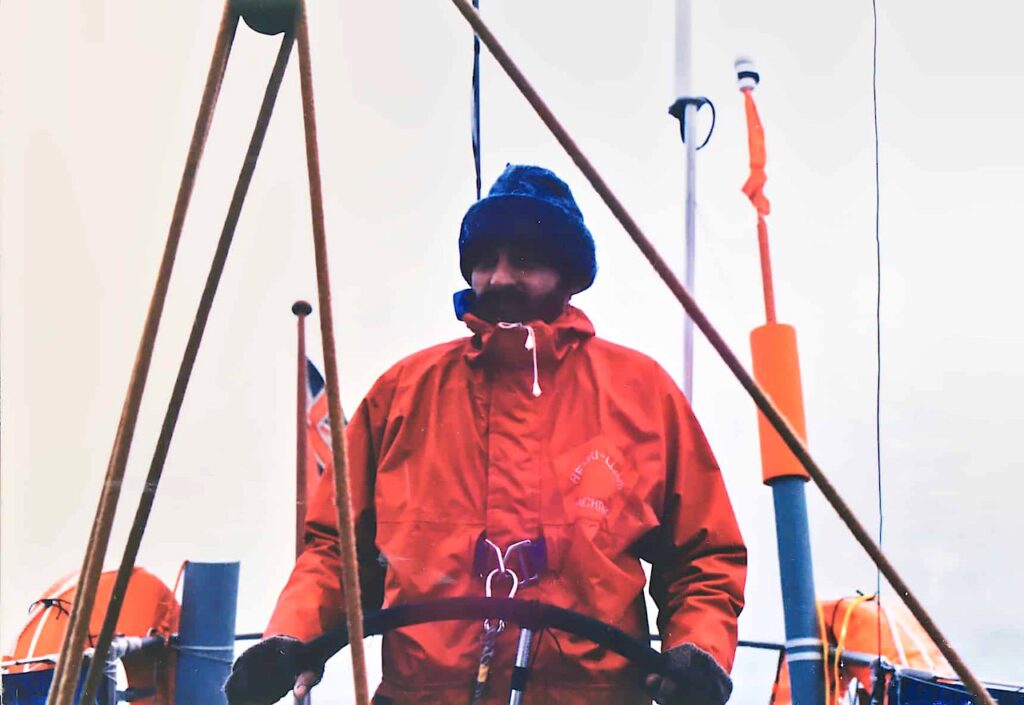
Though the crew had sailing experience in small dinghies, they had no exposure in handling bigger yachts. To overcome this, we followed a tight schedule of training cruises, under our hawk-eyed Guru, Major Ron Gravels, ex-Royal Engineers and who had served in India during World War 2. He had also been an instructor at the Joint Services Sailing Center and was an experienced sailor; he was invaluable for the knowledge he imparted on sailing boats and about the seas – in typical British style!
.
.
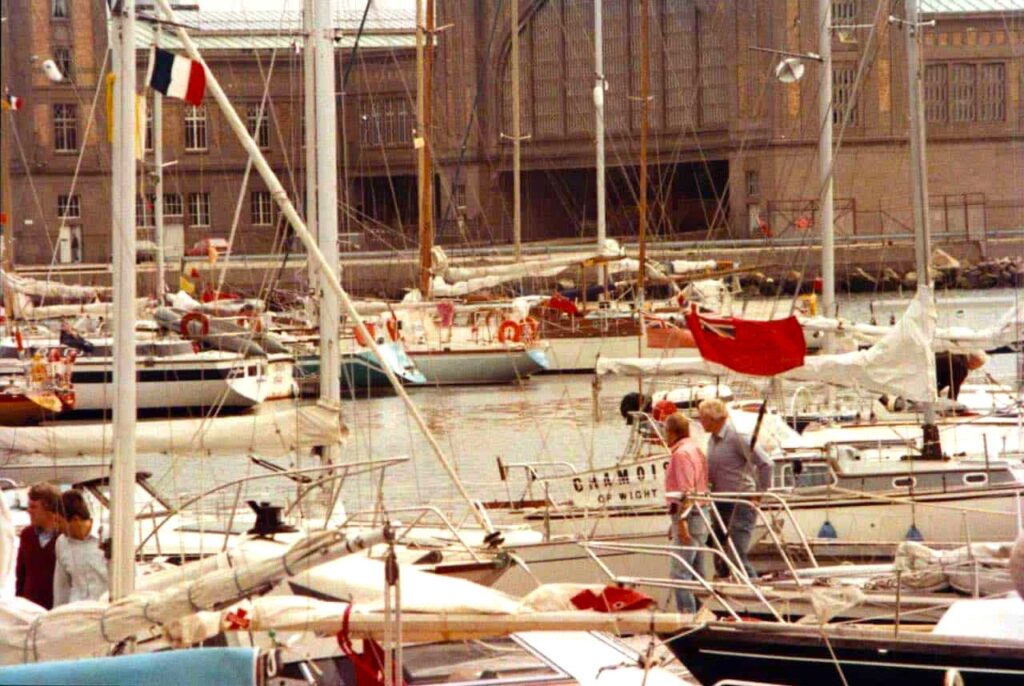
Our training sails were mostly on the Solent, a busy sailing waterway where one had to be extremely wary of the traffic. A few cross English Channel crossings to the Channel Islands and Cherbourg, France to test our skills in heavy weather boat handling and navigation were also undertaken.
.

.
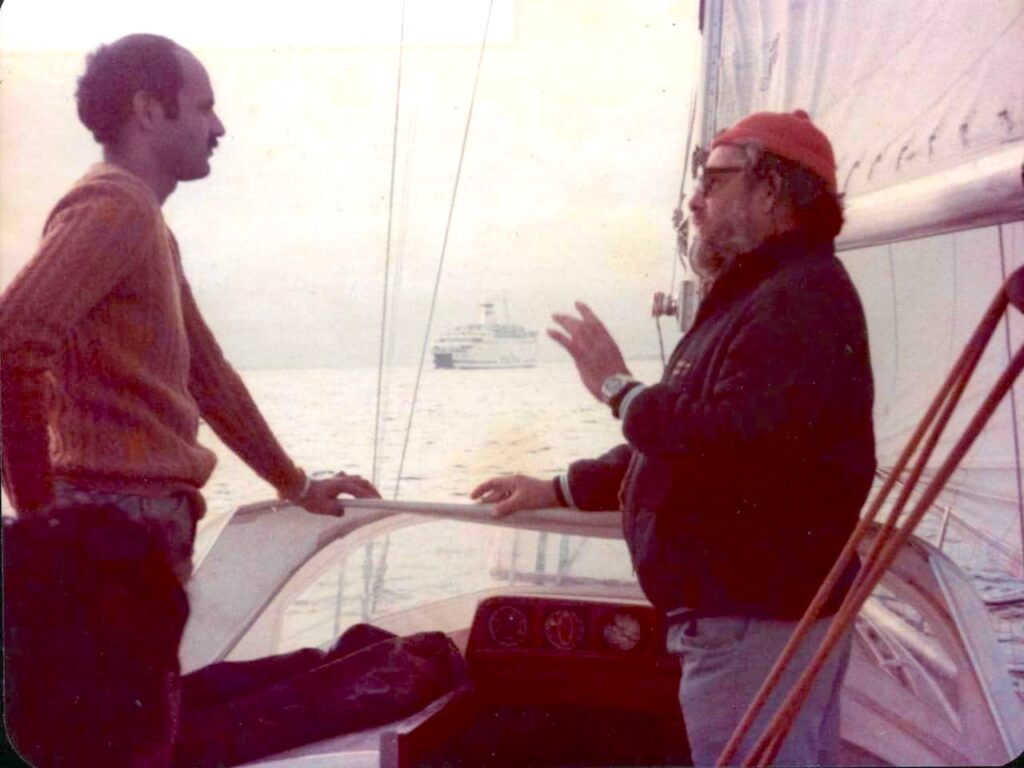
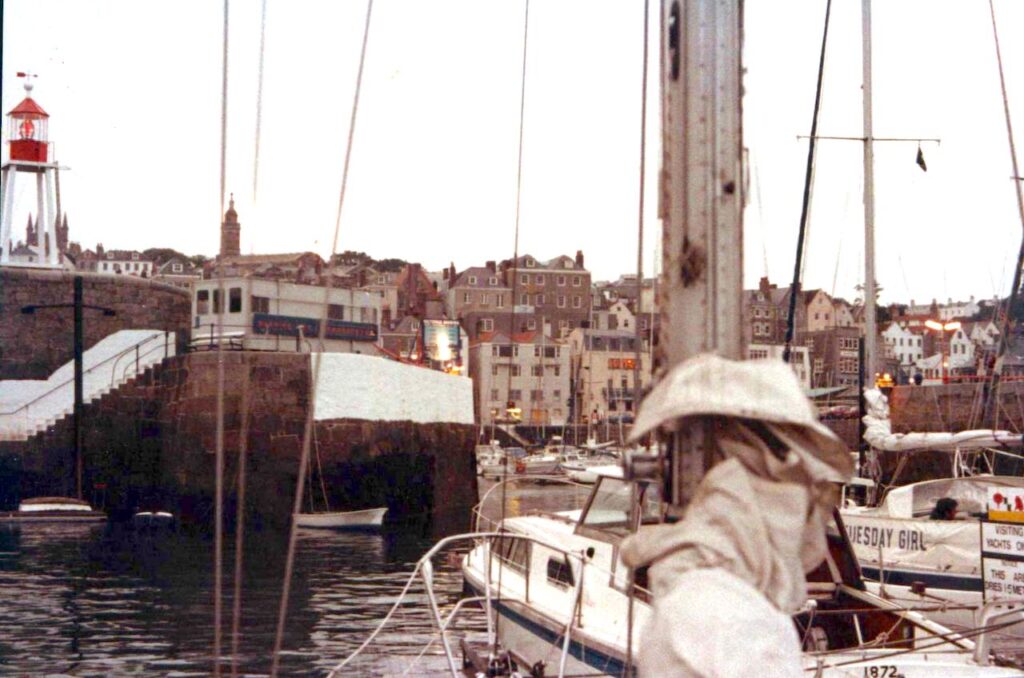
The sails to the Channel Islands of Guernsey, Alderney and Jersey taught us a very typical lesson – on handling the boat in extreme tidal conditions.
.
.
The tidal variation here is up to 12 metres – and riptides of 10 knots! It was in these areas we also came across the densest fog, which also provided us lessons in sailing blind; the boat had no radar.
.
.
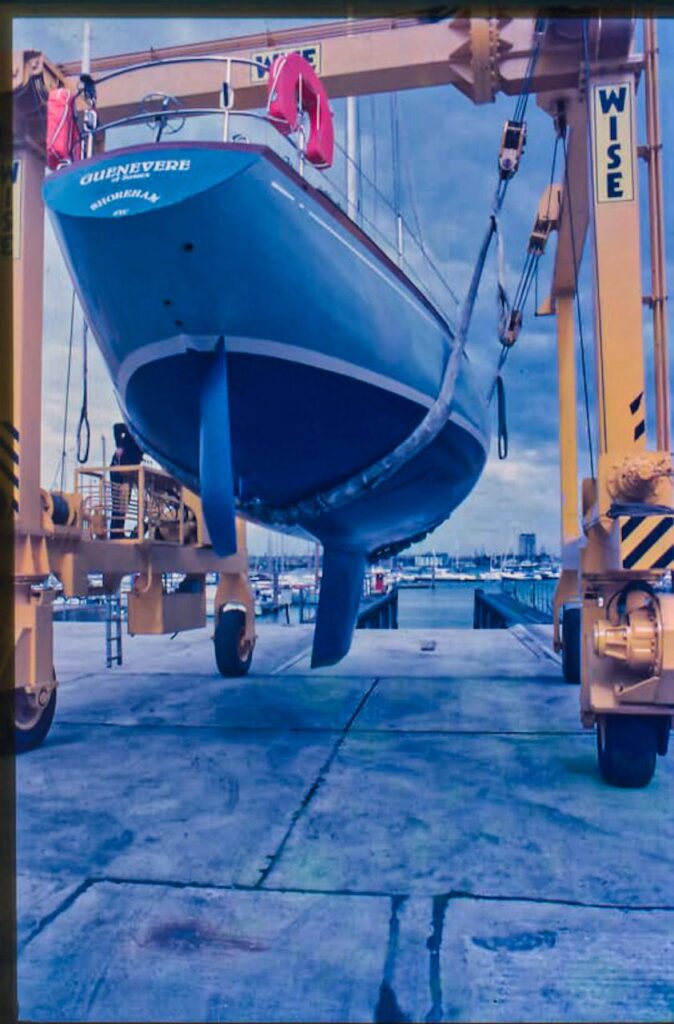
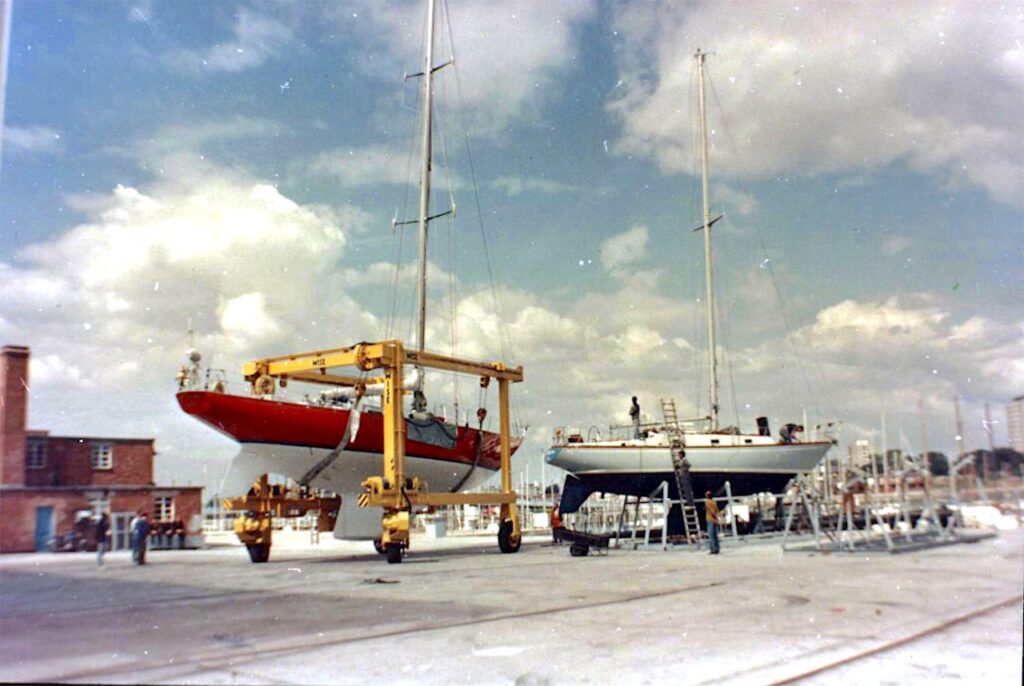
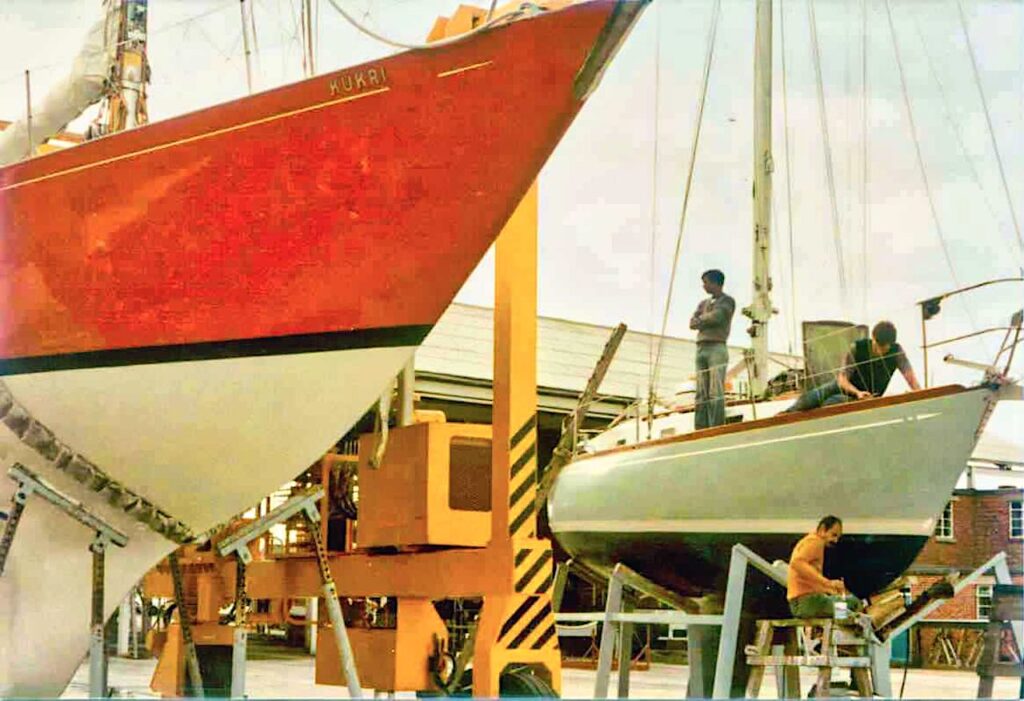
The Joint Services Sailing Centre assisted us in carrying out essential repairs to the boat and in the basic provisioning for the sail back to India, which required hoisting the boat out of the water. In between, we sailed to Cowes, which had the best yacht rigging chandlers. It took a day for them to replace all the running and fixed rigging, a necessity before we undertook the circumnavigation. Expertise and availability of stainless steel rigging in India was limited and the new set would last us around the world. Most of it actually lasted till the boat was finally put in the museum!
.
.
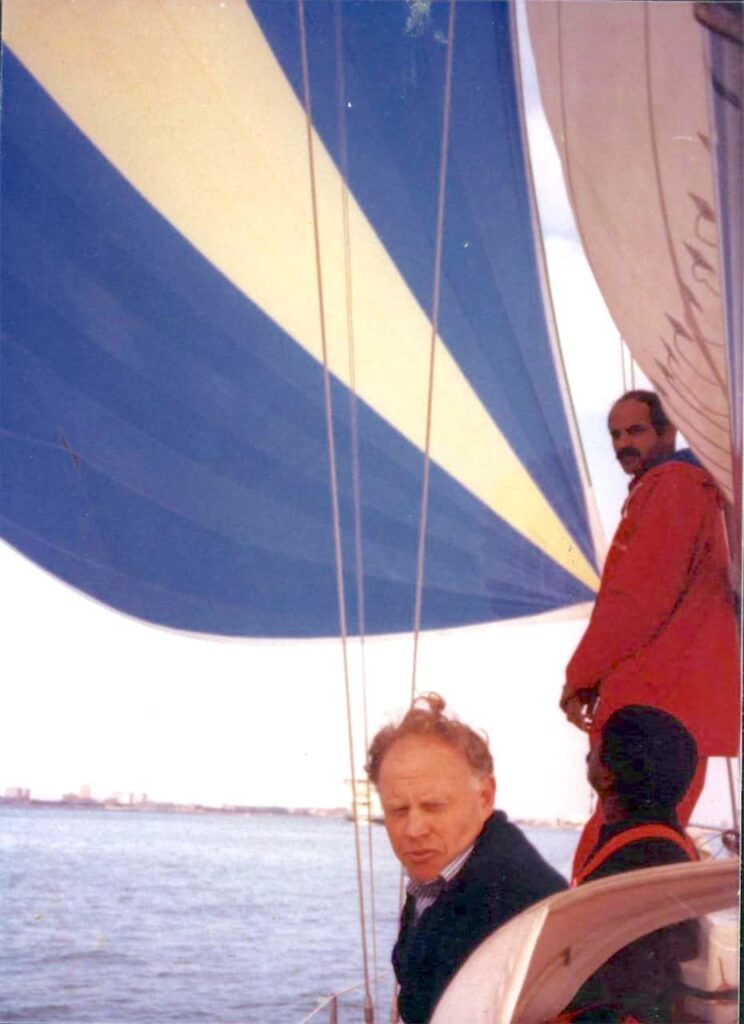
One can’t forget the sails in a yacht! These are again expensive items, depending on what use they are required for. An ocean-going boat generally carries on board a set of foresails; in layman terms, different sails for different wind conditions. Consequently, the thickness of the sailcloth varies, with a thicker cloth and smaller sails for heavy wind conditions and vice versa. The lightest foresail we had (and the largest in sail area) was a drifter, whose material could be compared in thickness with that of a handkerchief! Of course, as soon as winds picked up even a bit, it had to be changed before it got ripped apart. The mainsail remains the same for all wind conditions – as the wind strength increases, the sail is reefed (rolled up) using a winch so that the sail area is decreased to match the wind strength.
.
.
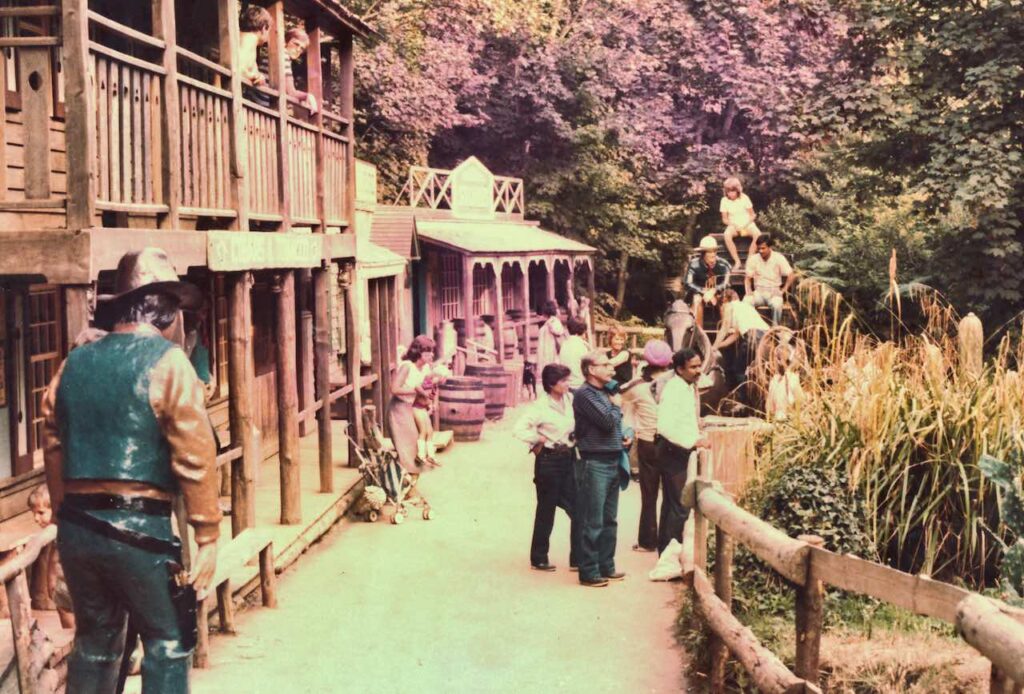
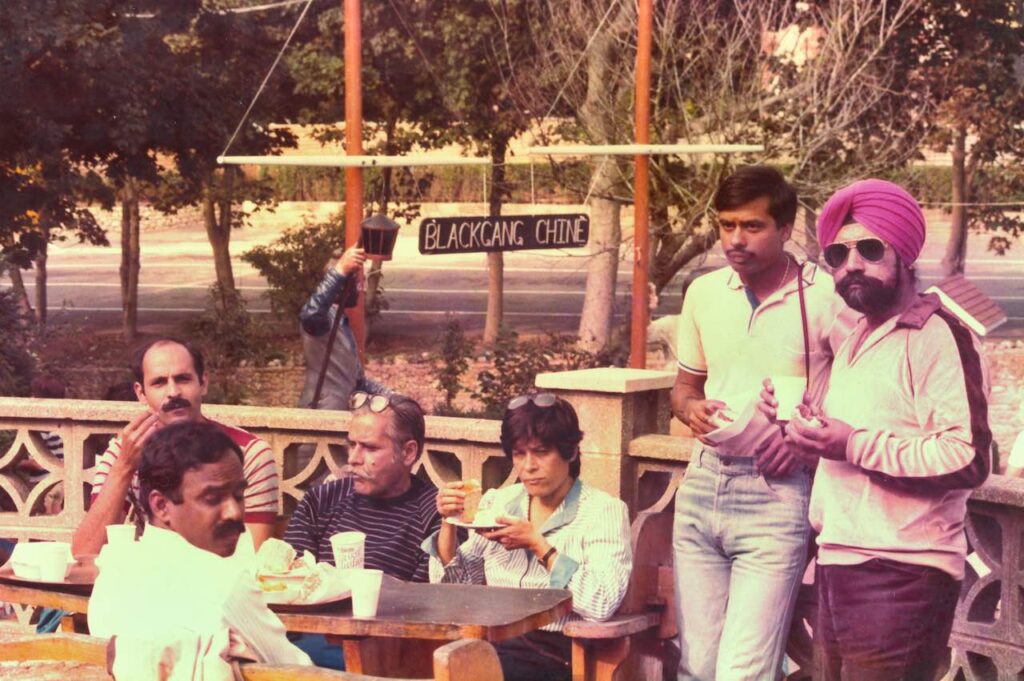
While the boat rigging was being replaced, we took off for one of our rare outings. There was nothing else to do on the island! The Isle of Wight has Britain’s oldest amusement park – the Blackgang Chine – and we spent the day there.
.
.
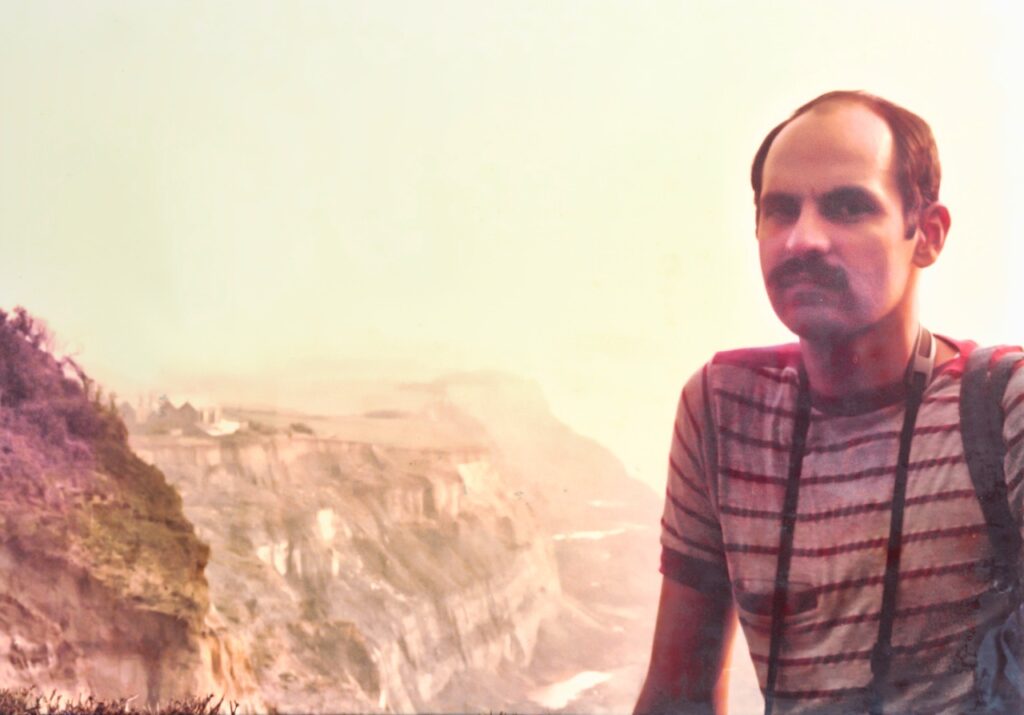
Spread over a vast area, partly overlooking the cliffs dropping down into the sea, we walked through the villages depicting various themes like the Wild West, some depicting pages from popular nursery rhymes and, others, comic characters. It was a good break for us from the daily routine of boat repairs-sail-sleep.
.
.
Before we sailed off, we made a quick trip to Nehru Centre (The Indian High Commission), London. It was a courtesy call (even though we hardly got any assistance from that end) and to extend an invitation for attending our sail off from Gosport.
.
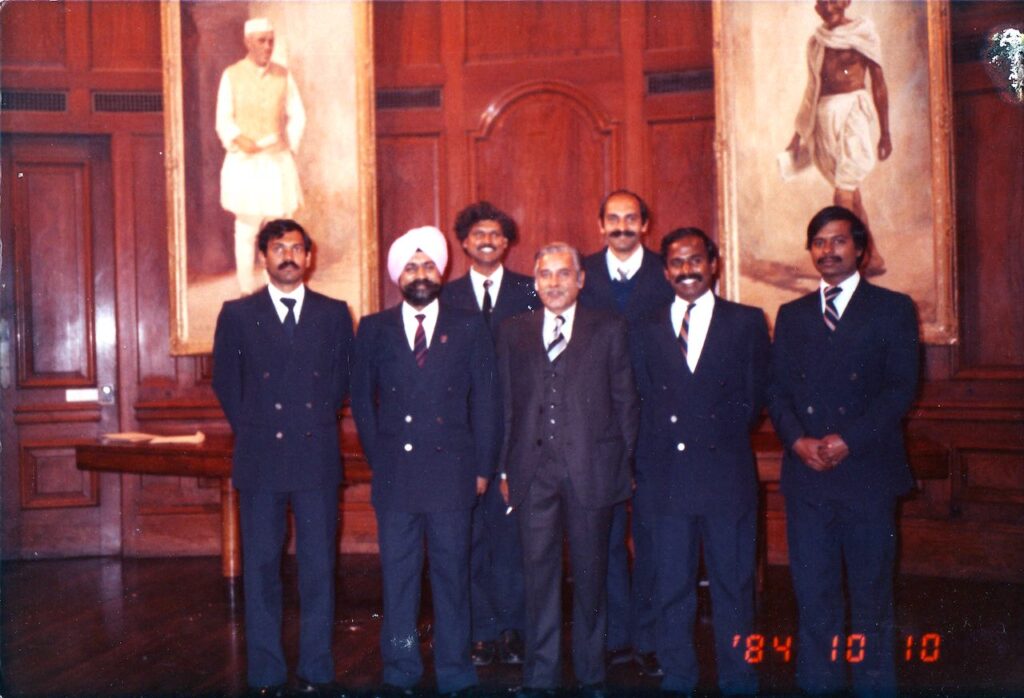
(From Left: Bharti, Tipsy, AK, Harry Kapoor, AP, KS, Shekhar)
.
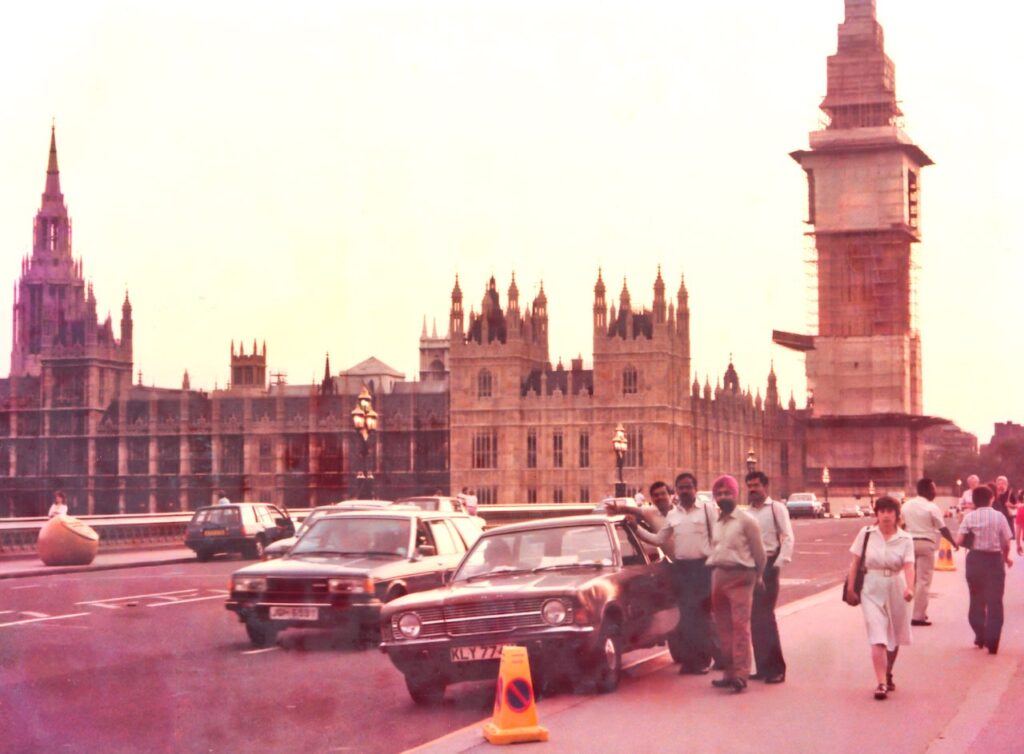
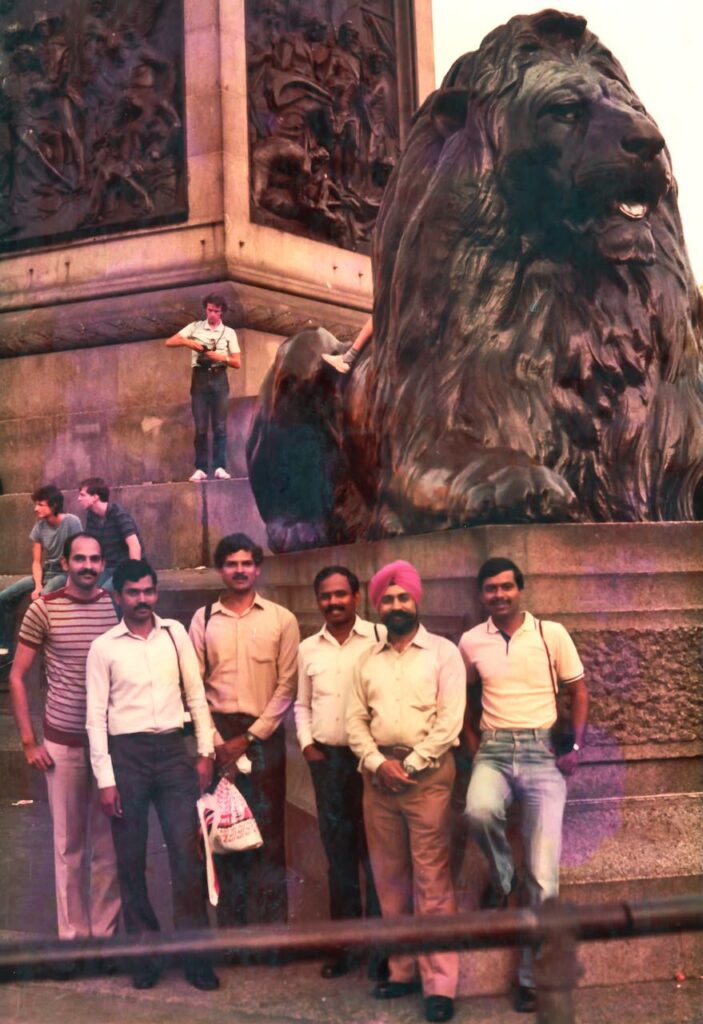
The High Commissioner was too busy, so we left the invite with the Defence Attache. The trip to London also gave us an opportunity to buy provisions in bulk for the voyage from the wholesale superstores there. In between, we managed to squeeze in a bit of sightseeing of the popular sights of London.
.
.
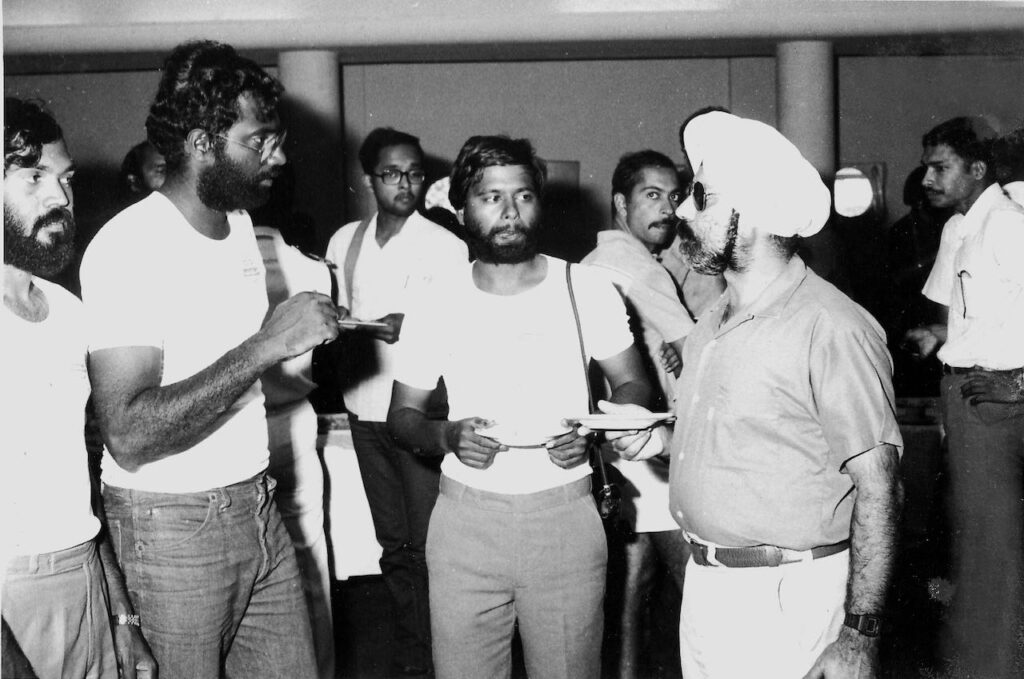
The last engagement we had before leaving Gosport was to host a get-together for thanking all those who had been associated with us during our longish stay – those who taught us, assisted us, and our well-wishers. The Officers Mess came up with excellent arrangements for the guests, an appropriate acknowledgement on behalf of the crew of the Guinevere of Sussex (she would be renamed Trishna only when we reached back to India).
.
Sail-off from Gosport & Crossing the “Bay of Storms”
.
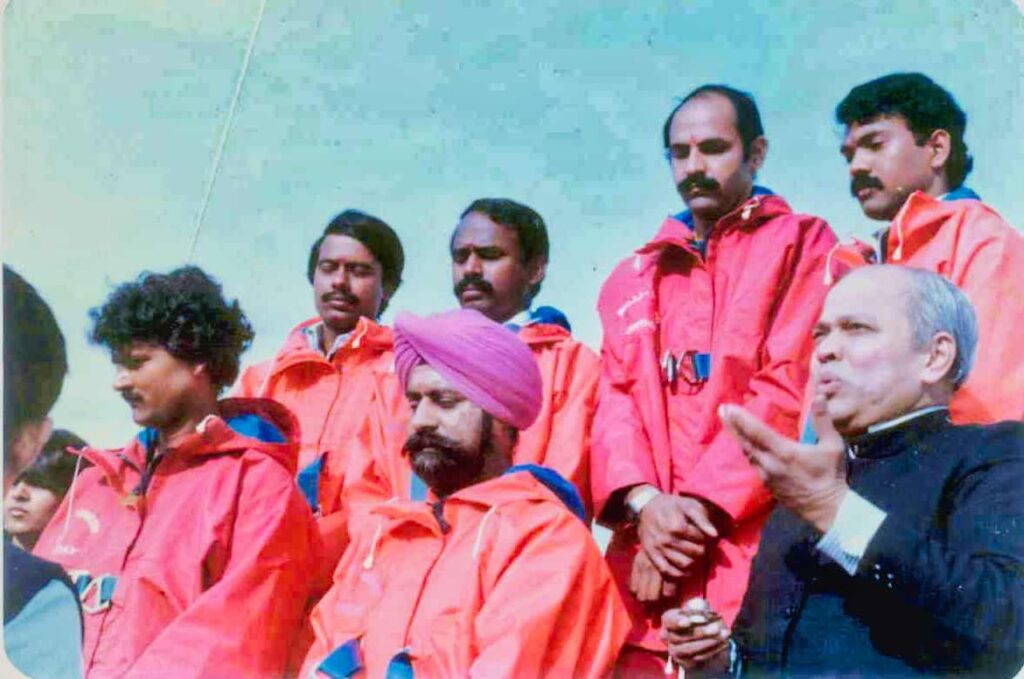
After the traditional puja, performed by a pundit from the Bharatiya Vidya Bhavan, London, we sailed off from Gosport for Bombay on 12 Oct 1984 at precisely 2:38 pm (GMT). Onboard were Col TPS Chowdhury, Maj KS Rao, Maj AP Singh, Maj AK Singh, Capt S Shekhar and Capt C Bharti; Ron Gravels was accompanying us till Gibraltar, his concluding assignment with us. Winters had already begun to set in, the season when sailors were cautioned from attempting to sail in the North Atlantic Ocean and the Mediterranean Sea due to the onset of winter storms, and the fact that most of the rainfall occurs in the region during winters. Sailing the Red Sea from north-to-south in winters was also an absolute no-no due to a combination of severe adverse weather and winds/currents. However, there was no option for us as we did not have the luxury of waiting till spring to make this voyage – the circumnavigation was scheduled to kick off from Bombay by autumn 1985 and the boat needed a major refit before that!
.
The Defence Attache from the High Commission came to see us off, and with him, he brought the bad news of a gale warning and advised us to postpone the sail-off till it blew over. It was difficult to turn down his “official” advice, which, however, was politely brushed aside – it was too late to postpone the sail off; AK had even sold his moped by then! The only effect the weather report had on us was that we probably downed a few more cans of beer thinking of the impending storm and the expected dousing in the freezing waters!
.
.
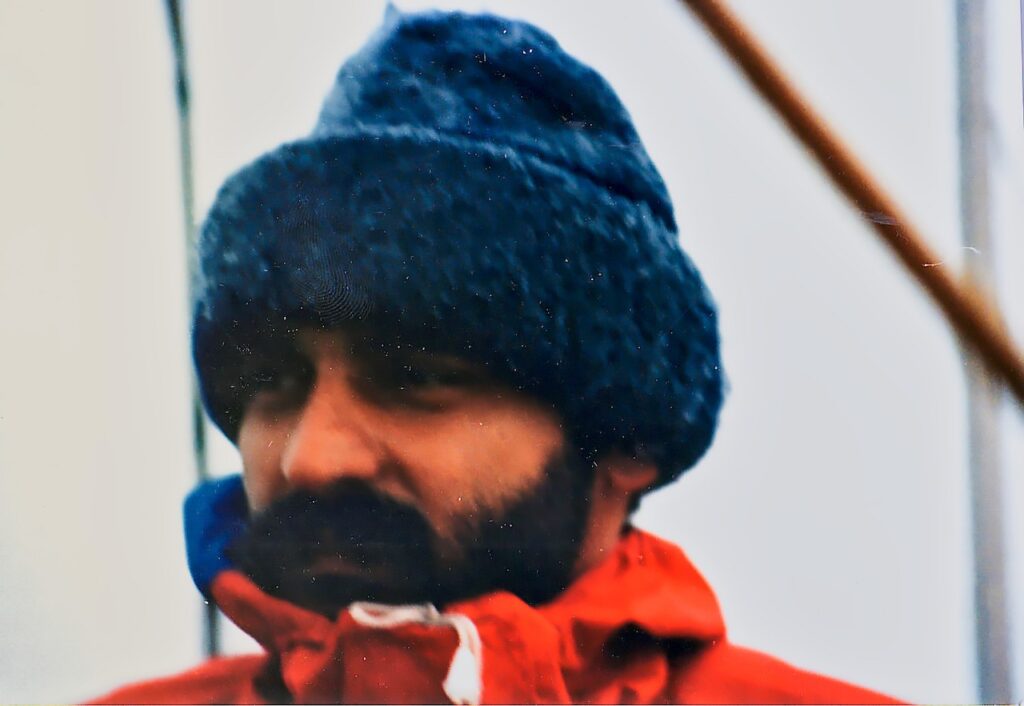
The storm was in no hurry – the gale was predicted in a few days. The journey from Gosport took us through the Channel Islands – stopping at Alderney on 14 October 1984 for topping up our water tanks, which had limited capacity – they were substantially augmented during the refit later. It was also where we encountered the densest fog, one of the few occasions where we had to keep blowing the fog horn periodically in the eerie silence of the enveloping fog.
.
.
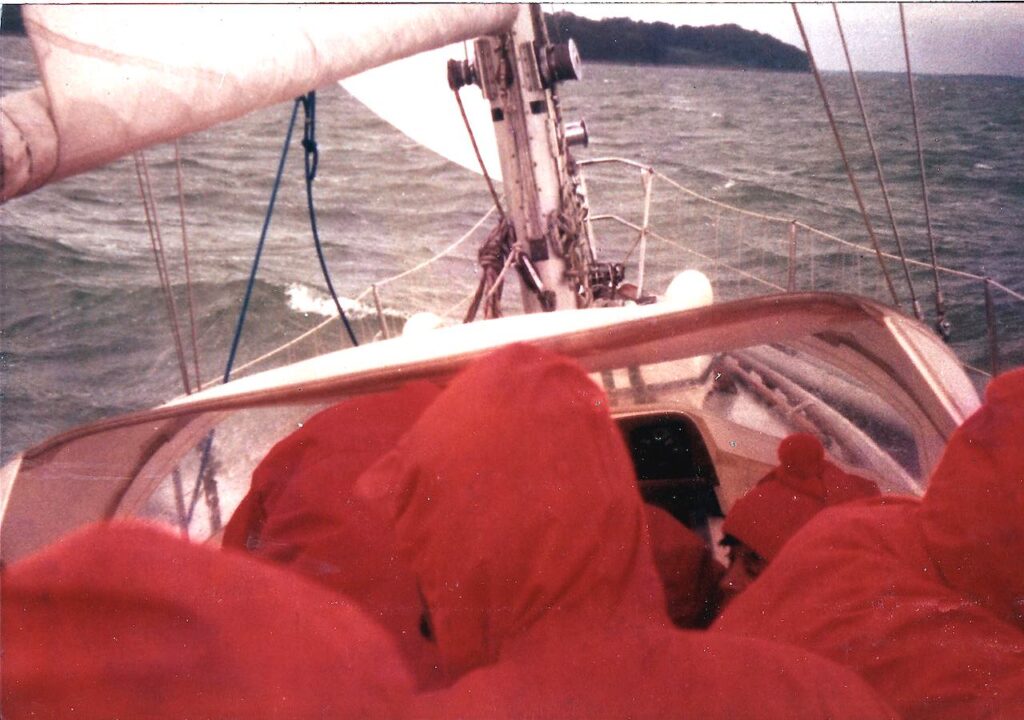
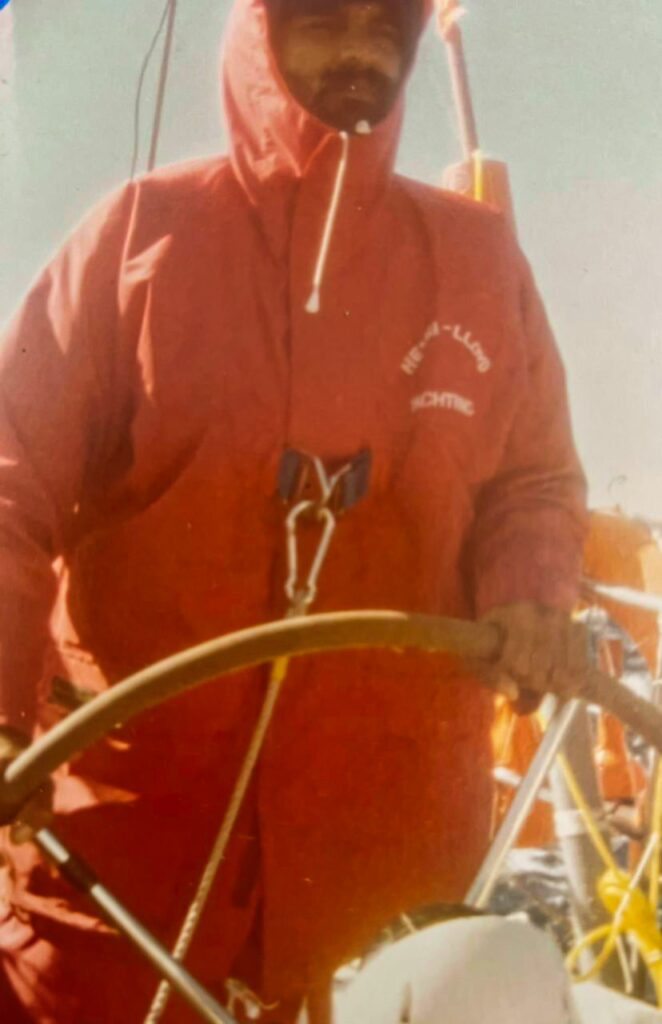
And then the storm struck on 17/18 Oct 1984 as we entered the infamous Bay of Biscay, also known as the ‘Bay of Storms’; winds over 60 knots and waves over 12 metres high. It was our first major “blow” and a unique experience for us. With adverse winds (it was a beating course), we battled against shrieking winds and pounding waves in freezing waters for over 18 hours as we were tossed about inside the boat.
.
La Coruna, Spain
.
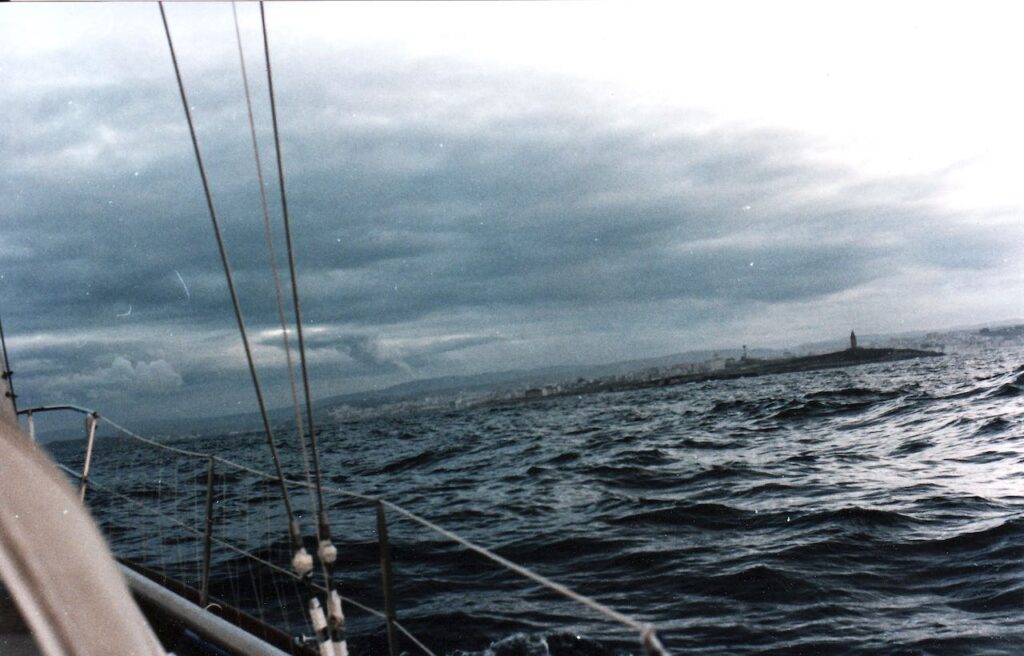
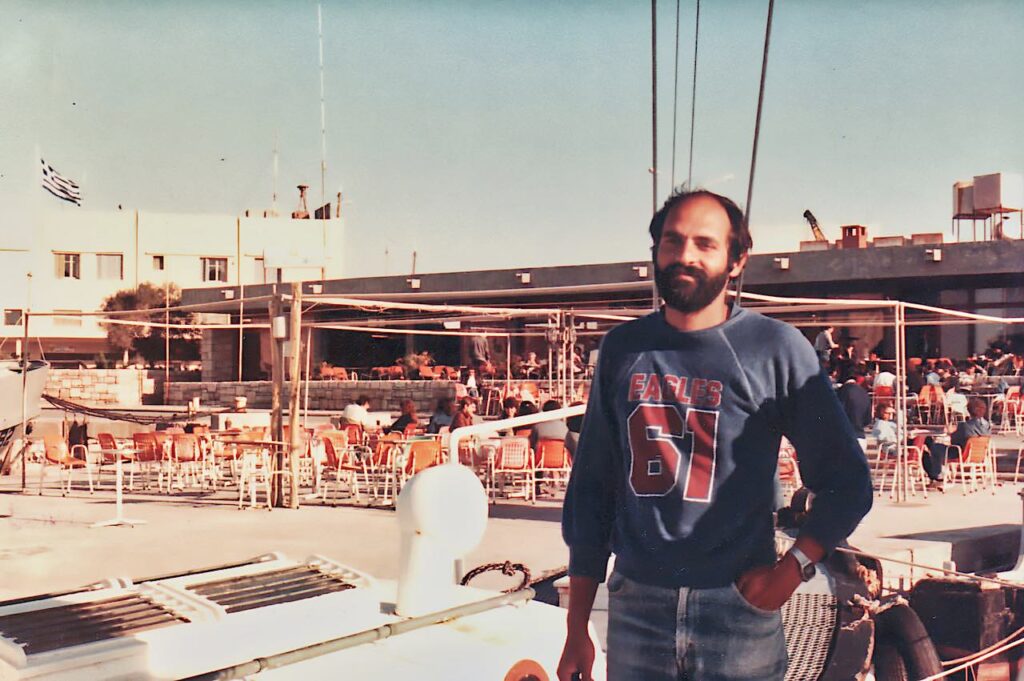
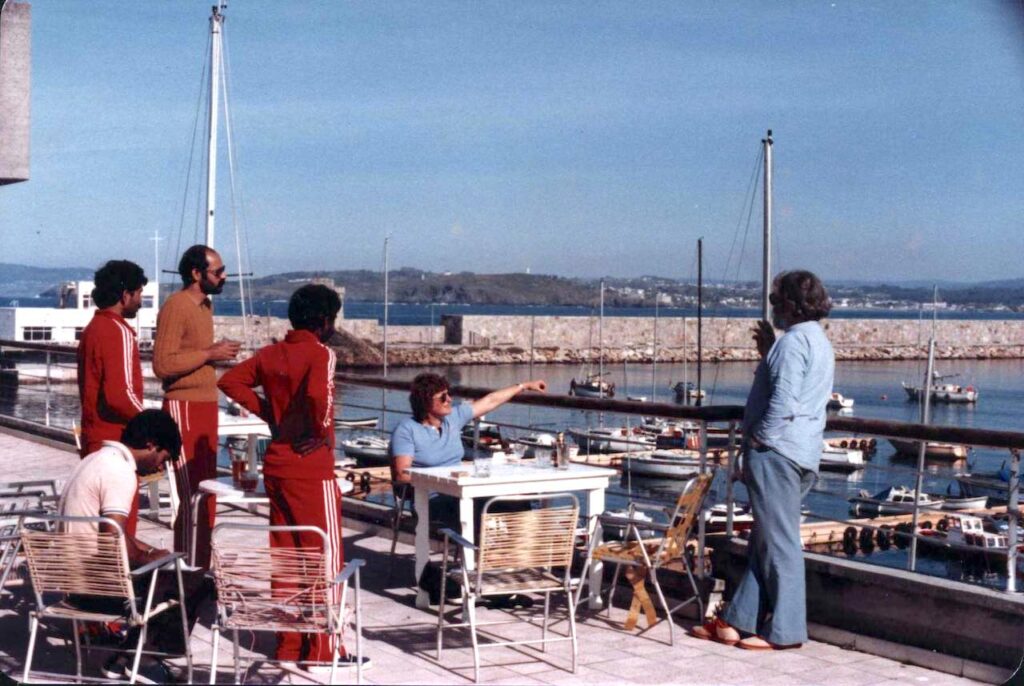
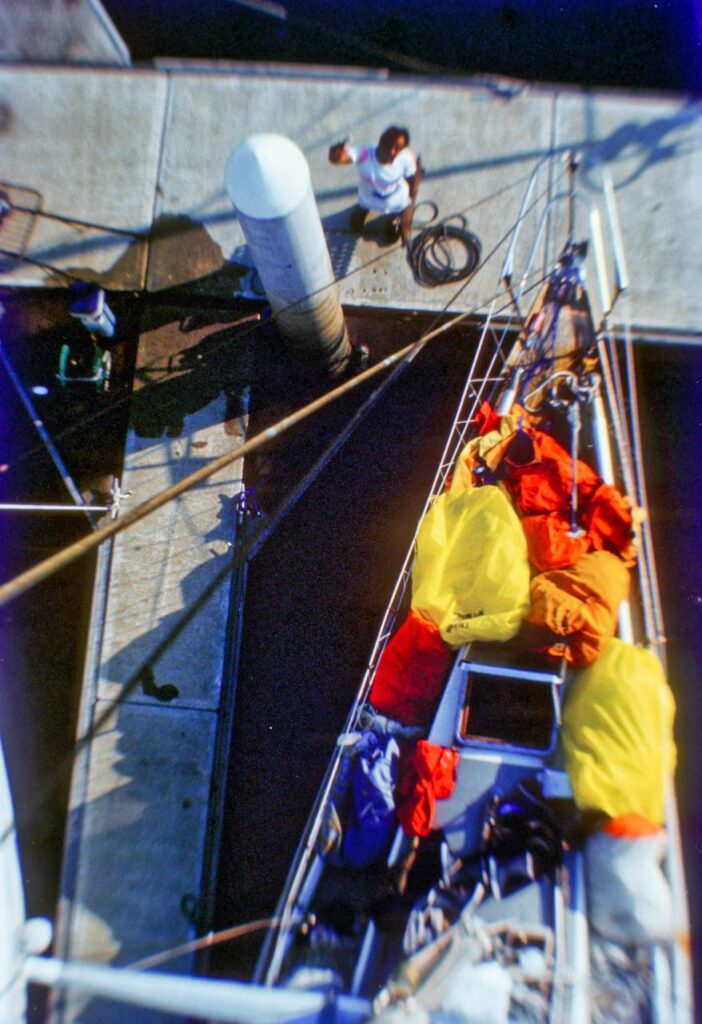
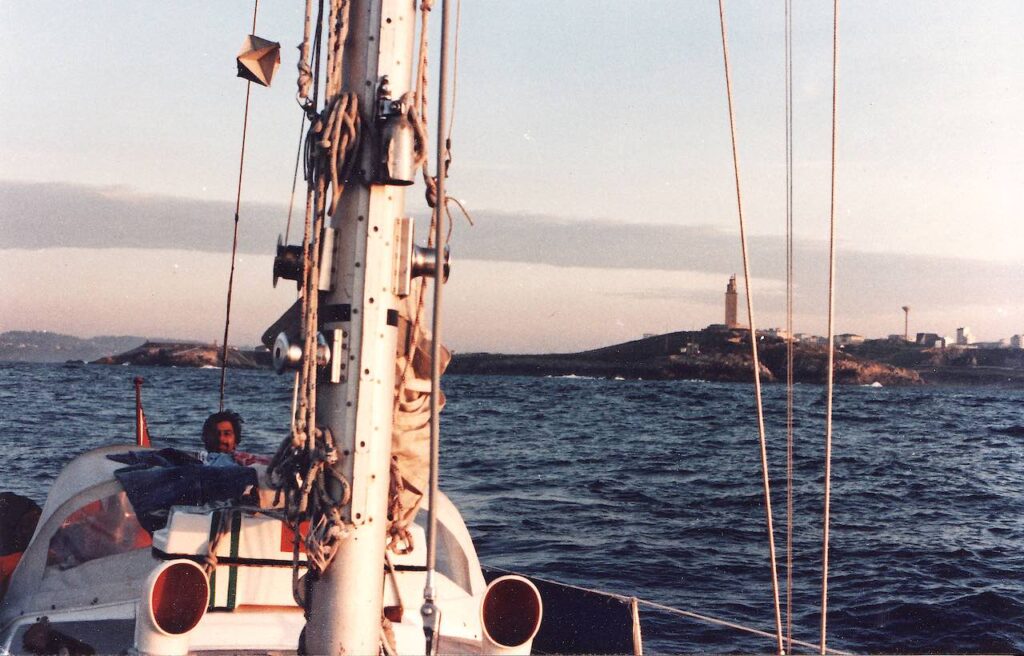
With a torn sail, broken aerial and a damaged stay, we limped into La Coruna in Spain on 20 Oct 1984. The Bay had lived up to its name and the winds literally blew us across it.
.
.
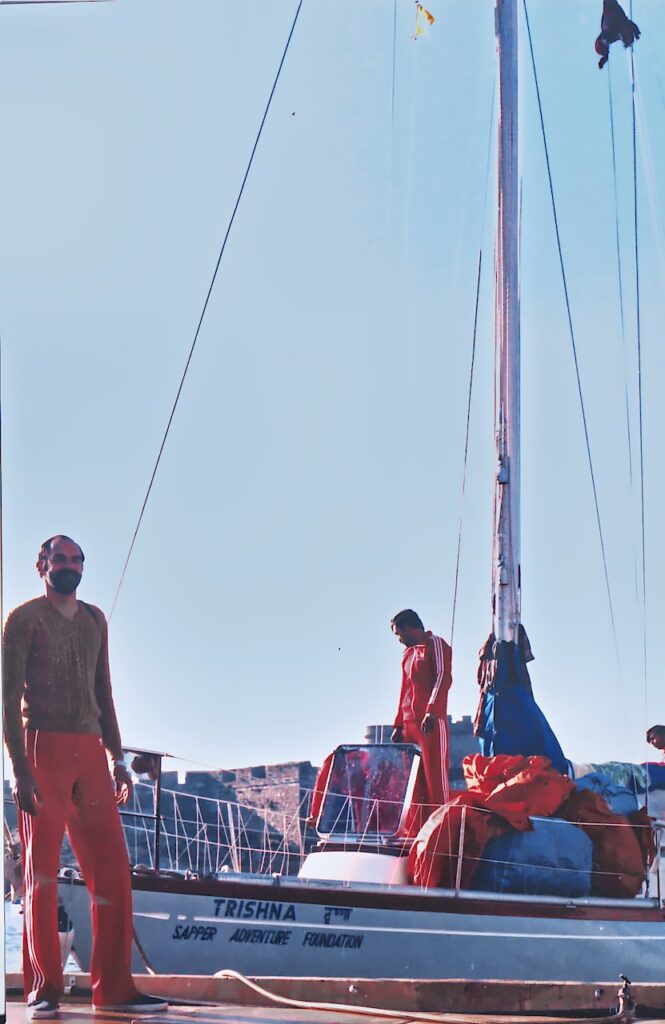
Our first experience of a gale had been tackled successfully, though it left us exhausted from the experience, partially due to seasickness and the resulting lack of ingestion of any food/water.
.
.
This baptism, however, made us confident to take on whatever came our way in future. The sail ahead was going to give us plenty more ‘blows’ to tackle during the voyage!
.
.
Lisbon, Portugal
It was a short halt of just one day and after carrying out minor repairs, and catching our breath, we sailed from La Coruna on 21 Oct 1984 for Lisbon (Portugal). After crossing the Cabo da Roca (the western-most point of Europe, which juts out into the North Atlantic Ocean), we headed for the mouth of Tagus River.
.
.
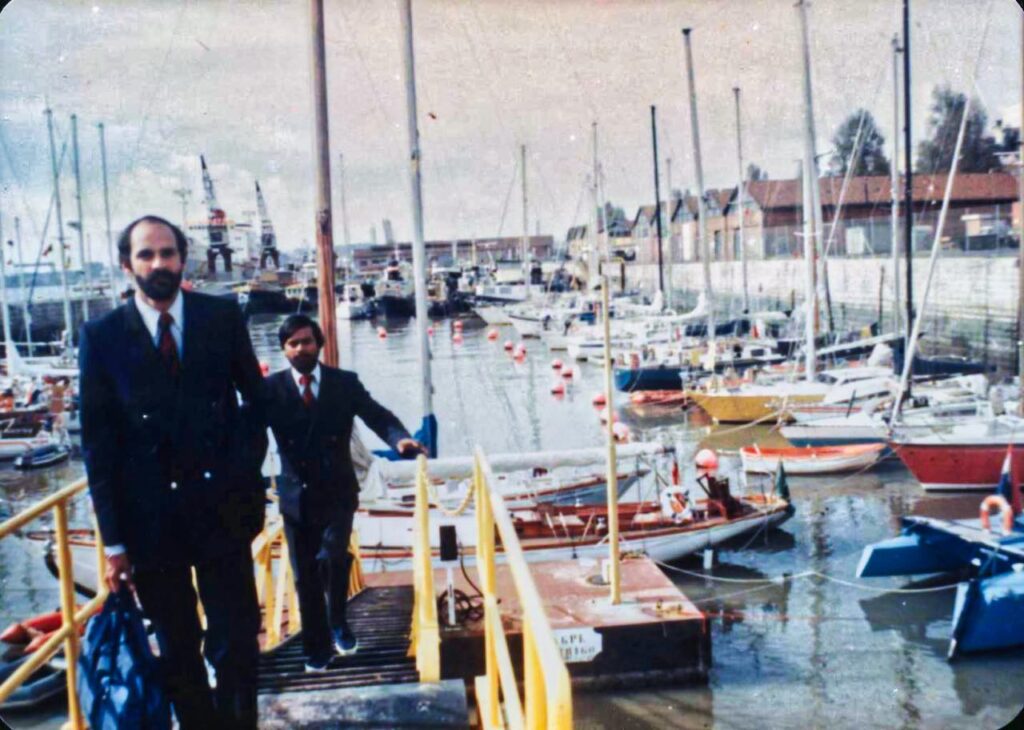
The harbour was a short sail up the River and we moored in a small enclosed marina on 26 Oct 1984. It was another stopover which saw the camaraderie and hospitality among the uniformed community.
.
.
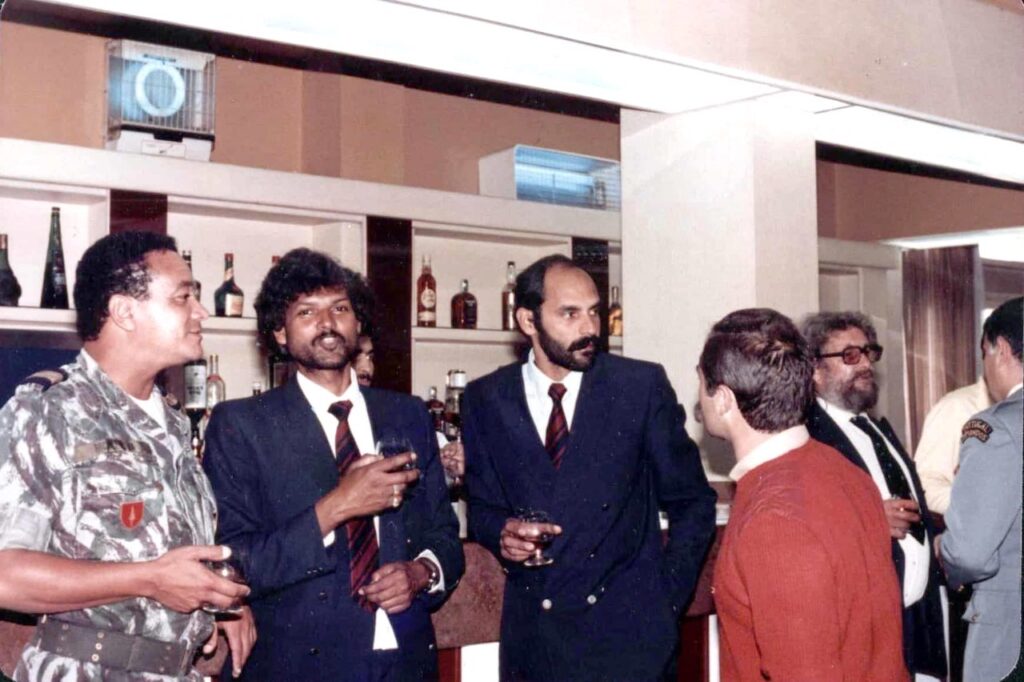
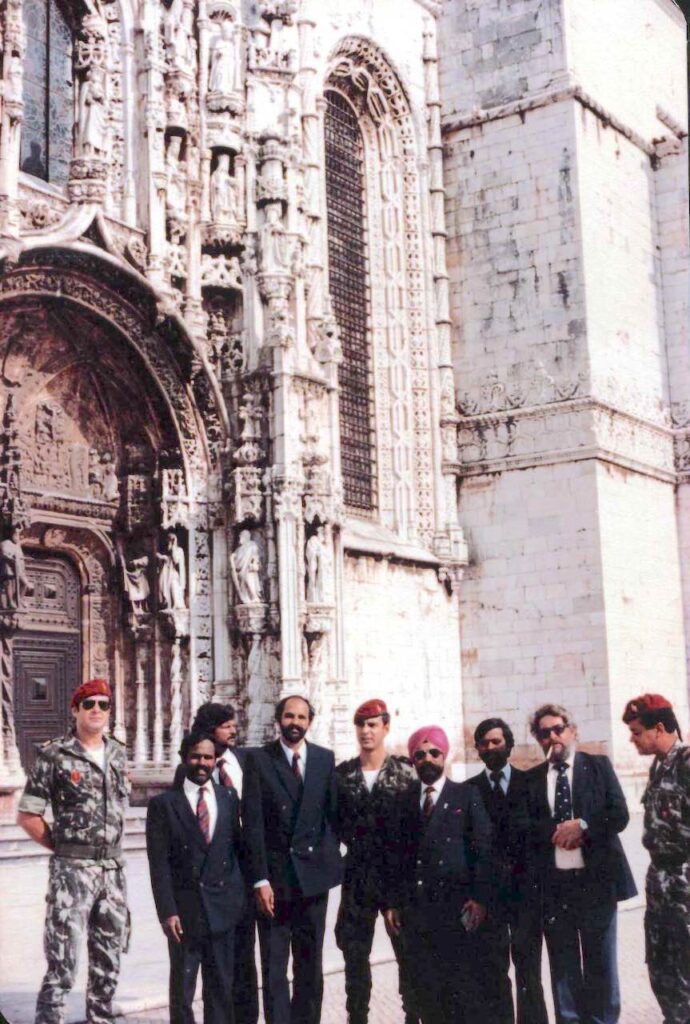
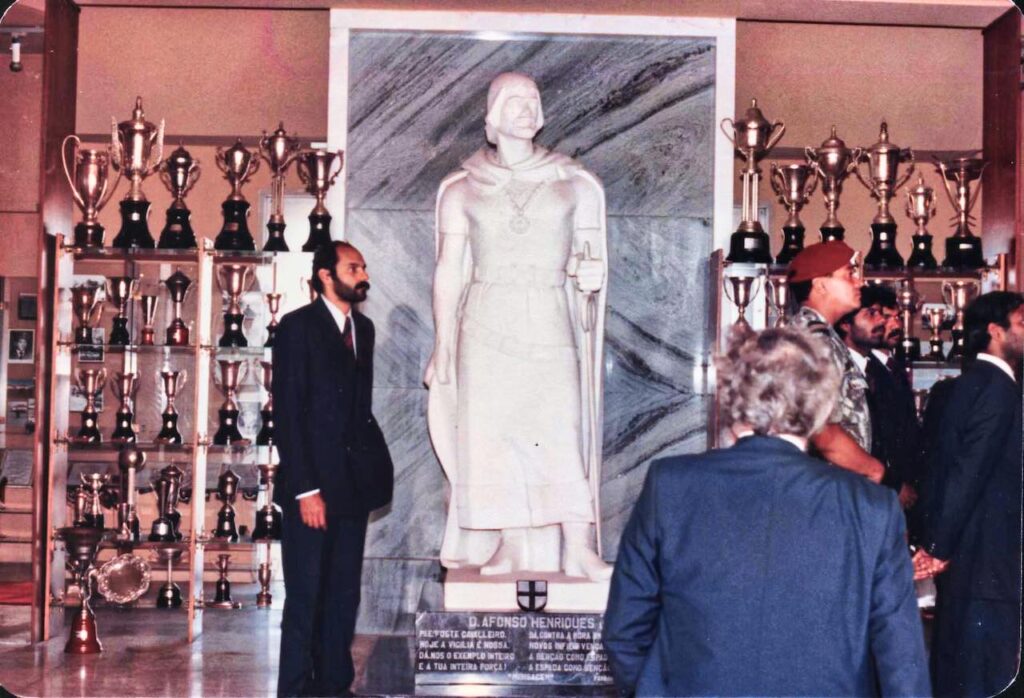
The Portuguese Army Chief personally ensured we were well looked after and our hosts were the elite special forces of the Portuguese Army, the Commandos. Though there had been limited interaction between the armed forces of the two countries, they went out of the way in welcoming us and the officers were eager to know more about the Indian Army.
.
.
We had long chatting sessions over countless glasses of exquisite Portuguese wine – we never knew their wine was so good – in the Officers Mess and during drives with them when they took us around the beautiful city of Lisboa to see the numerous heritage monuments and structures. They had been one of the most powerful colonial powers in their heydays, owing to legendary seafarers like Henry the Navigator, Megallen, Vasco da Gama, and their ships ruled the oceans.
.
.
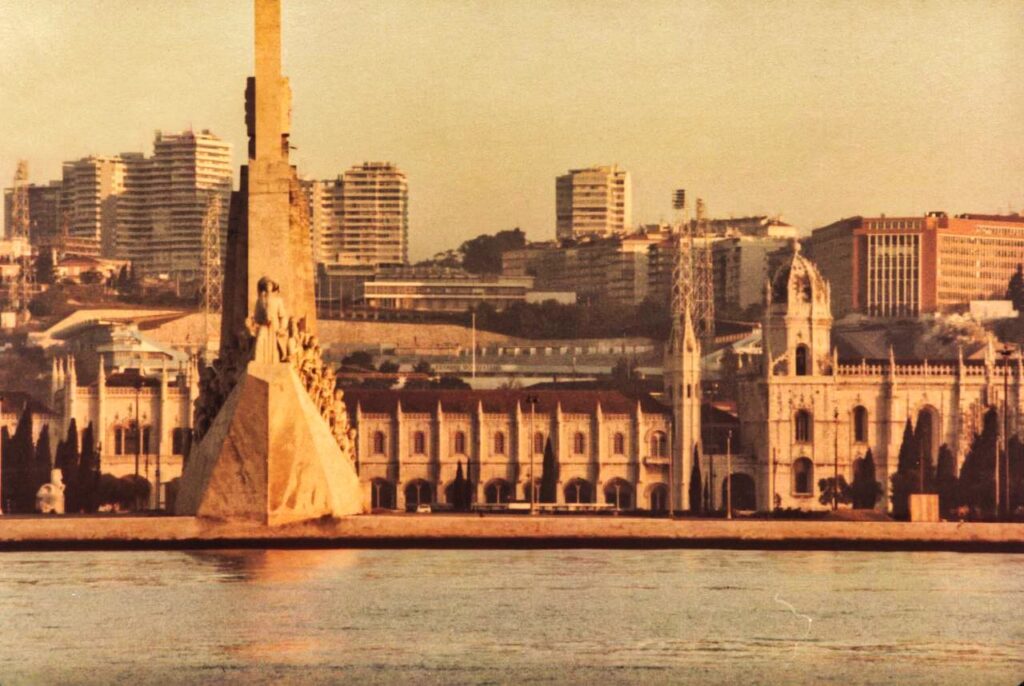
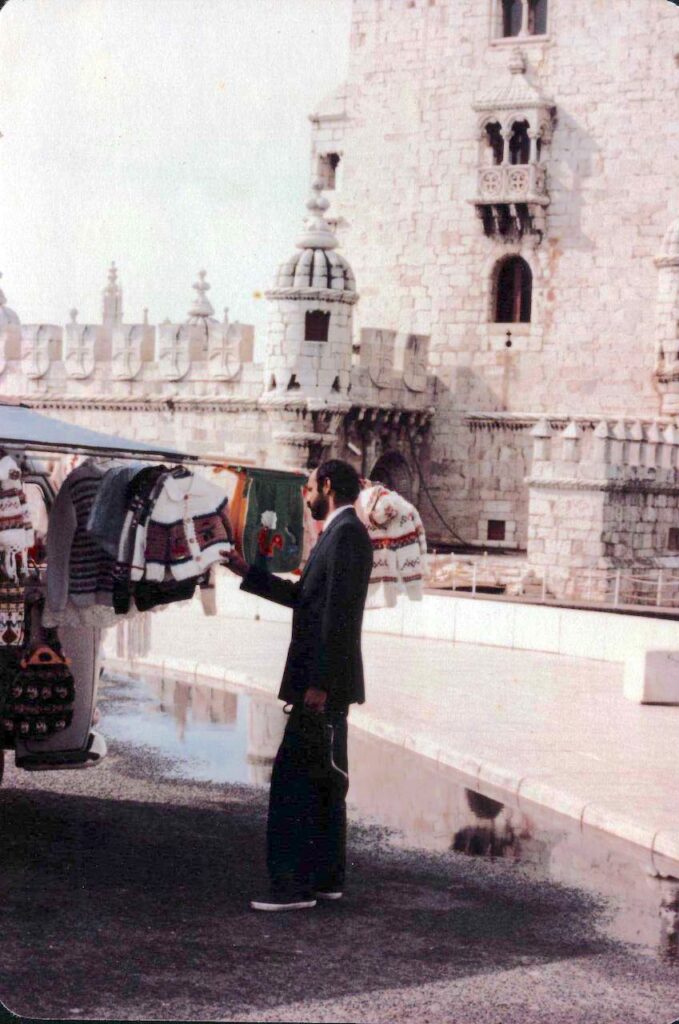
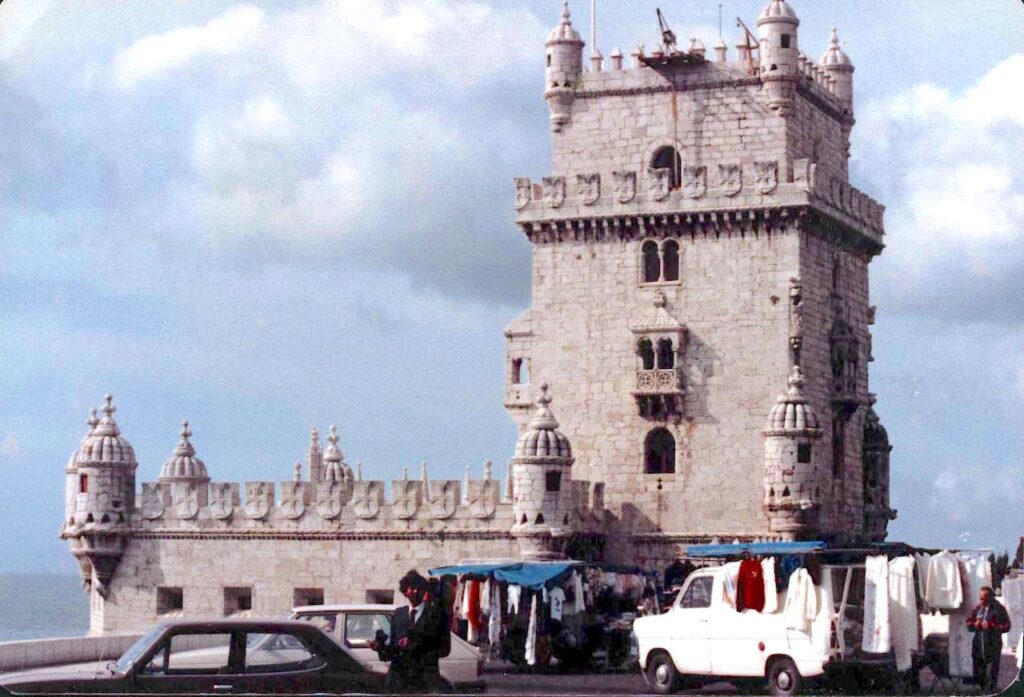
The “old” wealth was visible in the monuments and museums we visited. One of the landmark monuments we visited was the Belem Tower, located on the banks of the Tagus River and from where all the famous voyages of discovery in the past sailed off from, including Vasco da Gama for India. Nearby was the Discoveries Monument, also on the river bank, depicting the erstwhile “great” discoverers.
.
.
The Indian Ambassador invited us to the Indian Embassy for meeting him and the staff over a cup of tea.
We also went for a longish drive along the scenic coastline till the Atlantic Ocean, with beaches lining the coastline. The weather was partially overcast and hence the beaches were mostly deserted. To get a real feel of army life, we had lunch at the langar (dining hall for soldiers). The food was the same as we had been having, including the copious quantities of wine served! News of Indians having “landed” in Lisboa spread and a Gujarati businessman landed up one day to take us to his house. Unfortunately (!), he was a teetotaler, and the only thing we could drink at his home was copious quantities of milk! To which we did justice so as not to disappoint him. His wife was vacationing in India and he was to take us to a hotel for dinner; by the time we finished telling him stories of how we had managed to escape from sea monsters by the skin of our teeth, and reached the hotel, it was 4:00 am! The staff of the 5* hotel were already laying the tables for breakfast, however, a quick switch of crockery and cutlery and we were soon served an excellent Portuguese “morning” dinner.
.
.
Before we sailed off on 28 Oct 1984, our Portuguese hosts filled our boat with some of the choicest of wines and juicy golden apples. Consumption of wine (or any alcohol) was restricted onboard and allowed only on special occasions (which were rare, for two reasons – occasions were few and we did not have many good-weather days). The crate of apples served us well, and on many bad-weather days was the only thing we felt like eating. During this leg the weather was often foggy and chilly, causing anxious moments without a radar. The winds continued to be adverse and sailing against the wind slowed our actual progress. Before we could finally head eastwards for Gibraltar, we had to sail nearly to Tangiers (on the African coast), before we could finally tack for our destination.
.
Gibraltar

.
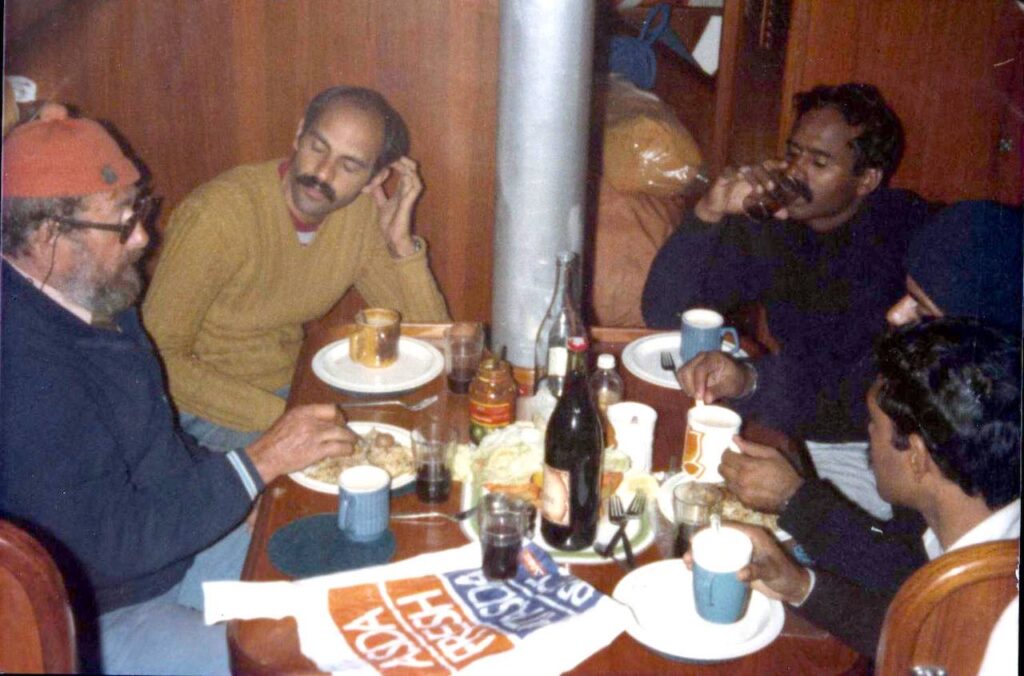
The next halt was Gibraltar where we reached on 01 Nov 1984; we learnt of the tragic assassination of Prime Minister Indira Gandhi and the riots thereafter here. Ron Gravel had been with us all along and remained more of an observer, watching how his ‘students’ performed – he never interfered. He was pleased by the result when he disembarked at Gibraltar.
.
.
It was a parting with mixed emotions, which swung between a genuine admiration for his knowledge and guidance, mixed with a distaste for his boorish behaviour and snobbish “British” manners which slipped out from under his mask on occasions! Nonetheless, he had carried out the job assigned to him with typical British thoroughness and I was grateful for that. That he was a true blue-blood sailor was evident from the fact that his woollen cap was NEVER removed as long as he was on the boat!
.
.
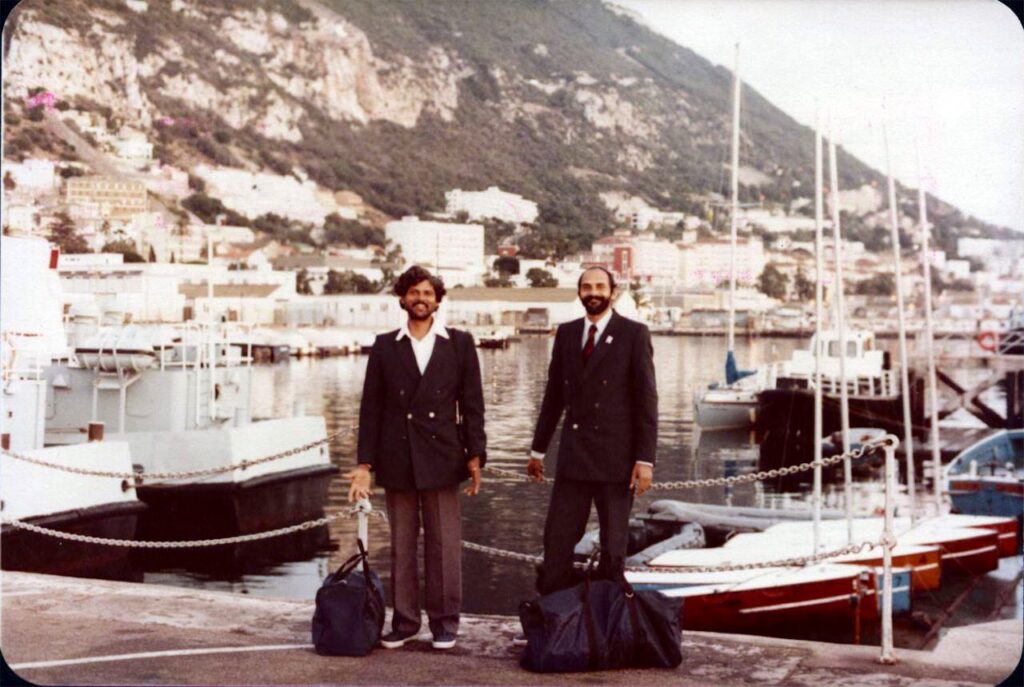
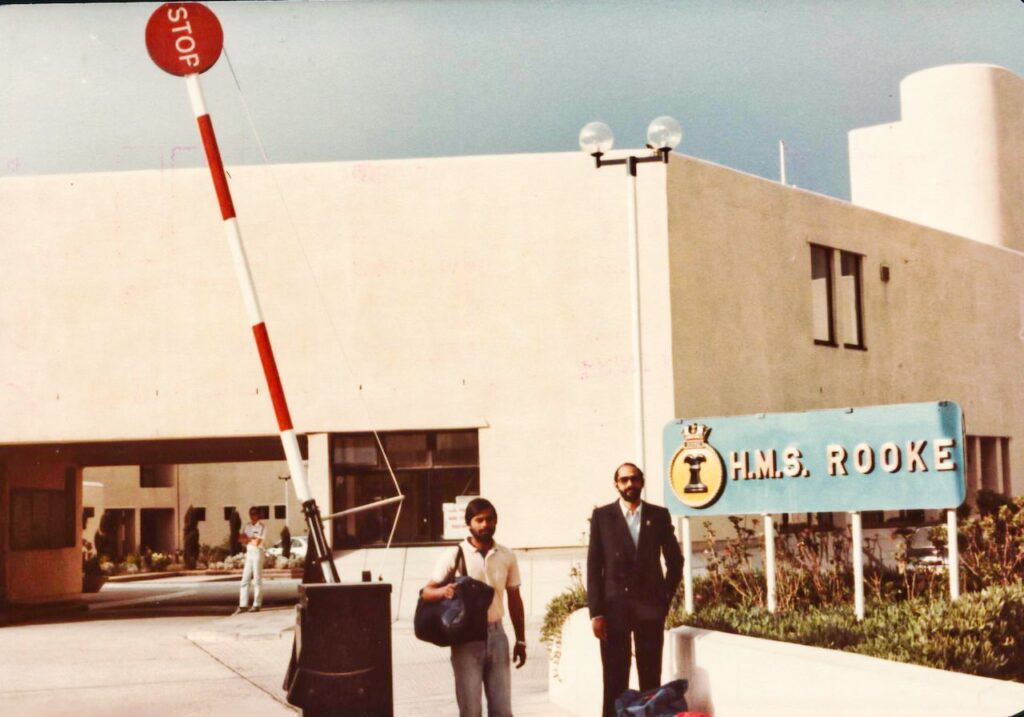
At Gibraltar, we moored at the Naval jetty and they had arranged for our stay at the Officers Mess of HMS Rooke, the Naval base. We slept like logs the first night and were woken with a pleasant surprise the next morning – the sight of a smartly dressed pretty lady sailor bringing bed tea in our room! Luckily, I was well covered by the quilt when she entered the room.
.
.
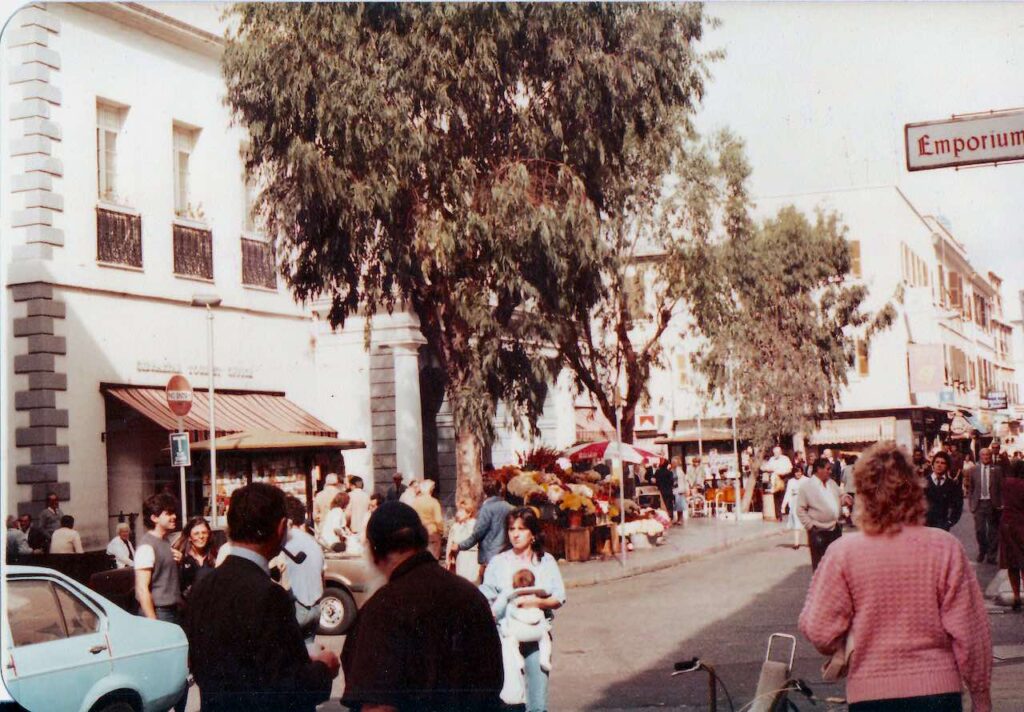
Gibraltar is a small rocky outpost and also known as The Rock – being among the last remnants of the erstwhile British Empire. We had another taste of the hospitality of the Royal Engineers here – they provided us with a van with a guide to see the place. There were many amazing things to see, both natural and manmade.
.
.
We could see them all, starting with the quintessential Army band playing on the Bandstand in the main market, which was full of men and women dressed in their Sunday finery, to visiting places in the Restricted Areas, where civilians were not allowed.
A bit of history – Gibraltar was the place of origin of the Royal Engineers in the 16th century, as a Company of Artificers. This unit was raised for digging tunnels during the siege of The Rock by Spain.
.
.
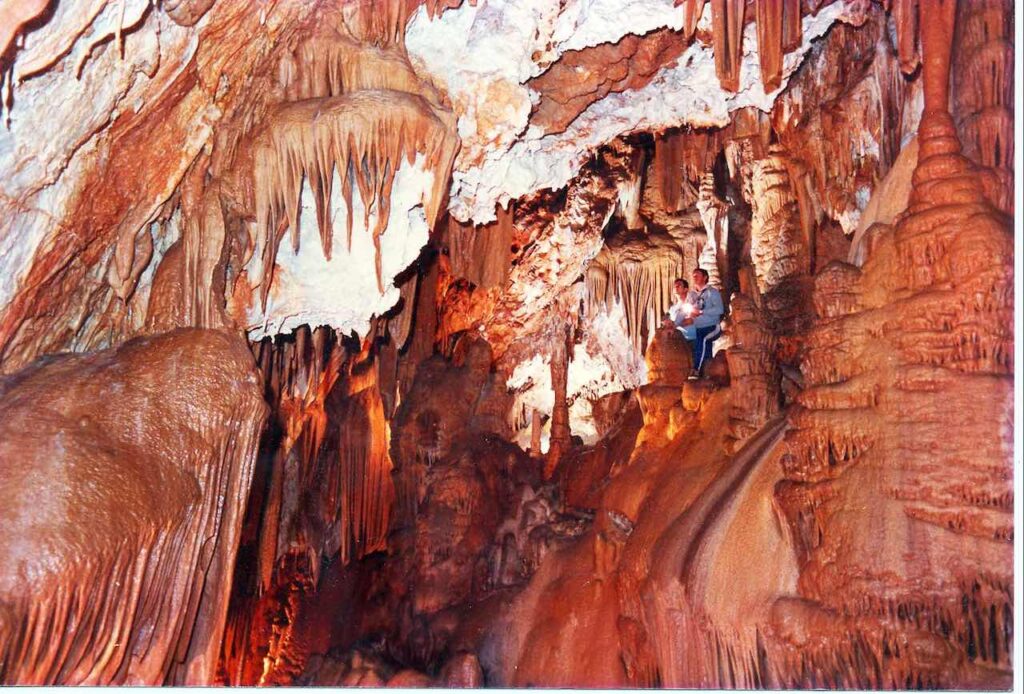
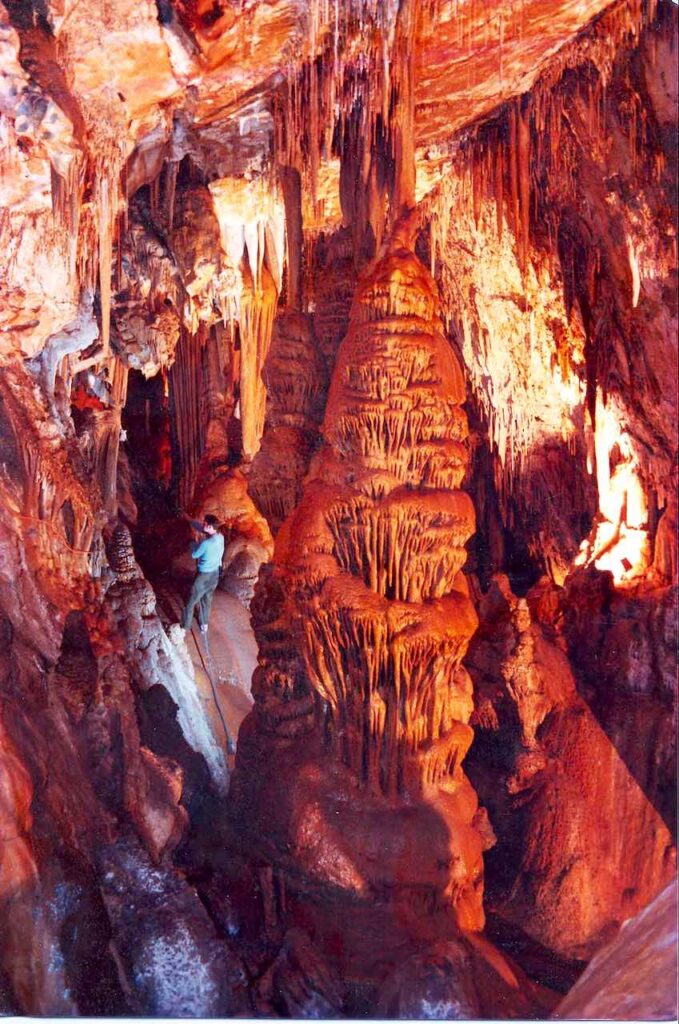
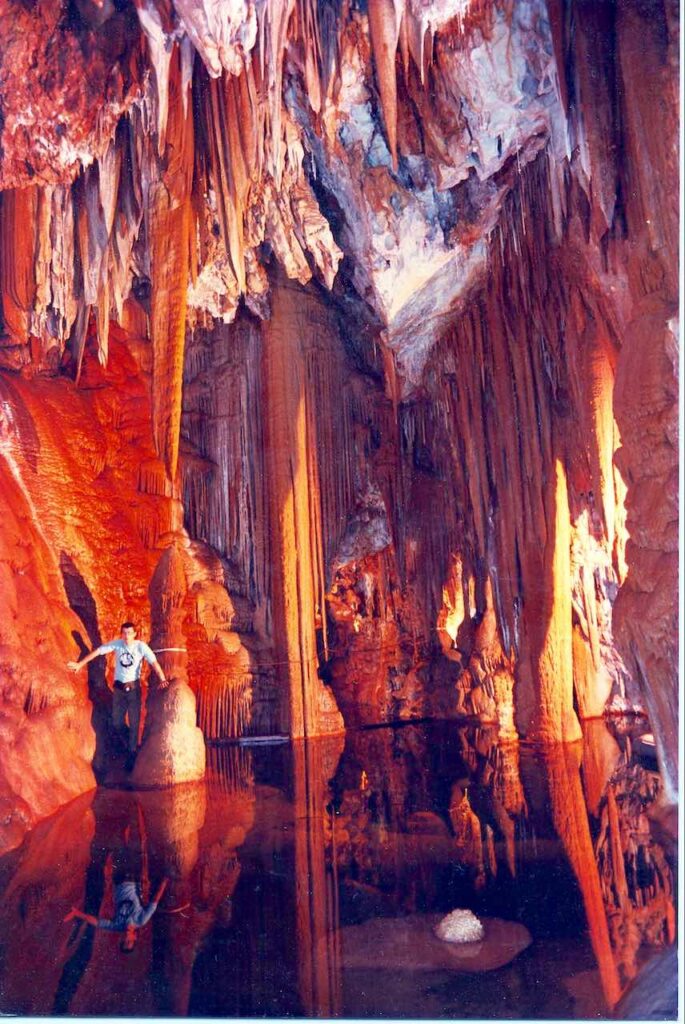
It was a surprise for us to learn that Gibraltar had one of the natural wonders of the world – a network of limestone caves known as St. Michael’s Caves. The numerous stalactites and stalagmites in the cave have been formed by an accumulation of traces of dissolved rock deposited by water dripping from the ground above over thousands of years.
.
.
The beautiful colours of the rock formations were truly a wonder to see. At the time, since the caves were inside the Restricted Area, they were off-limits to tourists. However, they now form one of the most popular tourist attractions.
.
.
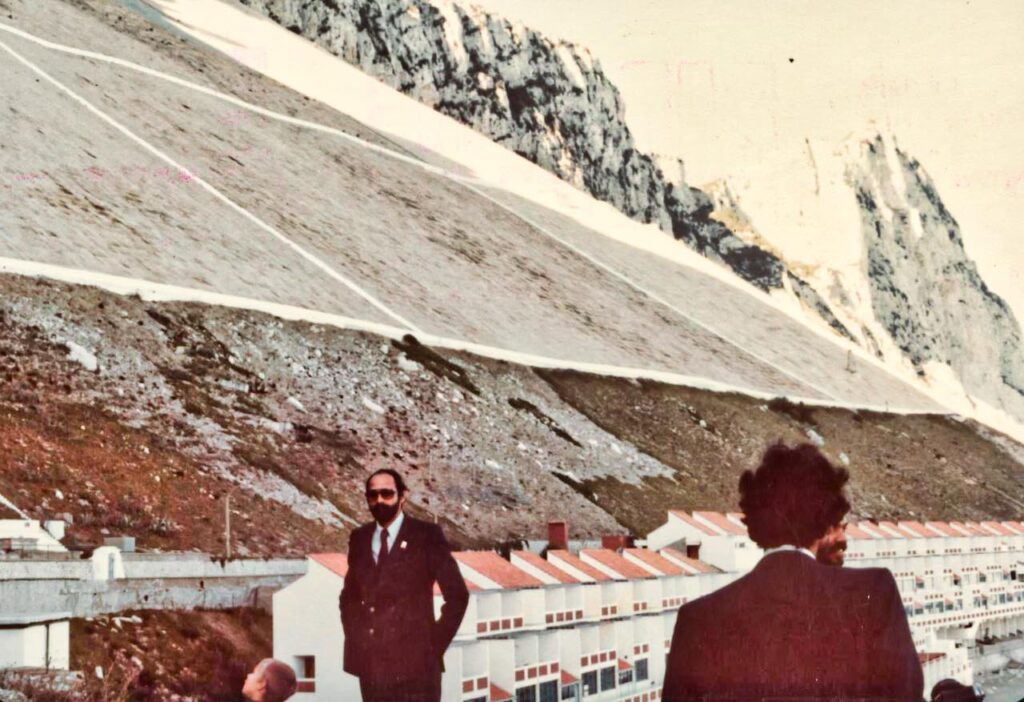
Water on The Rock was always in short supply and the Royal Engineers had devised a novel method of ‘harvesting’ rainwater, where we were taken for a visit. A whole hillside had been covered with synthetic sheets and this let the rainwater runoff into storages built below. Providing drinking water to the town.
.
.
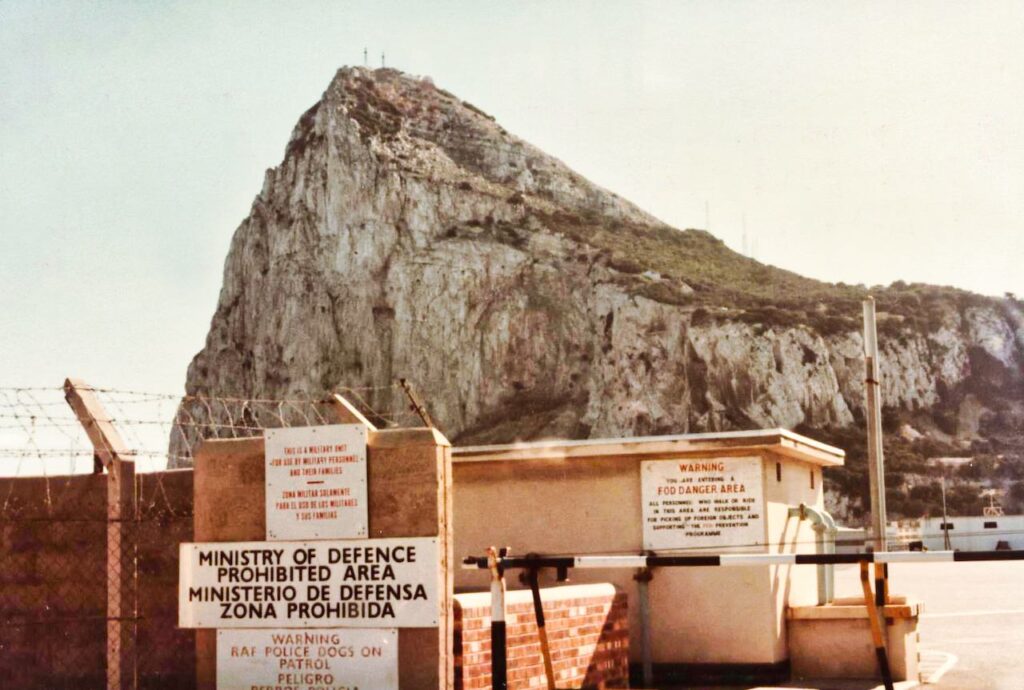
We also drove across the airfield, the road crossed the runway and there was a barrier to stop traffic during takeoffs and landings by aircraft, to see the border crossing with Spain. It was a wonder that the British could hold on to the small Rock (the area of Gibraltar is 6.7 square km only!) against many Spanish attacks over the centuries. Our guide took us to see the view from a tunnel overlooking the border; it was a portion of the vast network of tunnels constructed as part of the defensive fortifications.
.
.
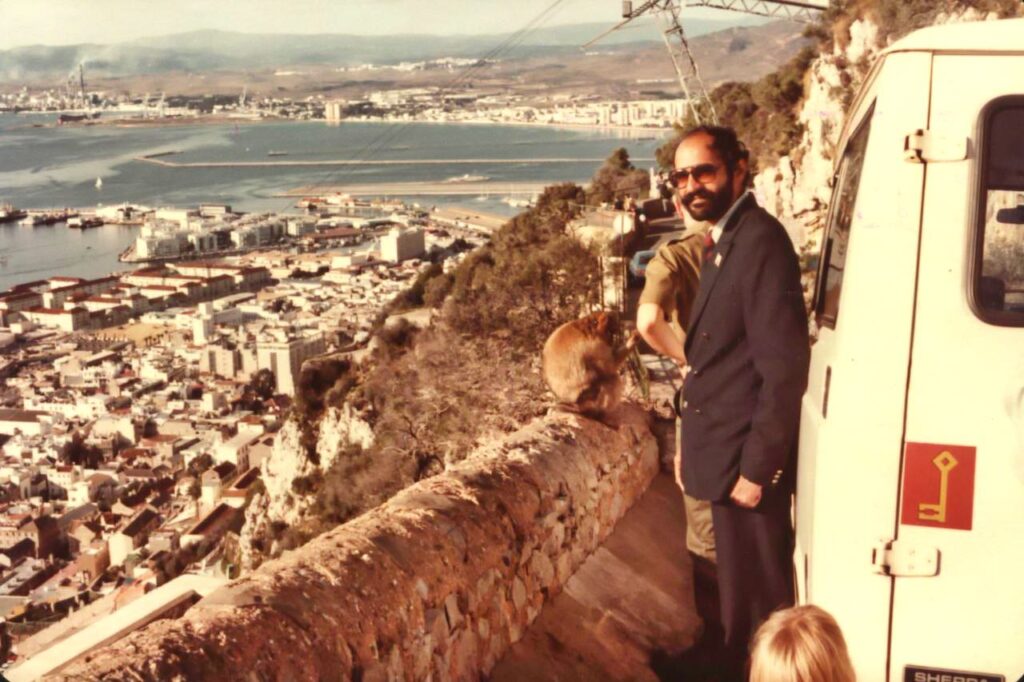
There is an interesting legend about The Rock – that it will remain in British hands as long as the famous Barbary macaques (monkeys) are there. The day these monkeys leave, it would signal the end of British sovereignty. The macaques were all over the place, and it reminded me of India where similar scenes were common enough.
I must mention about the efficiency of our hosts. The sail through the stormy North Atlantic Ocean had caused some fixtures and fittings on the boat to become non-functional/break. On the first day we had handed over a list of items requiring attention on the boat, and the Naval tradesmen and artificers had attended to all of them by the end of the day!
.
Ibiza, Spain
4 Nov 1984
.
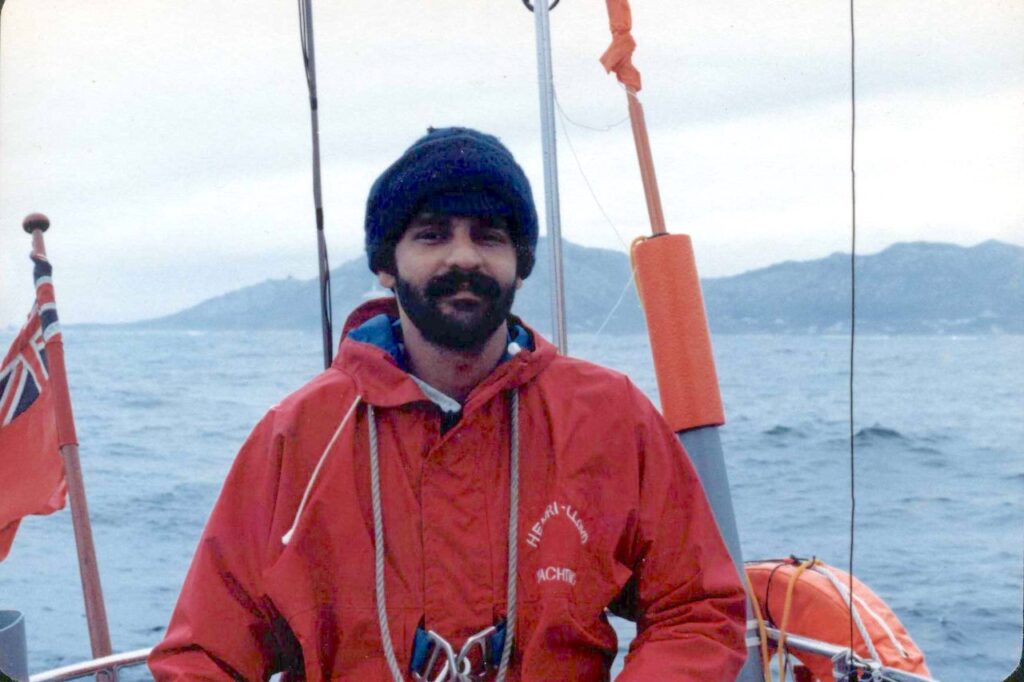
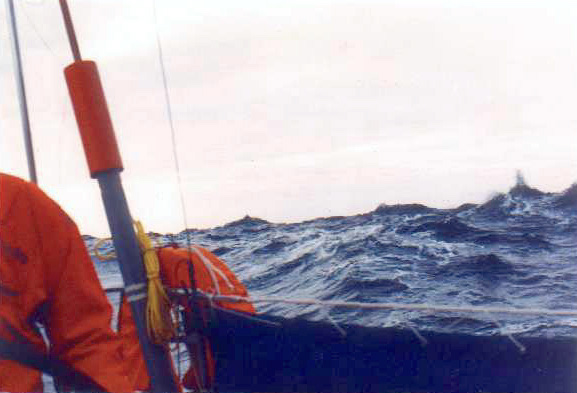
On 04 Nov 1984, we sailed off in miserably wet, cold and foggy weather for our next port of call – the Isle of Ibiza. During this leg, we were struck with our first “Mediterranean” storm, and the first one while sailing on a run (with the blowing wind from the stern). It was a new experience in boat handling for us, as the boat behaves differently with the wind coming from different directions. Storms from the stern are the most difficult to manage, especially when waves build-up as the boat can easily spin out of control and broach if the steering is not handled with nimbleness.
.
.
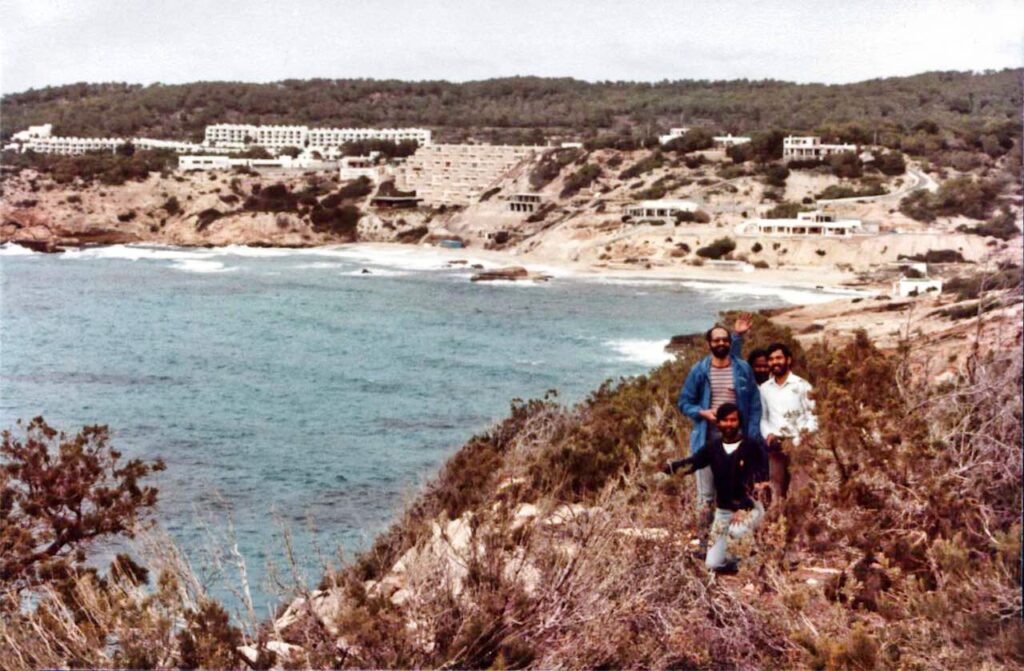
We were again in Spain on reaching Ibiza on 7 Nov 1984. To our disappointment, the onset of winters and bad weather turned the promised Homer’s Elysium into “Paradise Lost”! Forget seeing any bikini-clad girls, the beaches were deserted in the freezing winds, and the hotels were largely empty. We could only walk across the sand with our dreams.
.
.
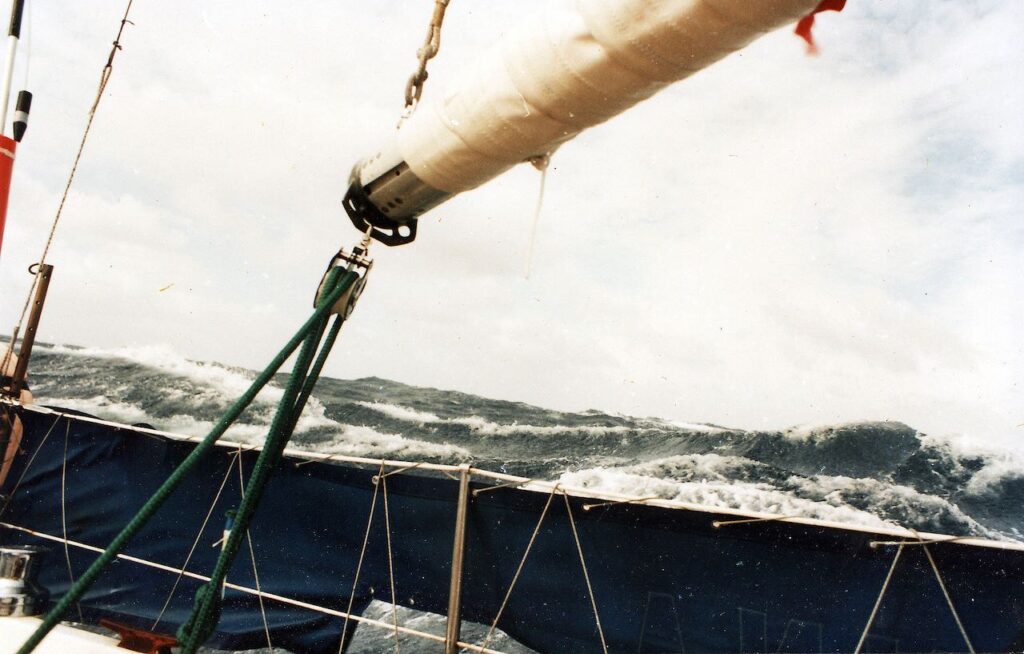
After taking in water and fresh supplies, we started our journey across the Mediterranean Sea, amid stormy forecasts. The route took us through the narrowest “neck” of the Mediterranean Sea between Tunisia and Sicily. As expected, we encountered another big winter storm with 50+ knot winds on this leg, which was a wet sail most of the distance. The Mediterranean Sea was living up to its reputation!
.
.
Malta
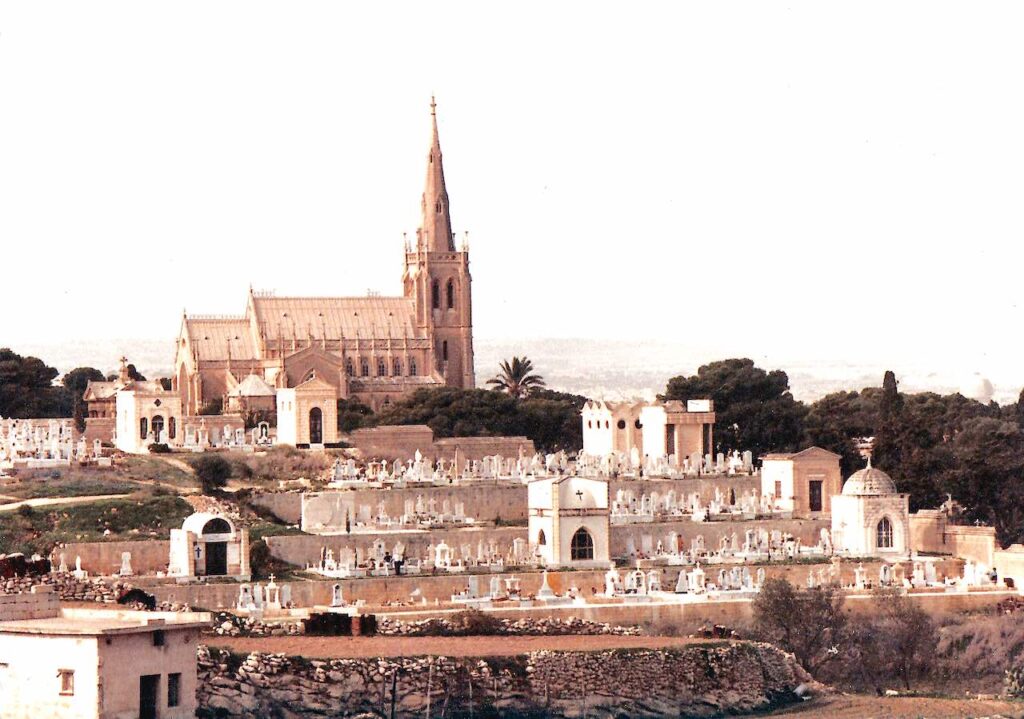
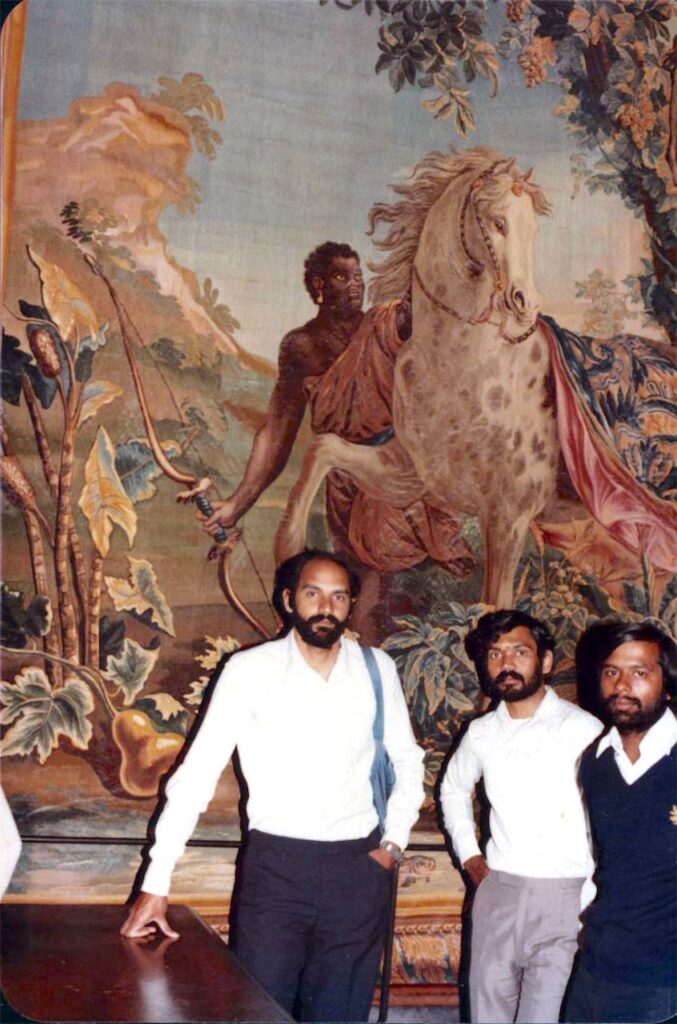
Malta was sighted on 17 Nov 1984 after a rough and wet sail. Malta is an island with history, and the only country with a gallantry award to its name – it was awarded the George Cross for its heroic resistance to German onslaughts in the Second World War! Malta is an archipelago, though only the three largest islands are inhabited, Malta being the largest comprising 95 square miles. The ambience on the island gave an “Eastern” feel, very apparent soon after we moored at the marina in Valletta. The people, their way of interaction, the local transport, it all felt different from that we had experienced till now. It is not without reason that Malta is known as the place where East-meets-West.
.
.
The island has a rich history, with evidence of habitation going back to the Neolithic era (4th millennium BC). The Neolithic temples are among the world’s most ancient standing buildings. Ancient buildings and museums abound, though we could visit only a few during our short halt. We stayed on the boat itself here, and on an invitation by the neighbouring yacht, AK and myself spent a night exchanging sailors’ tall tales – they never end! The result was the first (and only) instance of having to down a gin on the rocks in the morning to get rid of the hammering hangover, on the advice of the seemingly still-cheerful pretty neighbour who saw our plight when we shakily came up on deck.
.
.
We took a trip around town to see what was possible in a day. The National Museum was excellent, not to mention the famous underground catacombs dating to prehistoric times. Malta is a rocky island, with massive churches dominating many of the hilltops. Our short halt soon came to an end and we sailed off on 19 Nov 1984 after taking on fresh supplies and water.
.
Crete, Greece
.
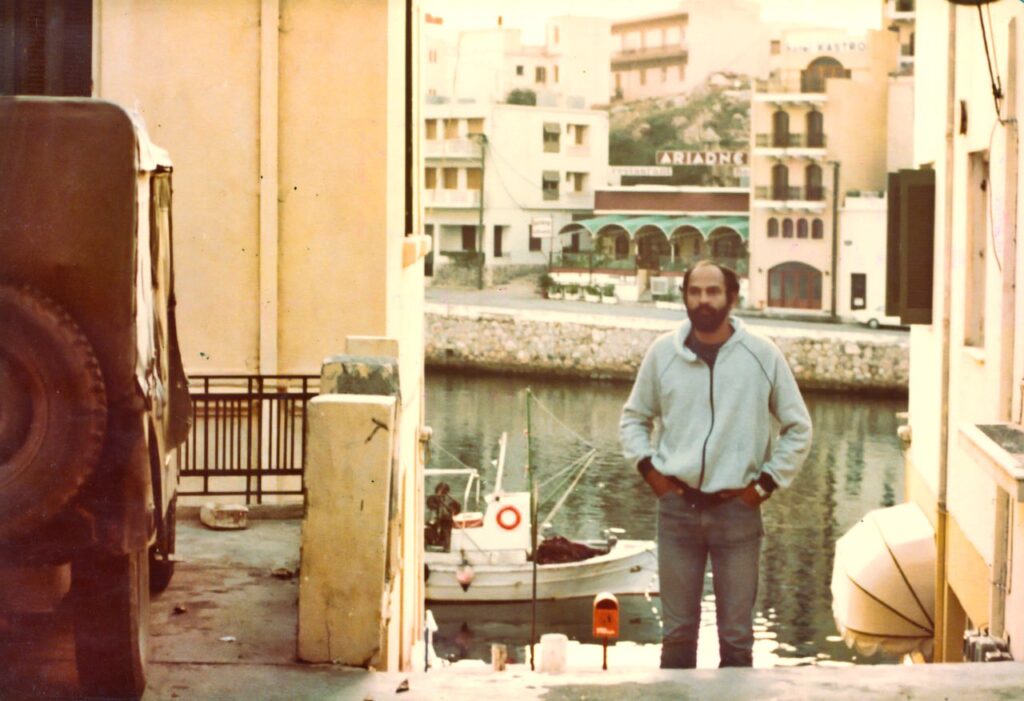
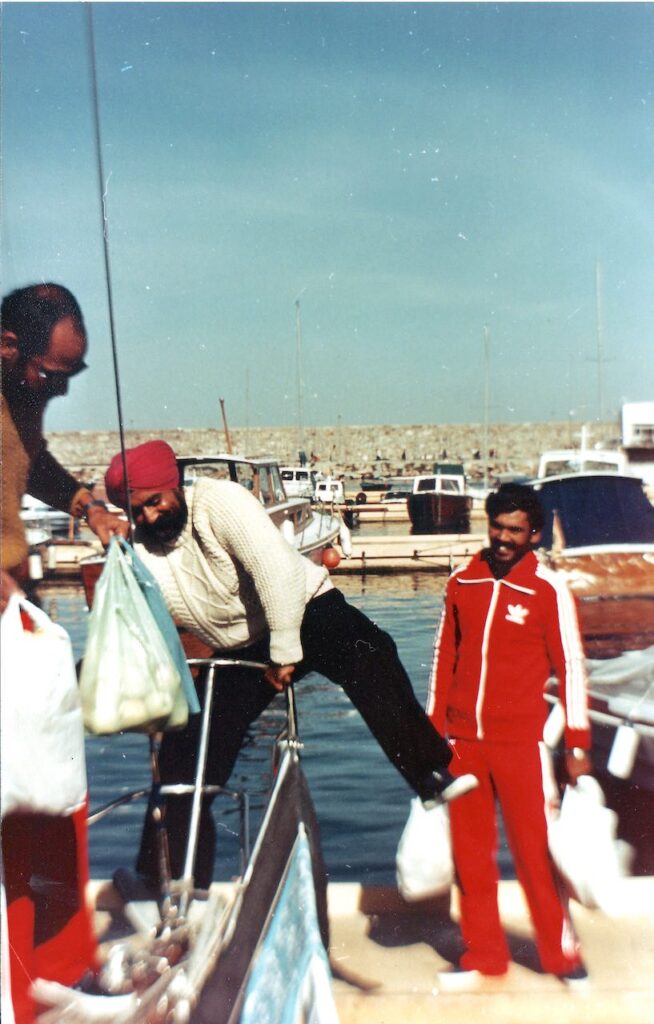
Iraklion (Crete) was the next halt. This halt was a forced one, as the drinking water we had earlier taken turned out to be brackish and not drinkable. We managed to survive using the water stored in plastic cans on deck for emergency use. The weather remained rough and cold on this leg of our sail, though the intensity was lesser than before, reaching Agios Nikolaos on 23 Nov 1984. The island turned out to have an even more ancient history than Malta.
.
.
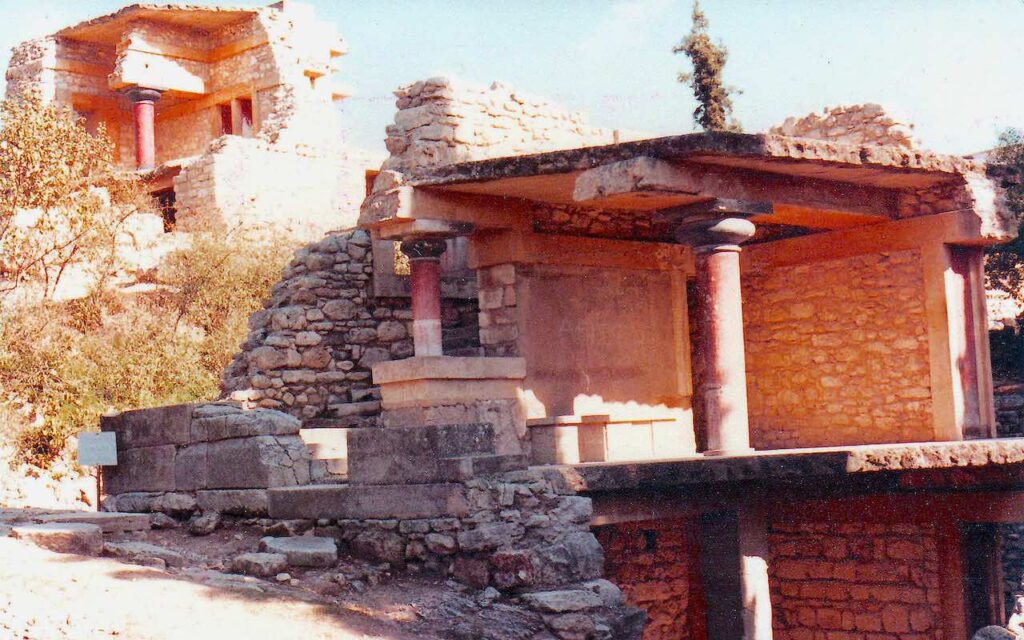
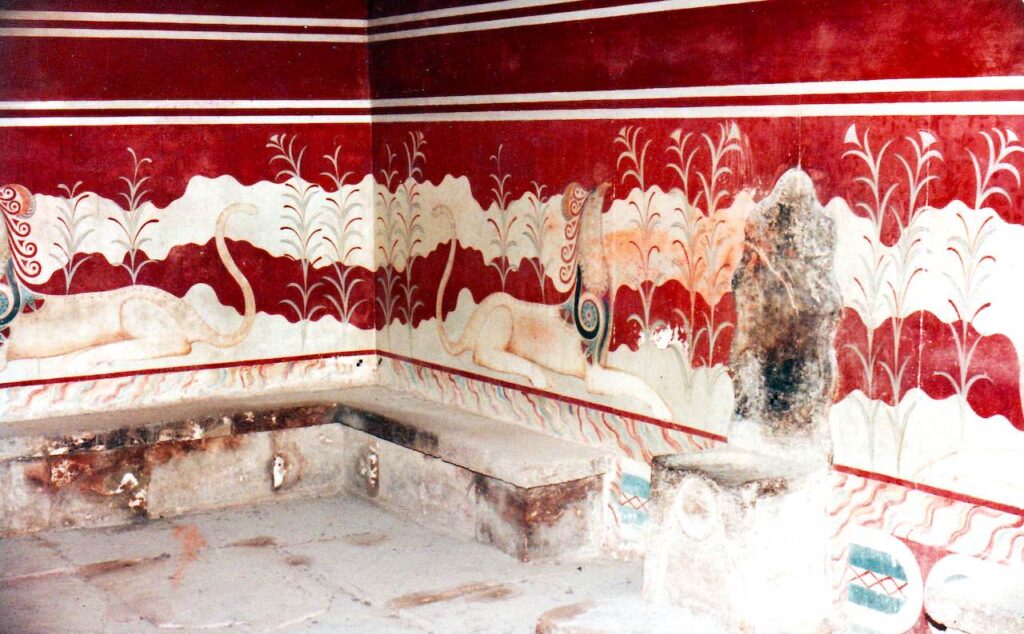
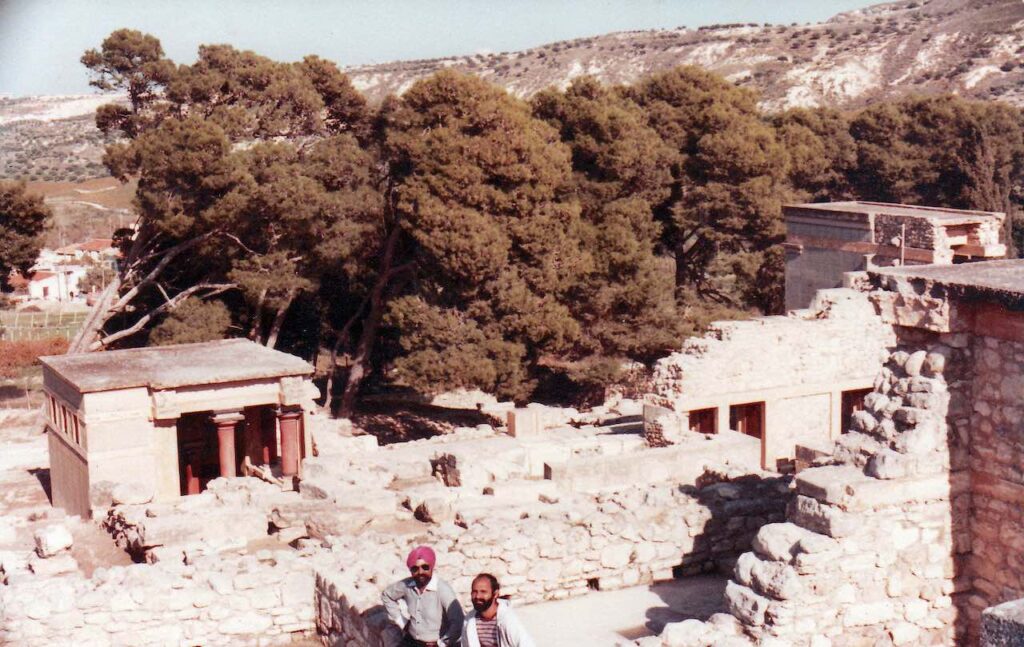
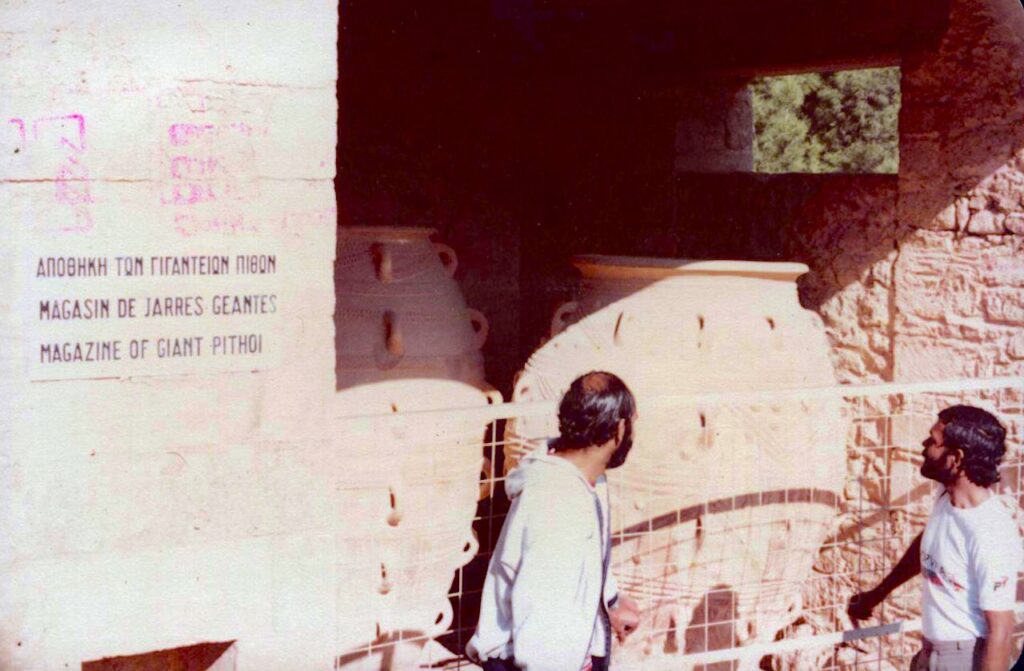
It is supposed to have been inhabited since at least 130,000 years, from the Paleolithic age. Crete was the centre of Europe’s first advanced civilization, the Minoans, from 2700 to 1420 BC. We were lucky to be able to visit these ruins at Knossos, which is the largest Bronze Age archaeological site on the island and has been called Europe’s oldest city.
.
.
Surprisingly, the ruins were in very good condition with colourful paintings and symbols adorning the walls. Crete is also famous for its olives and orange orchards, which we could access easily and savour garden-fresh from the road.
.
.
During the halt, the drinking water tanks were emptied out, flushed, and refilled. This exercise itself consumed a considerable amount of time. Luckily, the weather on the island was milder and sunnier than what we had experienced earlier and that was a relief for us.
.
Egypt & Suez Canal Crossing
.
We left Crete on 27 Nov 1984, and from there it was a short sail to Port Said, where we reached on 1 Dec. Though the weather and the seas continued to be rough, at least now the temperatures were not freezing, but when you are continuously drenched by waves, its not much of a consolation. This is where Capt MS Pillai replaced Col TPS Chowdhury on the boat. We would miss the josh and cheerfulness of ‘Tipsy’, as he was more popularly called. Though the oldest crew member, his wit survived through the worst of the gales we had encountered! …and not to forget his steely stomach, one of the few of the crew who never got afflicted by sea-sickness.
.
.
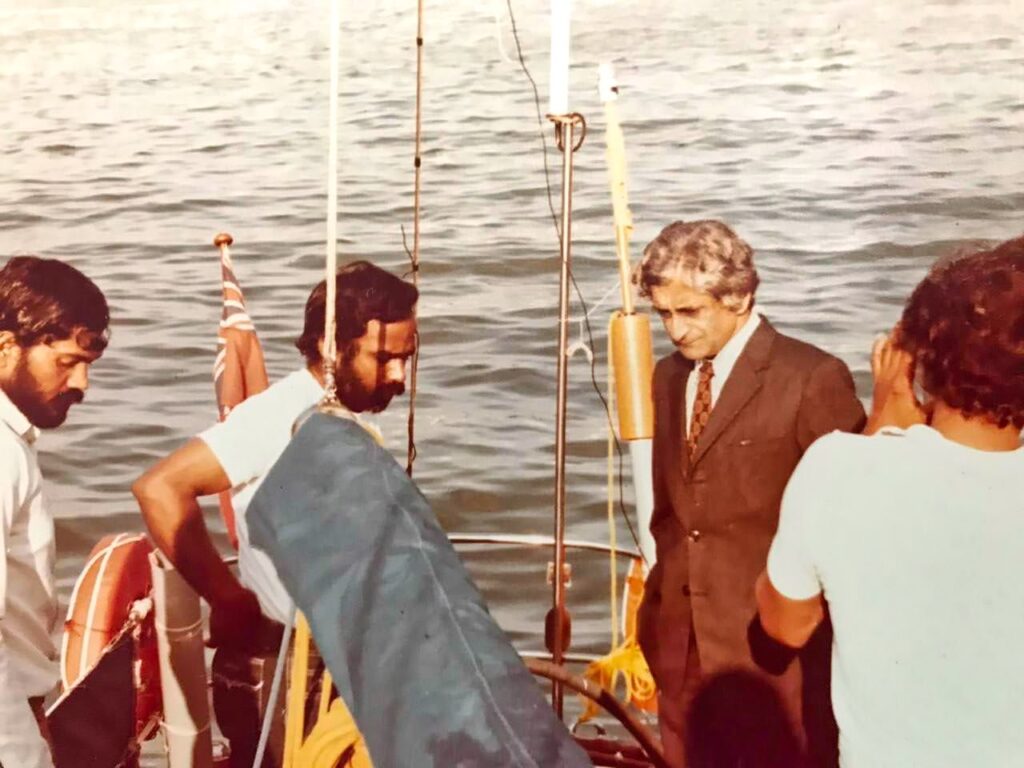
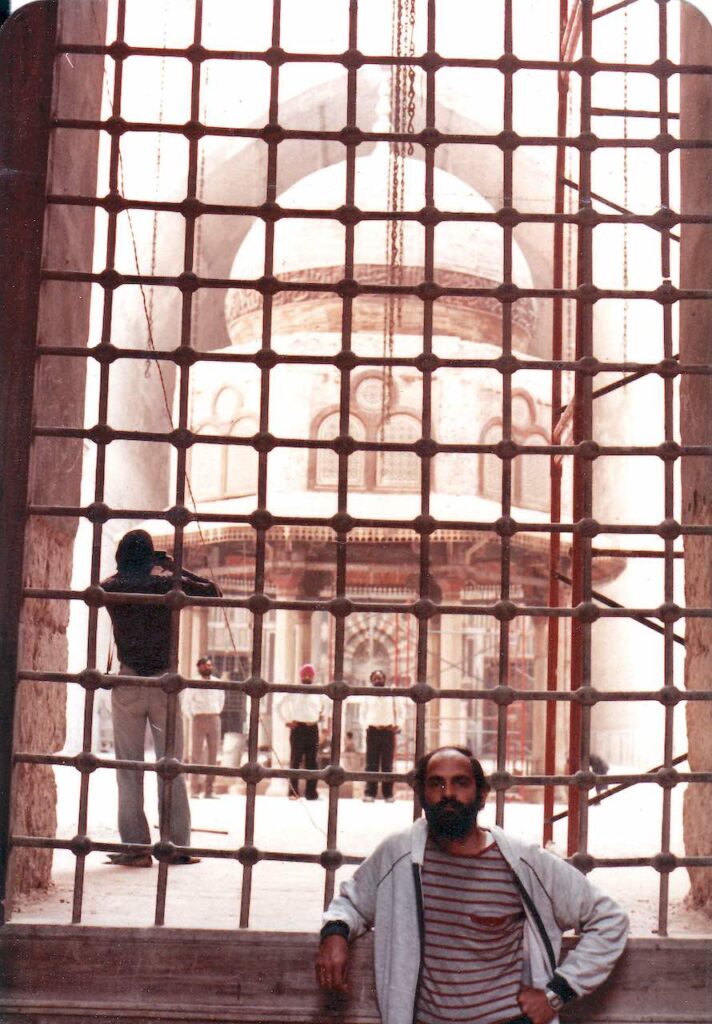
Egypt was one of the few countries where we got excellent support from the Indian Embassy, partly due to the interest shown by the Ambassador, Mr Alfred Gonsalves. He even took the trouble to travel all the way from Cairo to visit the boat and the crew. He was very impressed by our endeavour and expressed it in the comments he wrote in the Visitor’s Book. Though he did express surprise when he inquired on how we communicated while sailing – the answer he received was “we dont”!
.
.
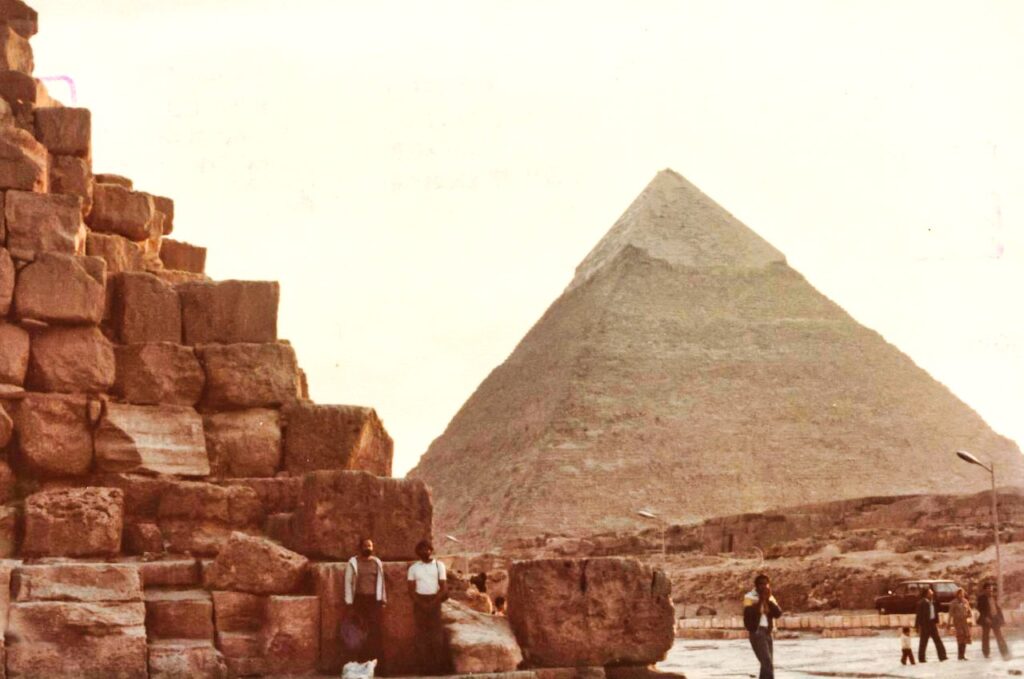
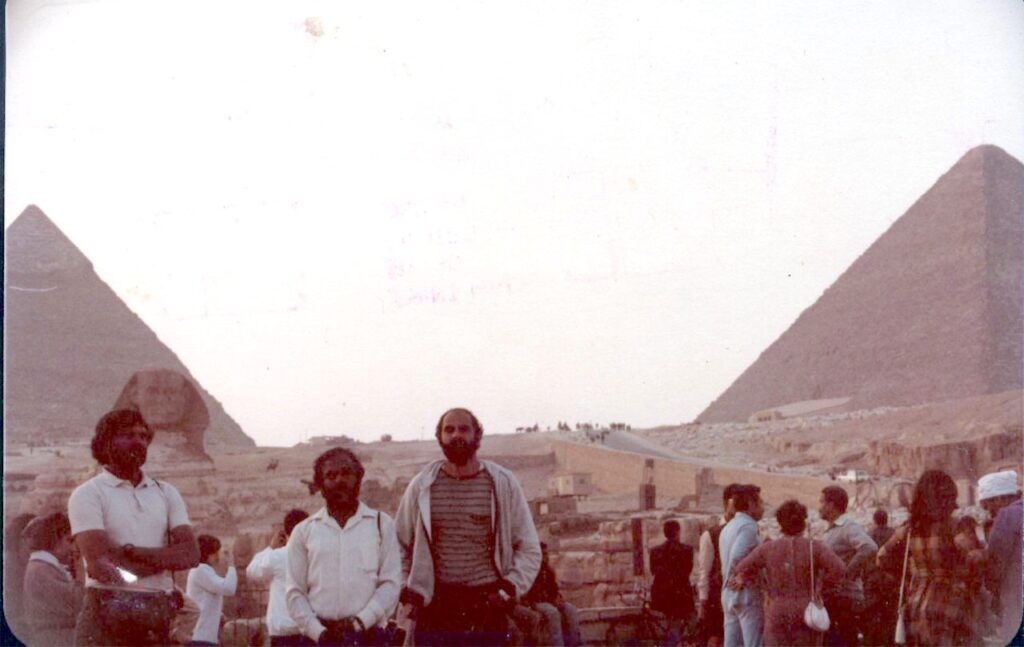
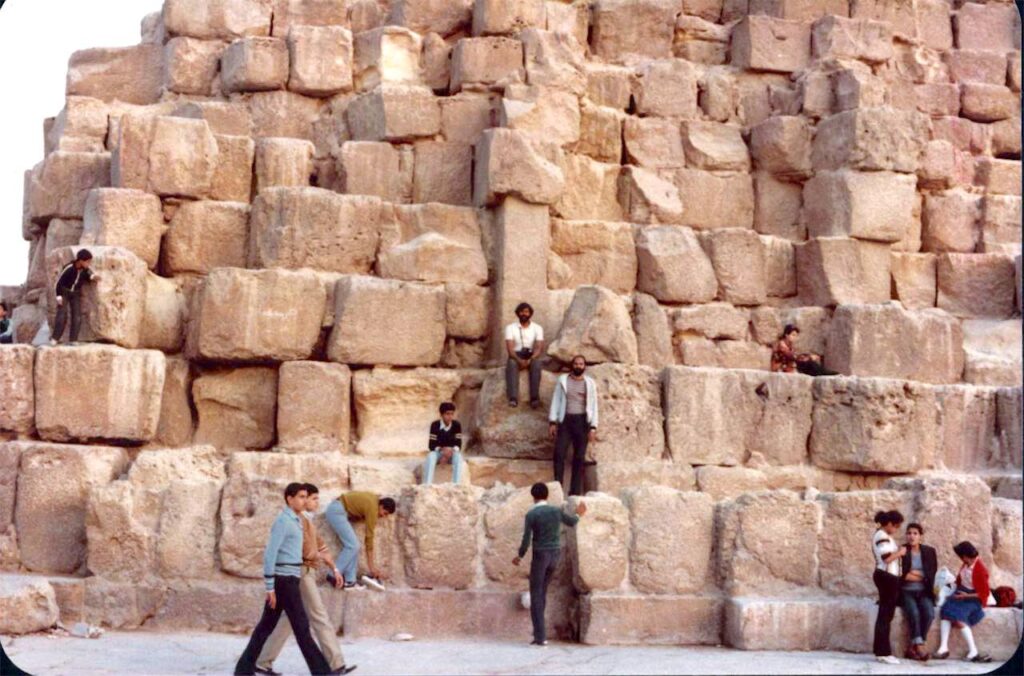
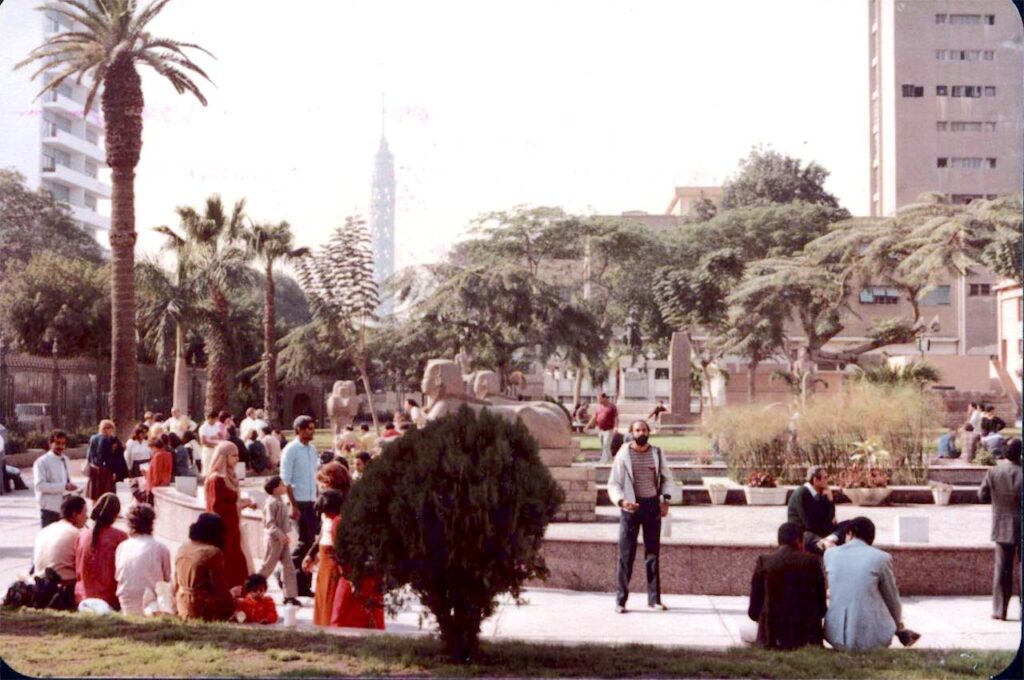
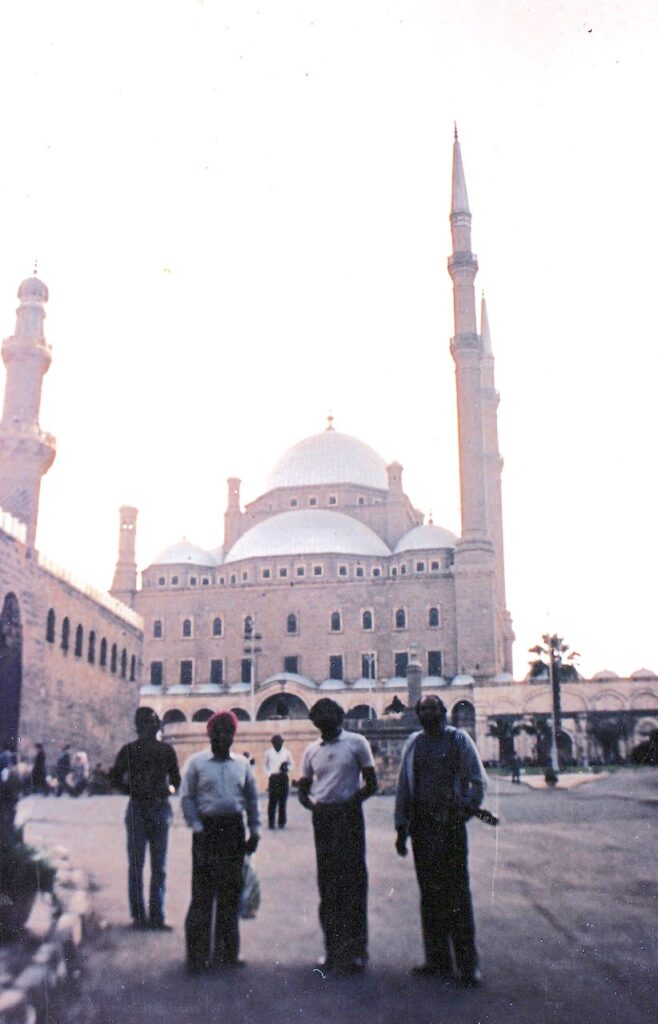
However, we cannot forget the hand behind the warmth, Col MC Gautam, the Defence Attache in the Embassy was a Sapper Officer and known to many of us personally. He even arranged for the crew to be taken by road to Cairo and we had the opportunity of visiting the famous sights, like the Pyramids of Giza, National Museum etc. This was an unexpected bonus as we had not thought we would be able to see these monuments. For our stay in Cairo, we were paired off with Indian families for our stay – I stayed with Col Gautam, who was a coursemate of my elder brother, VP Singh, and whom I had met often over the years. Three crew members, including KS Rao, stayed with the local head of the Shipping Corporation of India, Mr PR Rao. He also assisted us with various formalities that were required for the boat. It was a very relaxing break for us.
.
.
For the sail through the Suez Canal, it was mandatory to take onboard a Pilot. To complete the complicated paperwork – reminiscent of the bureaucratic red tape in India – one had to hire an Agent (tout?). And they didn’t come cheap….despite all the bargaining skills which we possessed! And the paperwork moved at its own pace – nothing much we could do to hasten the process. The unexpected dent to our finances due to the astronomical charges paid to the Agent precipitated the decision to approach the Ambassador for a loan to see us through the rest of the voyage. He came forward to help – the loan was returned after we returned to Bombay. A reflection on how we sailed, literally hand-to-mouth, despite all the support we received at most of the ports of call.
.
.
Our Egypt halt also brought good tidings for me personally. Ranjana had been expecting our second child in November. Since communication was only possible from ports, any news from home could only reach at the next halt, that too not necessarily. The only marine communications available in those days was the HF Radio or the hugely expensive International Maritime Satellite Organization (INMARSAT) network, both were not available to us. We only had a short-range VHF Radio for contacting port authorities when we reached a port, or for contacting passing ships. As such, the boat had no communication with the outside world while sailing!
From ports, the skipper reported our progress through an ISD call, and if there was any message from India, it was conveyed back. With the licence raj in India, a telephone at home was unheard of those days. My second daughter, Ankita, had been born on 29 November at Pune – the news reached me in Egypt. She was the first “Trishna” child born during the expedition. Despite the suggestion to name her “Trishna”, this was not accepted back home, who felt that among the many meanings of the words, some were unsuitable. However, I had to wait till February of the next year to actually see the baby – there were no means available to send even a photograph to me!
.
.
It was only on 7 Dec that the paperwork was completed and we set off on our journey through the famed Suez Canal, with the Pilot onboard. Progress was slow on our small inboard engine – sailing was prohibited in the canal zone. The 120 mile-Canal is a busy waterway with a large volume of ships traversing it in both directions. Around two-thirds distance across the Canal is the Great Bitter Lake. The currents are adverse north of the lake during winters i.e. they were adverse for us. It took a whole day to cross the Canal, not an easy time for us as the demeanour of the Pilot (who only spoke Egyptian) turned sour when he saw the small boat – probably a punishment assignment for him – which hardly offered any luxuries compared to the bigger ships he was used to. To add to his grumpiness, his frequent demands for cigarettes was denied – none of the crew smoked and anyway, smoking was strictly no-no on board because of the fire hazard it posed on the boat! It was a relief when we could finally disembark him at Port Said on 8 Dec.
.
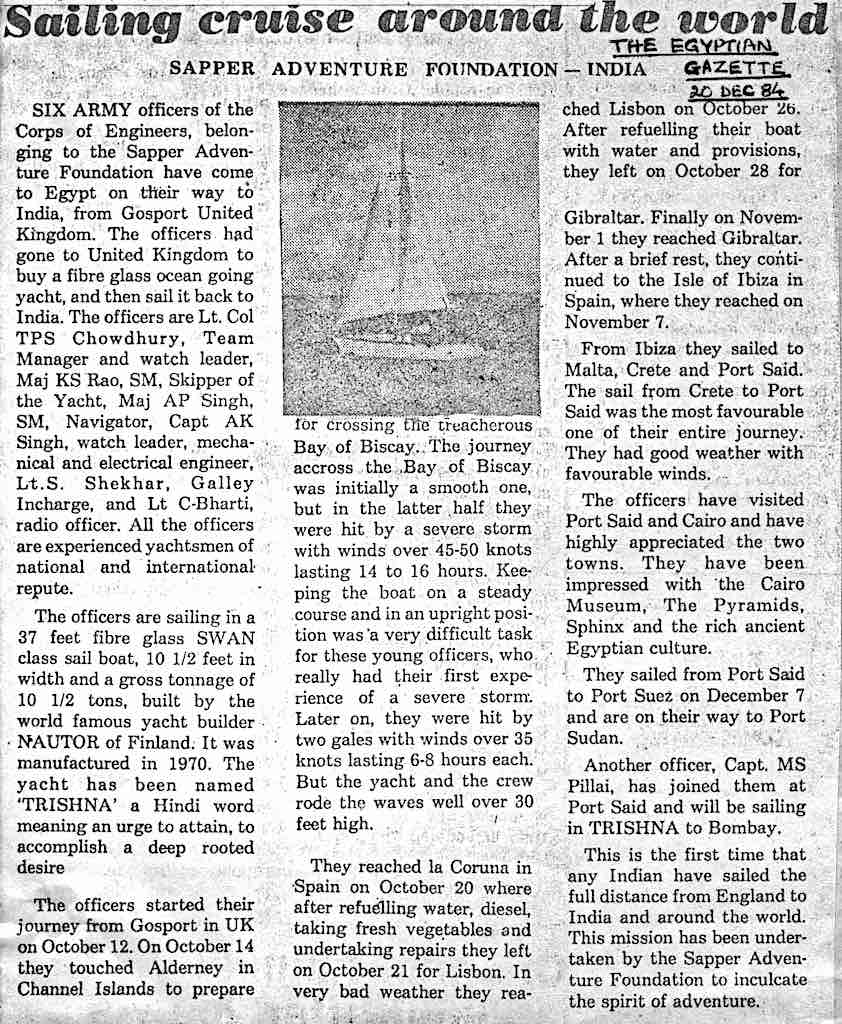
The Egyptian Gazette, 20 December 1984
.
The Red Sea Leg & Port Sudan
The Red Sea is about 2250 km long, and we had to make a stop midway, essentially to fill up our drinking water tanks. A halt in Saudi Arabia was not recommended, especially as we were not a ‘usual’ vessel transiting through, and the only other option on the barren western coast was Port Sudan. Sudan itself was not something to cheer about in those days but was the better choice between the devil and the deep sea. We generally sailed keeping to the western half of the Red Sea – not that it is a narrow channel, being nearly 350 km at its widest.
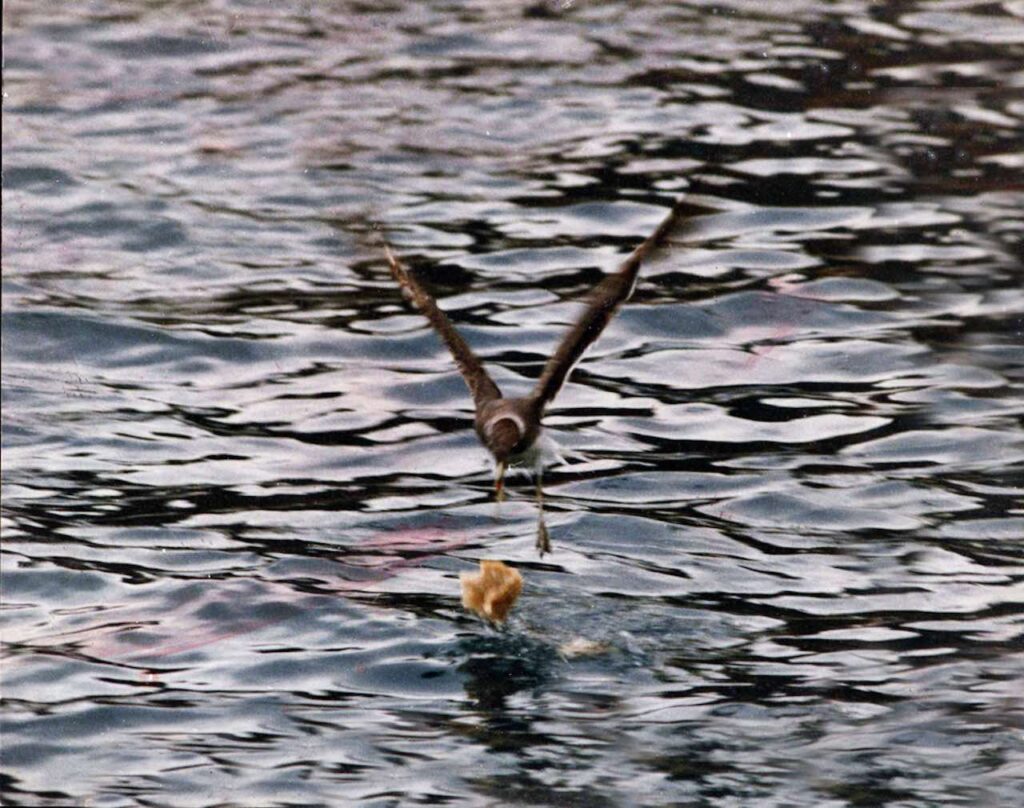
The weather in the Red Sea was predicted to be bad, really bad, in the Pilots (the nautical manuals used for planning) – southerly adverse winds, winter storms, rough seas and strong adverse currents in the second half of the Sea. A continuous close-hauled course (sailing against the wind required following a zig-zag course to make headway), strong winds and waves kept the boat heeling considerably all the time, and the bows crashing against each incoming wave jarred the boat and slowed it down if they were not tackled in a seamanship manner. Occasionally a big wave would heel the boat dangerously – and anything kept inside the boat on the windward side would come crashing down, including the off-duty crew sleeping in their bunks on rare occasions! The gas stove was gimballed – fixed on pivots to keep it horizontal – with clamps to hold any cooking container in position in a heeling and bouncing boat; however, sailing close-hauled (against the wind) in bad weather meant no appetite and the stove was sparingly used, sometimes to make soup, the only thing which could be had in those conditions.
.
.
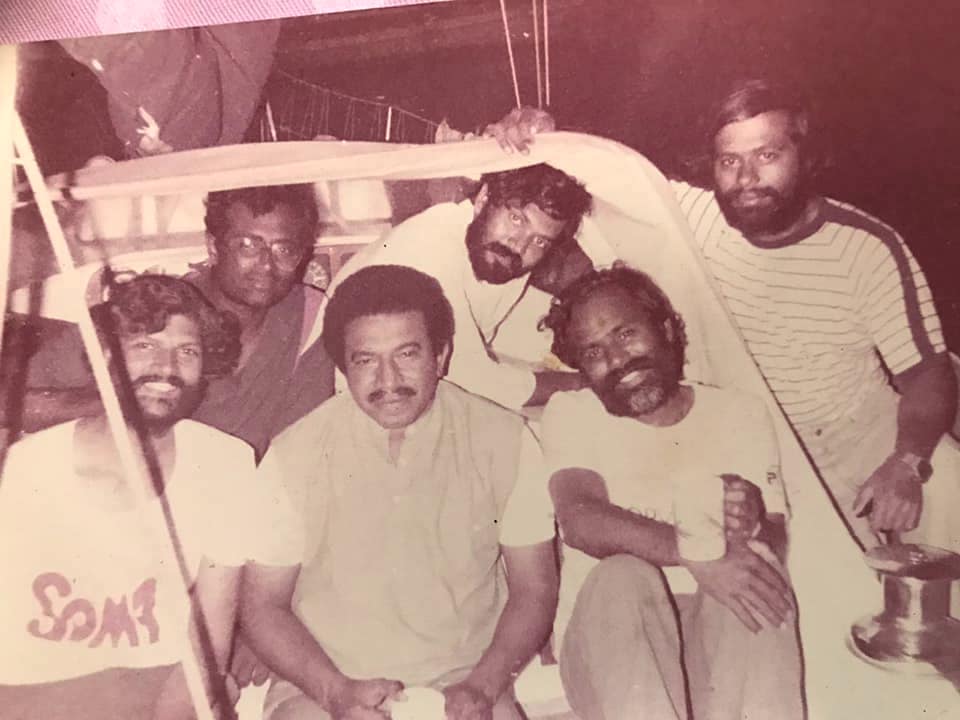
We reached Port Sudan on 15 Dec 1984, the port looked quite empty, the result of years of internal strife between the north and southern regions of the country. Luckily, we had a contact here – a Marwari businessman whose ancestors had settled there since a few generations. We later came to know that the first Marwaris had come from Rajasthan to Africa for doing business over 250 years ago – the original Indian entrepreneurs around the globe as one found them in the remotest of places. However, the conditions were not good presently, martial law had been imposed in Port Sudan and movement was restricted. He, however, took us home and our first task on reaching any port was having a bath and washing our clothes – chores which had last been carried out at the last port! There arose the problem – water was a precious commodity and our host apologetically informed us that he would be able to spare only ONE bucket of water per head! So we got down to the most important business, by turns, of trying to scrub off all the salt which had penetrated deep inside the pores of our skin in half a bucket of water – and wash clothes in the leftover water. Surprisingly, we managed it reasonably successfully!
.
.
Our host requested us to meet the Martial Law Administrator, probably with the thought that it would be a nice gesture and help the small Indian community in the long run.
.
“I remember, for a day we were not permitted to leave Trishna on reaching Port Sudan, due to Martial law there. Next day I accompanied KS Sir, to meet the local Martial law administrator, that is, Col Mohammad Bin Yusuf Bin Mohammad. On reaching his office, I was quite worried, as you never knew how these Martial law types react. KS Sir recognised he was the contact person, as mentioned by his degree course mate. Col Mohammad was quite impersonal when we entered his office, wondering who these sailors were? And what they were doing in Port Sudan. I could see KS Sir smiling, and then he introduced himself to Col Mohammad. What a change after that! We had a vehicle, local army representative as Liaison Officer and access anywhere in town. We also had dinner at Col Mohammad’s house. The liquor was some local stuff, and tough to take. AP, AK & self could just about manage.”
In the words of MS Pillai, crew member
.
The invitation for dinner was something we always looked forward to! The evening was spent gorging on all types of fully-cooked and half-cooked meats, downed with the popular local drink, Araqi. Though it tasted more like illicit distilled brew from its taste and pungent smell, those small niceties did not distract us from enjoying the evening, or the liquor! Incidentally, Col Mohammad was also from the Sudanese Army Corps of Engineers! His senior had done his Degree Engineering Course at the College of Military Engineering, Pune in India with KS Rao and they had kept in touch. Being posted in Khartoum, he had given the reference of Col Mohammad. The world is indeed a small place!
This connection did away with the problem of arranging for our boat’s water supply to be replenished, which would have not have been an easy task without the directions of the Administrator!
.
.
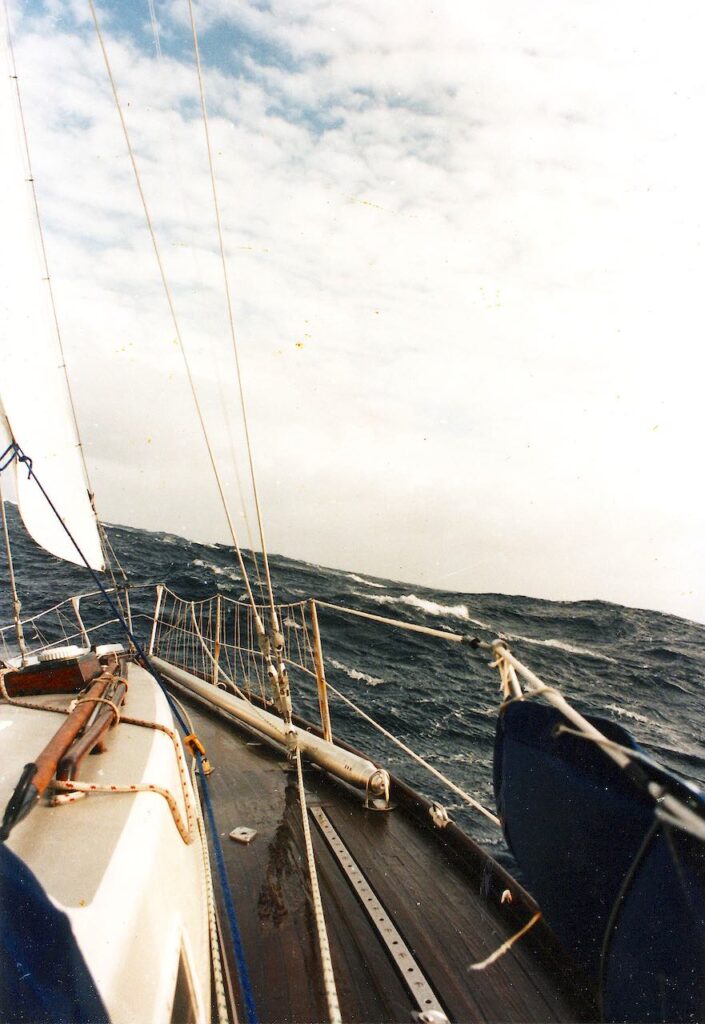
The sail through the second half of the Red Sea was one of the worst prolonged stretches of bad weather we ever sailed in – it lasted 12 days from 18 to 31 Dec 1984. Southerly winds blowing steadily between 30 to 40 knots accompanied with 25 to 30 feet waves. It meant we were sailing dead against the wind, on a close-hauled course, and against a strong adverse current. This had been predicted, but it was only when we were in it, day and night – without any let-up – did it start wearing down the crew. A close-hauled course in strong winds is the most uncomfortable leg to sail in. The Red Sea, with a comparatively smaller stretch of open water, produced short, steep waves. Unlike the waves in open oceans, which are bigger and with longer frequency. The short waves are much more uncomfortable to sail in as the boat cannot ride over them smoothly, and most of the time crash through them – jarring the boat, slowing it down and resulting in water cascading over the boat. Those on duty on deck are drenched under tons of water constantly, while those inside the cabin are thrown around mercilessly without respite. Anyone coming on the deck had to be tied with a lifeline to his harness so that if a wave washes him overboard, he could still be rescued before he vanished into the seething cauldron of water and mist. The adverse sea currents further slowed down our actual progress – on a few occasions after a day (24 hours) of such pounding, we covered only about 25 nautical miles on the map!
.
.
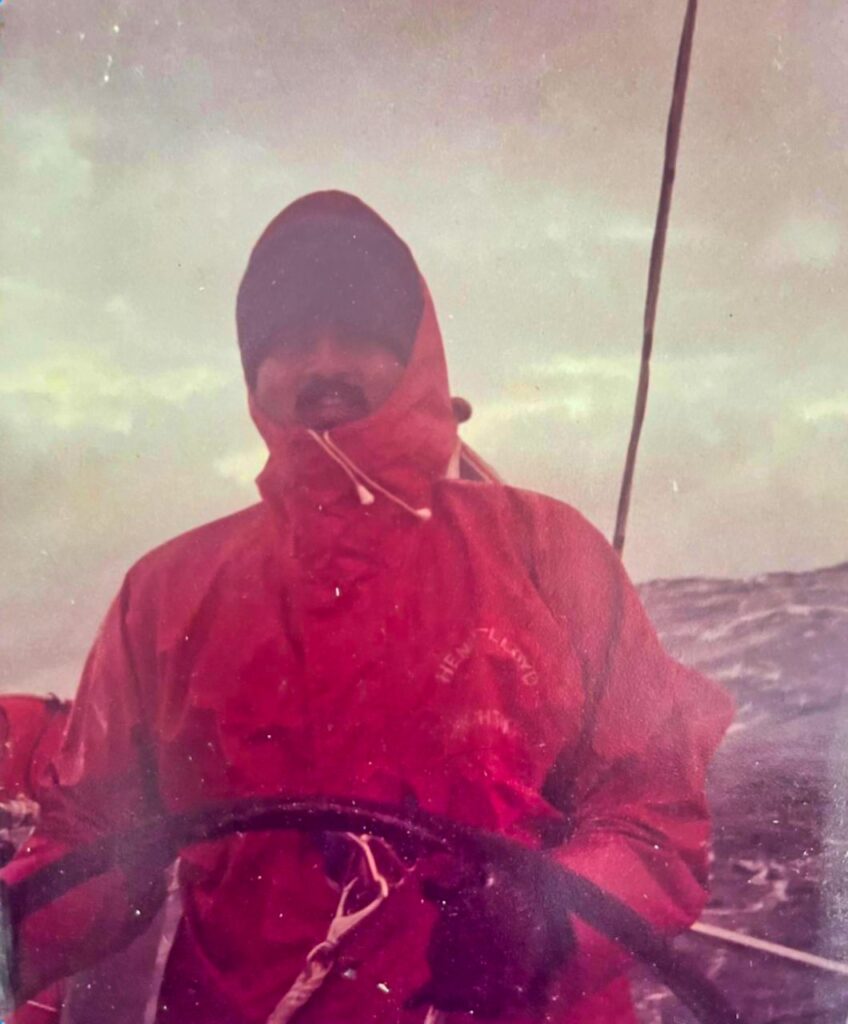
40 knots gusting, steep short seas, strong adverse currents, parked reefs, narrow limited navigational waters in a heavy shipping lane, on nights the boat being pushed back 10-15 nautical miles after the night-long tough beating in these conditions; dark starless nights, dull sun-less gloomy ominous days – upon days, upon days. Full 12 days and nights without let-up. Not easy to forget. Grateful to Lord Varuna.
In the words of AK Singh, crew member
.
.
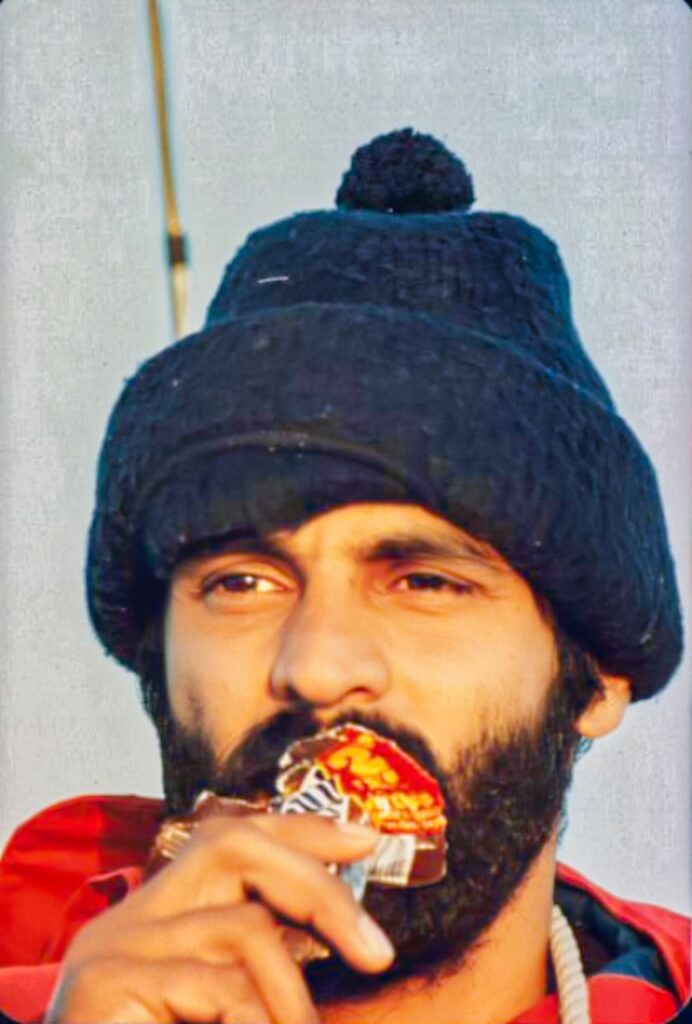
On the fifth day into the storm, the mainsail, though it was heavily reefed, tore. Changing the mainsail is a laborious task, partly due to its huge size and weight, even in the best of circumstances. Attempting to carry out this task in a gale with the boat bouncing in 30-foot waves is something else! Shekhar and myself managed to complete the task after a considerable amount of effort – and afterwards could just straggle inside the cabin and drop dead on our bunks totally exhausted and wet! In such times, changing clothes, even if they were wet, was the last thought in one’s mind.
Since the beginning of this leg, our appetites had started vanishing and by the third or fourth day, the only intake was soup and chocolates. Attempting to eat anything else resulted in immediate vomiting. By the sixth or seventh day, the crew had started to reach the limits of their endurance, due to exhaustion in handling the boat in the deteriorating sailing conditions, lack of food, hardly any sleep and the mental stress from the continuous battering, coupled with the knowledge that we were actually making hardly any progress! This was apparent from the limited exchanges now taking place between the crew – short, curt and irritable. The state of the cabin was also a mess. There was no energy left to attend to any task other than what was absolutely essential. Sleep war sporadic, waking up the sleeping crew when an occasional wave seemed to bring the boat to a shuddering halt. As it is, one slept fully dressed in heavy weather clothing – and wet – as there could be an emergency at any time, requiring scampering on to the deck without delay. The two crew members on watch duty were adequate to steer the boat, but in case any other task came up, the others had to help out.
Sailing became more dangerous as we approached the southern parts of the Red Sea closer to the Gulf of Aden and the Straits of Bab al-Mandab since that area had islands, numerous reefs and shallow waters. The navigation channels became restricted, and heavy shipping traffic added to the danger as we were crisscrossing through the shipping lanes because of adverse winds. There was a history of boats and ships having met their doom in these waters, making us all the more apprehensive. The weather didn’t help, as visibility was reduced and the drift of the boat from her planned course on a close-hauled course being considerable, couped with the drift due to the strong sea currents, required plotting the position frequently and keeping a sharp lookout (though one could hardly see much in the daytime, and nothing at night).
.
Aden
.
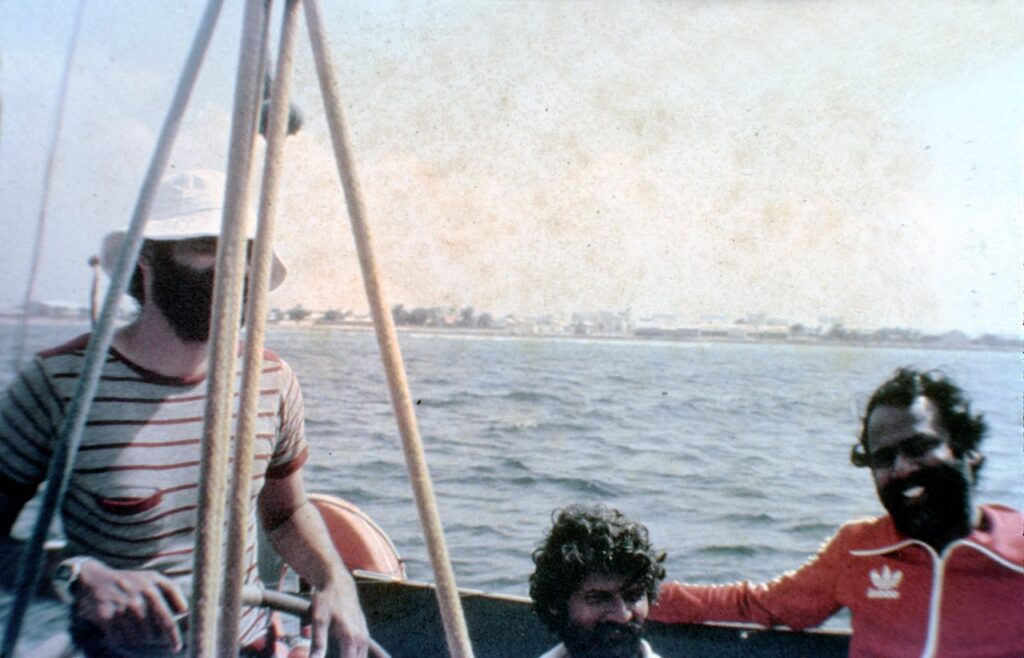
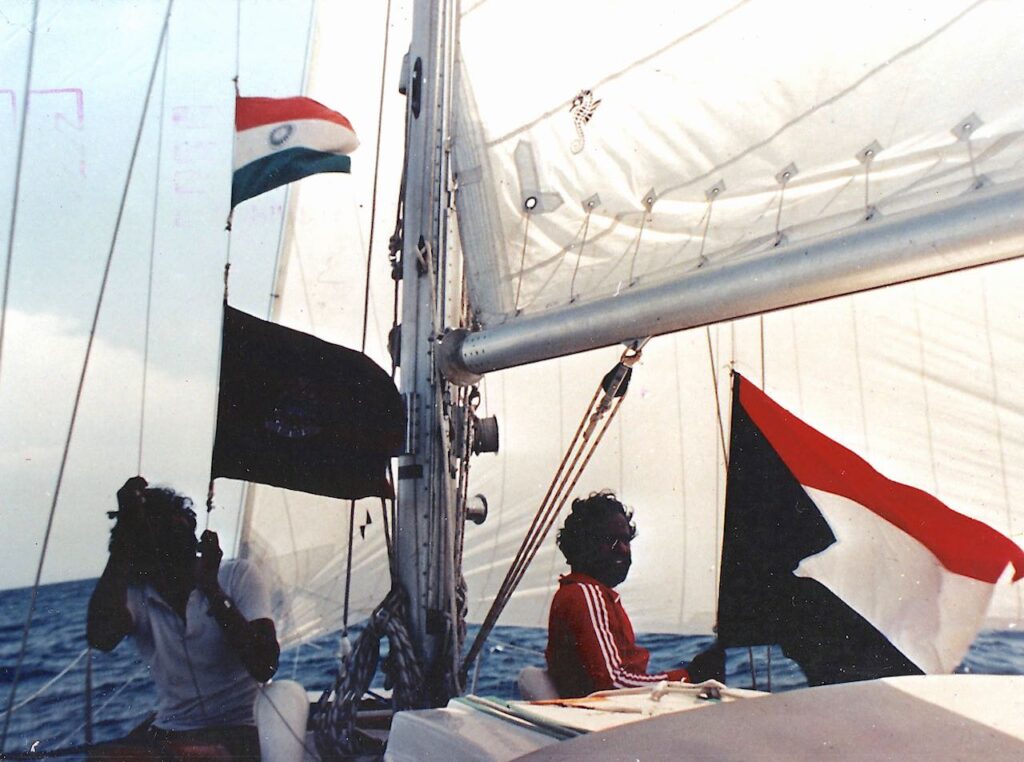
It was a huge relief when we crossed the Bab al-Mandeb Straits safely into the Arabian Sea after the 12th day of bad sailing conditions, and the weather and sea conditions changed for the better. Our next port of call was Aden, which was finally sighted on 31 Dec 1984. The year had ended for us with a big bang – and successfully!
.
.
The capital of the People’s Democratic Republic of Yemen, Aden was a small city. We were quite happy relaxing on the boat itself after the beating we had taken in the Red Sea on our first night there, which was New Year’s eve. The night was spent celebrating over glasses of sweet Portuguese wine, strictly rationed, and the delicacies which Bharti rustled up. At midnight, the horns of all the ships in the harbour blared forth, we added to the cacophony with our minuscule horn. Next morning we visited the town, though not as much as I would have hoped for, as now our allowances were “rationed” – we were now surviving on a loan! As news spread of an Indian sailboat in the harbour, visitors started trickling in to see it. Taking on fresh supplies and water, we sailed out the next day.
.
.
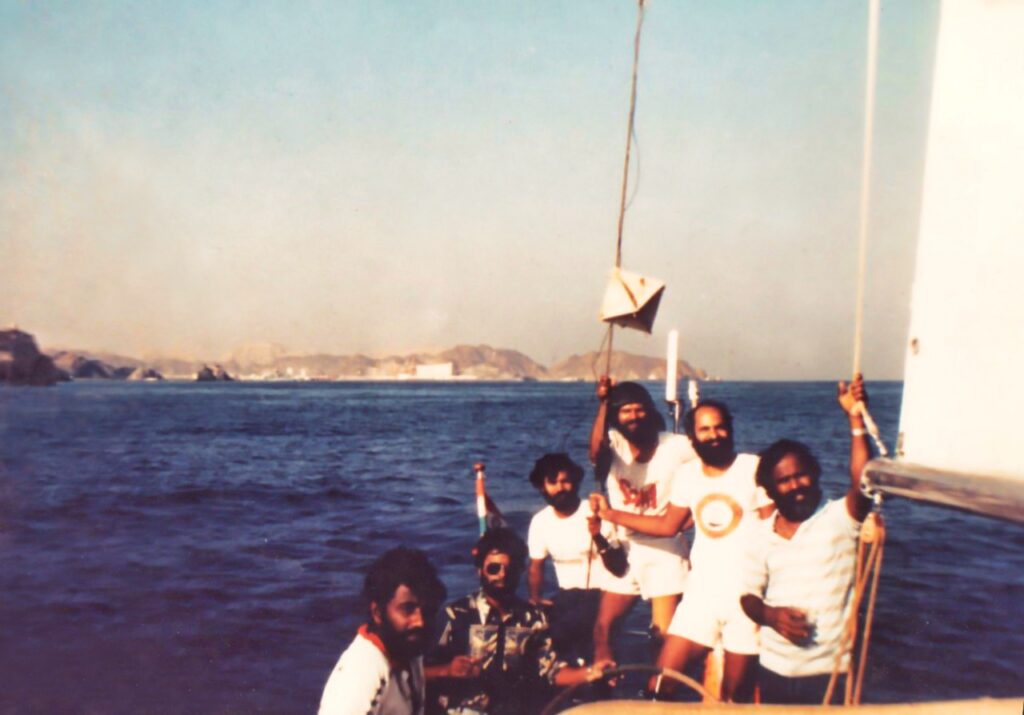
Our next halt was Muscat, a distance of about 1,300 nautical miles. It would take approximately two-weeks sailing, which would stretch our drinking water capacity to the limits – the boat had been used as a family boat for outings on the weekend and its water tank capacity was not designed for a 6-man crew. It was thus decided to halt en route at Salalah, in Oman. The approximately 600 nautical mile sail took us a week; the weather in the Arabian Sea remained excellent, after our roller-coaster experiences in the Red Sea. We could now take off the heavy weather clothing and come back to our T-shirts and shorts in the sun.
.
Salalah, Oman
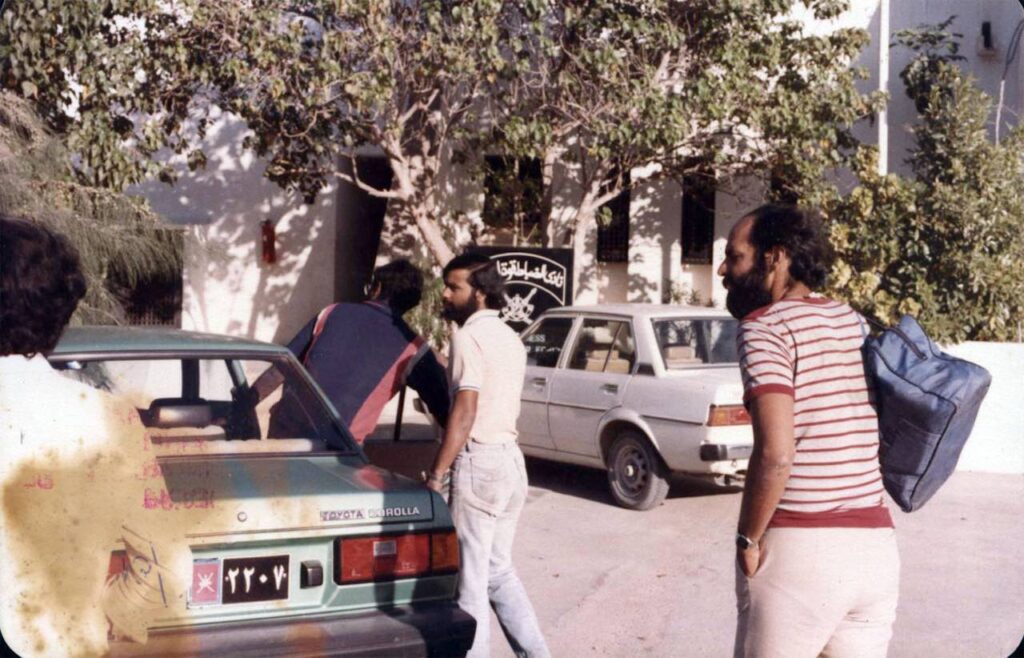
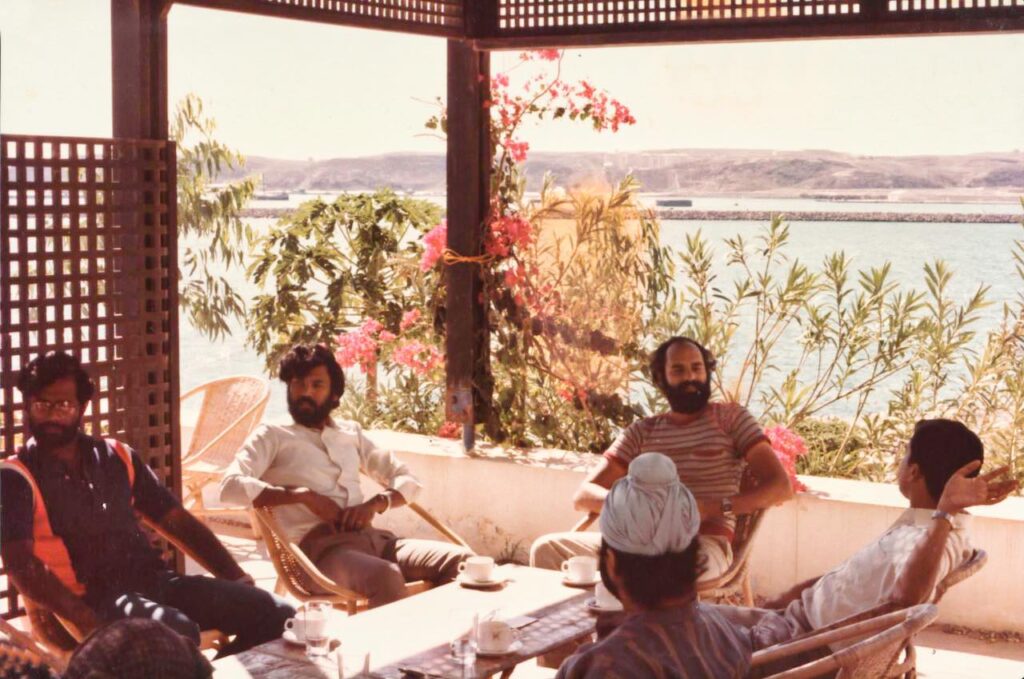
Approaching Salalah, we saw airforce jets flying across the sky and later learnt that one of the biggest US airbases in the region was located nearby. Salalah was a small port, having a sizeable Indian community. There was even an Indian Army Dental surgeon posted there on deputation, whom we were fortunate to meet. Though a short days’ water-halt, it was spent comfortably with the doctor and a few local Indians taking us with them for a refreshing meal and outing in the town. During the short stay, we also managed to get in touch with Capt Basith, a colleague and an old sailor who was working in Oman after leaving the Army.
.
.
Coincidently, many years later when I was posted in North Bengal, I had taken my daughter to the dentist for a dental procedure and ran into the same doctor at Siliguri! It was a nice reunion, and from then onwards I never had any worries as he took care of everything whenever we visited.
.
.
Muscat, Oman
Muscat is located slightly up north on the coast of the Gulf of Oman. As soon as we turned northwards past Sur, we encountered strong adverse currents, the boat initially hardly making any headway. But once we crossed the area, the point of confluence of the two water bodies, it was a pleasant sail to Muscat. With its large Indian diaspora, especially with KS Rao’s father-in-law, Mr MS Rao there, we had a very comfortable halt there. And well pampered for a change – cant forget the unending supply of freshly made idlis which kept coming, and which we kept consuming during breakfast! Our genial hosts would have got a “taste” of the legendary sailor’s appetite! This was the only halt where we had the facility of a washing machine instead of doing hand washing. The result was that Mrs KS Rao, who was there, remained busy keeping the machine running late nights to cater to the mountain of dirty clothes we all brought for washing. All good things must come to an end, and so did our halt there as we set sail for Bombay, our final destination.
.
The Arabian Sea
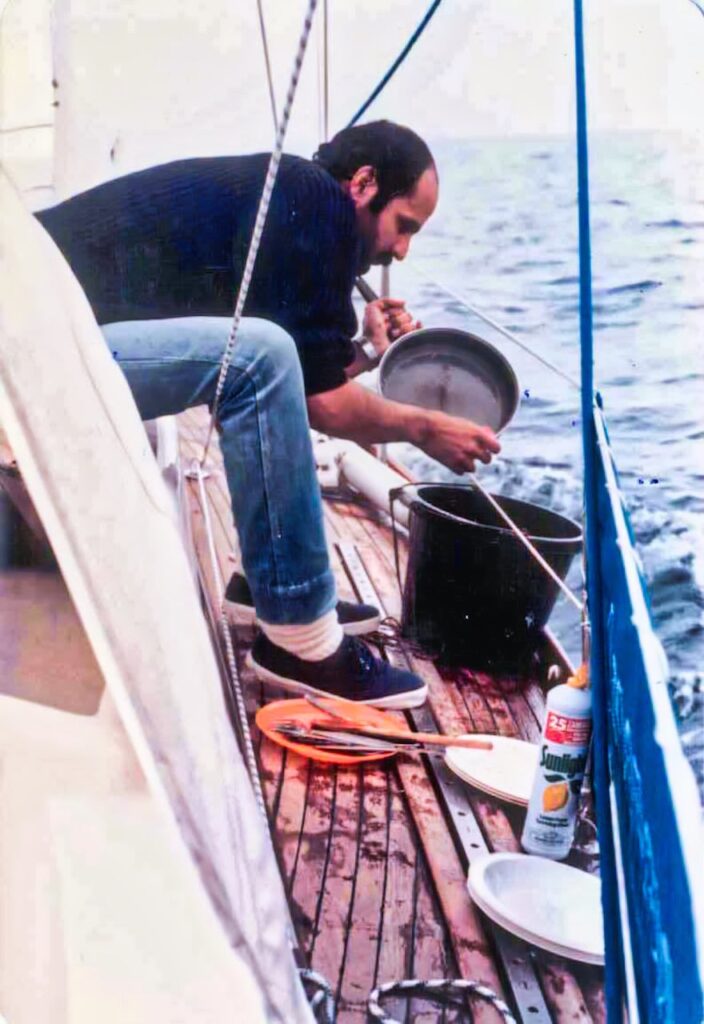
The sense of anticipation of being back home with our loved ones’ slowly started creeping over us; the calm seas gave us time to indulge our dreams – in bad weather, on duty, there is not even a moment of respite from managing the boat, and when off-duty, one just collapses into one’s bunk totally exhausted. The eagerness to reach home was greater for me, as I was yet to see my newborn. The 1000-mile distance to Bombay was covered peacefully. The flat seas brought scores of dolphins to the surface, at times as far as the eyes could see. Playing and frolicking around the boat, diving under it and some who used to dive under from the stern and appear from under the bows in front of the boat as if racing with us; sights which kept us mesmerised for hours on end. It was the first time we heard the high-pitched “whistles” of dolphins as they communicated with each other. The cabin of the boat is below water level and the sounds get amplified inside. It was amazing.
.
.
One late evening, at dusk, we were overwhelmed by swarms of flying fish! The glow of the cabin light attracted them in the darkness, the fish hitting the crew on watch all over their bodies. All of us came on deck to watch this wondrous experience. This phenomenon lasted nearly an hour before the “attacks” petered off. Next morning we gathered a bucketful of flying fish lying on the deck, which had not made it back into the sea. The menu for the next few meals was delicious fried fish, and more fish, till we could stand it no more!
.
.
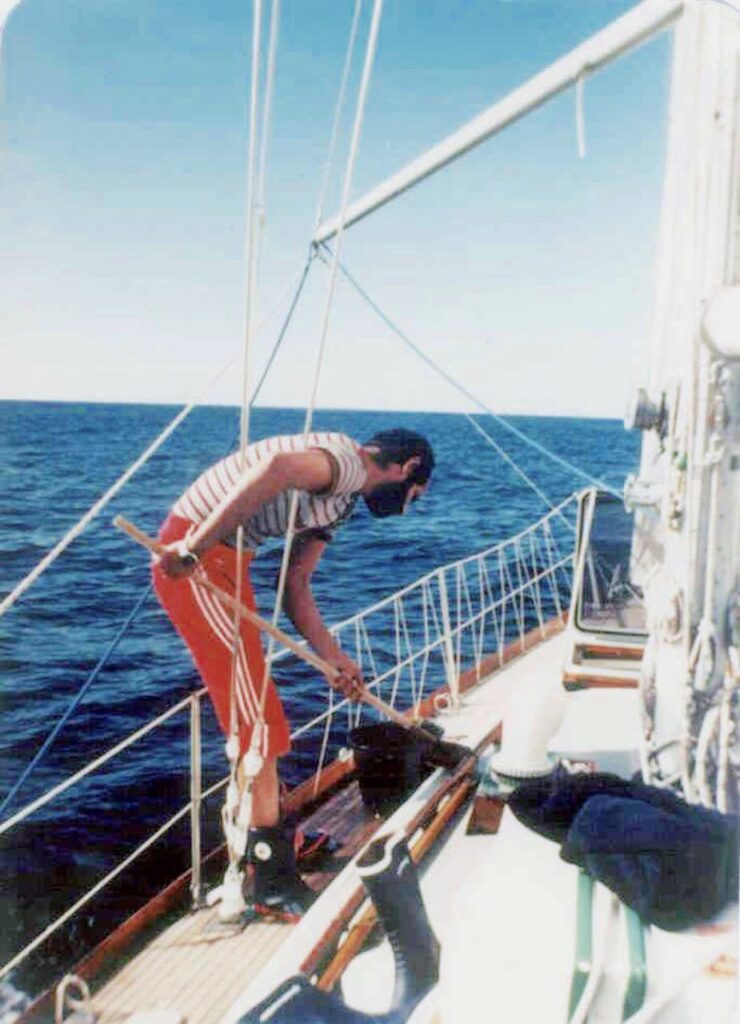
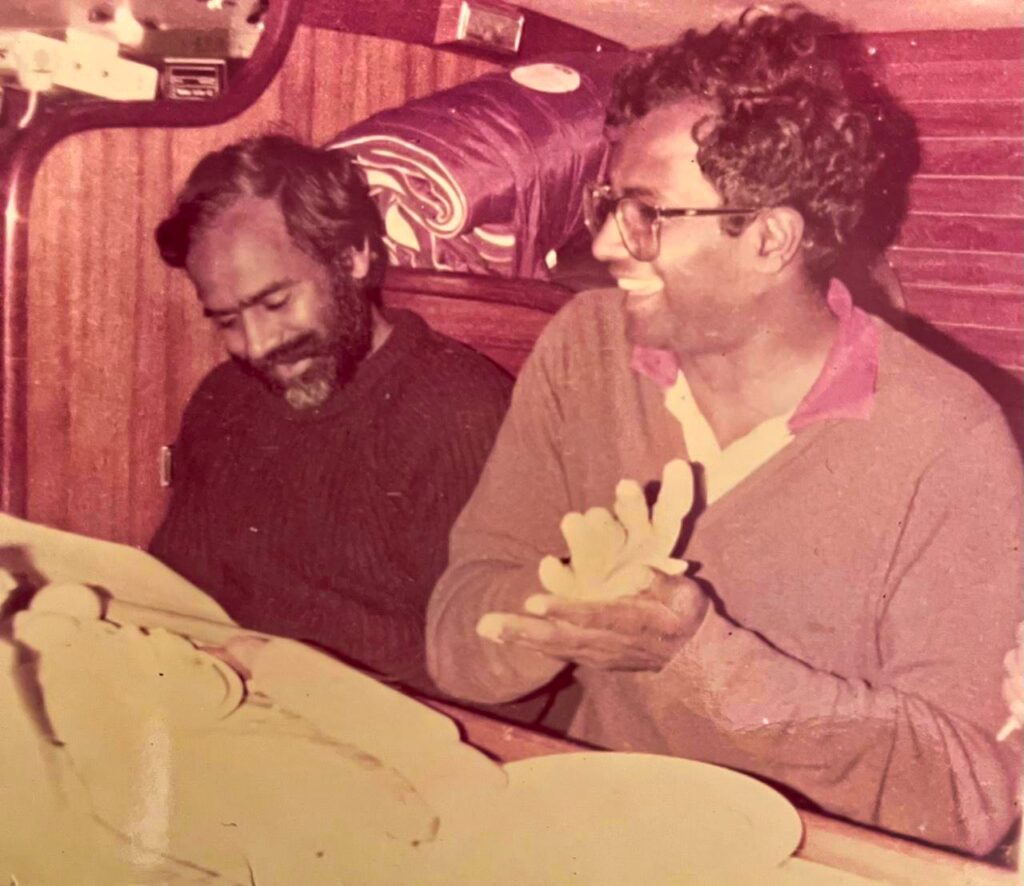
More time was now spent between the crew on watch in dialogues encompassing any and all topics under the sun! Spanning the spectrum from the personal to the how’s and why’s of creation. Time passed as the boat kept inching closer home. The weather held out and the crew’s appetite grew, making the “mother” (the crew on cooking and washing duty for the day) having to cook greater quantities of rice/noodles with each passing day. The self-appointed chef’s – Shekhar and Bharti – turned to experiment with new dishes. Bharti’s aloo-parathas were the all-time favourite! Of course, while we relished the unending supply of parathas, the poor chef had to spend an additional hour to clean the mess of the flour lying all over the cabin.
.
.
Now that we were approaching home, the reserve food stocks appeared – cans of rassogullas, condensed milk tins, the hoarded bars of Mars Bars etc etc. They were all dealt with promptly. A typical morning watch started (at 4:00 am) with downing half a condensed milk tin, midway through the watch a few golden apples vanished before the morning tea was brewed. The crates of Portuguese golden apples were finally no more. My sweet tooth became sweeter – the syrup from all the cans opened was passed down to me!
.
.
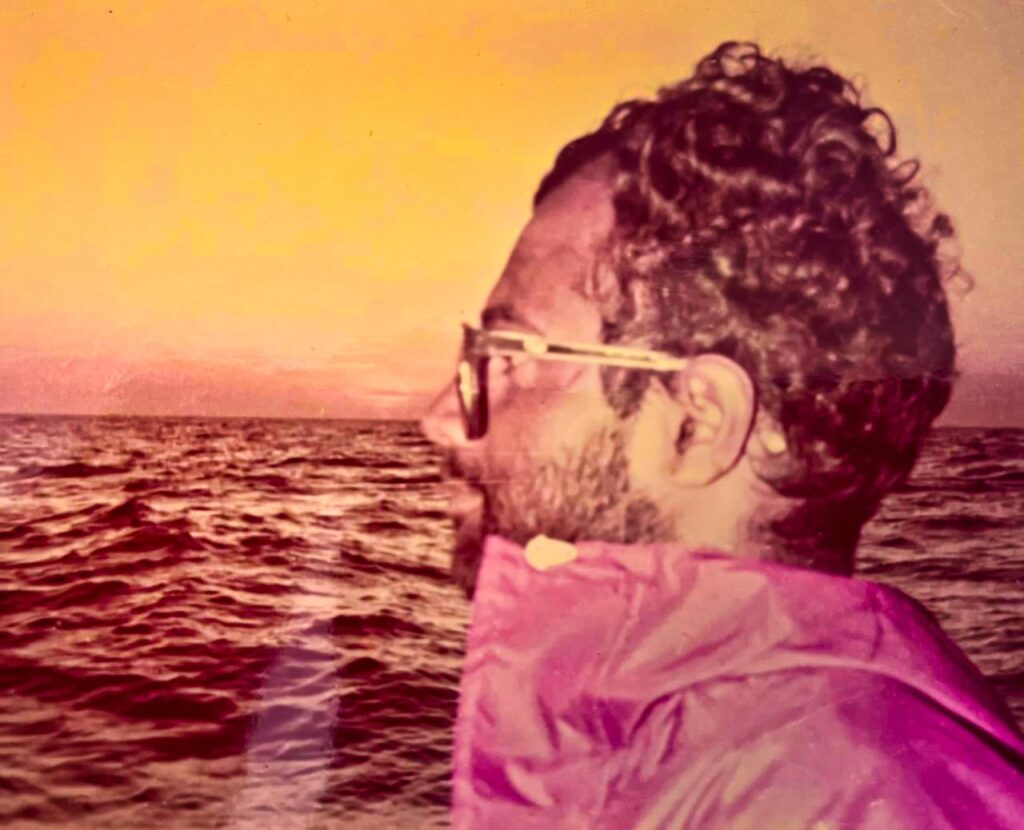
Finally, we could see the Indian landmass on 31 Jan 1985 morning – growing larger as we sailed through the day. Our arrival was finalised for the morning of 1 February 1985 on the VHF Radio. The winds had been good and we reached the outer Bombay harbour by evening itself. It was an agonising wait through the night, sailing up and down at the harbour entrance, waiting for the sun to come up. A brilliant plan emerged to pass the time, the last big cask of Portuguese wine had been kept safely through all these days – we thought it was time to celebrate. While the crew slept, AK, Pillai and me slowly worked our way through the wine – the cask didn’t seem that big after midnight. I only worried that we don’t mess up our drills while coming alongside the jetty the next morning! The worry was unfounded – by now all drills were so deeply ingrained that we could have executed them even in our sleep. Though I did have my second hangover of the voyage in the morning.
.
Back Home
.
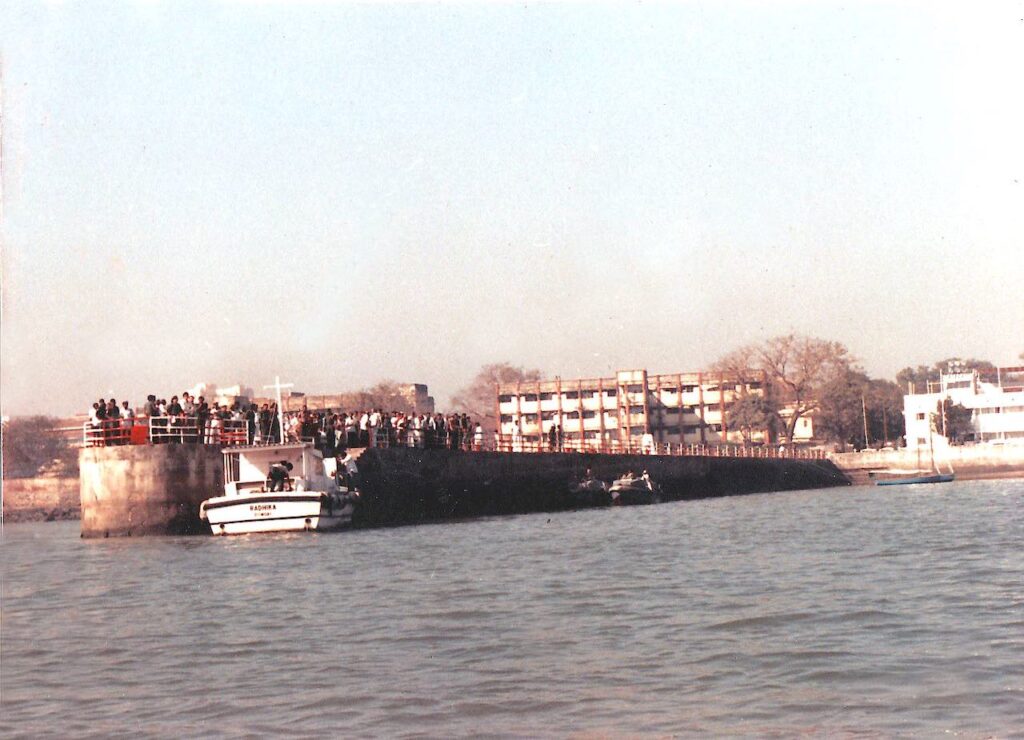
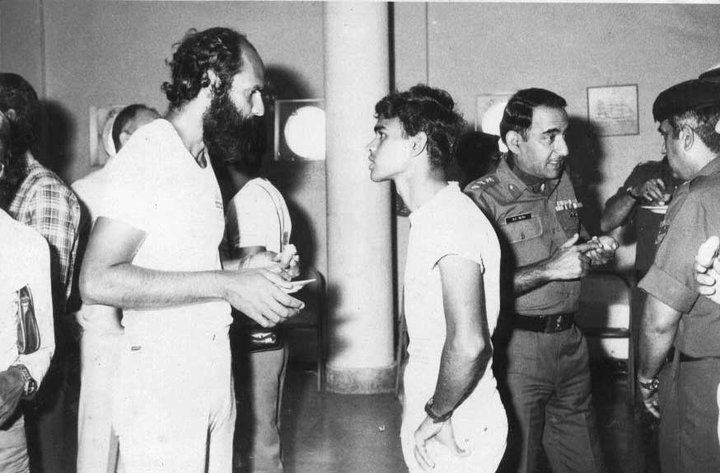
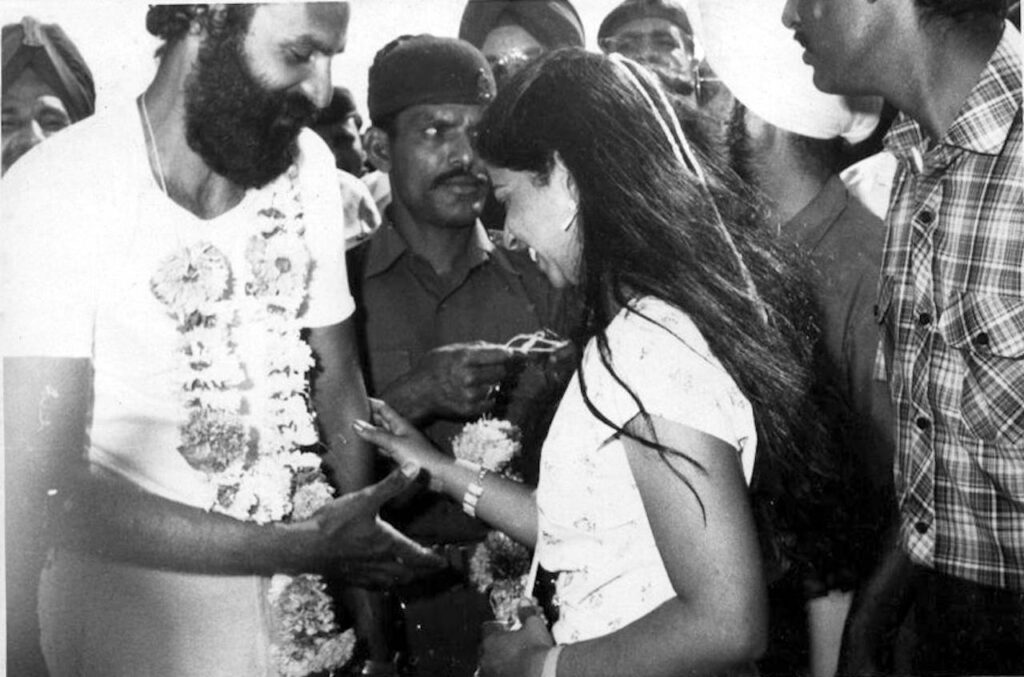
As soon as dawn broke over Bombay harbour on 1 Feb 1985, we changed course and set sail for the Naval Sailing Club, Colaba. A warm welcome awaited us, with a large gathering of sailors, colleagues, relatives and friends waiting to greet us. It was a very emotional moment for the bearded voyagers – none of the crew shaved onboard since we commenced our journey.
.
.
We had sailed 7,700 nautical miles (approx 14,000 km). It was a creditable achievement for all of us, and we really could not believe that we had finally done it!! The day when I flew out to the UK last year in August, now seemed another age.
.
.
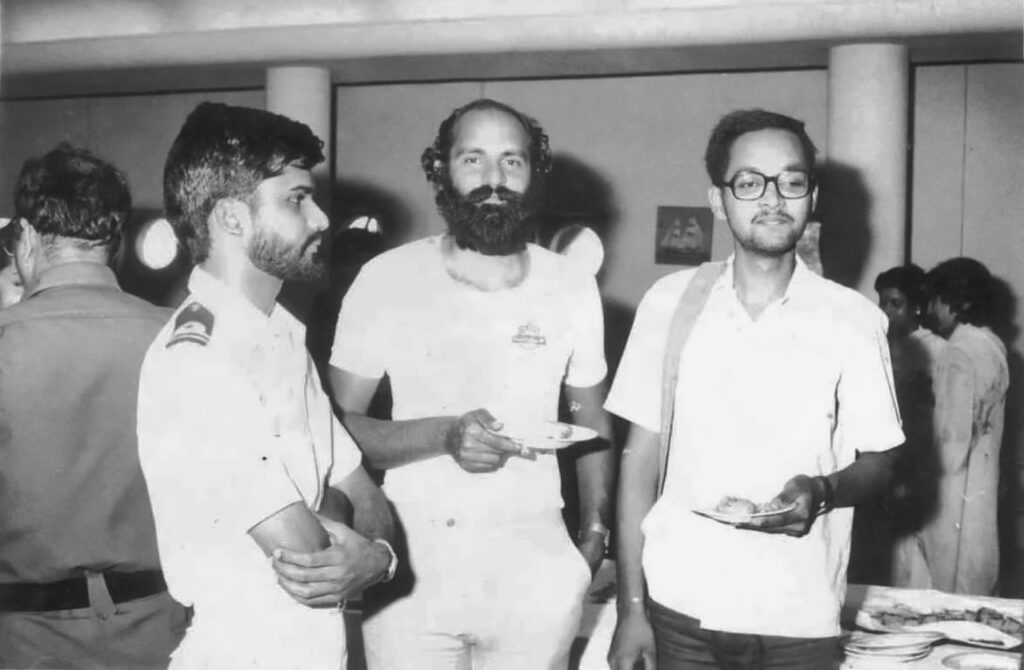
We had sailed through the fog of the Channel Islands and the notorious Bay of Biscay, where we ran into our first gale. We had sailed through rough, foggy and chilly weather of the North Atlantic Ocean till Gibraltar, causing us many anxious moments. We had then sailed through the winter storms of the Mediterranean where we hardly saw the sun for 4 or 5 days during the month. The journey through the Suez Canal was a unique experience, but the rough weather in the second half of the Red Sea was one of the worst periods that we had come across – which tested the crew to the limits of their endurance under extreme physical and mental stress. However, after crossing Aden, in the New Year, the sail to Salalah, Muscat, and Bombay was smooth-sailing and made up for the earlier rough weather – and gave us the opportunity to see the wonders of nature – frolicking dolphins and flying fish in their hundreds in the Arabian Sea.
.
Conclusion
The Expedition was my first experience in blue water sailing – the earlier expedition to Iran in the Seabird Albatross had provided only a taste. I had started out as a rookie but now after its successful completion, the confidence of being able to handle any situation had replaced the earlier tentativeness. There were many joyous as well as anxious and dangerous moments when adrenalin levels ran high. Our discipline and training in the army had been a major factor in transforming the crew into a close-knit team capable of taking on the worst. A memorable part of the voyage was meeting people from different nationalities and cultures, and interacting with them. And of seeing that the world has wonders everywhere, in every small island, and it’s only through travel that one can get to see them. We saw, and experienced, nature in a totally new dimension. Its grandeur and beauty, as well as its awesome power. Days and weeks at sea gave us the opportunity to see nature without any filters – in its pristine beauty. This is what sustained me during the long hours performing watch duty, often in total silence, without ever feeling a moment of boredom.
“The voice of the sea speaks to the soul”
The end of the first phase of our circumnavigation of the globe, for me, did not end on reaching Bombay. It was only when I reached Pune and saw the 2-month old baby girl that I felt a mixture of joy and satisfaction. There was another amusing sequel to this voyage. When I reached home, Richa, my elder daughter, saw the bearded man entering the house and ran off screaming about an intruder in the house! She had been spending time with our neighbours, Maj NDN Singh, during the time Ranjana was in the hospital and even thereafter – it had become a second home for her. It was with great difficulty that she was persuaded to return from the neighbour’s house and meet her unrecognizable “father”. The hazards of staying away from home for too long!
.
Links
For more details of yacht “Trishna”, click on the link below. Incidentally, the Wikipedia page was made by me earlier for recording details for posterity. But let me tell you, it’s not an easy task to make a new page on Wikipedia – took me a few months of initially learning the process and then answering unending queries from the moderators before they allowed the page to go online! But definitely worth the effort.
.


19 Responses
Finally, I get to read the story (which I heard first hand as well 🙂 )
and my favorite quote
“A smooth sea does not make a skilled sailor!”
Hope the written version was as interesting as the verbal narration 🙂
yes, indeed 🙂 very real-like description 🙂
Many dream to take on an adventure but very few do so. It was an amazing read and the pictures in between made the blog even more alive. A lot of learning and insights can be gathered from the blog. It was really nice to see that how some less known people came up to assist, while those who were actually supposed to, failed to do so. but then life’s a mix of good and bad acquaintances.
I’m sure the article will motivate and guide many more adventures in times to come. Kudos to the team who achieved this marvelous feat.
Thank you for going through the blog. Yes, one was lucky to have been able to see one’s dreams crystalize into reality…..and now to be able to write down some of those adventures, even though it has been after a few decades!
I hope that many more youths are motivated to take on adventure activities, to fill in that missing link required to convert daily drudgery into a life-extraordinary!
A most interesting read with such a vivid recall after almost four decades. This being the precursor to the circumnavigation of the globe makes it all the more critical as all lessons learnt during this leg were to be become crucial in the success of the main adventure.
So well written AK.
Thanks for the comment. Yes, took a while to gather material….and memories after all the years to write the account!
Dear AP.
Very well covered, the journey from Gosport, UK, to Bombay ,India. Well done AP. GOOD EFFORT. BRIG TPS CHOWDHURY,AVSM. (Retd)
Thank you, Sir! Your role in all this remains singular!
It was great to read the very detailed coverage of the first sail of Trishna. Many aspects not apparent in the planning and execution of such an adventure well brought out. The emotions and never-say-die spirit shines through
Thanks! Any expedition has to have an element of surprise, that’s what makes it exciting. The challenge is to face the unexpected and overcome it!
Hi sir, a great read. Enjoyed reading about your adventures.
Best wishes
Hi, its great hearing from you after so long! Thanks for taking the time to go through.
Ajai,
Thrilled to read, thoroughly penned down your memories of Trishna after such a long time. It was amazing to go through your blog which also contains some photos of your adventure.
Simply Great.
Thank you. It was nice that you were able to participate in the voyage, even if from your armchair 🙂
It took me some time to complete the whole virtual journey from Gosport to Bombay. Staring on the map is a hobby for me, so I am able to connect with the whole journey through Lisboa, Gibraltar, Malta, Crete, Suez and onwards. It is indeed a very beautiful read. I am eagerly waiting to read each and every story from your blog, Sir. It feels like living the moment with you. Your journeys are truly incredible as well inspiring. Looking forward to meet you one day.
Thanks for the comments. Hope you get to read the other posts, which I am sure will enthuse you equally! Do subscribe on the website, to receive intimation of new posts.
Good day, “Owner” I was quite impressed by your article, “Ordeal or Adventure? The Voyage from Gosport, UK to Bombay.” I can’t tell you how much I enjoy reading it, and I know that what you’ve written here is original. My other identity is that of a travel writer who shares insights on destinations and journeys.
Thank for going through the blog. It was a historical adventure, very much part of the record books of Indian maritime history.