

Introduction
Goa always brings to mind pristine sunny beaches, blue waters, and shacks along the seaside selling chilled beer – the party capital of India! And of a green verdant landscape dotted with pretty churches. However, that perception is a superficial description of Goa, as will be evident to anyone venturing away from the overcrowded beaches. The real Goa is a true kaleidoscope of legends, colours, ancient customs and traditions, attires, cuisines, festivals, history, and heritage. Goa is truly an exploration of diversity. Styled as ‘Sunaprant’ (golden land on the west coast), ‘Aparant’, ‘Goi’, ‘Gomant’, ‘Gomantak’, Goparashtra’, ‘Kalyangude’, ‘Govapuri’, and finally ‘Goa’ (perhaps to rhyme with ‘Lisboa’ the Portuguese capital).
I came to know about the ‘Goa beyond beaches’ during the recent Pathik – Temple Trails and Stories Tour (organized by INDICA-Rashtram Centre for Cultural Leadership), which took us on a pilgrimage across some of the most exquisite, yet lesser-known Devasthanams of the world.
“A Hindu Temple runs deeper than its brick and stone exterior, existing on various planes of meanings and significance. On one hand, it is the nucleus of knowledge and learning, a preserve of Indic Knowledge Traditions; on the other, a socio-economic entity and a welfare institution. In the Hindu social system, temples have served as centers of art, culture, and economics where music, dance, painting, sculpture, architecture, and other forms of craftsmanship have flourished; as treasury offices that distributed resources, and as legal courts that dispensed justice.”
The trip was an eye-opener and I discovered that the unconquerable soul of Bharatvarsha still resides in Goa – the seat of regeneration and civilizational survival.
.
Note for Readers
During my recent visit to Goa, I visited a number of magnificent temples, being completely unaware of the existence of such a large number of temples in Goa; the common perception is that Goa comprises only BBC – Beaches, Bars, and Churches! This led me to dig into Goa’s history and what/who inhabited the region before the Portuguese. It was a fascinating read that spans over millennia starting from the Neolithic Period, events in the Mahabharata period, being a part of the Ashoka Empire, the Golden Age of the region under the Kadamba dynasty, mass conversions, destruction of temples and gory details of the Goa Inquisition under the Portuguese, Shivaji’s attacks on the Portuguese which led to Hindu revival and kickstarted temple rebuilding activity in the region.
It would be an injustice not to write about what I found since most of it is not known. The territory having been the last colonial outpost in India to have been “liberated”, still continues to hold many secrets. Due to a lack of knowledge and an absence of official records. Surprisingly, official records still state that Goa was “annexed” by India in 1961! As if the Indian Army invaded a foreign country.
Since delving into history may not be of interest to many, I have split the blog into two parts. Part I (this blog), covers the history of Goa since the dawn of time. Part II is the actual travelogue, which can be read directly by clicking here.
.
Goa down the Ages
.
Around 12,000 to 10,000 BCE, geological events in the region of southwest India are thought to have resulted in the elevation of the coastal area that encompasses Goa. Burnt shells and fossils in Goa’s soil confirm this. Coincidently, Vedic Itihaas also ties in with this geological event (described below).
.
.
Migrants are believed to have populated the land that is now Goa, though discoveries in the hills of Goa’s east show that the area was inhabited for centuries before the agricultural, migrant settlers. Cave art in the area dates from around 100,000 BCE to 10,000 BCE and points to an ancient hunter-gatherer population in the region.
.

.
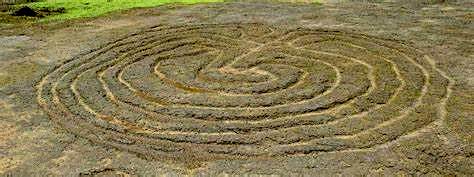
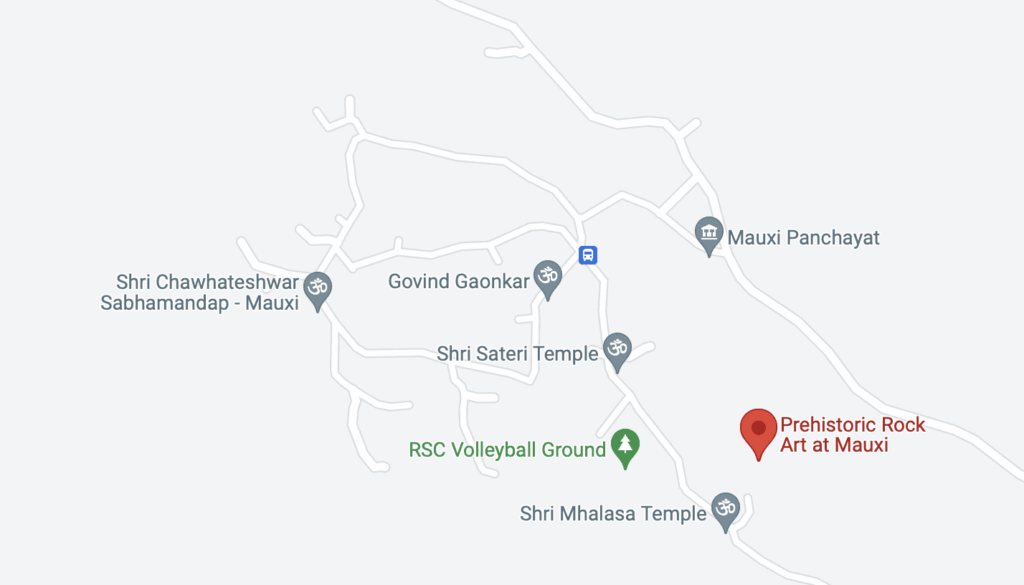
Goa traces its history back to the waters of Mhadei (Mandovi), Zuari (Aghanashini), and Kushawati rivers where Goa’s pre-history flowered. The Sanguem and Sattari Talukas mirror Goa’s pre-historic antiquity. The petroglyphs of Pansaimal, Kazur, Pirla, and Mauxi showcase Goa’s Stone Age (megalithic) rock art. Alongside these, Palaeolithic caves exist. The earliest communities living in Goa were the Kunbis to whose stock belongs the other agriculturists – the Gawdas and the Velips – the fisher folk Kharwis or the Kols, and the Mhars are the other tribes. These tribes have a very rich heritage of folk songs, dance, and music. Agriculture formed the basis of the earliest village communities called the Gaunkaris. ‘Santer’ and ‘Betal’ were their folk deities.
.
.
Around 600 BCE, it is believed that significant numbers of settlers came to Goa from central India, and the area is referred to in the Mahabharata as Gopakapuri, or ‘Cowherd Country’. Bhisma Parva of Mahabaratha and Vishnu Purana mentioned this land as Goparashtra. Sahyadri Khand refers to it as Gorastra and Gomant. The place Aparant that covers the western coast of India includes Goa. This name was mentioned in Mahabharata, Buddhist literature Baveru Jataka, Kalidas’ Raghuvamsatn, Vatsyayana’s Kamasutra, and Kautilya’s Arthashastra. The Girnar inscription of Maurya Ashoka mentions that Aparanta was the border of the Arabian Sea. Goa is also called Gomanchal since the land is situated in hilly terrain. It is also mentioned as Gopakapattana. Pattana means port city in Sanskrit and Gopakapattana was a port city of the Kadambas, which was well fortified. The Greek geographer Ptolemy (160 CE) mentioned it as Kouba. Arab traders and Persian writers mentioned Goa as Gouba. Arabian traveler Ibn Batuta (1325 CE) mentioned Goa as Sindabur, while the 16th century traveler Ludovico de Varthema called Goa as Goga. Goa is also called Goem in Konkani and Govern in Marathi.
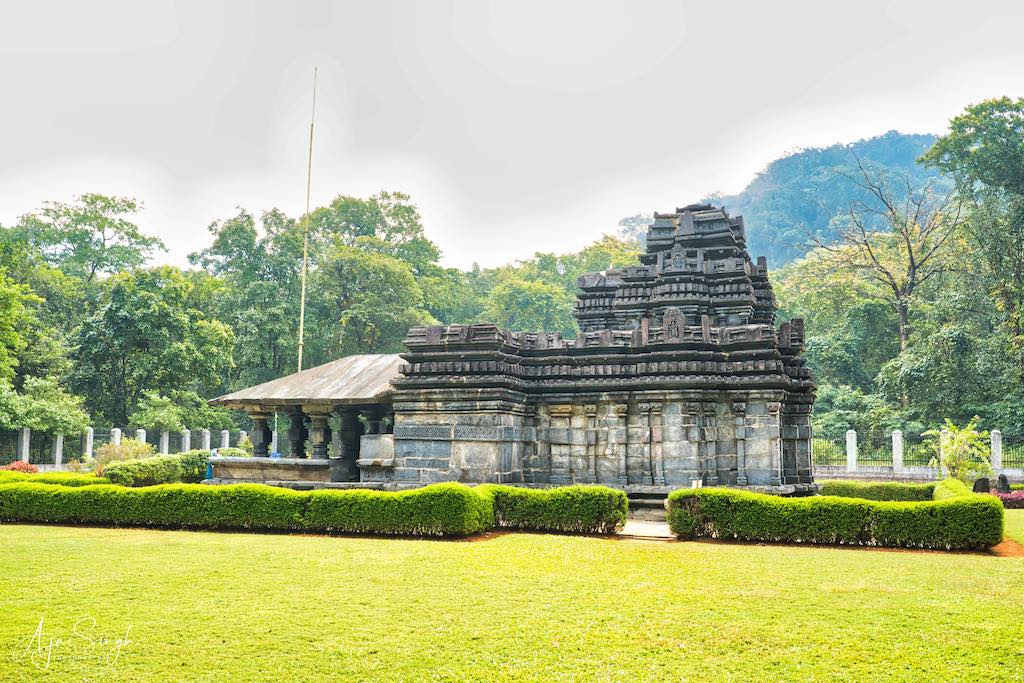
The dynastic history of Goa begins in the 4th Century BCE with the Mauryas (322 to 185 BCE). Then followed the Satyavahanas, Chuttus, Western Kshatrapas, Kuras, Marathis, Ishvakus, Gurjara Pratiharas, Abhiras, Trikutas, Kalachuris, Nagas, Bhojas, Kaikeyas, Konkan & Kolhapur Shilaharas followed by the Kadambas (11th to mid-14th century CE), whose period is called the “Golden age of Goa”. Invasions by the Delhi Sultans and the Honavar Nawab followed, as did the fallout of the enmity between the Vijayanagara Empire (who ruled from the 14th to 15th century) and the Bahamanis. Adil Shah of Bijapur got control of Goa in 1498 CE and ruled till he was defeated in 1510 CE by the Portuguese. This period under the Bahamani-Adil Shahi rule was the Islamic period and saw many Hindu conversions and destruction. In between, for a relatively brief period under the Mauryan empire, a Greek Buddhist missionary was sent to the region by Emperor Ashok, forming the southern fringe of his empire. Buddhist settlers spread their religion, but after Ashok’s death in 232 BCE the empire crumbled, and Hinduism returned as the main religion.
.
.
Inhabitants of Goa were the Rashtrikas, Peitinikas, and Bhojas, which are mentioned on an Ashokan rock edict. Konkani, the language spoken by Goans today is believed to have been created by the impact of the official language of the Mauryan Empire called Prakrit on the native language.
With the European powers seeking influence abroad in the 15th Century, the Portuguese set their sights on the ports of the Indian Ocean. In 1498, Vasco Da Gama set sail from Lisbon for Calicut on the south Indian coast. His arrival there signaled the beginning of the colonial period in the history of Goa. Da Gama’s expeditions were marked by atrocities and bloodshed.
The sinking of a small Portuguese fleet between Mumbai and modern Goa by the Ottoman Turks and a fleet of Calicut vessels sparked a far greater naval conflict which took place at the Indus Delta and was known as the Battle of Diu (1509 CE). The Portuguese and Muslim fleets involved knew that success would mean dominance over the Indian Ocean. The Portuguese won outright and marked the occasion by firing the limbs of their prisoners at towns and villages as they sailed along the coast.
Eleven years after Da Gama arrived in India, and after the Battle of Diu had ensured Portuguese dominance, a permanent enclave was needed on the Indian coast to administer the trade. After bloody battles, the Portuguese finally captured the capital of Ela, and set about fortifying the city. It would remain under Portuguese rule for the next 450 years. In 1530, Goa replaced Portuguese Cochin as the administrative capital not only of Portuguese India but the Estado da India, that is, all Portuguese colonies east of the Cape of Good Hope.
.

.
However, their stronghold in India started declining from the 17th century, a process which was further hastened by the Maratha Wars between 1664 to 1739. Forced to decide between the warring Marathas and Mughal armies, the Portuguese incurred the anger of the Marathas by granting safe passage to the Mughals through Goa. This eventually led to the seizing of Margao by the Marathas and the signing of a treaty that required Portugal to pay compensation in exchange for the withdrawal of Marathi troops from Goa. In the 18th century, the territory of Goa comprised two parts – the central nucleus of the Velhas Conquistas (Old Conquests) and the Novas Conquistas (New Conquests). In 1843, the Portuguese moved the capital to Panaji (Cidade da Nova Goa) from Velha Goa.
.
The Skanda Purana Itihaas
.
Shayadri Khanda of Skanda Purana (pt-II, ch.1) refers to the reclamation of part of Goa from the sea by Bhagwan Parsurama, the 6th incarnation of Vishnu. He shot seven arrows from Shayadri towards the sea and reclaimed the land of a trapezoid shape extending from Vaitarni to Kanyakumari. The region thus reclaimed goes by the name Parasurama Kshetra. It is divided into 7 divisions known as Sapta Konkan. They are Viratam, Karatam, Barbara, Konkanam, Govarashtra, Tulangum, Keralam and Havyagam. Govarashtra is Goa and the place where the arrow fell is believed to be Banauli (modern Benaulim, taluka Salcette) – Bann: arrow, ali: village. It is further mentioned that Parasurama performed the asvamedha yajna at Harmal (modern Arambol), thereafter gifting all the lands he conquered to sage Kashyapa.
Parasurama is also reputed to have brought 96 Saraswat Brahmins from Tirhut (Bihar) and settled them at Tiswadi (Tis-30, wadi-village) and Sashti or Salcette (Sassast or 66). They are called so because they originally resided on the banks of River Sarasvati, which eventually dried up, leading to their migration to other parts of Bharat.
There was a temple of Parasurama called Sankheswar and Baneswar at Benaulim. The temple was destroyed by the Portuguese in 16th century CE.
Chandrapur (Chandor) by about the 5th century CE was a prosperous city, and the earliest copper plate inscriptions from this region were found at Shiroda during excavations.
.
The Temples
.
The discovery of rock engravings on a basalt rock boulder at Mauxi near River Nanora in Sattari Taluka and the figure of a Trishul depict Hindu worship, like in the Harappan Neolithic phase, and it is the earliest such record in Goa. The existence of innumerable Hindu sculptures all over Goa indicates that there were Hindu temples right from the Bhoja period up to the Marathas in the medieval period.
During the period of the Portuguese Inquisition in Goa, especially post-1560 CE, nearly 566 noted Hindu temples were destroyed. All these big and small shrines had been existing since ancient times and were highly venerated before the advent of Portuguese rule in Goa.
While the destruction of Hindu temples by Muslim invaders gets the spotlight, and understandably so, an exposition of anti-Hindu iconoclasm would remain incomplete if it did not mention the Christian campaigns against Hindu society. In truth, the campaign against Hindu heathenry was driven by the old Judeo-Christian hostility against idolatry. Such hostility provided Christian conquistadores the perfect theological justification for both colonial conquest and the destruction of Hindu temples (Henn, 2014). For the Hindus of Goa, this meant a ferocious and humiliating experience of subjugation. By the second half of the 16th century, Portuguese-Catholic forces “launched a ferocious iconoclastic campaign against Hindu culture in India that seemed to bring an end to all ambiguities and confusions regarding the identities of gentiles and Christians.” Among the first targets was the destruction of temples on Divar Island in 1516 CE.
Few ancient Hindu temples have survived in Goa and these are confined to the remote areas of the New Conquests. The Edict of 1540 CE gave a carte blanch to the Portuguese to destroy all Hindu temples and shrines ‘not leaving a single one on any of the islands’ (the Ilhas). With the acquisition of Bardez and Salcete in 1543, these areas were also subjected to the complete elimination of Hindu temples, virtually all traces were swept away, never to be replaced. Hindus were even forbidden to cross the border to worship at temples and shrines outside Portuguese territory across the river, and the Portuguese themselves were not averse to organizing regular forays to continue the destruction beyond their existing borders.
The campaign devastated Goa between 1540 and 1560 (Henn, 2014). These two decades were marked by a demoralizing devastation of Hindu Goa; all Hindu temples, shrines, and images were destroyed or removed. Furthermore, the performance of public Hindu rituals was banned and actively suppressed (Henn, 2014). By 1600, most Hindus who did not convert to Christianity were either expelled or fled Goa. Like the mosques built on top of destroyed Hindu temples by Muslim invaders, purposefully embodying architectural expressions of conquest over heathenry, so too did the Christian intruders destroy Hindu temples in order to replace them with Christian images and monuments. To quote the Portuguese poet Camoes, “Goa [was] taken from the infidel [in order to] keep severely in check the idolatrous heathen.”
Existing beautiful sculptures of basalt, a Nandi with panavatta collected from the Gandhi Circle area of Old Goa and exhibited in Old Goa Museum, a broken sculpture of Uma-Maheshwar collected from between Aljube and Royal Hospital area of Old Goa and exhibited in the ASI Museum, give an indication that beautiful temples did exist in medieval Goa. A deep well in the St. Cajetan Church (completed in 1661 and now a UNESCO World Heritage Site), strongly supports the existence of Hindu temples in Old Goa. It is believed that Archbishop Aleixio de Menezes constructed the Holy Trinity Church on the ruins of a Shiva temple. In its neighborhood, there exists a pushkar (a sacred water tank) to fulfill the requirements of the temple and its devotees. Although the term Old Goa was not mentioned directly in the records of the Kadambas, according to a copper plate inscription belonging to Tribhuvanamalla of 1107 CE, there was a foundation of a Brahmapuri colony for Brahmins on the outskirts of present Old Goa. In the Brahmapuri, Shiva was worshipped under the name of Goveshwar. Here the Brahmin families lived near the temple of Devi Sarasvati, which was dedicated to study and teaching.
A written report submitted by Brother Gomes Vas to the King of Portugal in 1567 along with the letter of the Captain of Rachol, clarifies that the temples of Sancoale were burnt down and their images destroyed. In the same report, he also mentioned the destruction of the temples of Shri Mahalsa at Cuncolim, Chinchinim and Ambelim in Salcete. According to the letter of Diogo Rodrigues, Captain of Rachol dated 17th March 1567, he destroyed the temples of Phado, Parammed, Narayana, Bhagavati, Iswar, Ajosini and Narsimha. In another letter dated 6th April 1567, he refers to the destruction of the temples of Sanvordam and Veroda. He also stated that up to that date, he had destroyed temples in 58 villages in Salcete. The famous temple of Ramnath was razed to the ground in 1567. Just in the year 1569, 3209 Hindus are reported to have been converted forcibly.
There are almost 50 temples in the area of the New Conquests in which the principal deity is a ‘refugee’ deity from Ilhas, Bardez, or Salcete – the deities having been smuggled to safety out of the Old Conquest area in the second half of the 16th century because of the campaign of temple destruction. In fact, most of the deities were transported across the Cumbarjua waterway and the Zuary river to Antruz (Ponda) in the territory under the Sonda king, on the eastern border of the area under Portuguese control. Since the devotees still wished to worship them and were prepared to risk the border crossing, in order to do so meant that they had to be accessible, resulting in a concentration of the temples in Ponda, at the very doorstep of Portuguese territory. With the insecurity resulting from the danger of continuing forays across the border by the Portuguese, these ‘refugee’ deities were originally kept hidden in hutments and modest dwellings, or discreetly concealed in the wooded valleys.
A 1569 royal letter in the Portuguese archives records that all Hindu temples in its colonies in India had been burnt and razed to the ground.
It was only in the second half of the 17th century that the northern shore of river Mandovi, Bicholim came firmly under Maratha control in the person of Chhatrapati Shivaji Maharaj, who himself funded the new Saptakoteshwar temple at Narve. Later Naro Ram Mantri, a minister of Shahu Maharaj of Satara funded the building of the Shri Shantadurga temple at Kavalem, and the village of Mangueshi was donated to the Mangueshi Temple by the Peshwas in 1739.
To give an example of the manner in which temples were destroyed by the Portuguese, the unfolding of events regarding the Mahalasa Narayani Temple at Mardol has been taken. Document No. 90 of Documenta Indica, Volume VII, carries a report dated 12th December 1567 of Fr. Gomes Vaz which includes the letter written by Fr. Luis Goes, who was a member of the party dispatched to demolish the temple of Malsa Devi. In his letter, Fr. Luis Goes describes the beauty of the mandap and the exquisitely crafted woodwork that embellished it. He eulogizes the pleasing ambiance created by the aesthetically designed landscaping of the site. The temple stood majestically amidst ideal surroundings. It was built on an elevated plinth 11 feet in height. Fr. Luis Goes admitted in his letter that, he had not until then seen, not even in Portugal, a temple so beautiful and suggested that the building should be maintained intact and be converted into a Church of Our Lady of Conception in the future. For Fr. Sebastiao Fernandes, the temple of Malsa Devi was the richest and the grandest temple in the land. The temple of Mahalasa was selected by Captain Diogo Fernandes as the first target to inaugurate his crusade against temples in Salcete. It was announced that the Viceroy needed the high-quality wood used in the roofing of the temple for the Artillery building. The Viceroy addressed letters to that effect to the people of Verna as well as to the Captain of The Fort of Rachol. Captain Diogo Fernandes descended upon the temple in all fury on 7th March 1567 just at the time when the priest was about to bedeck the idol of Mahalasa with silver ornaments. Those ornaments were confiscated along with other valuables of the temple and a proper inventory of the movables was made. And then began the act of destruction. The image in the sanctum sanctorum was broken to pieces allegedly because Fr. Luis Goes had denounced her as a ‘bad woman’. The villagers managed to spirit away other murtis. Sacred books and works of art that enhanced the beauty of this temple together with the roof were ruthlessly destroyed. The Captain retreated after planting a Cross at the most prominent spot at the site. However, the temple could not be destroyed in one go because the structure was massive. Though the roof was destroyed, the walls remained intact. After the departure of the Portuguese force, the villagers regrouped and convinced a Portuguese businessman to buy the temple property thinking that the temple could be rebuilt in the future with the change of the Viceroy. Somehow the Portuguese got wind of this plan and fearing that the temple might be repaired or rebuilt in the future, Captain Diogo Fernandes once again descended upon the temple and totally destroyed the entire edifice. The details of the destruction of this temple are to be found in the report of Irmao Gomes Vaz dated 12th December 1567, which notes that the temple was totally destroyed on 14th March 1567. However, the mention of silver ornaments leads to the suspicion that the original vigraha had already been spirited away by the mahajans and the pujas continued with a duplicate murti to deceive the Portuguese.
.

.
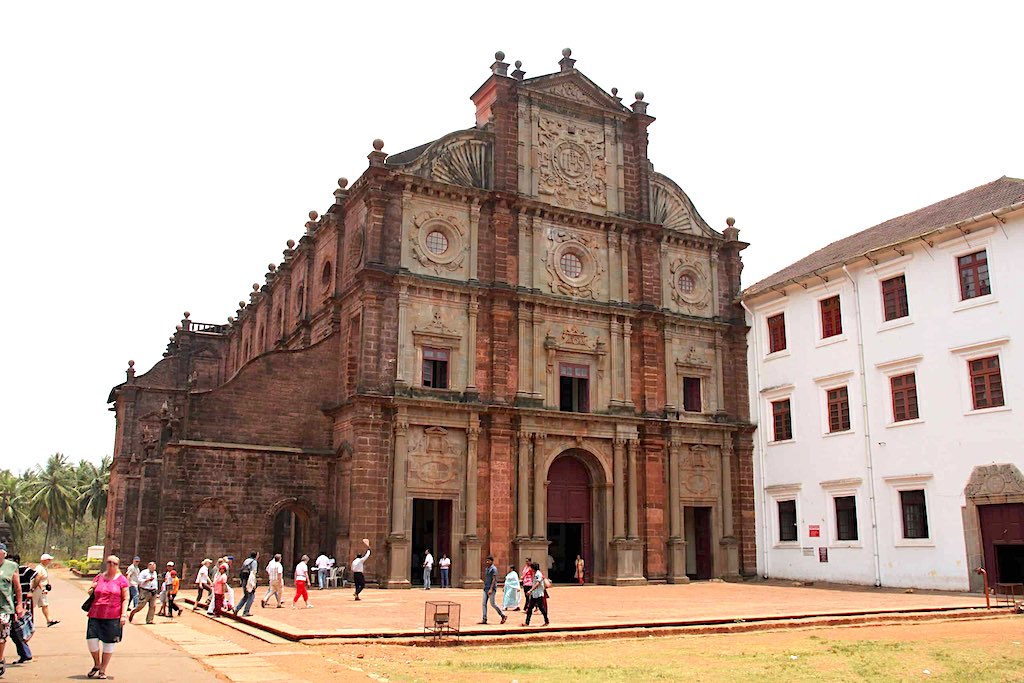
Hindus were forbidden from holding any public office, inheriting their father’s property, and testifying as witnesses in courts. Use of the local Konkani language was forbidden. If a Hindu child was deemed to be an orphan by the colonialists, the child was ‘seized’ by the Society of Jesus (founded by the not-so-saintly Francis Xavier) and made to change his religion. The irony is that the architect of the Inquisition, Francis Xavier now lies in splendor in the Basilica of Bom Jesus, visited AND venerated, by thousands of visitors, a majority of whom are Hindus! The construction of this church began in 1594 and it is now a UNESCO World Heritage Site. Xavier was beatified in 1619 CE. There is a local folklore about this church – they have attempted to erect a cross on top of the building several times, but it never stays there for long. We could not see a cross on the structure even during our visit.
.
.
Temple Architecture
.
Though temple construction in Goa started with bricks, mud mortar, and brickbats, stones like laterite, basalt, schist, and granite were also extensively used for making icons, doors, lintels, columns, and ceilings. Laterite and wood were commonly used for raising structures and roofs. The plan and elevation of the temples changed with the introduction of new materials like lime, sand, cement, tiles, etc. Since wood is smooth and can be easily carved, the carpenters sculpted excellent woodwork in temple art. In addition to the continuation of Hindu temple architectural concepts, Islamic and Portuguese architectural features were also incorporated into temple architecture over time.
Temples constructed in the late 16th century and after were made under the influence of a fusion of different architectural features and with new materials. Laterite stone, lime mortar or lime surkhi, wood, and tiled roofs were extensively used. New architectural features were added, like providing large sabhamandapas and mukhamandapas with a transept, which resemble the features of Church architecture and which could accommodate larger congregations. In place of a single division sanctum, three divisional sanctums came up. The transept with two side entrances was erected similar to church architecture.
.

.
Considerable changes were also incorporated in the vertical superstructure of the temple. In the place of Dravida, Nagara, and Vesara sikaharas, a domical sikahara with an octagonal base and sloping tiled roofs were developed, which rarely exists outside Goa. A single domical sikahara with an octagonal base and topped with a three-fold Kalasa was introduced as the superstructure of the sanctum in the beginning. In the course of time, double octagonal bases for domical sikaharas, or double sikaharas with double octagonal bases (like two-tired sikaharas), with three-fold kalasa on top, and with slanty sloping roofs for mandapas were introduced in temple architecture. This type of temple tower would develop into the impressive double-storeyed tower of Shantadurga temple built in 1738.
.

.
The introduction of a deepasthambha or depmala is also significant; the lamp tower could be transformed into a pillar of light on festive occasions. This feature hardly exists in any other part of India. The tower is an octagonal turret, raised in front of the temple, five to seven stories high, each story articulated with dwarf columns at the corners, in between which piercing the side of the turret are niches for lamps. The Marathas had introduced the concept of a separate tower of light, but Goan architects adopted it with their own unique designs based on Christian Baroque elements. However, it is interesting to note that most of these elaborate deepasthambhas are never lit with lamps. The reason is that since many temples are ‘refugee’ temples, which existed at another location earlier, lights are only lit at the original kshetram.
.

.
Another typical Goan design is the Naubat Khana or the Drum Tower, usually situated above and as a part of the main gate to the courtyard. It is generally a two-storeyed structure associated with Muslim rather than Hindu architecture. The upper chamber is for the musicians or the drum beaters as the name suggests.
Another unique practice followed in Goa is that the ‘refugee’ deities “visit” their original kshetram annually. This ceremony is carried out with great pomp when the vigrahas are taken ‘home’.
.
Significance of Ponda
.
The Taluka of Ponda has been a conscious witness to many religious upheavals that have taken place in Goa. It enjoys a special distinction for having sustained the different cults that were sought to be eradicated by the Portuguese. The erstwhile Antruz Mahal has offered an abode for the gods and goddesses from various regions. Perhaps this fact makes the Mahal, the anant urja desh, or a region of high spiritual energy. This was because of the security that the region provided from Portuguese destruction due to its location, surrounded by rivers and being outside their direct control. Thus the temples of Ponda taluka allude to their remote antiquity. Most of these temples have had a chequered history owing to the forced migration of a large section of people who chose to move across the river in search of a safe destination for their gods and goddesses. They gave up their comforts, lucrative professions, and properties and volunteered to face unknown perils to ensure that their gods and goddesses continued to be given regular ritual service and accorded due honour. As such the sacrifices of the forefathers of the present generation need to be duly appreciated and wholeheartedly saluted.
.

.
The Goa Inquisition
.
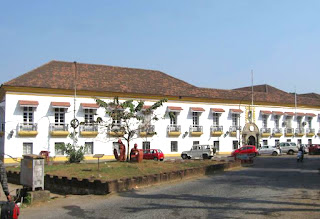
Accompanying the systematic destruction of temples in Goa, was the launching of the Inquisition. Perhaps because of its Catholic fervor, the Portuguese Inquisition in Goa became the most severe and cruel of all the Portuguese territories, and the longest in world history. Francis Xavier was sent to Portugal in 1541 as a missionary to convert Hindus. In 1545 Francis Xavier wrote to Rome asking for the Inquisition to be installed immediately. The request was initially turned down, but he persisted. Xavier did not live to see his wish fulfilled, but in the year 1560 the first inquisitors Aleixo Dias Falcão and Francisco Marques, secular canonists, established the Inquisition in Goa. It lasted until the year 1812, that is, a span of 252 years. This Inquisition was abolished in 1812 – when the British were occupying Goa – and the Inquisition files which were kept first in Goa were later sent to Lisbon. Whether the records are still available is a question mark. The Palace of the Inquisition was pointed out in awe by the Goans, who called it Orlem Goro or Big House, which had two hundred cells. It was a palace-cum-fortress built by the last Muslim ruler of Goa, Yusuf Adil Shah of Bijapur in 1500 and is Panaji´s oldest surviving colonial building. After 1961, when Goa was liberated from the Portuguese, it was converted to function as the Secretariat. The palace itself was built after destroying the temple on the site, using its broken remnants.
“The palace of the Inquisition, called by the Portuguese Santa Casa, or the Holy House, is situated on one side of the great square, opposite the cathedral dedicated to Saint Catherine. It is extensive and magnificent, in the front are three entrances, of which, the center is the largest, and opens upon the grand staircase ascending to the hall which I have mentioned. The two other portals severally lead to the apartments of the Inquisitors which are sufficiently commodious for considerable establishments. Within, are various apartments for the officers of the house, and passing through the interior, there is a vast edifice divided into distinct masses or squares of buildings, of two stories each, separated by small courts. In each story is a gallery, resembling a dormitory, containing seven or eight small chambers, ten feet square, the whole number of which, is about two hundred. In one of these dormitories, the cells are dark being without windows, and smaller and lower than the rest.“
.
.
The Inquisition in Goa, on account of its tortures and its extended duration, is reputed to be the worst inquisition carried out anywhere in the world.
Alexandre Herculano, a famous writer of the 19th century, mentioned in his ‘Fragment about the Inquisition’: ‘…The terrors inflicted on pregnant women made them abort….Neither the beauty nor decorousness of the flower of youth, nor the old age, so worthy of compassion in a woman, exempted the weaker sex from the brutal ferocity of the supposed defenders of the religion….’
‘…There were days when seven or eight were submitted to torture. These scenes were reserved for the inquisitors after dinner. It was a post-prandial entertainment. Many a time during those acts, the inquisitors compared notes in the appreciation of the beauty of the human form. While the unlucky damsel twisted in the intolerable pains of torture, or fainted in the intensity of the agony, one inquisitor applauded the angelic touches of her face, another the brightness of her eyes, another, the voluptuous contours of her breast, another the shape of her hands. In this conjuncture, men of blood transformed themselves into real artists !!’
.

.
What is not commonly known, was that the inquisition was mostly directed against the neo-converts. Due to pressure from the Portuguese authorities and missionaries, and in order to retain their status in society and their property, many Hindus converted. However, in private they continued their Hindu religious practices negating the very aim of the Catholic missionaries. To crack down on this, the Inquisition started by targeting the neo-converts to ensure that they completely gave up Hindu practices. Thus the edicts banned even keeping murtis or religious texts at home. Nor even having the tulsi (Holy Basil) plant in their house. Neighbors and friends were encouraged to report anyone disobeying orders. To incentivize this, those who reported against anyone, received the property of that person! The omnipotence of the Inquisition in Goa can be gauged by reading the Edict of 14th April 1736, through which amongst other things, 42 Hindu practices and rituals were banned.
The link below gives a graphic account of the Goa Inquisition:-
https://m.facebook.com/story.php?story_fbid=367616894922202&id=110021834015044
As mentioned earlier, there are no official records of the Inquisition and hence no count on the numbers who suffered torture and death during the two and half centuries the horrors lasted. Few authentic accounts exist. One of them is The Goa Inquisition: A Quatercentenary Commemoration Study of the Inquisition in Goa by Anant Kakba Priolkar.
.
Conclusion
.
Surprisingly, and contrary to popular perception, Goa is probably the only state that has been able to recover some of its lost heritage, culture, and religion. This appears to be the result of the sacrifices made by Brahmins over the centuries to protect their heritage and culture, often at the cost of their own lives. Despite the repressive and terrible oppression meted out to the Hindu community – firstly, at the hands of the Muslim rulers, and then under Portuguese rule. The temple has again re-emerged as a center of the community and is a vibrant institution involving the masses. Nearly every village has a temple, and none of these are under government control. Functions and festivals are celebrated with enthusiasm and all the village folk participate. The population of Hindus in 1961 at the time of liberation from colonial rule was 60.8%, which has grown to 66.09% (2011 Census). Truly, the unconquerable soul of Bharatvarsha still resides in Goa, which has become the flagbearer of regeneration and civilizational survival.
However, Goa is also a sad reflection on how we record and present our history, and the way the official narrative continues even today. Which continues to eulogize the colonial period and actions. Even the government ASI Museum in Old Goa displays exhibits on those lines. There is hardly any reference to the darkest period of Goa of the 252 year-long inquisition! Hiding Goa’s, and of those who gave up their lives, stories of horror – making a mockery of their sacrifice. Exhibits still recount the colonial narrative. Even the liberation of Goa in 1961 is referred to as “annexation”, rather than “liberation”. We need to portray our past to bring out the truth, not hide or twist it.
An effort has been made to compile a list of 279 temples in Goa – an incredible effort! See the link below.
https://www.google.com/maps/d/embed?mid=1IRH1UjWoo9LCjhVjdCGJ7d4L6BY&ehbc=2E312F
.
The Travelogue
.
The description of my visit to the temples of Goa can be read in the following blogs:-
.

.
References
.
- Portuguese Goa https://www.worldhistory.org/Portuguese_Goa/
- Goa https://en.wikipedia.org/wiki/Goa
- The Portuguese Inquisition in Goa: A Brief History http://indiafacts.org/the-portuguese-inquisition-in-goa-a-brief-history/
- Goa History: Ancient & Pre-Colonial Period https://www.travel-india-goa-guide.com/goa_history.html
- History of Goa: Goa & Its Portuguese Colonial Period https://www.travel-india-goa-guide.com/history_of_goa.html
- Rock Art in Goa https://www.goa.gov.in/places/rock-art/
- Usgalimal Rock Engravings https://en.wikipedia.org/wiki/Usgalimal_rock_engravings
- Early History of Goa https://www.goaholidayhomes.com/information/early-history-of-goa.html
- Goa https://www.encyclopedia.com/places/asia/indian-political-geography/goa#:~:text=By%20the%20end%20of%20Portuguese%20rule%20in%201961%2C,of%20Portuguese%20power%20from%20the%20late%20sixteenth%20century.
- Rise in Hindu, Muslim, Jain, Buddhist, Sikh Population https://timesofindia.indiatimes.com/city/goa/Rise-in-Hindu-Muslim-Jain-Buddhist-Sikh-population/articleshow/48688387.cms#:~:text=In%20Goa%2C%20after%20Mormugao%2C%20Margao%20and%20Panaji%20have,after%20Sancoale%20to%20have%20the%20biggest%20Hindu%20population.
- Temples https://www.goa.gov.in/what_to_see/temples/
- Temples https://goa-tourism.com/temples
- Temples of Goa: An Architectural Study http://hdl.handle.net/10603/35652
- Ponda: A History of Temples http://hdl.handle.net/10603/273031
- Archaeology of Goa: An Early Period http://hdl.handle.net/10603/105017
- Temples in Goa that will Inspire you https://itsgoa.com/famous-temples-in-goa/
- 16 Mystical Temples in Goa what are a Perfect Pilgrimage Getaway in 2022 https://traveltriangle.com/blog/temples-in-goa/
- Shri Lakshmi Narasimha Temple Goa https://www.indiangraffiti.com/shri-lakshmi-narasimha-temple-goa/
- Shree Rudreshwar Devasthan http://shreerudreshwar.org/history/
- Shri Mahalasa Narayani Temple Goa http://www.mahalasa.org/chronicles/
- Shri Mahalasa Narayani Temple Mardol Goa http://mardol.mahalasa.org
- Devaki Krishna Temple Goa http://www.travelpeopleindia.in/2019/10/24/devaki-krishna-temple-goa/#:~:text=The%20legend%20of%20Devaki%20Krishna%20Temple%20takes%20you,as%20a%20child%2C%20she%20could%20not%20recognize%20Krishna.
- Mahadev Temple, Tambdi Surla Goa https://en.wikipedia.org/wiki/Mahadev_Temple,_Tambdi_Surla
- Goa Inquisition: Being A Quatercentenary Commemoration Study of the Inquisition in Goa by Anant Kakba Priolkar https://archive.org/details/GoaInquisitionAnantKakbaPriolkar_201806/page/n97/mode/2up
- Goa Inquisition https://www.gnanisworld.com/2021/02/goa-inquisition-fake-narrations-facts-christian-conversion.html
- Goa Inquisition: Portuguese Massacre of Innocent Hindus and Destruction of Temples https://www.myindiamyglory.com/2017/12/29/goa-inquisition-portugese-massacre-of-innocent-hindus-and-destruction-of-temples/
.
.
.
Note: All photographs displayed above are my exclusive property and copyright; their use is prohibited without explicit consent, in writing.
.


