
.
Hoysala architecture is the building style in temple architecture developed under the rule of the Hoysala Empire between the 11th and 14th centuries, in Karnataka, India. Hoysala’s influence was at its peak in the 13th century when it dominated the Southern Deccan Plateau region. Large and small temples built during this era remain as examples of the Hoysala architectural style, including the Chennakesava Temple at Belur, and the Hoysaleswara Temple at Halebidu. Hoysala temples were not limited to any specifically organized tradition of Hinduism and encouraged different Hindu devotional movements.
Hoysala craftsmen won fame for their sculptural detail, whether in the depiction of the Hindu epics, Yali (mythical creature), deities, Kirthimukha (Gargoyle), eroticism, or aspects of daily life. Their medium, the soft chlorite schist stone, enabled a virtuoso carving style. Their workmanship shows attention paid to precise detail. Every aspect down to a fingernail or toenail has been created perfectly. My fascination with Hoysala architecture started after my first visit to a group of Hoysala temples earlier. This pulled me again to visit these incredible examples of ancient Indian design, engineering, and workmanship.
To view my earlier blogs on Hoysala temples, visit the link below:

.
The Nageshvara-Chennakeshava temple complex, sometimes referred to as the Nagesvara and Chennakesava temples of Mosale, are a pair of nearly identical Hindu temples in the village of Mosale, about 15 km from Hassan, Karnataka. One for Shiva, the other for Vishnu, this pair is a set of highly ornamented stone temples, illustrating the Hoysala architecture.
.

.
They are supposed to have been built in 1200 CE during the reign of Hoysala King Veera Ballala II. There is an inscription dated 1578 CE near the doorway of the Chennakesava Temple recording endowments made to the temple.
.


.
As per legend, the village of Mosale is considered the ashram of Sage Jamadagni.
.
.
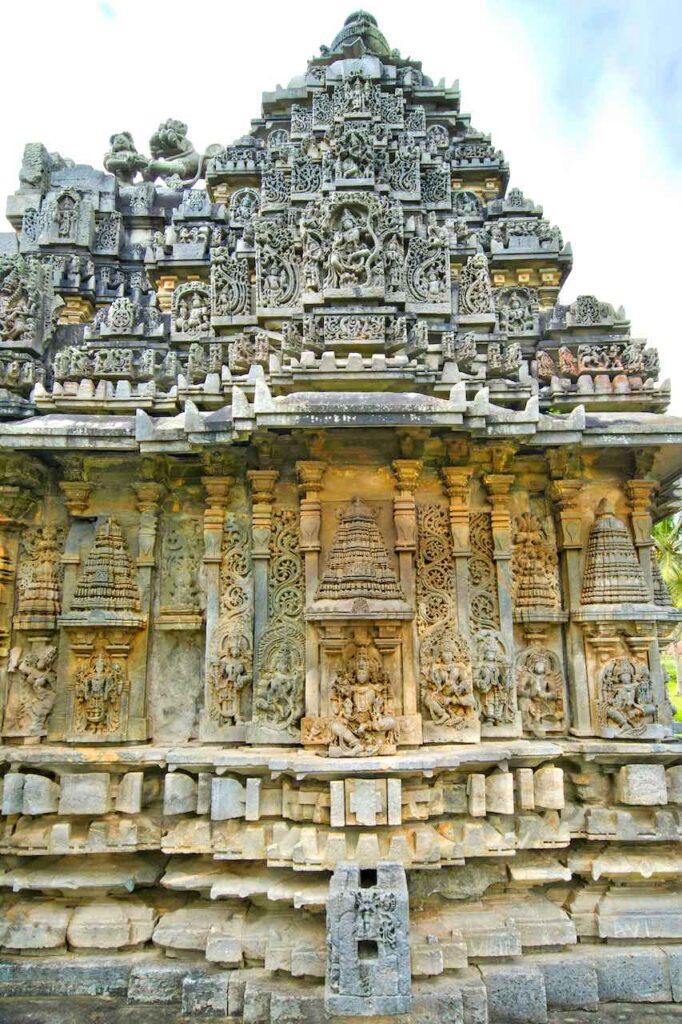
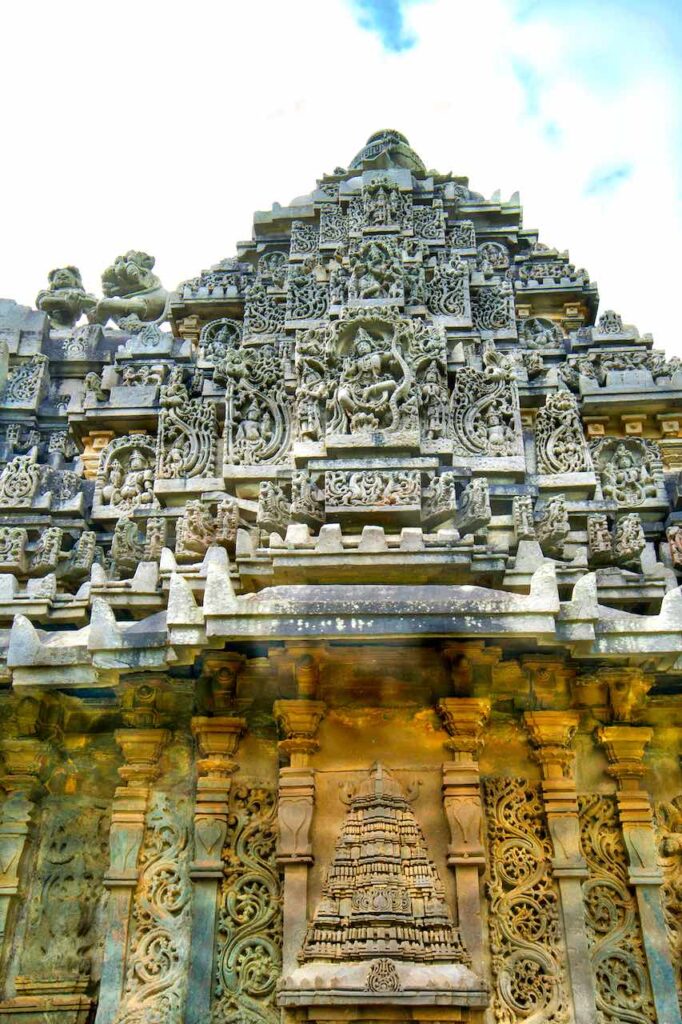
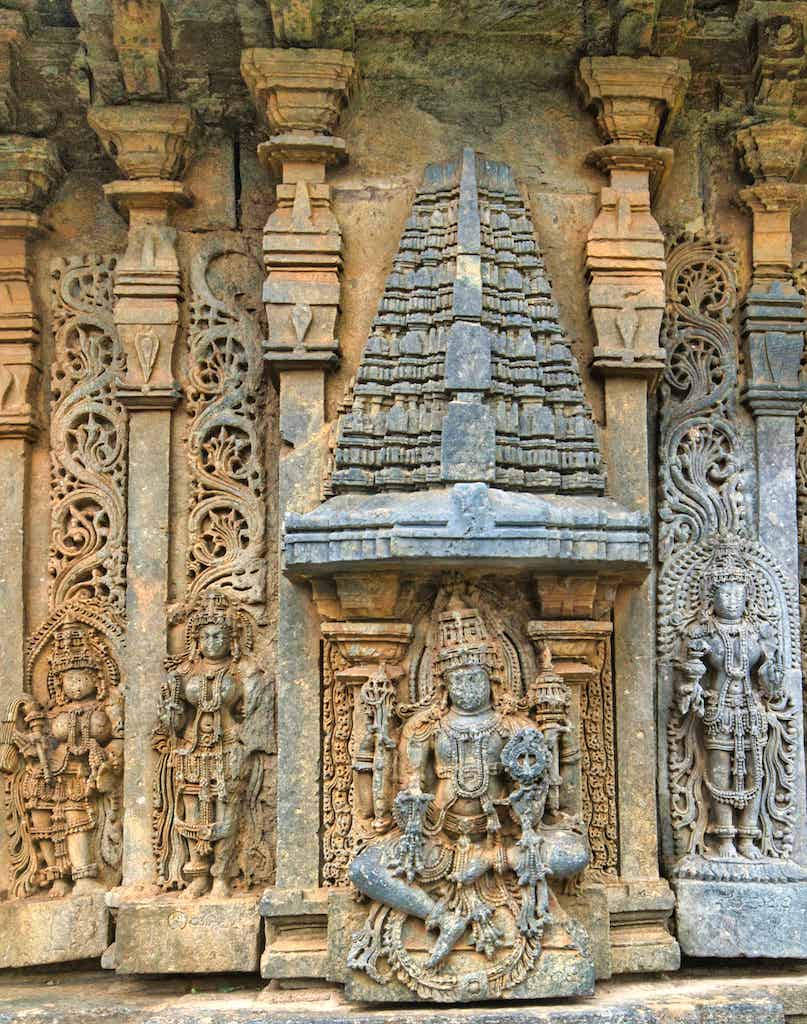
These temples include panels of artwork related to the goddess tradition of Hinduism (Shaktism) and Vedic deities. Another notable feature of these temples is the artwork in their ceilings, how the shilpins (artisans) integrated the historic pre-Hoysala architectural innovations from the Chalukya era. Further, the temples include north Indian Bhumija and south Indian Vesara aedicules on the outer walls above the panels.
.
.
.
Among the several Hoysala temples in Hassan district is the lesser-known temple complex at Mosale. Two temples stand side by side in the complex a few feet apart. Surrounded by a wall, the twin temples exhibit many similarities except for the deities in the sanctum sanctorum and the images on the exterior walls. Though the temples are single-shrined, they together form a unique Dwikutachala.
.
.
The temple on the south is dedicated to Shiva and the one on the north to Vishnu with names Nageshvara and Chennakeshava respectively. This particular feature makes the temple complex unique among the Hoysala temples. The only other place where we find such twin temples is at Marale in Chikkamagaluru district.
.
.
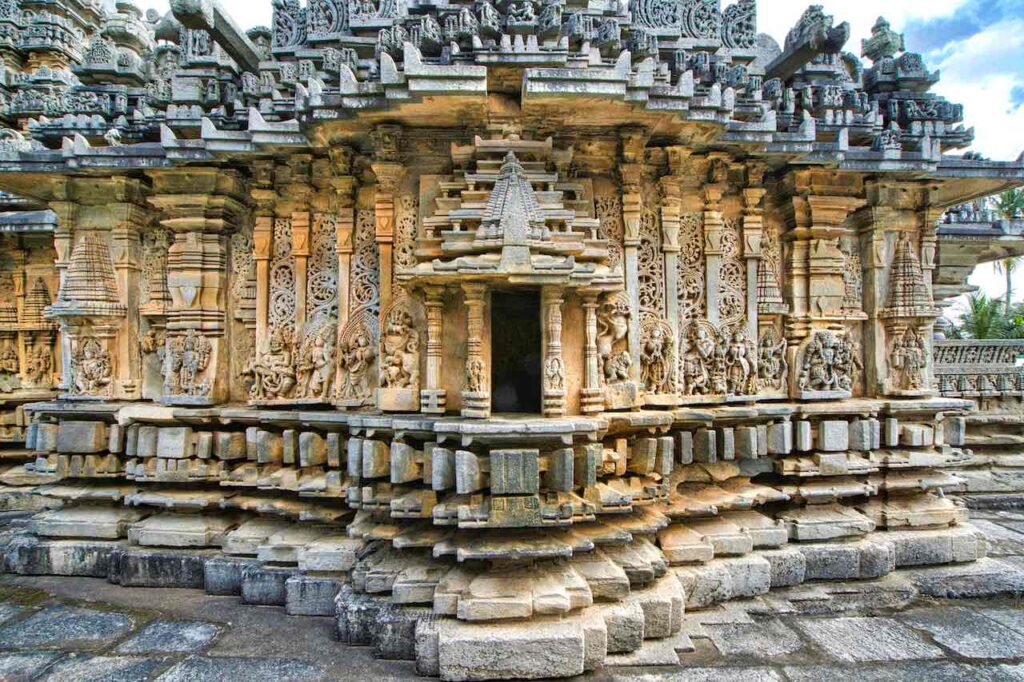
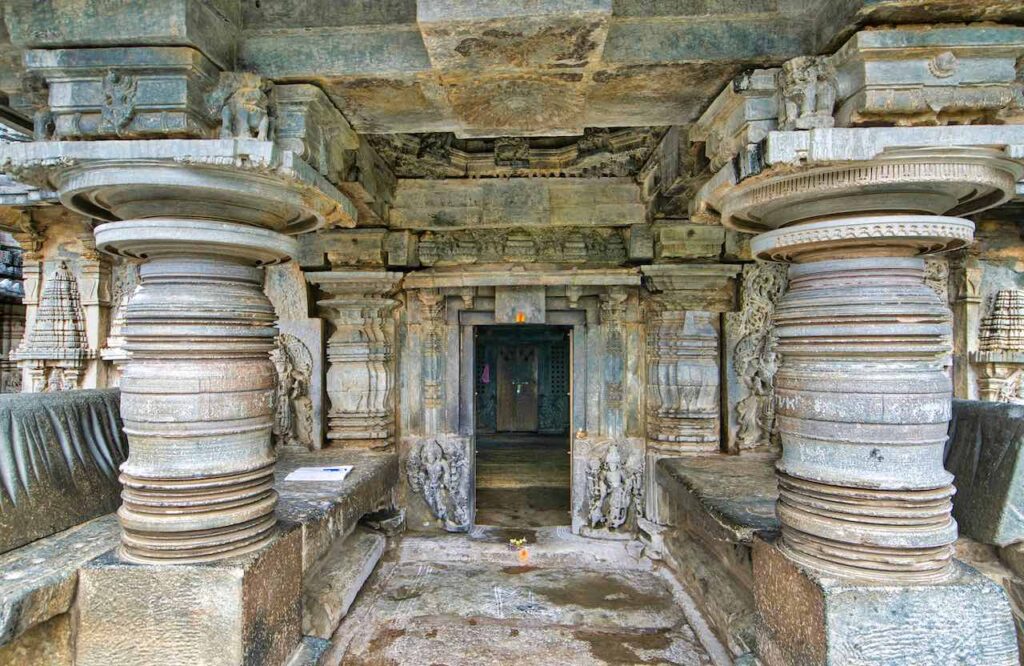
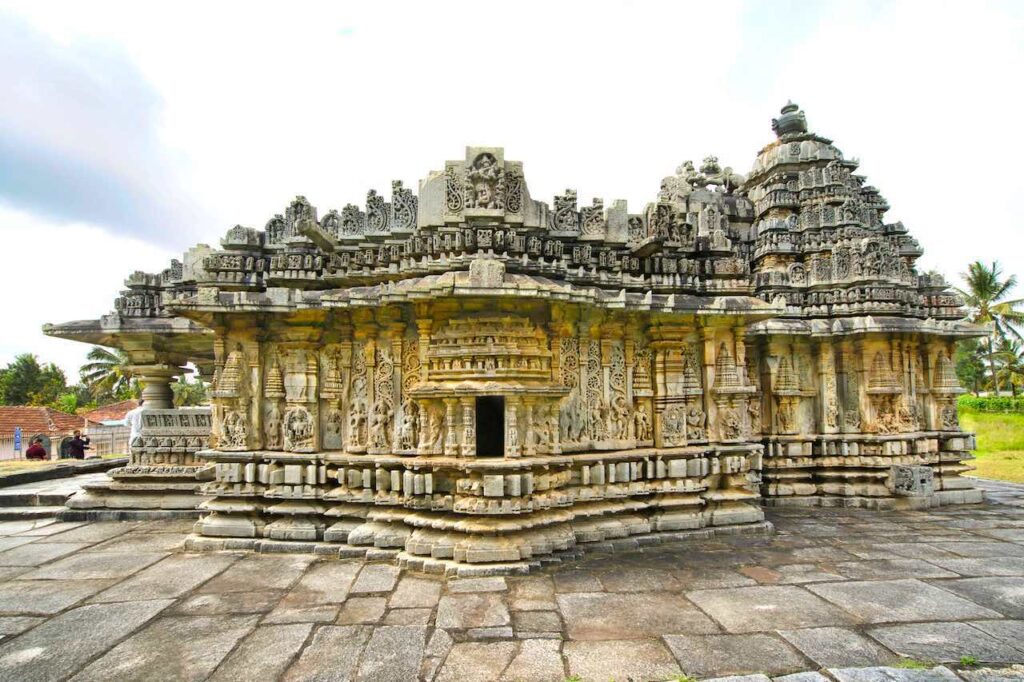
The temples incorporate all the standard features of Hoysala architecture such as a porch entrance into a square closed mantapa or navaranga leading to the sanctum, and a superstructure (shikhara) over the main shrine. The sanctum is connected to the hall by a vestibule called sukhanasi. The closed hall, whose inner and outer walls are decorated, has four central lathe-turned pillars that support a bay ceiling.
.
.
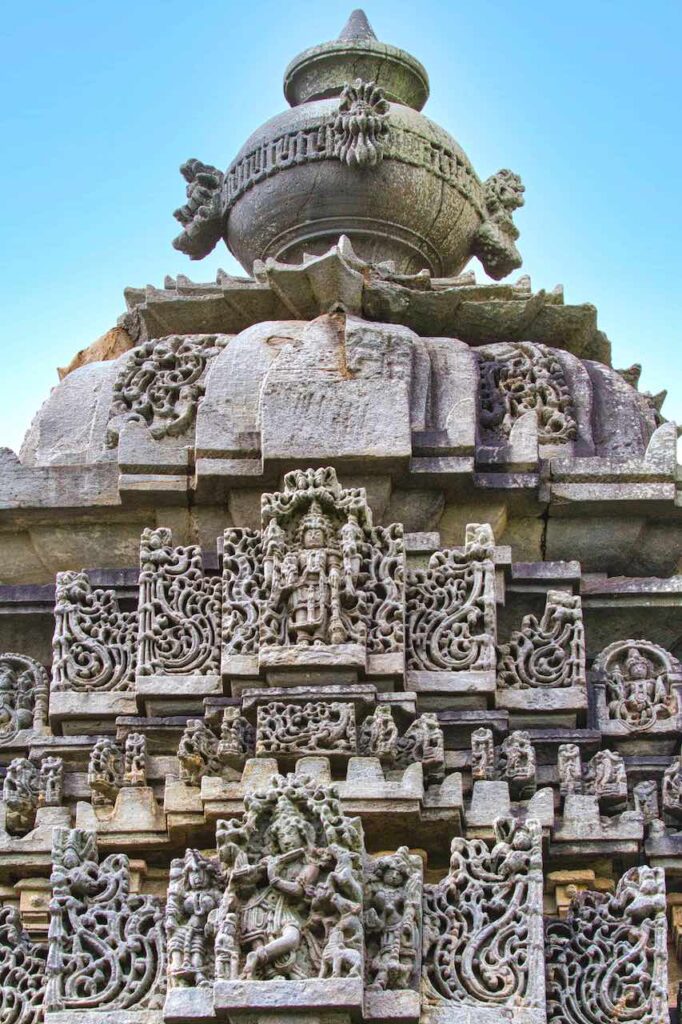
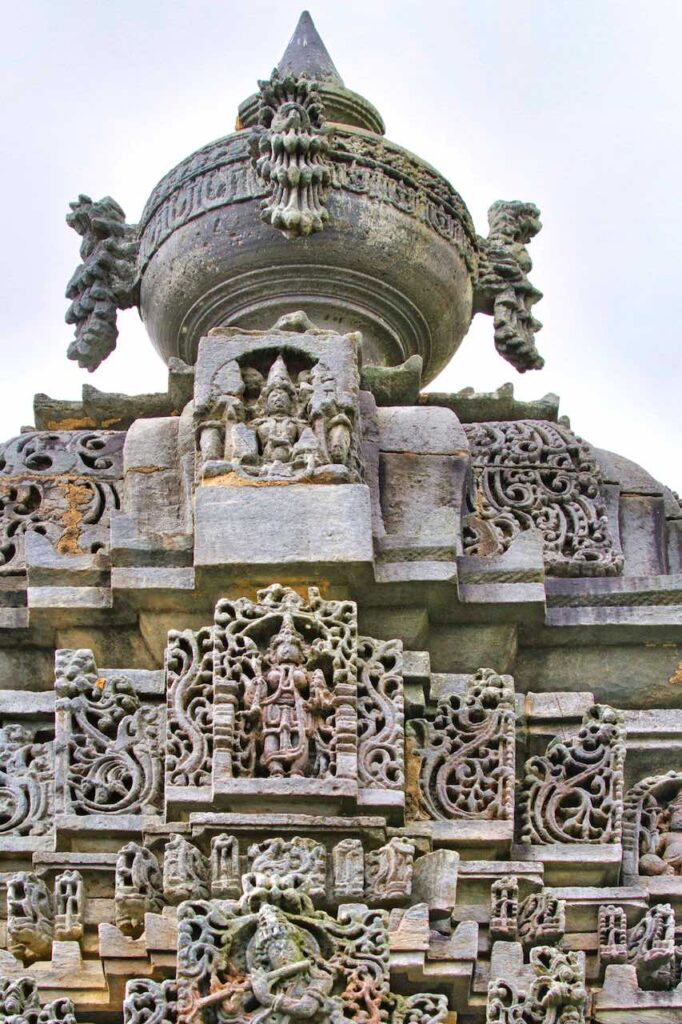
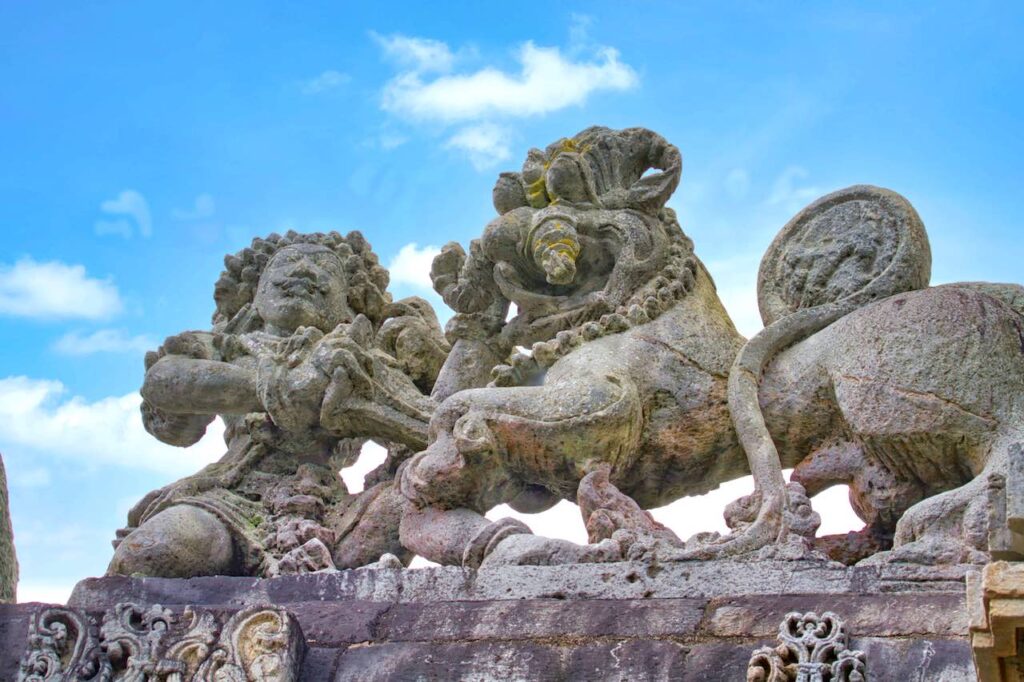
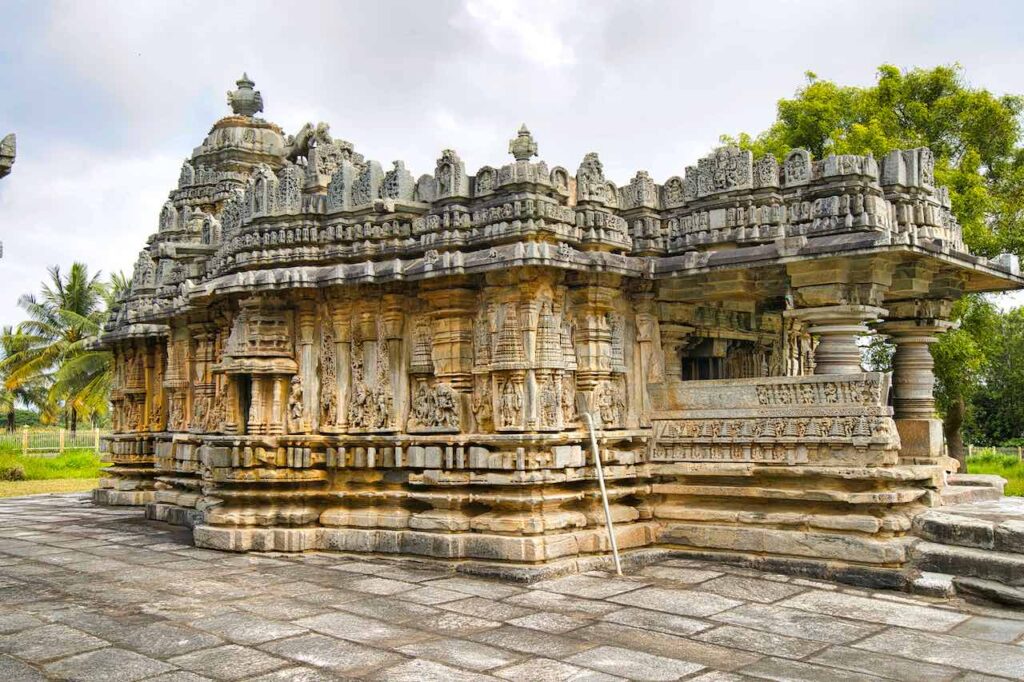
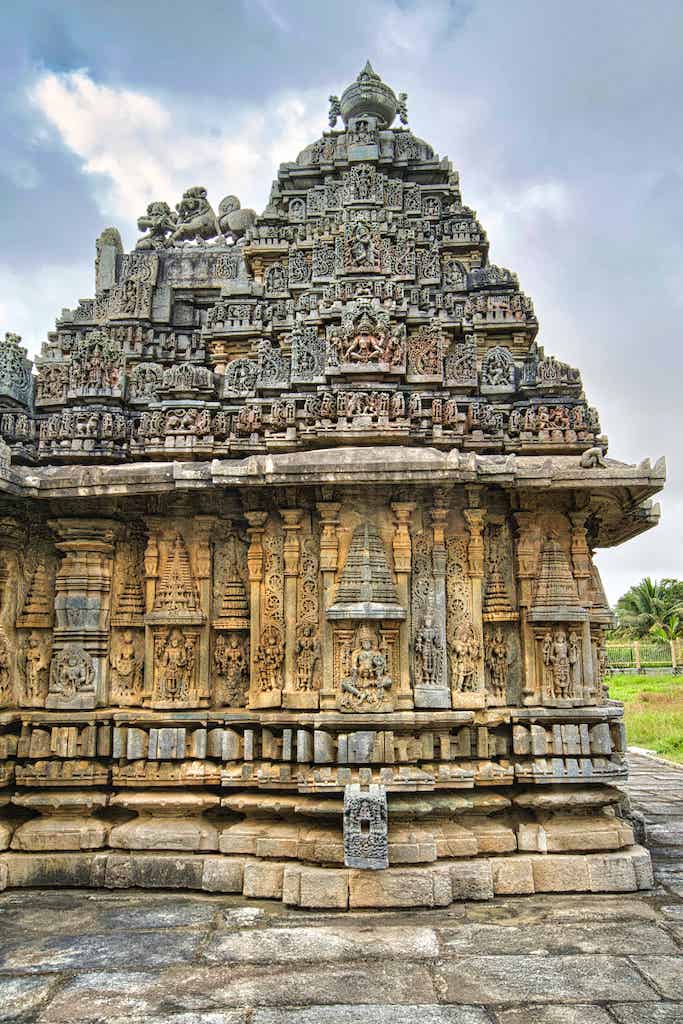
Both temples have graceful towers, The superstructure over each shrine is three-tiered and vesara in style. It is intact, finely sculptured, and has a decorative low extension which is the tower over the vestibule. The extension tower looks like the ‘nose’ of the main superstructure and is also called sukhanasi. The towers of these ekakuta temples are in good condition. The Hoysala crest of Sala (slaying the tiger) figures stand on a projection above the sukhanasi ceiling of the temples. They stand in front of each other and make for a beautiful image when viewed against the blue sky.
.
.
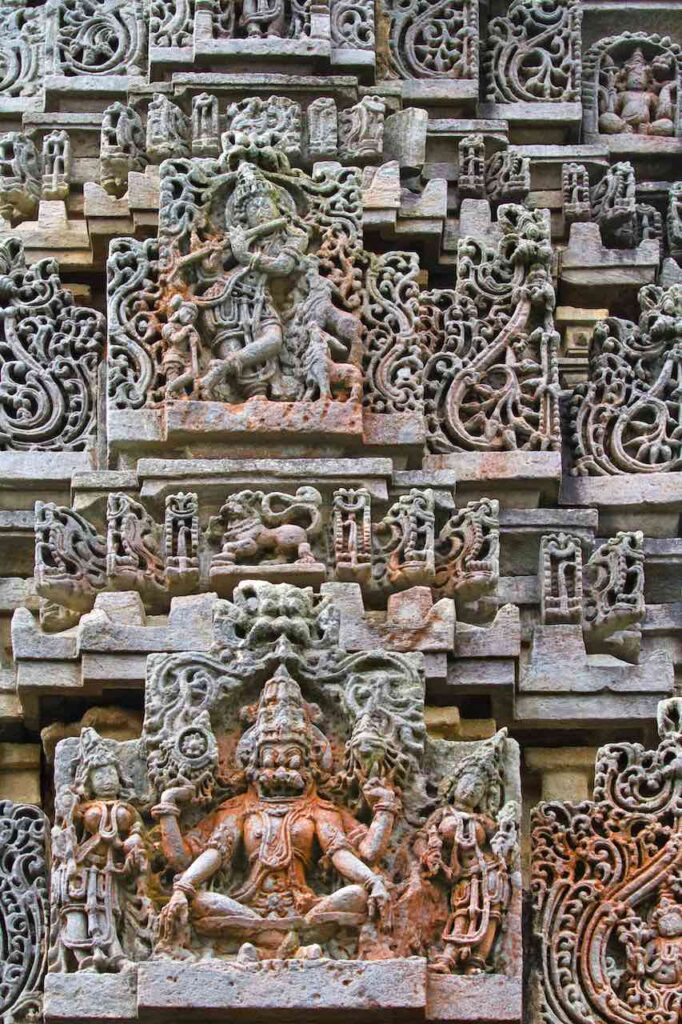
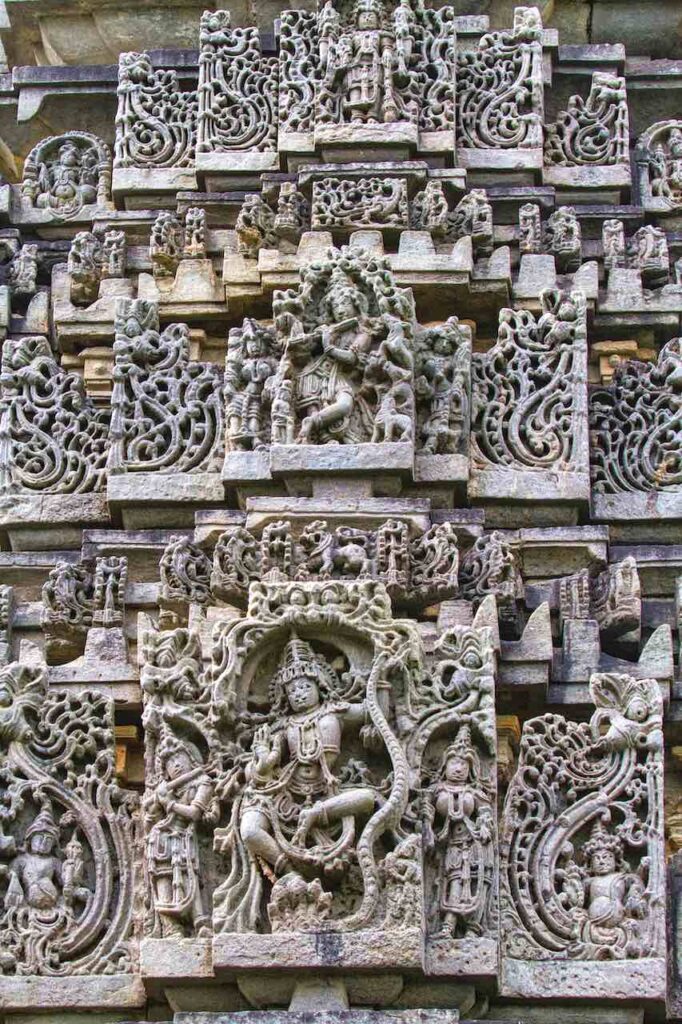
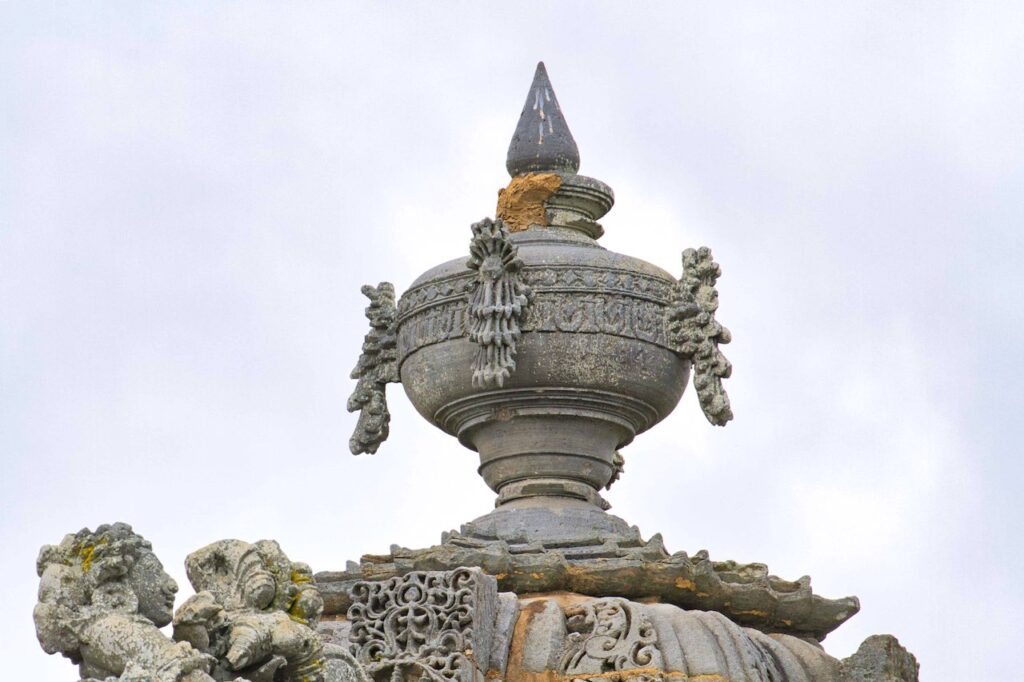
The beautifully sculpted kalashas at the top of the apex of the shrines further enrich the completeness of the two temples. On the towers, the dancing figures of the gods, to whom the temples are dedicated, are seen. The twin temples are built with the standard features of Hoysala architecture, but they are distinctive because of the names of some of the deities mentioned below the carvings.
.
.
The kalashas of these temples are among the few which have been preserved in good condition.
.

.
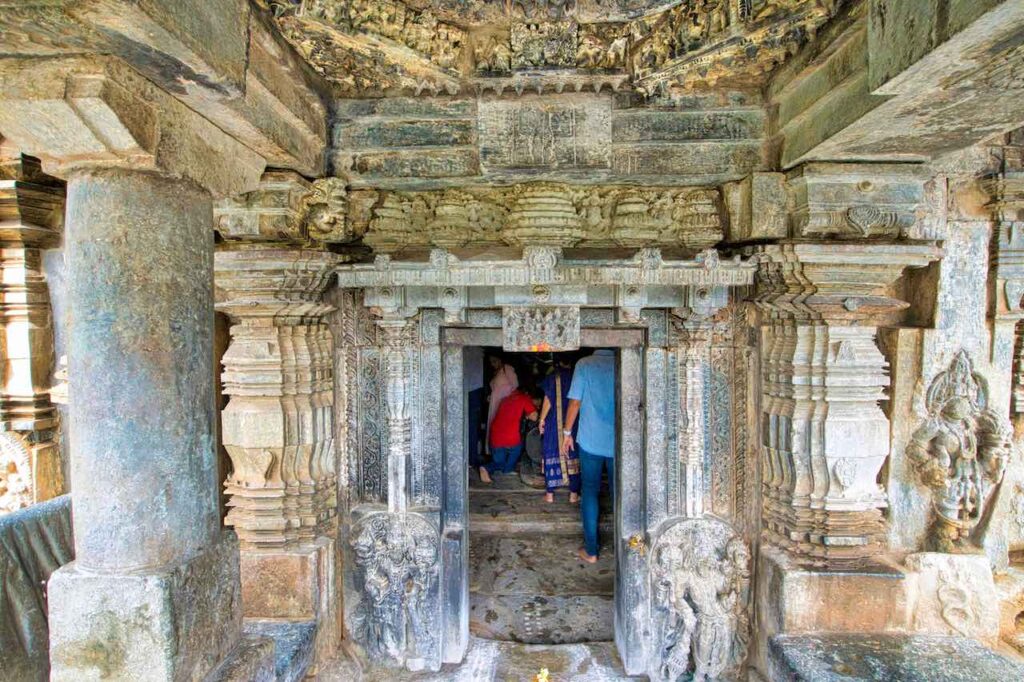
All the ceilings of the temples are intricately carved with complex patterns and designs.
.
.
The well-executed image of 6-foot high Chennakeshava is accompanied by Sridevi and Bhoodevi on the sides below. The sanctum sanctorum lintel in the Vishnu temple has the image of Gajalakshmi. The outer walls of the Shiva temple have interesting carvings of Shiva in different forms. Most of them are unfortunately damaged. On the lintel in the sukhanasi is a small image of Shiva and Parvathi with their vehicle Nandi and Chauri-bearers. Shiva, in the linga form, stands on a pedestal inside the sanctum sanctorum.
.
.

.
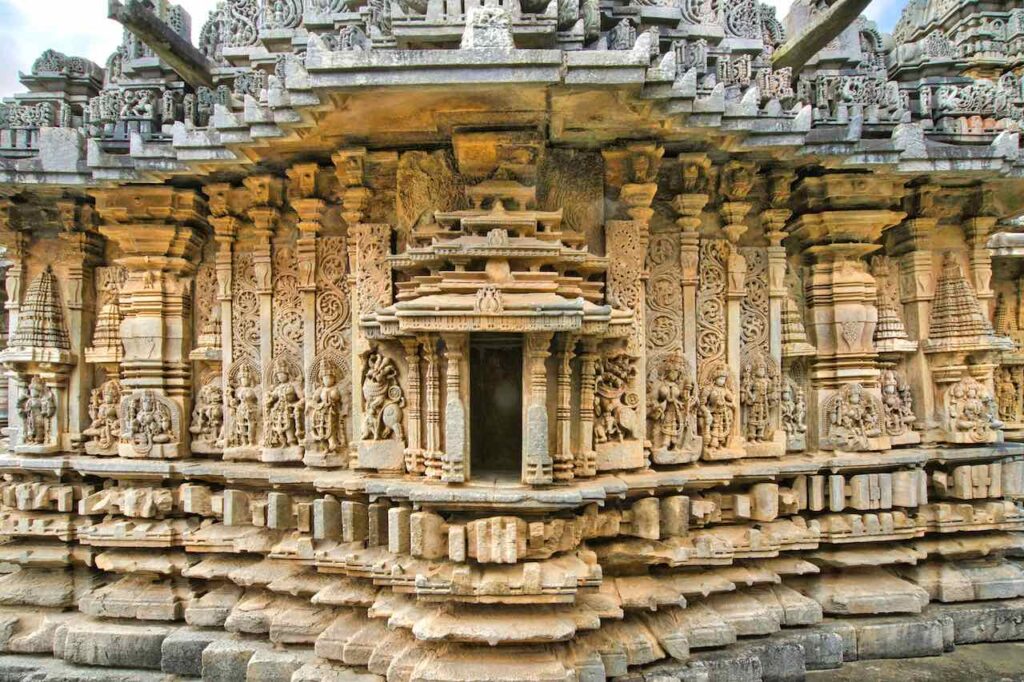
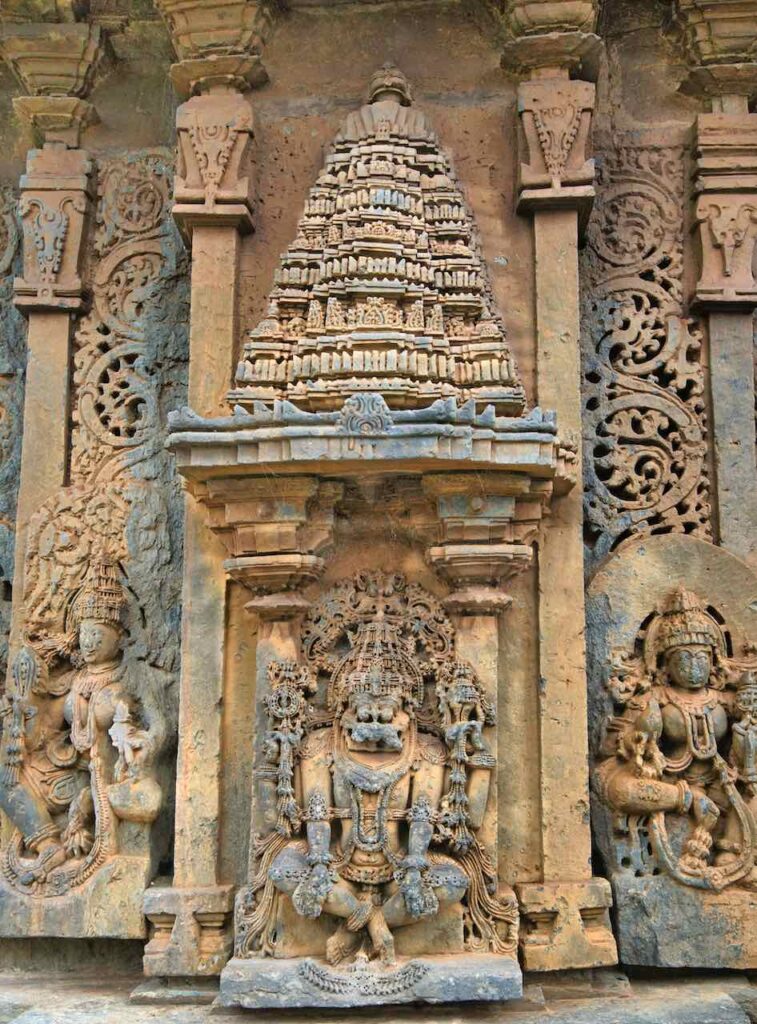
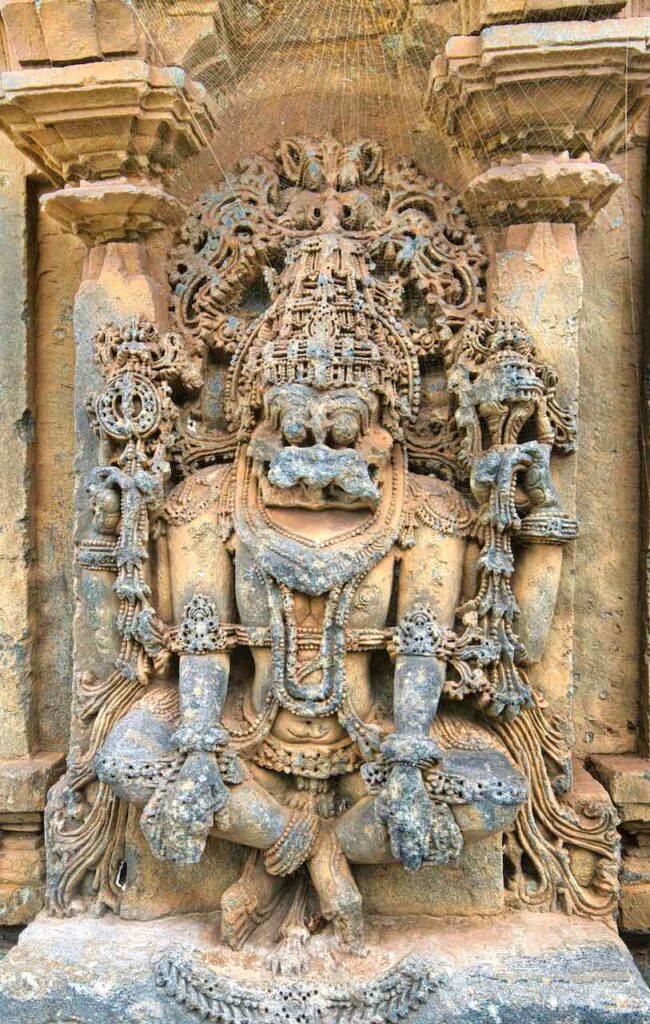
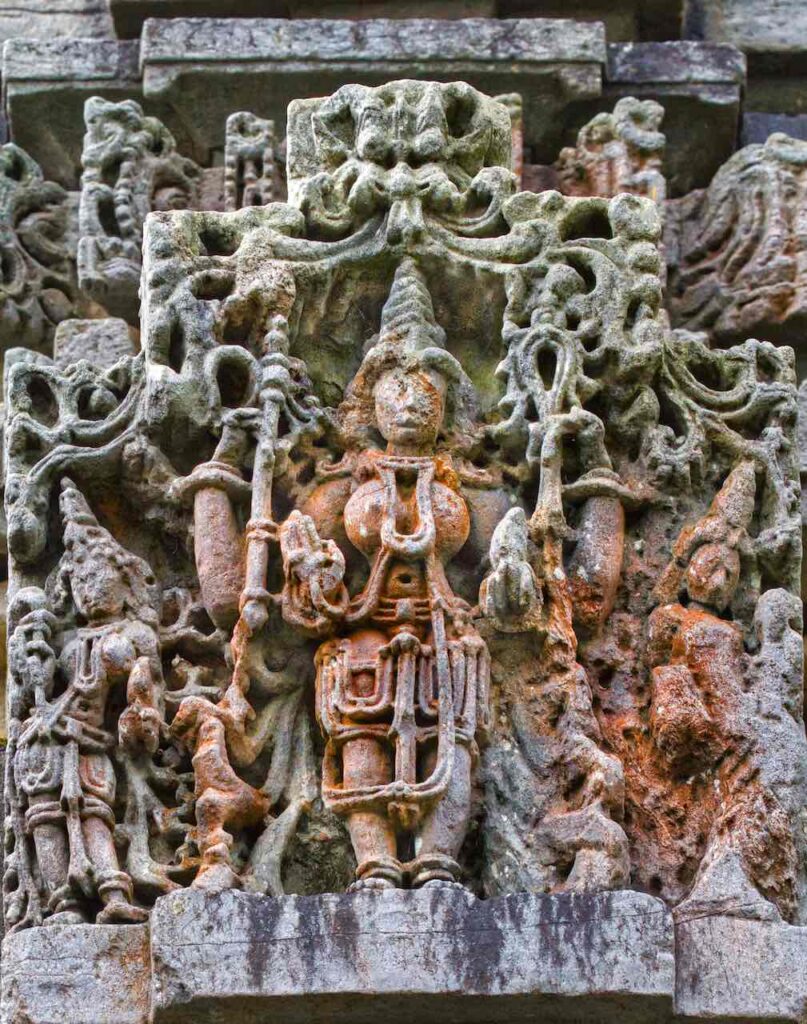
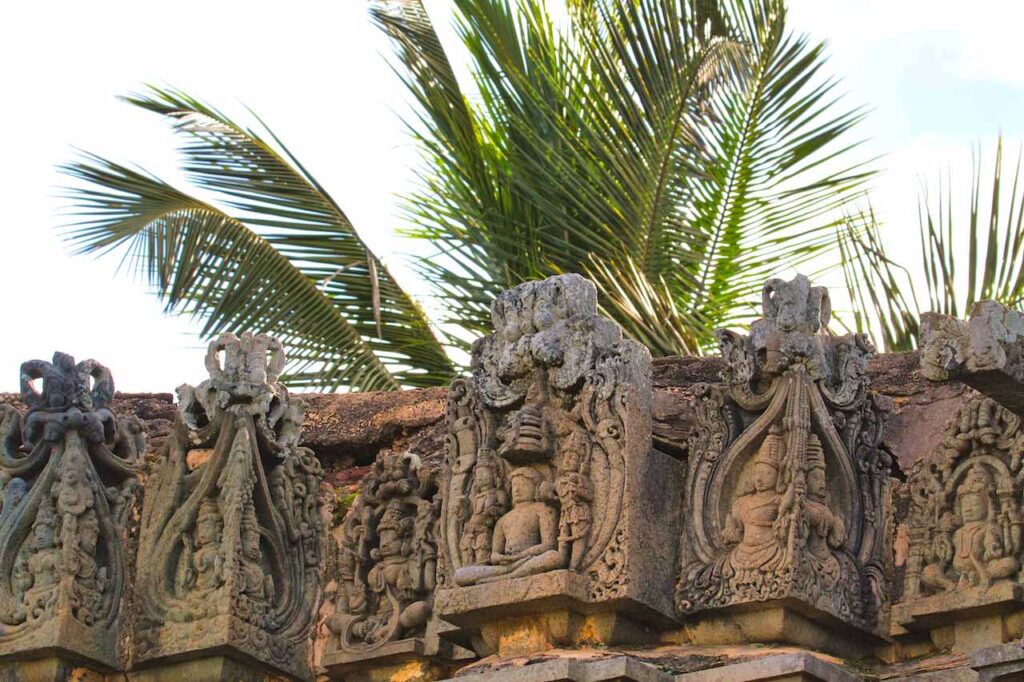
The decorative features found on the temple’s outer wall belong to the ‘old kind’. In this type of decoration, below the superstructure, the eaves that project about half a meter runs all around the temple. Below the eaves are decorative miniature towers on pilasters. In the ‘old kind’, the large wall images of deities and their attendants are placed below these decorative towers. Sridevi, Lakshmidevi, Gauri, Maheshvari, Brahma, Sadashiva, and Bhudevi are some of the prominent images at Nageshwara Temple.
.

.
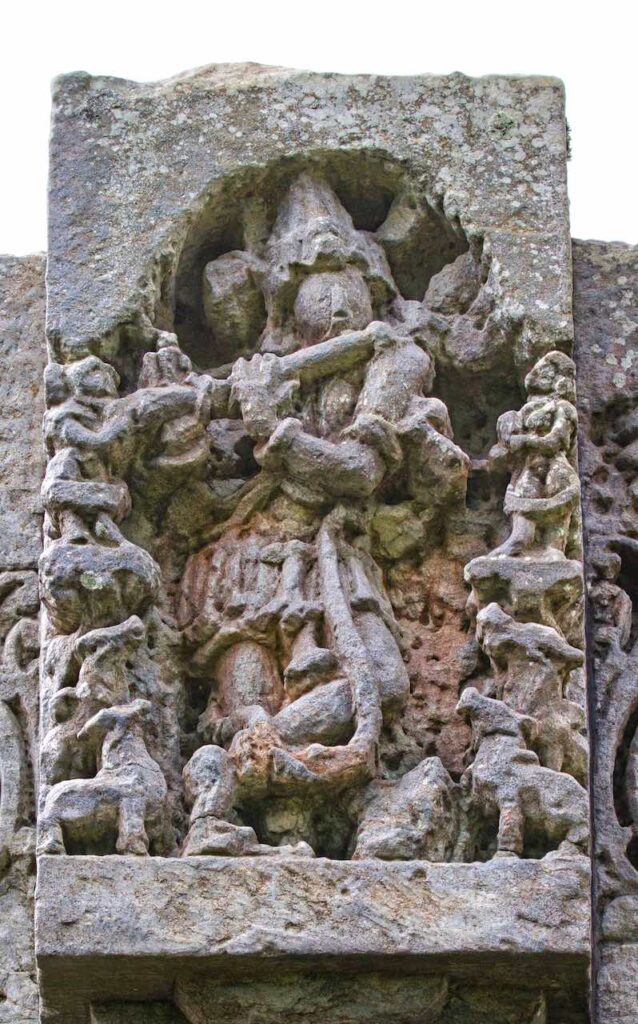
Another intriguing feature of this temple is the carving of Goddess Durga on the external ceiling of Nageshwara temple. The specialty of the carving is that irrespective of the direction from which we view it, the goddess appears to be looking back at us. The Channakeshava Temple has sculptures of Garuda, Keshava, Janardana, Venugopala, Madhava, and Bhudevi.
.

.
The base of the walls of both shrines comprises of five horizontal moldings below the images of gods and goddesses.
.
.
Amidst the greenery and a tank a little away, the rare temple complex stands distinctively among the Hoysala temples inviting visitors not to miss Mosale, a perfect place to pay obeisance to Vishnu and Shiva together.
.
.
Note: All photographs displayed above are my exclusive property and copyright; their use is prohibited without explicit consent, in writing.
.


4 Responses
Is the duo tone of the stones natural or camera effect? Excellent pictures and write up.
The colours seen are natural. Due to aging, the colouration is taking place, probably because of pollution effect.
Good afternoon. The photos on your photoblog, Nageshvara-Chennakeshava Temple Complex, Mosale are down.
Thanks. Was a technical issue, now resolved.