
.
.
.
.
.
Introduction
.
The Corps of Engineers has been synonymous with adventure since their inception. The nature of their tasks in the battlefield as well as in peacetime, and a traditionally strong backing to encourage such activities from the highest levels within the Corps, further encourages this trait. The activities are coordinated by the Sapper Adventure Foundation, which was registered in 1979. It is a member of the Army Adventure Foundation.
.


As a prelude to the global dream of the Corps, the first sailing expedition to foreign shores was successfully carried out from Bombay (now Mumbai) – Karachi (Pakistan) – Bandar Abbas (Iran) – and back in 1977. The aim was primarily to test if the Corps had the sailing skills, knowledge, and temperament for long sea voyages. In the absence of ocean-going sailing yachts in the country then, we did what the Sappers were known the best for – improvisation! A 1913-vintage wooden 19-footer Albatross class gaff-rigged dinghy was modified in-house for the voyage. The suicidal venture – as the Navy termed it, whom we approached for learning the basics of astro-navigation, nevertheless went ahead in the absence of an alternative. The voyage was thrilling, hilarious at times, and frequently outrightly dangerous! This has been covered in detail in an earlier blog, and can be read at the link below:
Albatross – The Seabird Which Conquered the Seas
.
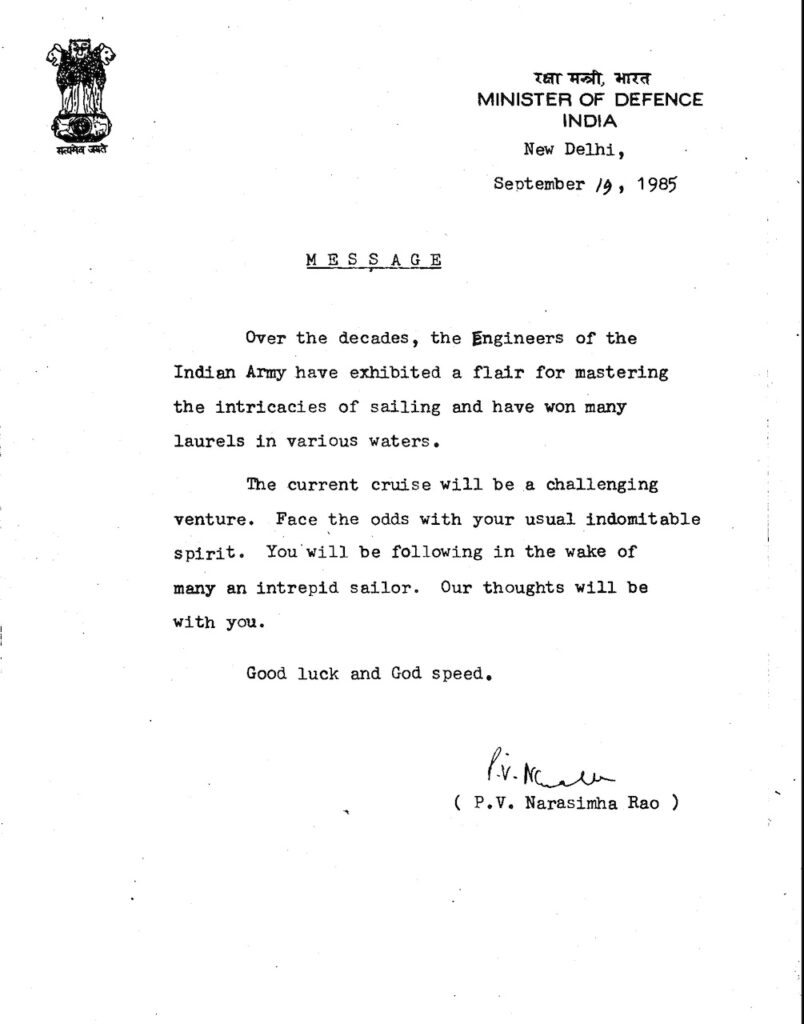
The pre-expedition paperwork for the expedition posed the first set of challenges for the organizers. Getting government approval for a first-of-its-kind venture was not easy, even within the organization. Many questions were raised on the utility of army officers taking to the sea for such an extended duration. The ministries involved – and there were many viz. Defence, External Affairs, Finance, Commerce (DGFT), to name a few – had their individual queries. To cut a long story short, the paperwork that commenced around 1980 ultimately fructified in 1984! With the condition that the government will not provide funding. Sponsorship was frowned upon those days, and consequently, it was left to the Corps to find the required funds from within its resources. Naturally, the budget had to be kept to the bare minimum.
.

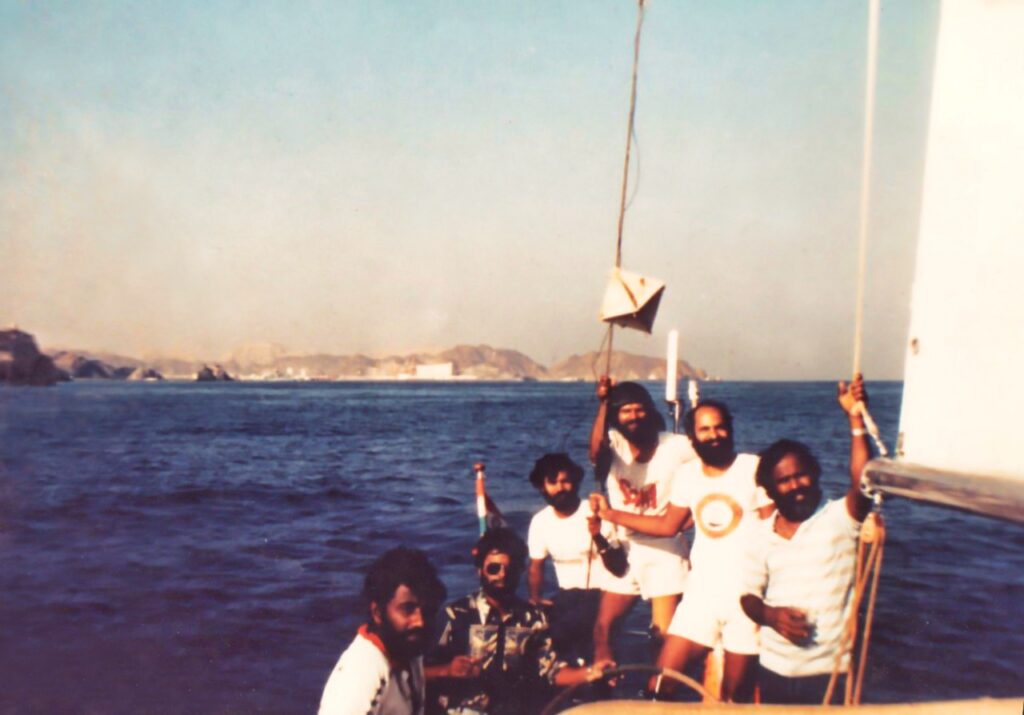
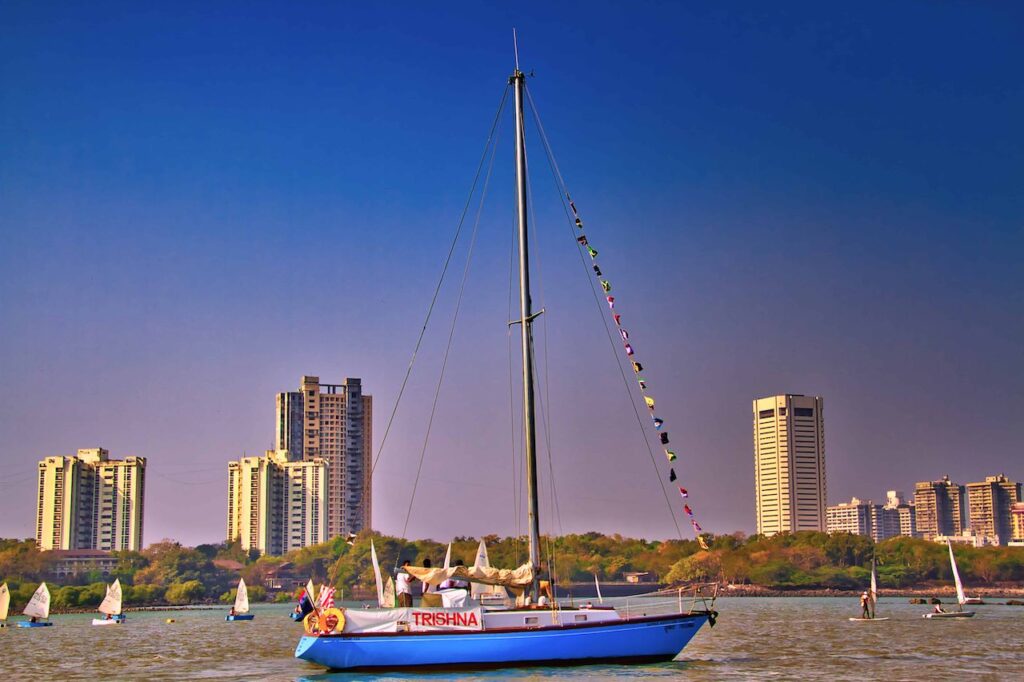
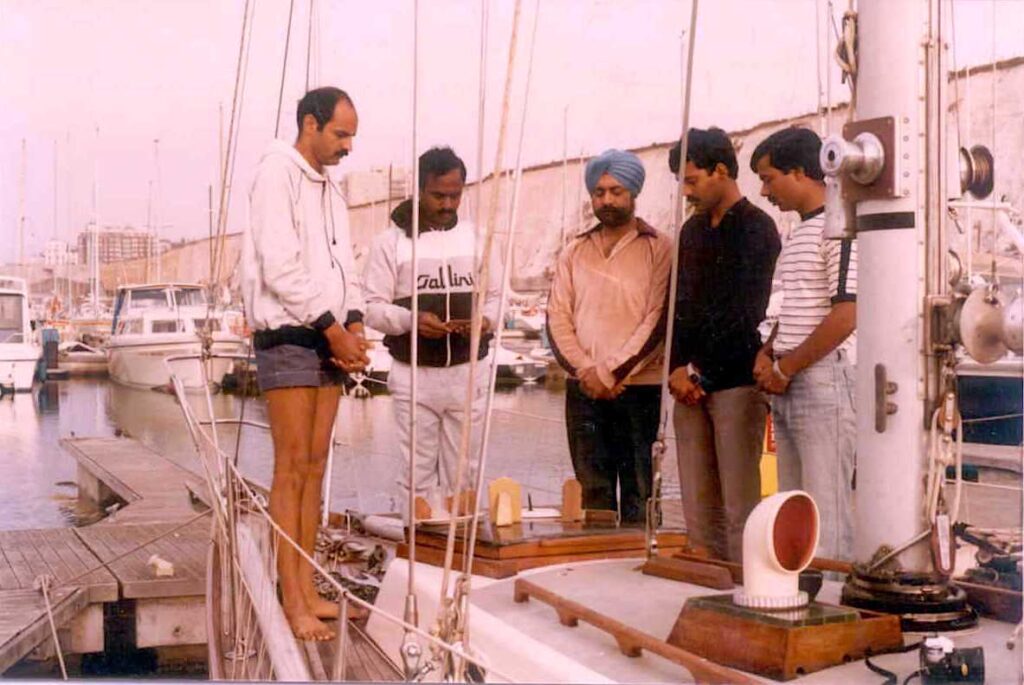
The availability of a suitable yacht was the next concern. Sailing as a sport had very limited spread in the 1980s, and ocean-going yachts were a rarity in India. It was decided that the best option was to scour the second-hand yacht market in the UK, which would provide the best options. A new yacht was out of the question due to lack of funds. After an extensive search of the second-hand market, a 13-year old 37-foot yacht was shortlisted and the crew flew to the UK to undergo a short training capsule with the British Army on sea sailing. They also assisted in carrying out essential repairs to the boat and in its basic provisioning for the sail back to India. Though the crew had sailing experience in small sailing dinghies, they had no exposure of sailing bigger yachts. Col TPS Chowdhury, Maj KS Rao, Maj AP Singh, Maj AK Singh, Capt MS Pillai, Capt S Shekhar, and Capt C Bharti sailed ‘Trishna’ from the UK to Mumbai in 1984-85 – the first instance of any Indian making a truly trans-oceanic passage in a yacht. This also was part of sail training for the crew. This voyage has also been covered in detail in an earlier blog and can be read at the link given below.
Ordeal or Adventure? The Voyage from Gosport, UK to Bombay
.
.

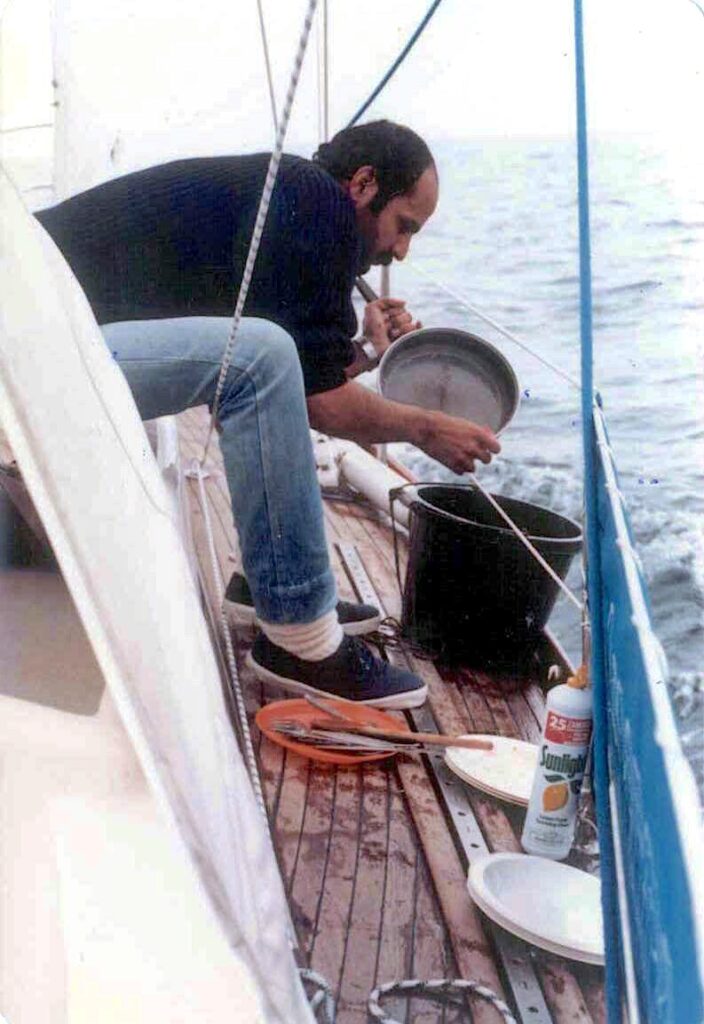
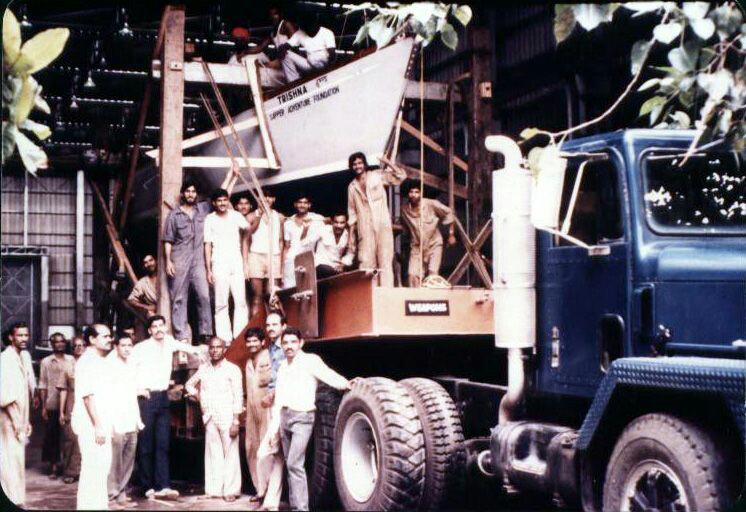
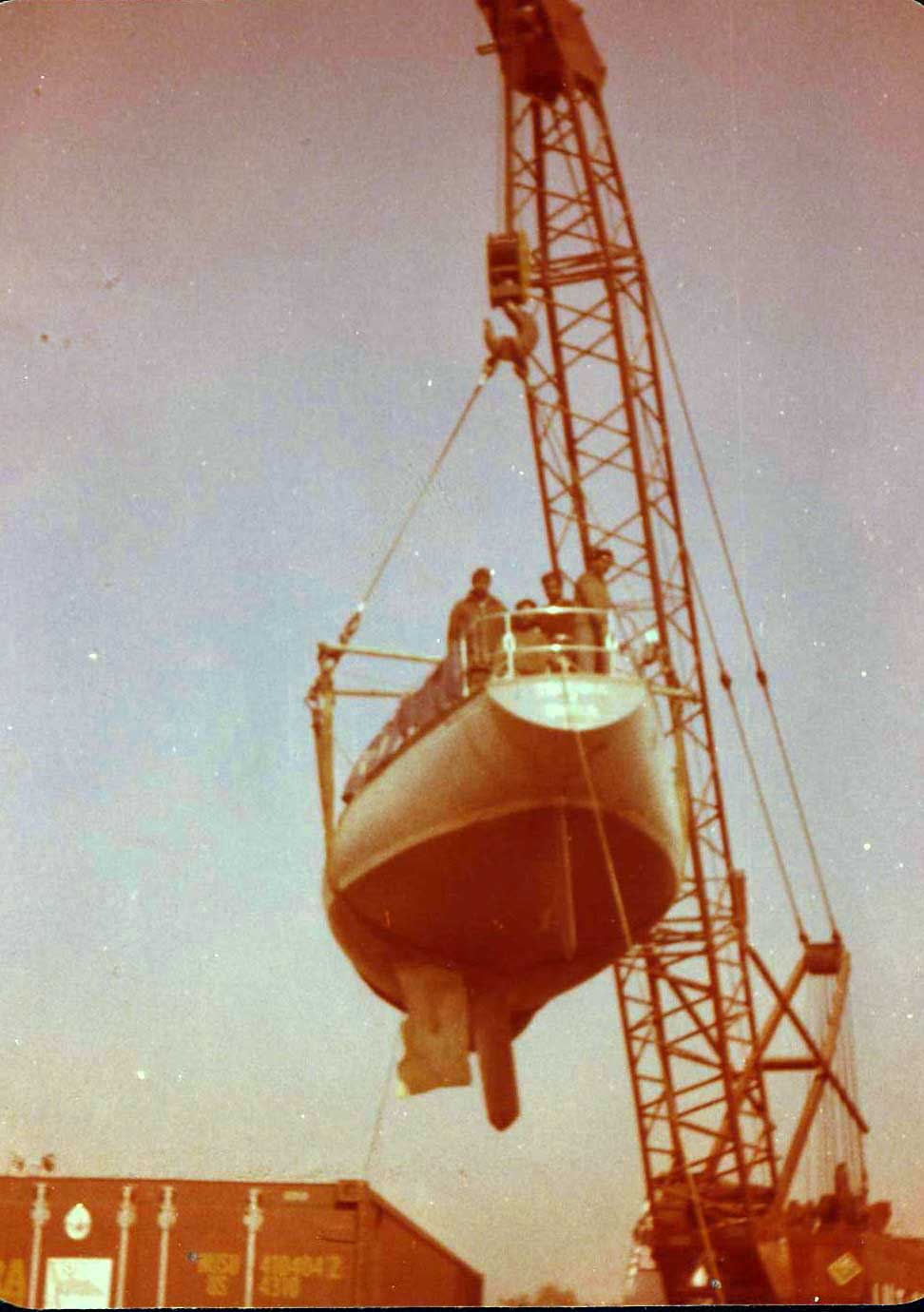
A 13-year yacht used by a family for pleasure sailing required major repairs and overhauling before it would become sail-worthy enough to circumnavigate the globe. This was carried out courtesy of the Indian Navy, at the Naval Dockyard, Mumbai. Though the dockyard was used to handling ships, they took on the novel challenge of handling a small yacht, though it meant that most parts required had to custom-made. It took over four months of full-time work to complete the work, with the crew themselves present throughout and working side by side with the tradesmen. This helped familiarising the crew with the yacht, down to the last nut and bolt which came in handy in carrying out all types of repairs when the need arose.
.
.
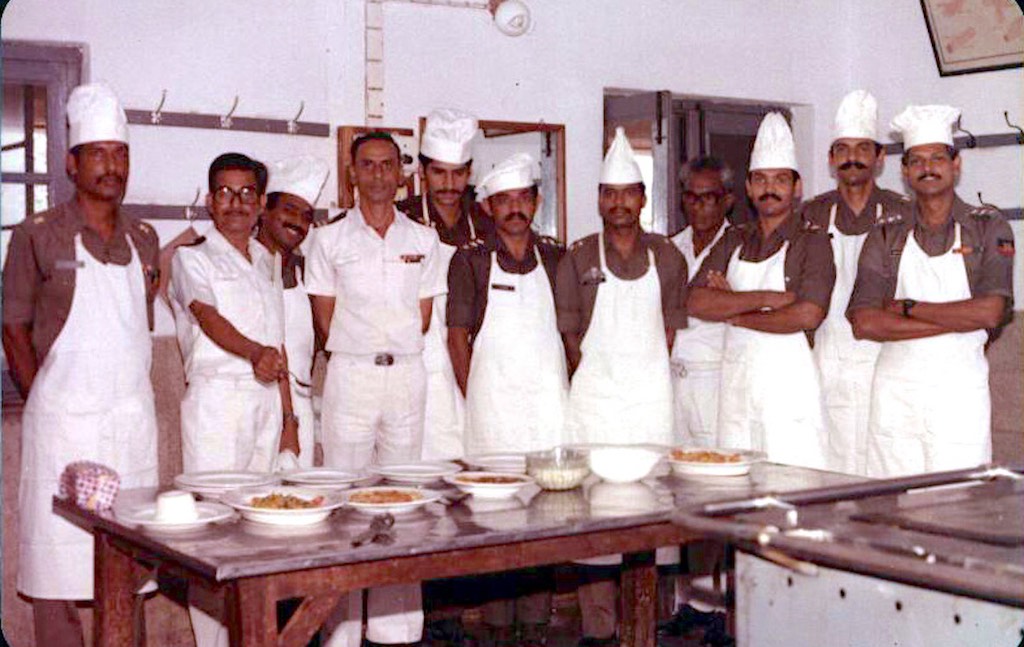
In between the work on the boat, the crew attended a series of training capsules on various subjects to prepare us for the long and arduous voyage ahead. Since for most of the voyage, we would be on our own – the communication equipment available was at best likely to provide limited contact, if at all – it was essential that we could tackle unforeseen contingencies that were bound to crop up frequently. Most of these capsules were specially conducted by various Naval training institutions at Mumbai and Kochi. They included the basics of seamanship, rules of the road, navigation, communication protocols, medical emergencies, diving, and even cooking. Most of the crew were already reasonably proficient in carpentry, engine, and boat maintenance.
.
.
The Team
.
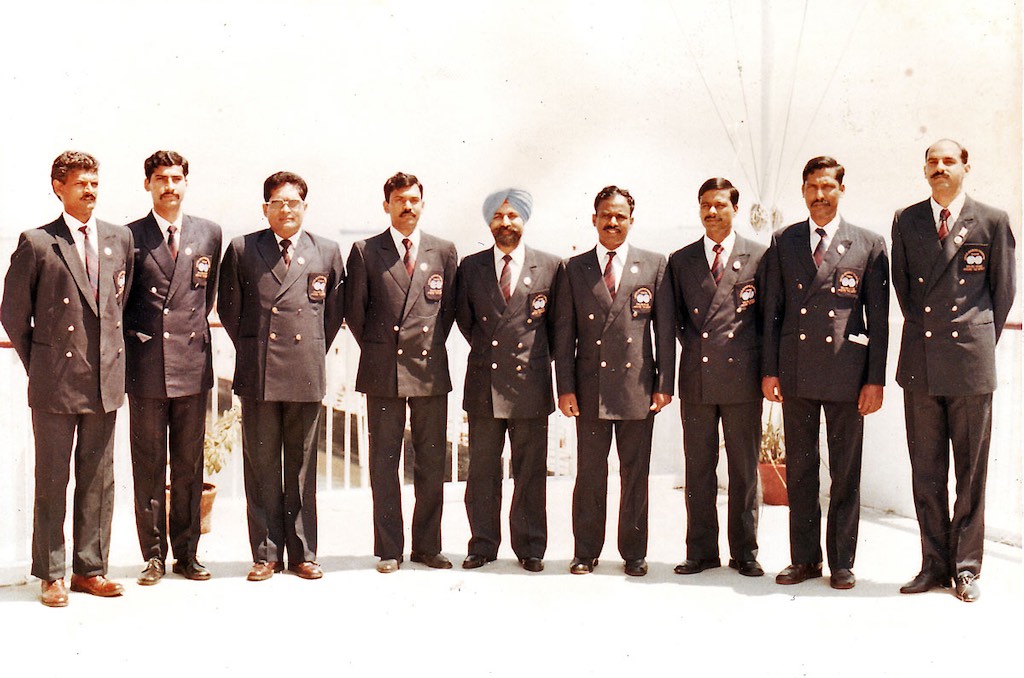
The team consisted of ten members, with six on the boat at any one time. There were four permanent crewmembers. These were Maj (now Lt Gen – Retired) KS Rao, SC, SM, the Skipper; Maj (now Retd) AK Singh, KC, SM; Capt (now Col – Retired) S Shekhar, SC and Capt (now Brigadier – Retired) C Bharti, SC. Capt (now Maj Gen – Retired) R Bassi, SM sailed from Mumbai to Trinidad; Maj (now Brigadier – Retired) AP Singh, SM(Bar), VSM sailed from Mumbai to Panama; Lt (now Brigadier – Retired) N Ahuja, SM sailed from Trinidad to New Zealand; Col (now Brig – Retired) TPS Chowdhary, AVSM, the Team Manager, sailed from Panama to Sydney; Maj (now Lt Col – Retired) A Bhattacharya, SM and Maj (now Retired) SN Mathur, SM sailed from New Zealand and Sydney back to Mumbai respectively. All the team members were accomplished sailors who had participated in many National/International Regattas. However, none had earlier sailed an ocean-going yacht since there were hardly any in the country then.
.
.
Maj AK Singh, a permanent member of the Expedition, was handicapped with his leg amputated above the knee. He is the first handicapped sailor in the world to circumnavigate the globe in a yacht.
.
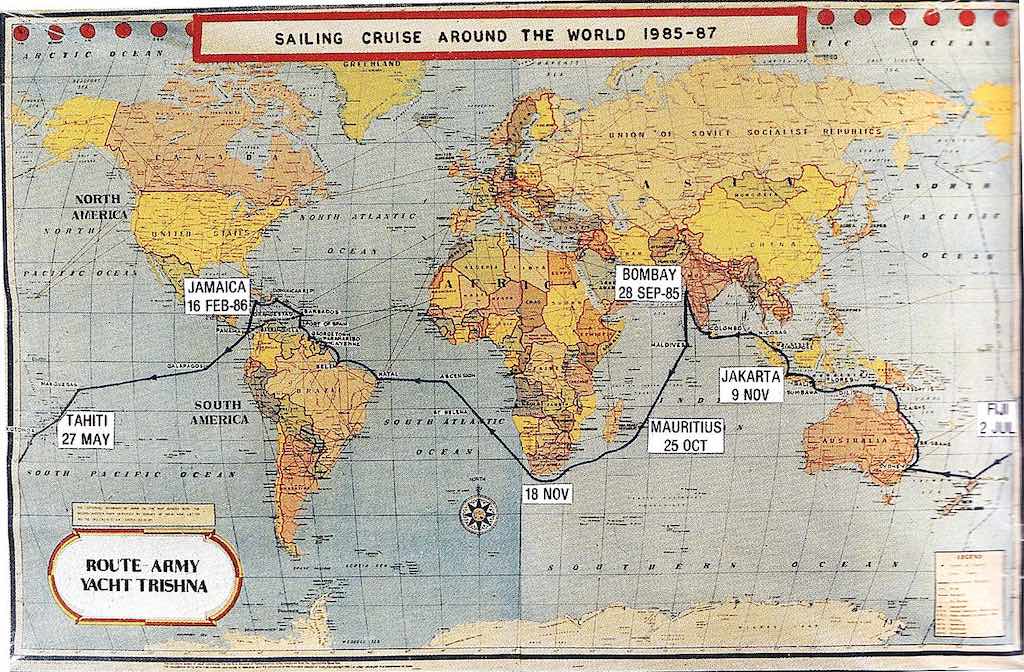
Route
.
.
Halts Enroute
.
| Ser No | Port | Country | Arrival | Depart | Distance (in Nautical Miles) |
| (a) | (b) | (c) | (d) | (e) | (f) |
| 1 | Bombay | India | 28-Sep-85 | ||
| 2 | Male | Maldives | 07-Oct-85 | 9-Oct-85 | 890 |
| 3 | Port Louis | Mauritius | 25-Oct-85 | 30-Oct-85 | 2000 |
| 4 | Jamestown | St Helena, UK | 02-Dec-85 | 9-Dec-85 | 4000 |
| 5 | Georgetown | Ascension Islands, UK | 15-Dec-85 | 17-Dec-85 | 710 |
| 6 | Natal | Brazil | 27-Dec-85 | 2-Jan-86 | 1250 |
| 7 | Belem | Brazil | 09-Jan-86 | 13-Jan-86 | 910 |
| 8 | Port Paramaribo | Surinam | 19-Jan-86 | 21-Jan-86 | 660 |
| 9 | Georgetown | Guyana | 23-Jan-86 | 27-Jan-86 | 190 |
| 10 | Port of Spain | Trinidad | 30-Jan-86 | 3-Feb-86 | 360 |
| 11 | Bridgetown | Barbados | 07-Feb-86 | 10-Feb-86 | 260 |
| 12 | Port Royal | Jamaica | 16-Feb-86 | 26-Feb-86 | 1040 |
| 13 | Cristobal | Panama | 25-Feb-86 | 26-Feb-86 | 570 |
| 14 | Balboa | Panama | 27-Feb-86 | 5-Apr-86 | 50 |
| 15 | San Cristobal | Galapagos, Ecuador | 15-Apr-86 | 16-Apr-86 | 970 |
| 16 | Santa Cruz | Galapagos, Ecuador | 17-Apr-86 | 17-May-86 | 45 |
| 17 | Taiohae Nuku Hiva | Marquesas Is, French Polynesia | 13-May-86 | 17-May-86 | 3080 |
| 18 | Papeete | Tahiti Society Islands | 27-May-86 | 3-Jan-86 | 760 |
| 19 | Bora Bora | Society Islands French Polynesin | 05-Jun-86 | 8-Jun-86 | 150 |
| 20 | Rarotonga | Cook Islands | 13-Jun-86 | 16-Jun-86 | 540 |
| 21 | Suva | Fiji | 02-Jul-86 | 8-Jul-86 | 1260 |
| 22 | Auckland | New Zealand | 22-Jul-86 | 3-Aug-86 | 1140 |
| 23 | Sydney | Australia | 17-Aug-86 | 27-Aug-86 | 1250 |
| 24 | Brisbane | Australia | 03-Sept-86 | 9-Sep-86 | 600 |
| 25 | Cairns | Australia | 17-Sept-86 | 22-Sep-86 | 1000 |
| 26 | Thursday Is | Australia | 26-Sept-86 | 29-Sep-86 | 500 |
| 27 | Port Darwin | Australia | 06-Oct-86 | 13-Oct-86 | 725 |
| 28 | Kupang | Indonesia | 18-Oct-86 | 21-Oct-86 | 500 |
| 29 | Waingapu | Indonesia | 23-Oct-86 | 25-Oct-86 | 290 |
| 30 | Bali | Indonesia | 28-Oct-86 | 2-Nov-86 | 330 |
| 31 | Jakarta | Indonesia | 09-Nov-86 | 14-Nov-86 | 730 |
| 32 | Singapore | Singapore | 19-Nov-86 | 27-Nov-86 | 660 |
| 33 | Penang | Malaysia | 01-Dec-86 | 5-Dec-86 | 400 |
| 34 | Andaman & Nicobar | India | 08-Dec-86 | 15-Dec-86 | 400 |
| 35 | Colombo | Sri Lanka | 21-Dec-86 | 20-Dec-86 | 1000 |
| 36 | Bombay | India | 10-Jan-87 | 950 |
Note: Crossed Cape Agulhas, Cape of Good Hope on 18 Nov 1985
.
Around the World
.
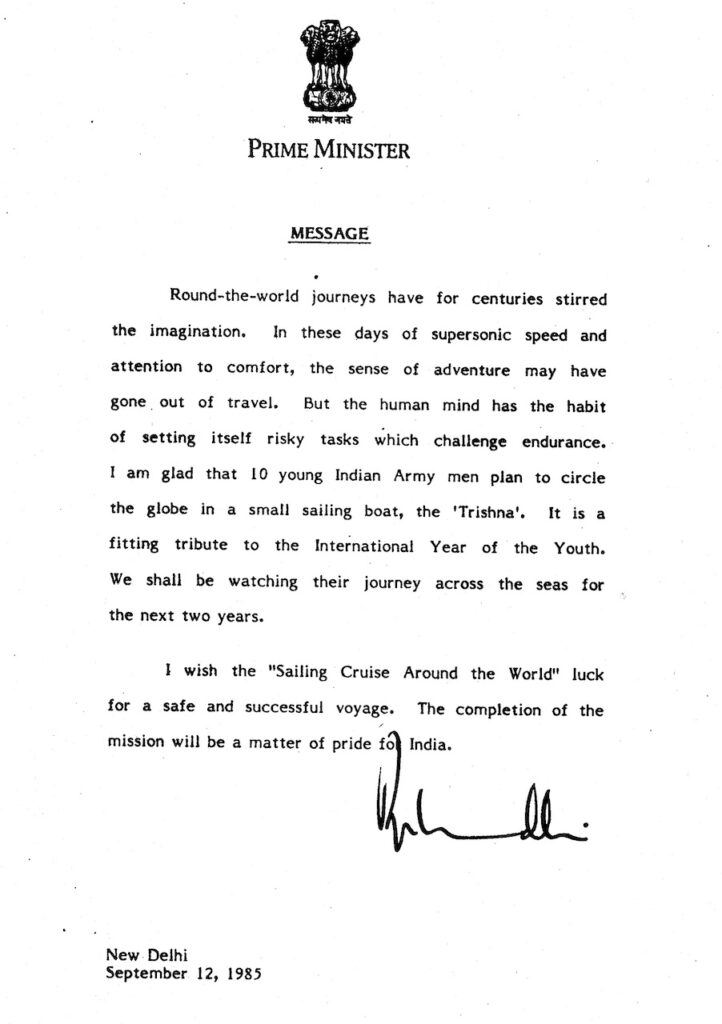
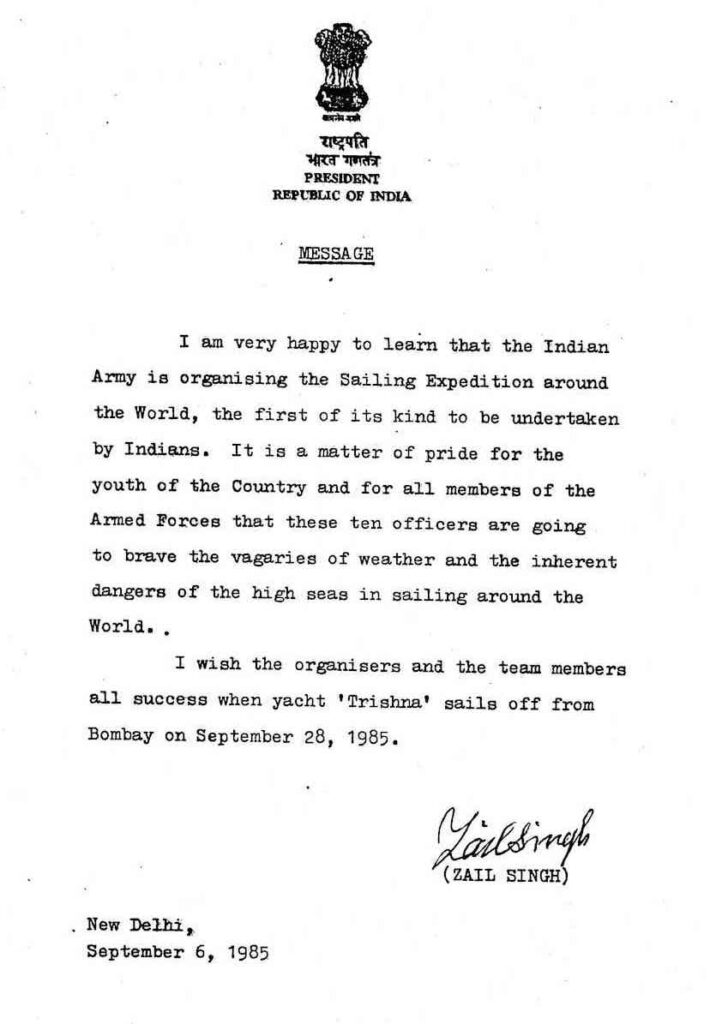
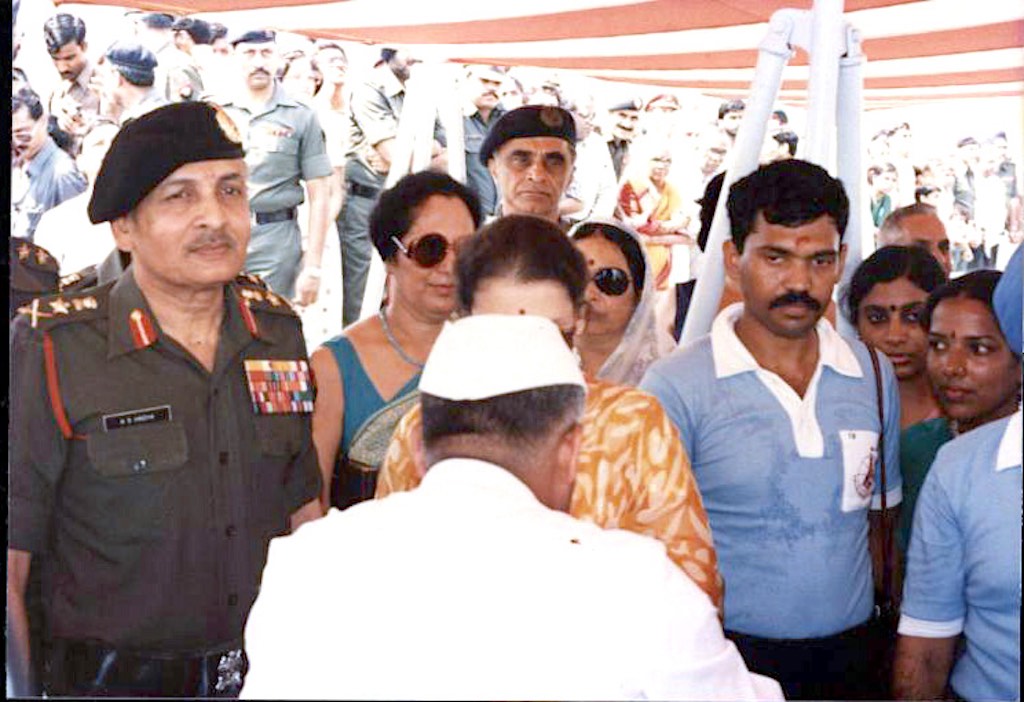
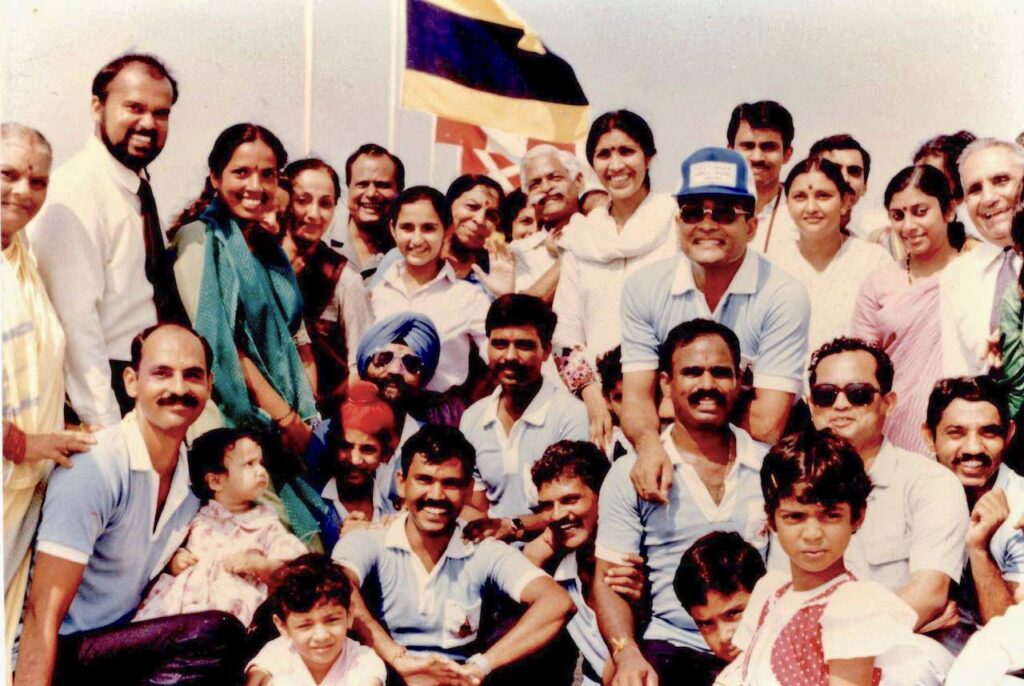
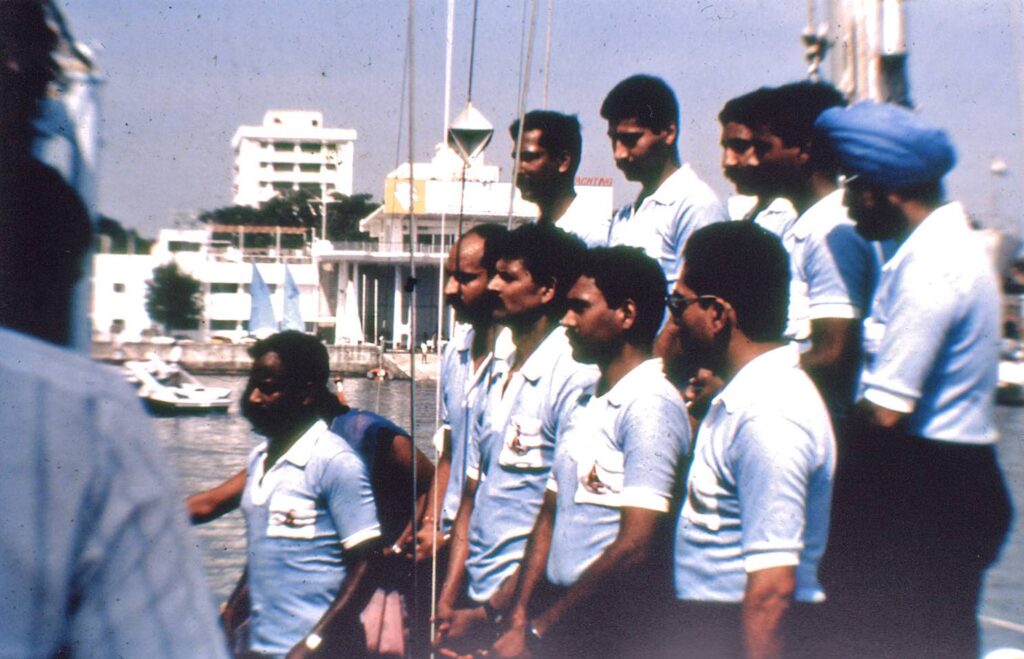
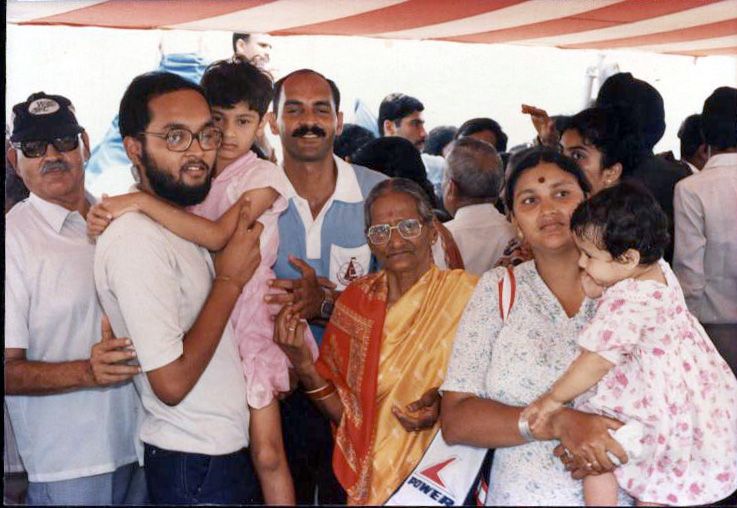
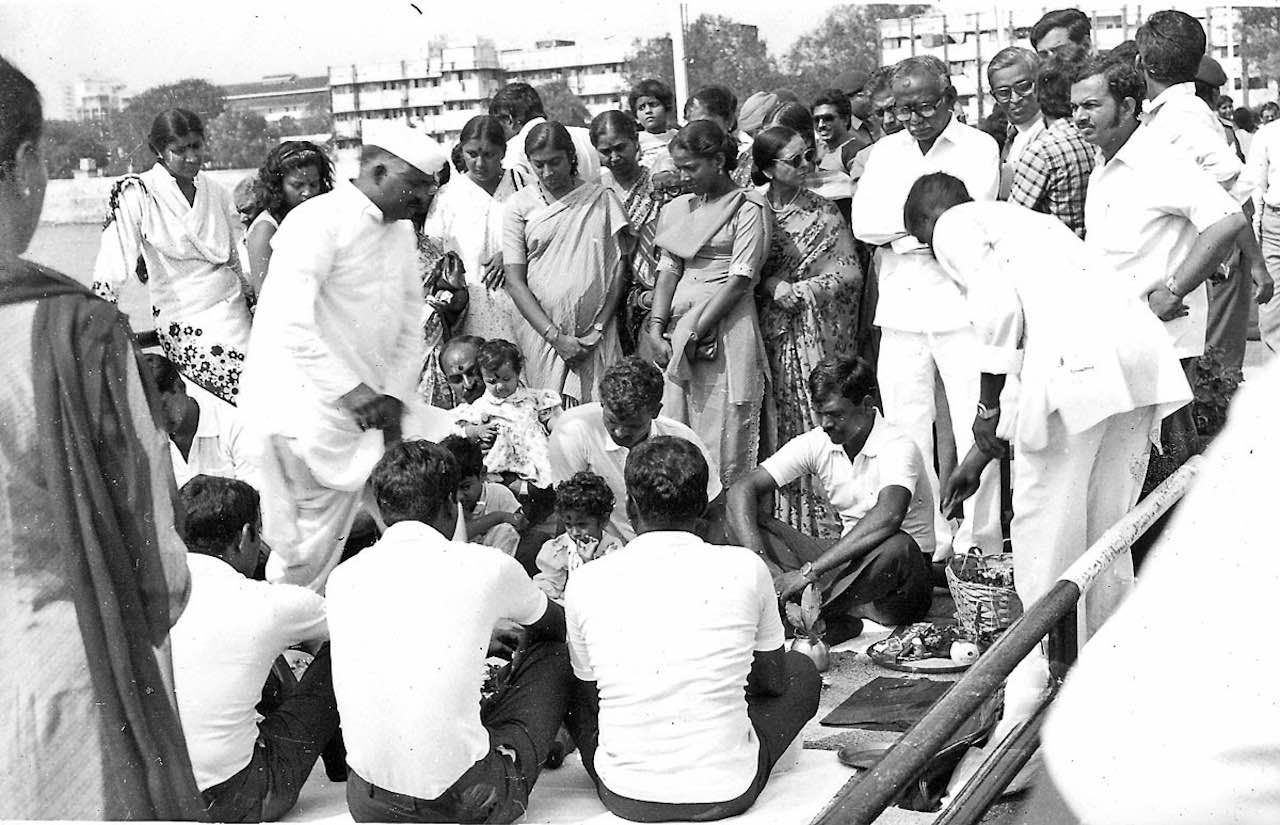
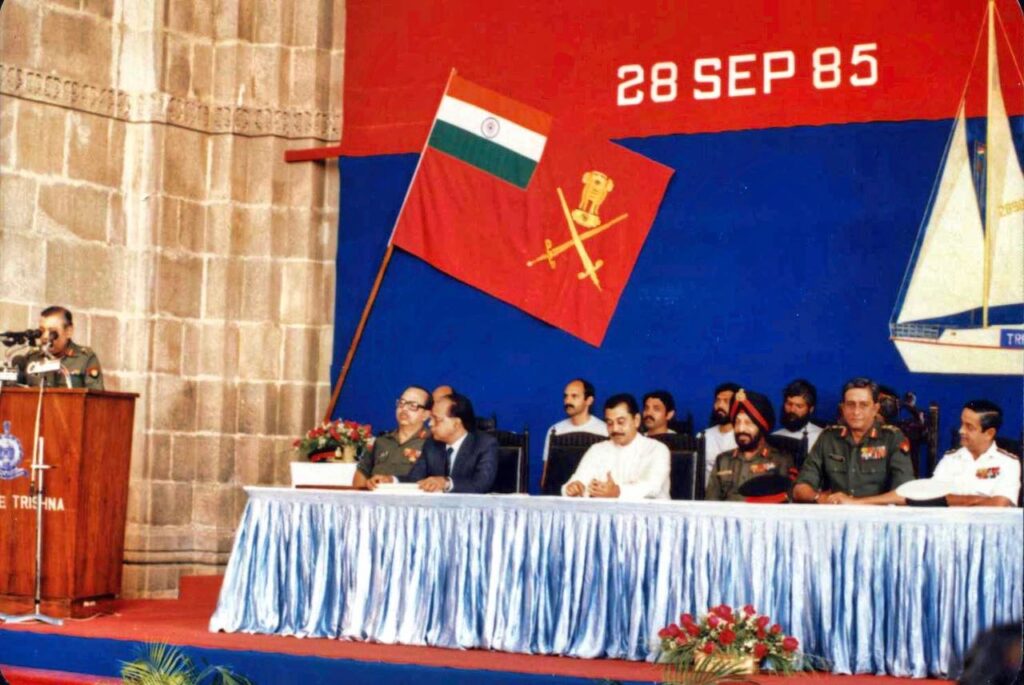
The First Indian Sailing Expedition Around the World was flagged off on 28 Sep 1985 from Mumbai by Late Gen AS Vaidya, then Chief of the Army Staff. It was a culmination of years of preparation, training and hard work by the team.
.
.
.
.
.
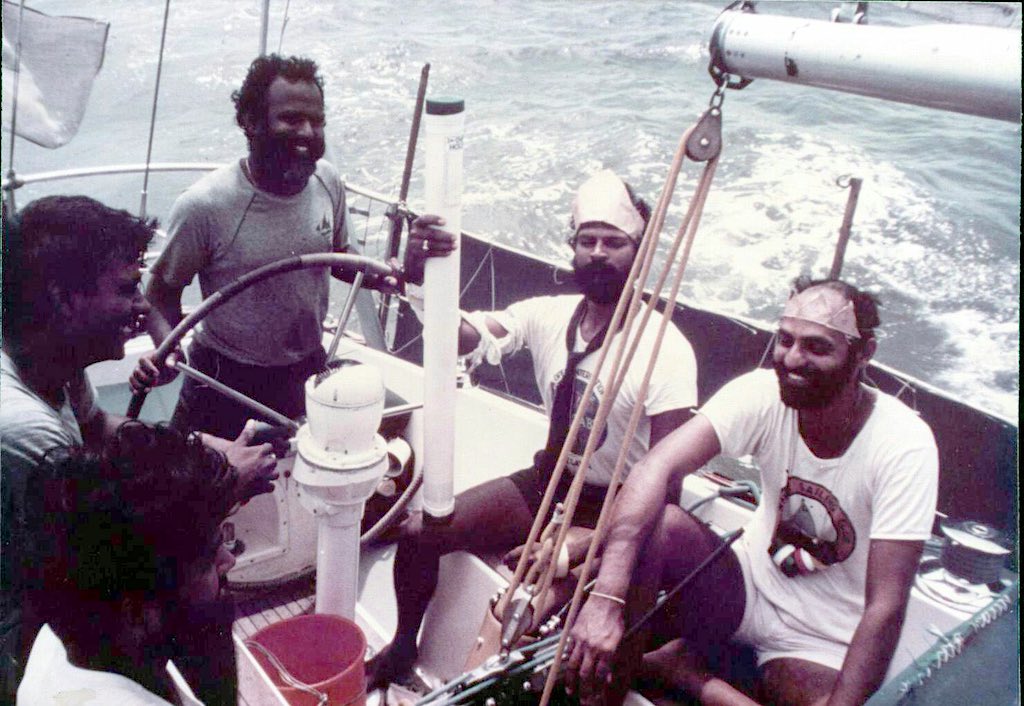
Right from the time ‘Trishna’ left Mumbai, she ran into the low pressure of the receding monsoons. The crew experienced rough weather till Male, Maldives – the first short halt to pick up fresh water for the long sail ahead to Mauritius, owing to the disastrous Andhra Pradesh cyclone in the Bay of Bengal that year.
.
.
The boat was hit by gales several times, notably on 29–30 September, 01–12 and on 13–14 October 1985, which damaged the VHF and HF antennas and electrical systems on board. The crew had to resort to makeshift repairs at sea to restore communications and navigational systems.
.
.
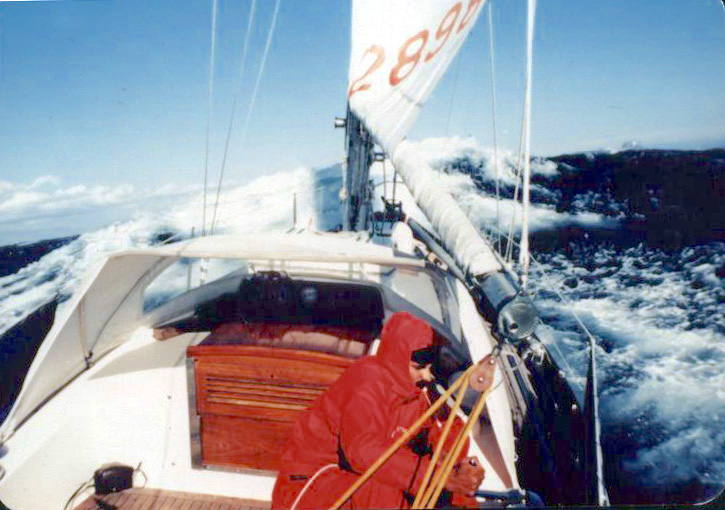
The Government had not accorded permission for a halt at Cape Town due to the anti-apartheid policy enforced during that time in South Africa. The journey from Mauritius to St Helena Islands (South Atlantic Ocean) around the Cape of Good Hope was very rough and the longest non-stop voyage of the expedition, taking 33 days. When the boat was near the Madagascar and South African coast, the boat was hit by severe gales. Towering waves repeatedly hit the stern of the boat, making steering the boat extremely dangerous due to the chances of broaching and even capsizing. ‘Trishna’ lost her horseshoe lifebuoy and one Dan buoy when seawater flooded the cockpit after a huge wave broke just astern. To ensure that the crew on watch duty was not washed off, they had to be secured to the boat with the help of lifelines.
.

.
The worst weather was encountered while rounding the notorious Cape of Good Hope, when ‘Trishna’ was hit by gales with wind speeds exceeding 65 knots (120 kph) – the wind instrument could record speeds only up to 65 knots! Wave height was 45 to 55 feet – the height of the mast. She lost her safety equipment including the second horseshoe buoy. The radio antenna broke in the storm. Communication with Mumbai and other ports was cut off. The Cape had lived up to its reputation of being the “Cape of Storms”! Thereafter radio communication could not be restored. A big blow for the organizers and family members who now had no means of tracking the boat or crew.
.

.
Fortunately, the sail across the South Atlantic Ocean thereafter was relatively peaceful till the Caribbean Sea. There was one occasion when all of a sudden the crew on duty spotted a whale lying on the surface of the water about 25 to 30 meters ahead of the boat. Since the boat was heading directly for it, it was panic stations on board, and the yacht was jibed around (turned 360°) just in time to avoid a collision. By the time the crews recovered and fetched their cameras, only the giant tail was visible lazily flipping for the last time before the whale disappeared underwater.
.
.
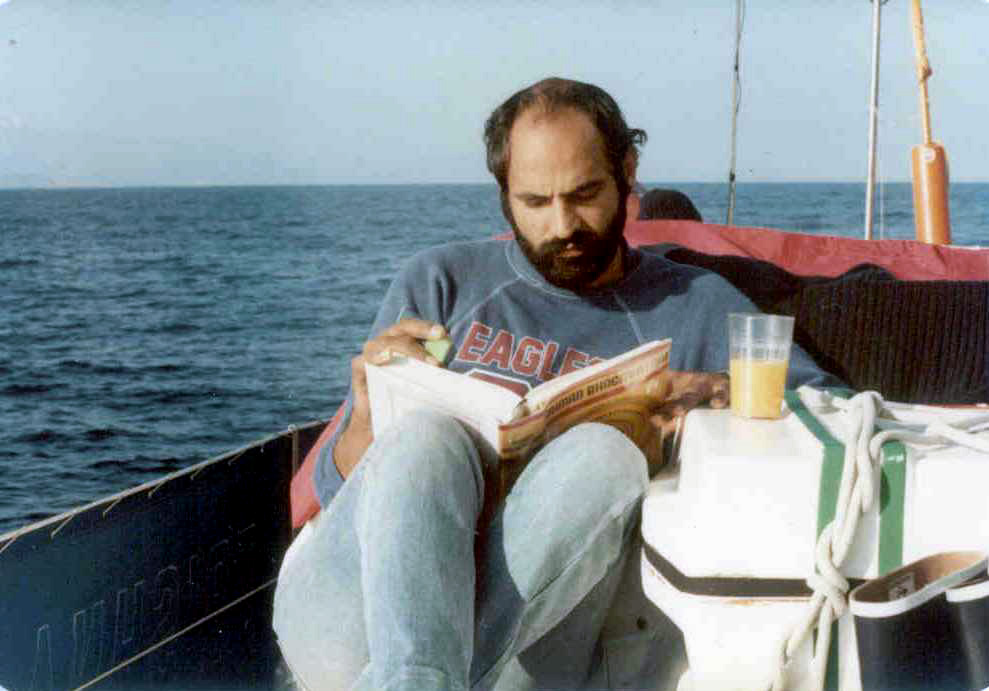
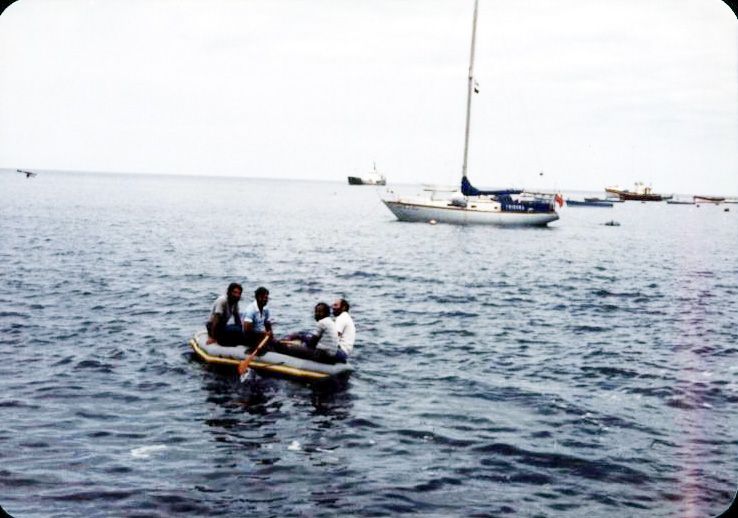
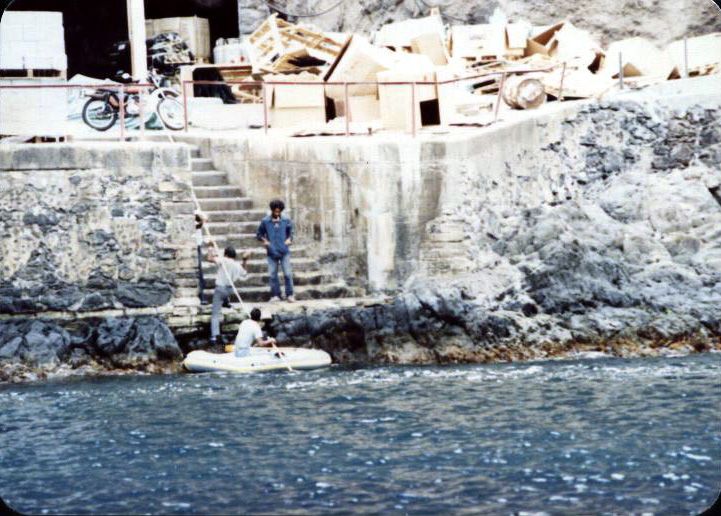
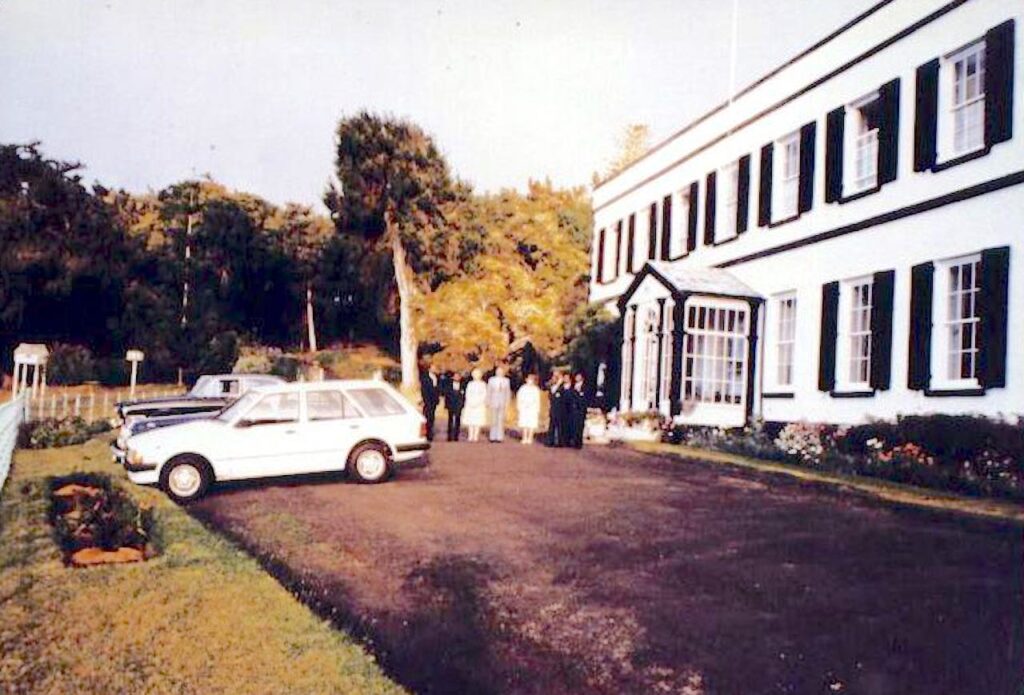
It was only when we reached St Helena Island that messages of our having survived crossing the Cape could be conveyed to anxious relatives and Army Headquarters back home. Since no repair facilities or spares were available at either St Helena or Ascension Island, our next short halt, we had to continue making do with existing resources.
.
.
.
Most of the halts were just a day or two, mainly to replenish fresh drinking water whose storage capacity onboard was limited. However, the halt at St Helena was a bit longer to enable the crew to recuperate from the after-effects of the long leg, when during the last 10 days drinking water was drastically rationed and prohibited even for morning routine and brushing.
.
.
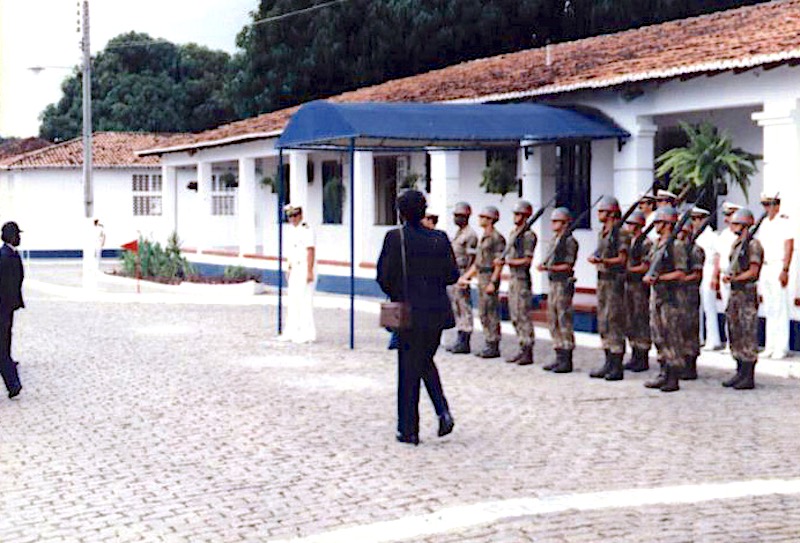
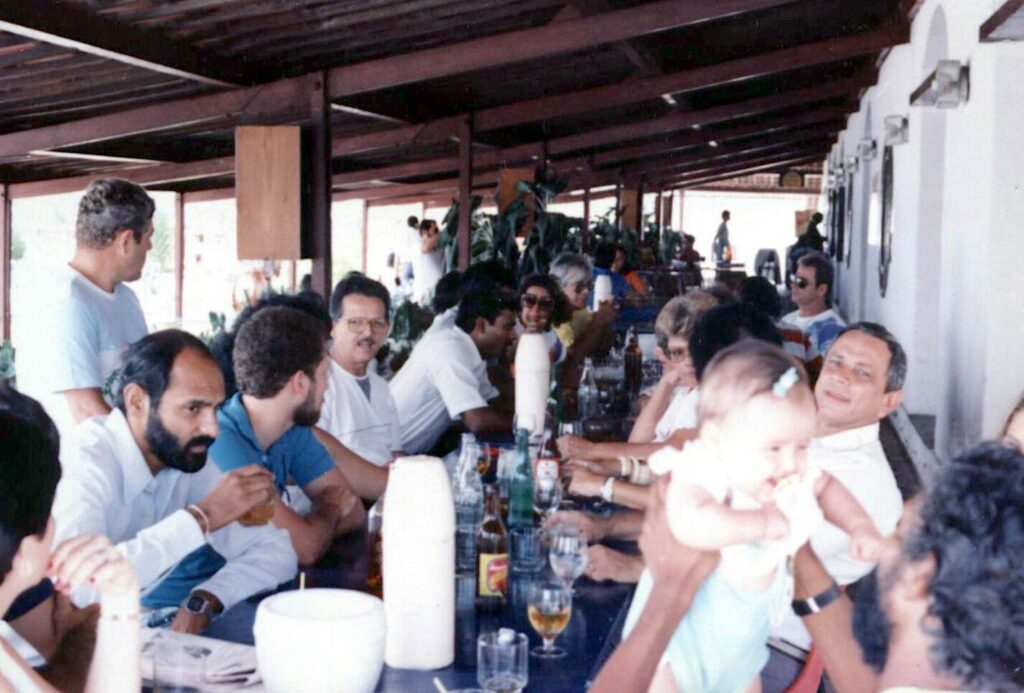
New Year’s was celebrated at Natal, where the Brazilian Navy went out of the way to host us. We were accorded a ceremonial guard of honour at their Quarter Guard and a formal banquet was hosted in their Officer’s Mess to felicitate the Trishna crew.
.
.
.
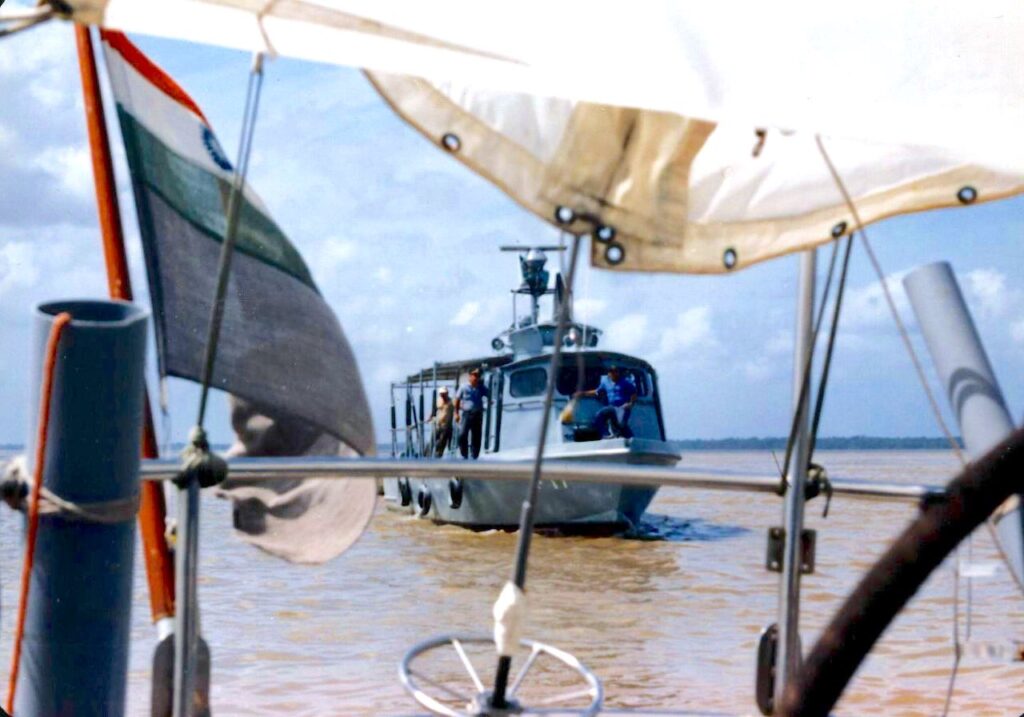
While sailing up the Rio Para River in Brazil, heading for the port of Belem, ‘Trishna’ had to sail upstream of this tributary of the mighty Amazon River for 70 nautical miles against the strong currents, avoiding huge floating logs. This was dangerous, especially at night, as any log could have easily ruptured the fiberglass hull of the boat.
.
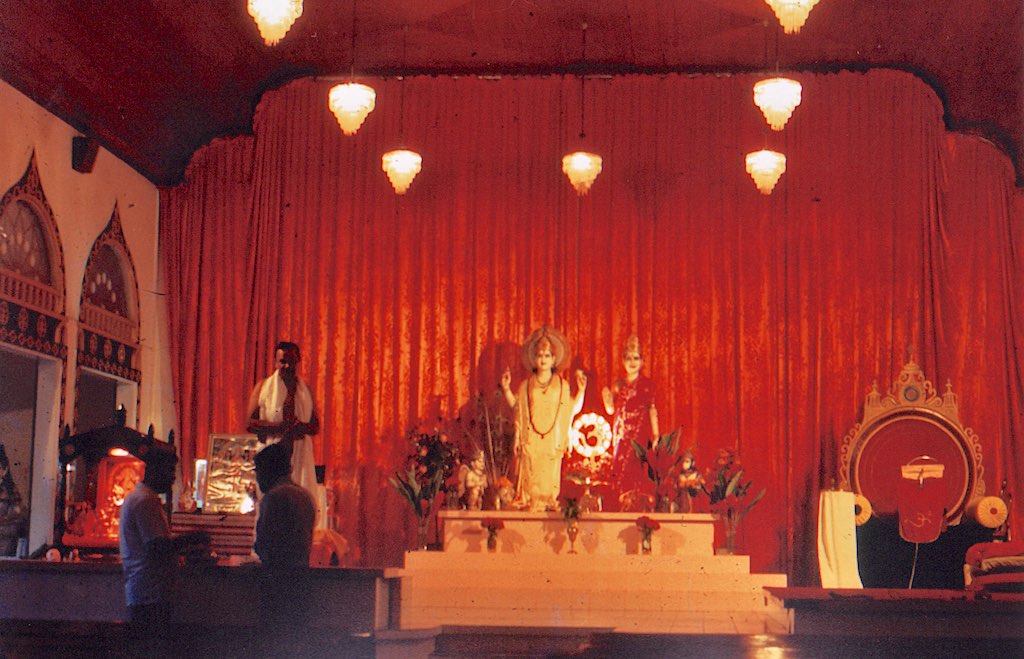
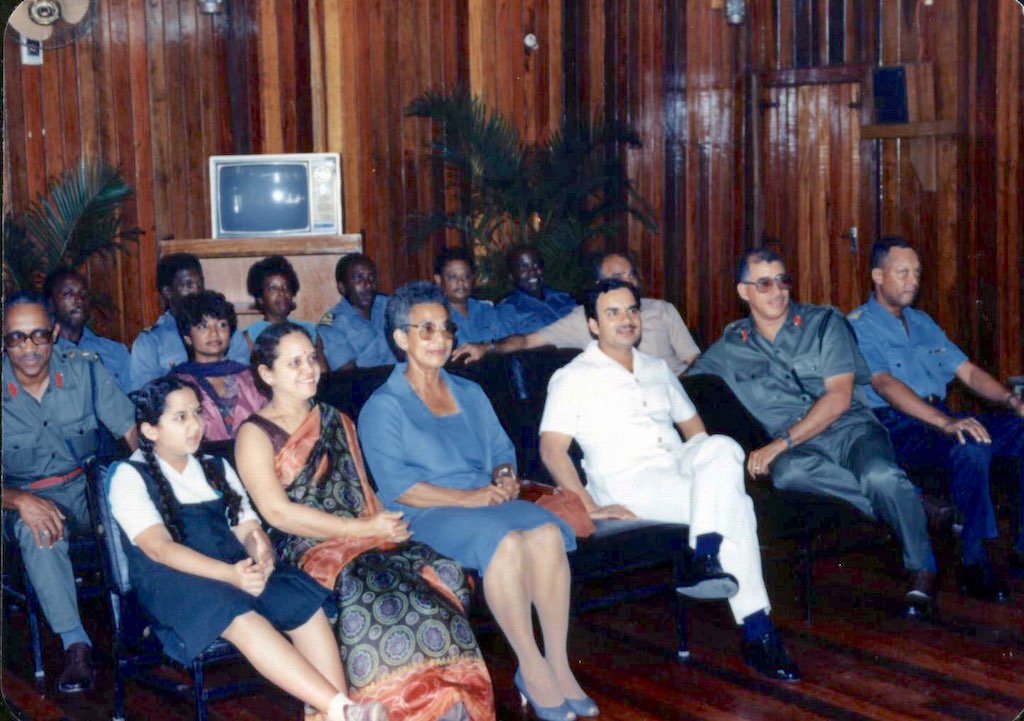
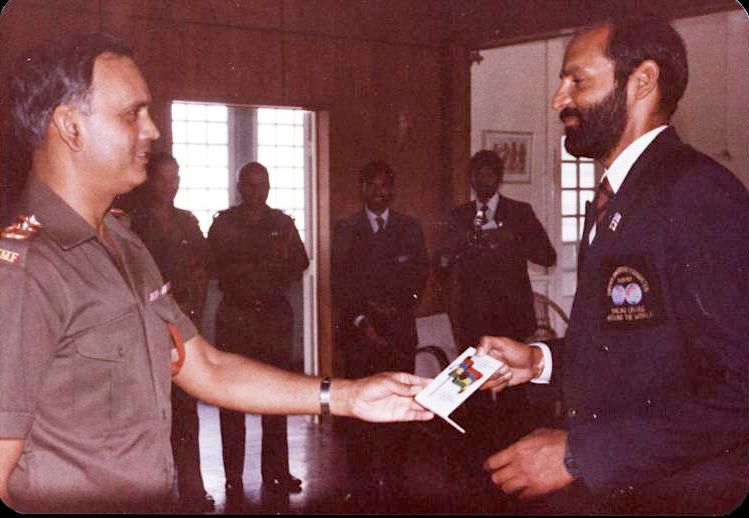
Right Picture: Georgetown, Guyana – 22 Jan 1986, a presentation ceremony for the Trishna crew by GDF Chief Maj Gen McLean and the Indian High Commissioner
.
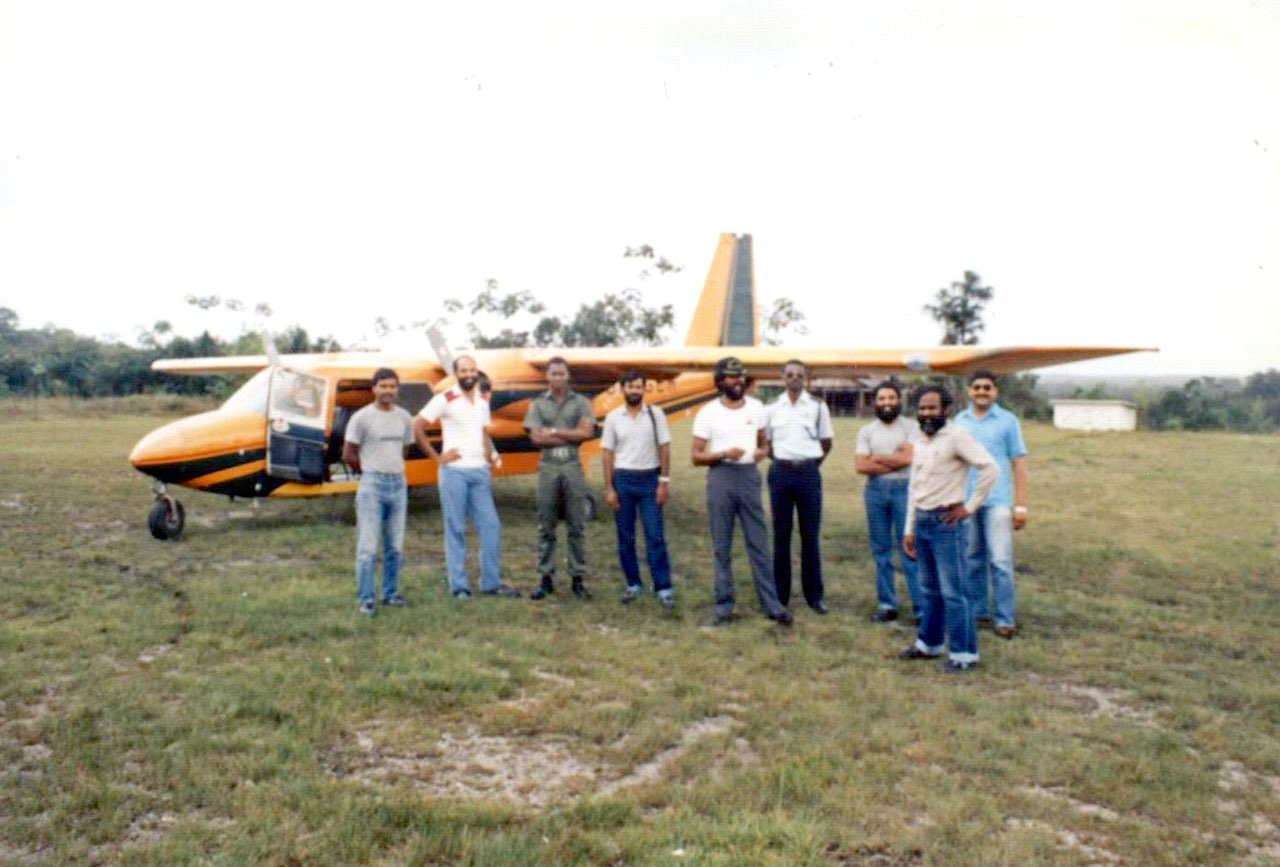
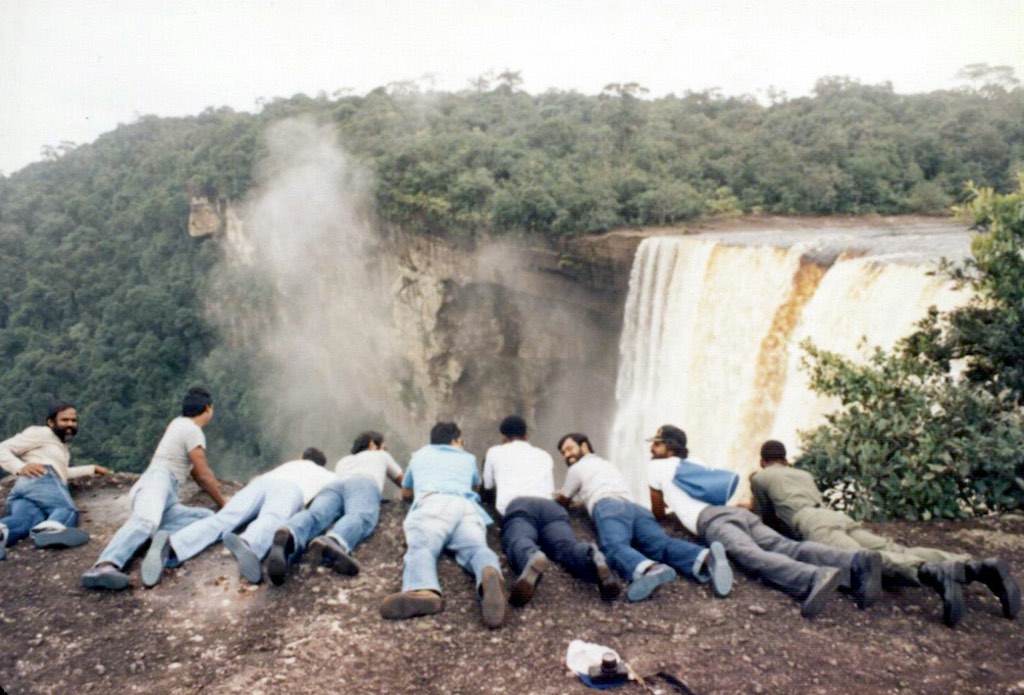
.
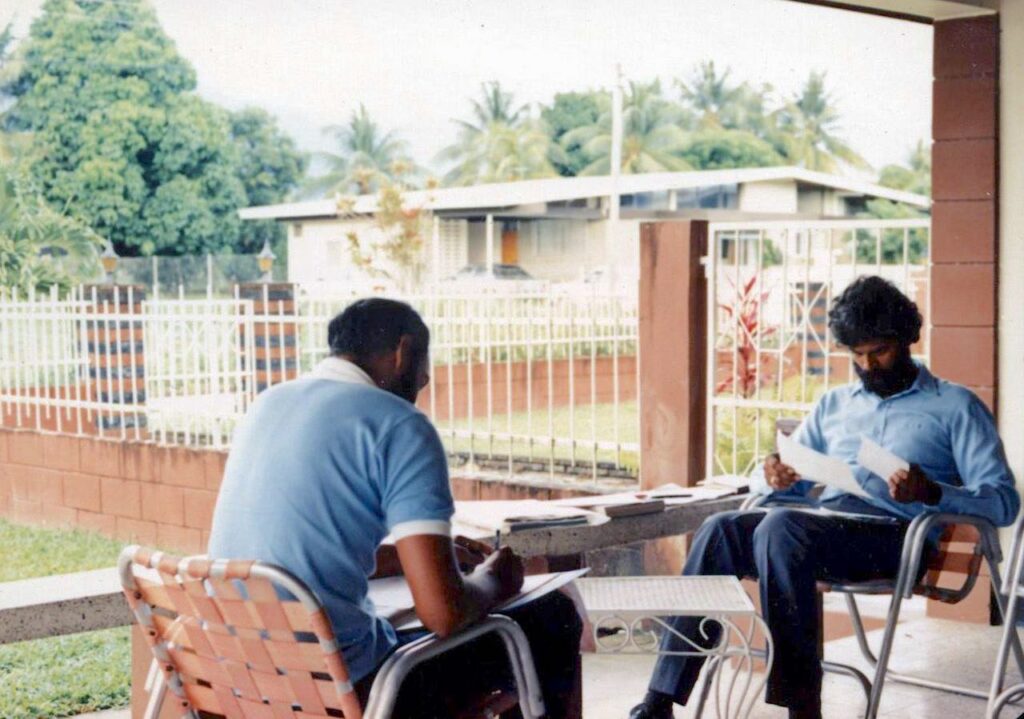
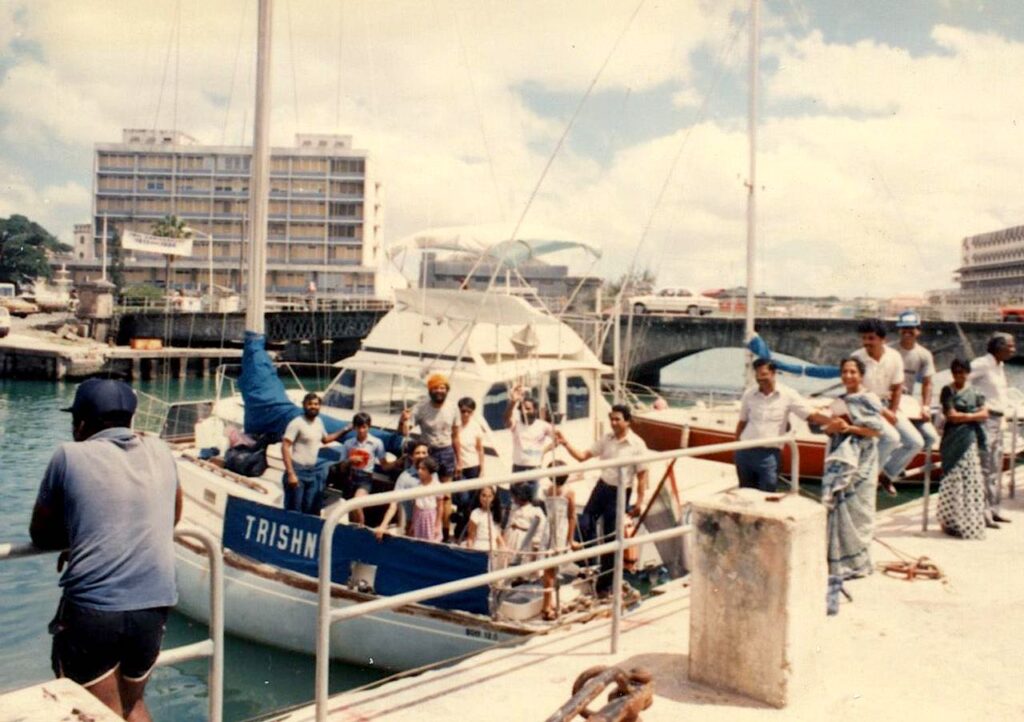
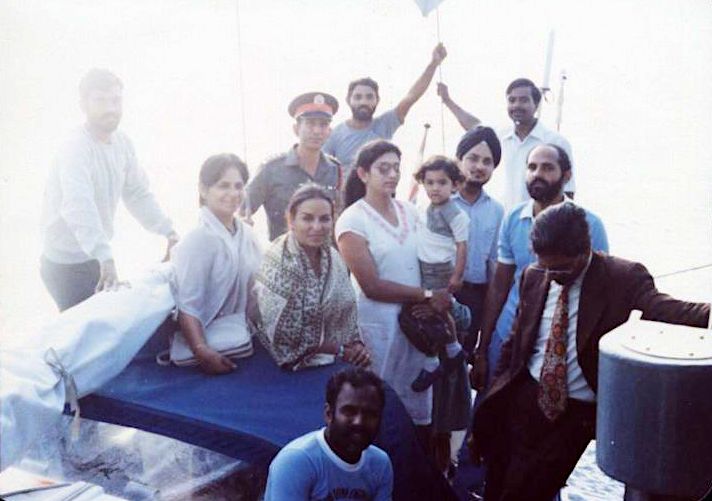
Right Picture: Bridgetown, Barbados – Trishna at her mooring with local Indians visiting
.
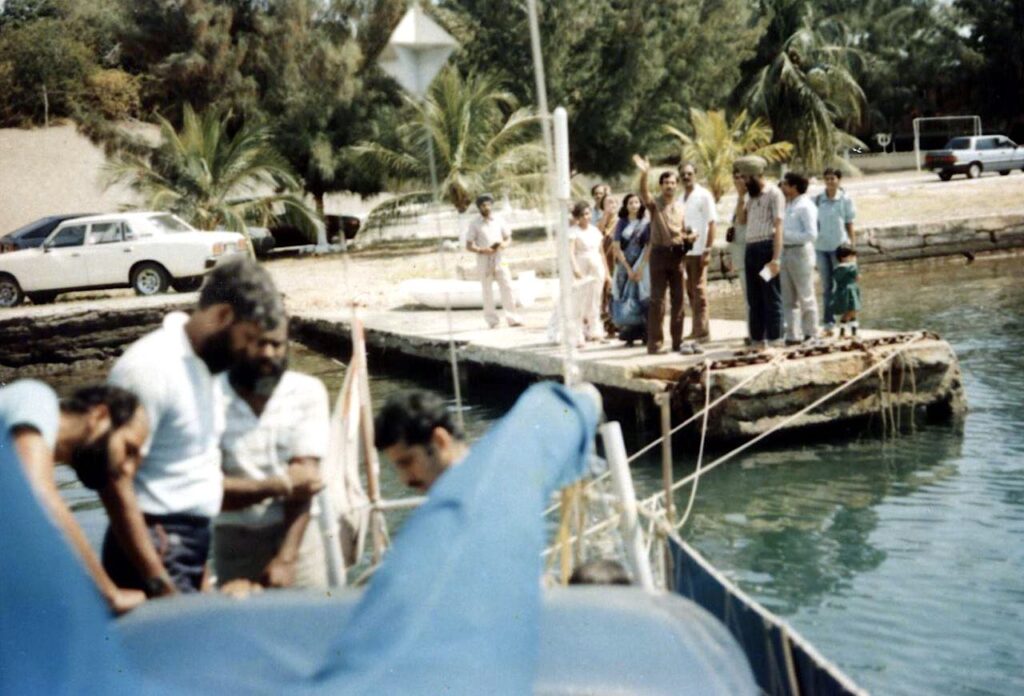
Jamaica – Getting ready to sail off, the local Indians bid farewell from the jetty
.
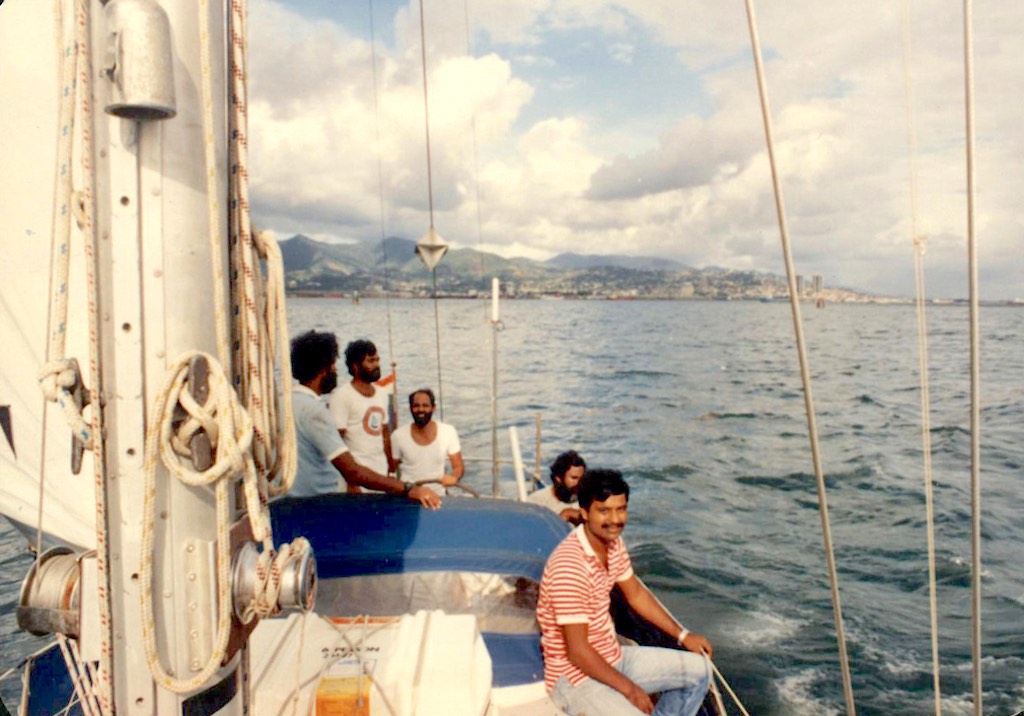
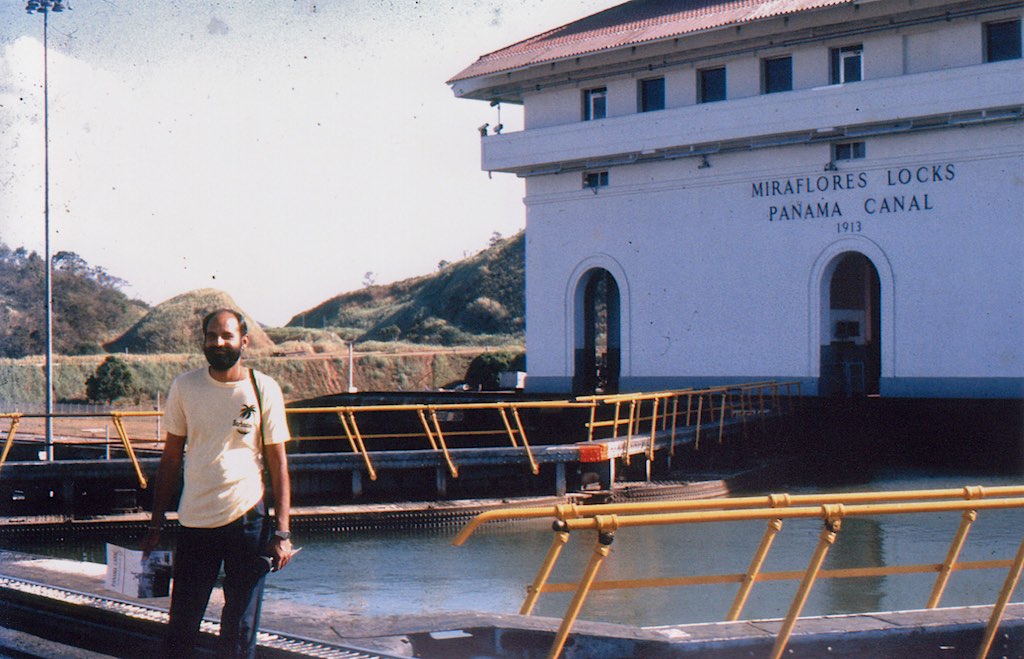
After water halts at Paramaribo and Guyana, the first crew change took place at Trinidad. The boat then sailed to Barbados and Jamaica through the numerous Caribbean islands. Trishna encountered rough weather again during this leg, but these were safely tackled. The crossing of the Panama Canal, through its numerous locks in the company of huge ships, was an unforgettable experience for the crew. One learned the local history, as the canal had been dug using mostly Indian labourers.
.

.
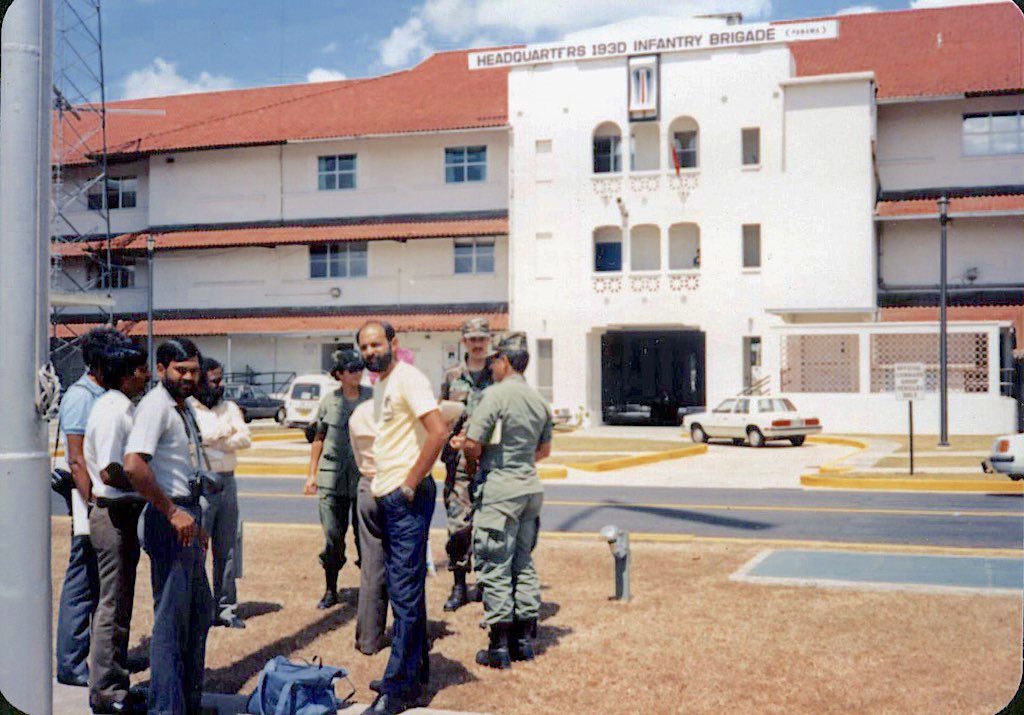
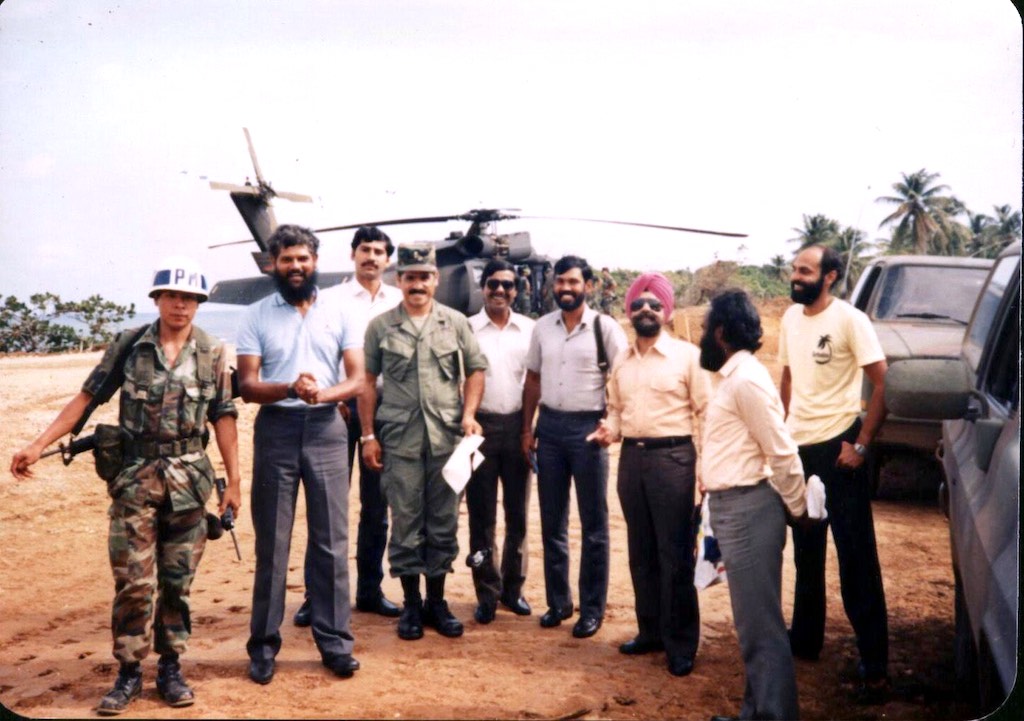
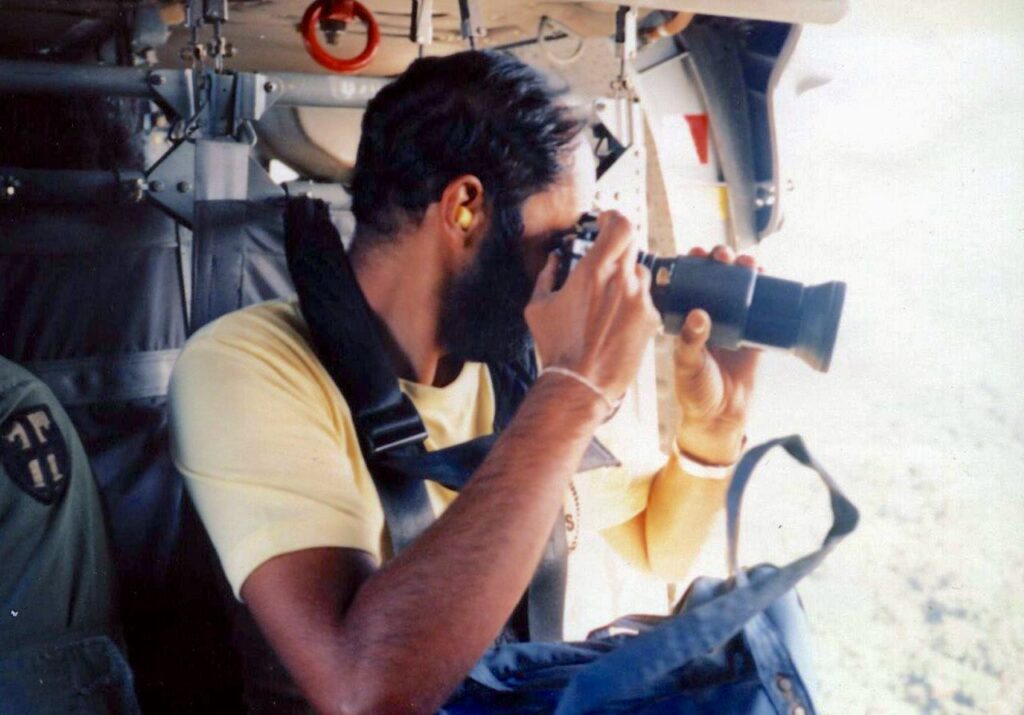
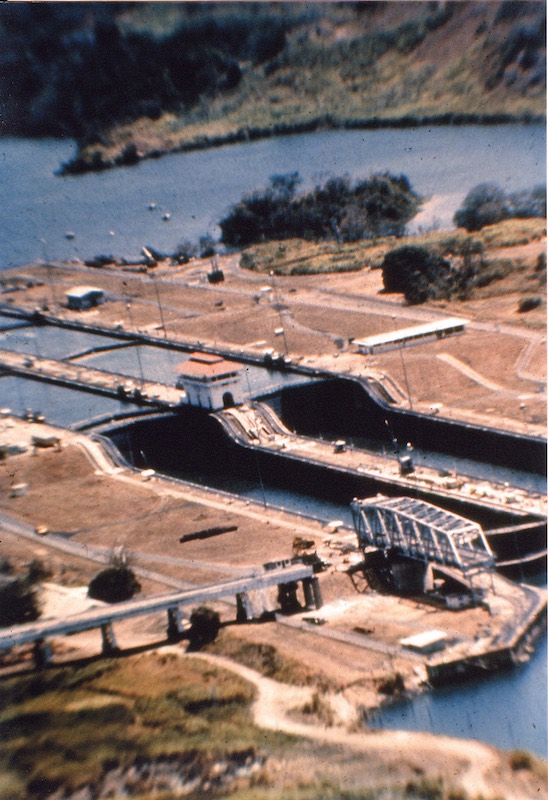
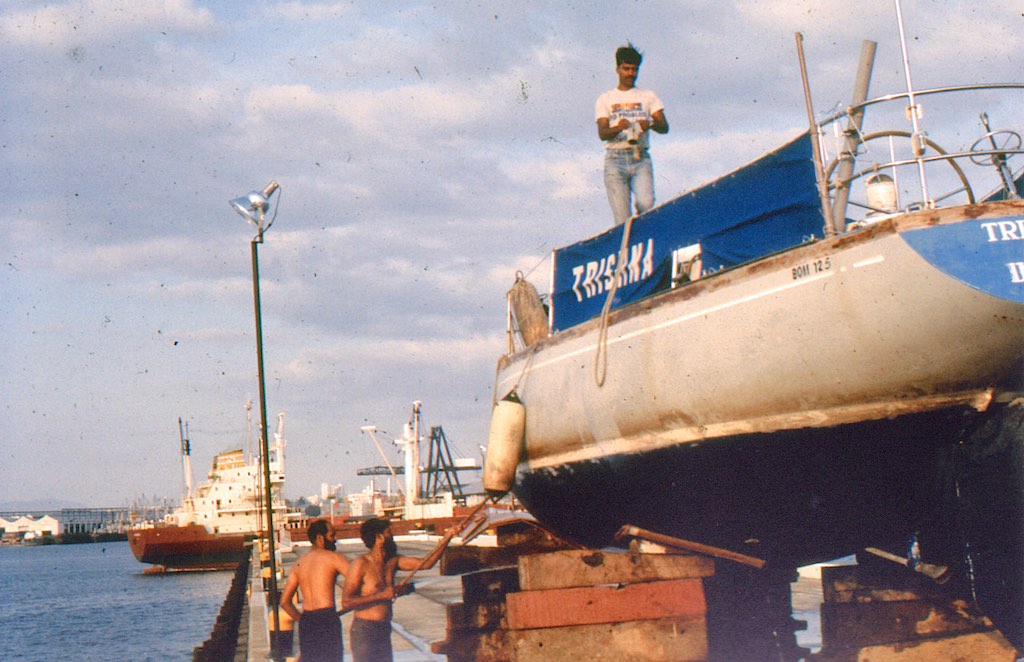
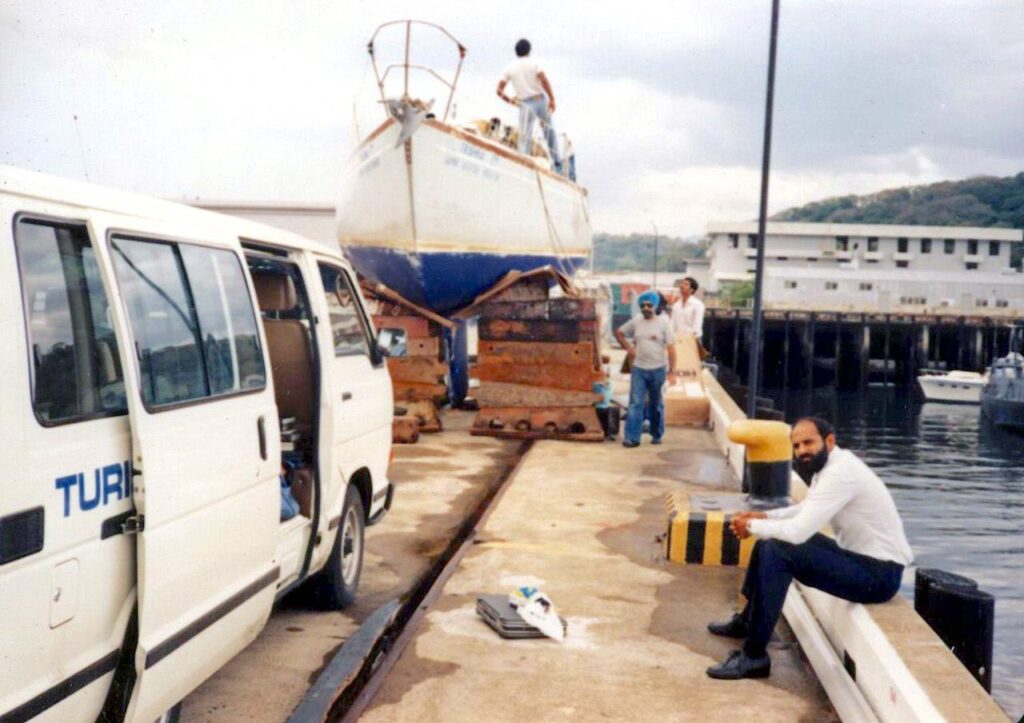
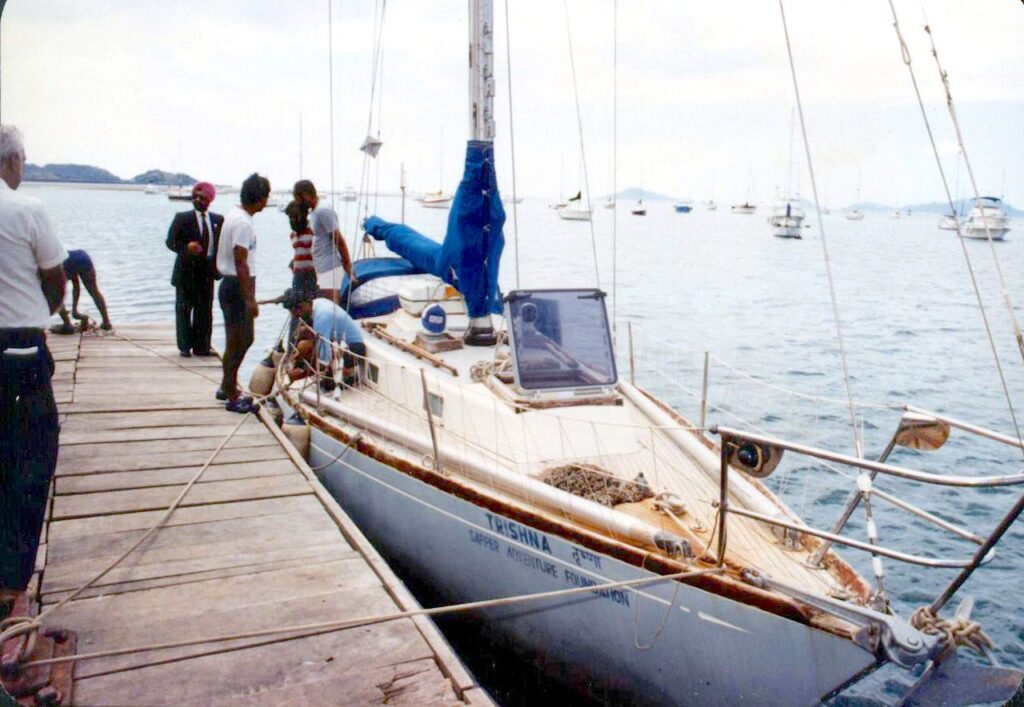
At the halfway mark of the expedition at Panama, the boat was taken out of the water and cleaned at the US Naval Base. The hull was given a fresh coat of anti-fouling paint. The US Army gave us an aerial tour of the Panama Canal in a helicopter – a unique experience to see the locks and the canal infrastructure from the air. In the middle of this excursion, the helicopter landed at a US Army camp in the remote forest, where we had lunch in the Mess. It was an excellent opportunity to see them working at close quarters.
.
.
.
.
The voyage across the northern Pacific Ocean was relatively calm. With good winds ‘Trishna’ sailed 3,200 nautical miles – from Galapagos to Marquesas Islands non-stop in 23 days. This was her fastest passage so far. Galapagos are among the most beautiful islands in the world with a plethora of exotic sea and animal life. The crew saw many sea lions, marine and land iguanas, whales, penguins, giant tortoises, blue and red-footed boobies, pink flamingoes, frigates, pelicans, and birds of different species. ‘Trishna’ encountered rough weather again from Tahiti onwards, and were hit by gales up to Rarotonga, and then beyond to Fiji. The weather again worsened from Fiji to Auckland with winds blowing over 60 knots accompanied by 30(+) foot waves. During this storm both the main and jib sails were ripped apart. Even the reserve sails, which were put up, were torn in the strong winds. The crew had to resort to hand stitching on two occasions to reach Auckland – not an easy task since the sailcloth is very thick. Winter had by then set in the southern hemisphere, and the sail was extremely punishing for the crew in the wet and cold conditions, with big waves continuously breaking over the boat.
.

.
‘Trishna’ had a perilous encounter with some whales between Rarotonga and Fiji. On three occasions whales came within 10 to 15 meters of the yacht and swam close by flipping their huge tails. Just a touch by a whale would have been disastrous, even leading to it’s sinking.
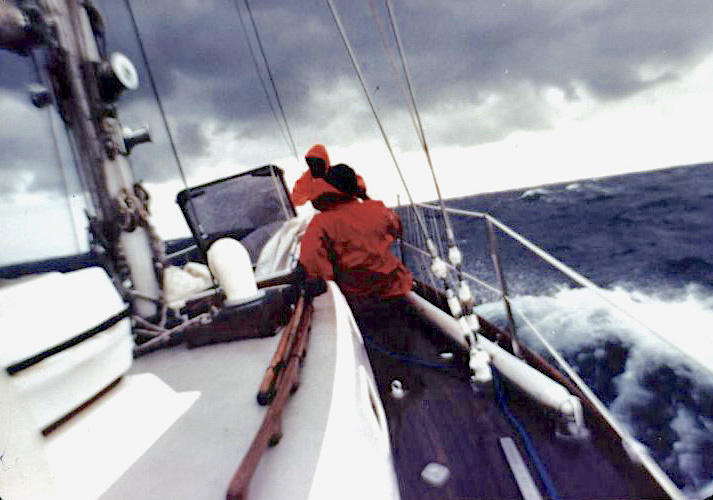
One of the worst journeys for ‘Trishna’ was the passage from Auckland to Sydney across the Tasman Sea. This crossing in winter has a reputation rivaling that of crossing the Bay of Biscay or the Cape of Good Hope. This leg was undertaken from 03 to 17 Aug 1986. The boat was hit by gales continuously for five days, with winds over 60 knots and 40-foot waves. The repaired sails got torn again, and for the first time in the whole voyage, the ‘hove-to’ drill was carried out to save the boat from major damage. The same storm meanwhile struck Sydney, causing the worst inundation of the city in a century. The crew was totally exhausted by the time the yacht finally limped into Sydney harbour.
.
.
The leg from Sydney to Brisbane also encountered rough weather. The voyage from Brisbane to Cairns and then onto Thursday Island was very difficult – and spectacular – owing to the sail along the Great Barrier Reef, one of the natural wonders of the world. Navigation was critical due to the numerous reefs in the area, and on one occasion the boat ran aground on a moving sandbar. There was luckily no damage, and the crew could sail off with the next high tide. Crossing the Torres Straits again caused some anxious moments, as at places it is only about a mile wide. From Thursday Island to Darwin the crew got some respite and it was a pleasant sail. The crew managed to catch fish for the first time and re-establish radio communications with India on the radio set.
.

.
‘Trishna’ left Darwin in north Australia on 13 October 1986 for Kupang in Timor. Initially, for three days the weather was rough, but thereafter the weather steadied and the sail was calm. From Kupang, the boat sailed to Waingapu in Sumba, and then onto Bali. Enroute, the crew had their largest catch of an eight-kilogram Tuna fish. Good ‘following’ winds helped ‘Trishna’ to reach Bali on 22 October. Bali has many Hindu temples, with dances being enacted based on the Ramayana and Mahabharata. The crew celebrated Diwali with the locals there and it was an enriching experience. The atmosphere was nostalgic, this being the third Diwali away from home – and the country! The yacht set sail from Bali on 02 November 1986, reaching Jakarta on 09 November; then onto Singapore, Penang, and the first landfall on Indian shores at Campbell Bay, Nicobar in December 1986.
.
Homecoming
.
.
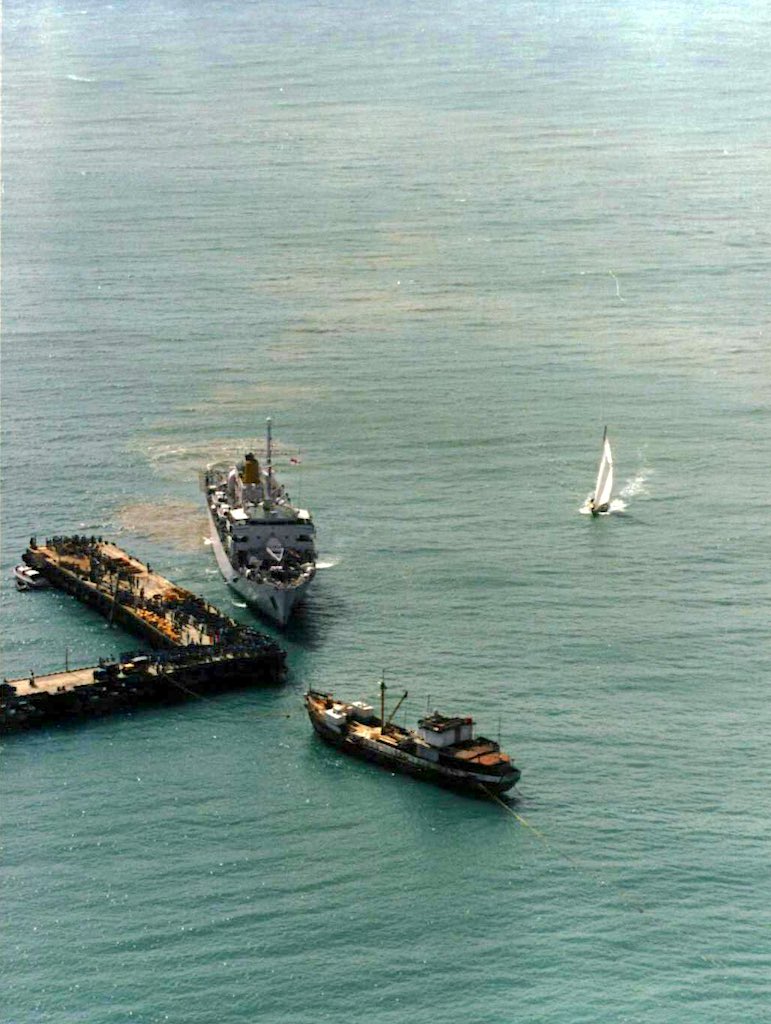
It was a momentous occasion, with the whole crew present. The Skipper received his long-delayed promotion here. The home run via Colombo was uneventful, except for a scare given by Capt Bharti when ‘Trishna’ was off the Malabar Coast. He had been running high fever (over 105 degree C) for a few days. The medical ‘expertise’ on board was unable to lower the fever, despite expert medical advice on the radio. Finally, he had to be treated by a Naval ship, which was called in. He had apparently caught malaria at Nicobar.
.

.
Reception at Mumbai
.
.
.
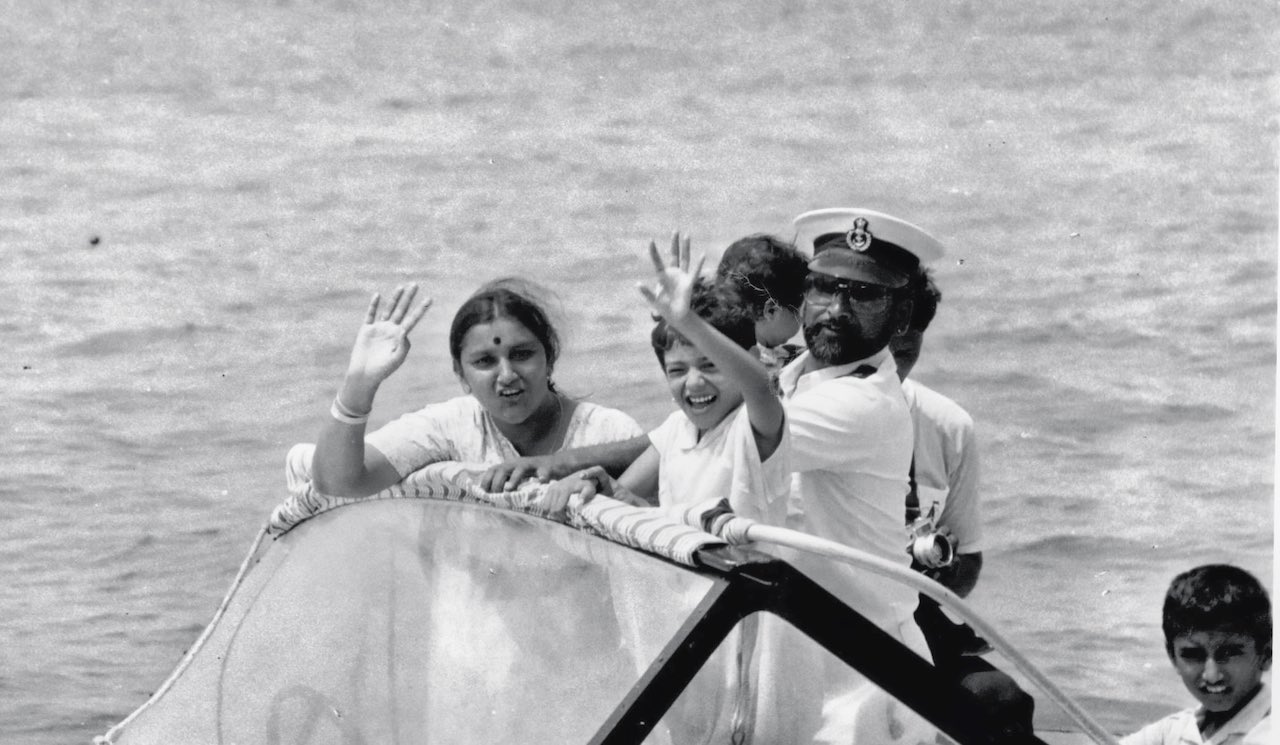
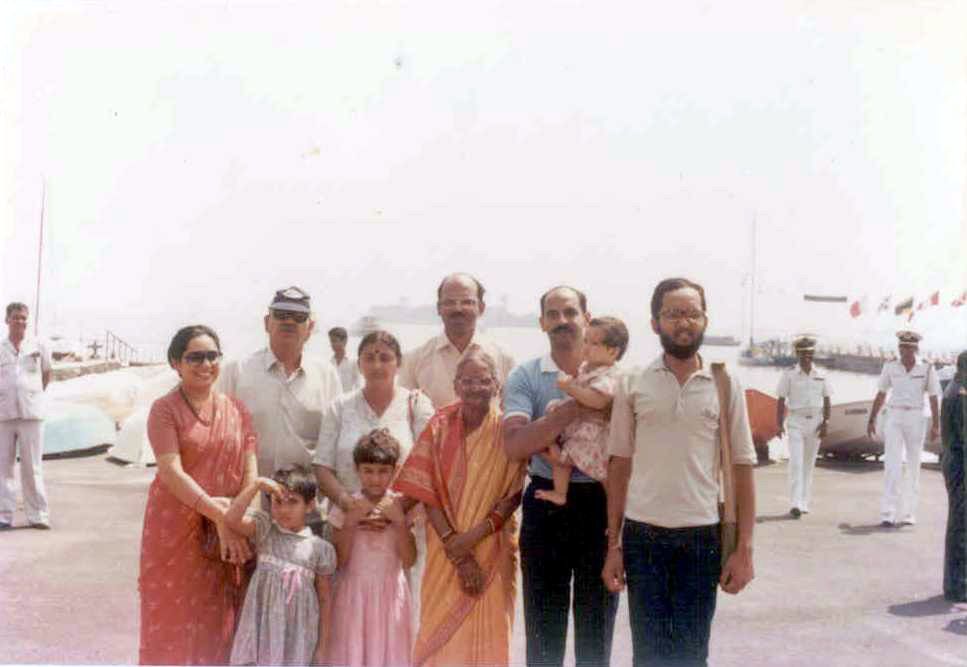
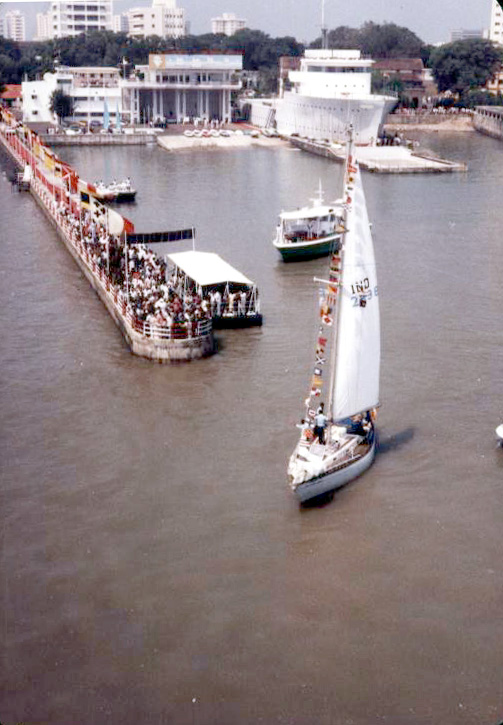
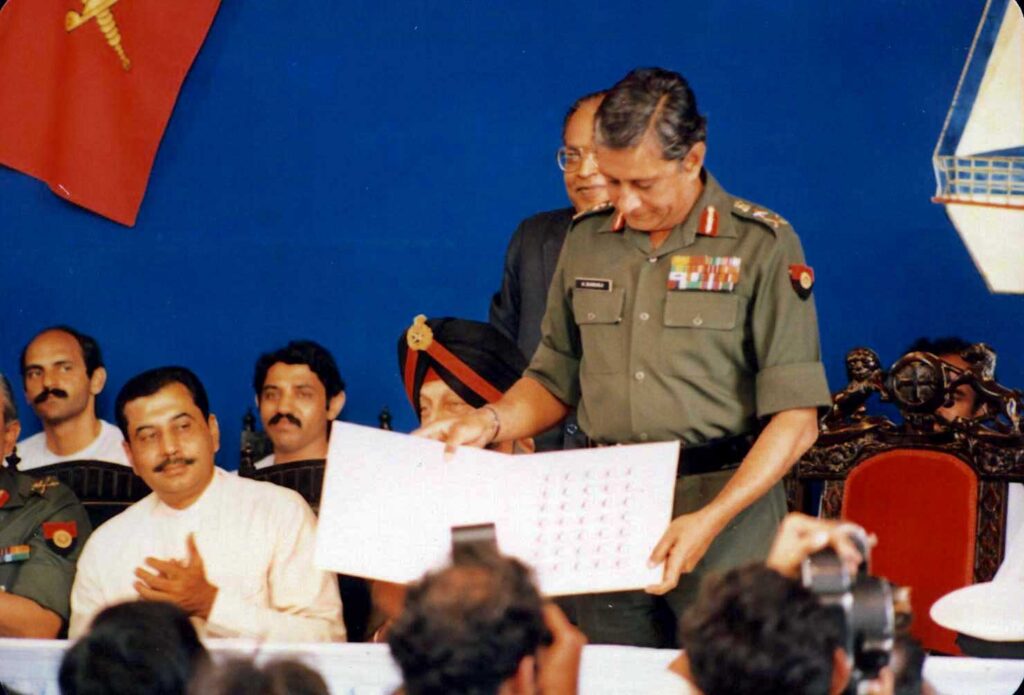
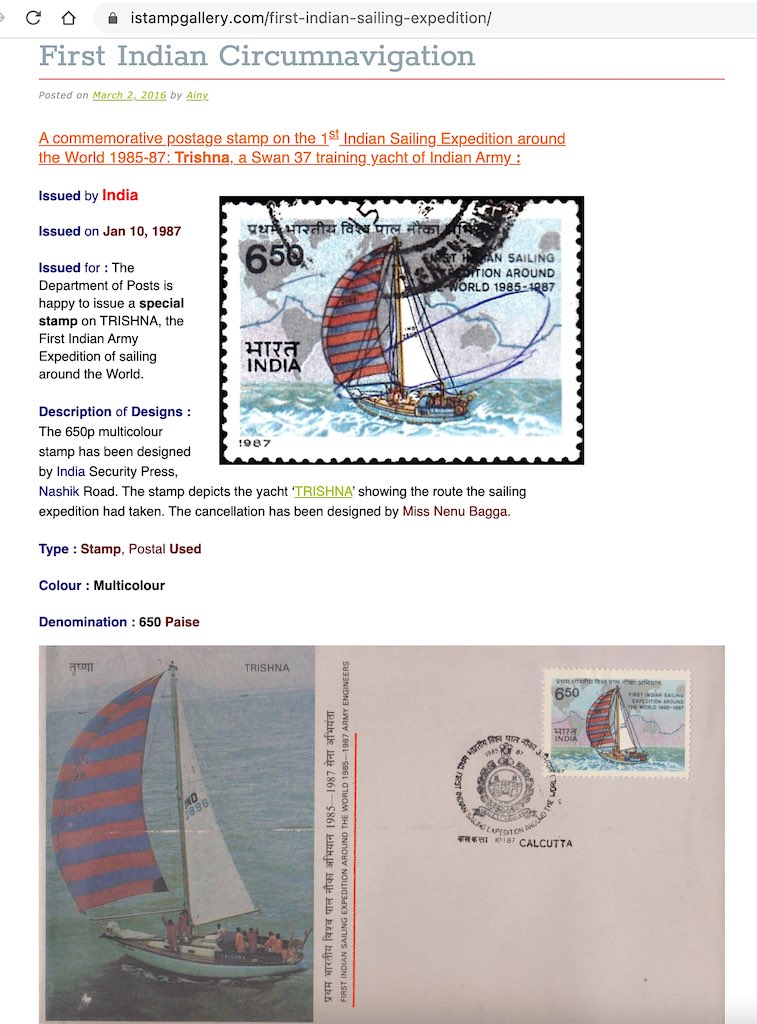
‘Trishna’ received a rousing welcome at the Gateway of India, Mumbai on 10 January 1987. General K Sunderji, Chief of Army Staff, and Mr KP Singh Deo, Union Minister were present to welcome the boat. The Postal Department released a postage stamp to mark the occasion in a ceremony at the Gateway.
.
.
Communication
.
Communication from the boat back home always remained tenuous throughout the journey. We had been provided a High Frequency Radio Set manufactured by BEL and used by the Indian Army. Fund constraints ruled out buying a marine radio set, or going in for the satellite-based INMARSAT system used at sea. The HF set worked till we were approaching the Cape of Good Hope, where gales broke the antenna installed on top of the mast. Few attempts to repair the antenna were made at sea – a horrifying experience of being winched to the top and trying to carry out repairs while the mast swung wildly like a pendulum in the big waves! Once we managed to put the antenna back. But soon thereafter a massive wave crashed into the boat and the antenna was lost at sea. That brought to an end our link back to India. The long journey of rounding the Cape, with predicted storms, left everyone back home on tenterhooks as to our fate. It was only when we reached St Helena that a phone call back home soothed the nerves of the organisers, family, and friends.
The rest of the journey continued in this fashion, of calling home on landline when touching a port. It was only when Maj Mathur came on board, did his expertise of being an HAM (amateur) radio operator help to establish communications through that network. These messages were then relayed to Engineer-in-Chief’s Branch, New Delhi.
Purchasing postage stamps was normally among the last tasks before we sailed out from a port. It also helped us use whatever loose change we had accumulated during the halt. This was used to buy stamps of varied denominations, which then became multi-coloured decorations on the letters/postcards we sent back home. Once, when we had bought stamps for the balance local currency we had, keeping a reasonable amount aside for a meal before sailing off, when the bill was presented to us by the restaurant we realised that we had run short of cash! Everyone searched their pockets for any change with them, but that proved futile. Finally, we approached the manager with our predicament – those were the days before credit cards – and offered to make up the cash shortfall with the equivalent value postage stamps. He smiled at the six bearded crew, and agreed to the barter proposal! One of the numerous humorous incidents we had as we sailed through different oceans to different continents and cultures.
.
Letters from Trishna
.
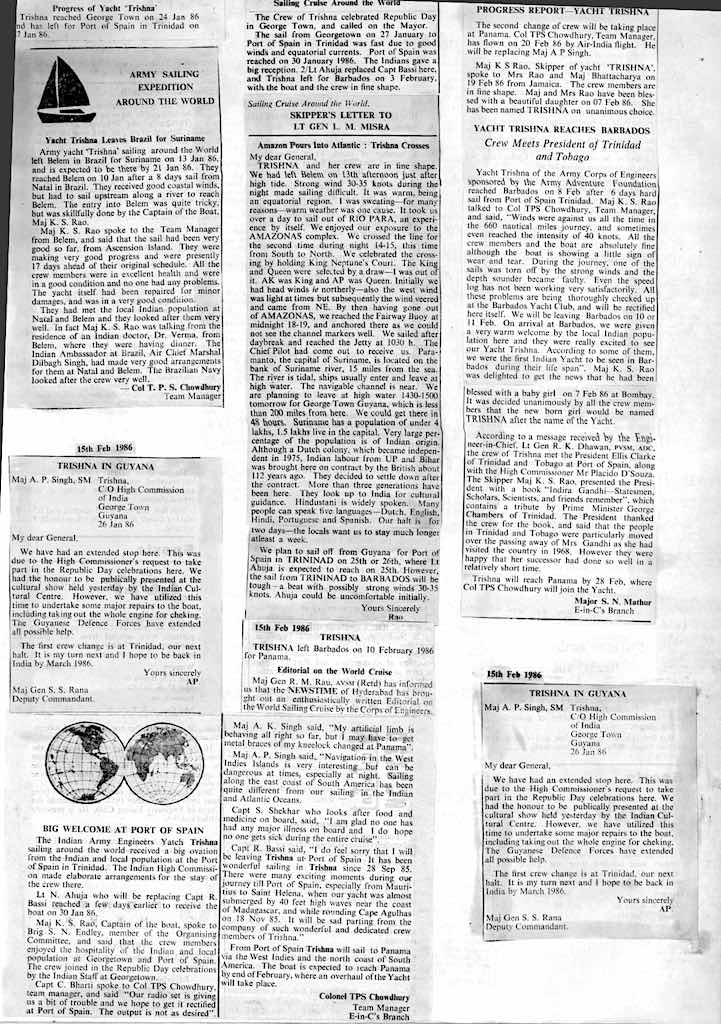
Those were the days when having a landline telephone at home was a luxury, and rarely available. The way to communicate was snail-mail! Which in the present-day world is considered archaic. This communication was also mostly one-way. We wrote a huge number of letters and picture postcards from every port back home – writing 30 to 40 letters from a port was normal practice! Family members were told they could send letters for the crew through New Delhi, where by diplomatic post the External Affairs Ministry sent it to the mission at our next port of call. But this didn’t work always since our dates of arrival were not fixed, the diplomatic bag frequency was limited to the smaller countries, and if the mission was not located at the port of call, it would not reach us. The letters the crew wrote gave a vivid account of the last leg and about the exotic islands and places we visited. Probably the most authentic unedited accounts on record! So much so that the College of Military Engineering Pune often published the letters in their weekly magazine for all to enjoy the stories and travails the crew experienced.
.
.
My NDA course-mate, and Squadron mate, Ravi Shankar was attending the Defence Services Staff Course at Wellington during our voyage. He thought of a novel idea of compiling a few of the detailed letters received by him and they were published in the DSSC magazine “Owl”. A few of the letters compiled by him, with his preface, makes for interesting reading, and are copied below:
.
Letters from Trishna by S Ravi Shankar
.
After covering 30,000 nautical miles, Trishna proudly sailed back into Bombay harbor to the grand reception she so richly deserved. Those on board had been labeled ‘crazy’ when they sailed out. They are today heroes, recognised by the nation as the first Indians to circumnavigate the earth.
One has since heard a great deal about the journey on Trishna, for the event has attracted wide media coverage. These have however covered but a small part of the story, a story that started almost six years ago when a few officers tried to make the whole idea sound plausible. They carried out extensive studies on how it could be done, canvassed for funds and finally got the nod of approval from the highest quarters, almost four years from the time it all started. The boat had to be bought in Europe, sailed to India, trained on and only then did the cruise start, on 28 September 1985.
And therefore they sailed out, which was the next chapter, more exciting, more hazardous and the ultimate proof that all they set out to do was not ‘crazy’ after all. The story cannot unfold in short newspaper articles or during brief interviews on TV. For each one on board has a share in it and something to say, his personal experience, his own personal affair with Trishna. While one would have to wait for all these experiences to be put together in print, a book on the journey of Trishna maybe, one can get a fair idea of what such a book will read like from the letters that kept coming from Trishna. Says AP Singh in one of his letters, “Average letter writing from each port is about 35 letters! Never written so many letter in my whole life all told”. Letters they wrote in plenty, for they longed for replies. And as the journey progressed, the letters changed from mere statement of facts to letters with deeper meaning, a touch of philosophy and marked sense of authority over the winds, the seas and the helm of Trishna. What follows are letters from Trishna by members of the crew, which span two years from the time the crew first saw Trishna.
.
.
Maj AP Singh, SM Jamestown
04 December ’85
My Dear Ravi,
Wishing you all a Very Happy New Year.
We reached here on 02 December, after our longest leg – 32 days, covering about 4000 nautical miles. This also marks roughly the quarter way around the world. It was quite a journey round the Cape of Good Hope. From Mauritius till the Cape, though mostly the wind was from astern, it was frequently gale force, with variable winds. It was common for the wind to swing around 360 degrees within say half an hour and then drop dead. The whole journey in the Indian Ocean was quite similar. The Aghulas current helped us tremendously and once in 12 hours we covered 100 miles, with a 5-knot current. Fortunately, till Cape Aghulas (the southern most point of Africa), the winds were favorable, and not Westerlies as we had expected.
The Cape of Good Hope is actually after cape Aghulas, upto Cape Town (about 80 nautical miles), and here is where we hit our second major storm of the voyage (the first was on 05 November below Madagascar with 30 to 40 feet waves and upto 40 knot winds). Here wind as recorded at Cape Point (18 November) was 60 knots and waves 40 to 50 feet. The massive waves were from behind, threatening to engulf us and in both the storms we came across a few ‘rouge’ waves which broke over the boat, totally submerging the boat under water and froth. I had the misfortune to be on watch both the times when this happened. The result was the loss of both our horse-shoe buoys and the Dan buoy. The safest way out of these is to keep sailing with the wind dead astern. We had 13 reefs on the main sail. Even a little off course and the boat is thrown around by the next wave. All the same, it was a good experience, something to tell our grand children about.
Thereafter, the journey till here was peaceful and fast, with the Southeast Trades and Bengular current with us. Overall we made good progress and reached here well ahead of time. Unfortunately we got out of communication at the Cape and remained so till we got here. I hear there was a big ‘flap’ in Delhi – the PM informed and permission sought to request South Africa to look for us. The result was when we got here, everyone on the island knew of us and out itinerary. This is a small place – 10 by 6 miles and a population of 5000 plus. The people are of mixed descent – all colours, and mix well. They are very hospitable and one keeps wishing everyone on the road, and quite frequently someone stops to chat with you. Got a room at a hotel where three of us stay by turn.
The place is rather formidable looking from the sea with sheer cliffs all around. The interior is mountainous but green. There are no beaches. We stay for a week and sail for Ascension, if permission is granted. There are some problems, it being a base there. Hope it is sorted out. Then Brazil and the Caribbean…….
Yours sincerely,
AP
.
.
Maj AP Singh, SM Paramaribo
Surinam
19 January ’86
My Dear Ravi,
Hope by now you would have received my letter from St Helena and the New Year greetings. How did your course at IAT go? Now you would be in a happy state, waiting for July to come.
We reached this place today, early morning (around 0430 hours), but were anchored out in the sea till early dawn, as it is a tricky and shallow entrance up the Surinam River (12 miles) which we did not want to risk in the dark. The only reason we chose to visit this place was because the Pilot mentioned that Hindi is one of the major languages in this country, 50 percent of the population being of Indian origin, mostly Biharis come as labour to work the plantations a century ago. It was a big surprise to us. There is a military dictatorship here and our visit raised a few eyebrows, as it has done at most of the places we have been to, but the Embassy has sorted it out.
It was a pleasant surprise to hear Hindi ghazals on the FM stereo radio while we were motoring up the river. Fortunately this trip has been a little better planned as compared to our first voyage and so people were waiting for us. But one can’t expect the Indian Embassy to do anything for us even a little out of the way, as we are not on an official trip. Most of the brunt is borne by local Indians who have been most helpful at all the ports of call. The Director of Ports is an Indian and he has spent the day taking us around.
Brazil was a change – naturally with Air Chief marshal Dilbagh Singh being the Ambassador. Though he could not visit us, he had informed the Brazilian Navy and Interior Ministry of our trip. When we reached Natal after our last leg across the South Atlantic from Ascension, there was a big reception awaiting us. Natal is a Naval District HQ something like our Areas and headed by a three star Vice Admiral). The Chief of Staff, of Captain’s rank, personally came to receive us with his staff. Language was a big problem in Brazil, as few spoke anything but Portuguese. We soon had a typed ‘training programme’ issued to us that kept us on the move for the entire stay from 27 December to 02 January. We wanted to spend the New Year on land, the last years’ being at Aden. Two vehicles were placed at our disposal and we were given the principal Guest House in the Navy Base for our stay. An armed naval guard was placed on our boat, leading other yachtsmen to believe that we had been caught with some contraband, and our boat impounded. The engagements were very formal, including visits to their Base, marine lines (where a Guard of Honour was inspected by KS!!), and a host of lunches and dinners including some with the families. For New Year we were invited to the exclusive Naval Officers Club, and celebrated it in style.
Nice hospitable people, with a lot in common between our countries – except for the culture, for they don’t seem to have any. Brazil being the country in the world with the biggest mixture of races – Portuguese, Dutch, Spanish, Italian, German, Japanese (the largest population outside Japan), Africans, Chinese, etc, etc., everything is a big hotch potch. And so they have taken off on a Western culture that locals say even beats the Americans in liberalism. So much so that the country seems to be on a perpetual holiday and soccer, volleyball, disco and dancing the major occupations. Three nights out of our seven, we were sitting with friends through the night till sunrise.
From Natal to Belem was coastal sailing and the 850 miles were covered in good time as the winds and currents were favorable. Belem is a big city about 70 miles up the Amazon River and hence tricky sailing with sand banks, strong currents and dangerous floating logs. Surrounded by thick jungles, it is also a Naval District HQ and so, again, we had a van and a Transit Hotel in the base at our disposal alongwith an interpreter. The stay here was short and low-key, but we visited the training centre for Naval Marines out in the jungle and saw some demos – quite similar to ours.
One of the things that struck us was that like in India everything in the shops is made in Brazil, though under license. So one finds the latest US cars, Japanese TVs and all, but made in Brazil. Inflation is 200 percent, with a $ 90 billion debt. So while we sailed from natal to Belem, the postal rates jumped nearly to twice and the value of the Dollar vs the Cruzerio was markedly up. The price of everything was to see so many zeros, till we found the thumb rule – 1000 Cruzerios is Re 1. This was the first country where there were hardly any Indians. Language and distance seems to be a deterrent.
The sail from Belem to this place was again quite rough. Getting out of the Amazon was time consuming as one never knows in which direction the tide is flowing, and at the mouth (about 35 miles wide, being a tributary called Rio Para), we were pushed out straight for about 20 to 30 miles though we wished to head North West. It was a rough beat along the coast, but the Guyana current is strong and it pushed us along rather fast, making nine knots on chart at one time, though the log showed only four to five knots.
I think I missed Ascension, which came midway. St Helena to Ascension was again a good sail on a broad reach/run. Actually right after the cape, the whole sail in the Sough Atlantic was really peaceful and we were on the run day after day. It was a good change from the Indian Ocean.
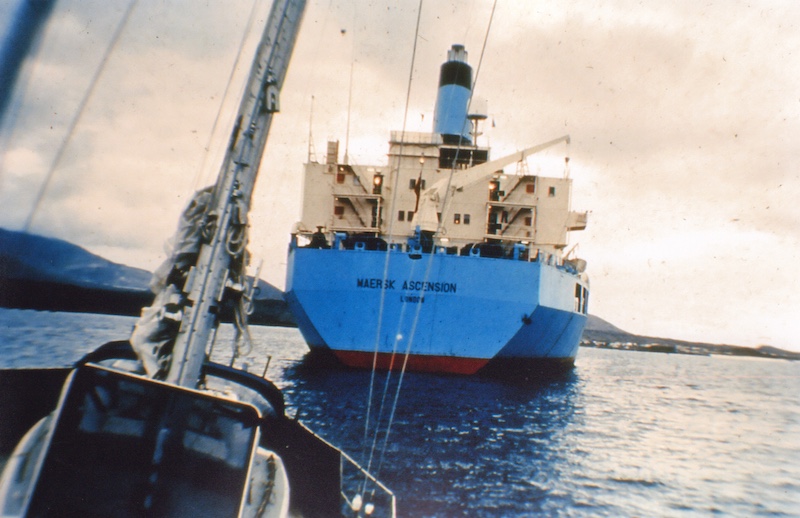
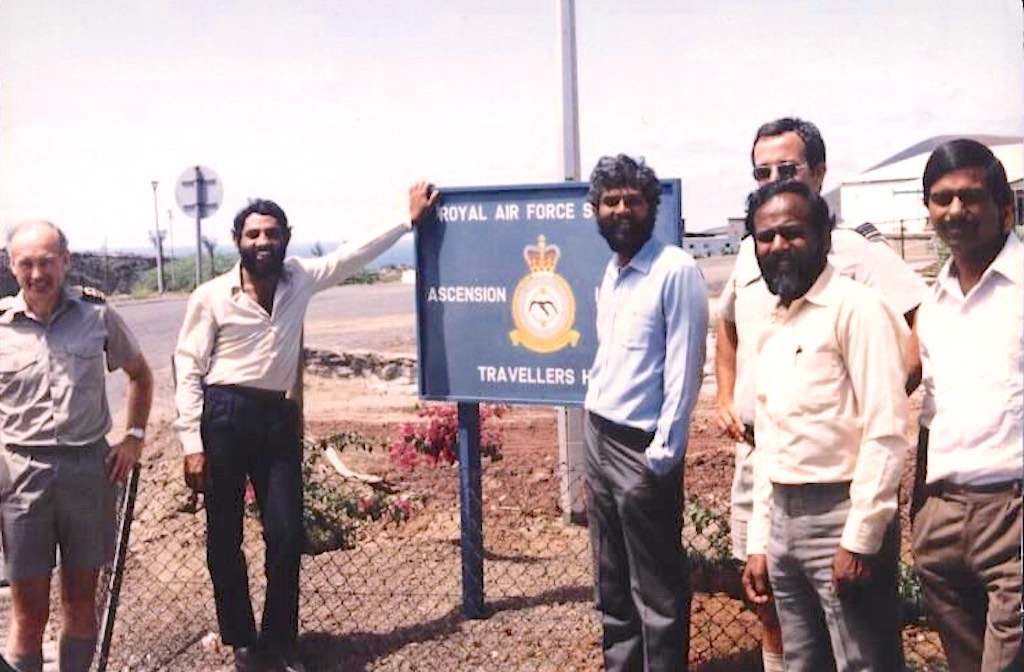
Ascension again is a very strange place. I think quite unique in the world. Belongs to UK, but most land is leased out to private organisations who run their own kingdoms literally. BBC has a major relay station there for Africa and Sough America with four 250 KW transmitters. We were conducted around the station. Both the power and the water supply to the island is by the BBC. The US bases are however on their own 110 volts supply. The USAF have a major airfield there, capable of taking all aircrafts, and is an alternate site for landing the space shuttle, we were told. The RAF uses the same airfield with its strength boosted since the Falkland War. The Royal Navy has a small fleet. The US plans to build a submarine base for nuclear subs there. The cable & Wireless have a major link in their world network and NASA has a major satellite tracking facility, which played a big role during the Apollo series of launches. The lunar buggy was physically tested here as the landscape is typically lunar – lava flows, craters, and stony outcrops in something like the Leh landscape. The initial US ICBM tests were tracked from here. And all this on a desolate island about 40 square miles on area, with almost no vegetation or water! Supplies are mainly airlifted by the USAF (three times a week), or by RAF Jumbos (twice a week). A tanker ship is permanently stationed off the island, to which we had secured Trishna. As the ships’ Captain was saying, there is enough fuel and supplies on the island to sustain a small war.
As usual, we located an Indian doctor, the only surgeon on the island, working under contract for BBC. He took us around, which was in addition to a Commander of the Royal Navy, detailed officially to look after us.
This should give you a fair up-to-date picture of our progress so far. While sailing, it has now become so much of a routine that all emergencies, storms etc are not thought about a second time, and reactions are more of a reflex. It may be climbing over an unmarked reef while entering Natal, blindly groping our way upto the mouth of the Amazon with its numerous sandbars and channels as the haze cuts off all landmarks and beacons navigating at night (not recommended in the Amazon, but we were in a hurry), or the more routine incidents like Bharti with his bunk falling on top of AK in the lower bunk on a rough night, a near collision with a fishing craft at night en-route to this place, batteries packing up at Belem……
From here we go to Georgetown (Guyana), to pick up our mail which is accumulating as we missed it at Mauritius, St Helena, and Ascension, and then to Trinidad where Bassi replaces Ahuja.
Hope I haven’t bored you with the details of our halts. At all halts, to whom so ever I write first, he gets a long letter from me, as it is one of the few things we look forward to. Average letter writing from each port is about 35 letters! Never written so many in my whole life all told.
How are……………
Yours sincerely,
AP
.
.
And so they sailed on, a long halt at Panama Canal and then across the Pacific to the Fiji Islands, Auckland, Sydney, Darwin, Bali, Singapore, Port Blair, Colombo and back to Bombay, to name only a few of the exciting ports of call.
These letters are but a portion of the stories by the crew. There were ten in all and each had his time on watch, his share at the helm and I am sure his own tales to write home about. And we reached only Panama with AP’s last letter. There was still an exciting half to go before reaching home. With time I am sure, like good sailors, their yarns will stretch, but personally I would love to sit and listen to all of it, even if stretched by a few additional nautical miles, for after 30,000 nautical miles one must give the heroes their due.
~ Maj S Ravi Shankar
.
The Aftermath
.
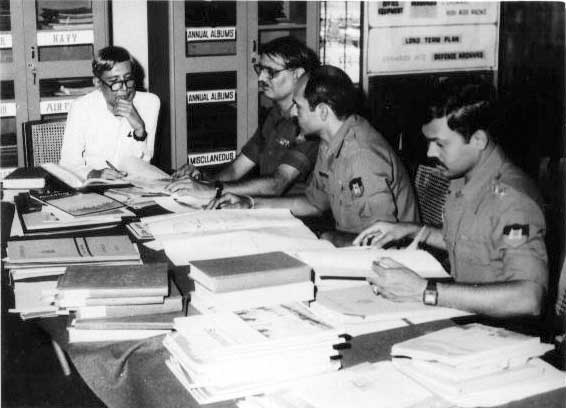
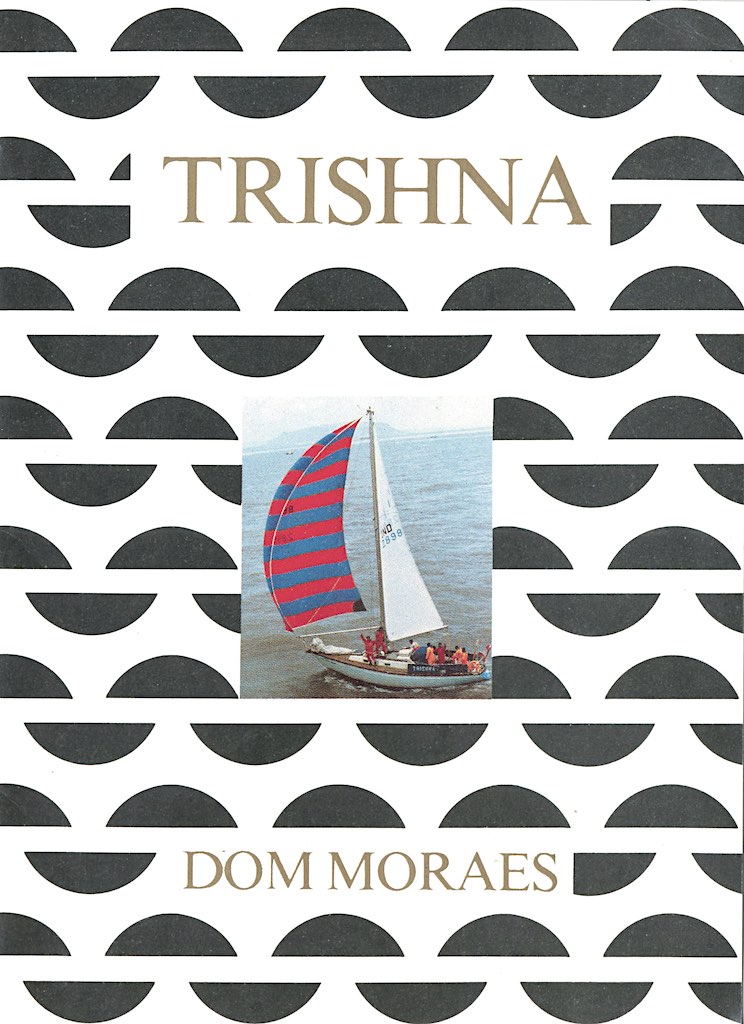
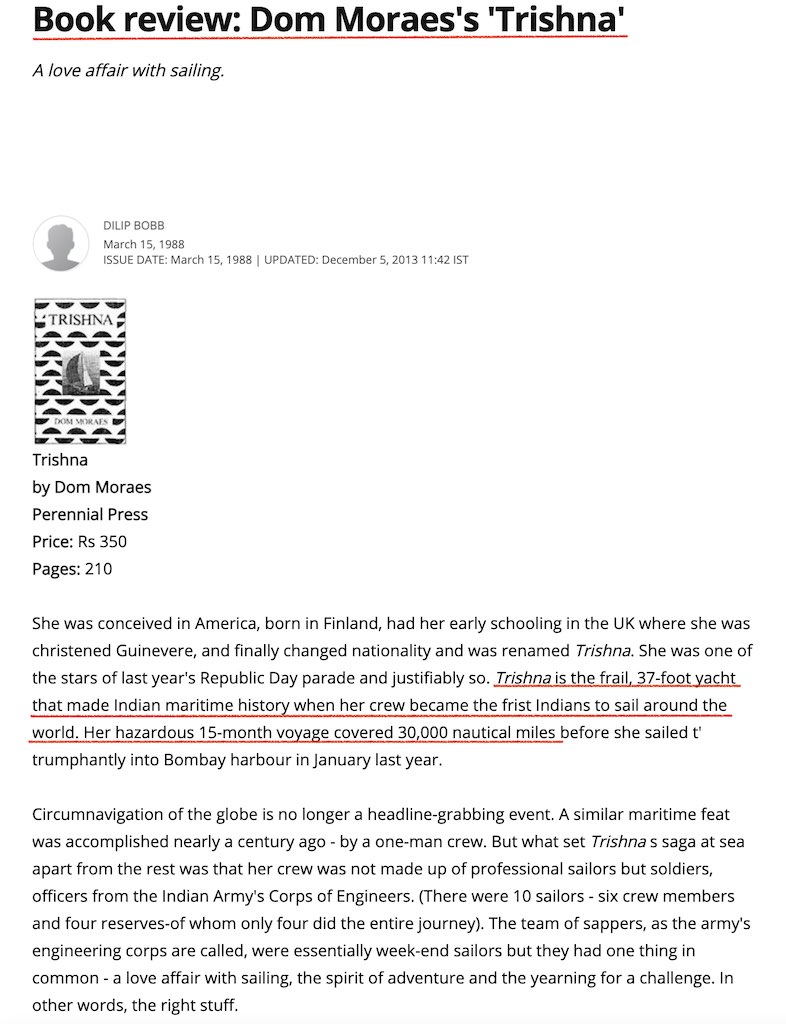
Celebrated author, Dom Moraes, had been following the voyage with interest and on its successful culmination offered to write a book on the voyage. His offer was gladly accepted and after interacting with the crew and their family members for three months at CME Pune, the book was published in 1988. The book received rave reviews and in a reviewer’s words “Trishna is, in essence Moraes’ personal tribute to the heroes whose courage and ability inspired him to undertake what, for him, is a new literary voyage.”
.
.
.

.
.
The Government honoured the historic voyage by including Trishna in the Republic Day Parade of 1987. Having reached Mumbai on 10 January 1987, the move of the boat to Delhi and the design and construction of a float in the short time available was in itself another adventure. But in the true spirit of the Army, was completed successfully and with elan, receiving the loudest cheer from the spectators during the parade.
.
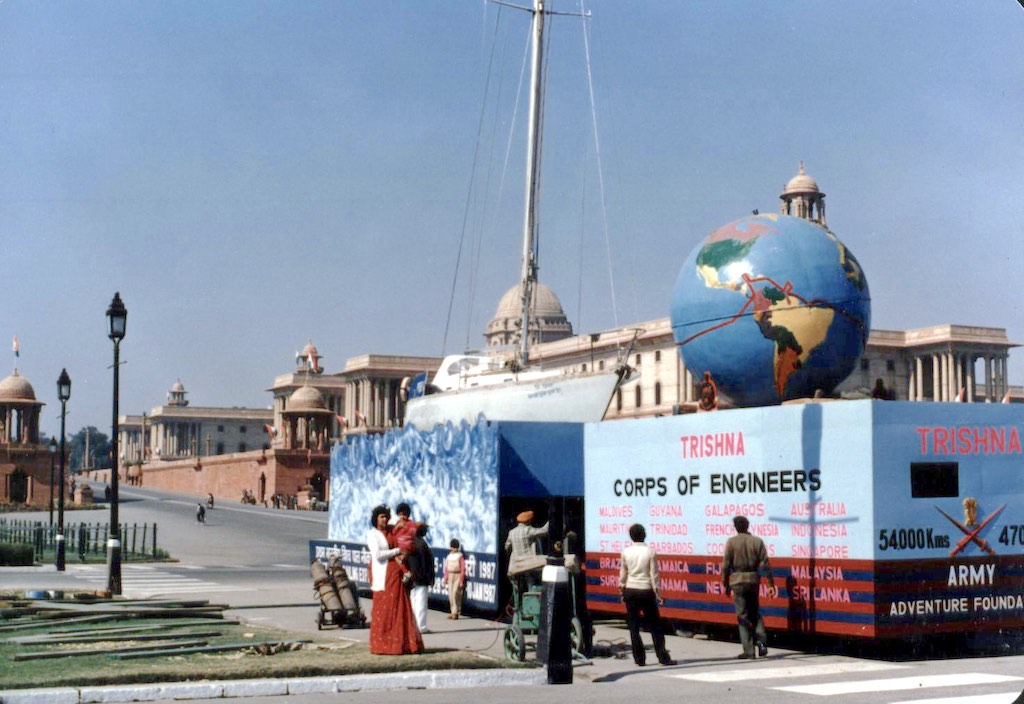
.
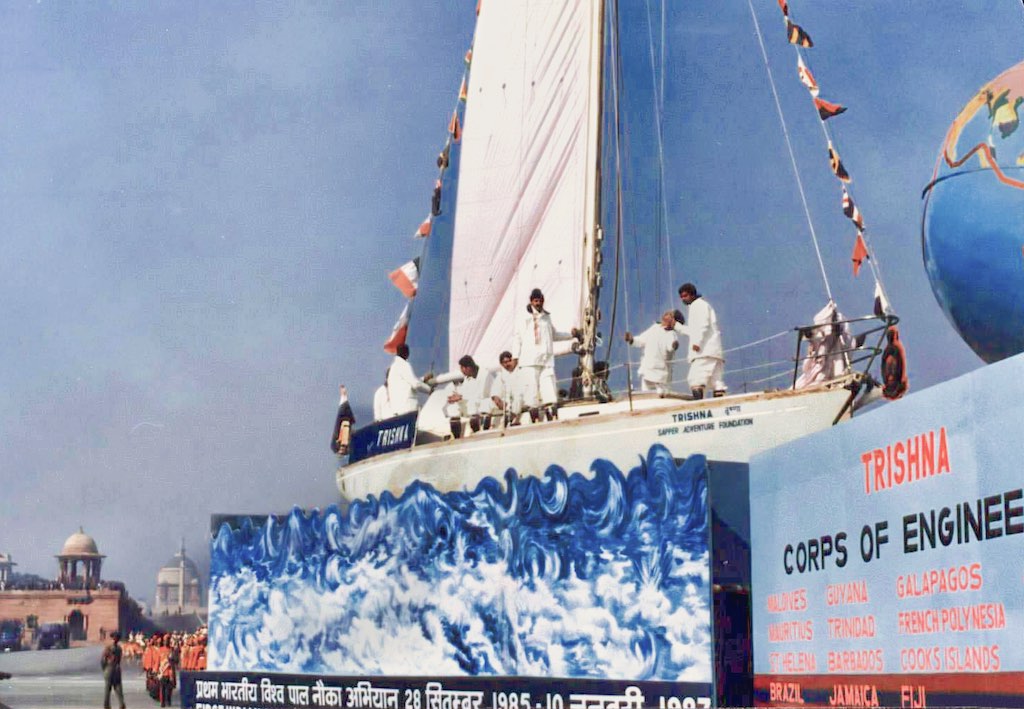
.
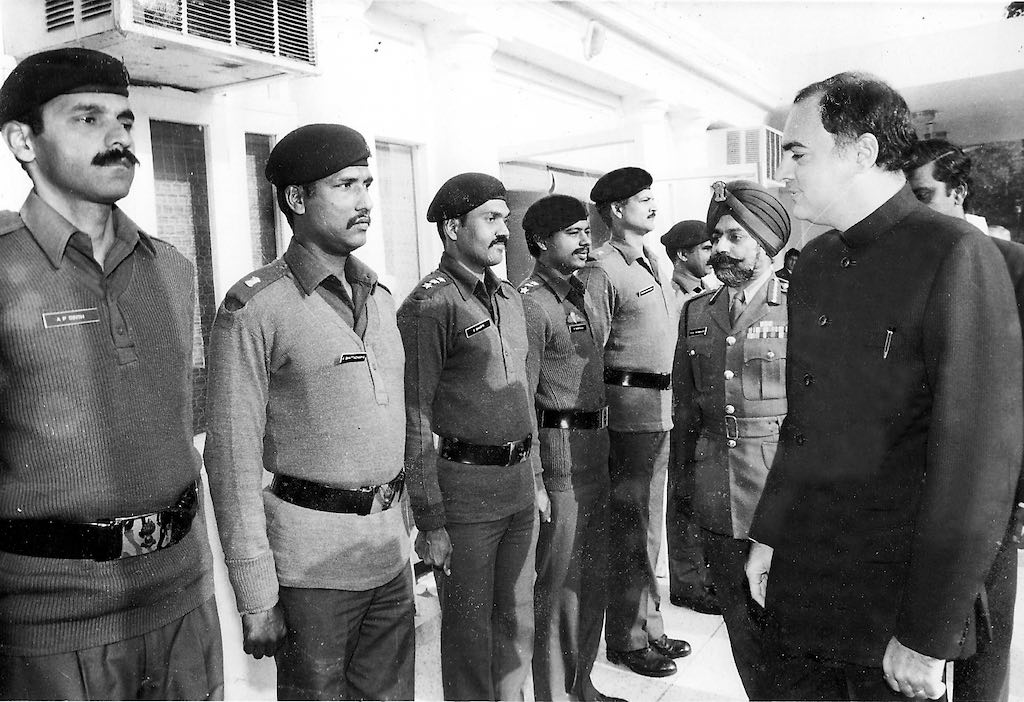
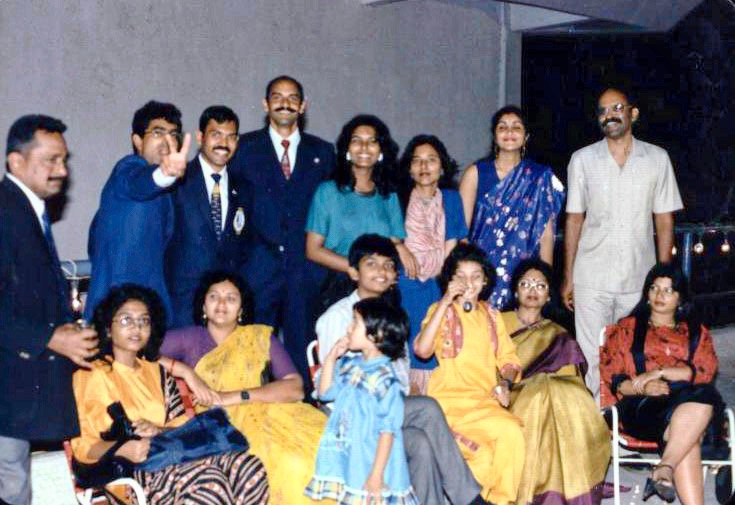
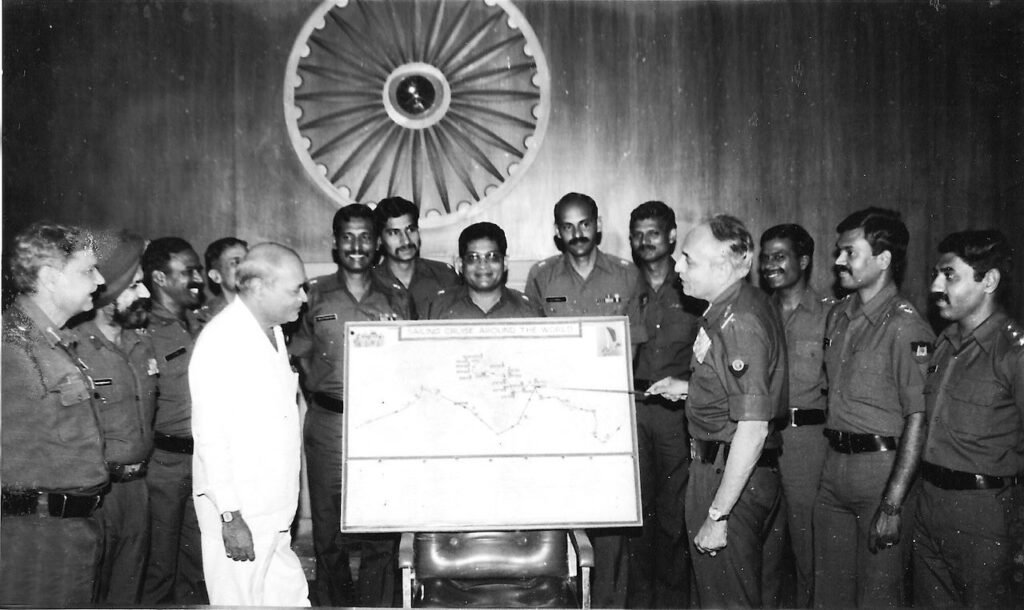
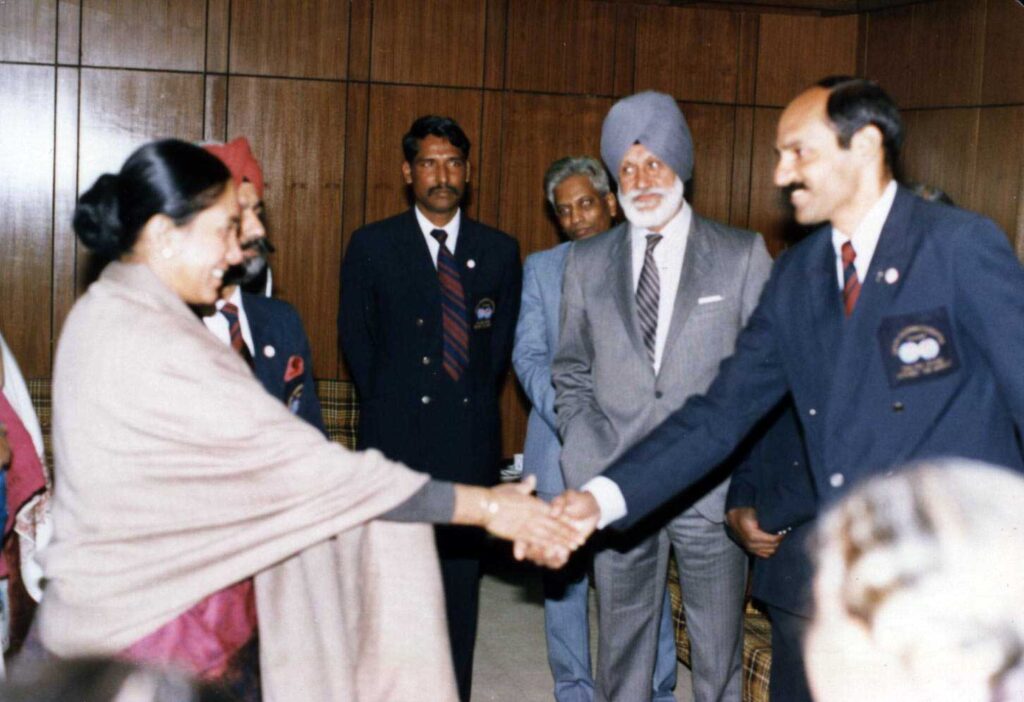
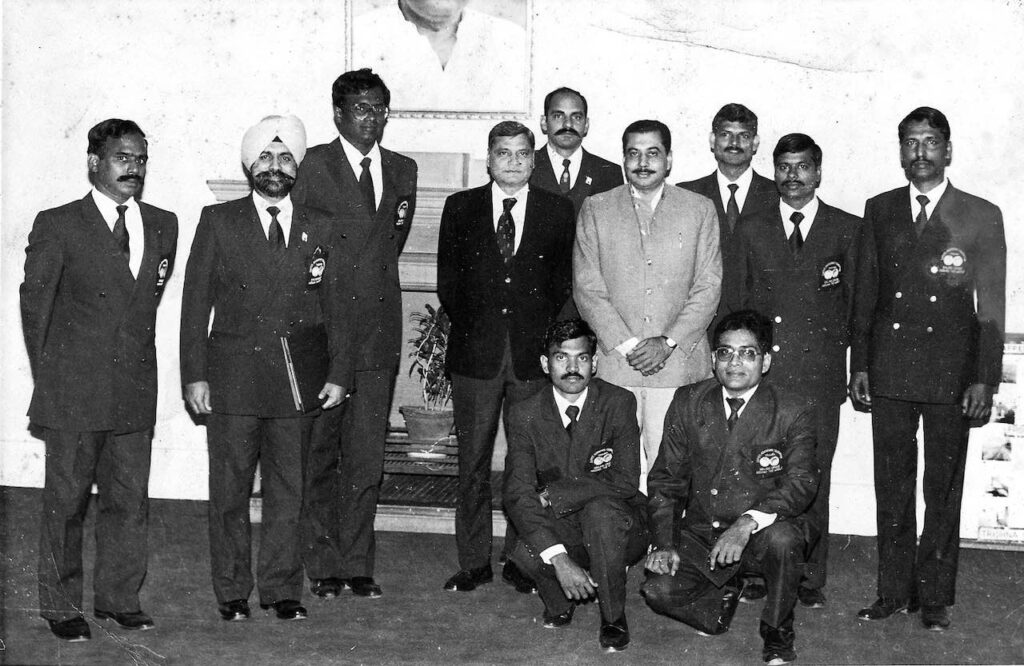
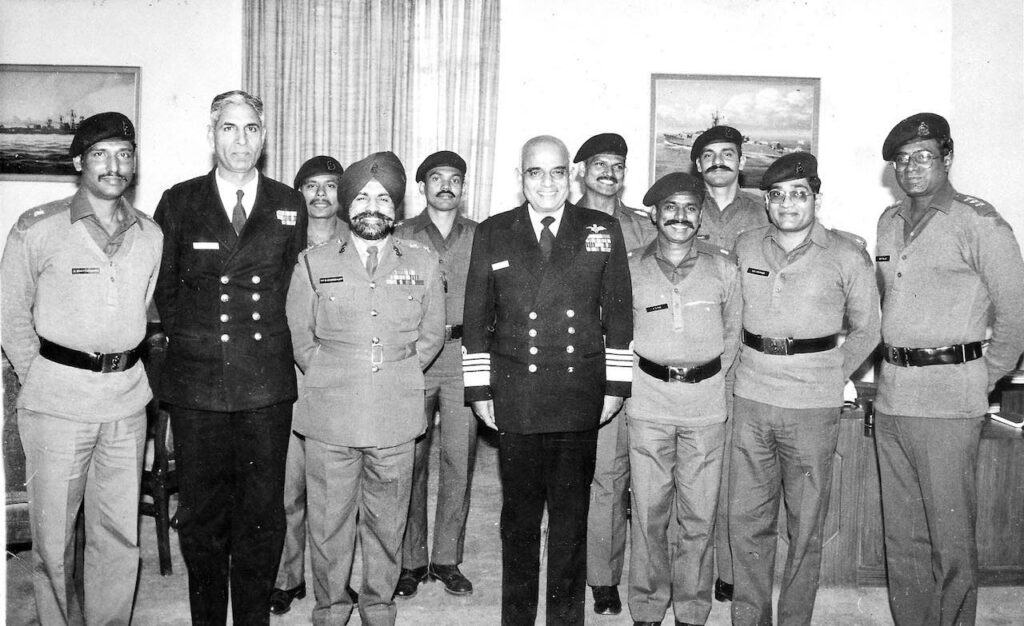
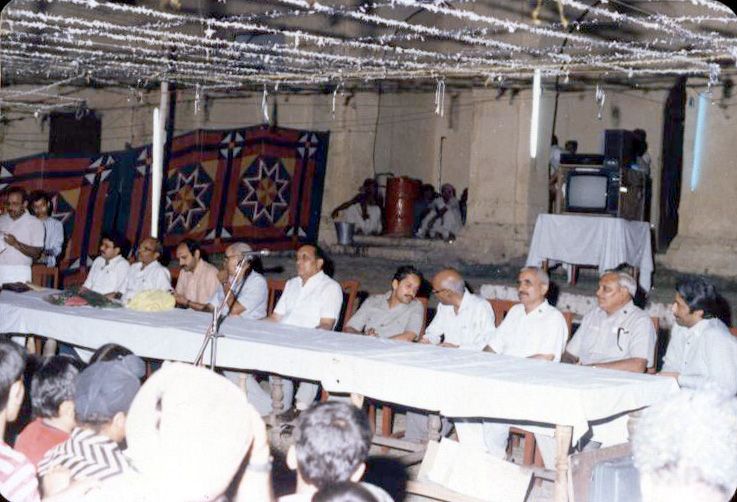
With the crew in Delhi for the Republic Day celebrations, they were felicitated by numerous VIPs in the capital.
.
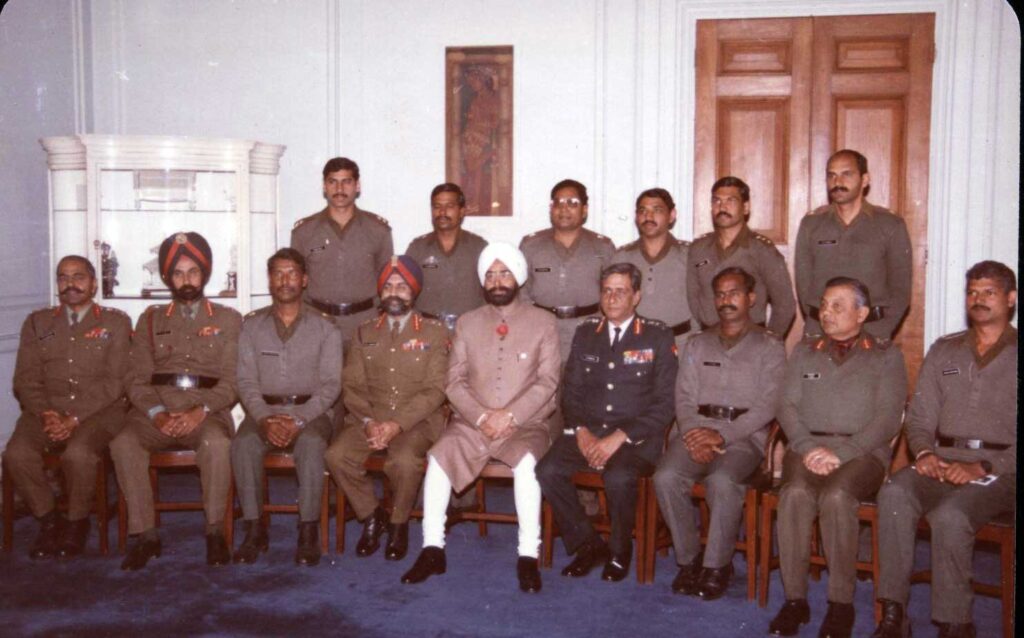

.
The voyage by Trishna generated tremendous enthusiasm all across the country. Media, both print and TV, covered the progress of the boat across the oceans closely and the boat’s name became well known. To further enthuse the youth of the country to take to adventure activities and to publicise the Army as an attractive career, the Trishna crew were divided into four groups, which then travelled to the four directions delivering talks at Service units & institutions, local colleges, and schools across the country.
.
.
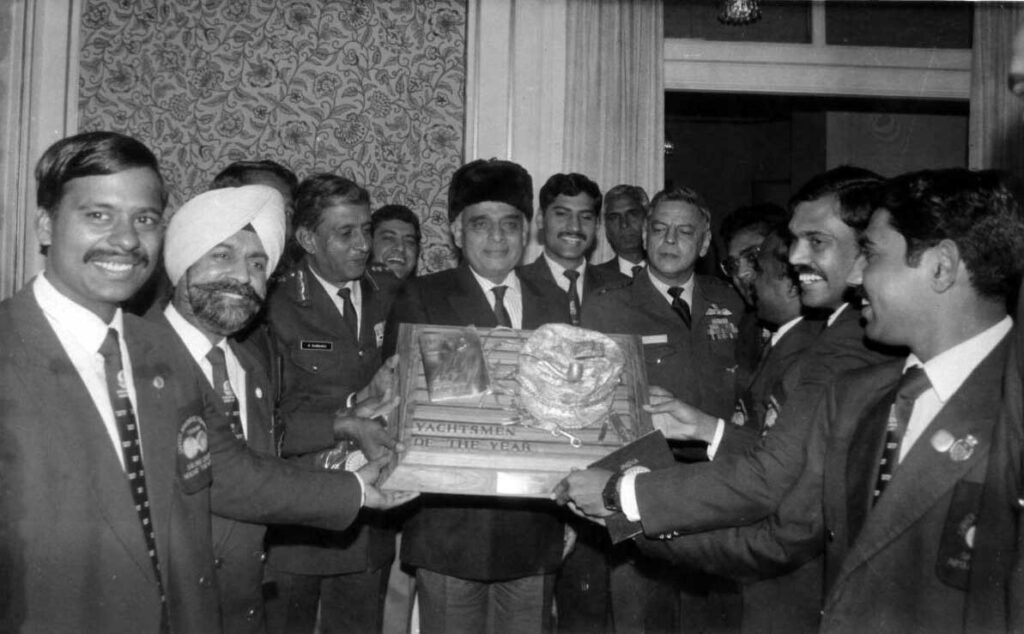
The Yachting Association of India bestowed the “Best Yachtsman of the Year” Trophy on the crew of Trishna for their historic voyage of being the first Indians to circumnavigate the globe. The trophy was presented to the crew members at a special function in which the three Service Chiefs were present.
.
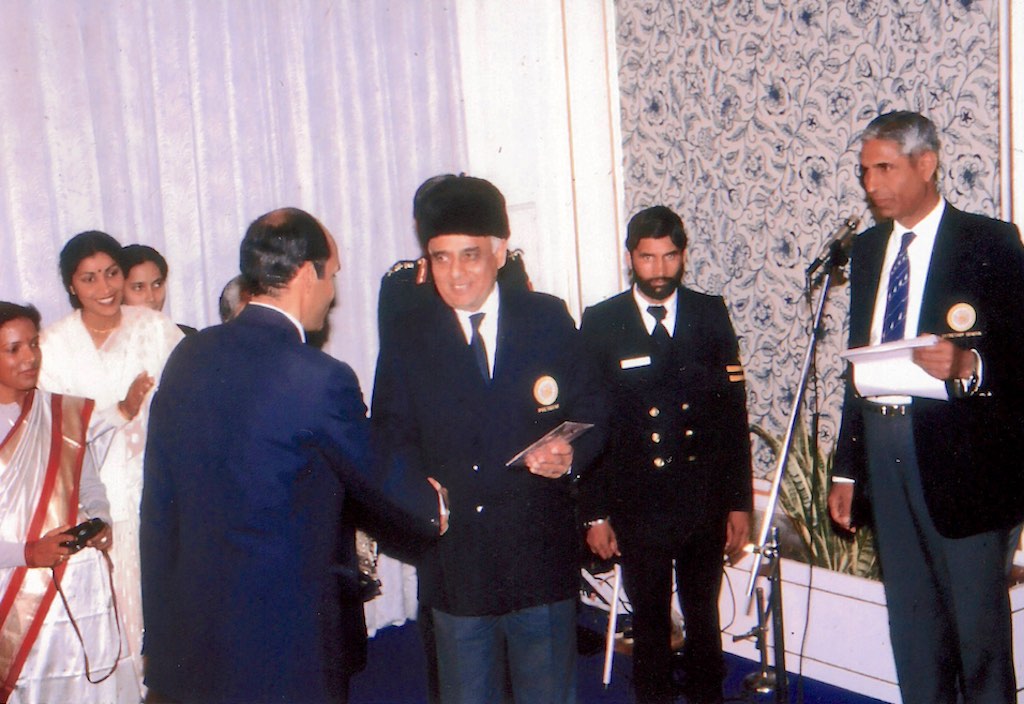
.
The President of India honoured the crew members through awards which were announced on Republic Day 1987.
.
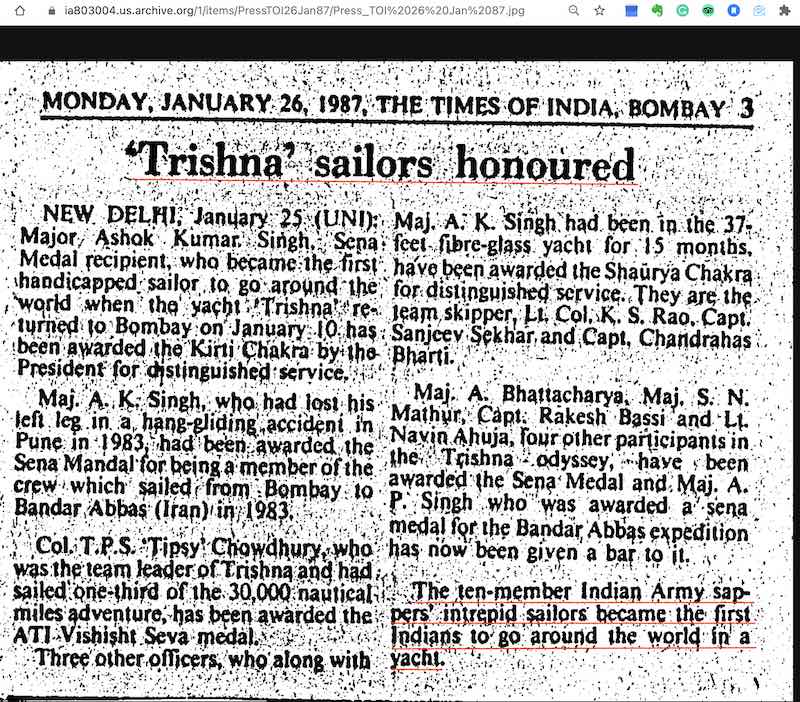
.
The Ocean Cruising Club, United Kingdom, recognises sailing feats by sailors in small boats (limited to 70 feet in length), feted the Trishna crew for the “First Indian Circumnavigation” by conferring the OCC Award of Merit for the year 1987 to Colonel Chowdhury & the Crew of Trishna. The award and citation can be seen at the link below:
Colonel Chowdhury & the Crew of TRISHNA – The OCC Award of Merit – 1987
.
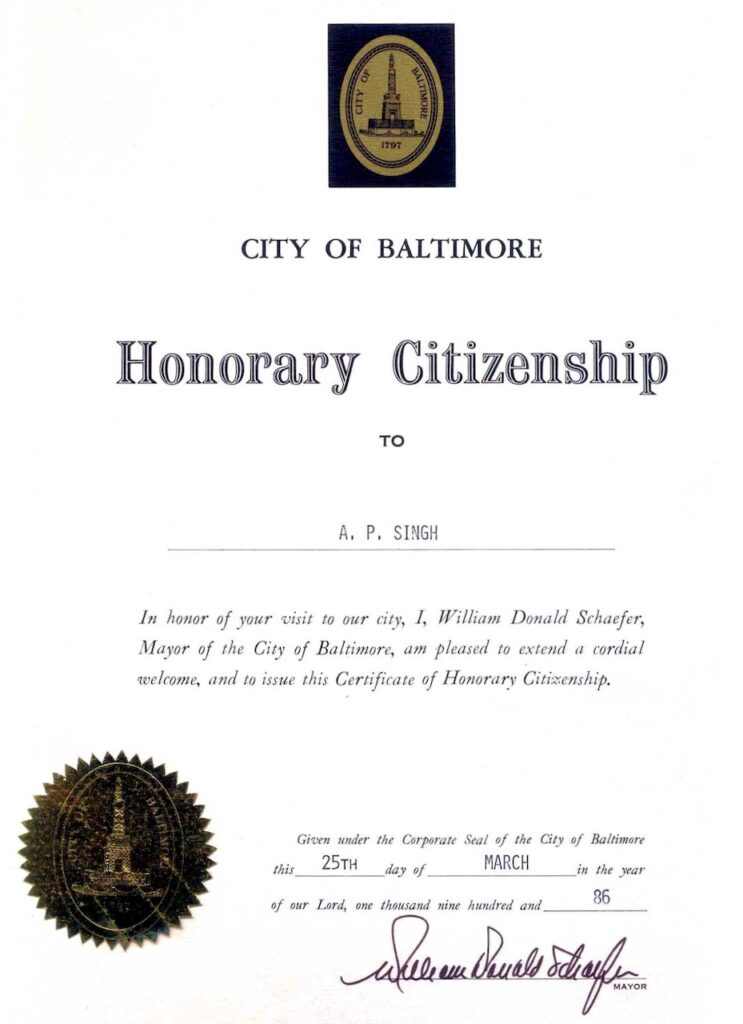
During the halt at Panama, which was around mid-way of the voyage, the crew made a short dash to the United States to meet friends/family. Due to the enormous media coverage which the voyage has attracted, the Indian community organised for the crew members to be honoured with an Honorary Citizenship of the City of Baltimore. An unexpected honour for us.
.
.
Flora and Fauna
.
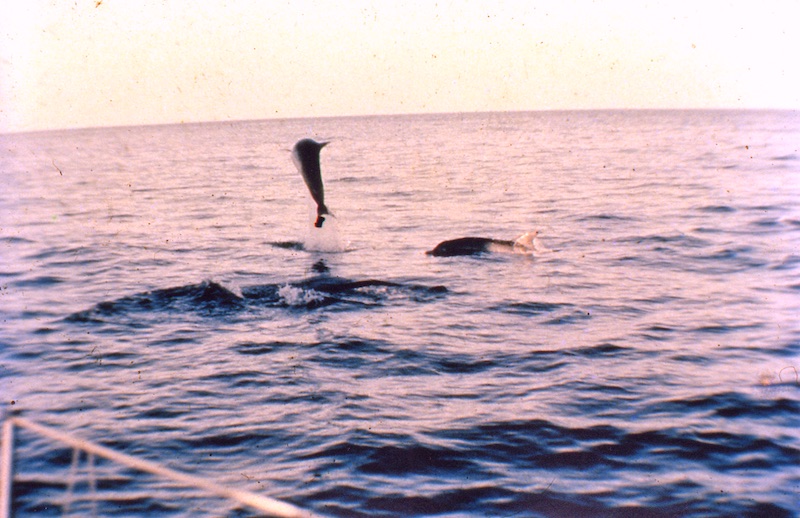
Sealife was observed in plenty during the voyage. One of the prettiest sights at sea were the schools of dolphins and porpoises following the boat for hours, displaying their acrobatics in the water and out of it. On occasions, the sea was covered with them as far as the eyes could see.
.
.
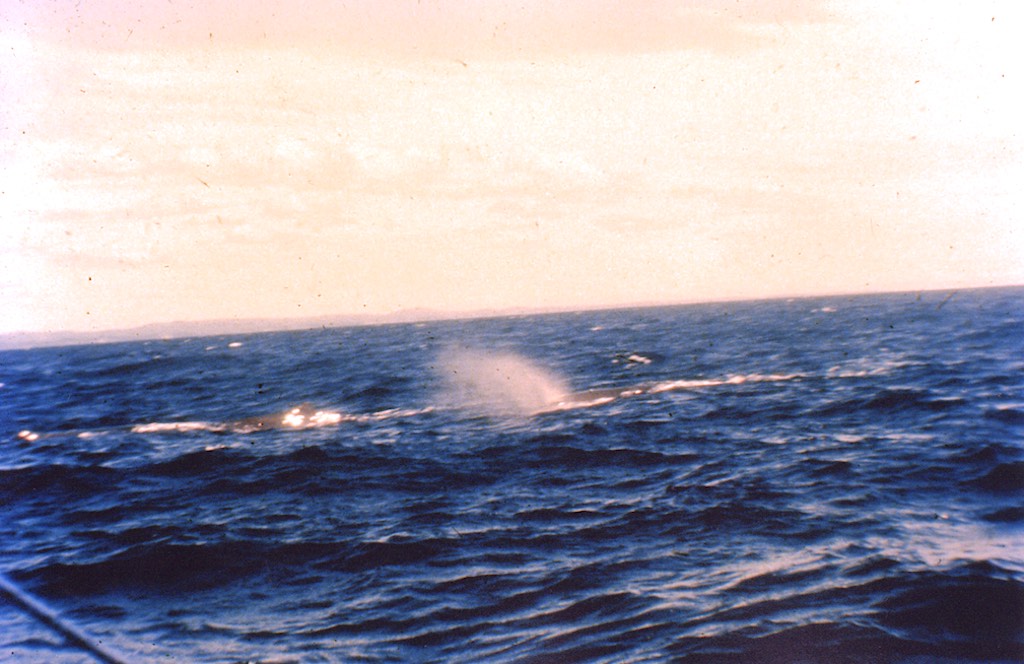
Whales were spotted on many occasions and were always a wonder to behold. Enthralling the crew with memories of tales of adventures at sea read during their childhood.
On a few occasions, sharks were spotted, distinctive with the triangular fin skimming across the water surface. The first time was after leaving Aden and heading for Mumbai, when Trishna was sailing from the UK on her first voyage.
.
.
Flying fish were also observed in their hundreds, skimming over the water surface. At night they were attracted to the yacht by the lights. This resulted in many landing on deck and hitting the duty crew on many occasions. They made delicious snacks.
.
Film on Trishna
.
When Trishna arrived at Campbell Bay, Nicobar Islands, a film crew was flown in to commence making a film to record the voyage for posterity. The shooting continued after the boat reached Bombay; to this was added the sailing videos which we had taken while sailing. The quality of footage from the small video camera was average, but it could capture some “live” scenes. Though, when the weather was bad, there was no question of using the camera! To watch the film, one can click on the link below:
.

To protect your personal data, your connection to YouTube has been blocked.
Click on Load video to unblock YouTube.
By loading the video you accept the privacy policy of YouTube.
More information about YouTube’s privacy policy can be found here Google – Privacy & Terms.
.
Epilogue
.
Trishna went along to sail many voyages after her historic circumnavigation. Further, over the years many Sapper sailors learned the basics of boat handling by conducting short capsules. Trishna remained moored off the Naval Sailing Club at Colaba, Mumbai, since her draft required a minimum water depth of six feet.
.
.
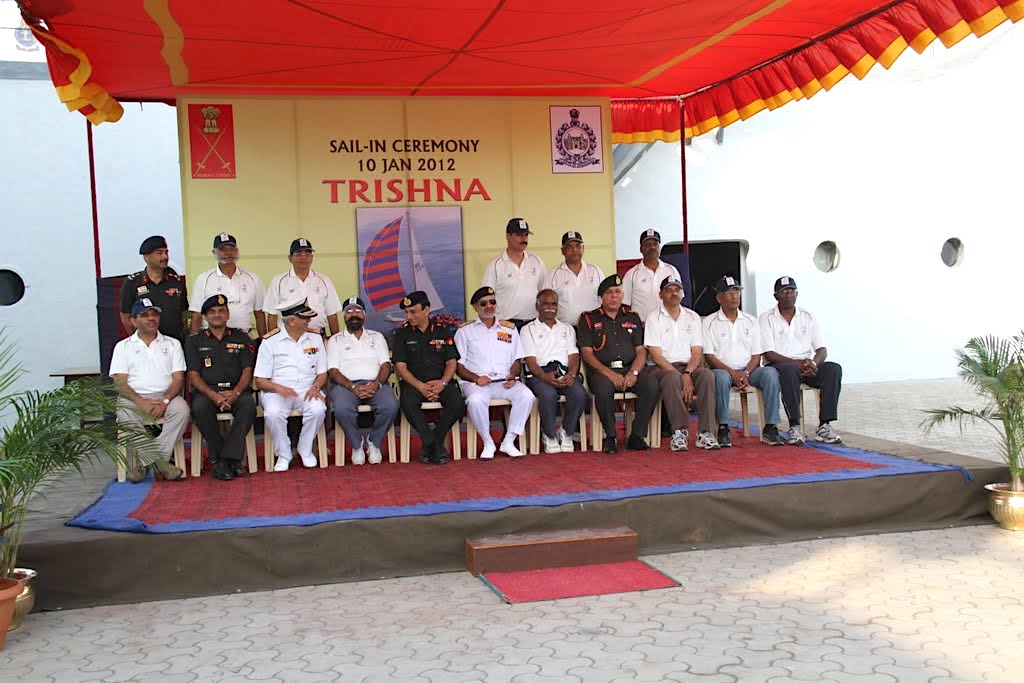
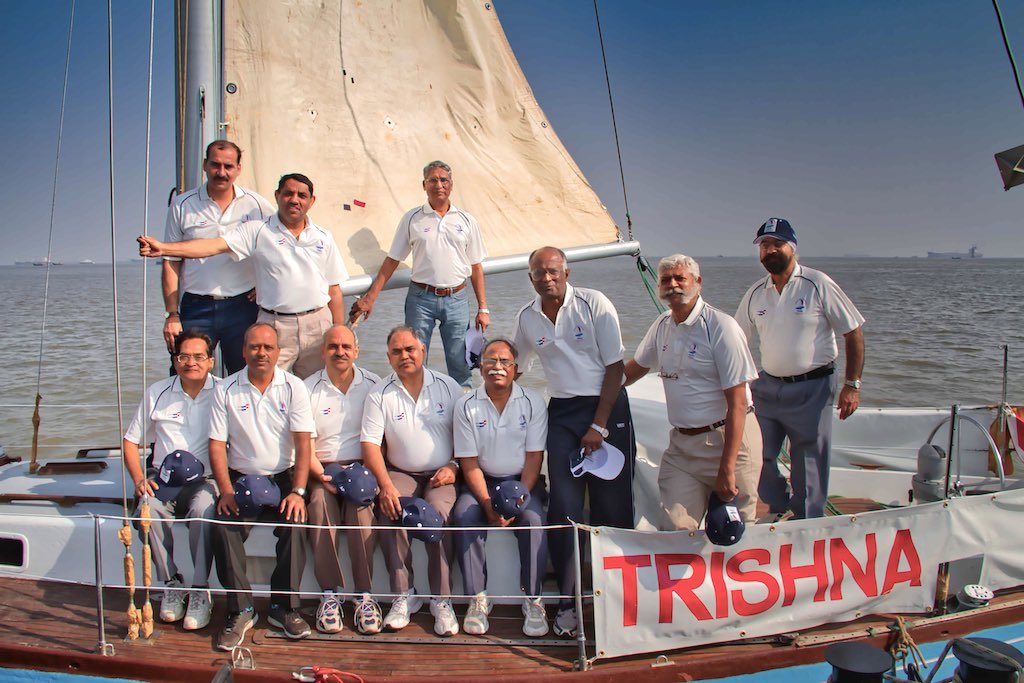
The crew celebrated the Silver Jubilee of the historic circumnavigation in 2012, and they assembled from across the globe to participate in the function.
.
.
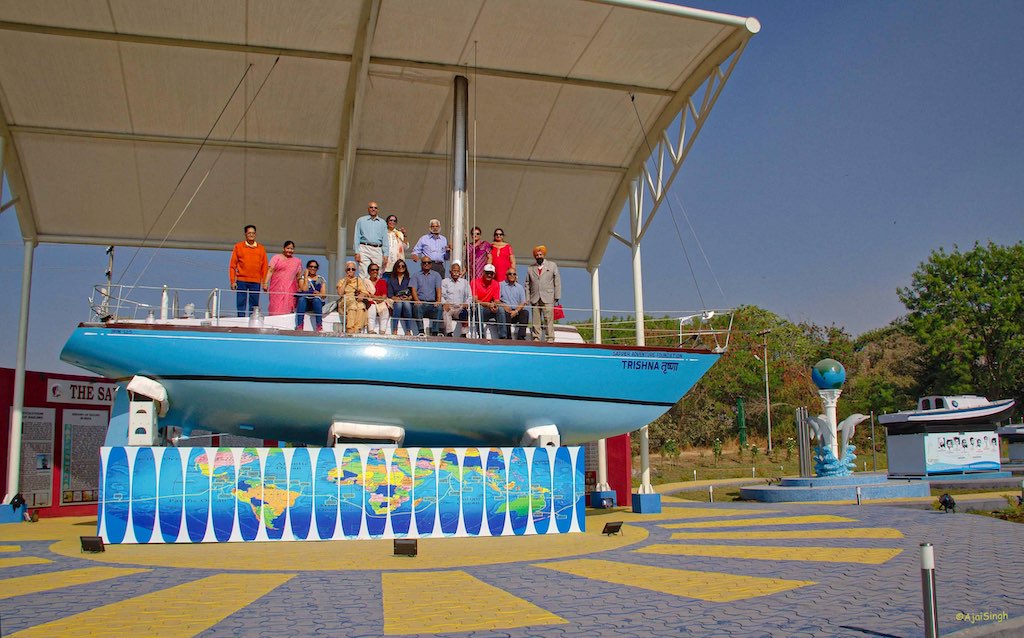
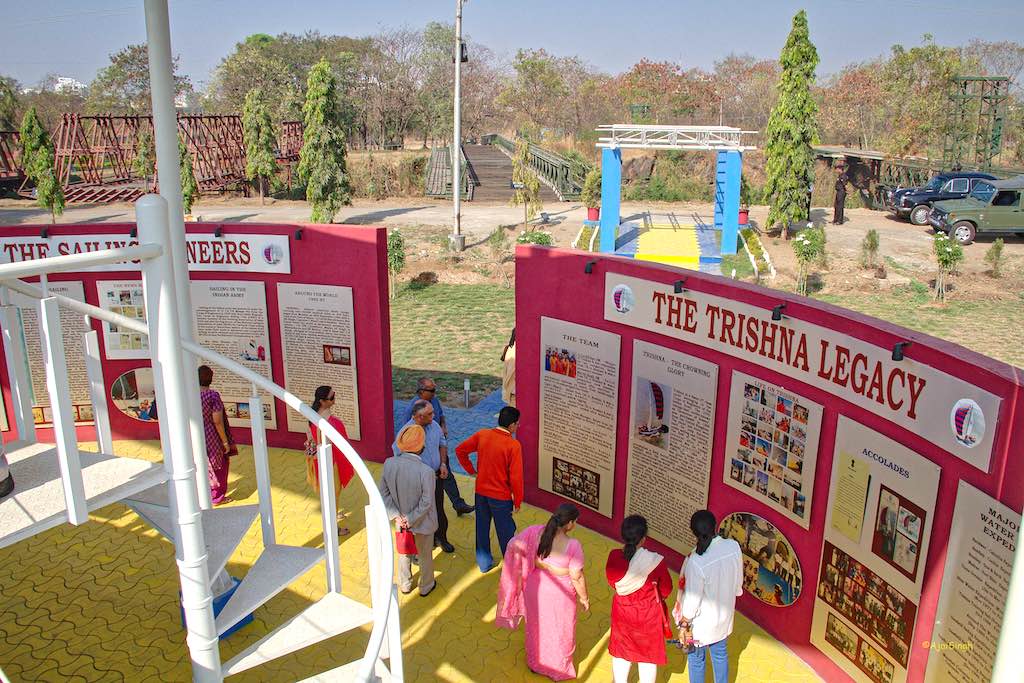
Ultimately, though “the spirit was still willing, the flesh became weak”, and after 30 glorious years of sailing under the burgee of the Sapper Adventure Foundation/Corps of Engineers Sailing Club, the 45-year-old boat was transported to her final resting place at the Corps of Engineers Equipment Museum at the College of Military Engineering, Pune, the alma mater of the Sappers. It now enthralls visitors in the beautifully appointed museum with tales of adventure and valor of all those who were fortunate enough to have sailed in it.
.
Conclusion
.
The Expedition was an experience of a lifetime. There were many joyous as well as anxious and dangerous moments when the crew was in imminent danger. One of the major factors responsible for their being able to overcome these hazardous moments was the discipline and determination instilled during their training and Service background. Another lasting experience was meeting people from different nationalities and cultures across the world and interacting with them, many times in sign language. It would be grossly unfair to underestimate the contribution and sacrifices made by the family members of the crew during their long absences in such unpredictable circumstances, often without any news till they reached the next port. Success in such a venture could not have been achieved without this crucial support, especially when many crewmembers had small children, some even born while their fathers were out at sea.
.
To read more about Trishna on Wikipedia, click on the link below:
Trishna – the boat
Wikipedia also has a page on the First Circumnavigation by Indians in a sailboat. To view it, click on the link below:
First Indian Circumnavigation
Wikimedia Commons has a compilation of photographs of Trishna’s First Indian Circumnavigation. These can be viewed at the link below:
Wikipedia – First Indian Circumnavigation photo album
.
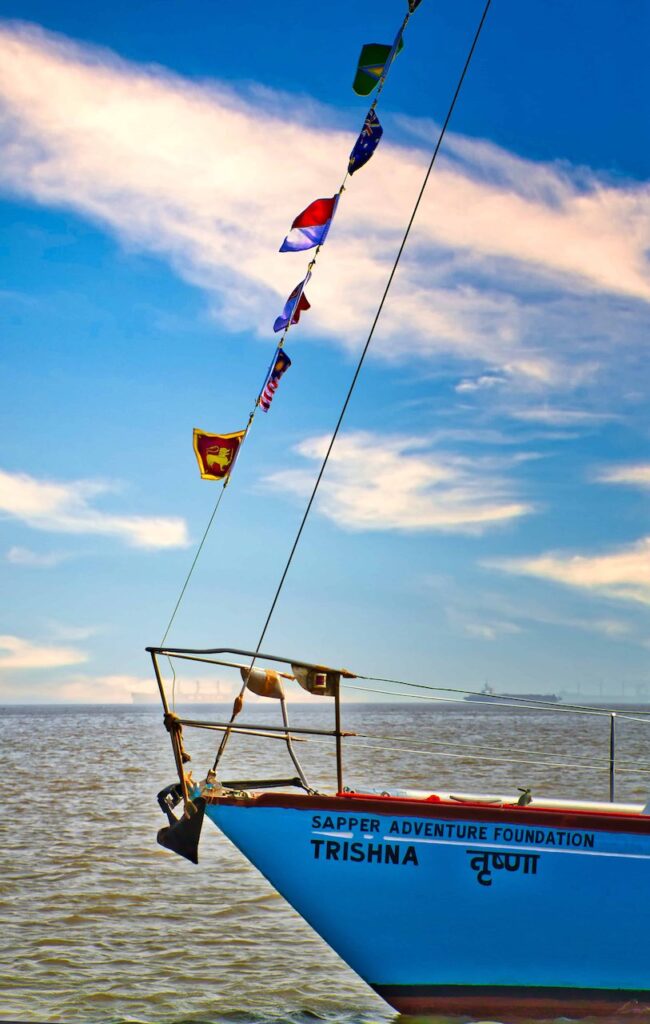
Ten Army Engineers in a sailboat girdled the globe – 30,000 nautical miles (~54,000 km) – in less than 16 months creating Indian maritime history. They are the first Indians to circumnavigate the globe in a yacht. No words can describe the hazards faced by the intrepid sailors on board ‘Trishna’, so that they may fulfill the ‘thirst’ – which is the Sanskrit meaning of Trishna – of sailing around the world.
.
.
The sea is a great mistress; she is a magnificent lady of great stature. But as I have found out, you must treat her with enormous respect; for, she is inclined, if you do not do so, to suddenly smack you with a back-hander – if ever you get too familiar with her – which can be quite disastrous.
.
You must now be crossing the Pacific, and that would be your greatest hurdle, for that ocean can be imperious and very unrelenting. It is an uncharitable bit of water but I am quite sure, the whole world will be watching you and praying for you, and so you must come through.
Admiral R.L. Pereira, Former Chief of Naval Staff, in a letter dated 18 March 1986
.
.
.
Talk Show
.
Fauji Days recorded a talk show with some of the crew members, to relate their experiences of the voyage. The recording was done in January 2023 at Chandigarh and has been published in two parts. These can be viewed as given below:
.
Further Reading
.
I have written blogs on my sailing adventures, which can be read at the links below:
1) Albatross – The Seabird that Conquered the Seas
2) Ordeal or Adventure? The Voyage from Gosport, UK to Bombay
.


7 Responses
Hello “Admin”, I read your article about “The First Circumnavigation by Indians in a Sailboat,” which is impressive. I can’t say how much I love to read it, your information is 100% original, and I appreciate your work. I am also a travel writer and provide information about travel and places.
Thanks for taking time to go through the blog. You should find a huge amount of information of your interest in my blogs!
This is top-notch! I wonder how much effort and time you have spent to come up with these informative posts. Should you be interested in generating more ideas about Food Delivery, take a look at my website Webemail24
Thanks. All posts take time, as you would be aware 🙂
Great post! I learned something new and interesting, which I also happen to cover on my blog. It would be great to get some feedback from those who share the same interest about Website Design, here is my website Seoranko Thank you!
Thanks. Unfortunately, your website is in German, and I could not find any option to change to English.
Very good article on our Expedition. All you Folks must read it
Love. Brig TPS CHOWDHURY, Team Manager and Crew