

An “outstanding example of Hindu architecture” and the “supreme climax of Indian architecture.”
~ Percy Brown
……..no facets of the Indian temple are the same; every convolution of every scroll is different. No two canopies in the whole building are alike, and every part exhibits a joyous exuberance of fancy scorning every mechanical restraint. All that is wild in human faith or warm in human feeling is found portrayed in these walls……..
~ James Fergusson (1876)
Continuing the description of my visit to the Hoysala temples in my initial blog, this is a follow-up post on the Hoysaleshwara Temple.
.
Hoysaleshwara Temple is a 12th-century Shaivite temple, the largest monument in Halebidu, the former capital of the Hoysala Empire. It is unique for the richness of the carved friezes that adorn its exterior walls, of great finesse and beauty. There is no other equivalent of such an artistic achievement across the country.
.

.
The temple was built on the banks of a large man-made lake and sponsored by King Vishnuvardhana of the Hoysala Empire. Halebidu was originally called Dvarasamudra (or Dorasamudra), a name derived from two Sanskrit words “Dvara” (gateway, door) and Samudra (ocean, sea, large water body).
.

.
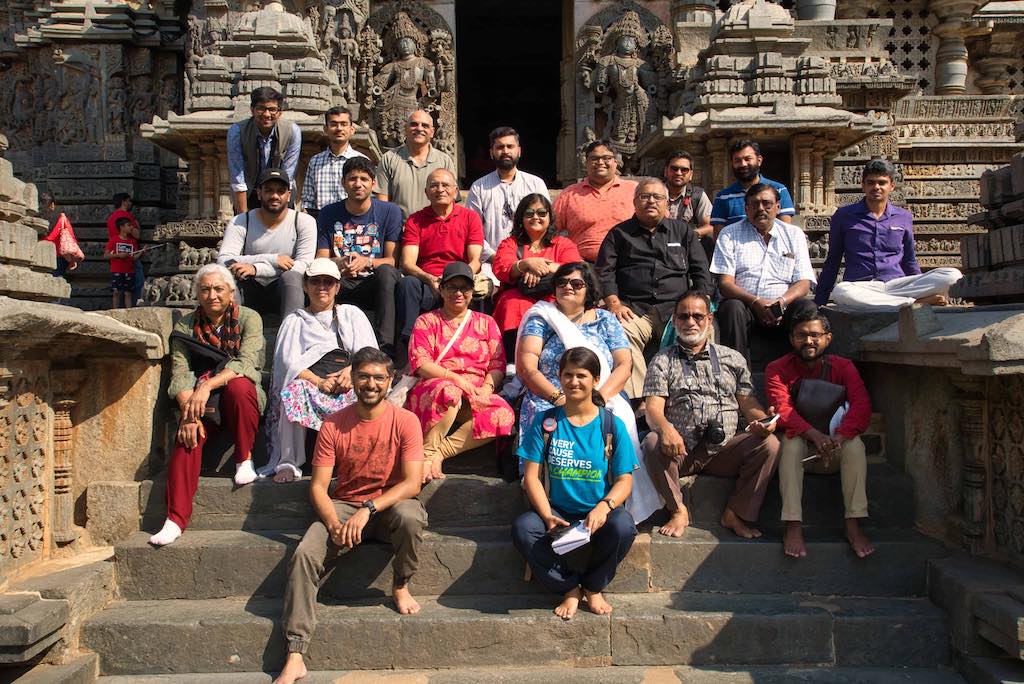
Our visit to this hallowed site was one of the most amazing trips I have made anywhere! The grandeur of the temple and profusion of such unmatched sculptures was beyond imagination, totally overwhelming everyone in our group. As are the masterpieces beyond words to express, so are they beyond photographs to be captured. Only a physical experience can absorb the breathtaking beauty of the place. And then one realises that for the master craftsmen who made the sculptures, it was not just another assignment but the result of their divine offering from the very depths of their being.
.
.
The temple’s construction started around 1121 CE and was completed in 1160 CE. It was principally constructed under the patronage of wealthy local Shaiva merchants and aristocrats.
.
.
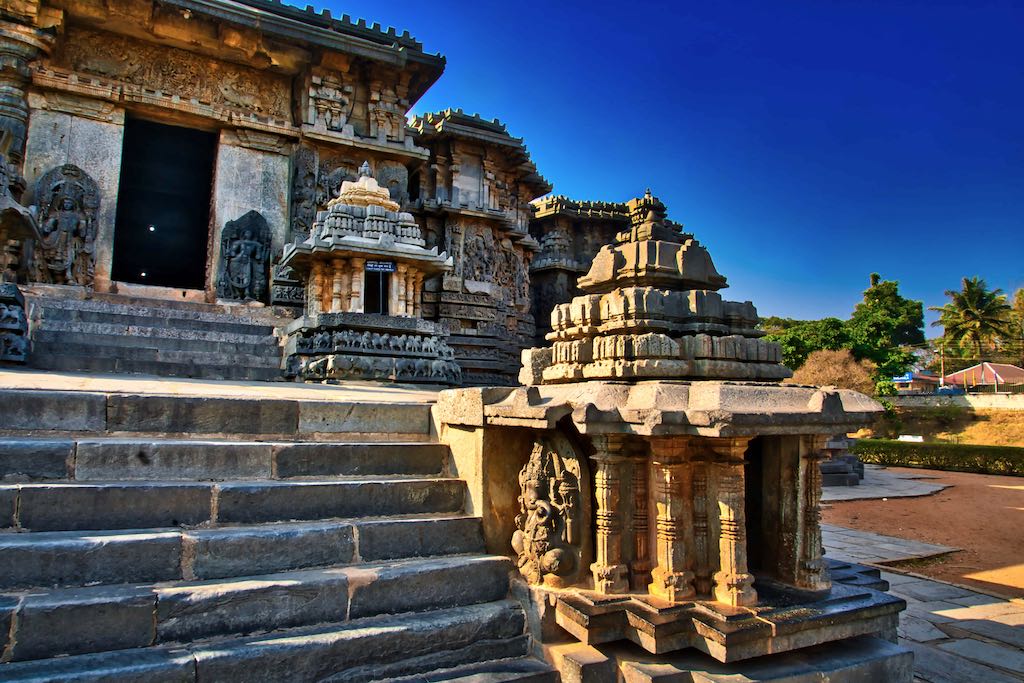
The breathtaking architectural style and grandeur of the temple add to its mystique and classifies it as one of the most unique stone-carved monuments in the world.
.
.
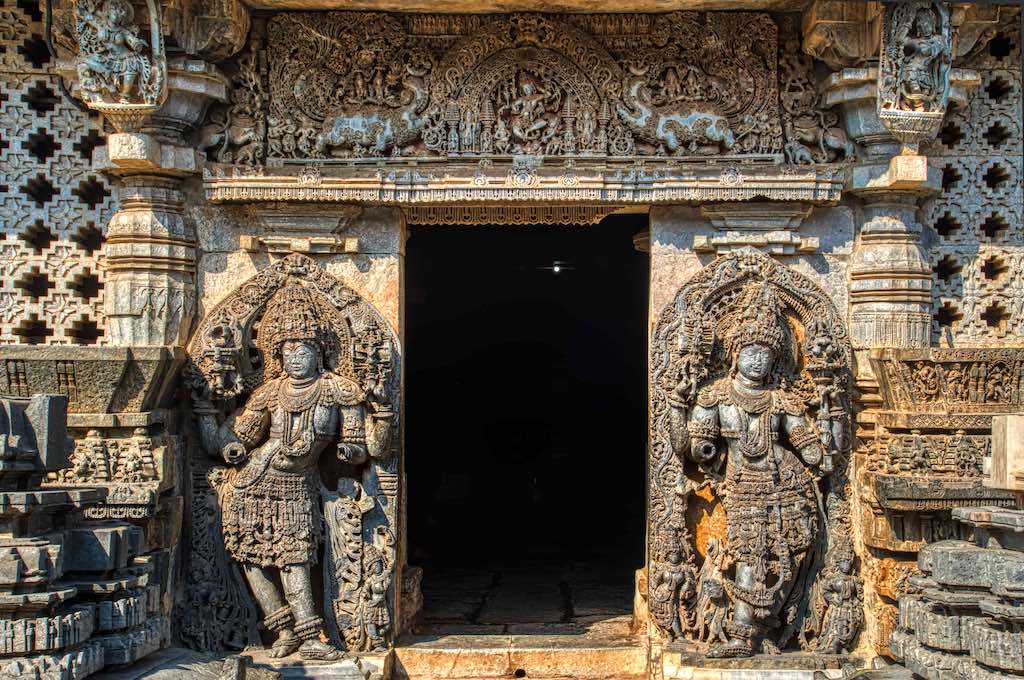
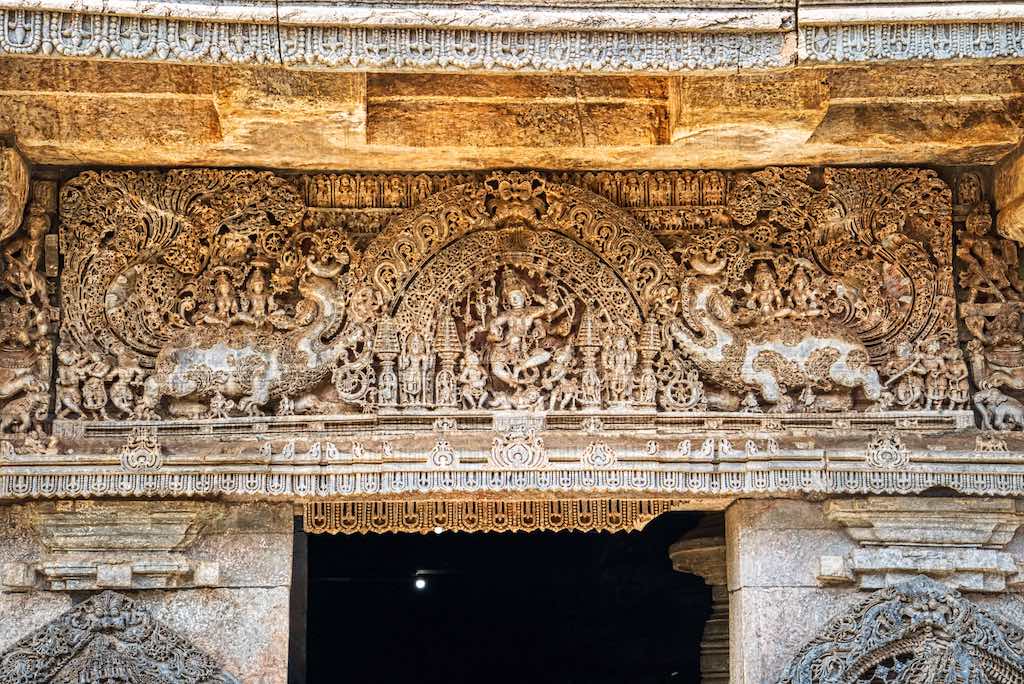
The lintels of the entrance gates feature the most beautiful carved frescoes of the temple. Of such intricate beauty that takes one’s breath away!
.
.
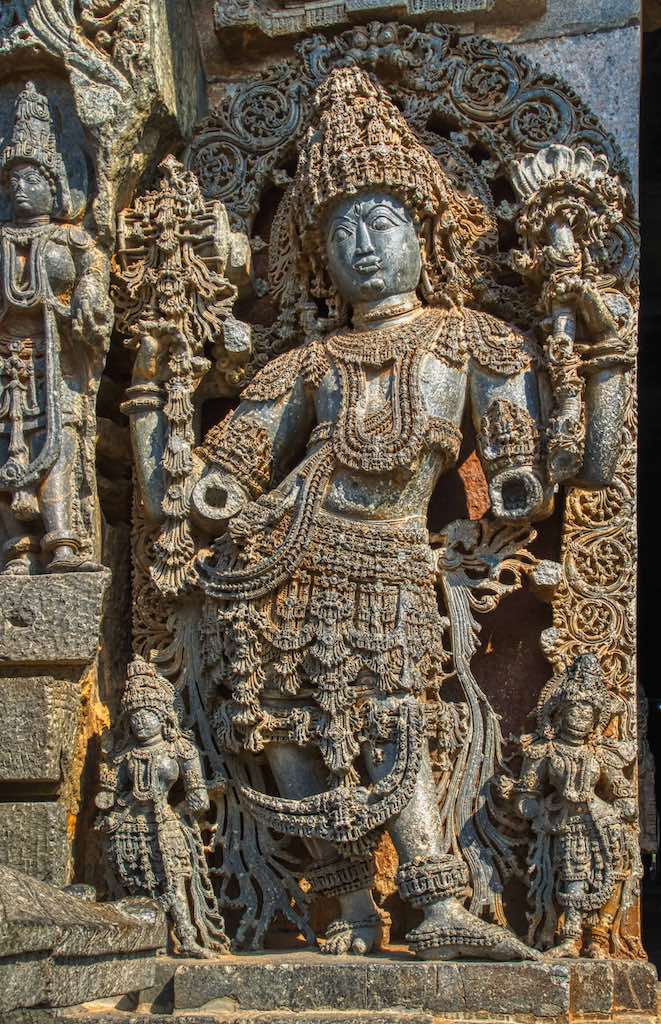
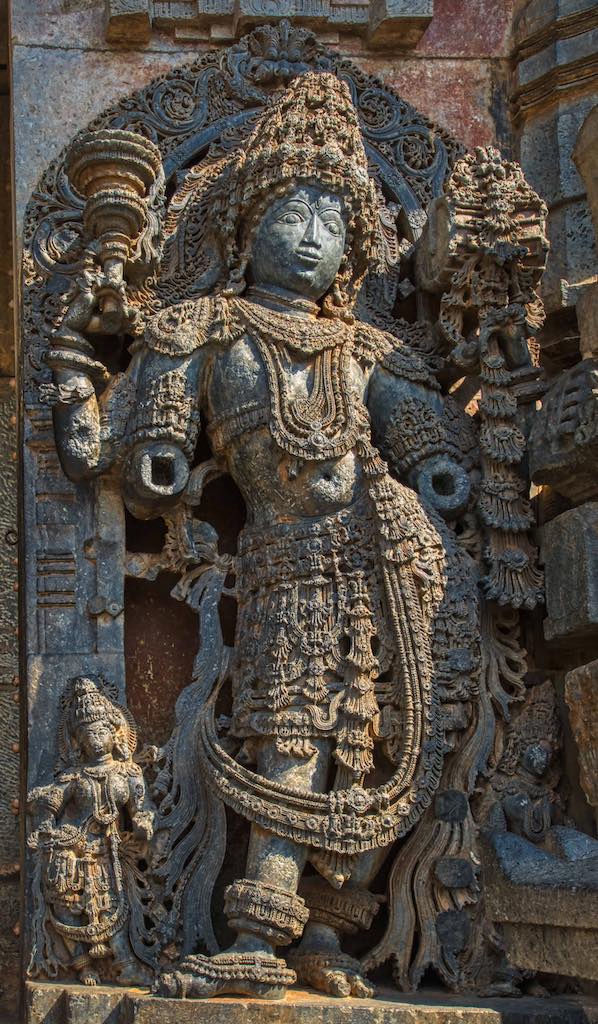
Though a Shaivite monument, it reverentially includes many themes from Vaishnavism and Shaktism tradition of Hinduism, as well as images from Jainism. A reminder of the openness of religious beliefs in those days. In this dvikuta (temple with two shrines) Shaiva temple, the two garbha grihas (sanctum sanctorum) are found connected by a mandapa (porch) forming a large open hall.
.
.
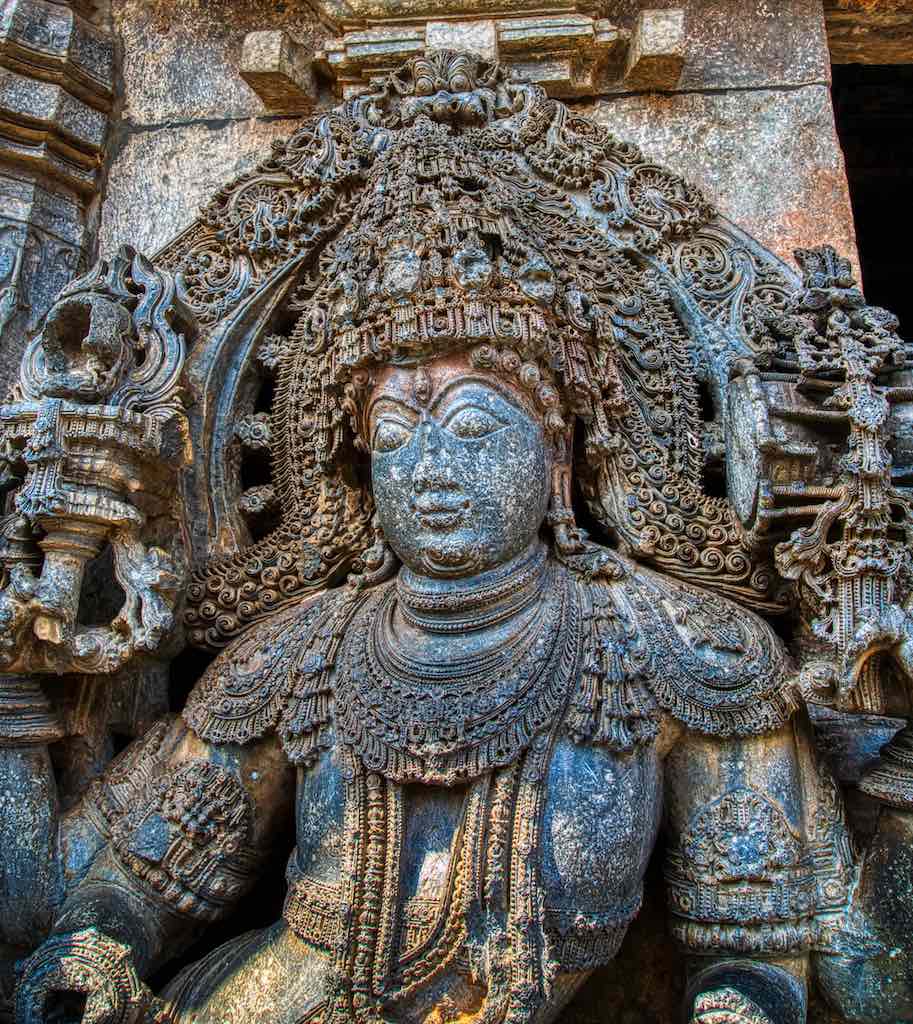
The temple has an extensive iconographic representation of episodes from the epics. It must be remembered that in temple architecture these do not merely serve a decorative purpose, but are essential to the integrity and composition of the structure.
.
.
The temple is dedicated to Hoysaleswara and Santaleswara Shiva lingas, named after the masculine and feminine aspects, both equal and joined at their transept.
.

To protect your personal data, your connection to YouTube has been blocked.
Click on Load video to unblock YouTube.
By loading the video you accept the privacy policy of YouTube.
More information about YouTube’s privacy policy can be found here Google – Privacy & Terms.
.
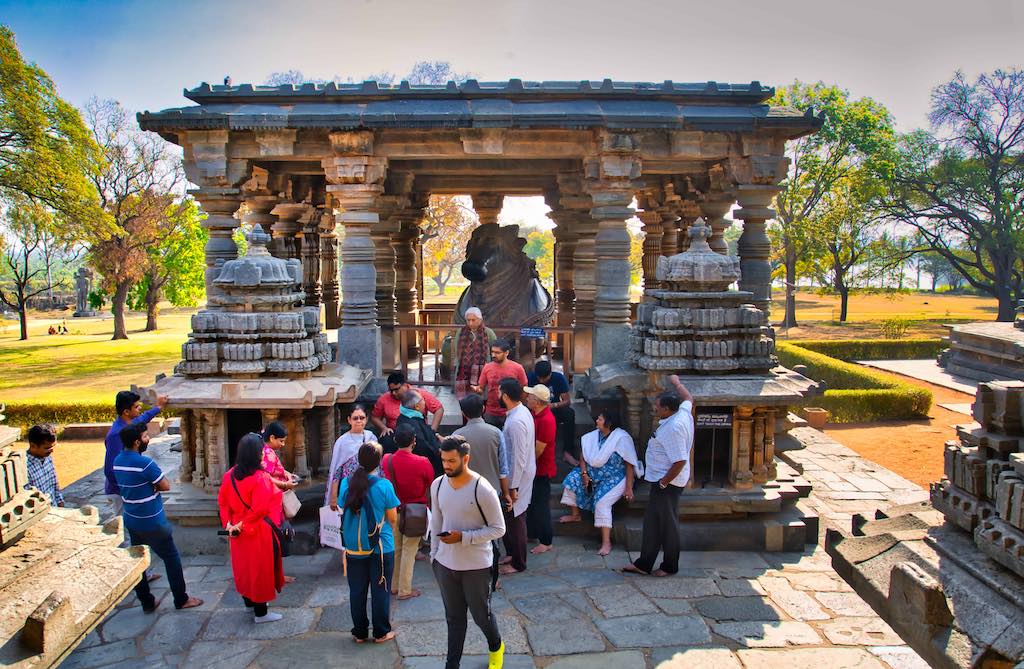
It has two Nandi shrines outside, where each seated Nandi faces the respective Shiva linga inside. The temple includes a smaller sanctum for Surya Bhagwan. This temple has a 7-foot tall statue of the Surya.
.
.
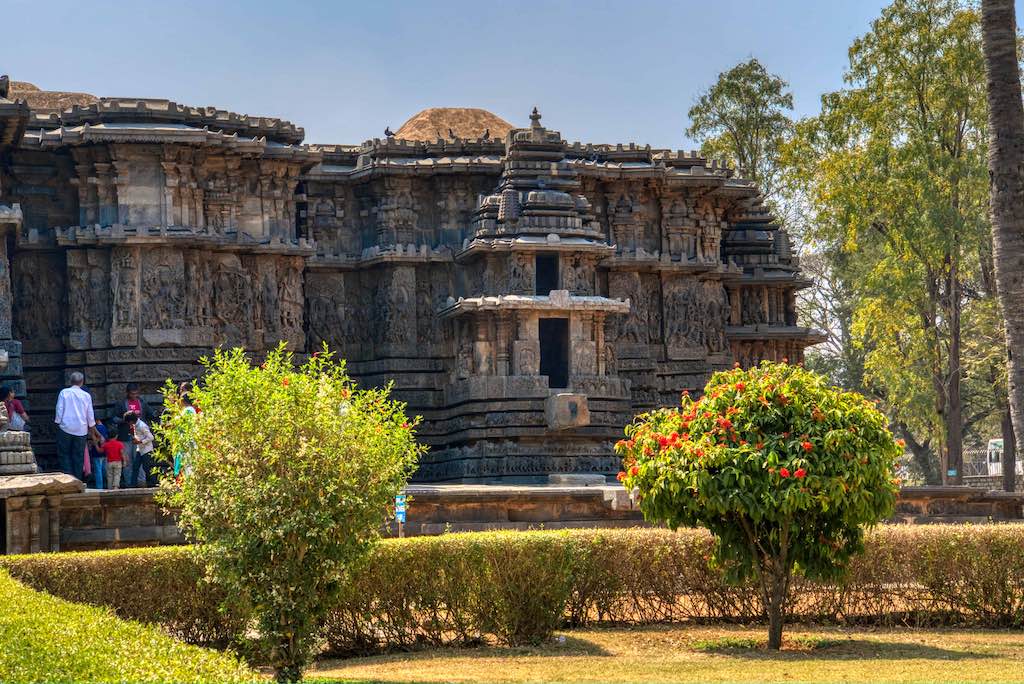
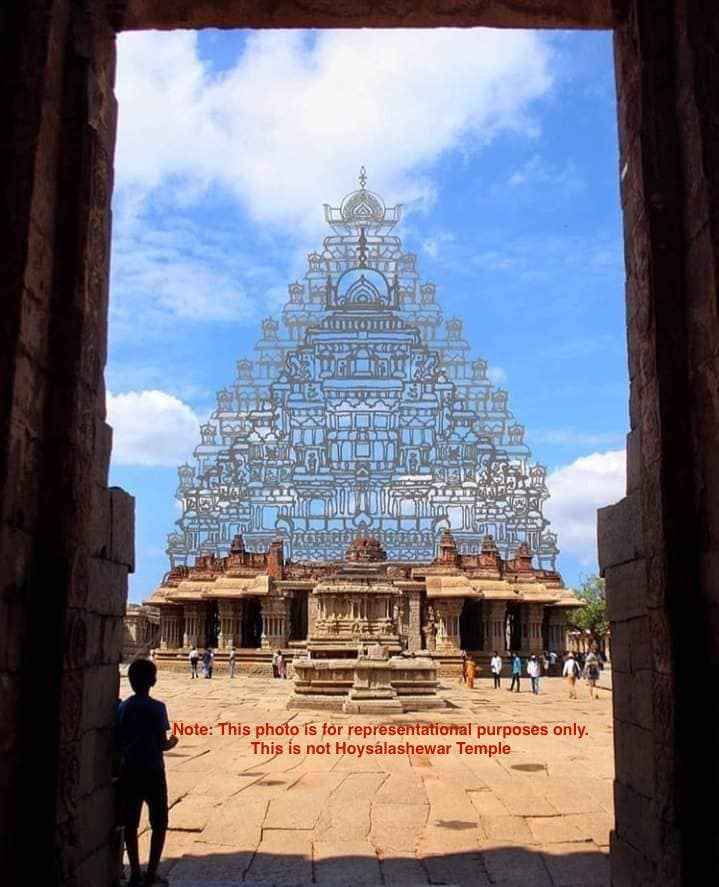
The temple once had superstructure towers, but they were destroyed and no longer exist, giving the temple a flat look. During the early 14th century, Halebidu was sacked and plundered by the Muslim armies of the Delhi Sultanate under Alauddin Khilji. In 1326 CE another Delhi Sultanate army of Sultan Muhammad bin Tughlaq plundered the temples of Belur and Halibedu and it became a near-ruin for many years thereafter. The capital was abandoned and the site became known as “Halebidu” (literally, “old camp or capital”).
.
.
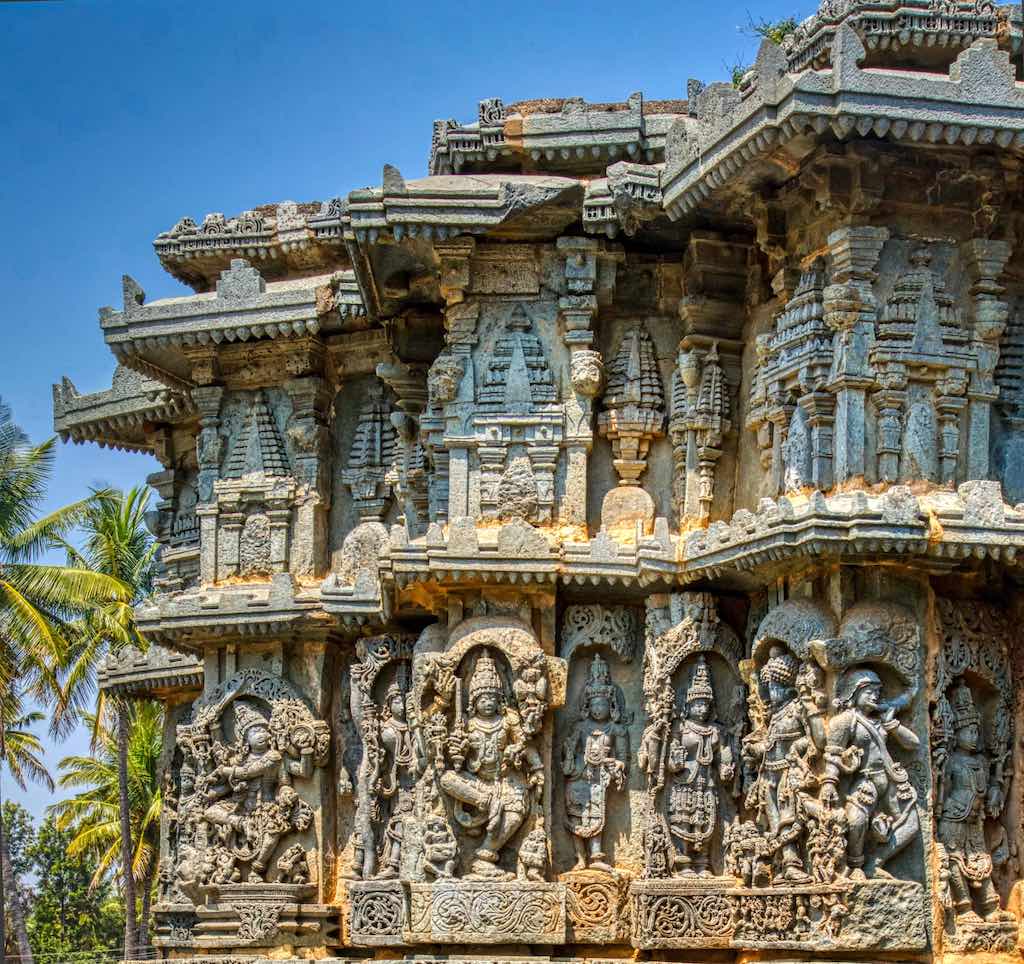
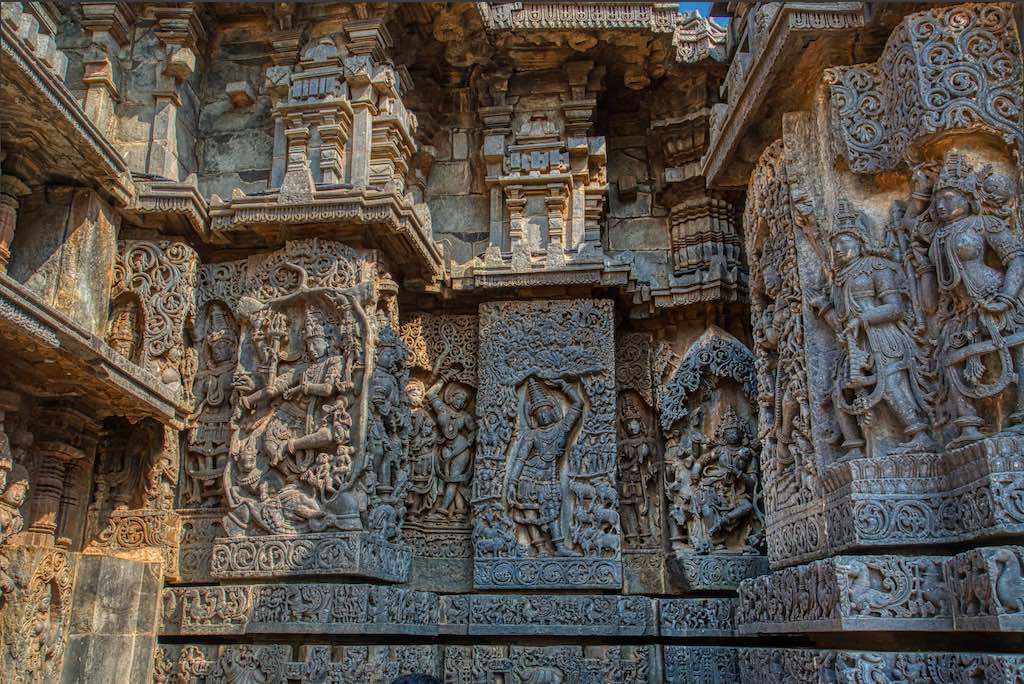
More sculpturally and artistically sophisticated than any other Hoysala temple, it is notable for its sculptures, intricate reliefs, detailed friezes as well its history, iconography, and inscriptions in North Indian and South Indian scripts.
.

.
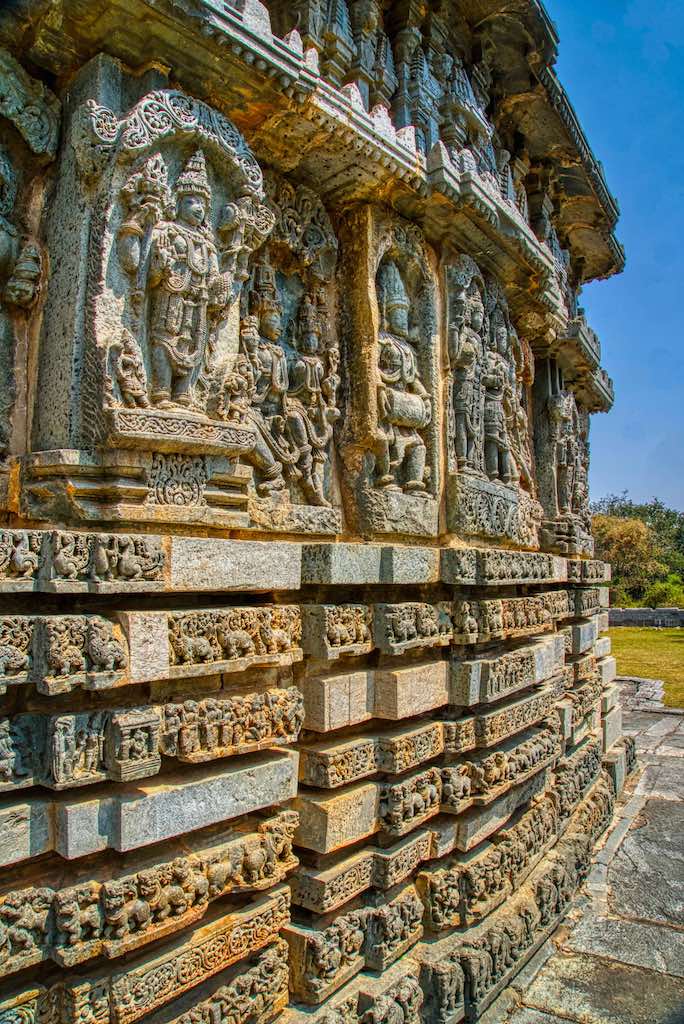
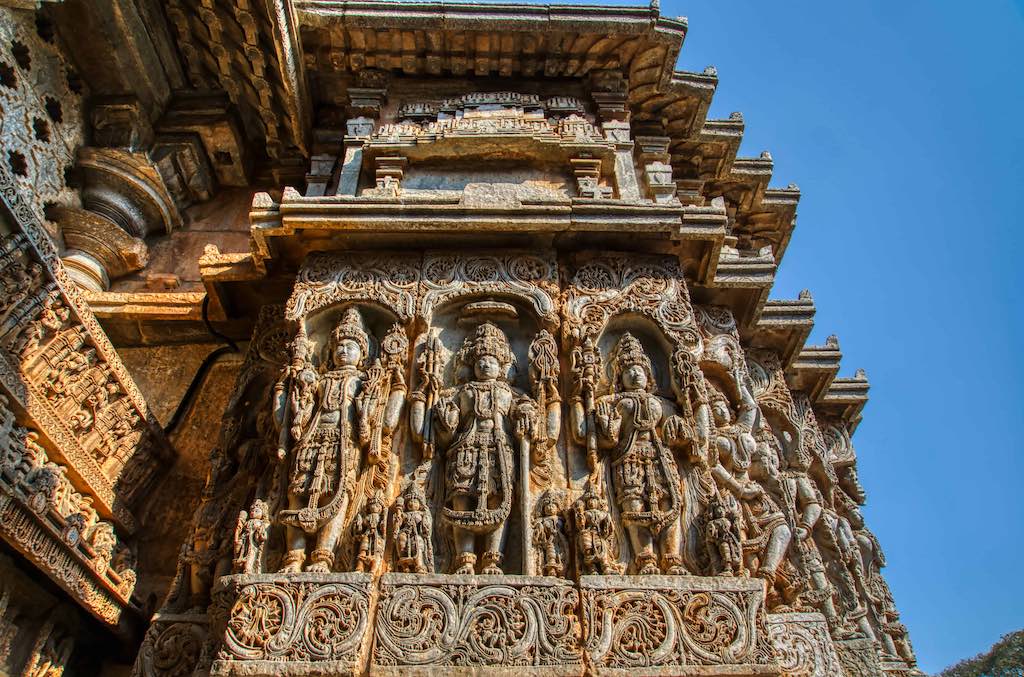
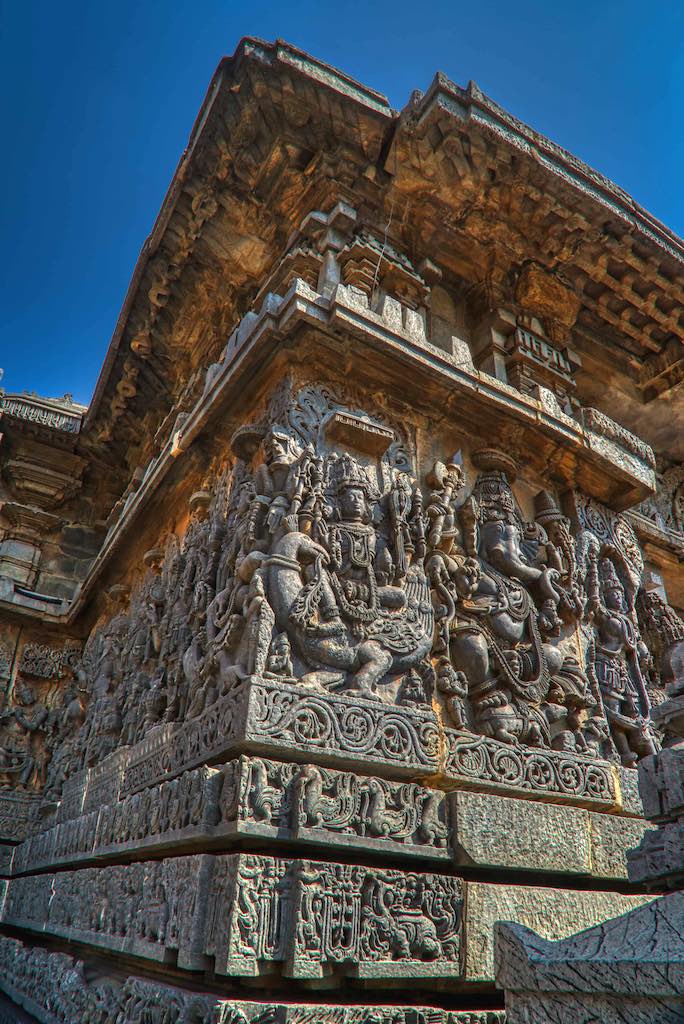
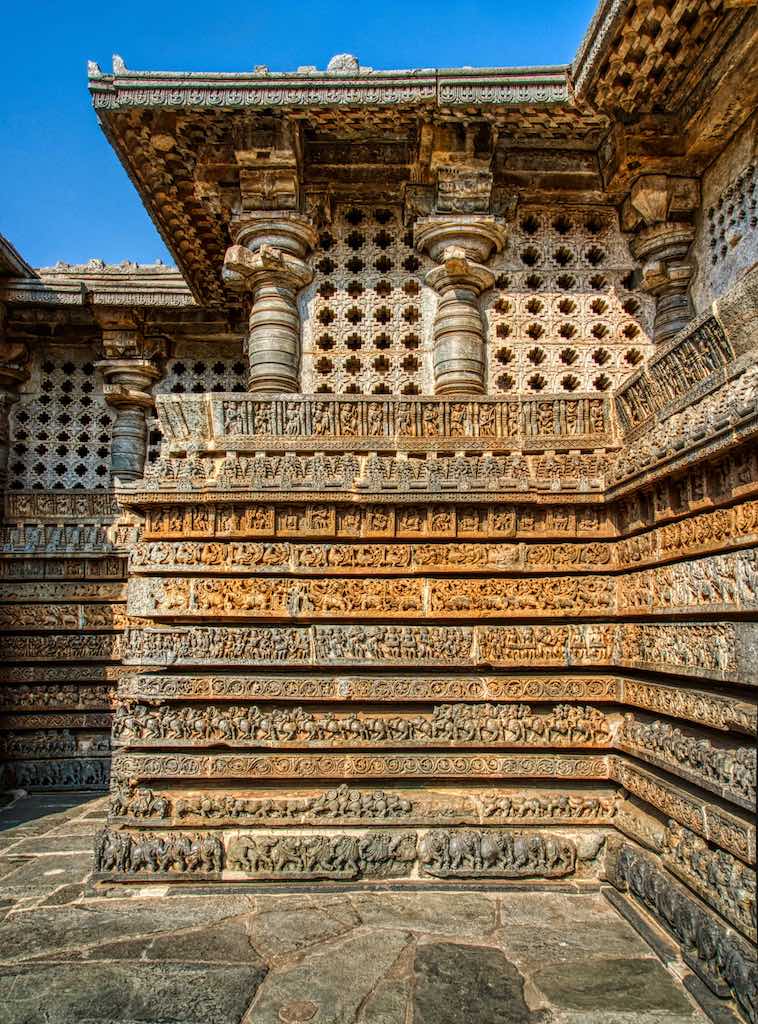
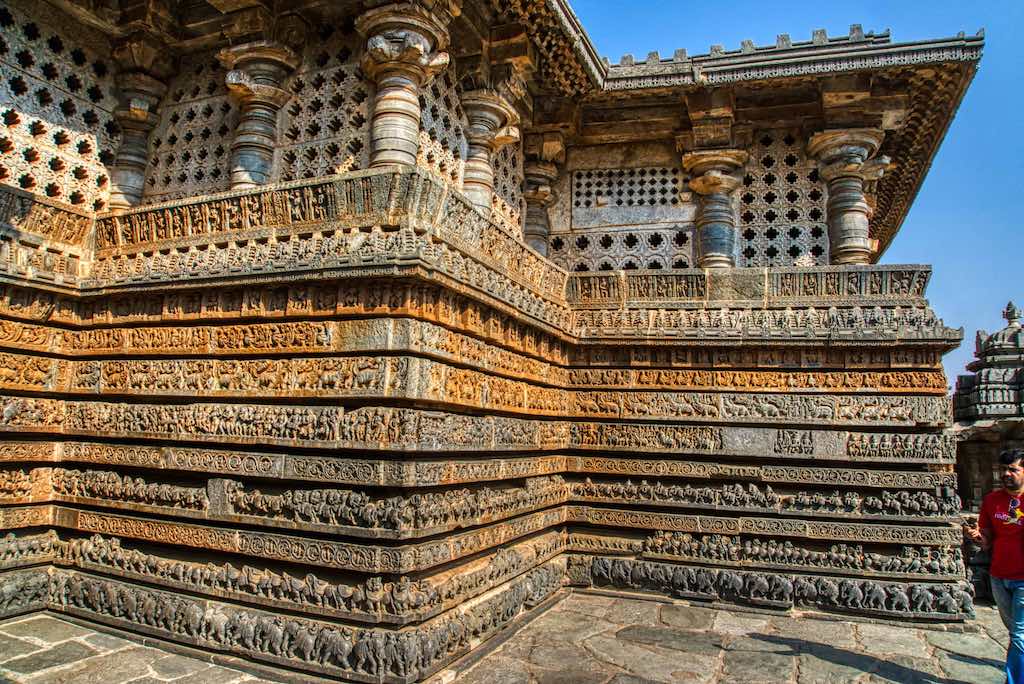
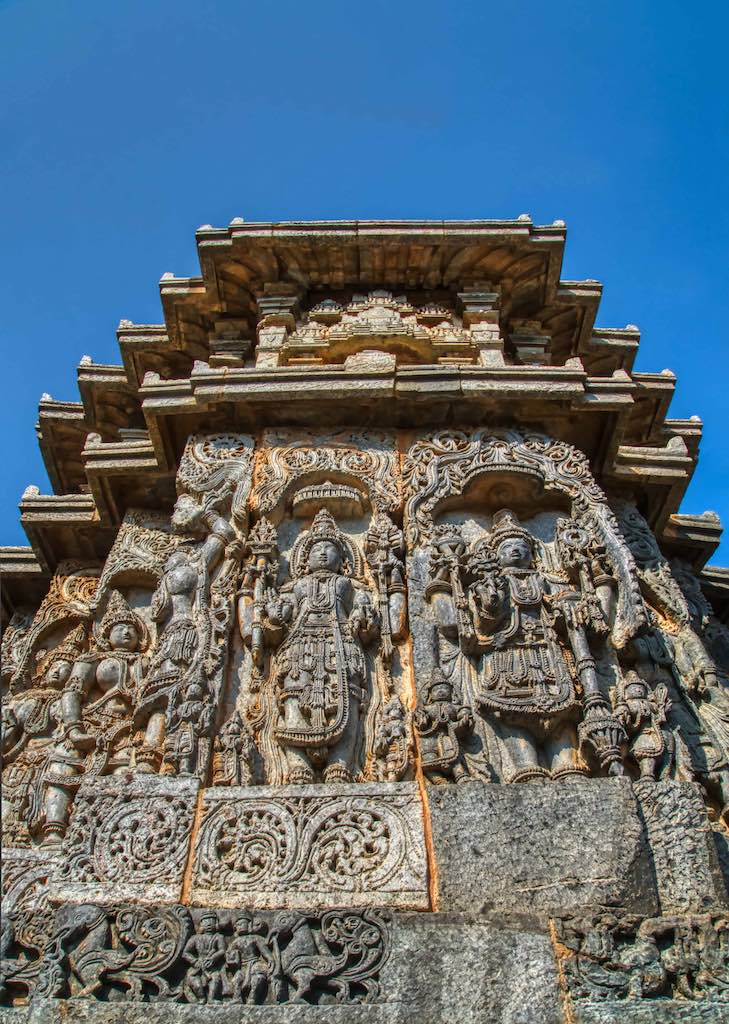
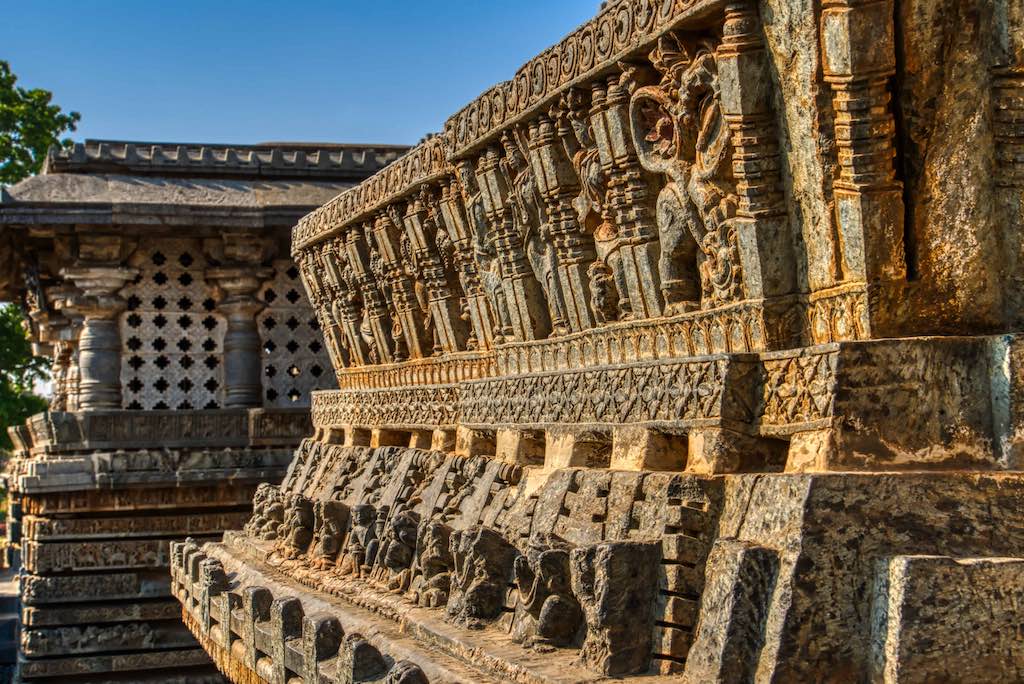
The temple outer walls are intricately carved. The carved banded plinths, a distinguishing characteristic of all Hoysala temples, comprise a series of horizontal courses that run as rectangular strips all around the temple with narrow recesses between them.
.
.
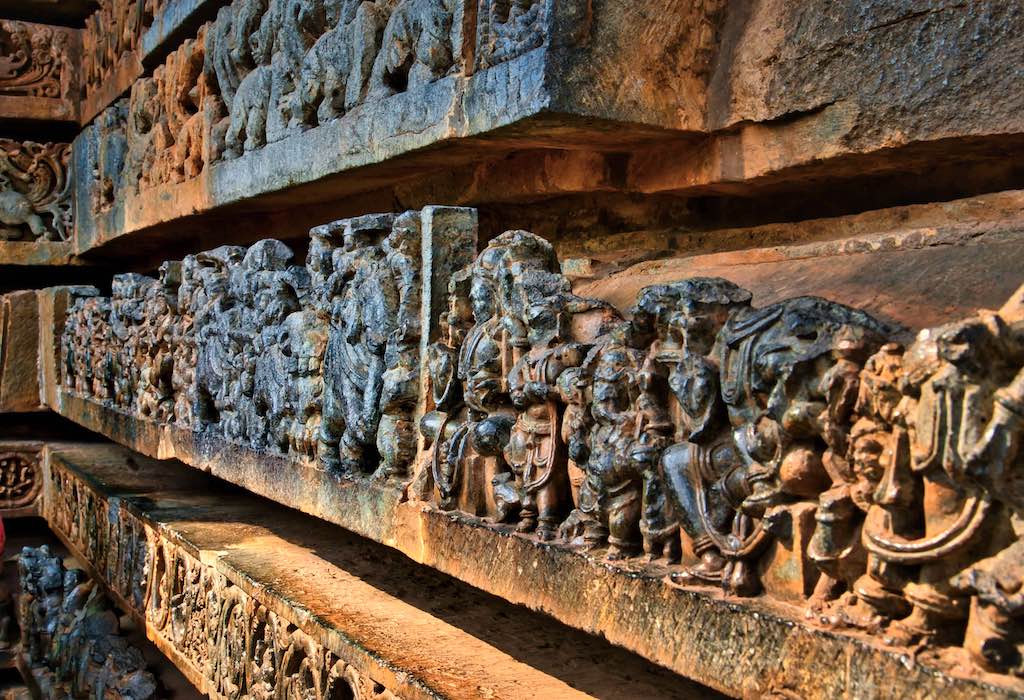
Its lowest layers consist of bands with friezes that consist of (from bottom to top) elephants, lions, scrolls with nature and miniature dancers, horses, scrolls, scenes from Hindu texts, scriptural animals (makara – crocodile) and swans.
.
.
According to Shadakshari Settar, the artwork shows “no two lions are alike in the entire span that covers more than a furlong (200 metres).”
.
.
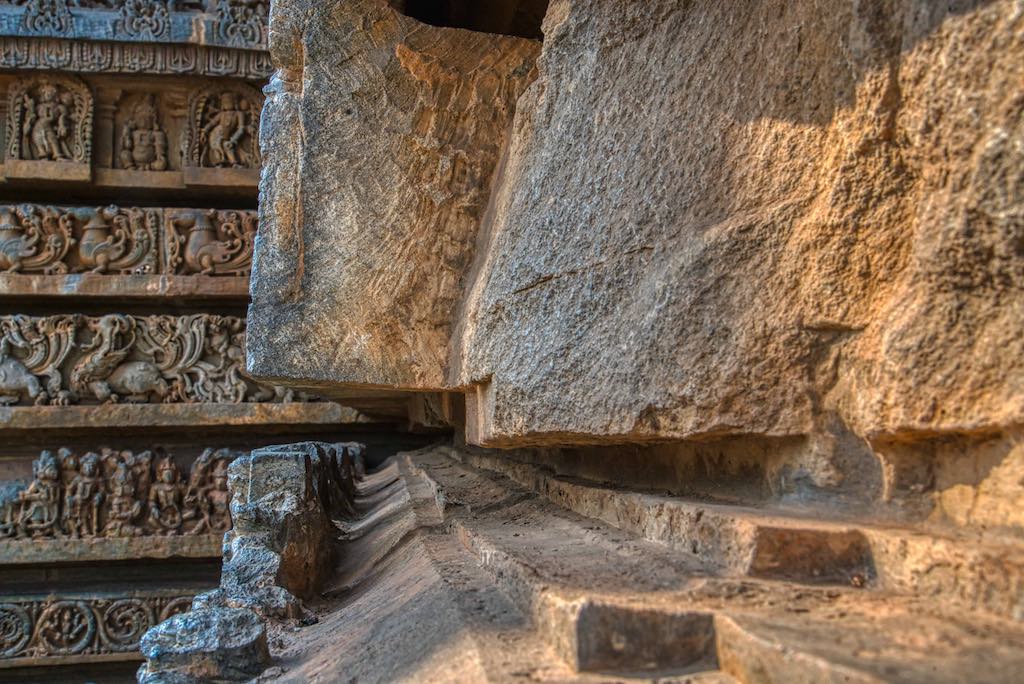
The uppermost band has been artfully tilted forward so that the carvings can be viewed easily from below.
.
.
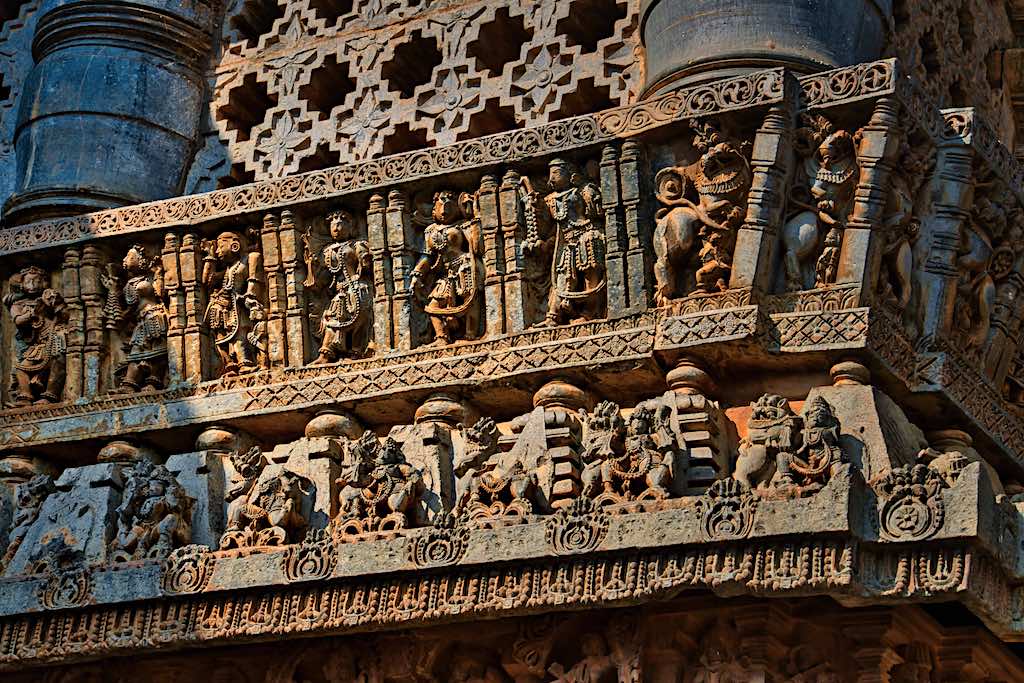
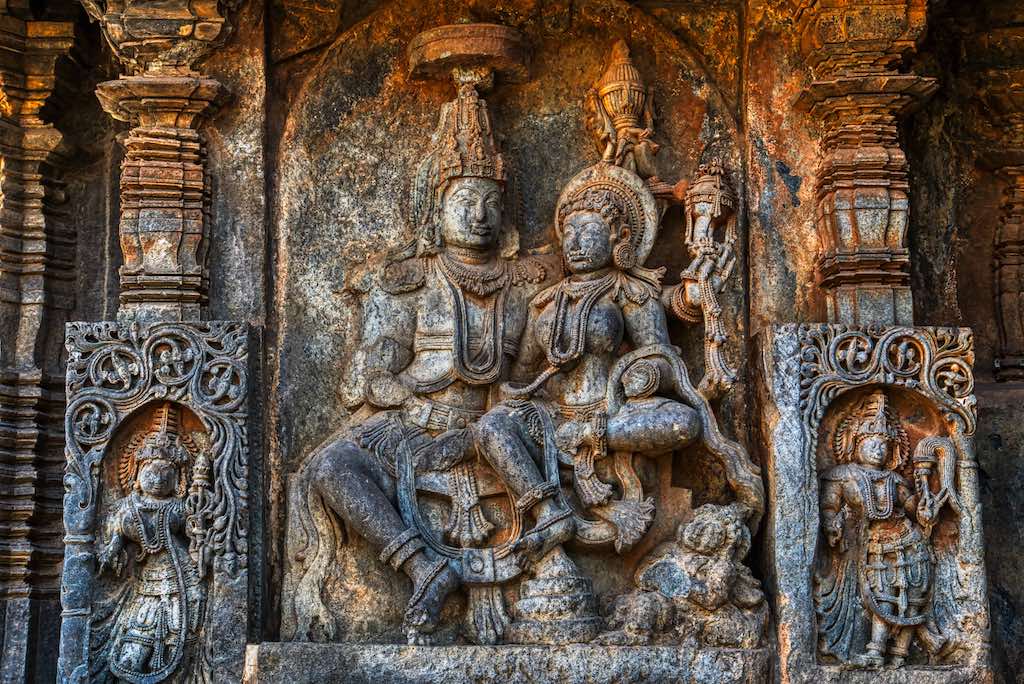
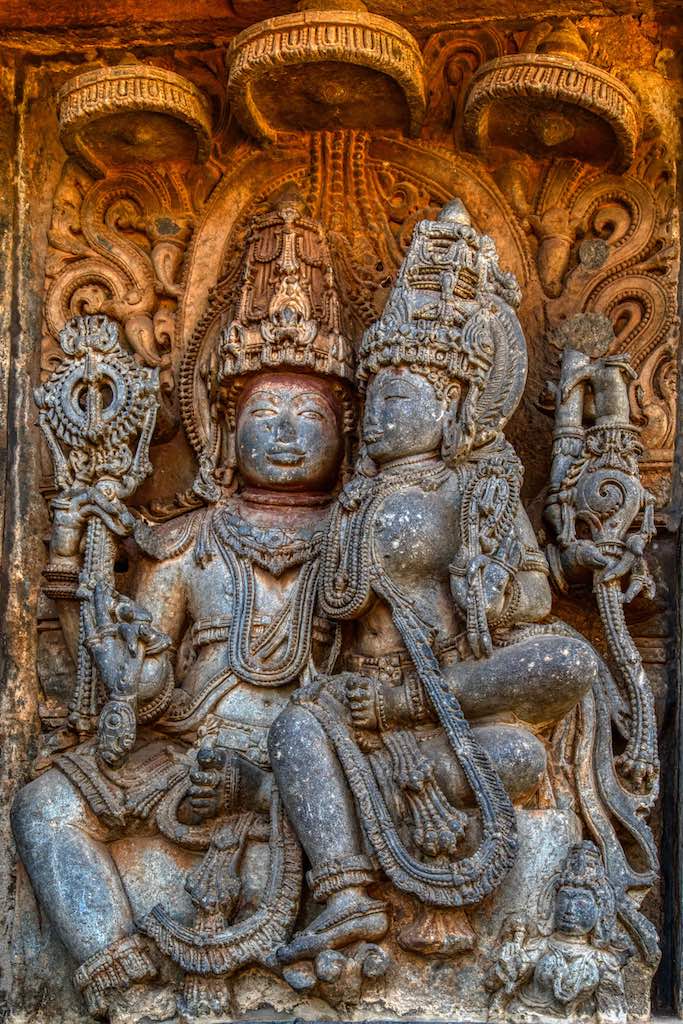
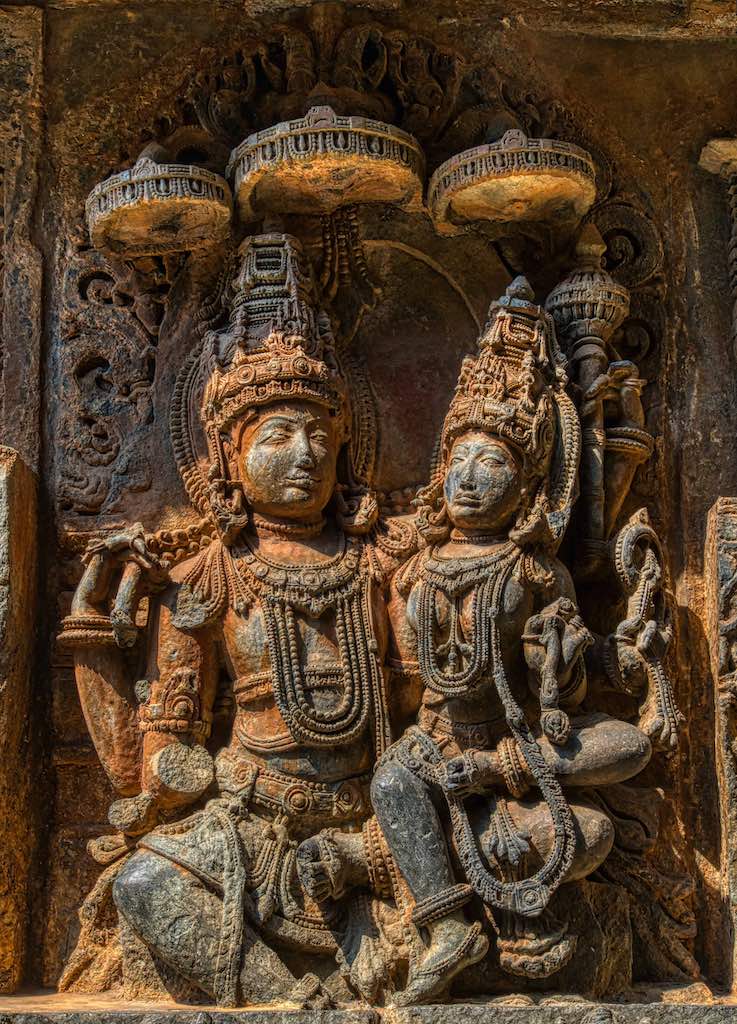
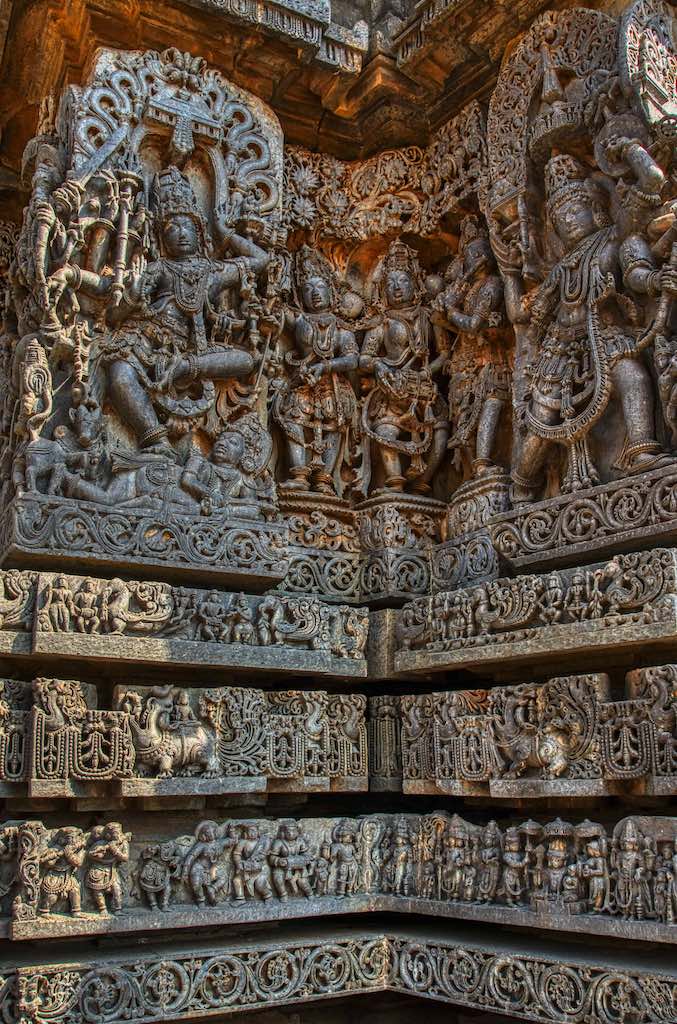
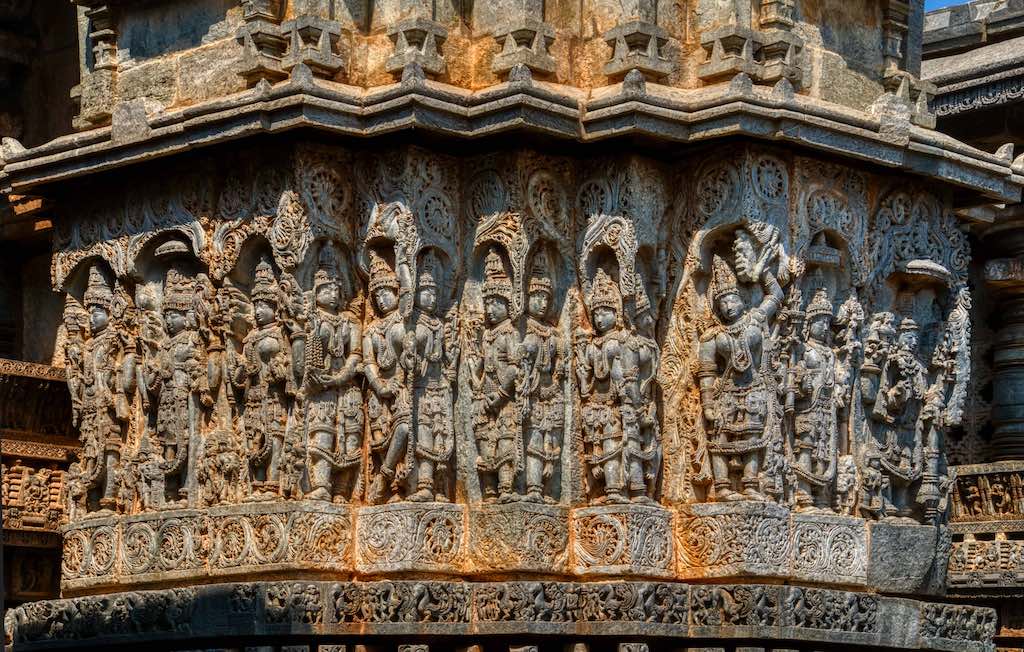
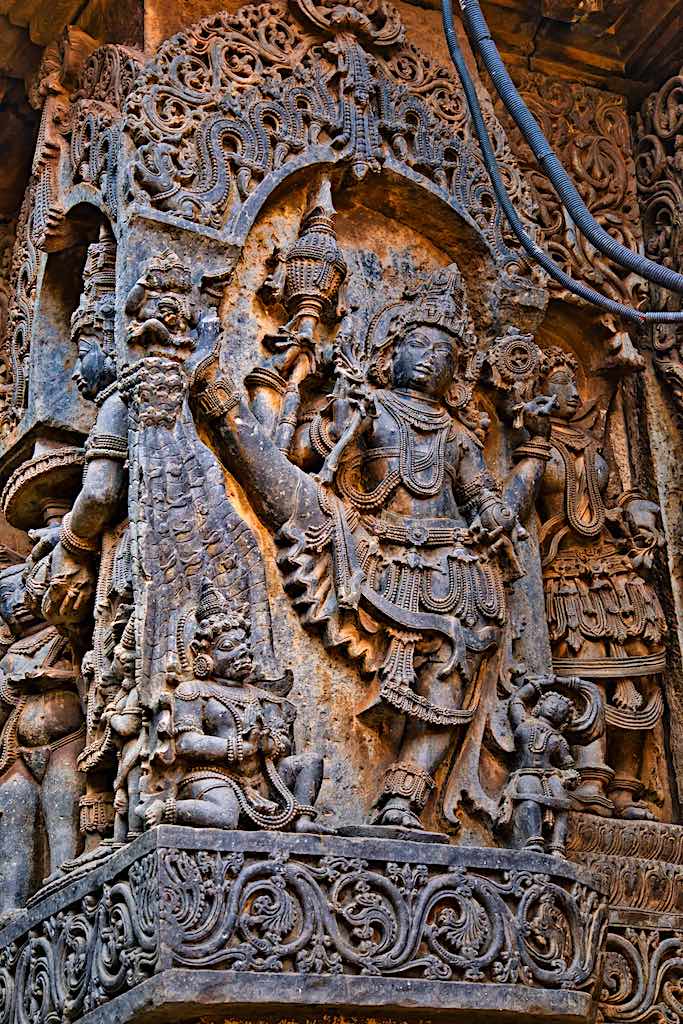
The Hoysaleshwara temple is most renowned for the more than 340 large reliefs depicting Hindu theology that run all along the outer walls.
.

.
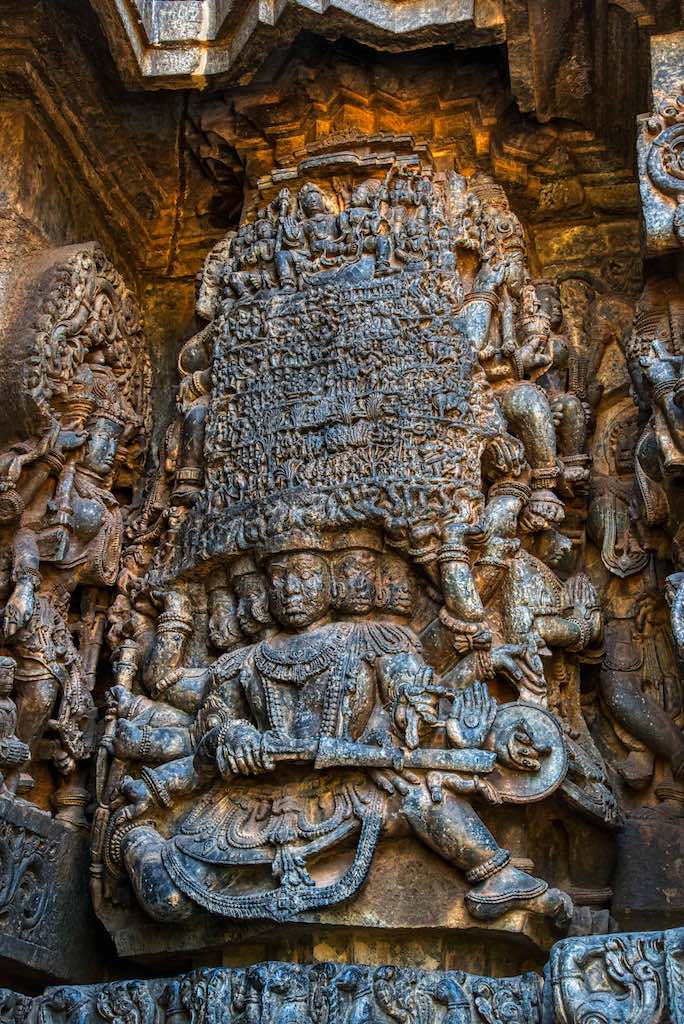
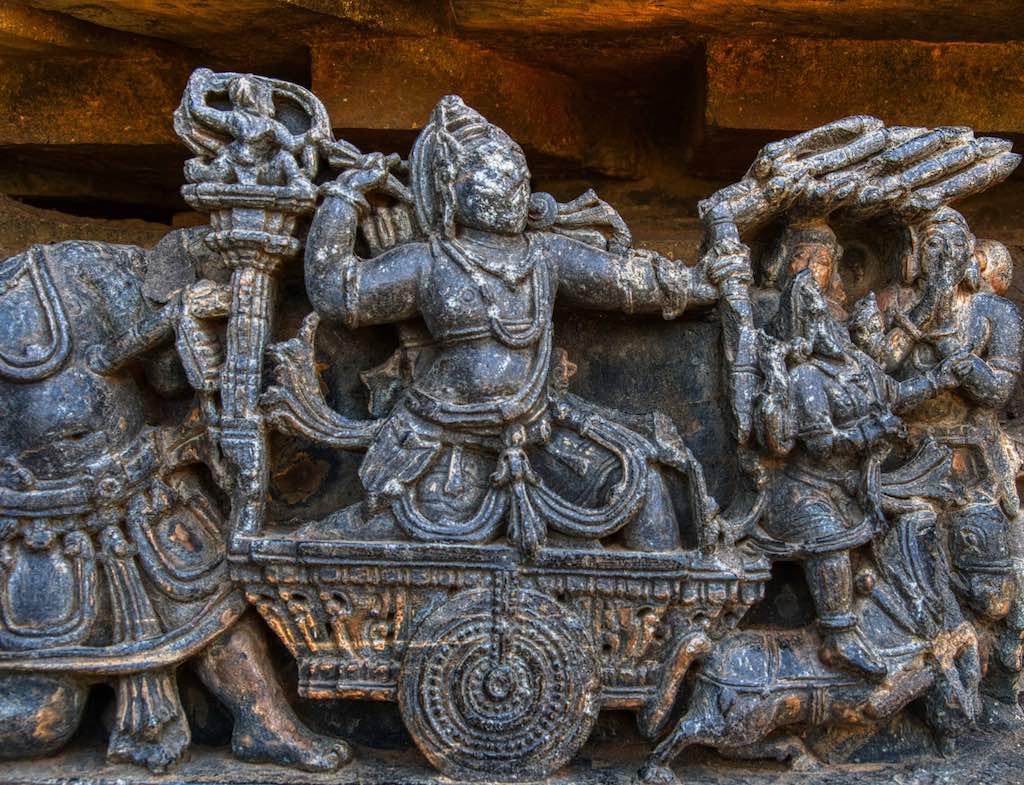
Numerous smaller friezes narrate incidents from Hindu texts such as the Ramayana, the Mahabharata and the Bhagavata Purana.
.
.
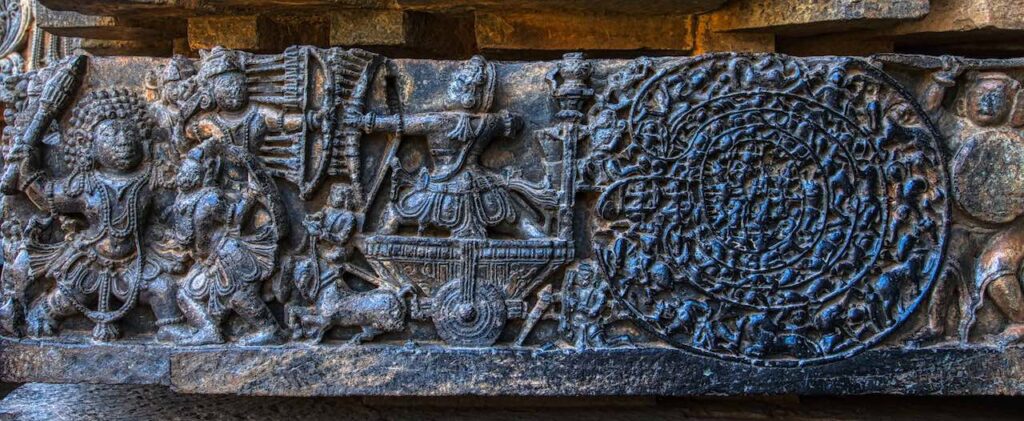
Some friezes in the bands below the large reliefs portray its narrative episodes.
.
.
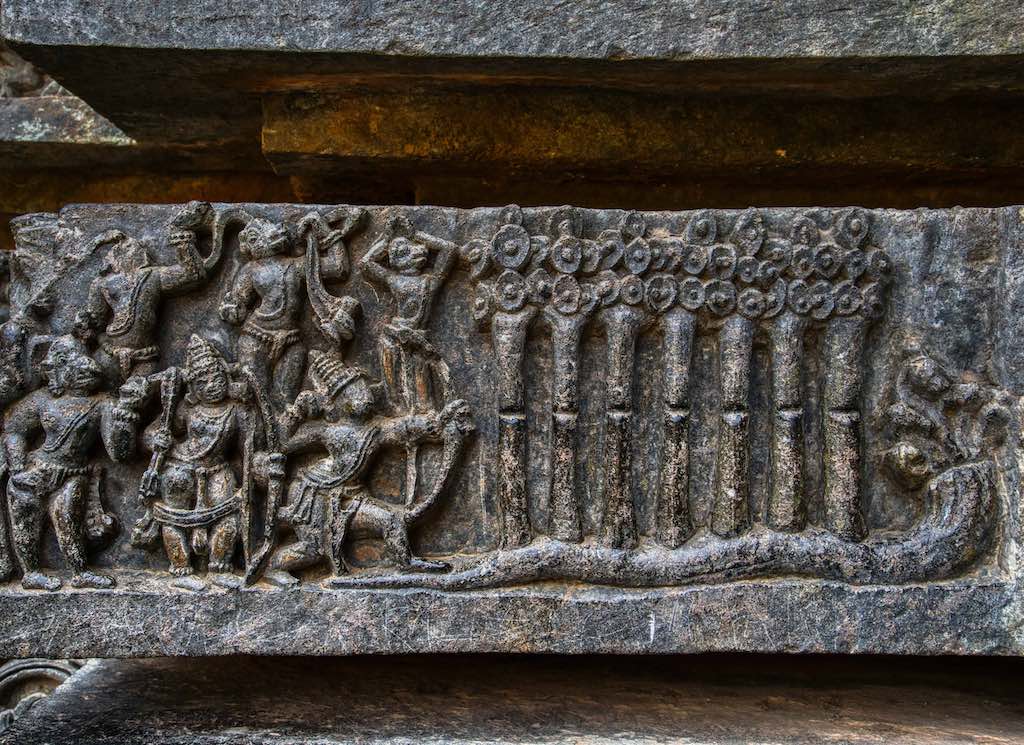
One of the exceptional incidents portrayed is of Abhimanyu fighting inside the Chakravyuh, along with a rare diagram of this complex fighting formation.
.
.
These reliefs preserve one of the finest achievements of Hoysala craftsmen and constitute an exhaustive lesson of Hindu art.
.
.
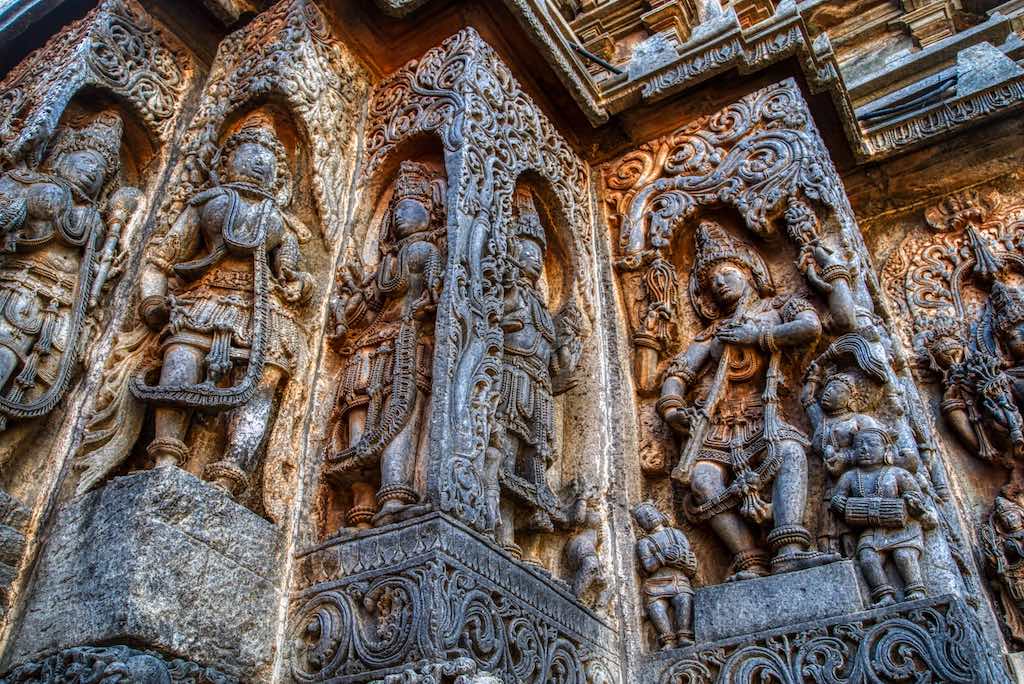
The temple structure of the Hoysaleswara temple is considered to be very complex due to the presence of projections and recesses.
.
.
This temple has been described by Percy Brown as an “outstanding example of Hindu architecture” and as the “supreme climax of Indian architecture“.
.
.
It is believed that the Chennakesava Temple was built during this time and was a Vaishnava temple. The Hoysaleswara temple was constructed by the Shaivas to compete with the Chennakesava Temple.
.
.
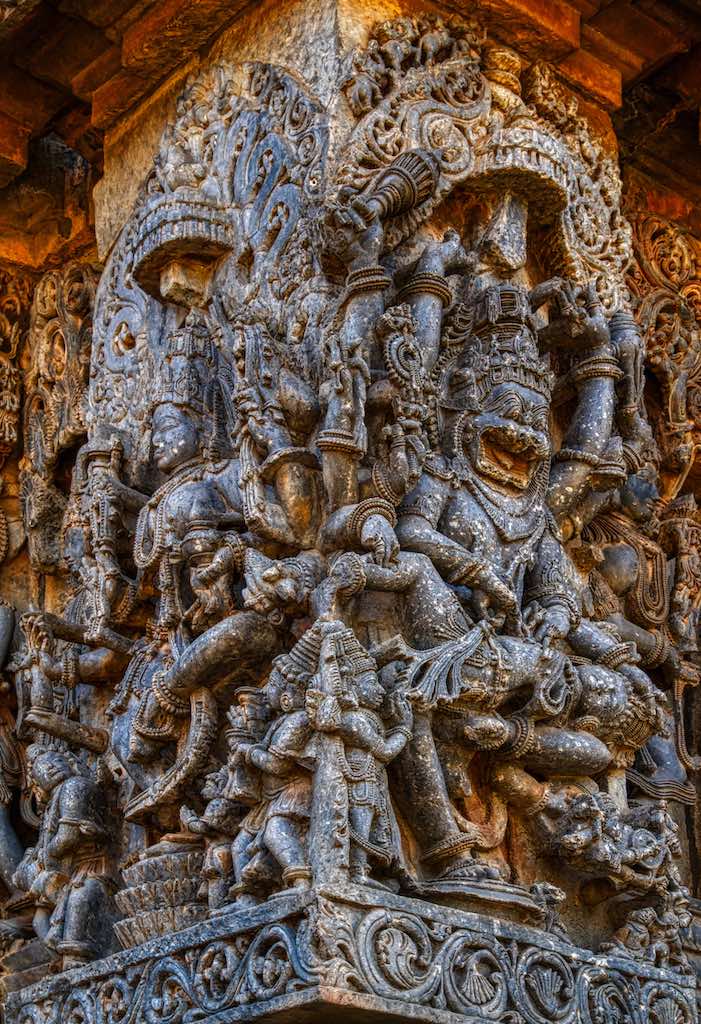
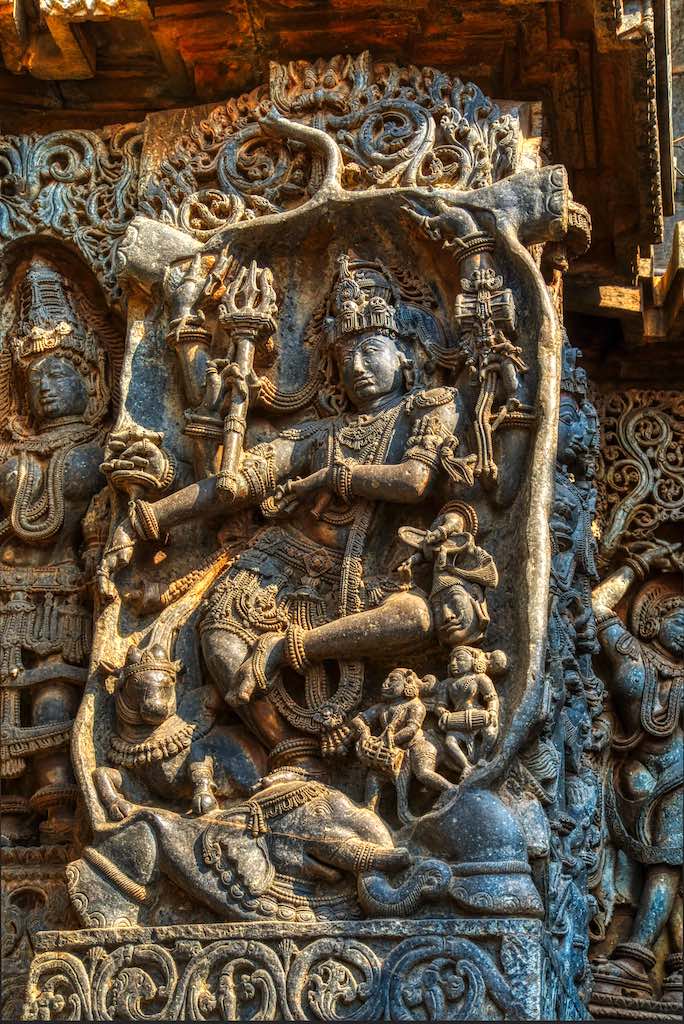
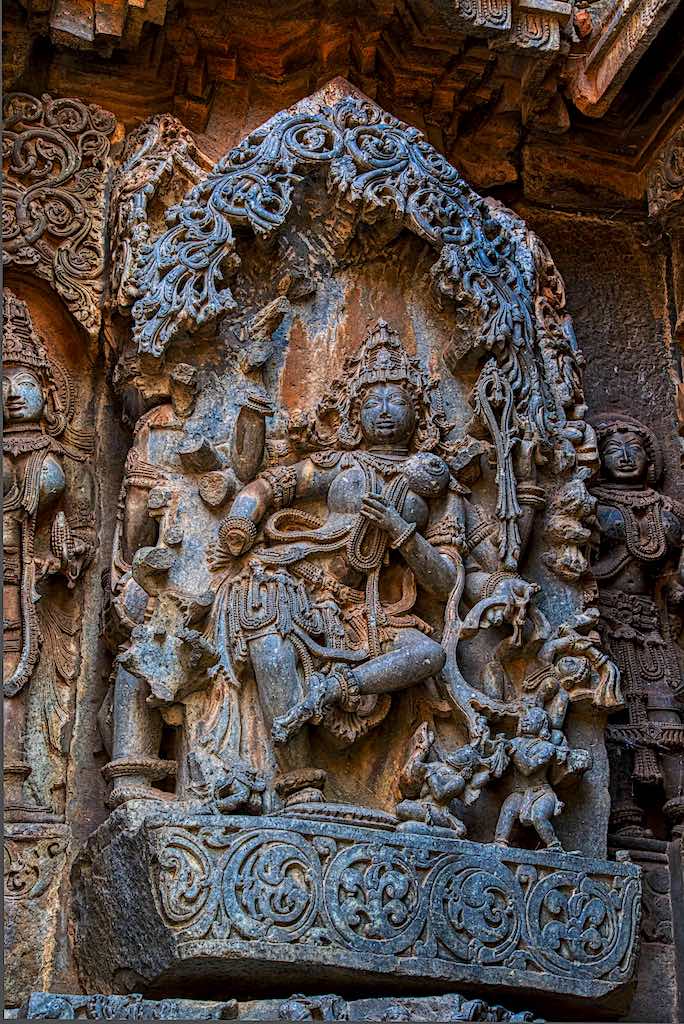
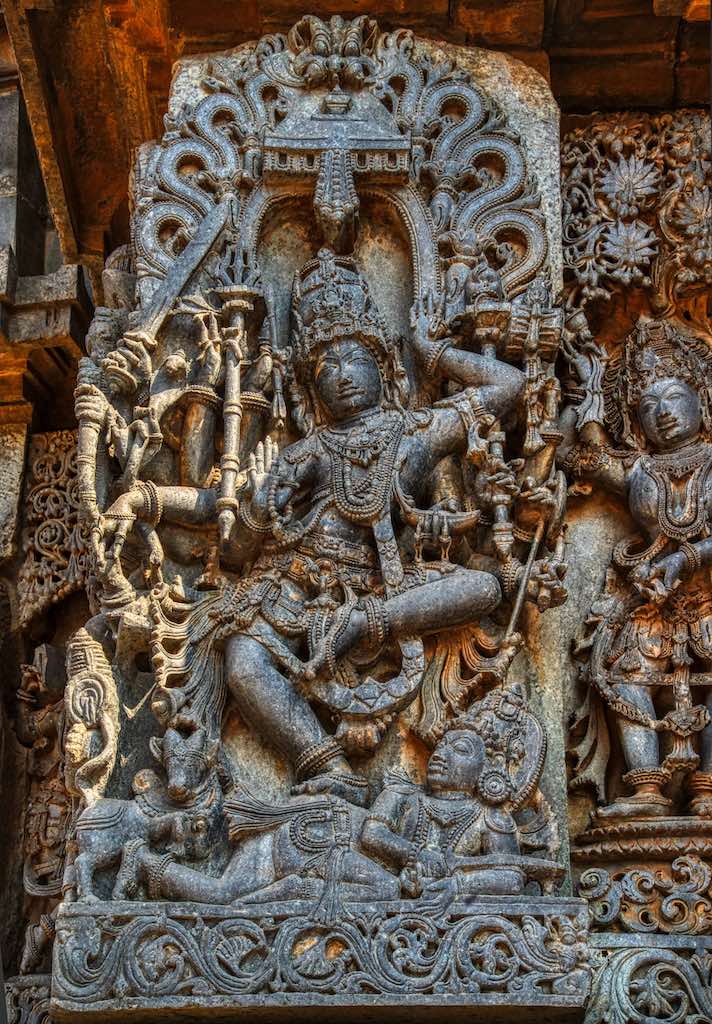
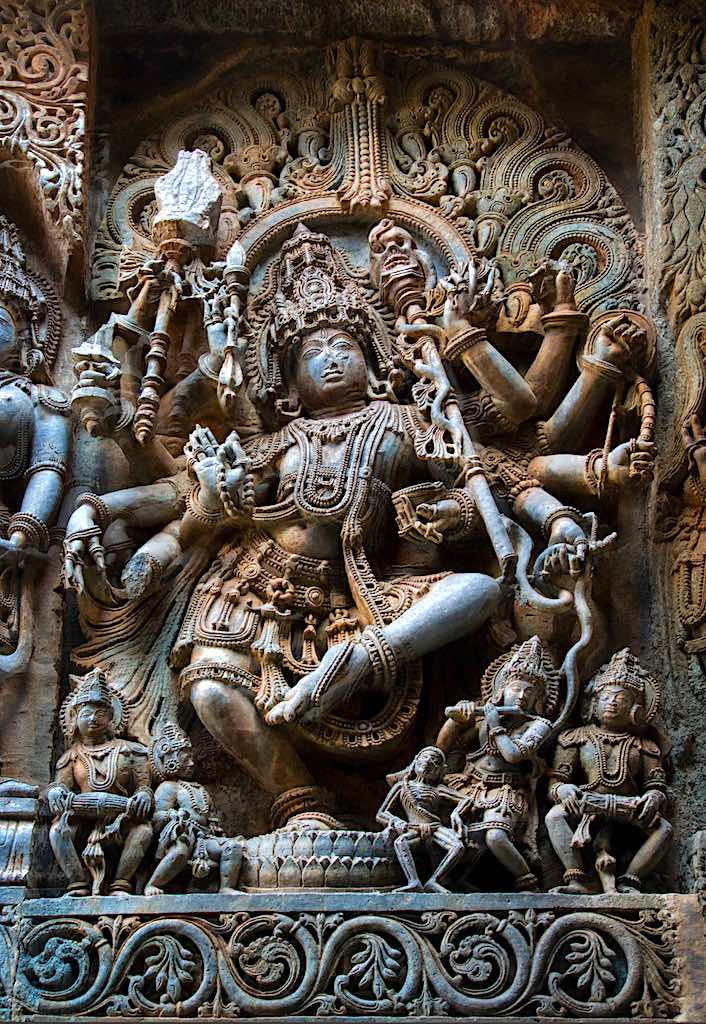
Shiva dances inside the elephant Gajasura after slaying it, which was actually the rakshas (demon) Nila in disguise. The sculptor has captured the details perfectly, the open belly of the elephant can be seen with the eyes of the elephant turned upward watching Shiva, and it is at peace having attained moksha. The multiple arms are uncommon in Shiva’s iconography and are exclusively used in his combative forms.
.

.
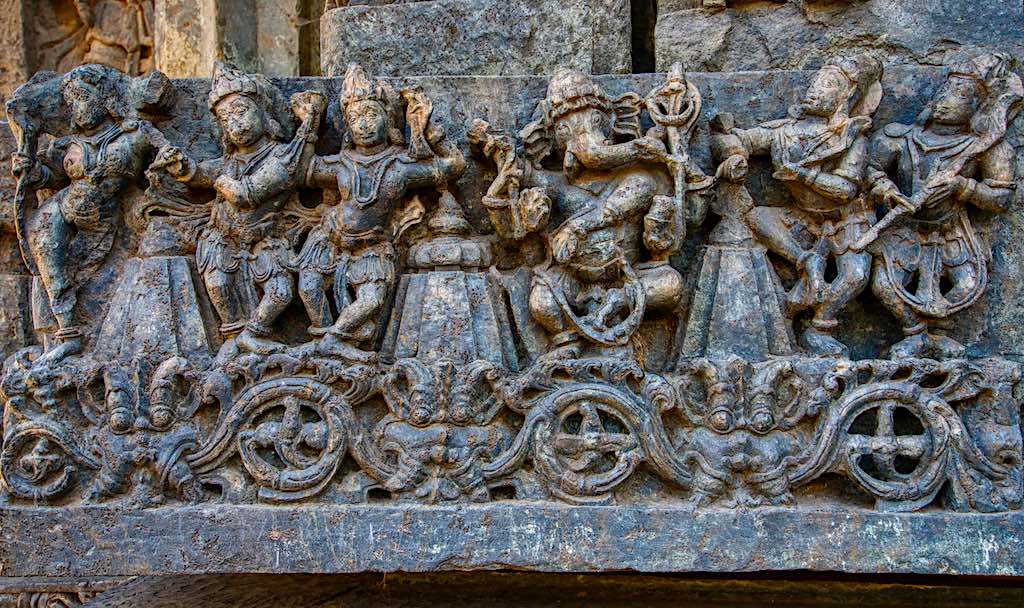
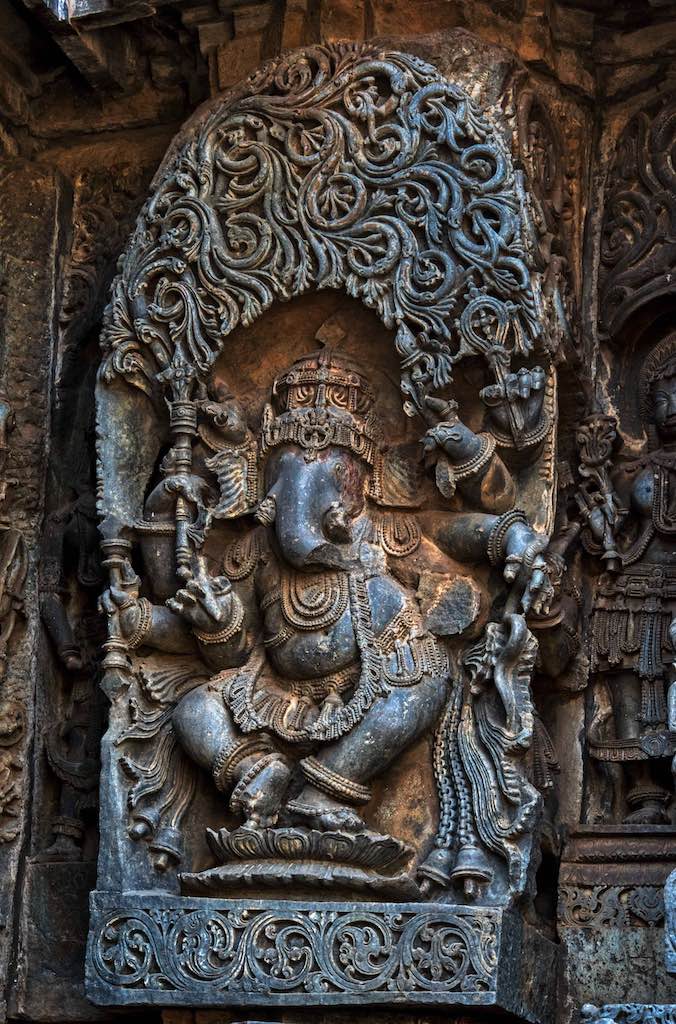
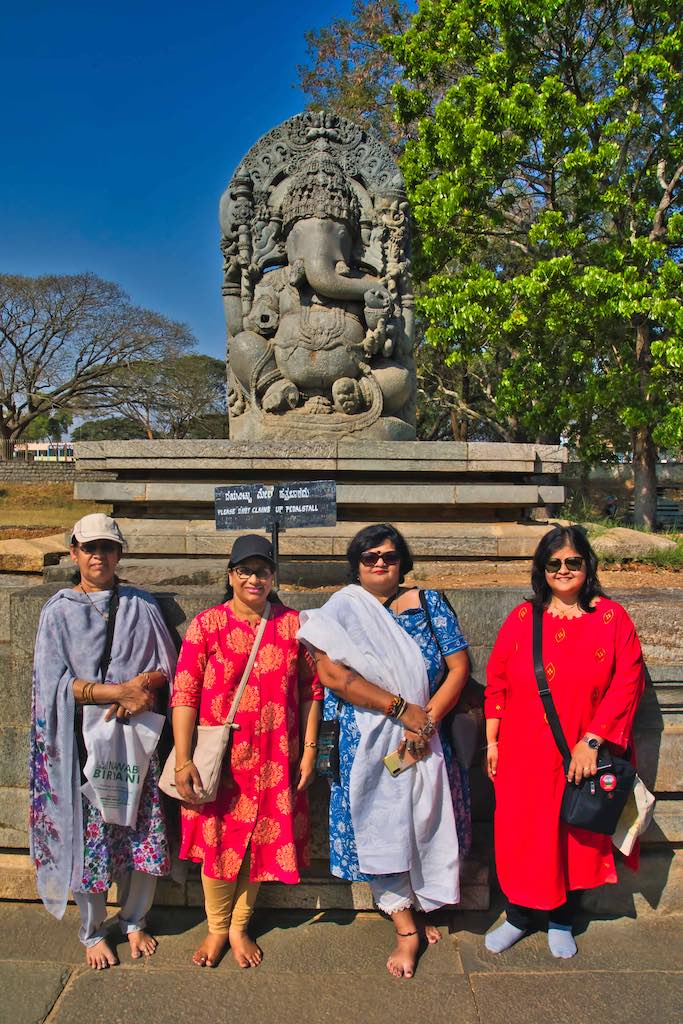
Another marvel of the Hoysaleswara temple is the set of sculptures of Ganesha. While the right part of the external wall of the temple starts with an image of a dancing Ganesha, there are almost 240 images of Ganesha in different poses.
.
.
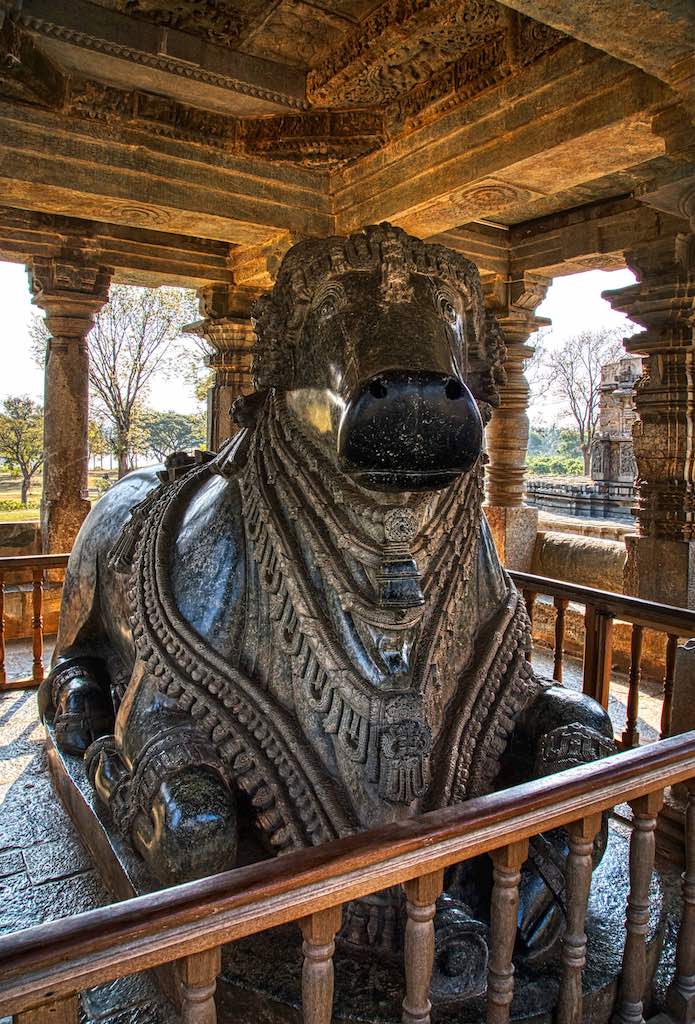
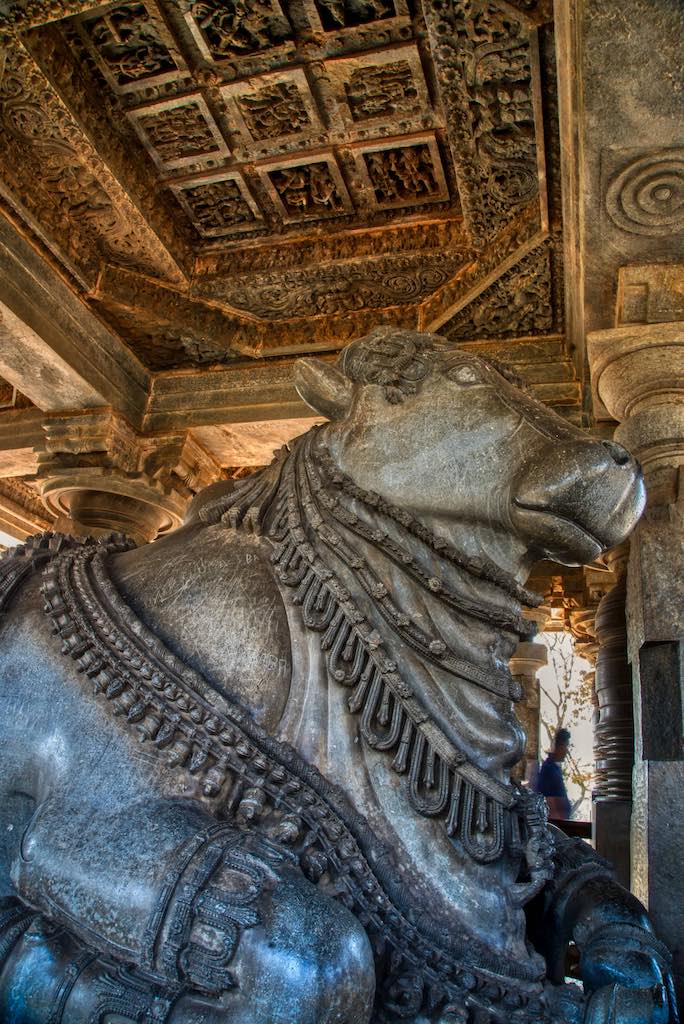
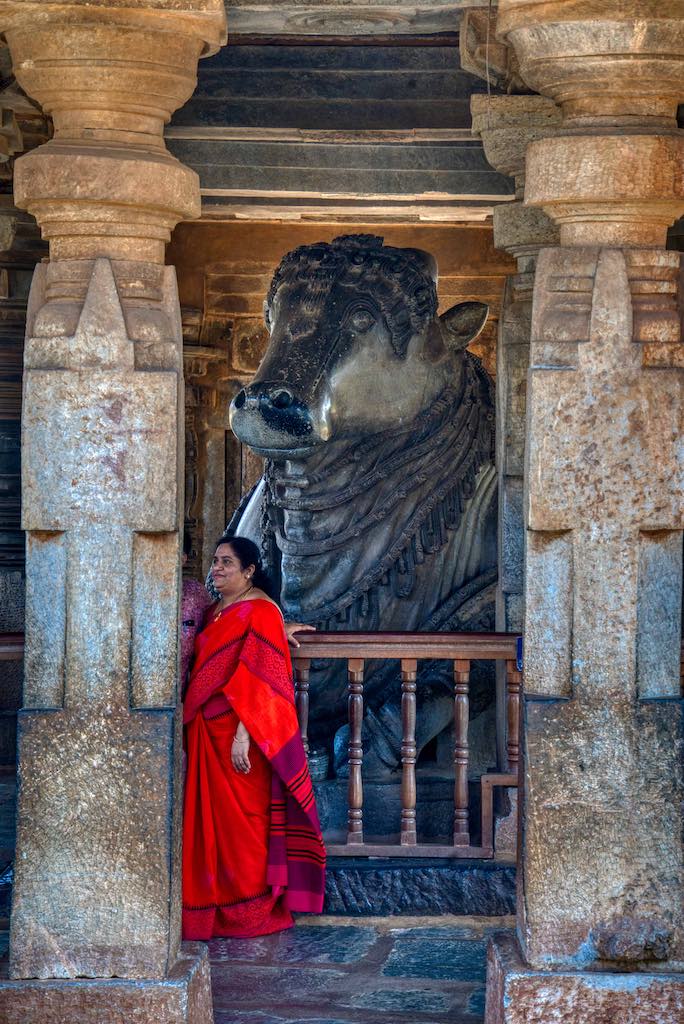
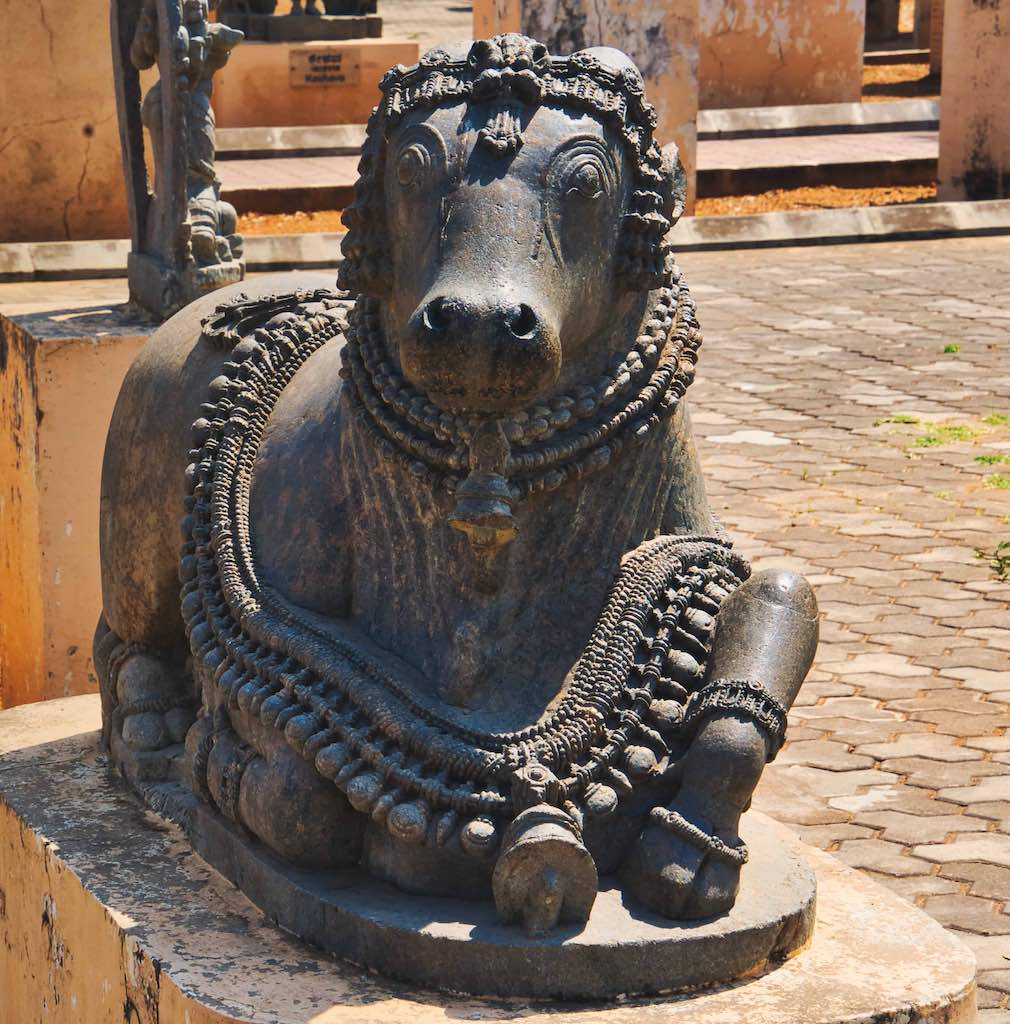
Where there is Shiva, Nandi will always be nearby. Being a twin-shrine temple, there are two Nandi’s one facing each shrine. Outside on the east side of the main temples are two smaller shrines for the seated Nandis.
.

.
The Nandis are huge, monolithic sculptures, each beautifully adorned with garlands of flowers and small bells.
.

.
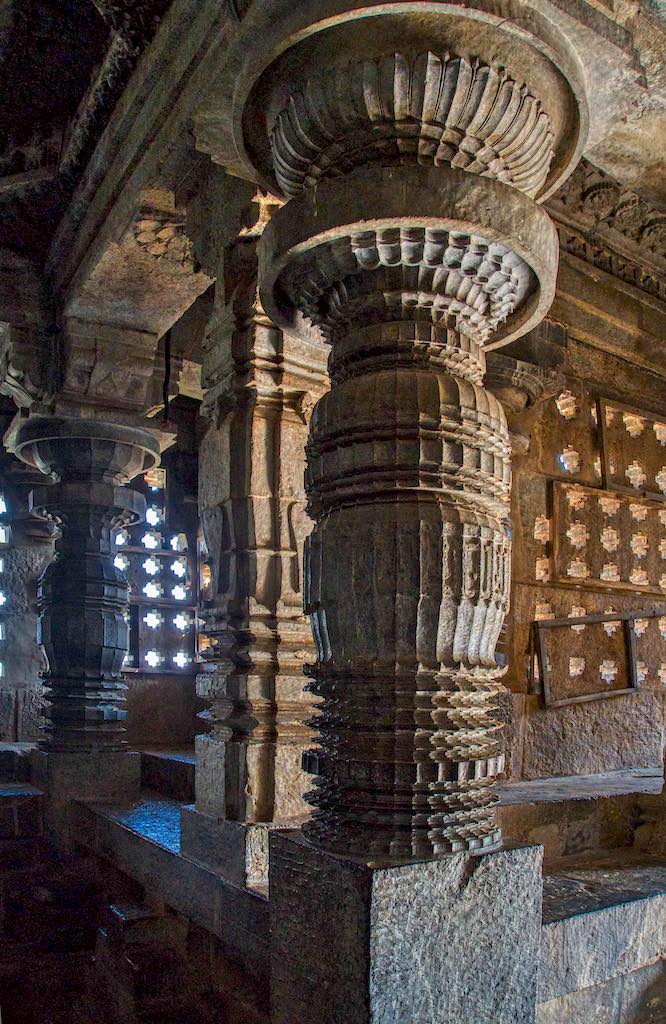
The Nandi shrines are also exquisitely decorated with intricate carvings and lathe-polished columns. The roofs have their own detailed artwork engraved in stone.
.
.
The symbolism of the seated Nandi facing towards the sanctum in Shiva temples represents an individual jiva (soul) and the message that the jiva should always be focused on the Parameshwara. For eternity. From the yogic perspective, Nandi is the mind dedicated to Shiva, the absolute.
.
.
While the exteriors of the temple are adorned with fine sculptures, the interiors of the temple are comparatively simple except for the exquisite polished lathe-turned pillars that dash in rows flanked by the north and south doorways.
.


.
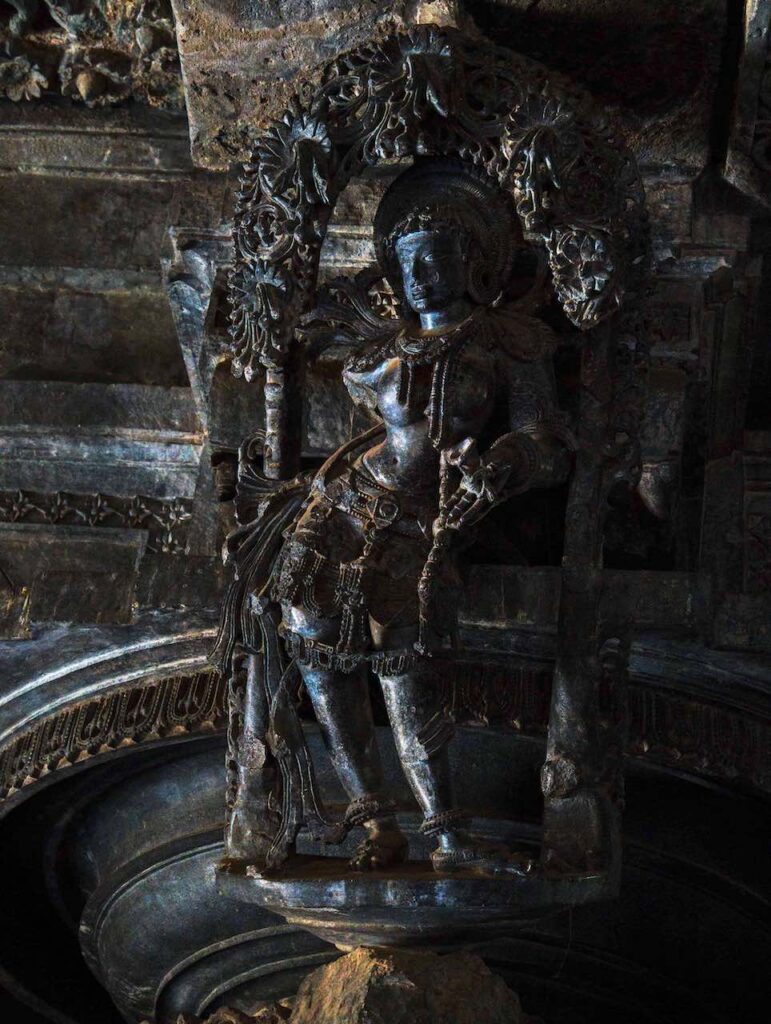
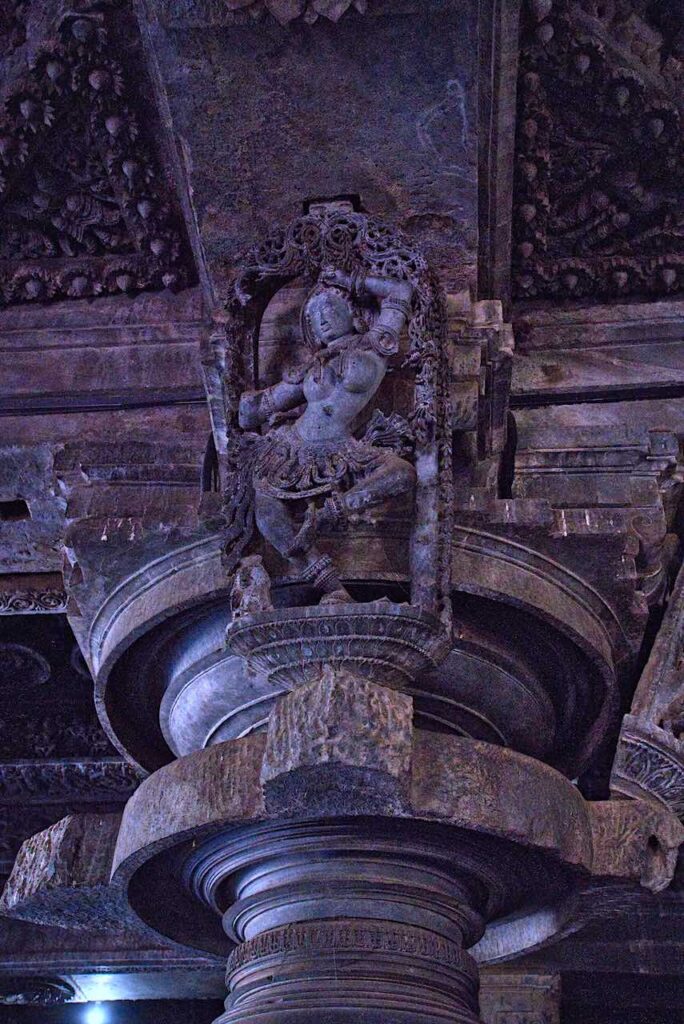
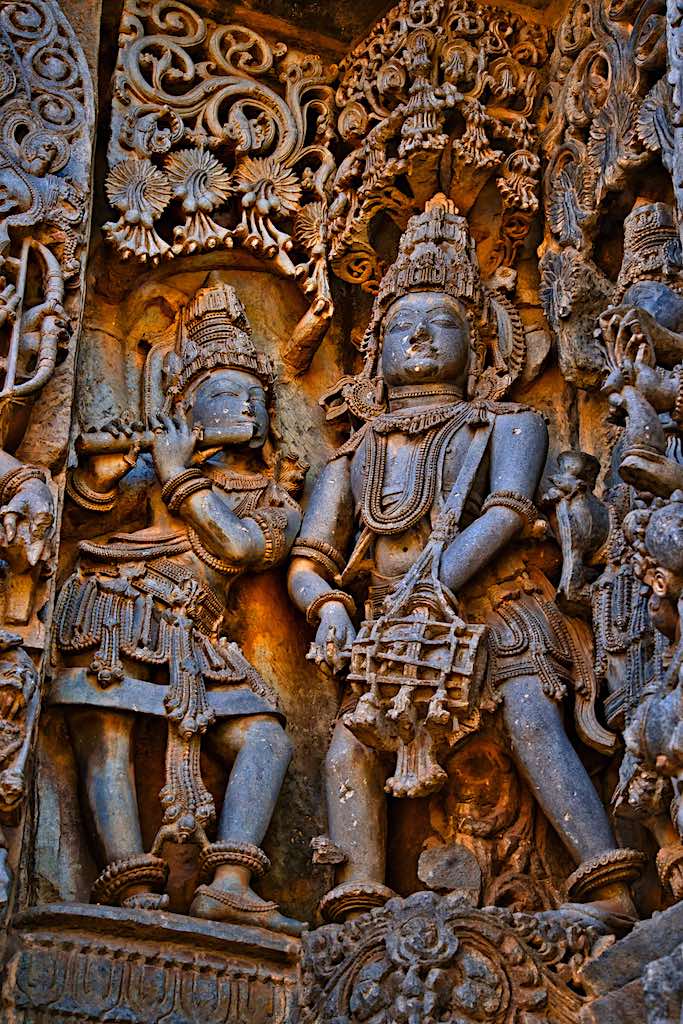
Each of the four pillars in the central navaranga of each shrine has four standing madanakai figures. These are beautifully carved damsels, looking down on the devotees below.
.
.
Apsara-Devangana, popularly known as Madanika, are the damsels depicted in sculptural forms in temples.
.

.
The shrines have a Shivalinga, which is worshipped even today.
.

.
The garbh griha entrance is flanked by Dwarapalas, as is usual in all temples. These are also as intricately carved as the Dwarapalas at the entrance of the temple.
.

.
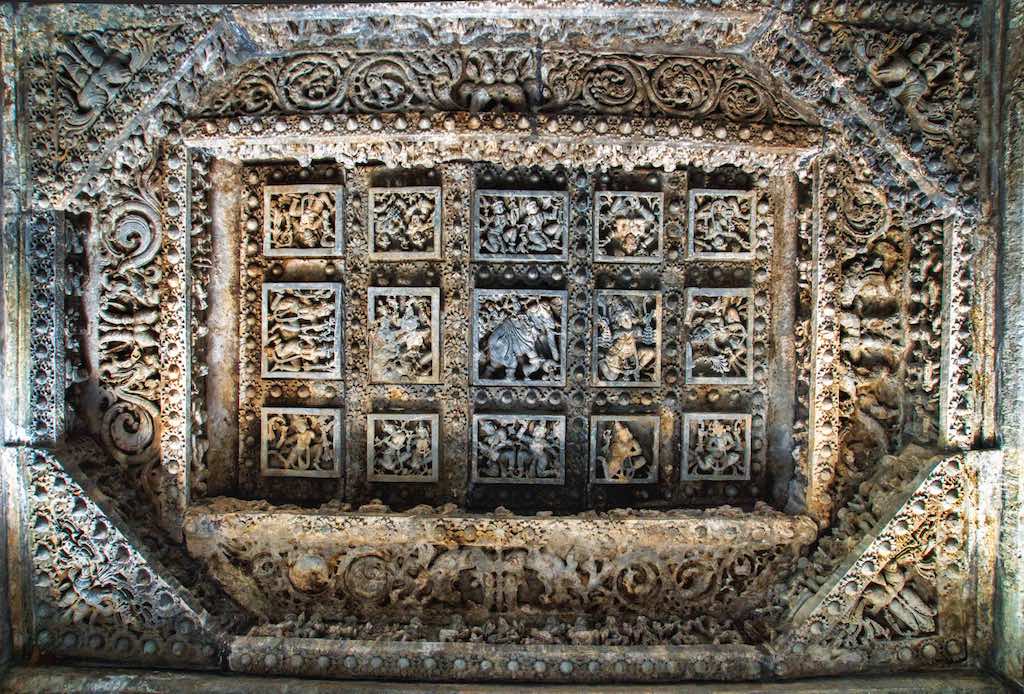
The ceilings of the garbh griha are beautifully carved, with each bay having a different design. Which is a normal feature of all the temples we visited.
.

.
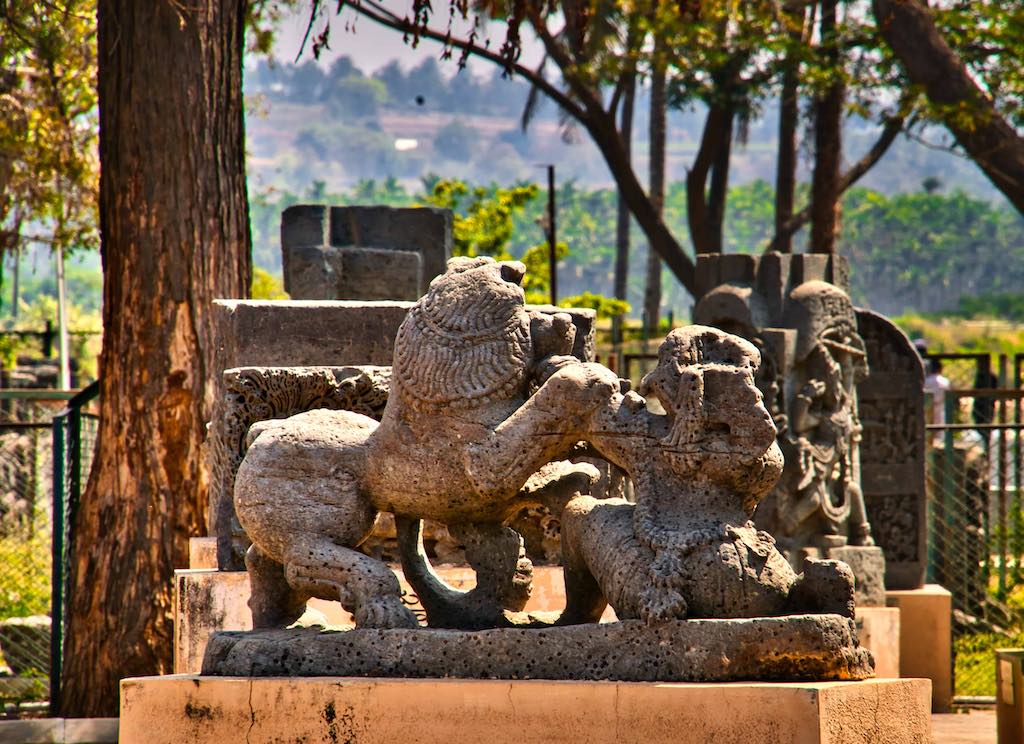
The temple premises include a museum managed by the ASI. It contains pieces of ruins and temple artwork recovered from the site and surrounding areas.
.
.
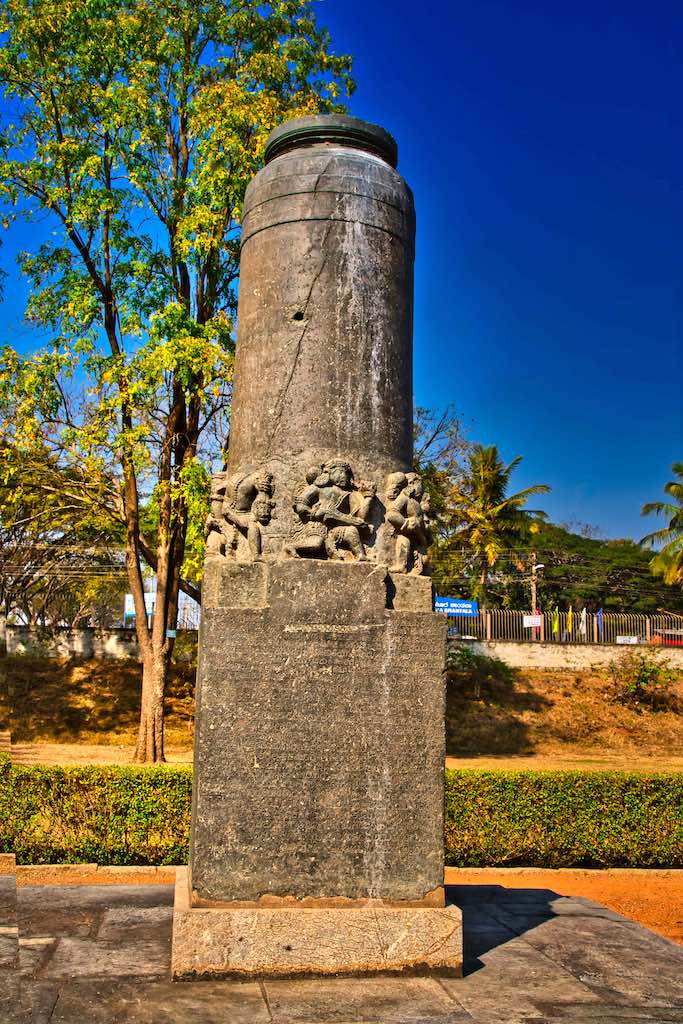
The temple premise also has the Garuda Sthambh (pillar) to the south but it is damaged. This Pillar is an important part of the temple. Garudas refer to the bodyguards of the monarchs and their queens. These inseparable guards used to commit suicide (siditale-godu) with the death of their master. This complete story is depicted on the Garuda Pillar, where the guards are seen cutting their heads with knives.
.
.
There is also an inscription engraved over the pillar which commemorates the death of one such guard, Kuruva Lakshma, the bodyguard of King Veera Ballala II.
.
.
The temple is a masterpiece of construction and reflects the glorious history of ancient India. It has been listed as a heritage site by UNESCO.
.

To protect your personal data, your connection to YouTube has been blocked.
Click on Load video to unblock YouTube.
By loading the video you accept the privacy policy of YouTube.
More information about YouTube’s privacy policy can be found here Google – Privacy & Terms.
.
Halebidu, along with Belur, were once the crown jewels of the Hoysala Empire. Today they attract well-deserved attention from tourists, scholars, and devotees alike from different parts of the country and the world at large.
.

.
Despite the irreparable losses suffered at the hands of time and mercenary invaders, the grandeur of these structures and the piety that went into their construction continues to inspire reverence from the silent beholder to this day.
.

the buffalo demon
.
How to Reach
Located at Halebidu, Hoysaleshwara Temple can be easily reached from Belur (16 kms), Hassan (31 kms) and Mysore (149 kms) in Karnataka. Apart from these cities, Halebidu is accessible from almost every city and town of Karnataka by regular buses and hired taxis.
.
.
Note for Visitors
The visit to the temple complex requires taking off one’s footwear. The complex requires extensive walking on stone surfaces and so visits should be avoided during peak summer when the stone becomes too hot to walk upon. And otherwise also always preferable to plan a visit in the early mornings. Visitor timings are from 6:30 am to 9:00 pm.
.
.
Nearby Temples
Close to the Hoysalewara Temple is the Jain Basadi complex, which is definitely worth a visit. Just one kilometre from Hoysaleshwar is another Shaiva temple, the Kedareswara temple. This too has magnificent sculptures and the temple is a must-see.
.
.
The photographs in this blog bring out the design and the richness of the sculptures.
.
My blogs of the other Hoysala temples I visited can be seen at:
- Chandramouleswara Temple, Arasikere
- Amrutheshwara Temple, Amruthapura
- Lakshmi Devi Temple, Doddagaddavalli
- Sri Veera Narayana Swamy Temple, Belavadi
- Kedareshwara Temple, Halebidu
- Parshvanatha Jain Temple, Halebidu
- Chennakeshava Temple, Belur
- Chennakeshava Temple, Arakere
- Sri Lakshmi Narsimha Temple, Javagal
.
Note: All photographs displayed above are my exclusive property and copyright; their use is prohibited without explicit consent, in writing.


26 Responses
Exquisite!
Thank you!
Magnificent and marvelous, with such intricacies and detail, it take you back to that era which was so beautiful.
Thanks for sharing the details, would definitely plan to visit. Added in my next list of visits, a must.
Every Indian must visit the place to see our glorious past for themselves.
Wonderful photo blog, next best thing to being at the site, totally surreal
Thank you. Now you can plan to see it in real 🙂
Wow Ajai,
Thanks for bringing this beauty in creation to my knowledge. It is astonishing to see the pain taken by the carvers of that time. The planning of each slab of stone, the designing, the carving, the meshing of one part with another is breathtaking. If i got it correctly, 19 years for creating this. What patience , but its worth it. We were so rich in our heritage that I feel blessed to learn about our ancestors. Their pursuit for perfection, matchless.
Your photography is of good quality , your eye for how to mesh them into a photo blog to narrate their history is mesmerizing.
Keep doing this great professional work and may you rise to the pinnacles of glory in your endeavours.
Wish you Godspeed and Good shooting
Thank you for your appreciation! The work is unimaginable unless one sees themselves. Hope you find time to visit the place.
Thank you for sharing such wonderful place details with intricacies. I will surely plan and visit.
Yes, you definitely must visit to see our heritage.
वाह वा खूपच छान फोटो. मागे मीही गेलो होतो, फोटो पण काढले. पण तुमच्यासारखे छान फोटो मला काढता नाही आले. तुम्हाला ती दृष्टी आहे.
Dhanyawad
Fantastic photography bringing out the intricate complex carvings and rows and rows of them merging beautifully into the next one. I saw these exquisite photos on a 22 inch computer terminal where one can really appreciate the true beauty and depth of STONE CARVINGS . At some places one can see the adjoining rough hewn ashlar which gives an idea of the effort and capabilities of the carvers who created all these heavenly sculptures with their hand tools only ,, centuries ago . No amount of praise can do full justice to this poetry in stone ! Thanks for bringing all this alive even when we are not present in situ . Great work indeed. Keep this up !!
Thanks! Whatever the photography, it can never convey the actual beauty of the workmanship. Which can only be seen when one visits physically.
Excellent photos and detailed explanation. Thank you all for such a beautiful work in enlightening everyone of our past.
Thank you. One should also endeavour to visit the temple to see for yourself the wonder.
Dear friends will request you to spend time to explore the magnificence of Ancient Indian Architecture as collated painstakingly by my erstwhile colleague Brig Ajay Singh ! It’s a treatise of the magnificence of Ancient Indian Temple architecture and more importantly the all encompassing magnitude of the Hindu faith which accepts all which thrives in diversity of thought and interpretation !
It is representative in its rich diversity , which is creation in varied hues its singularity is represented in varied forms it represents … we have celebrated and sold only a few mausoleums and monuments as those worthy of interest to foreign tourists while putting a cloak on the magnificence of a bewildering array of physical symbols which truly represented the rich culture of Bharath …
Make no mistake , it’s been erroneously represented as a polytheistic faith a conclusion reached by impatient and ignorant historians and observers who never dived deep to understand its under;yang philosophy , undermined its core teaching that the object of creation and the creator in every fundamental element of creation on misuse forms it’s omniscience and omnipresence is eternal .. it never takes birth and can never die … it’s travellers like Brig Ajay Singh who unearth this enormous wealth & reservoir of wisdom , share their experience to give a view of the true representation of Bharath ! It did not begin in 1947 it has many contributors. It is reservoir of wisdom and silence a manifestation of creation and an unending process of discovery and wisdom as we transcend personal limitations towards the end objective of Mukti or the transcendence of the soul to eternal bliss !
Enjoy the journey and the visual treat … Thank you Brigadier for this outstanding contribution !
Thank you, Atul! Your description is very apt for the wonder that is this temple. And the greater wonder that is our heritage. Sadly so underplayed even till date. I hope this state will change in the near future.
Entralled to go through the profound description. Being local I prefer to recommend ur blog to new visitors so that they can see the details with knowledge. Kudos👍.
Thank you for the write-up. You are welcome to share this blog to those who wish to visit the temple.
“Though a Shaivite monument, it reverentially includes many themes from Vaishnavism and Shaktism tradition of Hinduism, as well as images from Jainism.”
This is the beauty of ancient architecture.. they focussed on different aspects of divinity, and still united it 🙂
Absolutely. Sanatana Dharma has always been inclusive of all faiths and beliefs. And tolerant.
What a beautiful place ! And wonderful photos 😍💙💯
It is an amazing place! Thanks
Awesome, Exquisite.
Creations of God !
Yes, absolutely! Only by seeing with your own eyes can you grasp the wonder that it is.