
This blog is part of the series I have written on Hoysala Temples. This is a follow-on to the initial blog and specifically covers the Parshvanatha Temple, Jain Basti, Halibedu.
.
Jain Basadi complex in Halebidu, Hassan district of Karnataka consists of three Jain Basadis (Basti or temples) dedicated to the Jain Tirthankars Parshvanatha, Shantinatha and Adinatha. The complex is situated near Kedareshwara temple and Dwarasamudra lake. These temples were constructed in the 12th century during the reign of the Hoysala Empire along with Kedareshwara temple and Hoysaleswara Temple have been proposed to be listed under UNESCO World Heritage Site. There were 772 Digamber Jain temples at one time in the area, out of which only 3 have survived.
.

.
Archaeological Survey of India (ASI) has listed all three basadis in the complex in the list of “Must See” Indian Heritage.
.

.
Halebidu was the capital of the Hoysala Empire between the 11th to 14th century CE when Jainism had a strong presence in the region. The region was called Dorasamudra or Dwarasamundra during the rule of Hoysala dynasty. Bittiga (later became Vishnuvardhana), is considered the greatest ruler of Hoysala kingdom and was a Jain till around 1115 CE after which he converted to Vaishnavism under the influence of the Hindu saint Ramanujacharya. However, he still recognized Jainism on par with Hinduism. During their regime, Hinduism and Jainism co-existed with utmost religious harmony. Vishnuvardhana’s wife Shantala Devi, remained a follower of Jainism. These temples were later maintained by the Maharaja of Mysore.
.
.
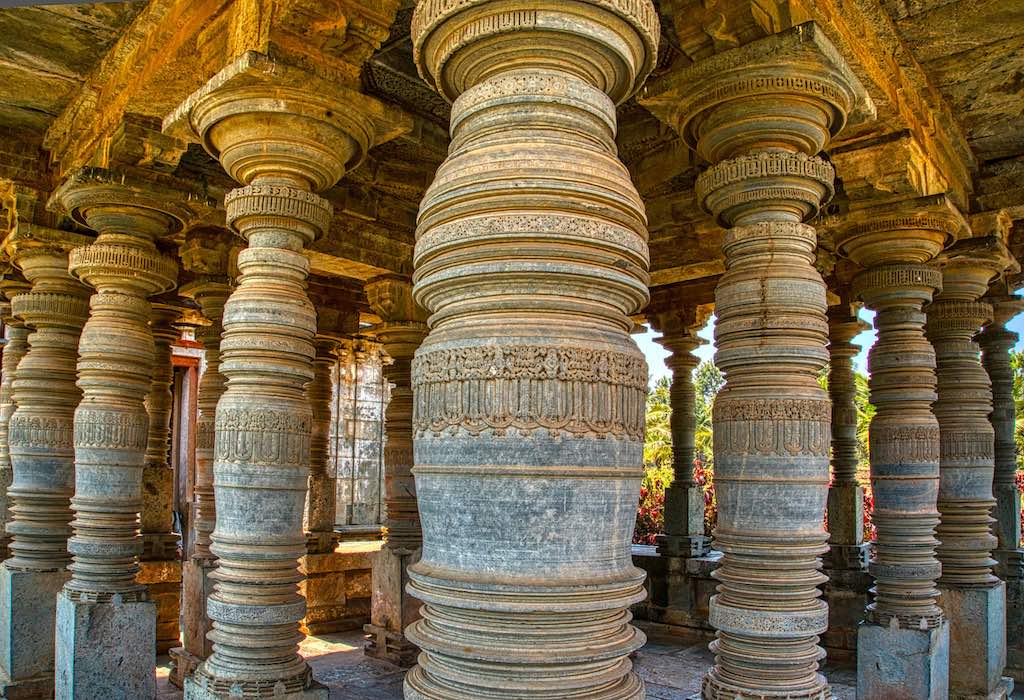
Near the Kedareshwara temple is the Jaina basadi (basti or complex). The Parshvanatha Temple comprises of an ardhamandapa (half hall) and a mahamandapa (large hall) and it was our next halt. The Parshvanatha Basadi was built by Boppadeva in 1133 CE during the reign of King Vishnuvardhana. The construction of the temple coincided with the victory of Narasimha I as the royal heir to the throne. The deity, therefore, is called Vijaya Parsvanatha (victorious Parsvanatha).
.
.
The temples along with the town were plundered by Malik Kafur, the general of Alauddin Khalji and were destroyed in the period of 16 years during the Siege of Dwarasamudra and the invasion by Muhammad bin Tughluq, which followed shortly after the Siege of Dwarasamudra.
.

.
While Hoysaleswara temple and Kedareshwara temple are famous for their workmanship, the Jain basadis are famous for architectural tradition.
.

.
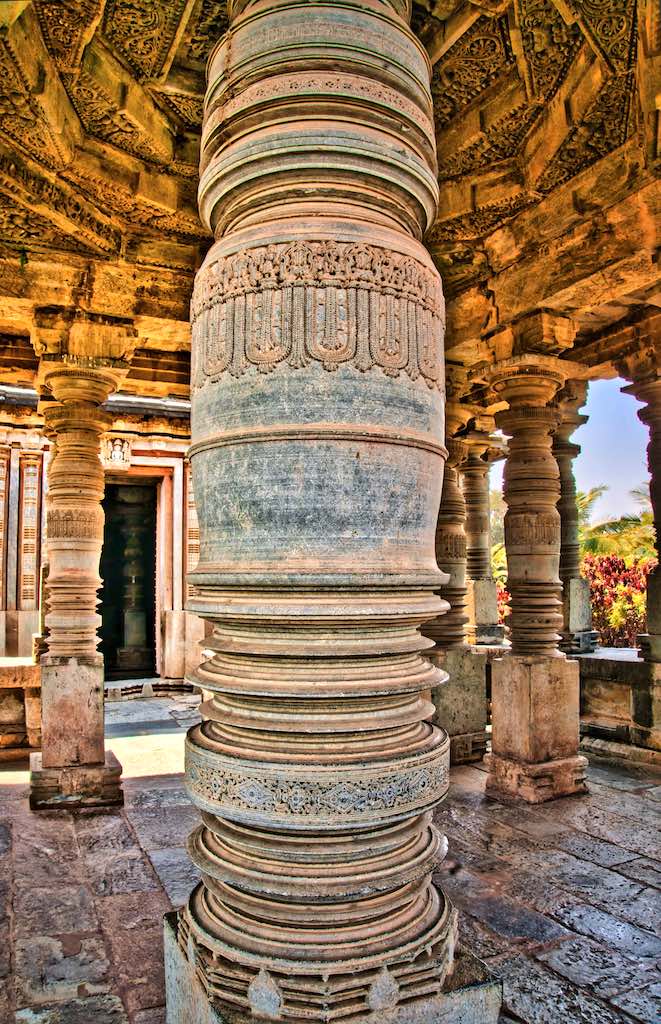
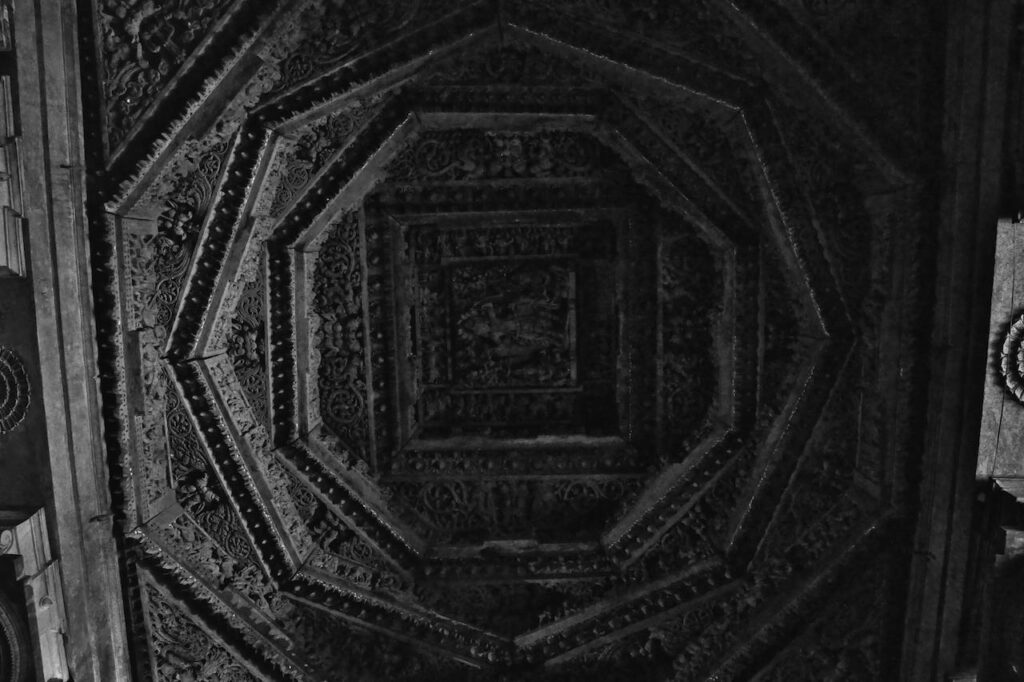
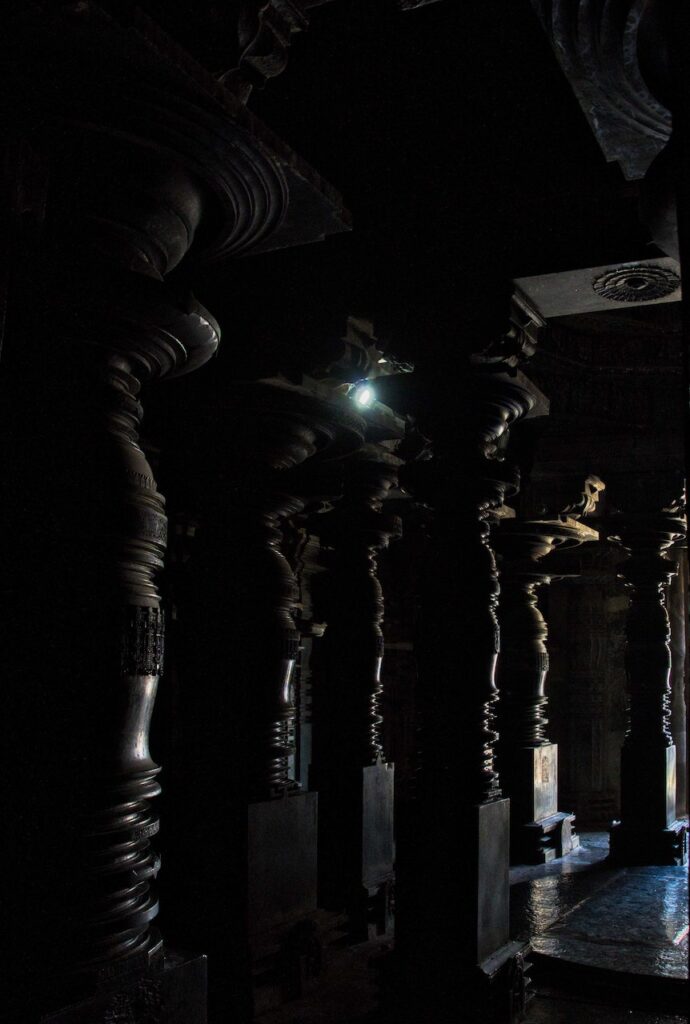
This temple is famous for the beautiful navaranga halls and exquisite carvings on the lathe-turned pillars. These pillars are massive and placed next to each other, which according to Kurt Bruhn signifies “the many layers karma that way us down with their black colour representing timelessness like it is for Tirthankaras”. The ceiling of the mandapa and mahamandapa is ornate with the sculpture of yaksha Dharanendra at the centre.
.
.
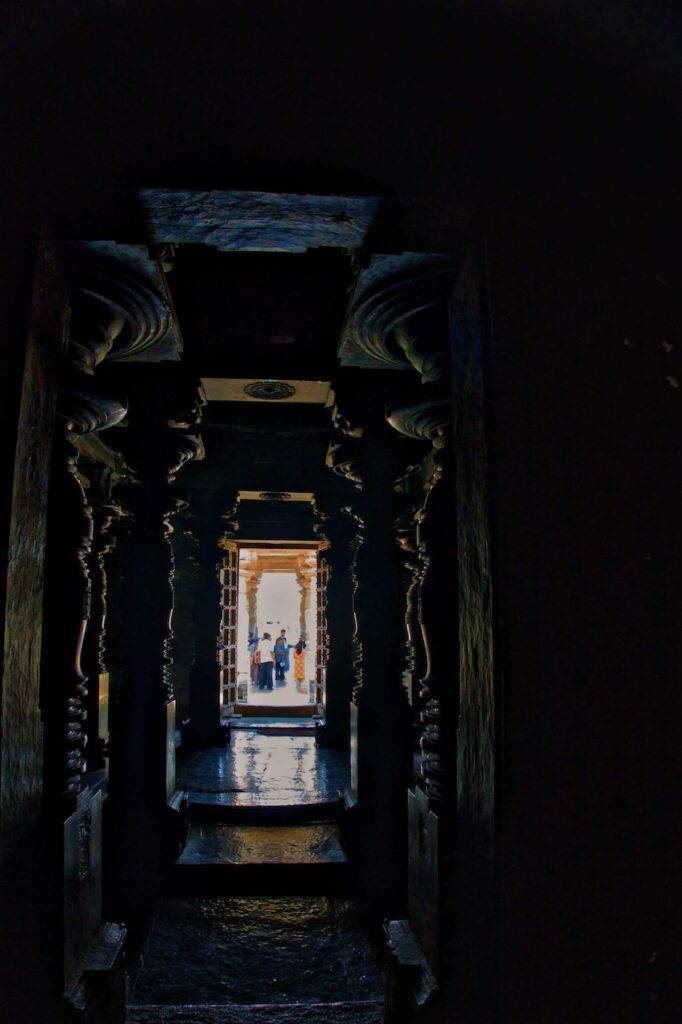
Along with being rich in sculptures, the temple also features carvings of the life-scenes of Tirthankaras on the ceiling panel of mukhamandapa. There is a famous image of Padmavati with three-hooded cobra over her head and with fruits in three hands and a weapon in the fourth. The temple also features niches for idols of the 24 Tirthankaras.
.
.
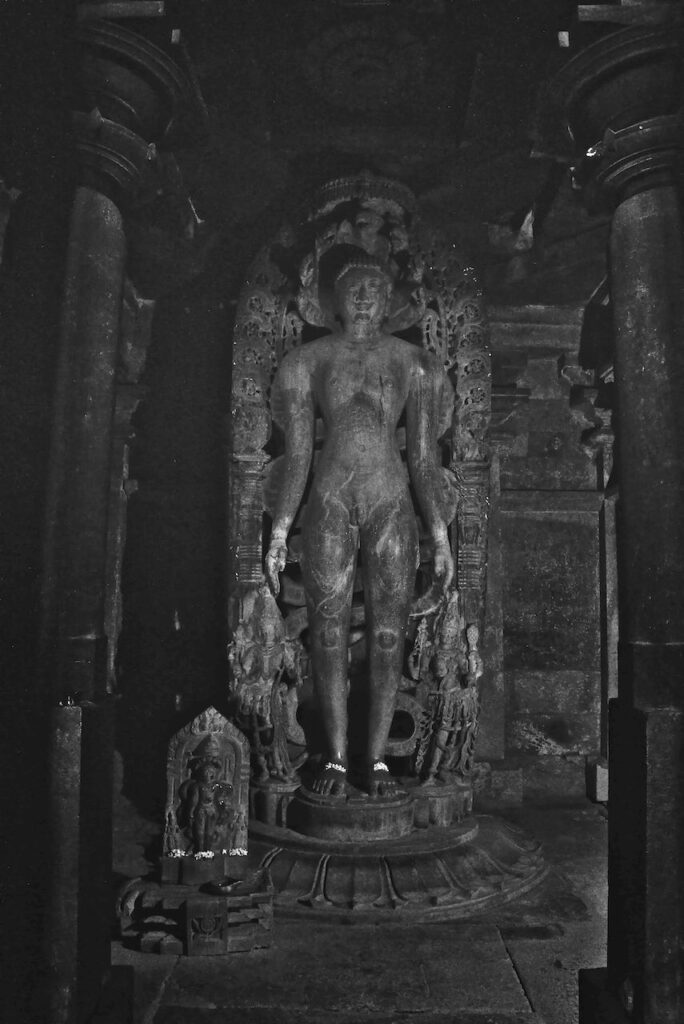
The murti of Parshvanatha is 18 feet tall in Kayotsarga posture. It is carved out of black stone and bears a 7-headed serpent on his head.
.
.
This temple is the largest and considered the most architecturally significant in the basadi complex.
.
.
Halibedu is 210 km from Bangalore and from Hassan 45 kms with good road and good connectivity. There are many temples in the vicinity in a 30 km distance which can be easily visited:
1. Koravangala – Sri Bucheshwara
2. Koravangala – Sri Govindeshwara
3. Sanka – Sri Cannakeshava
4. Salgame – Sri Cannakeshava
5. Doddagaddavalli – Sri Lakshmi
6. Honnavara – Sri Channakeshava
7. Belur – Sri Channakeshava
8. Adagur – Sri Channakeshava
9. Halibedu – Sri Hoysaleshwara
10. Chatchatnalli – Sri Chatteshwara
11. Belavadi – Sri Veera Narayana
12. Javagal – Sri Lakshmi Narasmiha
.
My blogs of the other Hoysala temples I visited can be seen at:
- Chandramouleswara Temple, Arasikere
- Amrutheshwara Temple, Amruthapura
- Lakshmi Devi Temple, Doddagaddavalli
- Sri Veera Narayana Swamy Temple, Belavadi
- Hoysaleshwar Temple, Halebidu
- Kedareshwara Temple, Halebidu
- Chennakeshava Temple, Belur
- Chennakeshava Temple, Arakere
- Sri Lakshmi Narsimha Temple, Javagal
.


8 Responses
Amazing content
Thank you. Hope you also managed to see the other temple blogs.
Wonderful photos
Thank you.
Nice one sirji
Just imagining how the “Beautifully carved polished lathe-turned columns” were made to shine so much in the darkness 🙂 in traditional ways
I am sure the “traditional” way for making those columns was actually advanced technology to produce such precision work. Even today I dont think it will be easy to produce such designs on stone columns, especially the work done from inside.