
This blog is part of the series I have written on Hoysala Temples. This is a follow-on to the initial blog and specifically covers the Kedareshwar Temple Halibedu.
.
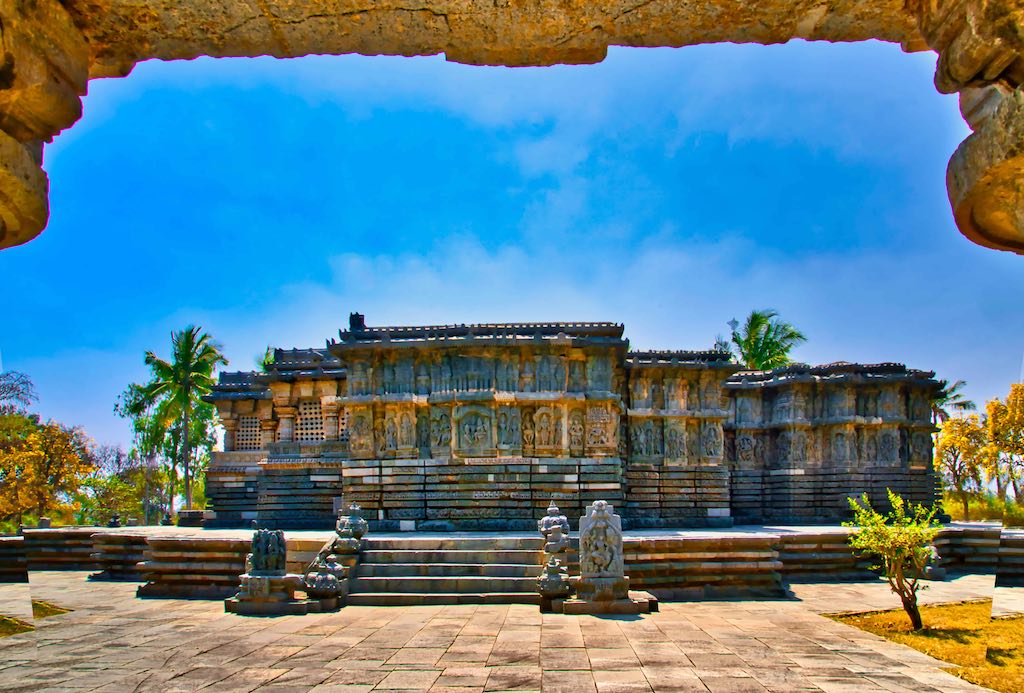
Within a kilometre of the world-famous Hoysaleshwar Temple is another exquisite Hoysala temple – the Kedareshwara Temple, Halibedu. The temple was constructed in 1219 CE by King Veera Ballala II and his Queen Ketaladevi, and its main deity is Ishwara (another name for Shiva). The temple took nearly 80 years to complete!
.
.
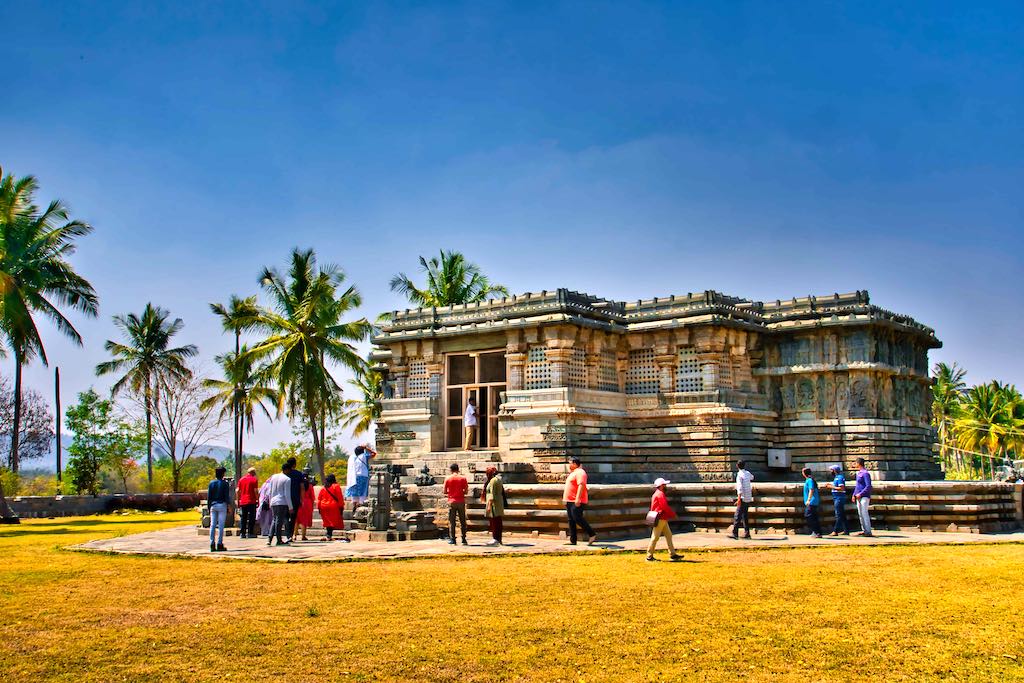
This is a Shaiva trikuta (temple with three shrines) – the temple’s three shrines are connected to the central hall via a vestibule. The temple is designed following a stellate plan (star-shaped) and is built on five to six feet raised platform, or jagati – a standard Hoysala design. Since these temples do not provide for circumambulation of the shrine inside the temple, this platform provides for this ritual. The star-shaped or “staggered square” (or cross in square) temple plans design used here is quite common among Hoysala constructions, creating multiple projections and recesses in the outer walls. In these projections, the architects created repetitive decorative sculptures and reliefs called “architectural articulation”.
.
.
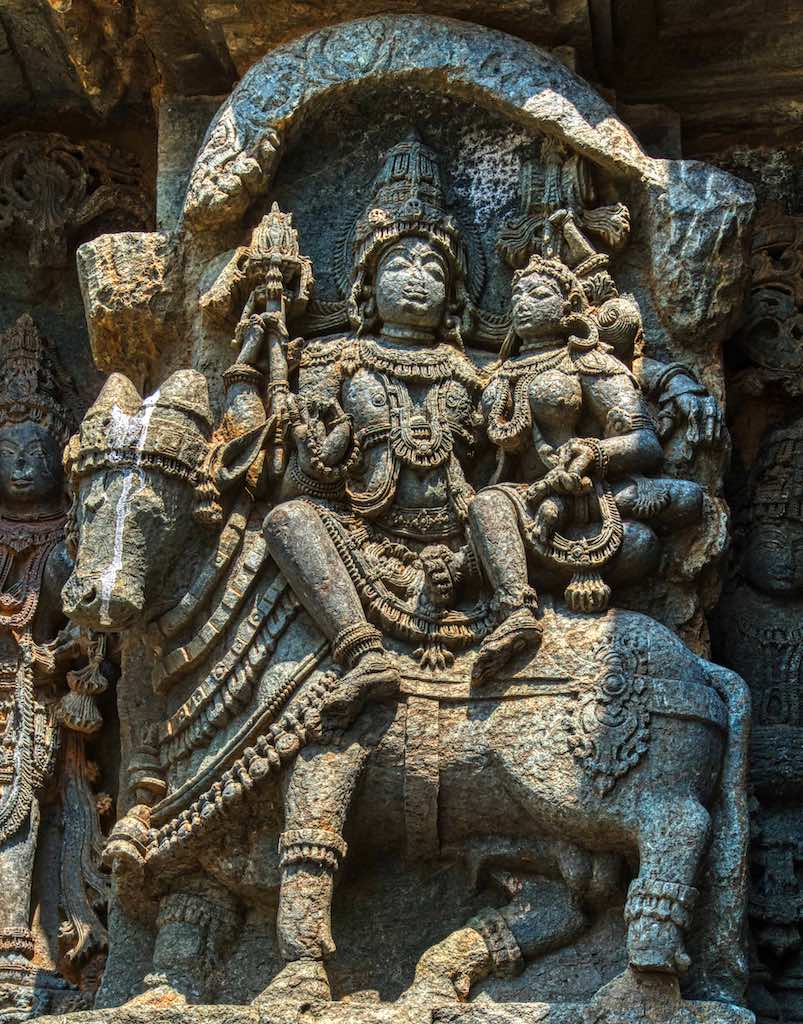
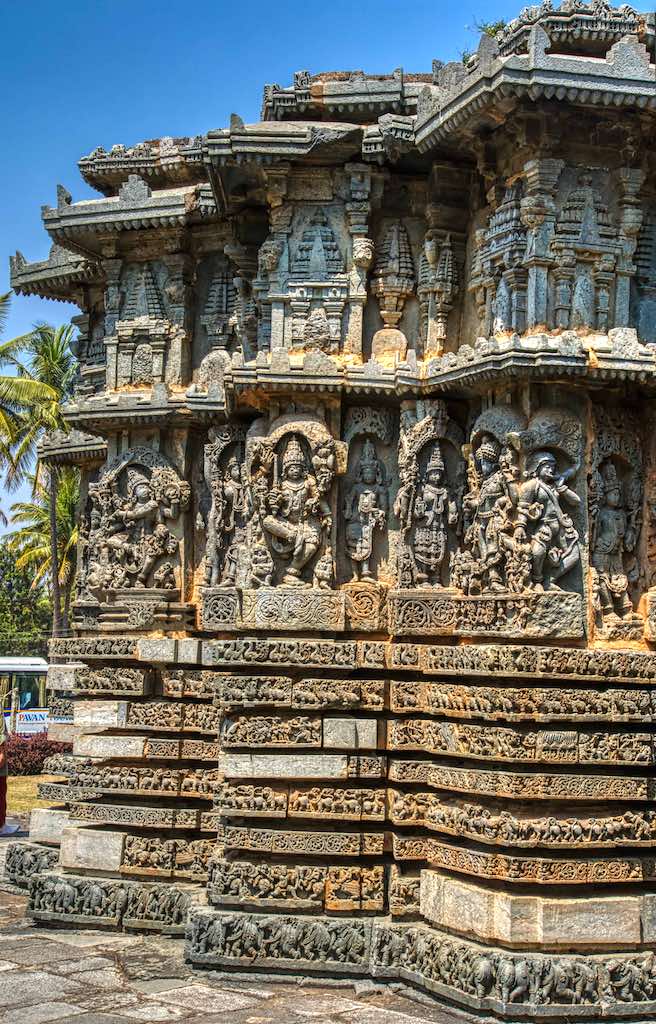
Despite being a Shaiva temple it is well known for its friezes and panel relief that bare depictions from both the Shaiva and Vaishnava traditions. The walls are covered with beautiful images of Lord Shiva, Vishnu Brahma, Lakshmi, Mahishasura Mardhini, Saraswathi, Krishna, Varaha, Ganesha, etc.
.
.
These images are carved with great importance given to their Bhava (expressions) and each God/Goddess holds their astras (weapons) in different postures
.

.
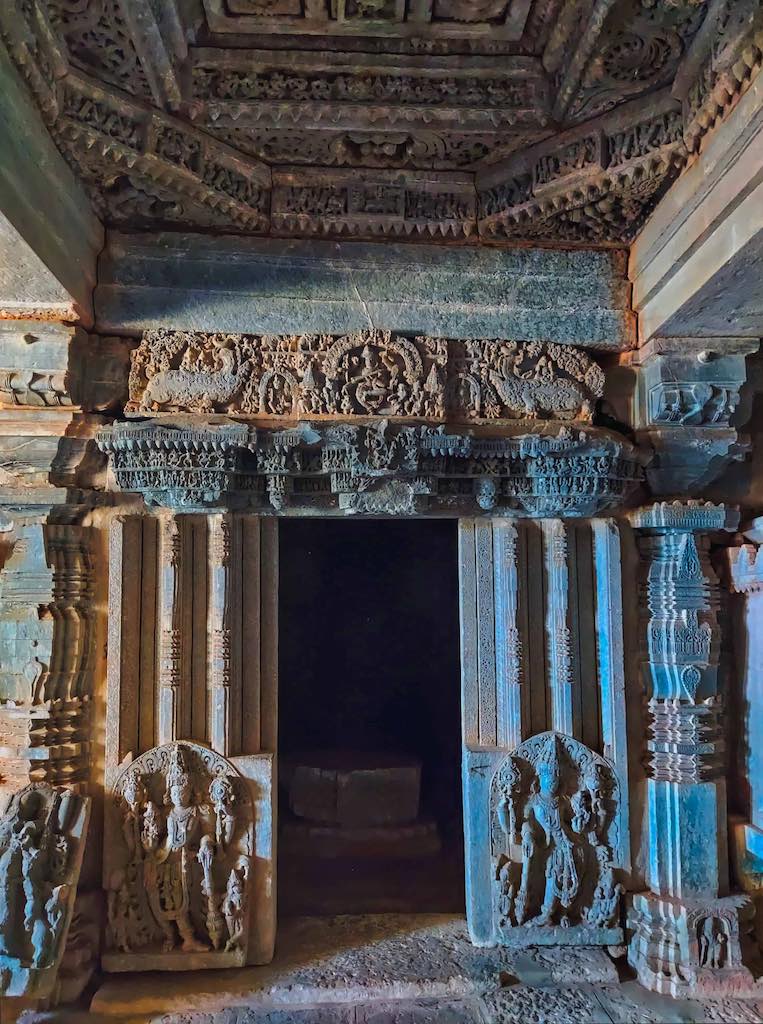
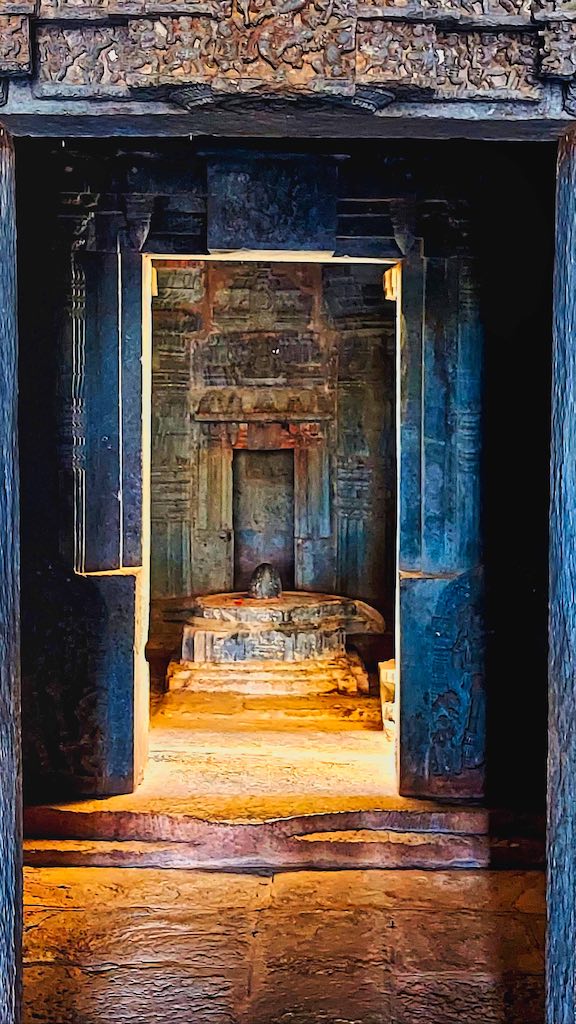
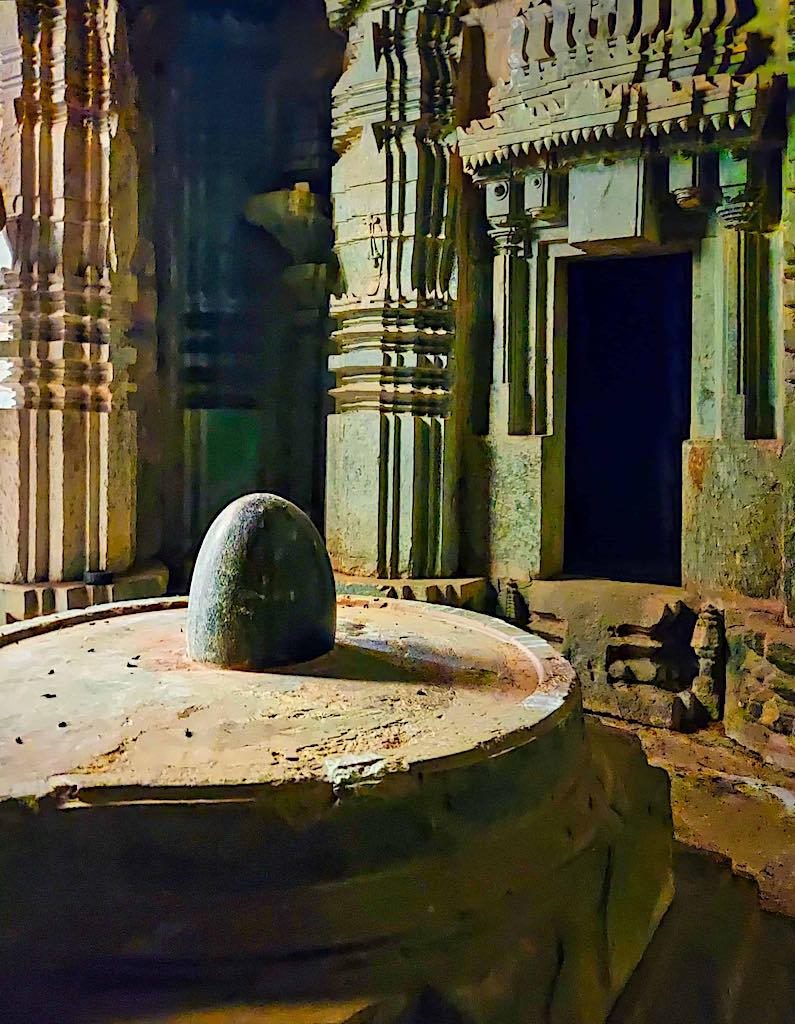
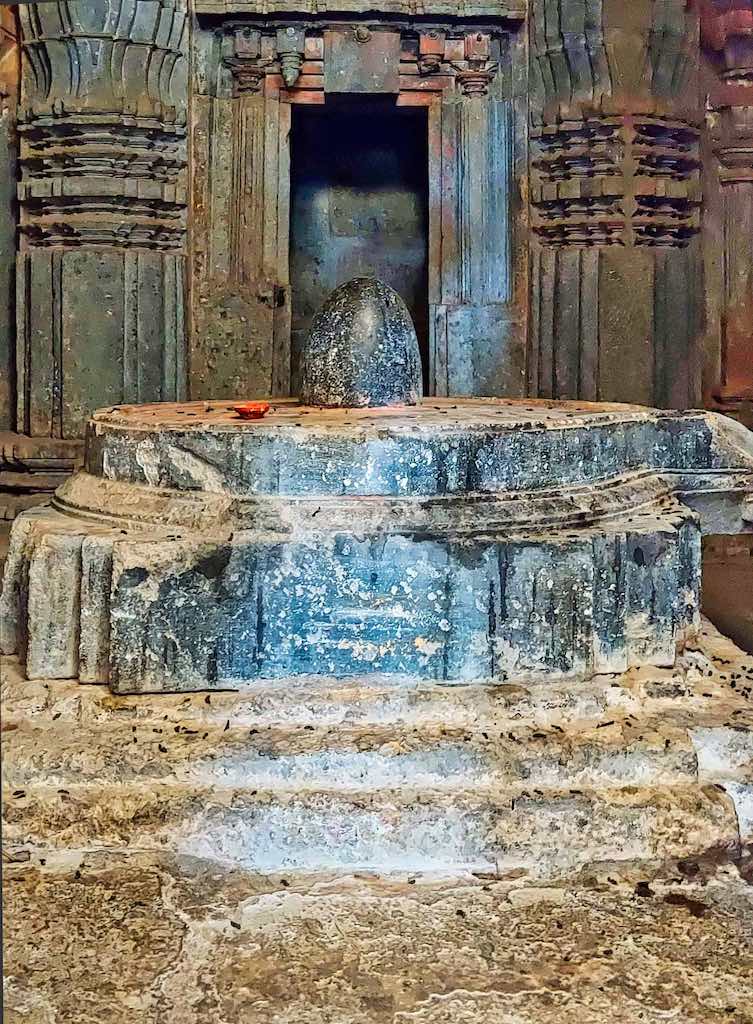
The murti of all the three deities is missing, as are the superstructures. It is not a “live” temple i.e. no puja is performed in the temple.
.
.
The door also remains locked, which however we were lucky the sentry had the keys and opened for us to see the interiors.
.
.
The architects have designed the Garbh Griha such that it ensures sunlight lights it up naturally.
.
.
Some noteworthy pieces of sculpture are the dancing Bhairava (a form of Shiva), Govardhana (Krishna lifting a mountain), the Vishnu as Varadaraja, and a huntress.
.

Stone jaalis provide light inside 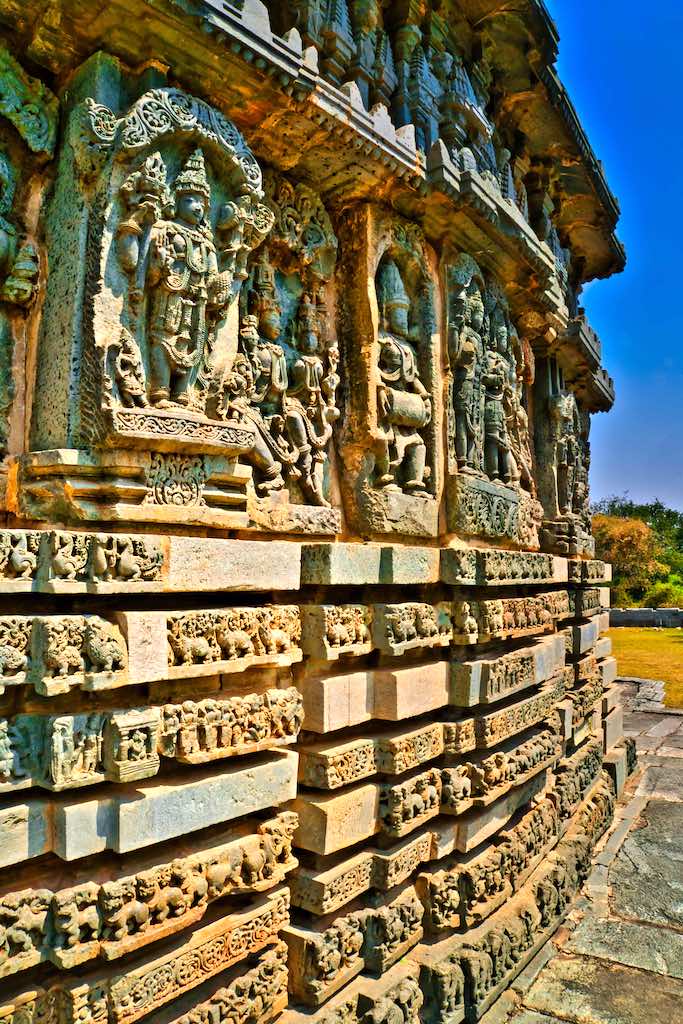
Carvings in eight tiers
.
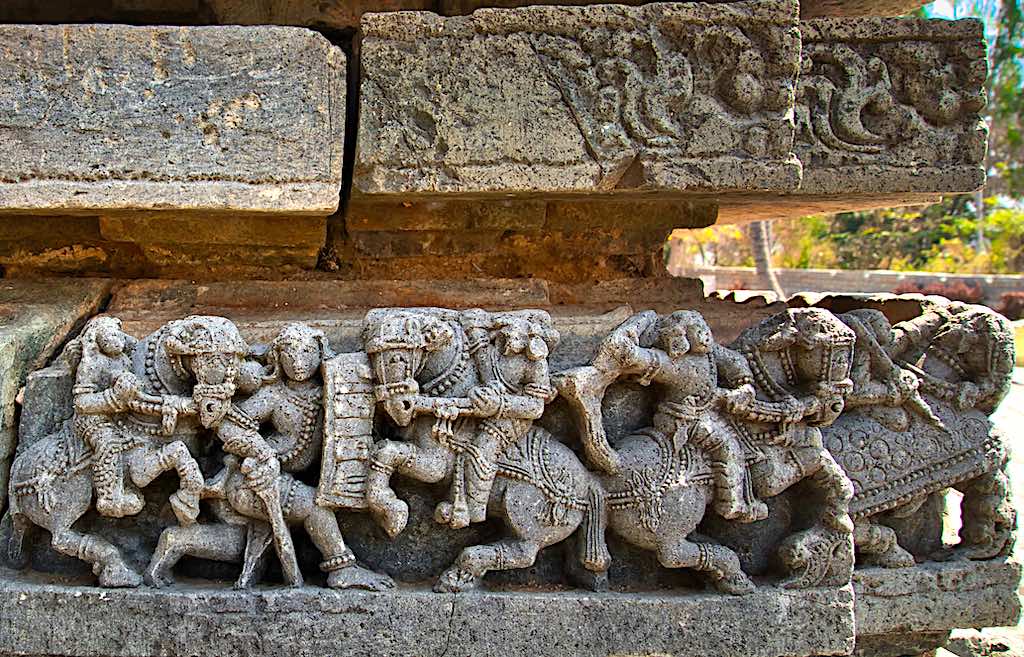
As we take a walk on the Pradakshina Patha (jagati or raised platform), we find eight tiers of carvings. From the bottom the first consists of Elephants, the second row decorated with Cavalry forces, the third row being decorated with beautiful creepers and flowers like designs.
.

.
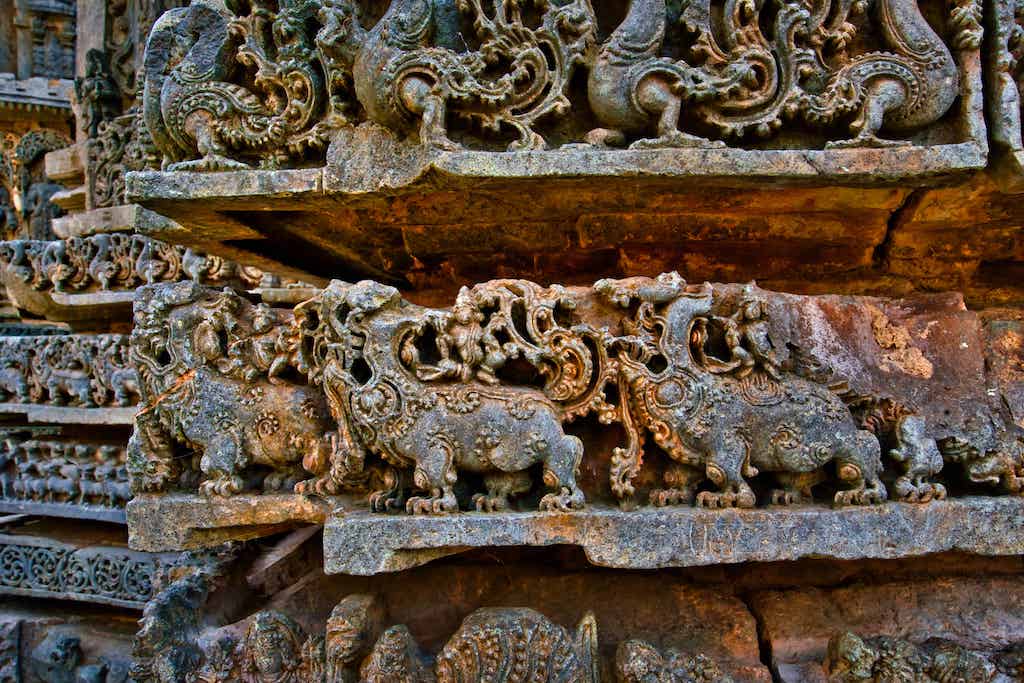
The fourth row is a combination of lions fighting with each other and in some places, one can make out the Mascot of Hoysala being sculpted.
.

.
The fifth row is again decorated with creepers, but one has to keenly observe the corners which have got the Simha Lanchana and these images are carved with great precision.
.

.
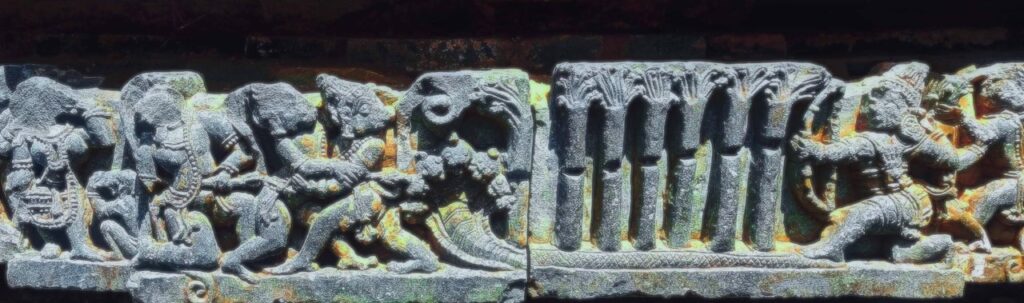
The sixth row is the storyboard of Ramayana, Mahabharatha, Bhagavatha and other story series. The Samudra Manthana scene, Bheeshma sleeping on the bed made out of arrows and waiting for Uttarayana Punya Kaala to separate the body from the soul are some of the notable sculptures. The photo below shows scenes from the epics – on the left is from the Mahabharat which shows the Pandavas trapped inside the burning palace made of lac; flames are seen rising from the roof.
.

.
A scene depicting Ram killing Bali from behind seven trees is a popular story from the Ramayana and seen below.
.
.
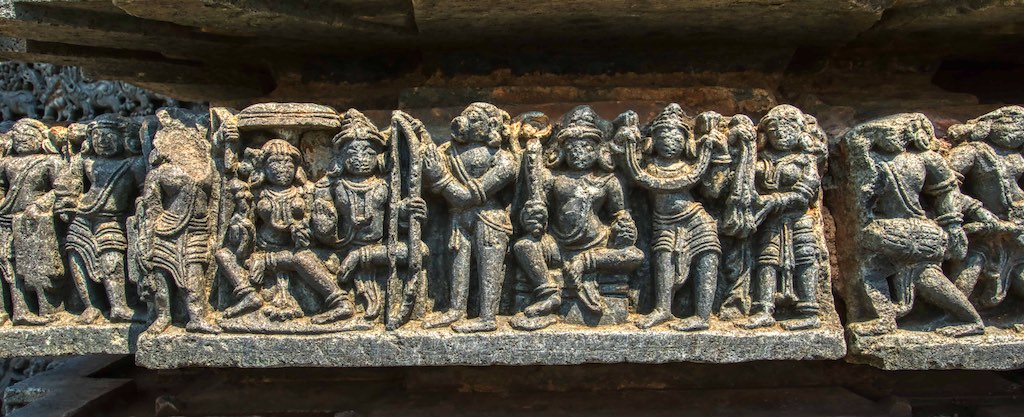
Other scenes depict Pralhada being tortured in different ways (such as being crushed between Elephants, put into burning Yagna Kunda, thrown with poisonous snakes around, pushed into Pathala, etc.,), Abhimanyu entering the Chakravyuha, etc. In the photo below Ram, Sita, Lakshman and Hanuman seen in a relief carved on the external walls.
.
.
The seventh row consists of Makara and the eighth rows consist of swans again, one has to give not miss the corner stonework.
.
.
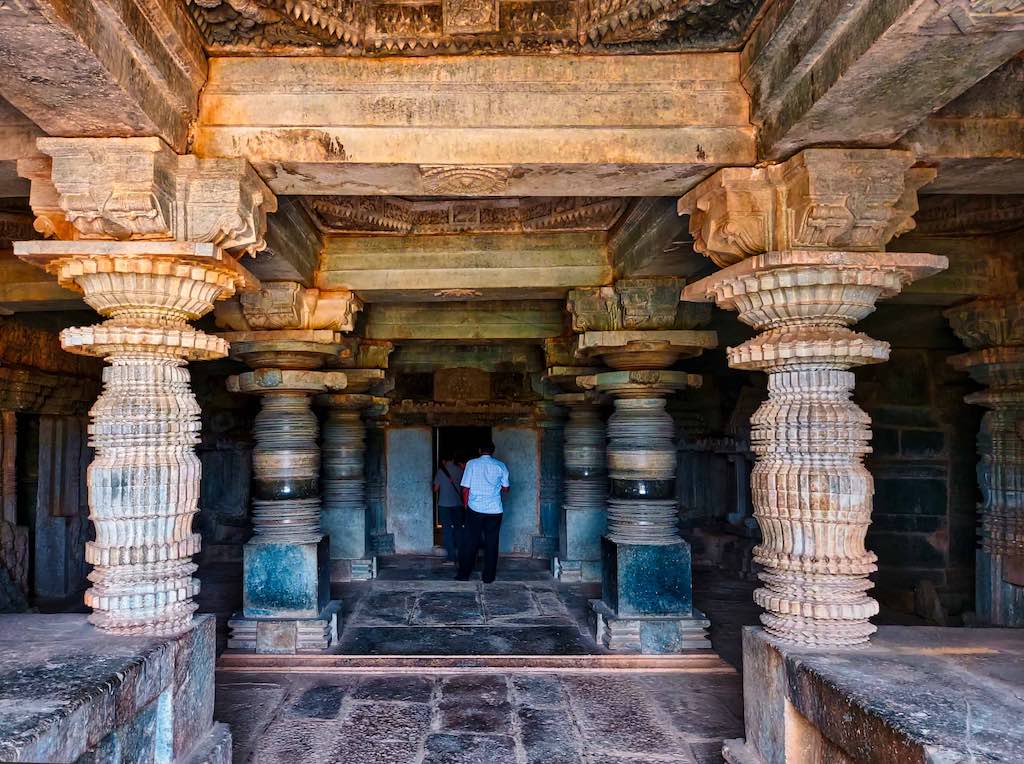
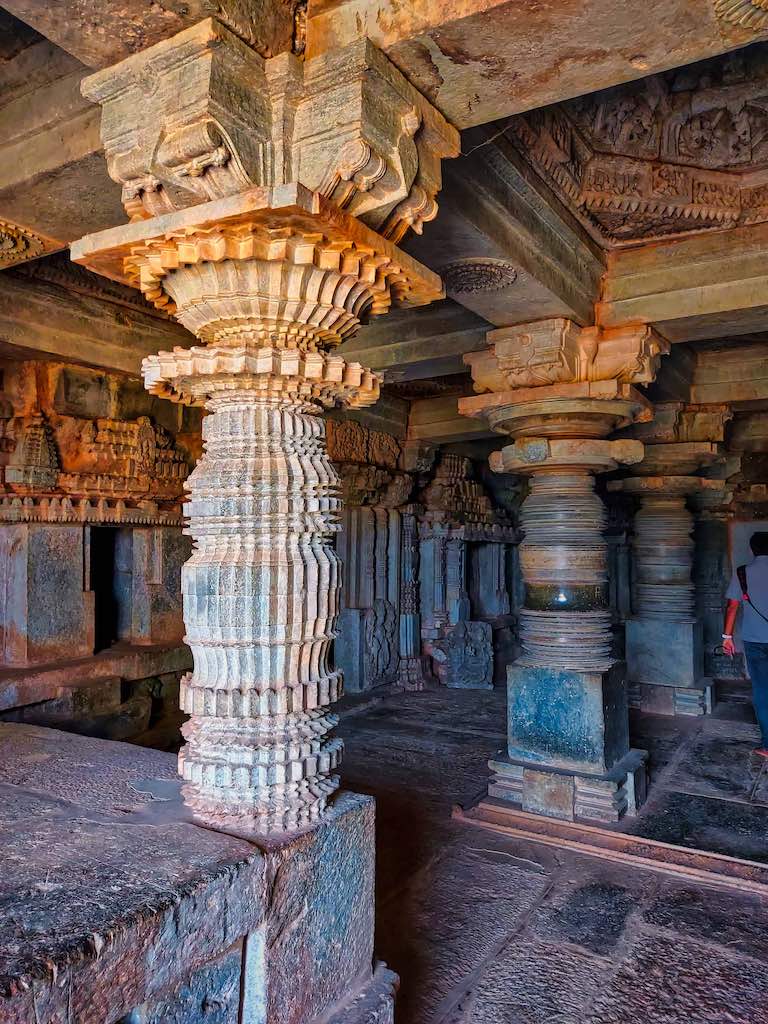
As typical in Hoysala temples, the entrance and halls are dotted with polished lathe-turned pillars having amazing geometrical designs.
.
.
It is still a mystery how such large pillars were made as lathe technology were not existing in that era. And even if such advanced technology was available, its a wonder how such designs could be carved on stone perfectly even on the inner sides of complex geometric patterns.
.
.
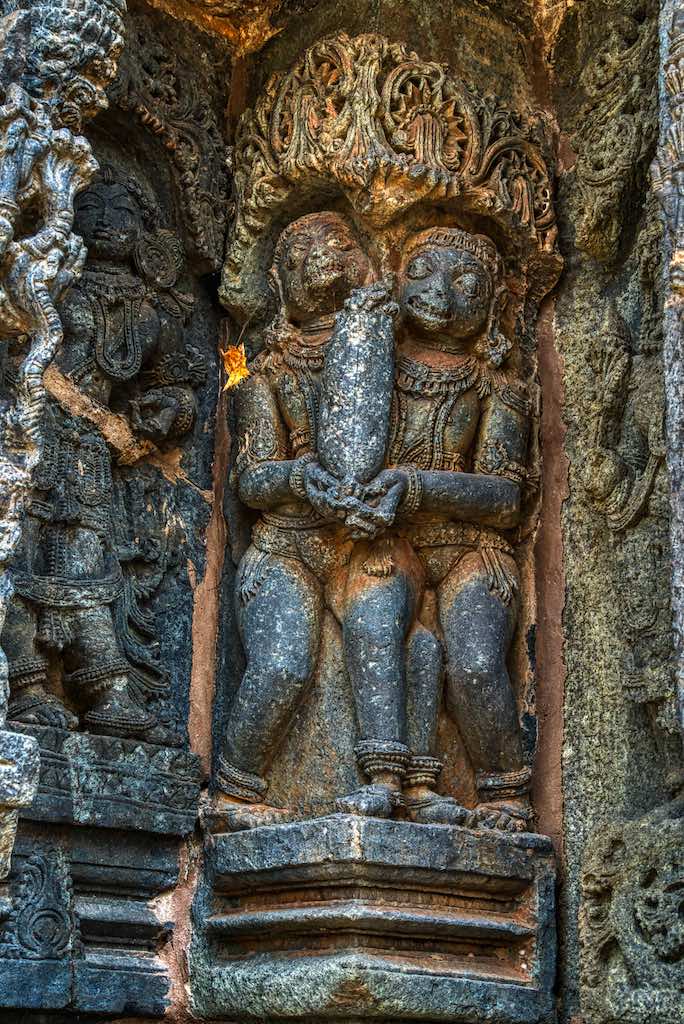
One of the twin sculptures magnificently carved by the artists on a cornerstone. The details of each figure merge perfectly across the edge and morph into the other figure on the other side. The expertise of the craftsmen is beyond words!
.
.
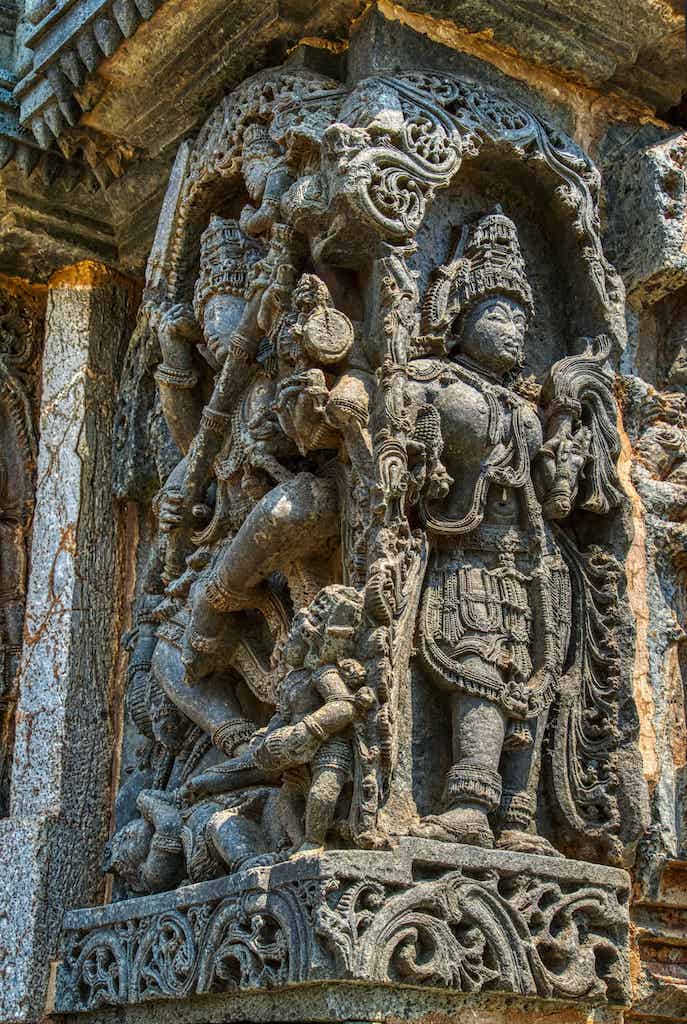
A careful look at the sculptures makes one understand that the sculptors were not only trained in handling stone and chisel but were also knowledgeable about Sangeetha, Sahithya, Puranas, Nrithya, Nataka, etc.
.
.
The images situated in corners are amazing as they share the limbs with each other on either side.
.
.
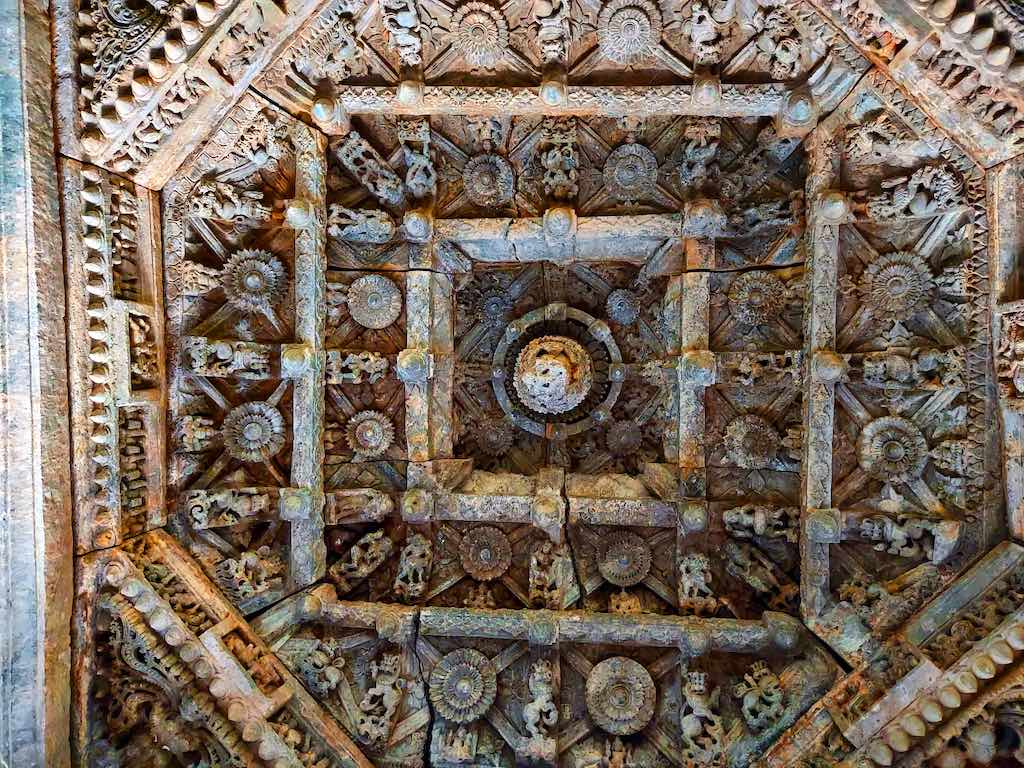
As would be expected in any Hoysala temple, the roof of the temple consists of panels, each exquisitely carved – again with figures of the pantheon or scenes from the epics. Generally, the roof carvings are in tires and each has its own story to tell.
.
.
Halibedu is 210 km from Bangalore and from Hassan 45 kms with good road and good connectivity. There are many temples in the vicinity in a 30 km distance which can be easily visited:
1. Koravangala – Sri Bucheshwara
2. Koravangala – Sri Govindeshwara
3. Sanka – Sri Cannakeshava
4. Salgame – Sri Cannakeshava
5. Doddagaddavalli – Sri Lakshmi
6. Honnavara – Sri Channakeshava
7. Belur – Sri Channakeshava
8. Adagur – Sri Channakeshava
9. Halibedu – Sri Hoysaleshwara
10. Chatchatnalli – Sri Chatteshwara
11. Belavadi – Sri Veera Narayana
12. Javagal – Sri Lakshmi Narasmiha
.
The photographs in this blog bring out the design and the richness of the sculptures.
.
My blogs of the other Hoysala temples I visited can be seen at:
- Chandramouleswara Temple, Arasikere
- Amrutheshwara Temple, Amruthapura
- Lakshmi Devi Temple, Doddagaddavalli
- Sri Veera Narayana Swamy Temple, Belavadi
- Hoysaleshwar Temple, Halebidu
- Parshvanatha Jain Temple, Halebidu
- Chennakeshava Temple, Belur
- Chennakeshava Temple, Arakere
- Sri Lakshmi Narsimha Temple, Javagal
.
Note: All photographs displayed above are my exclusive property and copyright; their use is prohibited without explicit consent, in writing.


One Response