
This blog is in continuation of the previous one on Lithuania; it is the concluding part of my 7-nation journey through Scandinavian and Baltic countries in the summer of 2019.
Norway was the first country we hitchhiked through; to read the first blog of my travels through the Scandinavian and Baltic countries, click here.
.
We caught the night bus at Vilnius, Lithuania, for Warsaw, Poland, on 30 July 2019. While boarding the bus, we came across the most stringent checking of our passport/visas, which till now was mostly a perfunctory ritual, though it was carried out by the bus staff itself. It was awkward reaching a new destination at 3:15 am, but it was the only bus available when we re-scheduled our plans in Vilnius.
Language was a major barrier in communicating – no one on the bus seemed to understand English! Our plan was to get off at the Central Railway Station in Warsaw, before reaching the Bus Station, since it was close to our lodgings. However, it was difficult to communicate this to the driver.
.

.
The bus was comfortable, and we had got along some snacks/dinner to eat, accompanied by the last of the Lithuanian beer we had. Sleep was intermittent that night due to the odd hour of arrival at our destination, and not being sure what time our disembarking point would come. We had tried to enquire about the approximate time of arrival, but our question to a few passengers was met by sweet smiles and silence. We entered the city quite early and the bus kept meandering through the streets for a considerable time, with an occasional passenger getting off. Finally, one of the passengers reached out and told us that we had reached the Central Railway Station drop off point and we hurriedly got off and retrieved our luggage. We had been dropped off on a deserted road and before we could gather our wits, the bus had zoomed off!
.

.
We had expected the Central Railway Station to be a big place – and here we were standing on an empty road at 3:00 am! There was no one in sight, and by the time we tried getting our bearings, the few passengers who had disembarked from the bus had vanished from sight! Though Harsh had international roaming on his mobile phone (through Airtel) which let us use Google Maps wherever we were, often when we reached a new country it gave initial problems to connect to a local network – on a few occasions, one had to call their helpline to resolve the issue. At the moment, our virtual “guide” was “not available.” I had glimpsed one of our co-passenger from the bus entering the underground tunnel nearby, and we decided to follow suit in the absence of a better idea. Hopefully, there would be some route markings inside.
.

.
The check-in time for the apartment we had booked in Warsaw was 3:00 pm. We had planned to spend the intervening time at the Central Railway Station due to our baggage. The tunnel led to a huge underground complex, well marked – but all in Polish! There were numerous escalators branching off from the central walkway to train platforms below, and there was no one in sight from whom we could ask directions. We continued walking, till we saw a sign which appeared to point towards the “Central Station.” We were correct and it led us to the huge concourse of the station. It had a large waiting area, though most of it was occupied. We had nearly 12 hours to pass, and so we settled down for the long wait. Around 6 am, the police appeared and started checking and removing those not having tickets. Probably we didn’t appear as stragglers, so we were left alone. But the frequent police rounds were unsettling and prevented us from taking a nap. Some occupants seemed “regulars”, including an old lady who changed into her shorts and started her exercise routine there itself!
.

.
After a few hours, passing time became painful and so we decided to take a walk in the vicinity of the station, by turns. As with other cities, the Central Railway Station is in the heart of the city, with commercial establishments and shopping malls spread around. On my walk, I came across a magnificent building, “Sala Kongressowa”. It was difficult to understand what the place was, though one could eventually decipher that it was a concert hall.
.

.
At our request, the apartment where we were booked agreed to allow us in around 11:00 am, which was a big relief to us. The Central Warsaw Apartments was within walking distance (about 1 km), but with language issues (both in asking directions and in reading road signs), the short walk became an extended pilgrimage, with our heavy baggage in tow! But as with any pilgrimage, on reaching the destination our joy was quadrupled!
.

.
The apartment was in a residential complex, which had a common entrance to the inner rectangle, operated by the residents through remote and/or a key. The studio apartment was quite comfortable, having a small kitchenette and shower-cum-toilet. Then started the task of exploring local tourist websites for places to see.
.

.
Poland has a history from prehistoric times and was it was populated by Slavic tribes with Paganism being their religion. As happened with the rest of Europe, Christianity took roots in Poland in 995 CE. During the medieval ages, it had its golden age with the Polish-Lithuanian Commonwealth becoming the largest and most powerful country in Europe. In this period both these countries were known as the Republic of Both Nations and they prospered, holding sway over a territory of almost 1,000,000 square kilometres in central and eastern Europe. The Union was largely run by the nobility but led by elected kings. This novel early democratic system (“a sophisticated noble democracy”) was untypical and in contrast to the absolute monarchies prevailing at the time in the rest of Europe. However, due to the country’s geopolitical location between the East and the West, Polish history underwent numerous wars and uprisings and which led to the country even vanishing from the map for nearly a century!
.
.
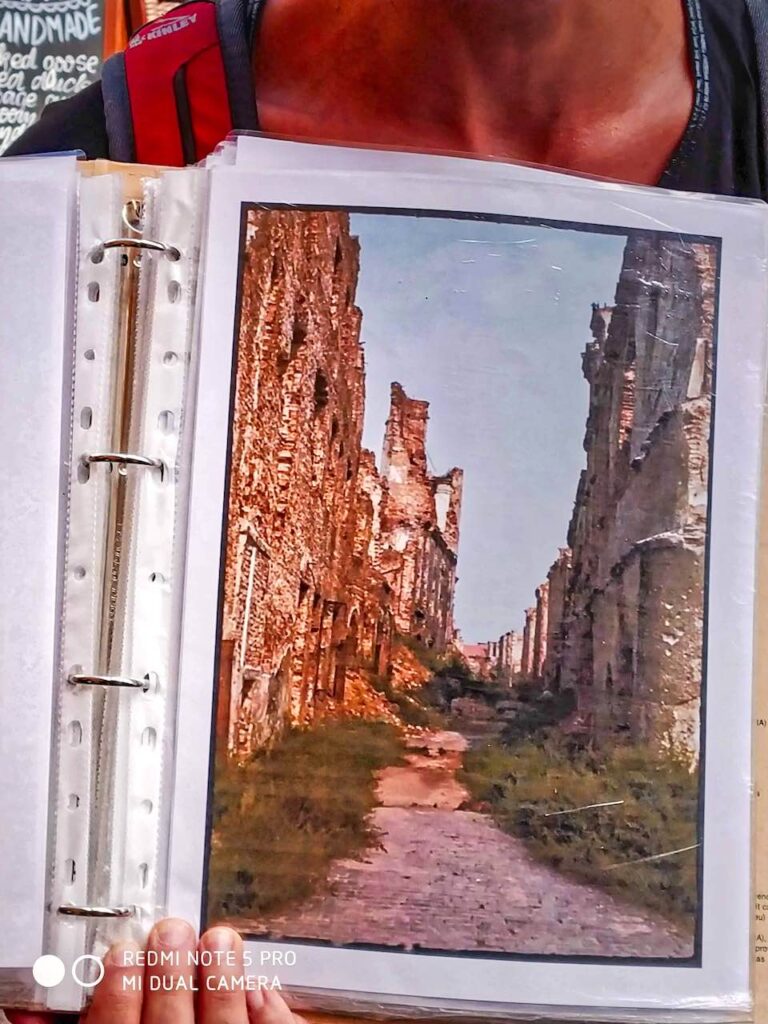
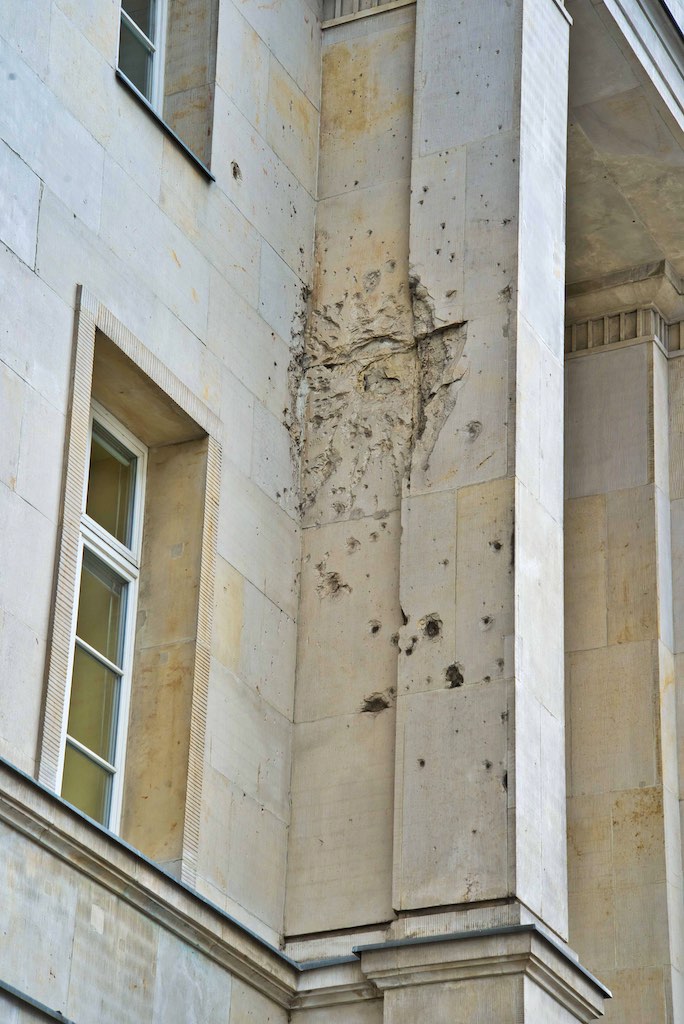
Poland had been devastated during World War 2, the country most affected during the war due to German and Russian armies ravaging across the country repeatedly. But they have rebuilt themselves spectacularly, a story about which most of the world is unaware.
.
.
The most striking thing we noticed during our stay was the patriotic fervour of common citizens! In all the countries that I have travelled to, it remains unmatched. And the country has ensured that future generations never forget how their country had been ravaged in the past – by building excellent museums and monuments and celebrating historical moments, in which the whole country participates. This includes school children and the elderly.
.

.
Another fact, not much known, is the active contribution of children (from below 10 years of age) in the Warsaw Uprising of 1944 against the Nazi occupation during World War 2. The Uprising was a significant event during the War and was launched in the hope of getting support from the advancing Russian Army. However, the Russians halted just across the Vistula River and refused to support the Poles, resulting in the slaughter of hundreds of thousands in the city and ultimately leading to the surrender of the Polish resistance after two months on 2 October. The Russians then entered the city in mid-January 1945! Warsaw had a population of 1.30 million before the war – a few hundred were found alive hiding in the ruins of buildings when Russian forces recaptured the city! The delay by the Russians in entering the city also gave an opportunity to the Germans to methodically demolish the city in retaliation to the Uprising, leaving the city as a vast area of rubble and debris!
.
.
To put the destruction suffered by Poland during the War in perspective, the country lost 38% of its national assets (whereas Britain lost only 0.8%, and France 1.5%)!
.

.
It is estimated that at least 3 million Polish Jews and 1.9 million non-Jewish Polish civilians were killed during World War 2. Of these, 90% of war casualties were the victims of prisons, death camps, raids, executions, the annihilation of ghettos, epidemics, starvation, excessive work and ill-treatment. The large Jewish presence in Poland that had endured for centuries was rather quickly put to an end by the policies of extermination implemented by the Nazis during the war.
.

.
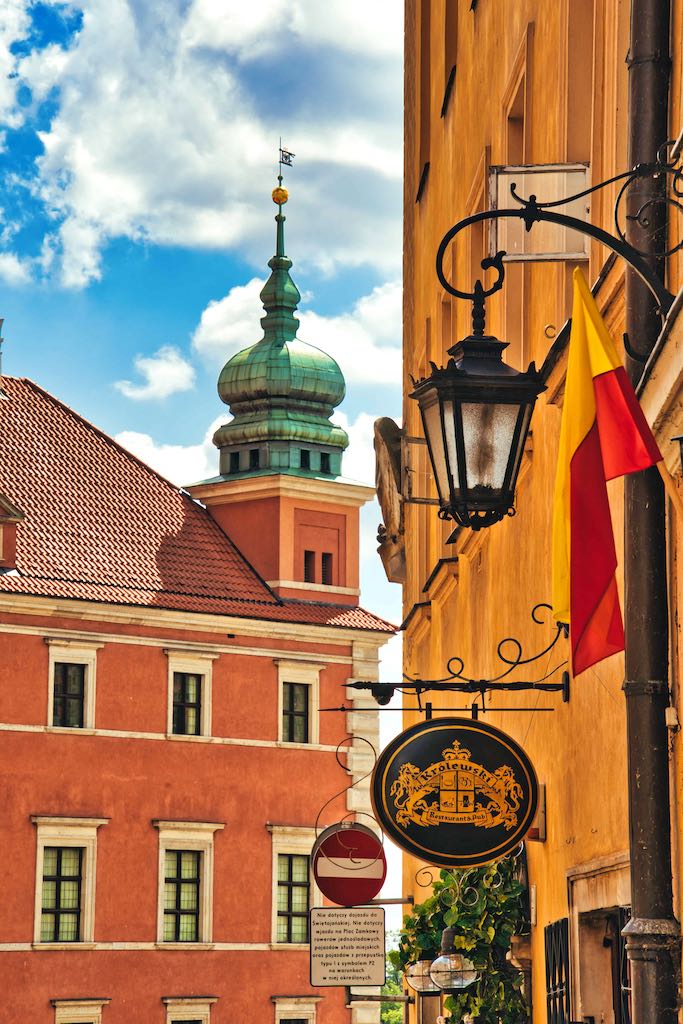
On our first day in Warsaw, we took a Bolt taxi (which are reasonable) to head to the Old Town, just about 4 km away. Most European cities have their Old Towns and they are the highlights of the city and the areas most visited by tourists.
.
.
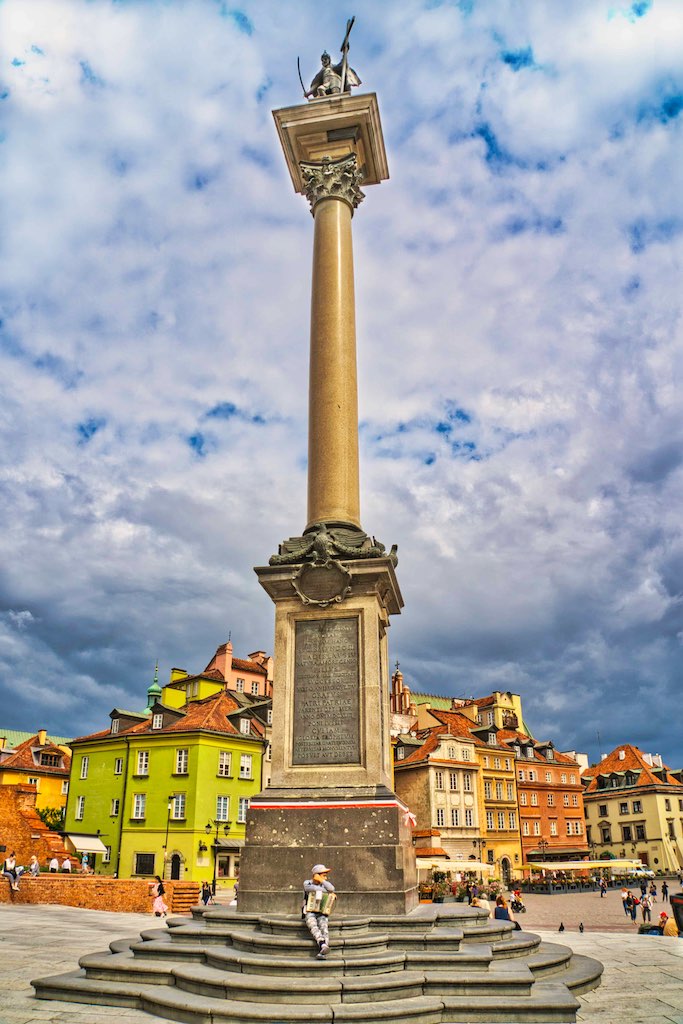
When Poland’s capital moved from Kraków to Warsaw in 1596, the Square beside the castle became the cornerstone of the largest Empire in Renaissance Europe. The man who brought about this switch was Sigismund III Vasa, who is commemorated by a bronze statue atop an 8.5-metre column (now replaced by a 22-metre column). This was first raised in 1644, but was toppled by the Germans in 1944 and its original red marble has now been replaced with granite.
.
.
Its bronze plaque has an interesting inscription, which translates as: “King Sigismund III, by virtue of free elected King of Poland, by virtue of inheritance, succession and law – King of Sweden, in love of peace and fame the first among kings, in war and victories not inferior to anyone, took prisoners of Tsar and Moscow chiefs, he conquered the capital and lands [of Moscow], defeated the Russian army, regained Smolensk, broke the power of Turkey near Khotyn, ruled for forty-four years.”
.

.
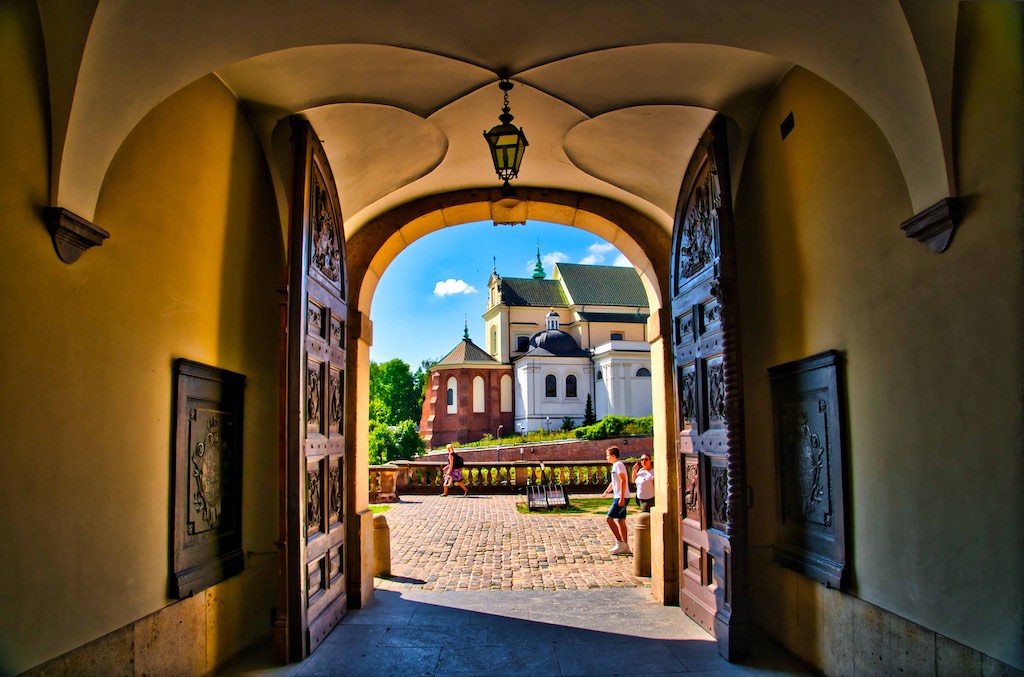
The Royal Castle served as the residence of Polish rulers for centuries. It dates back to the 14th century when it was the official residence of the Dukes of Masovia. Interestingly, it is here that the first constitution in Europe was drafted in 1791.
.

.
Warsaw is not only famous for its heritage monuments – jointly with Frankfurt and Paris, Warsaw has the highest number of skyscrapers in the European Union.
.
.
As was standard practice with us, we looked for local free walking tours, which provide the best way of seeing and learning about the place. There were many, starting in the morning and we decided to take the walk through the important sights of the Old Town. All walking tours started from Sigimund’s Column.
.
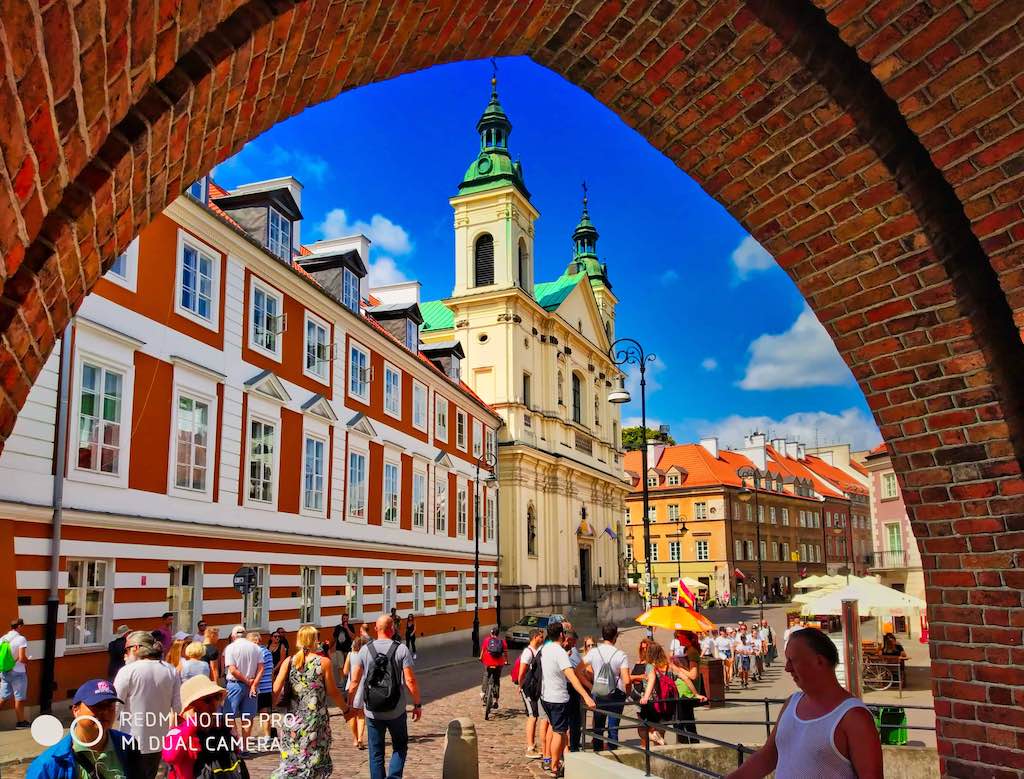

.
The magic of the old quarter in Warsaw is in the detailed and faithful reconstruction carried out up to 1962, mostly based on old paintings, one of them being the 18th-century Italian painter Canaletto. After almost 85% of the city was wiped out during World War 2, the Old Town’s rebirth was an incredible feat that has earned it Old Town UNESCO World Heritage Status.
.
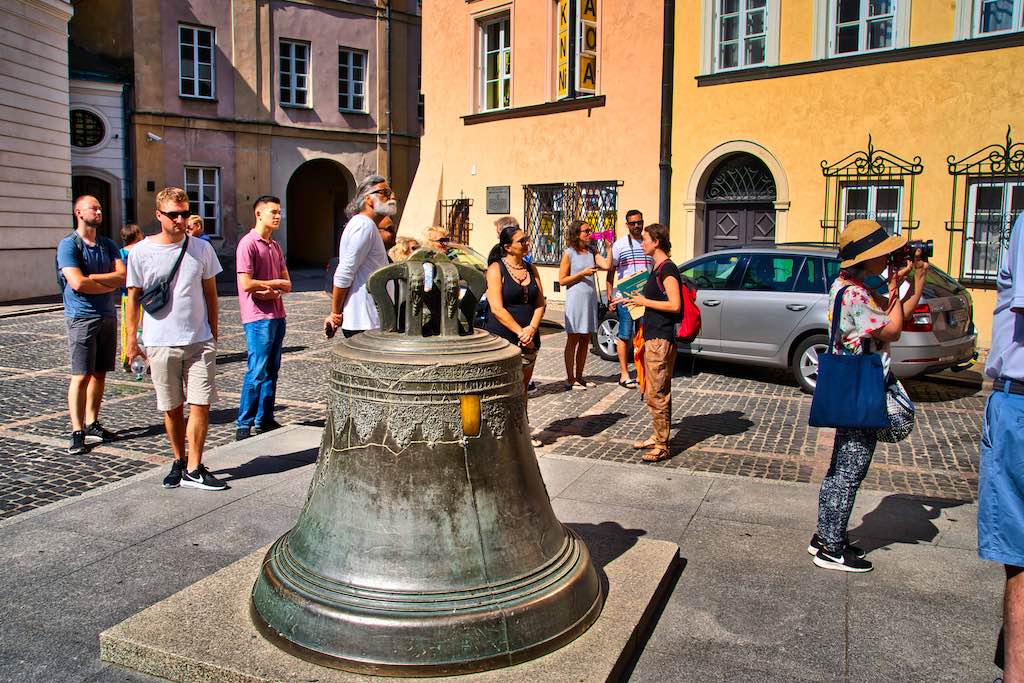
.
Plac Kanonia until 1780 was the graveyard of the town. In the middle of the square is a church bell dating from 1644 (cast by Daniel Thym, who also made the casting of Sigismund Waza at the Palace Square). The bell is supposed to fulfil your wish if you touch it while circling around it.
.
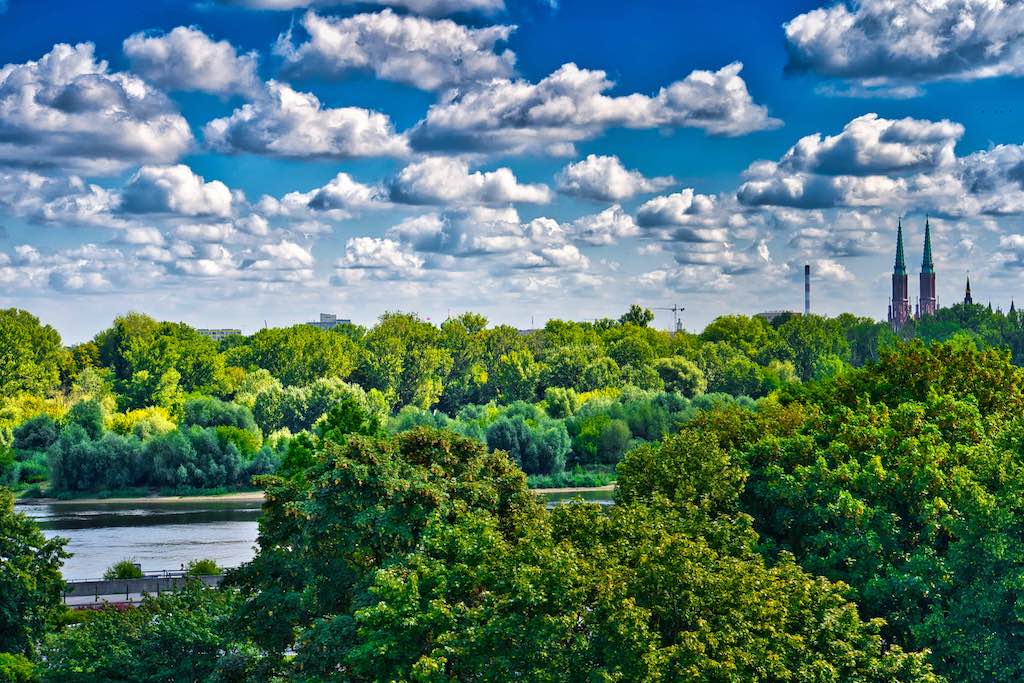
.
Near Plac Kanonia is a viewpoint overlooking the Vistula River. The riverfront is a popular hangout for locals; it also marks the place where the Russian Army halted in its advance during the end of World War 2, permitting the crushing of the 1944 Uprising by the Germans to proceed unchecked.
.

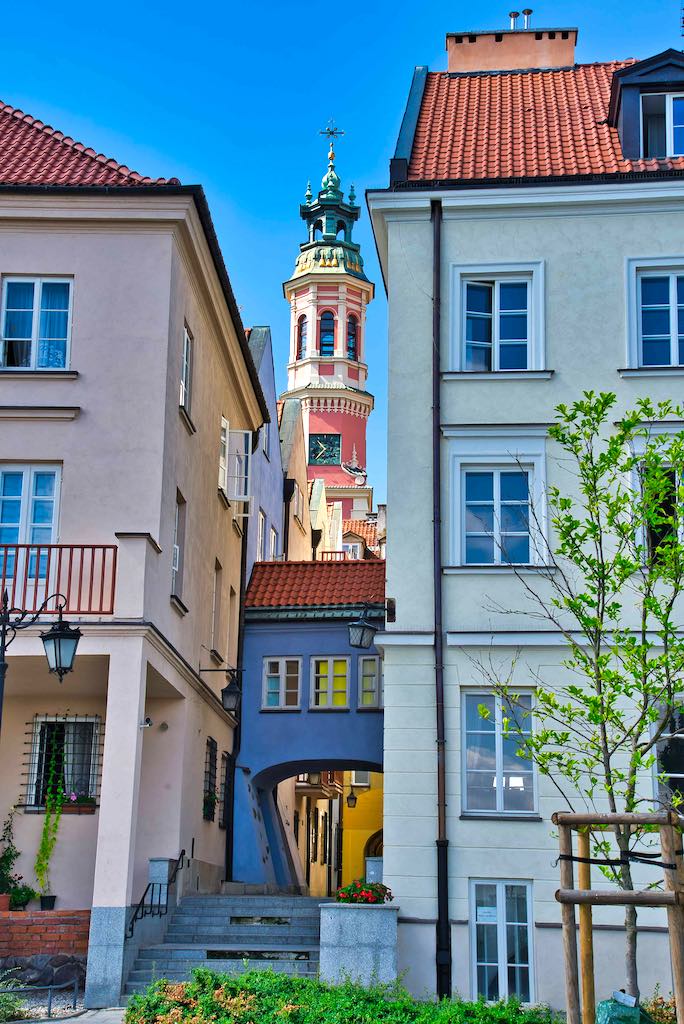
.
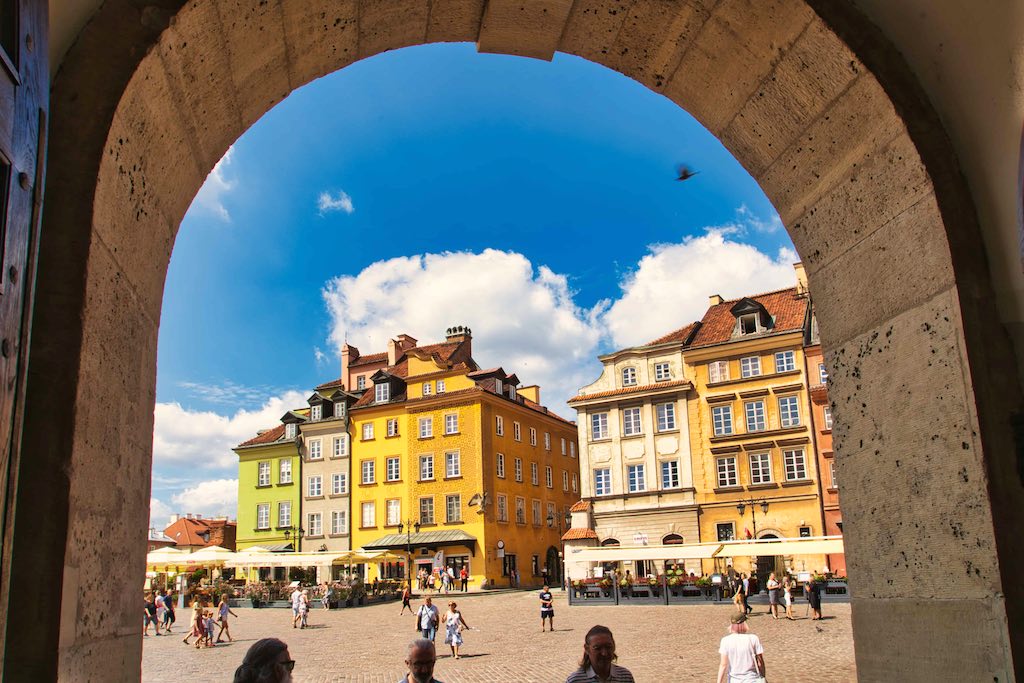
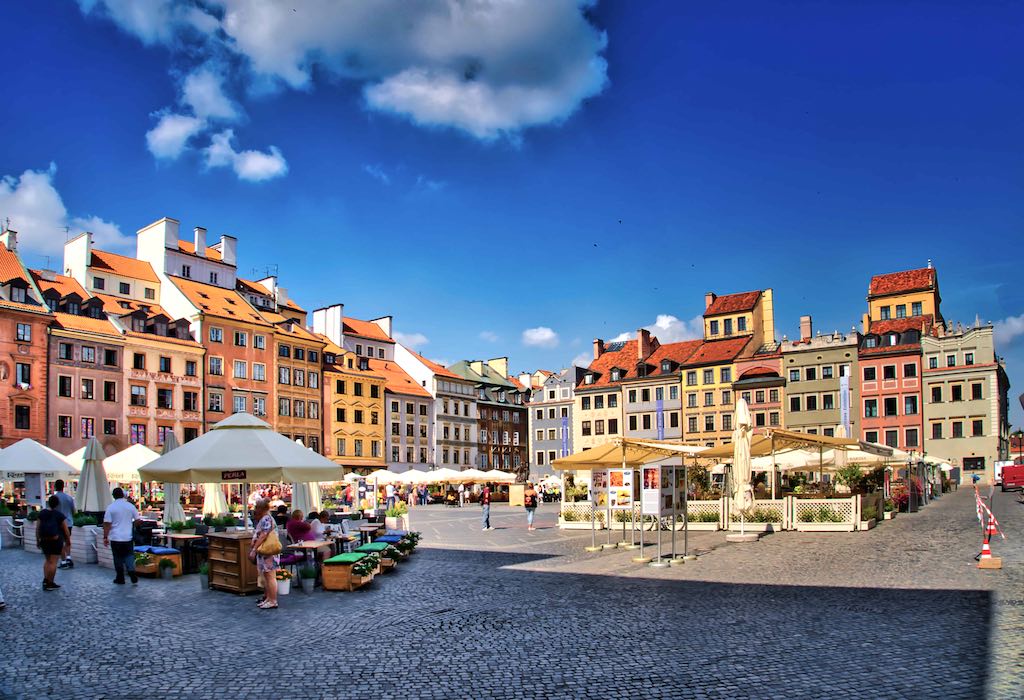
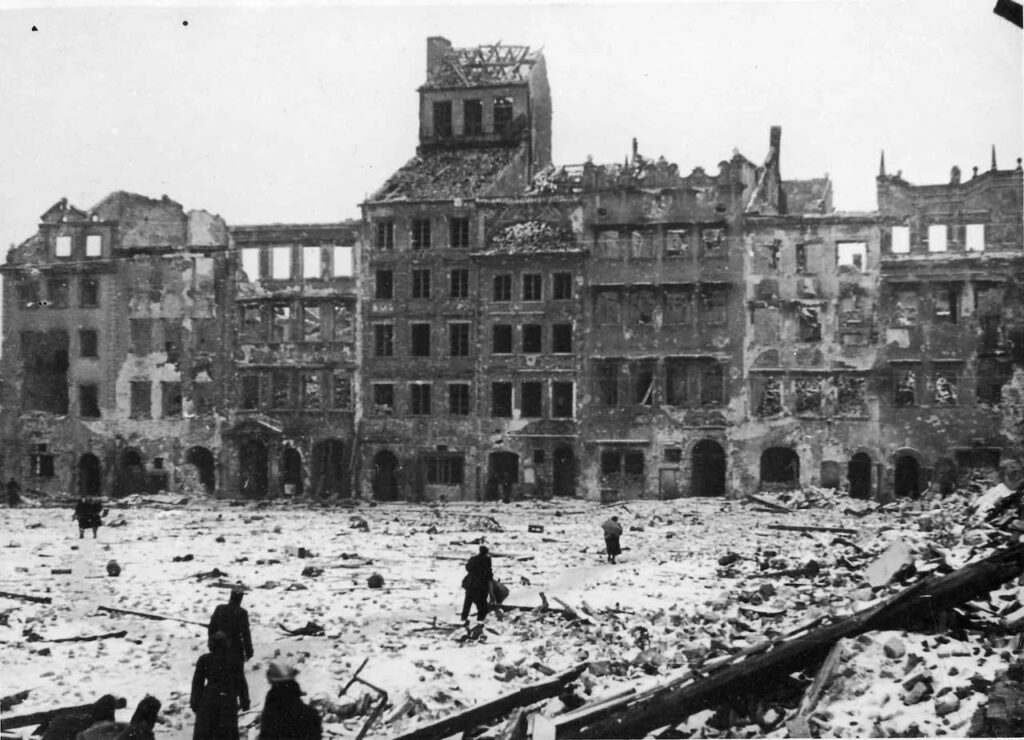
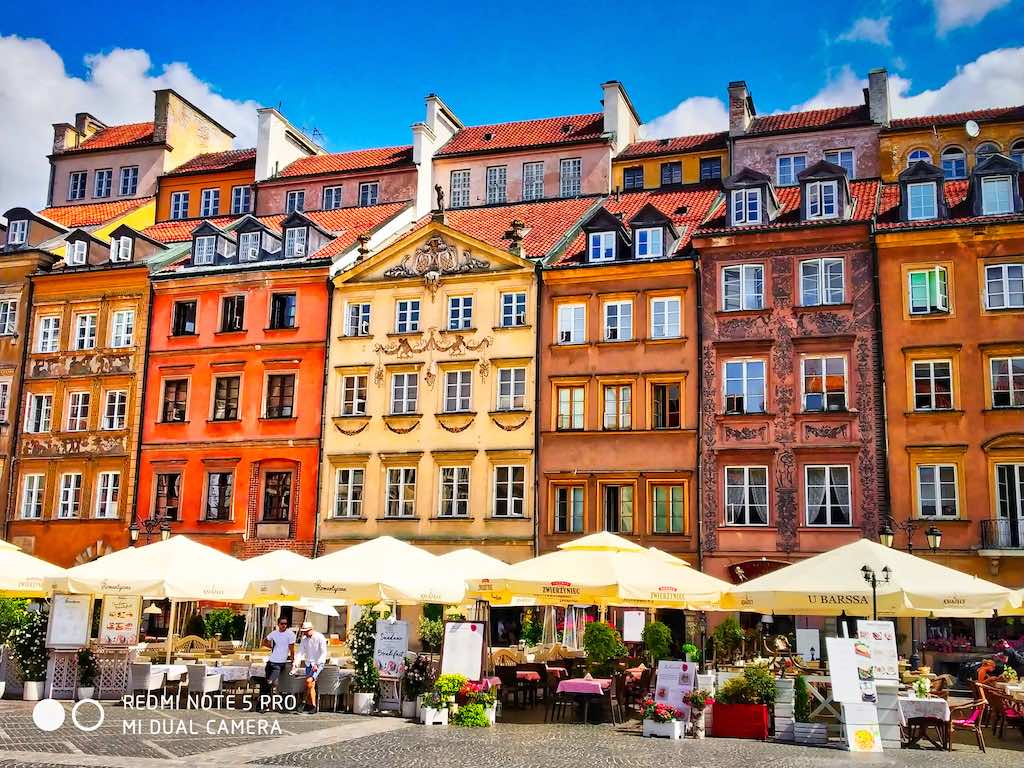
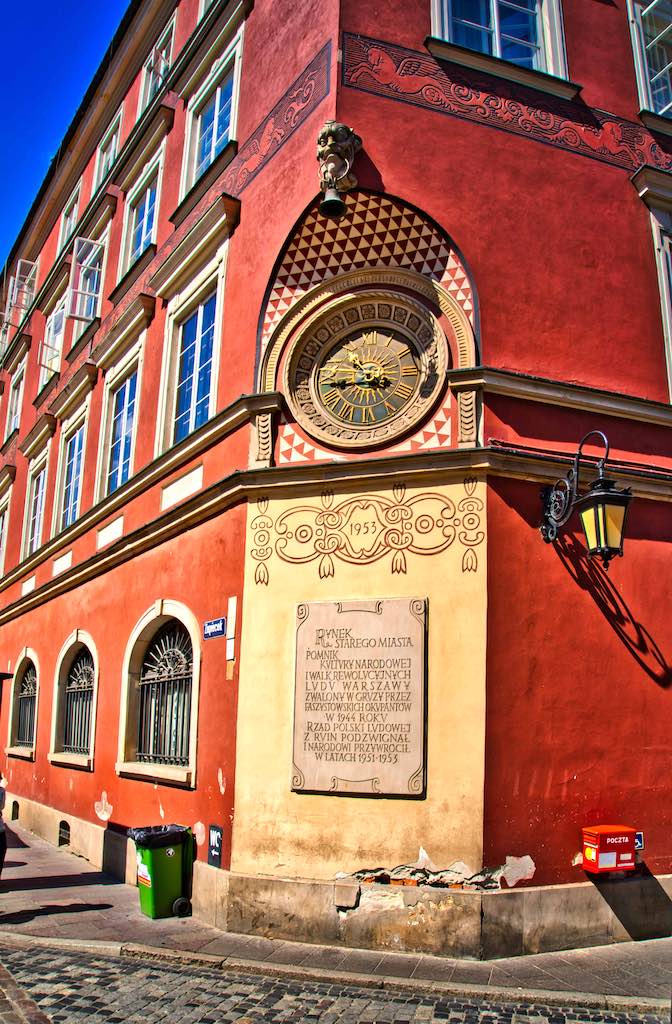
The Old Town Market Square is a good example of reincarnation. Located in the oldest part of Old Town, the square dates back to the late 13th century. It was totally destroyed by bombs in World War II. Following the war, it was restored to its prewar condition. The Square is surrounded by tall Renaissance and Baroque merchants’ houses in a spectrum of colours.
.
.
What we see now…….and how it was!
.
.
Most of the buildings were rebuilt beginning in 1948 and look much like the original 17th-century structures.
.
.
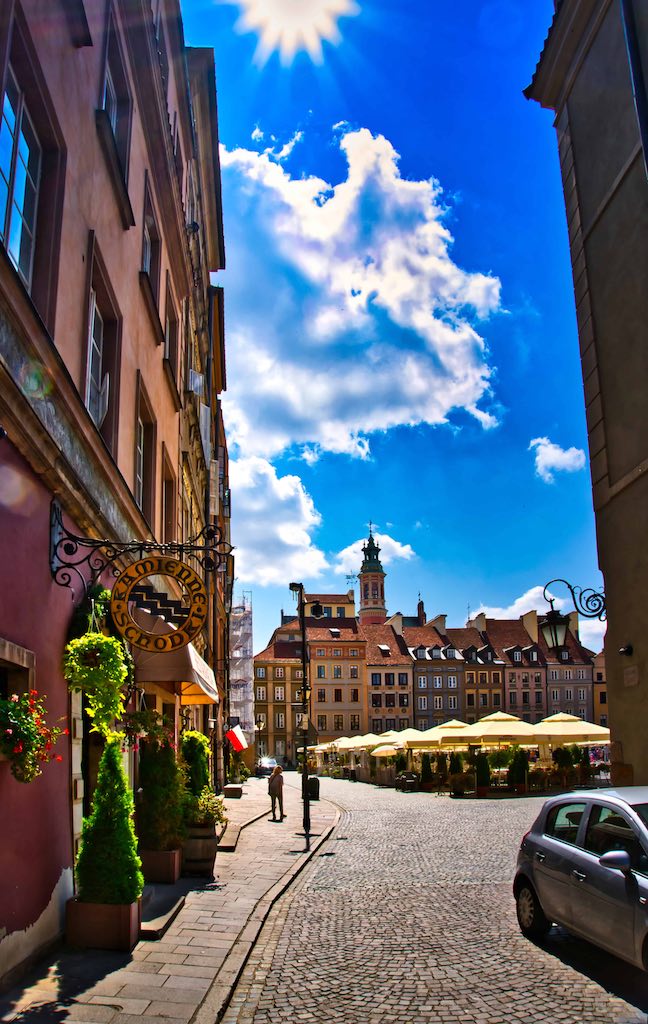
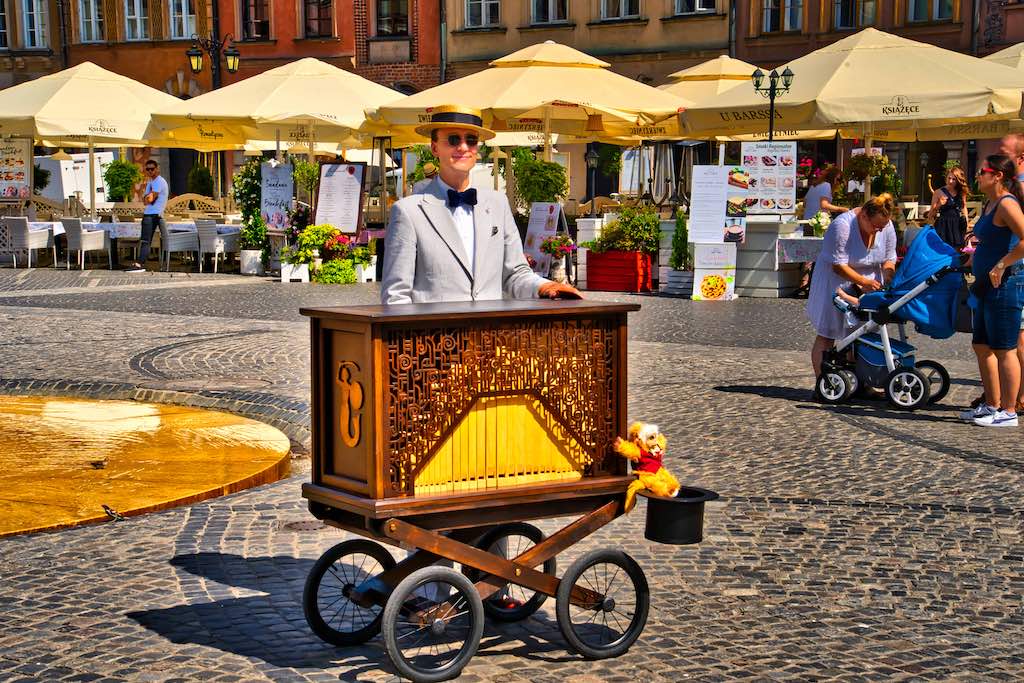
The main attraction of the square is the restaurants that surround this pretty square, making it the ideal place to sample Polish specialities such as stuffed cabbage leaves and grilled mutton.
.
.
The market square features a bronze sculpture of the Warsaw Mermaid, the symbol of Poland’s capital.
.

.
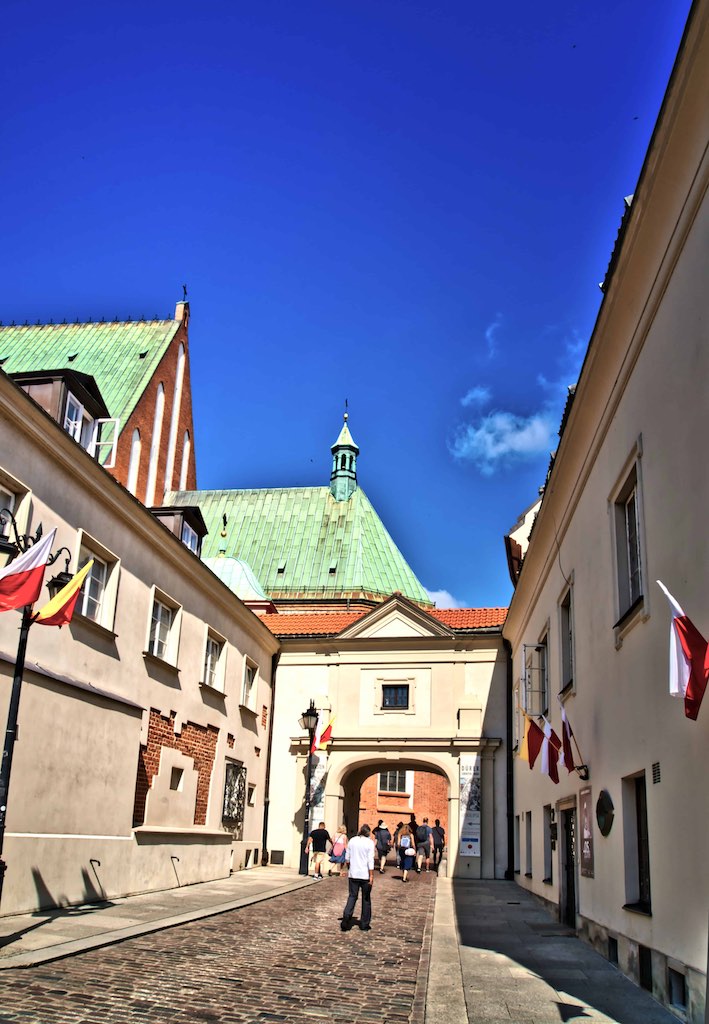
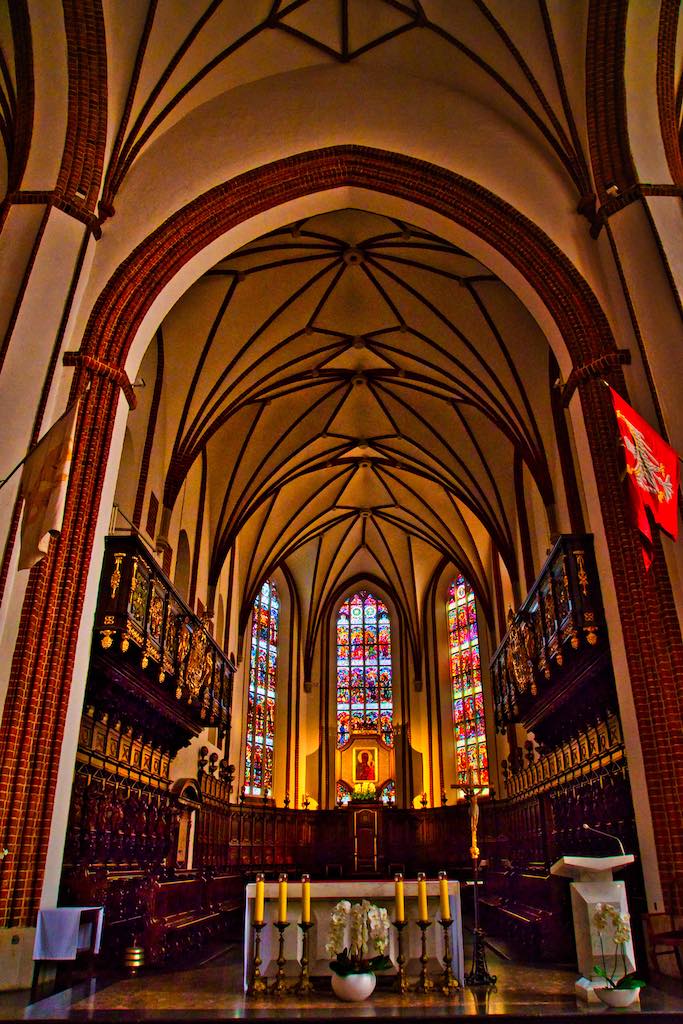
Two major churches, the Jesuit Church and the adjacent Gothic brick structure of St John’s Cathedral in the Old Town stand on Świętojańska Street in the Old Town.
.

.
St John’s Archcathedral was originally a 14th-century church, destroyed by the Nazis after the failed Uprising by taking an explosive-laden tank inside and blowing it up.
.

.
The St John’s Archcathedral has now been reconstructed and the structure is considered as one of the prime symbols of post-war Polish nationalism.
.

.
The walking tour showed some hilarious sights, like the bar which had no sign – it just displayed a painting to show the after-effects of visiting it!
.

.
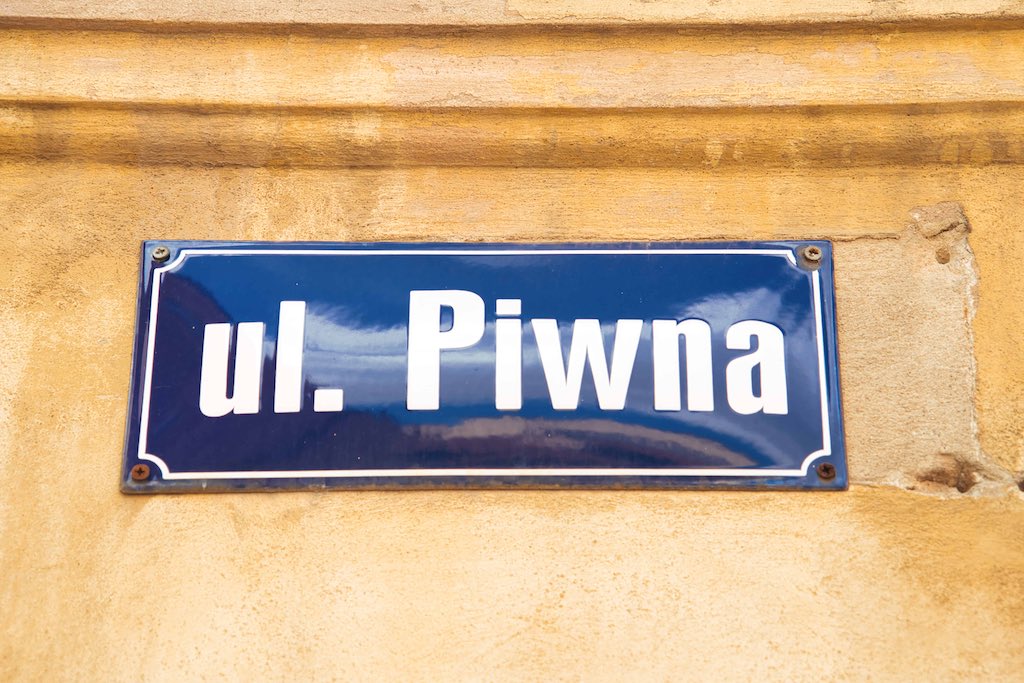
And where will we find the bar? ul Piwna (Piwna Street), naturally! Pina in Hindi means to drink.
.
.
The walking tour brought us back to Castle Square after meandering through the cobblestone streets of the Old Town, which were replete with old-world charm. Our guide never failed to remind us that what we were seeing were mostly reconstructed buildings.
.

.
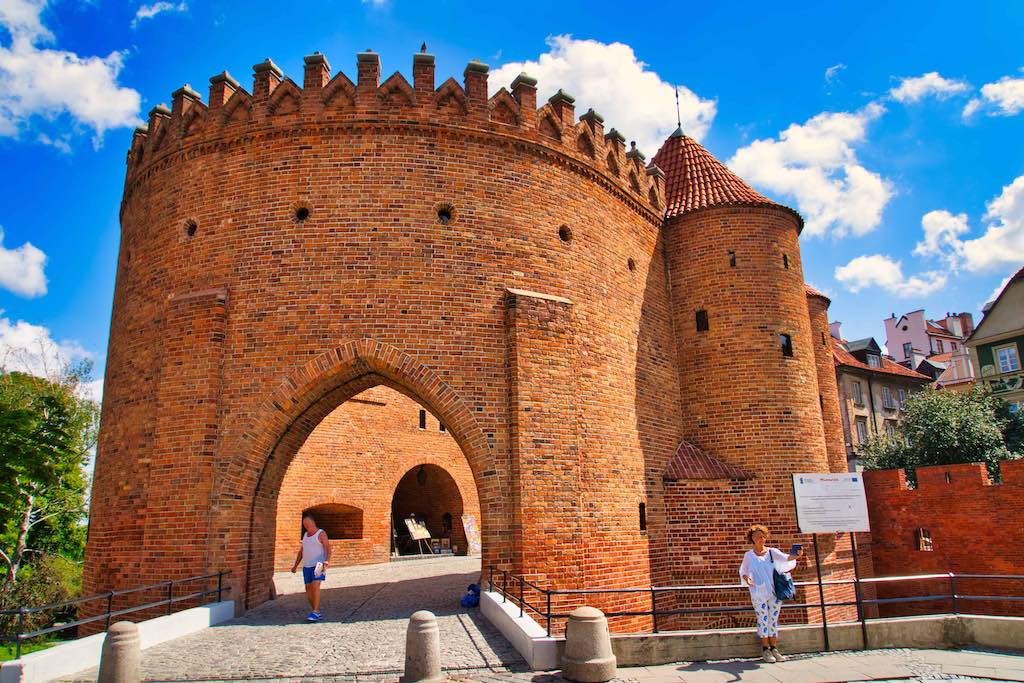
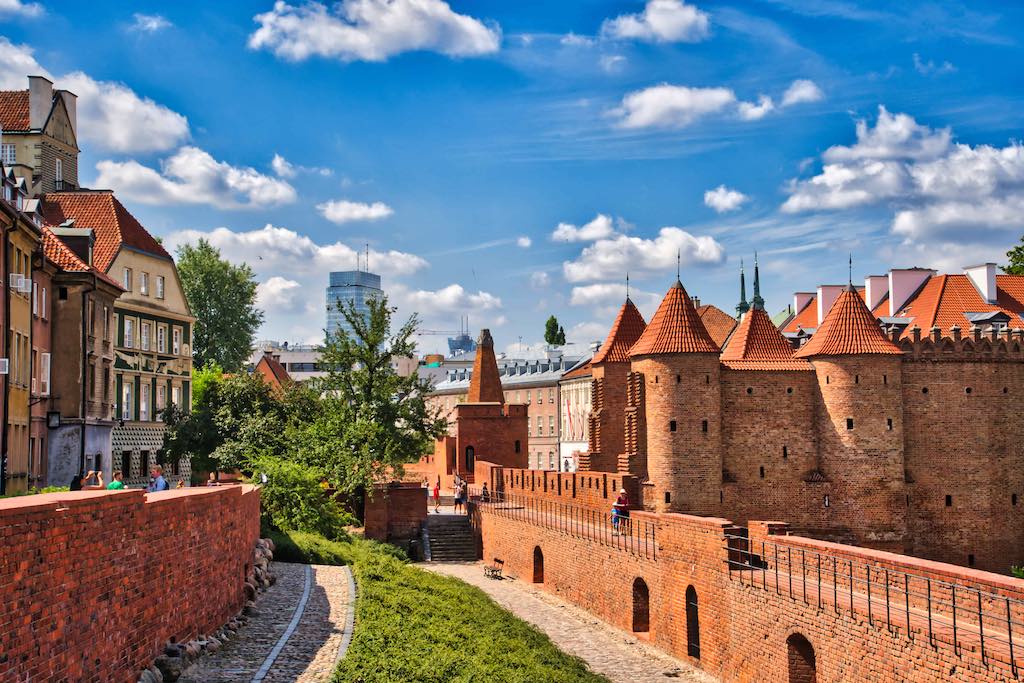
The walking tour continued to another landmark of Warsaw – the Barbican. A barbican (semicircular fortified outpost) is one of the few remaining relics of the complex network of historic fortifications that once encircled Warsaw.
.
.
It is located between the Old and New Towns. Built initially in 1540, the present wall is mainly a reconstruction. At some points, one can see the original gothic walls, which have been marked by a black line to indicate their extent.
.
.
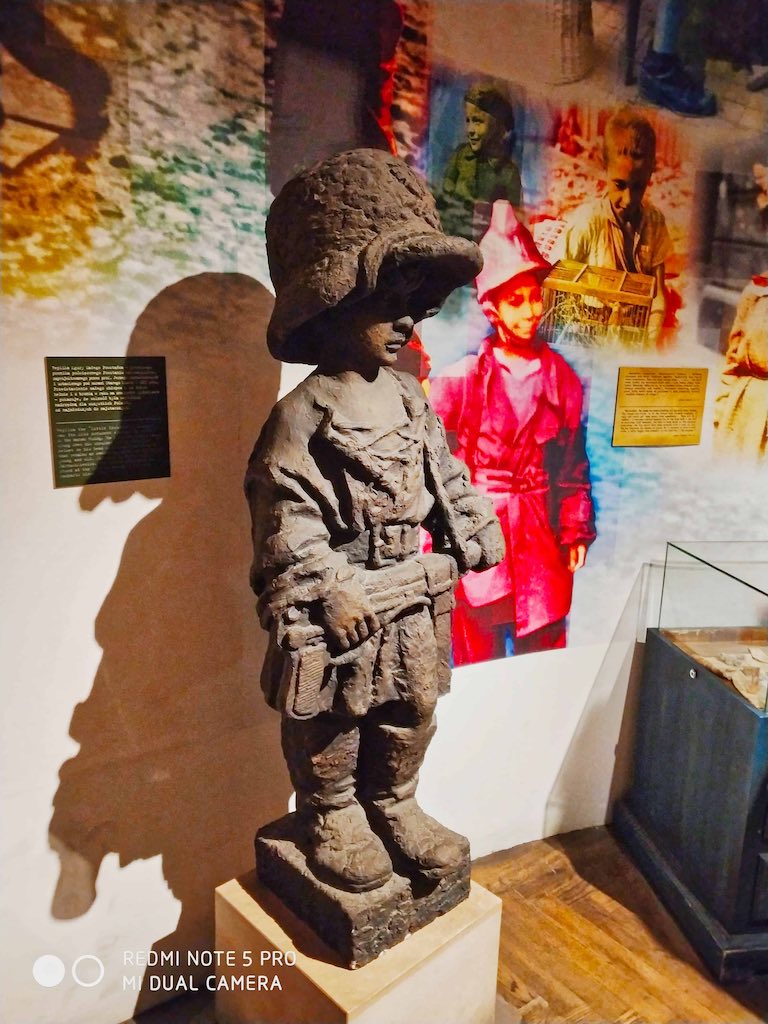
Along the ramparts is a famous monument known as Mały Powstaniec (“Little Insurrectionist”), a statue commemorating the child soldiers who fought and died during the Warsaw Uprising of 1944.
.

.
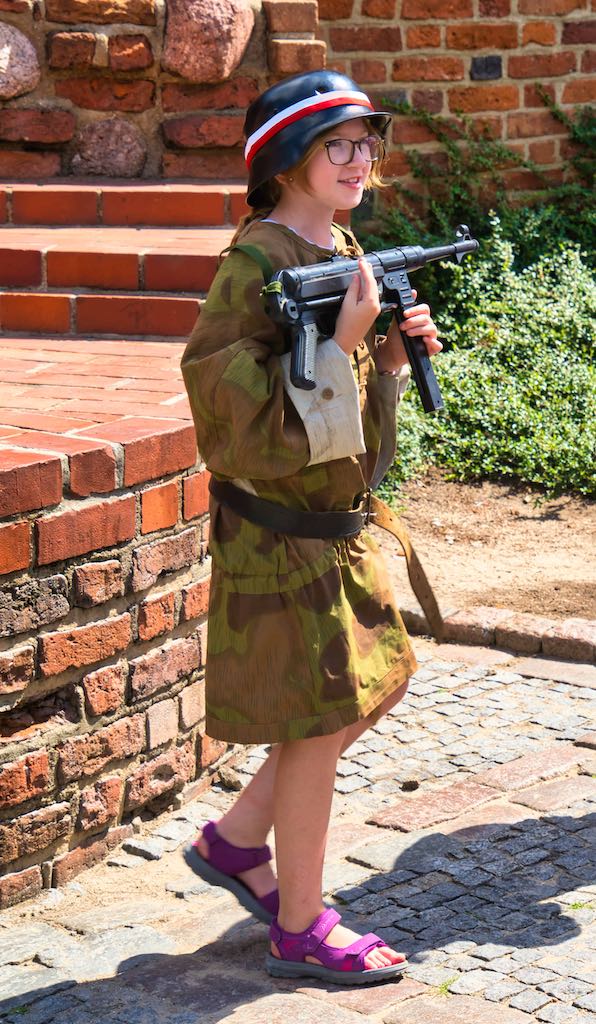
Children played an important part in the Uprising and have been honoured generously in the national discourse. This statue is reputed to be of a fighter who went by the pseudonym of “Antek” and was killed on 8 August 1944 at the age of 13.
.
.
The next day was the anniversary of the 1944 Warsaw Uprising (on 1 August) and a national holiday. We saw large groups of school children coming to pay homage at the memorial. It was very inspiring, how the country remembered the past and honoured its heroes.
.

.
The walking tour finally brought us back to Castle Square (Plac Zamkowy), from where we had started. We had tied up with Piotr Wiench to meet at the Pizza Hut at the Square after lunch. Having some time to spare, and feeling thirsty after the long walk in the sun, the chilled beer was most refreshing!
.

.
Inija Trinkūnienė’s (our host in Lithuania) phenomenal network worked here also. Piotr Wiench, a Professor at Warsaw University, came to meet us and took us around some of the important sights and museums. Very knowledgeable about history, he explained how the country bore the devastation of World War 2, and arose from dust like the legendary Phoenix; he also accompanied us to see some of the major places connected with the War.
.

.
One of the prime attractions Piotr took us was the Warsaw Uprising Museum. Warsaw was famous for withstanding the Nazis during World War 2. The Jewish ghetto, where Jews were confined by the Nazis, was the largest in Europe. The uprising, however, was not limited to Jews alone. Indeed, the whole city joined the fight in 1944.
.

.
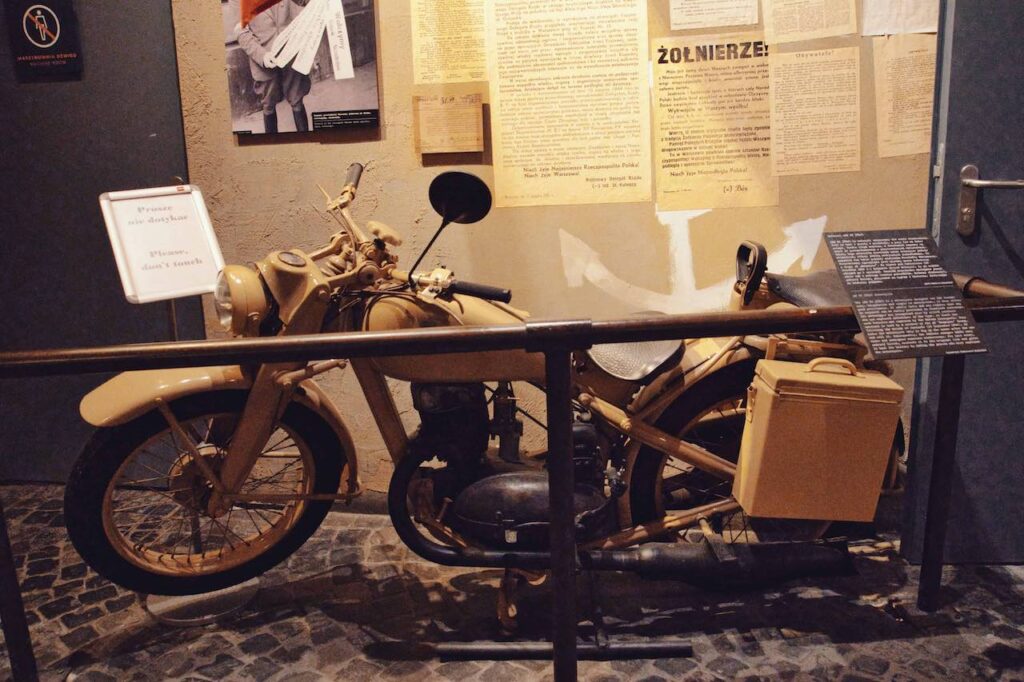
This state-of-the-art museum tells the story of the Polish rebellion against Nazi occupation. Comprising of video, audio and photographs, mixed into an interactive experience, this truly unique, tactile exhibition gives an interesting glimpse not only into the city’s history but also into the country’s historical narrative around one of the most traumatic events in its recent history. Interestingly, the museum is housed in a discarded tramway power station.
.

.
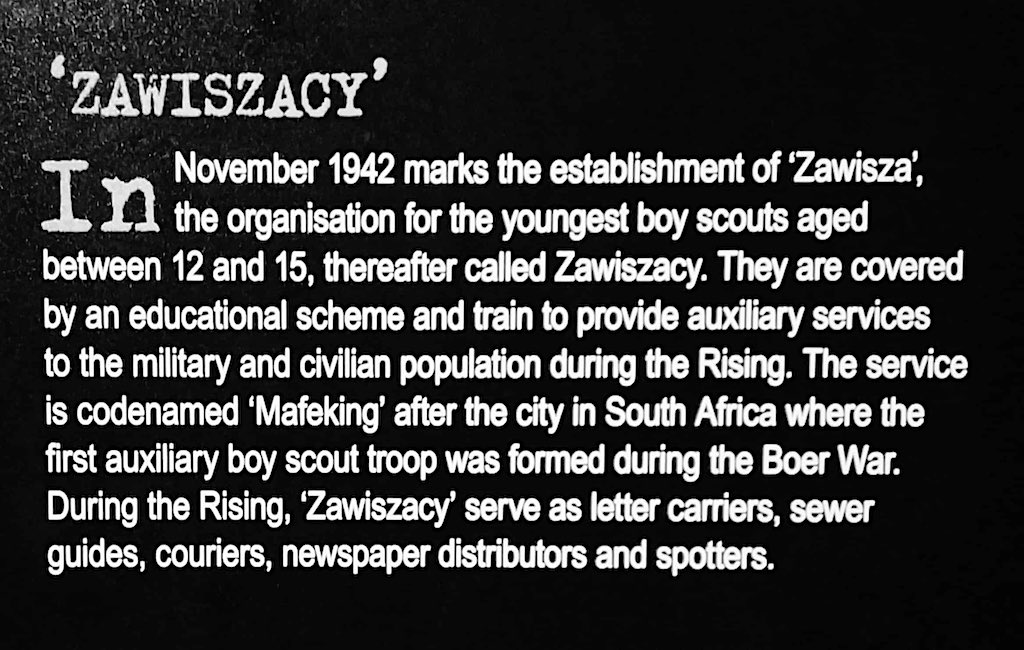
The Warsaw Uprising Museum opened in 2004 on the 60th anniversary of the uprising. The Museum has a day-by-day account of the uprising which began on August 1 and ended on October 2. Not to be forgotten, there is also an exhibit dedicated to children who participated in the uprising; a replica of the sewers the insurgents used to get around the city is also depicted.
.
.
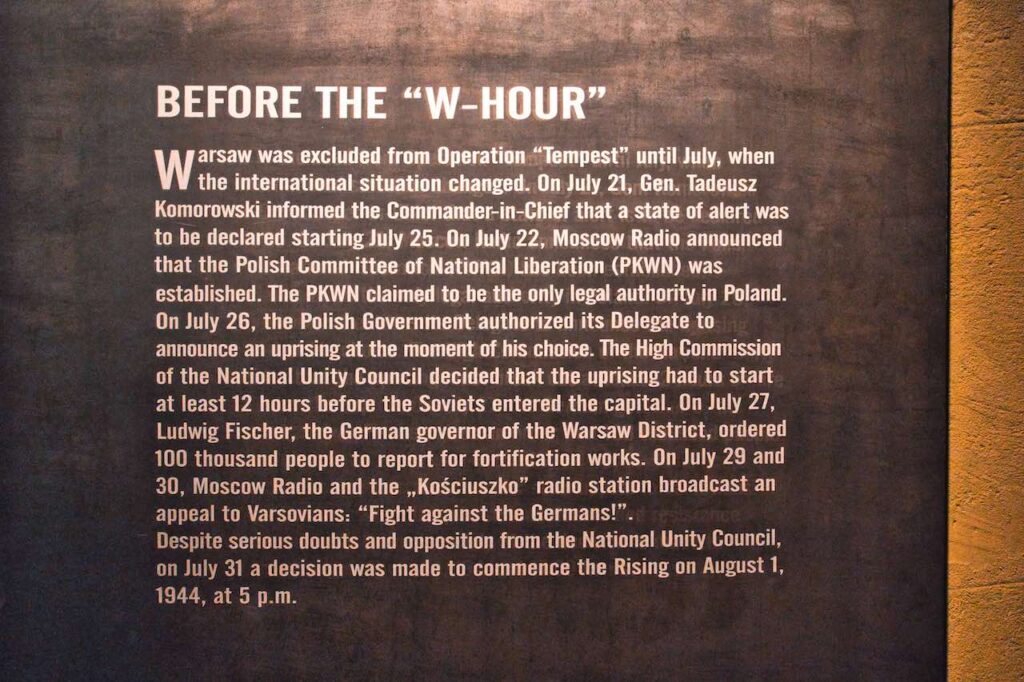
The museum had small boxes next to the exhibits, which held information leaflets. An innovative way to learn their history, these were collected by the visitors, especially school children, during visits. We also saw a short film that took viewers on an aerial tour over Warsaw, showing the devastation across the city at the end of World War 2. The movie was animated, being reconstructed from photographs, documents, survivor accounts and various other sources. It was excellently made – by the end of the show, there was absolute silence in the auditorium when the reality of the destruction which the city suffered dawned on the audience – hardly any structure was seen standing.
.


.
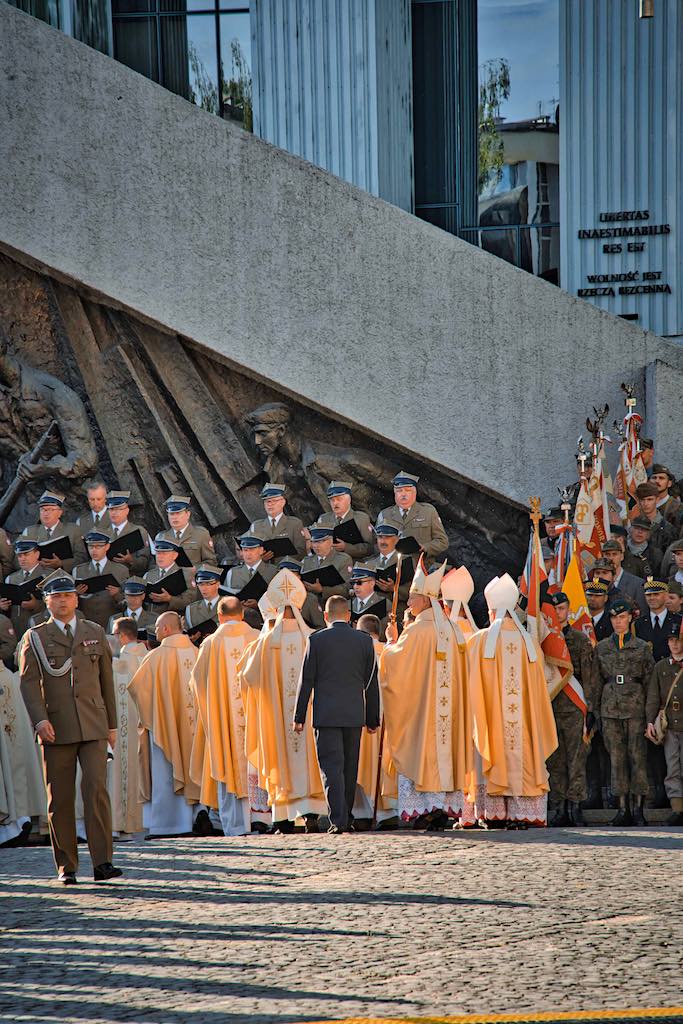
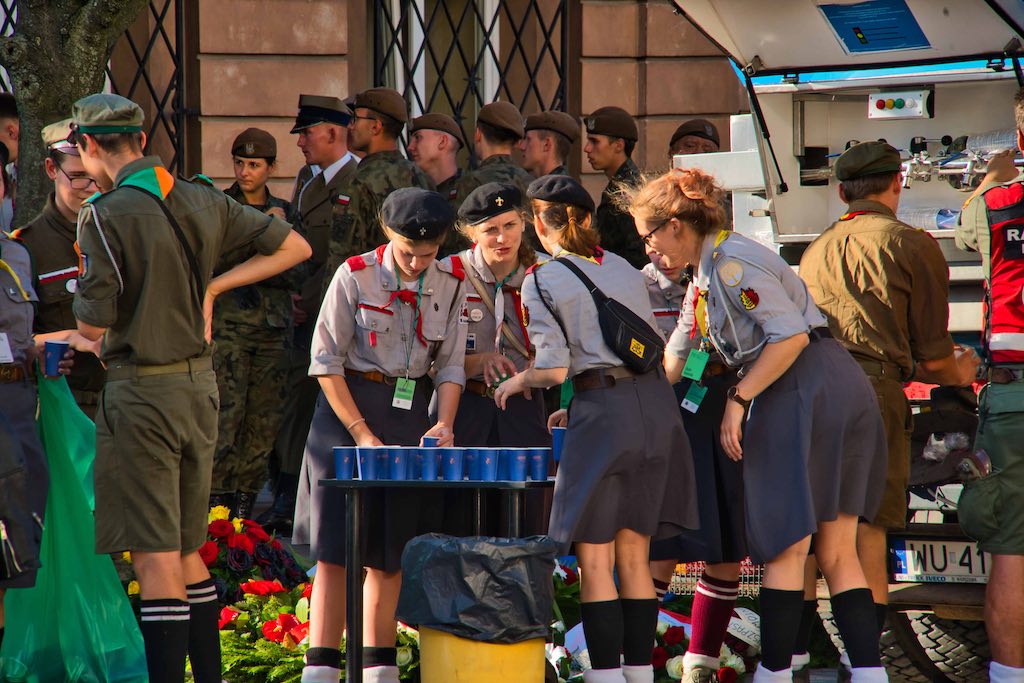
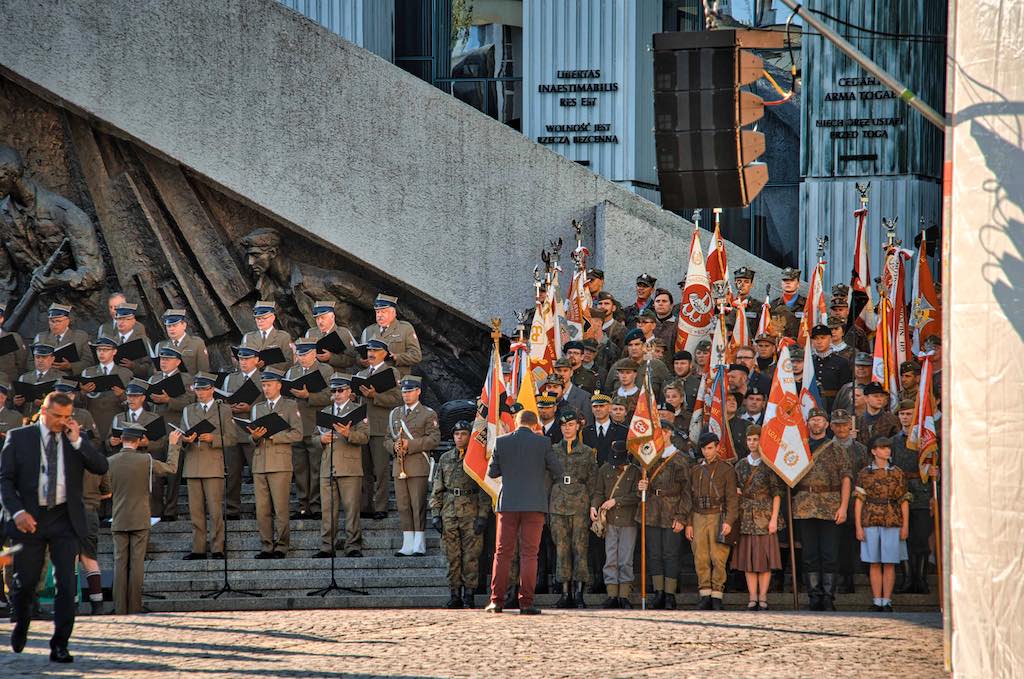
It was 31st July, and on the eve of the Uprising anniversary, many celebrations were planned across the country. That evening, to commemorate the 75th anniversary, the Institute of National Remembrance had organised numerous events throughout Poland. There was a ceremonial Holy Mass, a Roll Call for the Fallen and a concert “Warsaw is sad without you” being held at Krasinski Square in Warsaw. It was being attended by the heads of Government and the Church.
.

.
The Field Cathedral of the Polish Army is the main garrison church of Warsaw and the representative cathedral of the entire Polish Army. All major military religious feasts in Warsaw are held there. It is located opposite the Heroes of the Warsaw Uprising Monument and Krasiński Square. The ceremonial procession, comprising of soldiers carrying the cross and the clergy emerge from the church.
.
.
Peter took us to witness the celebrations. It was a unique opportunity for us, which we were lucky to witness. Though it had happened by chance. While initially planning our itinerary, I had no inkling of the significance of the date.
.
.
Similar to the Indian Army, religious beliefs provided a pillar of strength to soldiers and were an integral part of any major event in the Polish Army.
.


.
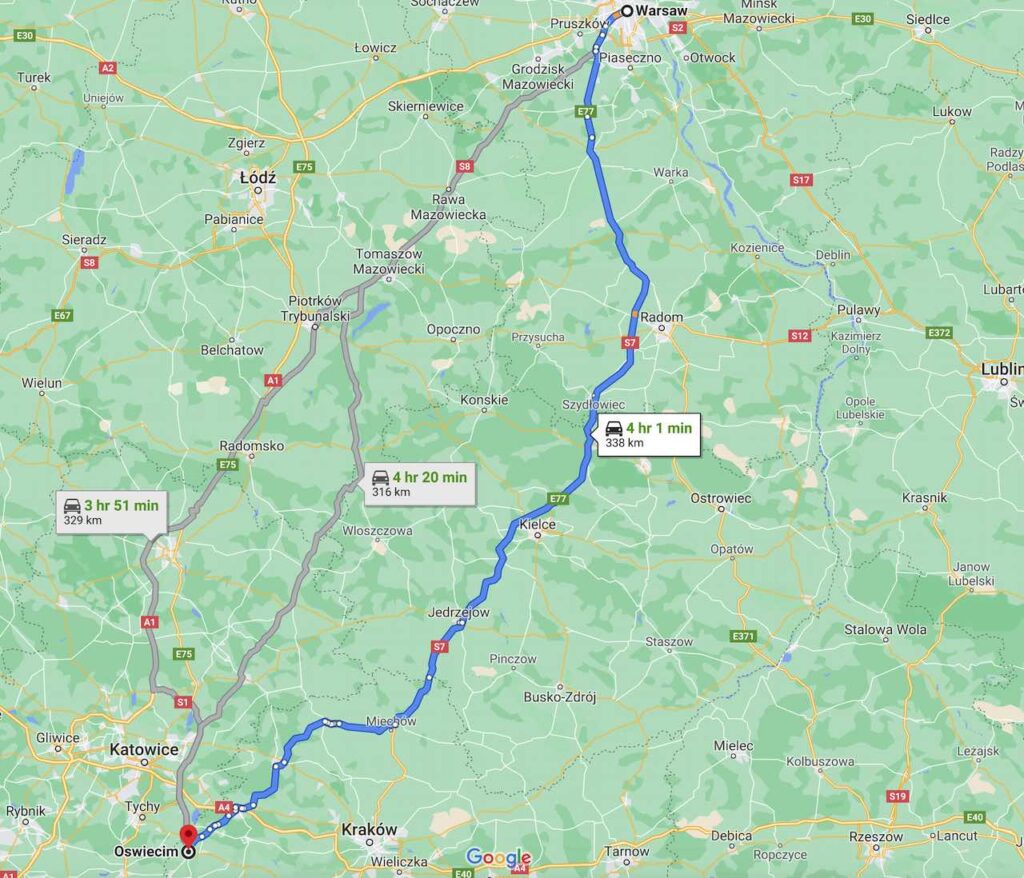
The highlight of our Warsaw stay was a visit to the Auschwitz and Birkenau Concentration Camps of World War 2. One had read so much about these places that they were ingrained in us. But that knowledge had been abstract till now.
.
.
Auschwitz is nearly 400 km away and tours were expensive, but then it was one of the places I had to see, having come so far. We left early the next morning with our group, which had been booked online the day we had arrived.
.

.
Of the 1.3 million people sent to Auschwitz, 1.1 million died. The death toll includes 960,000 Jews (865,000 of whom were gassed on arrival), 74,000 ethnic Poles, 21,000 Roma, 15,000 Soviet prisoners of war, and up to 15,000 other Europeans. Those not gassed died of starvation, exhaustion, disease, individual executions, or beatings. Others were killed during medical experiments.
.

.
The site comprises the main concentration camp at Auschwitz I and the remains of the concentration and extermination camp at Auschwitz II-Birkenau, which was developed later. Both were developed and run by Nazi Germany during its occupation of Poland in 1939–1945. The first 30 prisoners arrived at Auschwitz on 20 May 1940.
.

.
The Polish government has preserved the site as a research centre and in memory of the 1.1 million people who died there during World War 2 and the Holocaust.
.
.
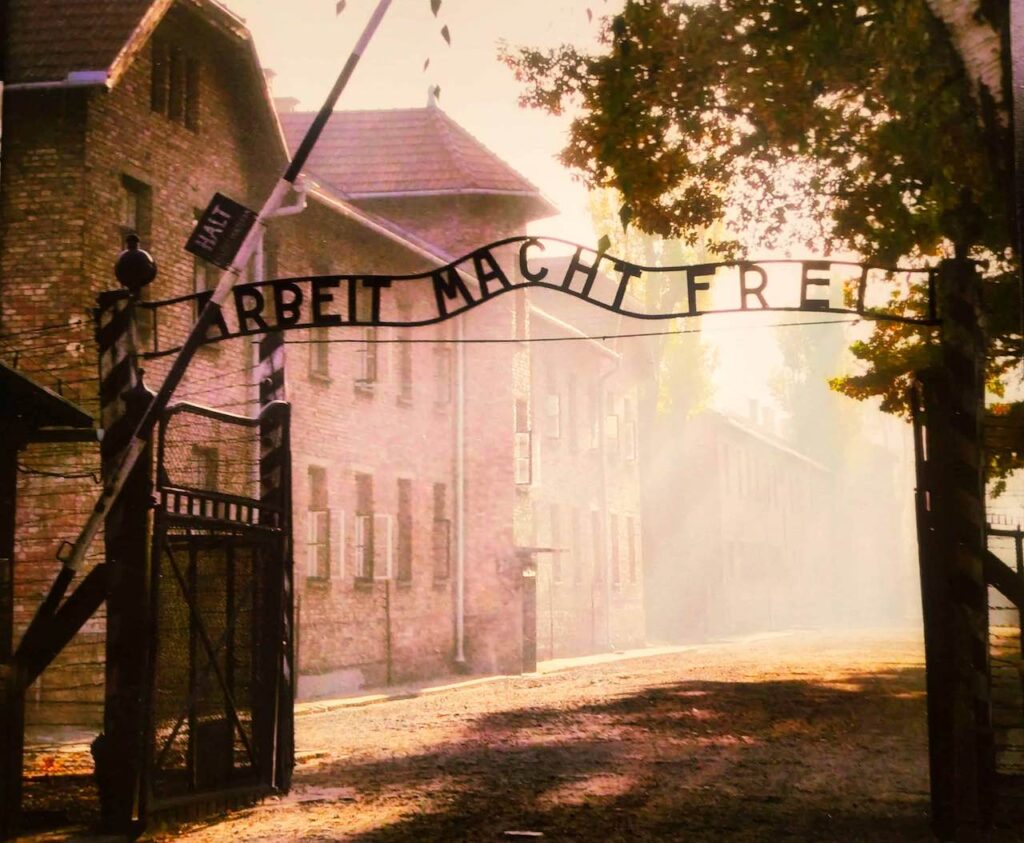
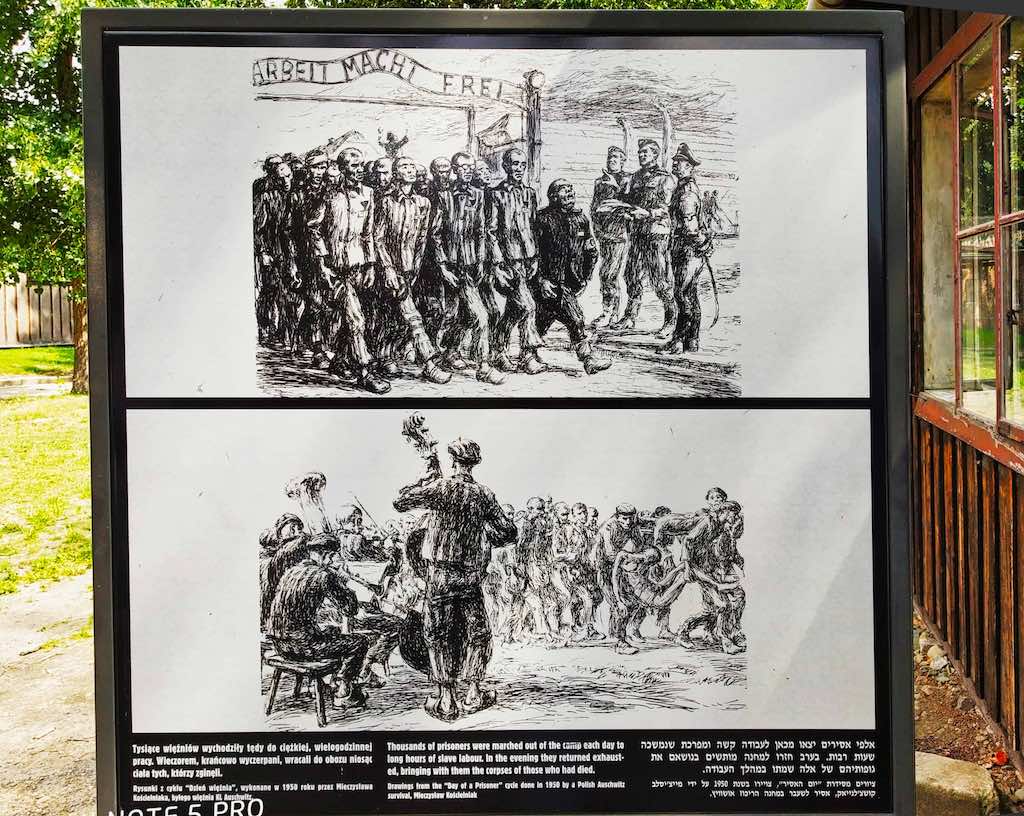
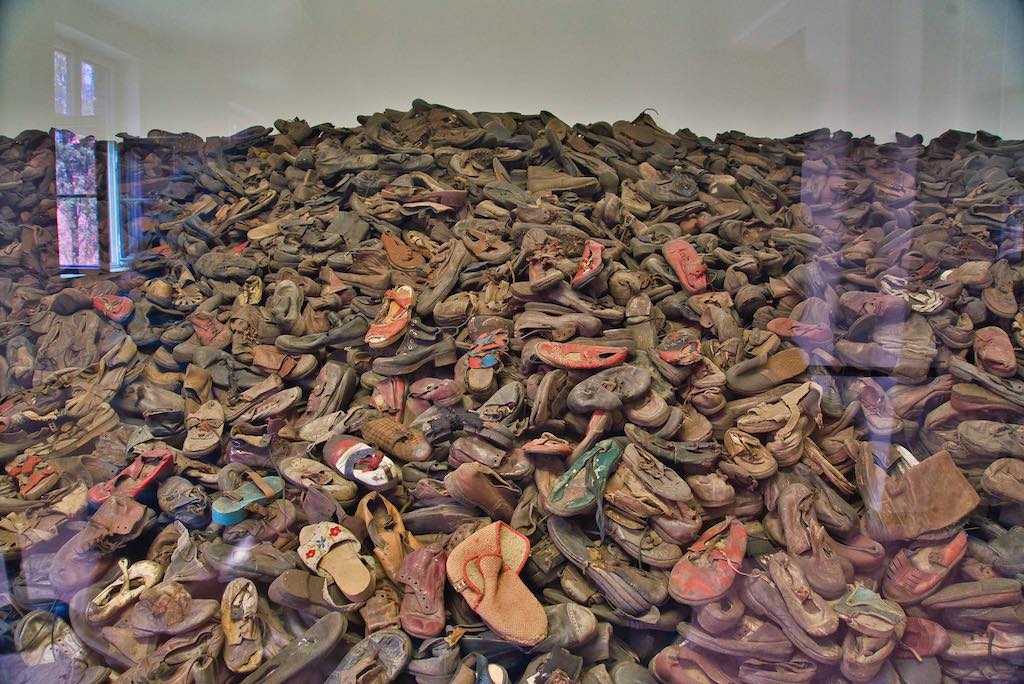
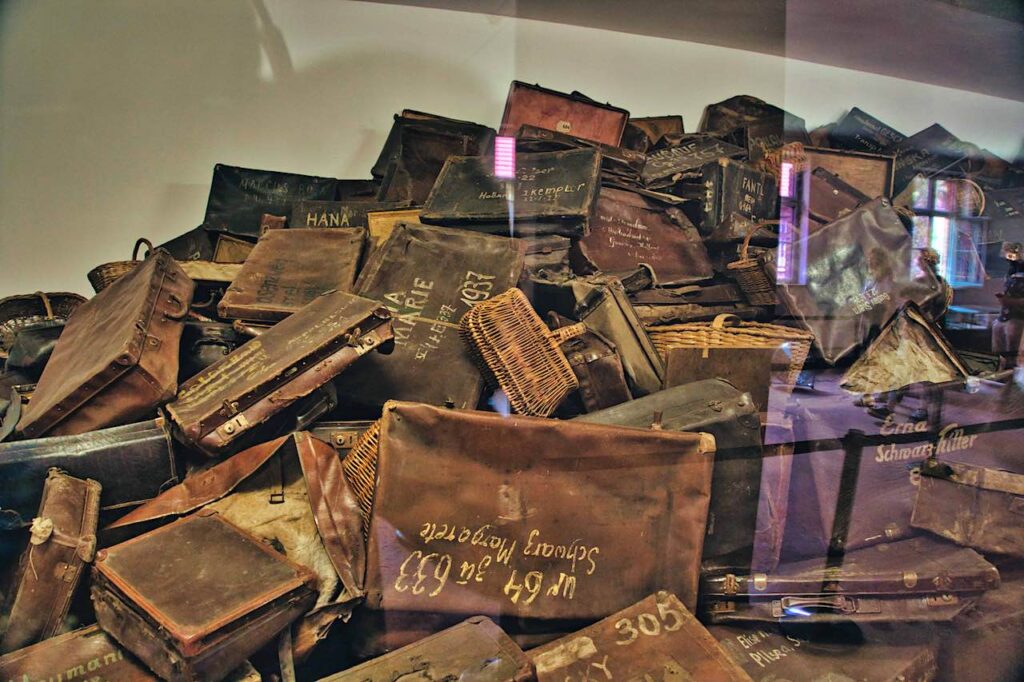
The visit was bone-chilling when one walked through the prisoner blocks, gas chambers, human incinerators, torture rooms, where medical experiments were carried out on women and through the piles of clothes, shoes, ladies handbags, hairbrushes and combs, children clothes, battered suitcases, etc etc (all items preserved in air-sealed rooms).
.


.
Everything has been kept in its original condition as a testimony to the millions killed, and to ensure that this dark period of history is not forgotten.
.


.
The guide accompanying us referred to the camp as an assembly line for exterminating humans – in the most efficient manner possible with maximum output.
.
.
Those not selected for being sent to the gas chambers on arrival (if physically fit, they were used as slave labour in factories nearby), these inmates were expected to survive a maximum of 3-4 months of slave labour in the camp before dying from starvation and were called “good prisoners” – those who survived beyond that time period, were subjected to more atrocities as they were consuming resources!
.

.
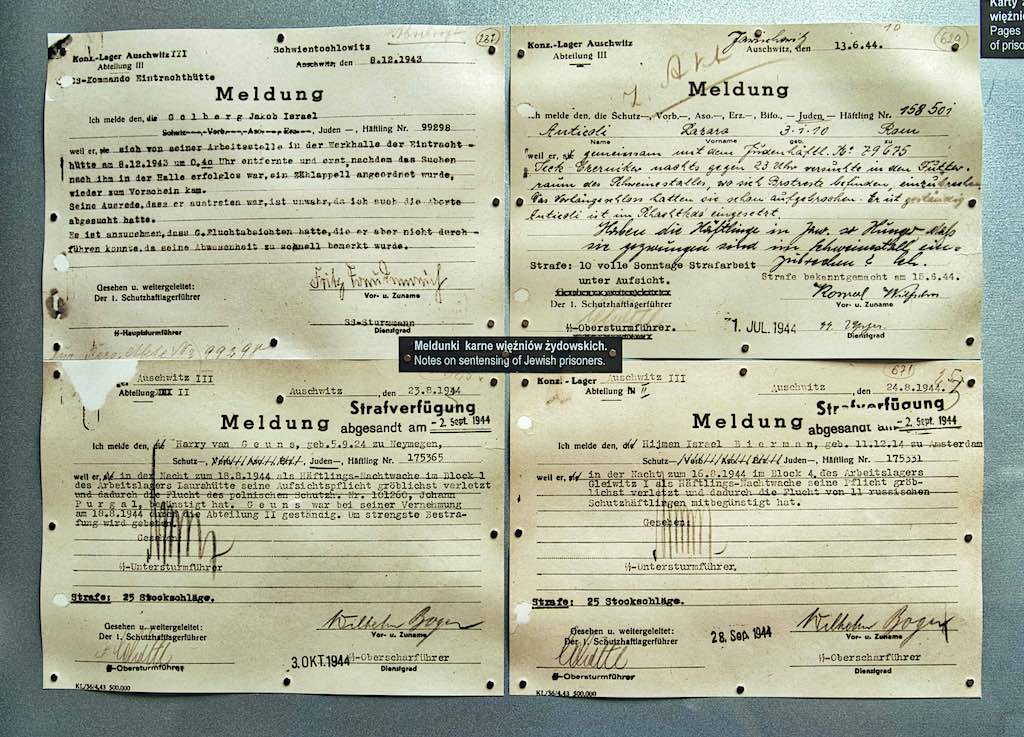
Everything was meticulously documented in the camps.
.


.
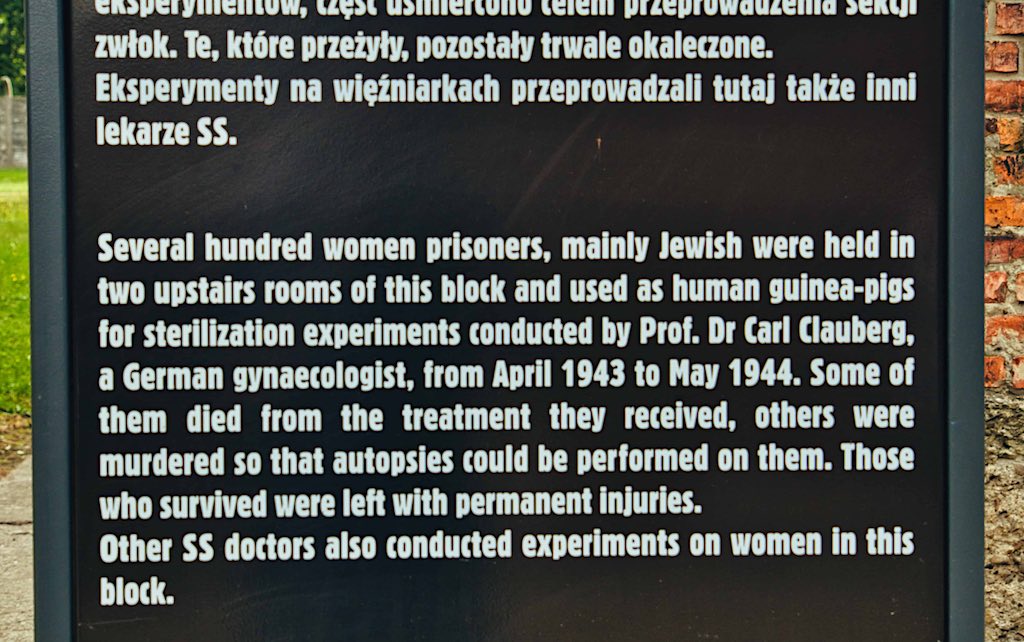
Some Blocks in the camp gained infamy on account of the activities carried out inside them. One of these was Block 8, which was used to carry out horrifying experiments on female prisoners.
.

.
Block 11 – The Death Wall
.


.
Tours inside Auschwitz 1 were in groups, with a guide accompanying each group. Our guide was a young woman in her 20s. There were many gruesome stories about the happenings in the camp told by our guide – who did mention in the end that we should keep in mind that her job was extremely stressful psychologically, on account of her taking groups and repeating stories about the atrocities day-in and day-out. I can understand what she would be going through after a visit to the camp of horrors! She did add a sentence to this – despite the mental stress of her work, the story had to be told so that the world does not forget what happened here. And that was the reason for her continuing with the job.
.


.
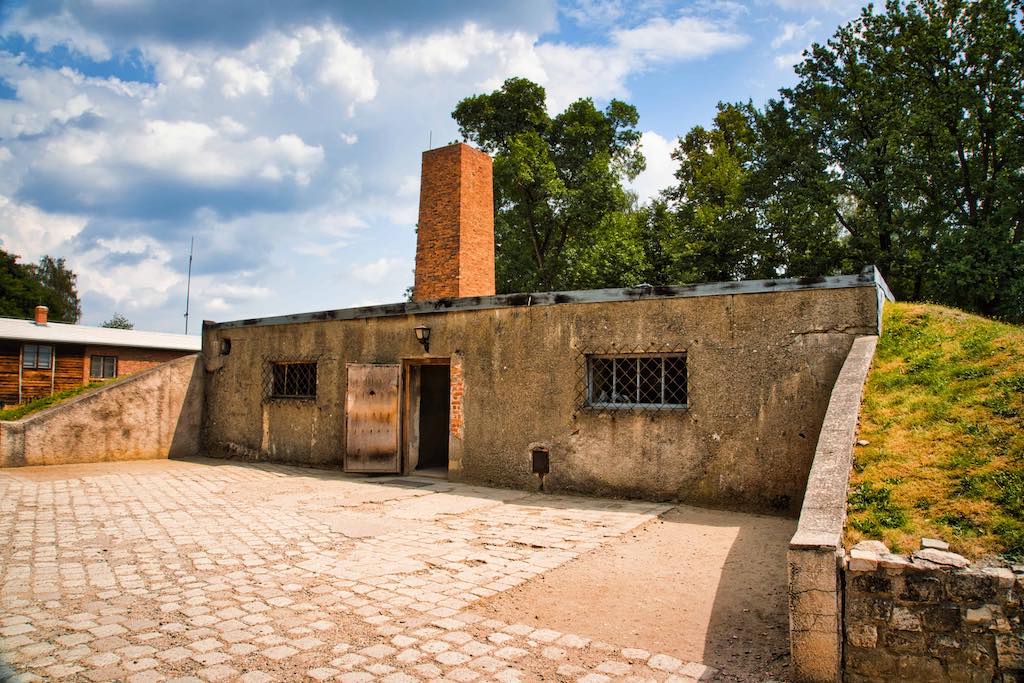
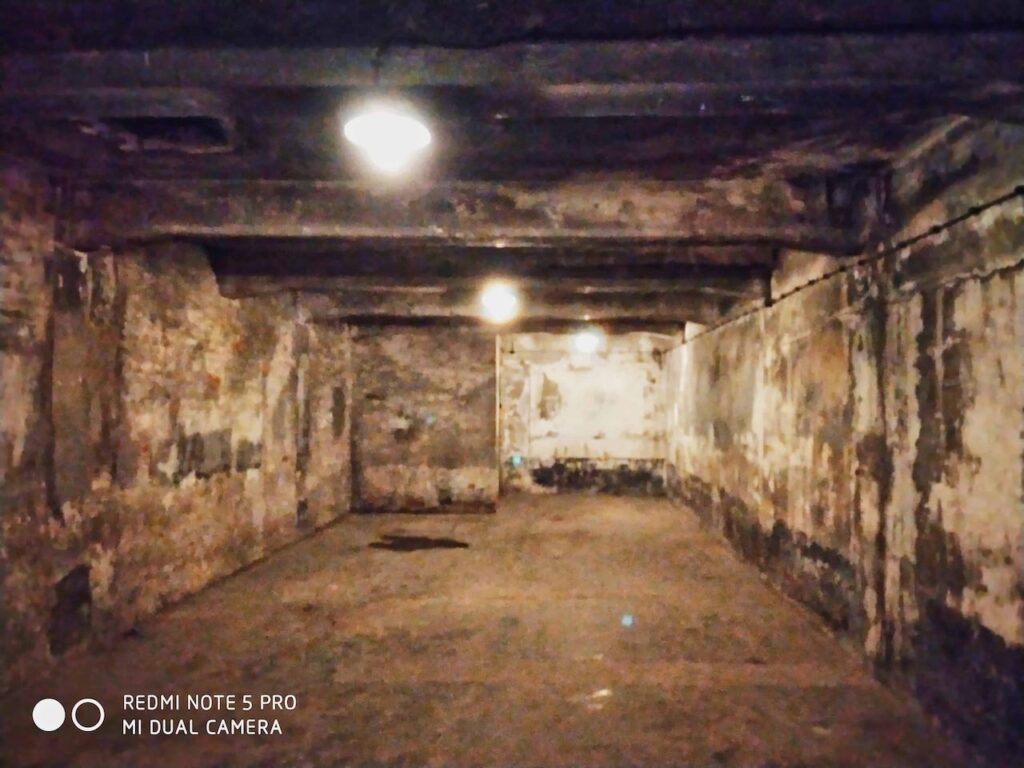
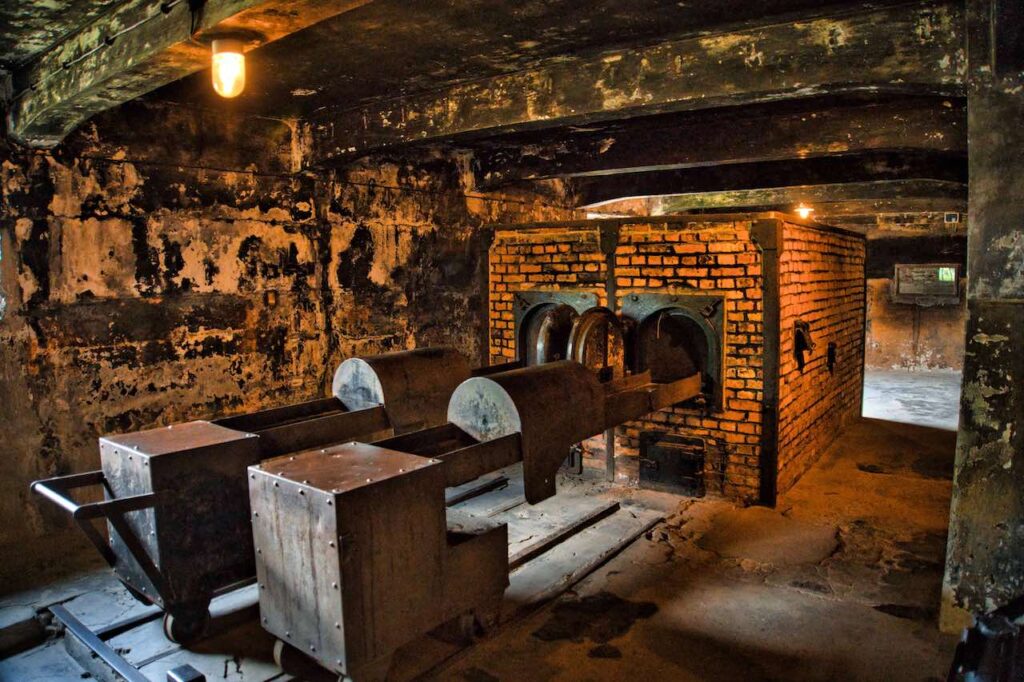
The last part of the Auschwitz 1 camp we visited was the gas chamber where the prisoners were actually gassed.
.

.
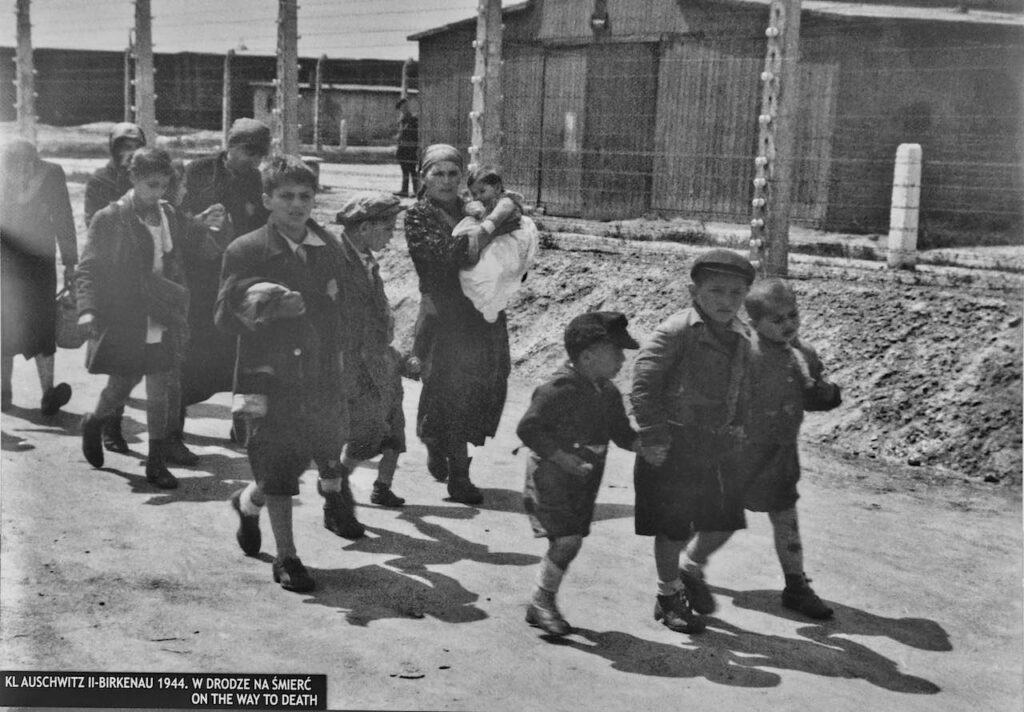
Many prisoners, especially women and children, who were thought to be of no use keeping alive, were brought directly for gassing on their arrival in the camp.
.

.
The Nazis began using Zyklon B in extermination camps in early 1942 to murder prisoners during the Holocaust, mostly at Auschwitz. The Hydrogen Cyanide gas produced killed prisoners in approximately 2 minutes.
.
.
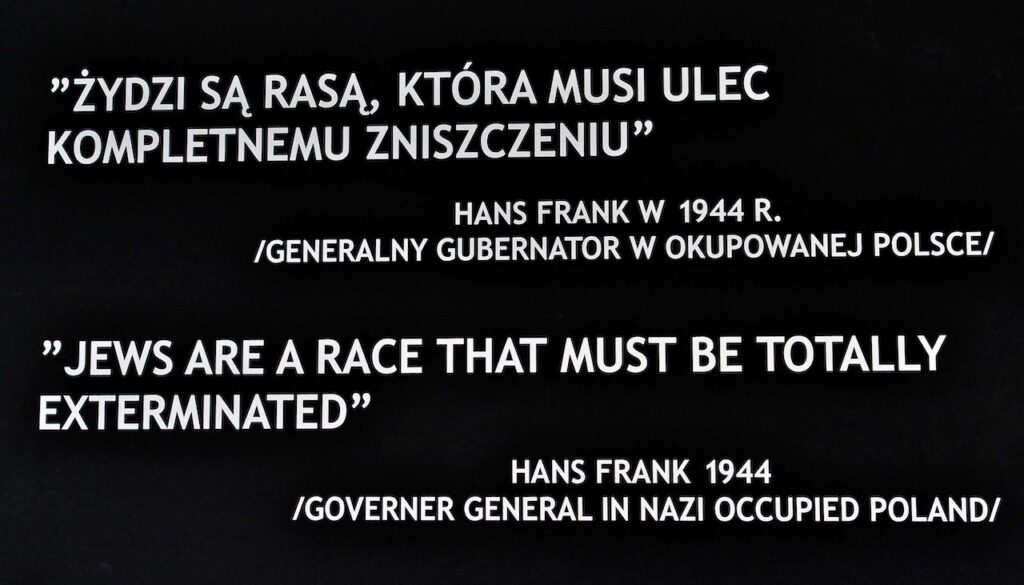
The Auschwitz II-Birkenau concentration camp was a short distance away. This addition to the existing camp was carried out because the Nazis were not able to meet the targets of the Final Solution.
.
.
They required a larger and more efficient set-up to achieve higher targets!
.
.
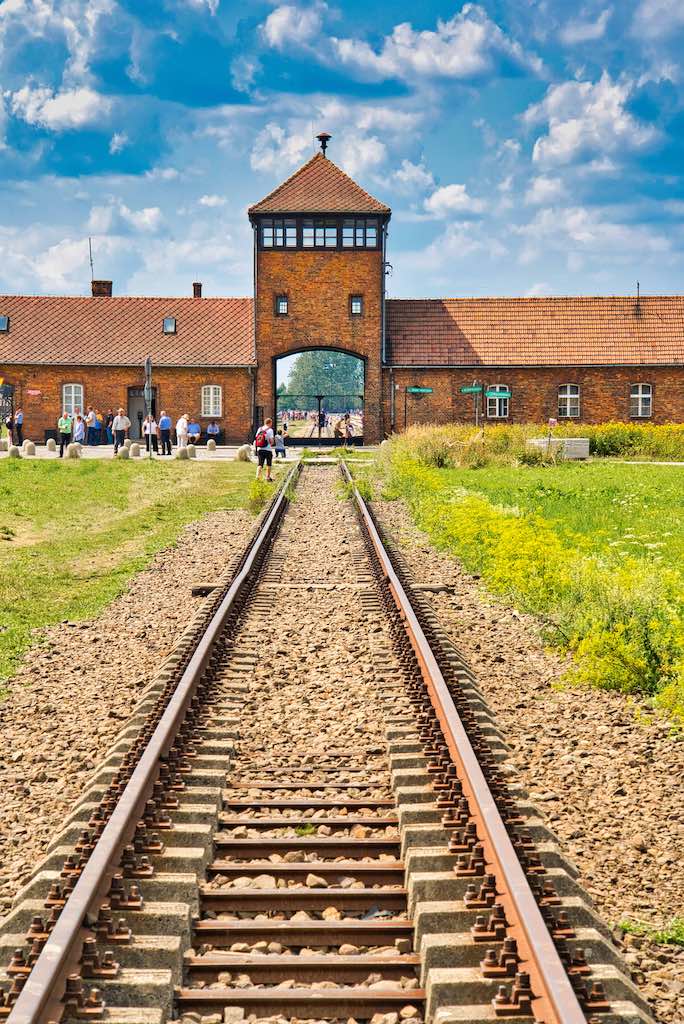
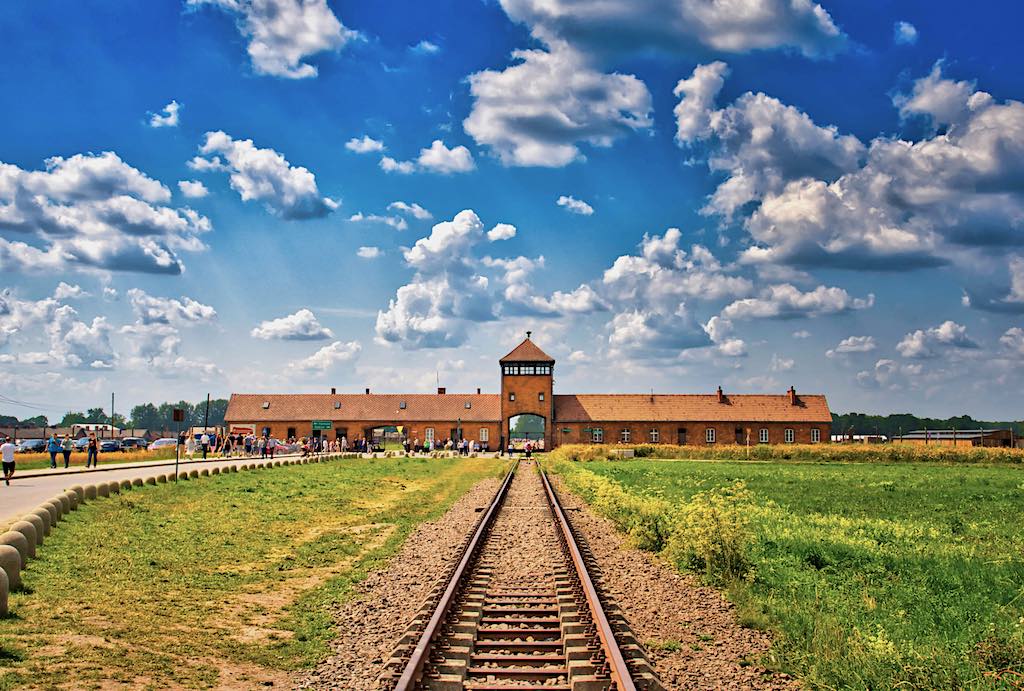
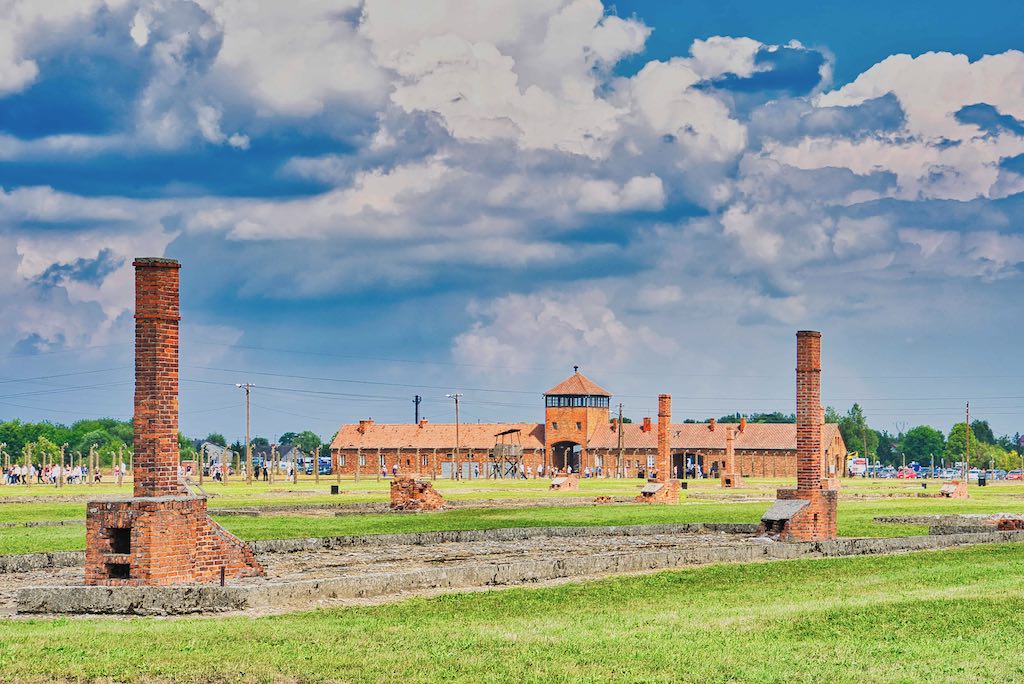
The entrance gate, with the railway line running under it, had been seen so many times in books and pictures – now one was able to see it in real.
.
.
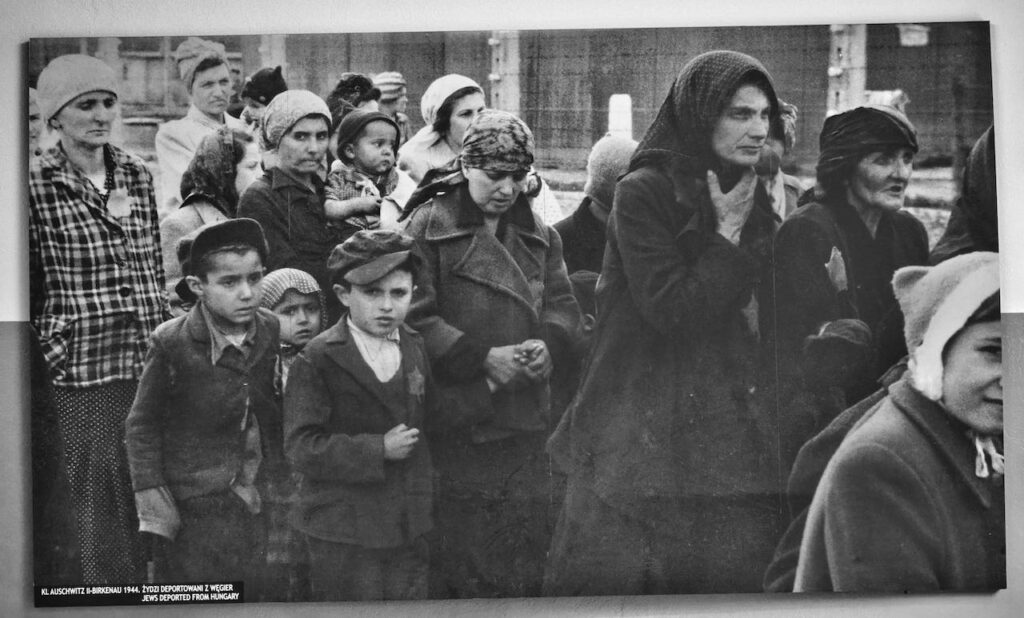
Auschwitz II-Birkenau functioned from 1942 until late 1944 and freight trains delivered Jews from all over German-occupied Europe to its gas chambers.
.



.
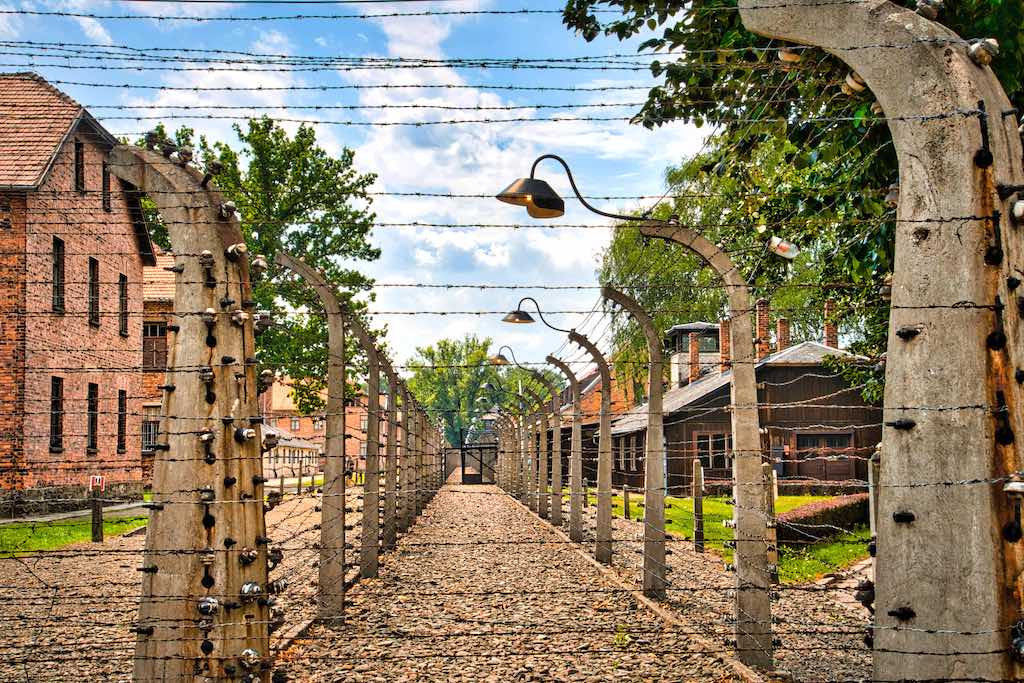
The barracks used to house the prisoners in Auschwitz II. With their electrified fencing, warning signs and watch towers.
.




.
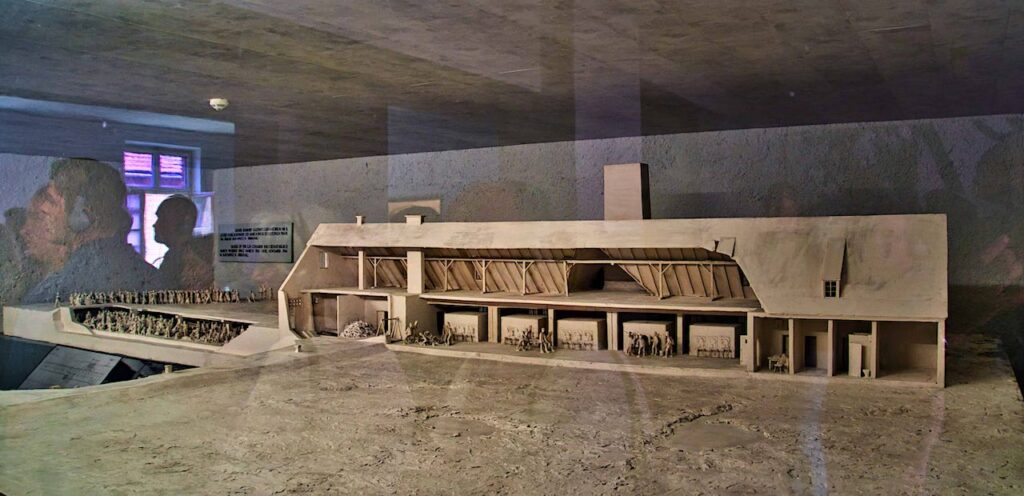
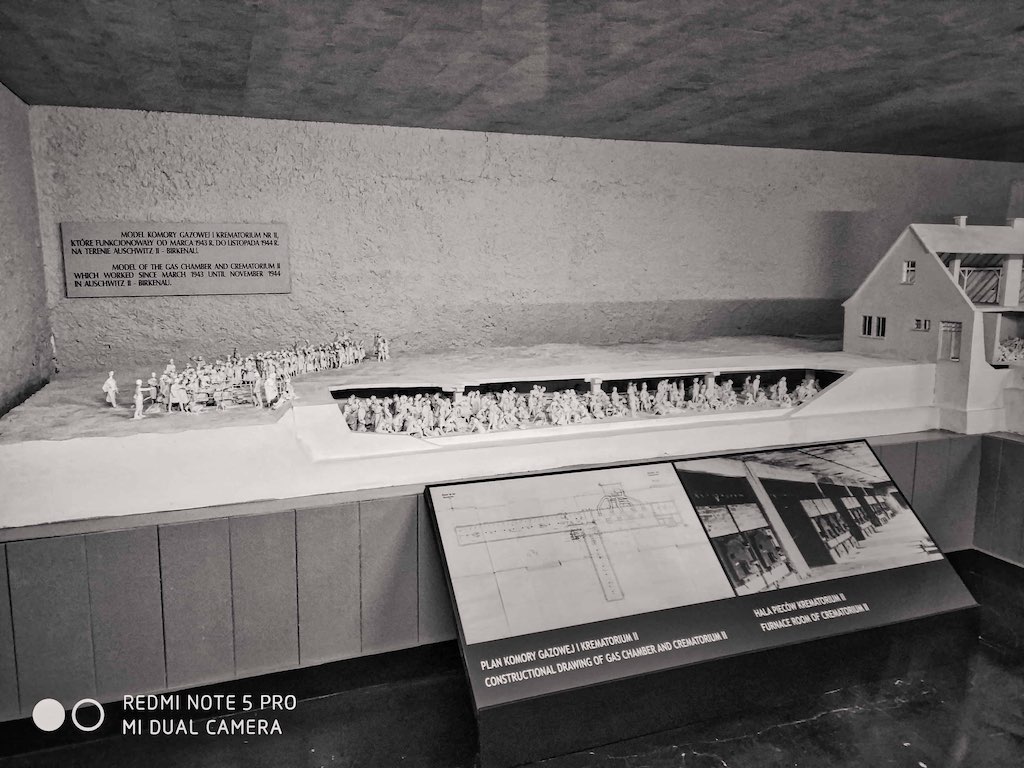
A model of the killing assembly line is one of the exhibits on display. The prisoners line up and strip naked; they then move to the underground gas chamber where the gassing takes place; the dead bodies are then removed to the incinerators for burning.
.
.
At its peak, the total daily capacity of the incinerators was 4,416, although by loading three to five corpses at a time, the Sonderkommando (prisoners used by the Nazis to help in running the camp and in the gas chambers to remove dead bodies and burn them; they were given special privileges) were able to burn some 8,000 bodies a day. This maximum capacity was rarely needed; the average between 1942 and 1944 was 1,000 bodies burned every day.
.
.
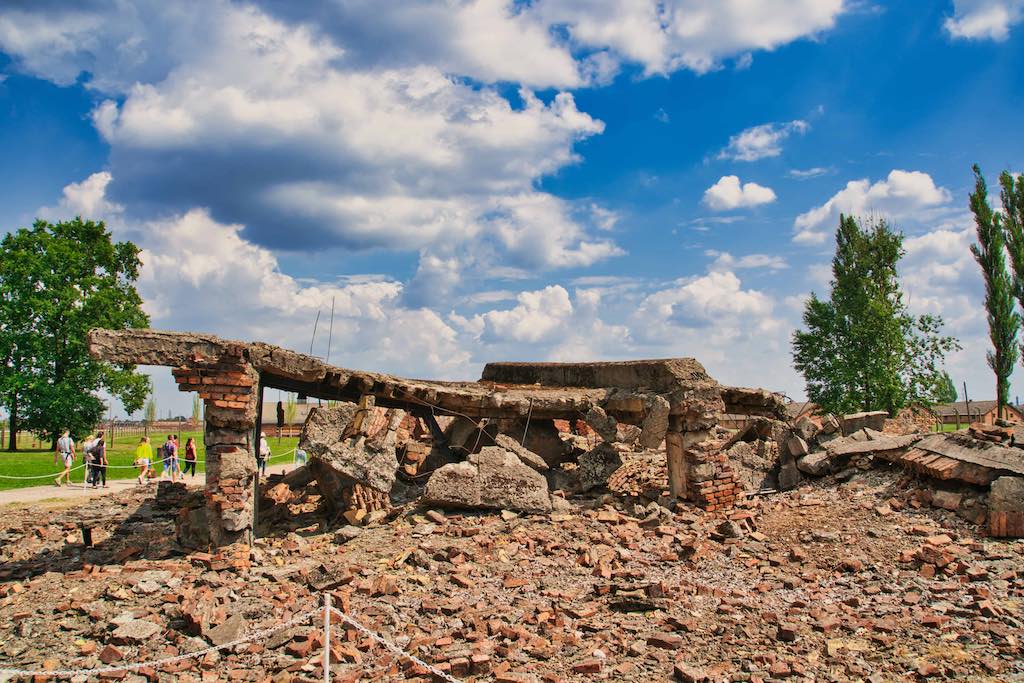
With the approach of Russian troops in January 1945, the Nazis tried to destroy all evidence of their atrocities by demolishing the camp and gas chambers. The surviving prisoners in the camps were sent on a death march to other concentration camps in Germany.
.
.
The structures have been preserved in the same condition they were found when the Nazis withdrew. Soviet troops entered Auschwitz on 27 January 1945, a day commemorated since 2005 as International Holocaust Remembrance Day.
.

.
The visit to Auschwitz was one of the most memorable visits, in a different sort of way, for me. As a student of military history, it marked the culmination of a long-cherished dream of seeing the place and partly re-live what transpired inside the electrified fencing. Remembrance and preservation of the events of World War 2 are taken seriously in Poland. This is further evident from the fact that Holocaust denial is punishable in Poland by a prison sentence of up to three years!
.
.
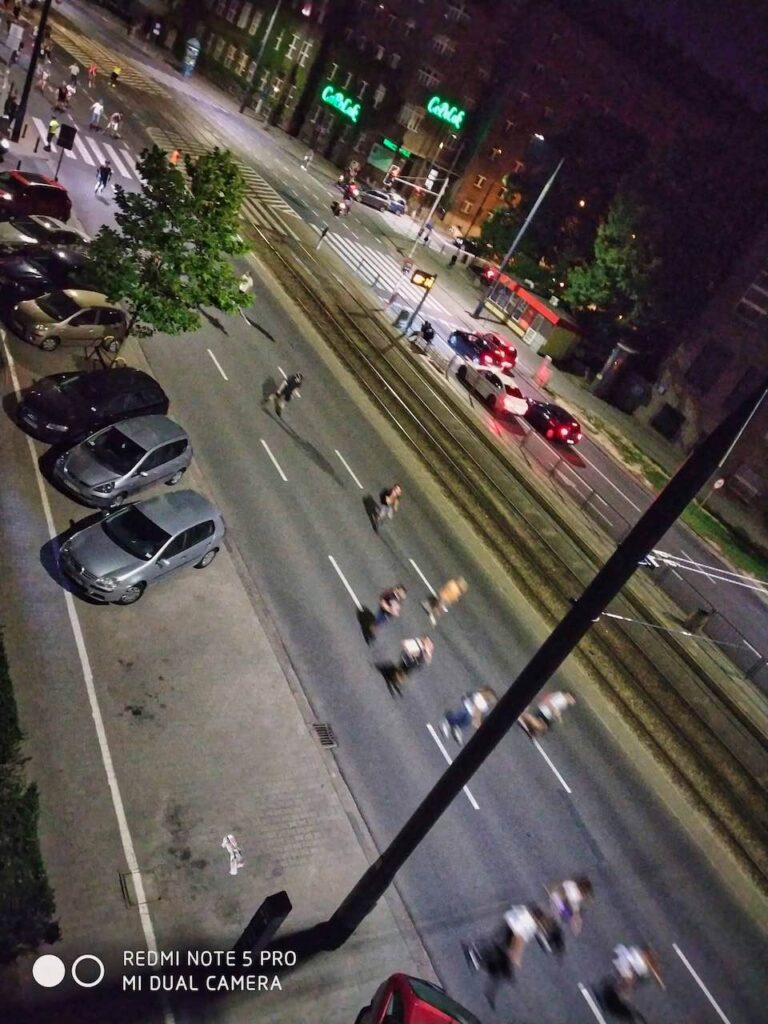
By the time we reached back from Auschwitz to our apartment, it was late evening and we were tired from the long, exhausting day. It was 1st August and the anniversary is marked in Warsaw through ‘W-Hour’ at 5 p.m. At this moment, alarm sirens are activated and a one-minute continuous signal is sounded. Public transport, cars and residents of Warsaw stop in their tracks to pay tribute to the resistance movement and murdered residents of the city.
.

.
The next day was our last full day in Warsaw and we decided to explore the left out places we had not visited. A walking tour was the best choice, this time in the opposite direction to the one we had taken the first day.
.

.
The walk started from Castle Square and went along the Krakowskie Przedmieście (Royal Route). It is one of the best known and most prestigious streets of Warsaw, surrounded by historic palaces, churches and manor-houses. Krakowskie Przedmiescie dates back to the 15th century when it was a trade route connecting the erstwhile capital, Kraków.
.

.
Hotel Bristol was commandeered by the Nazis during World War 2 as the office of their Chief of Warsaw District. The probable reason it escaped the war relatively unscathed.
.

.
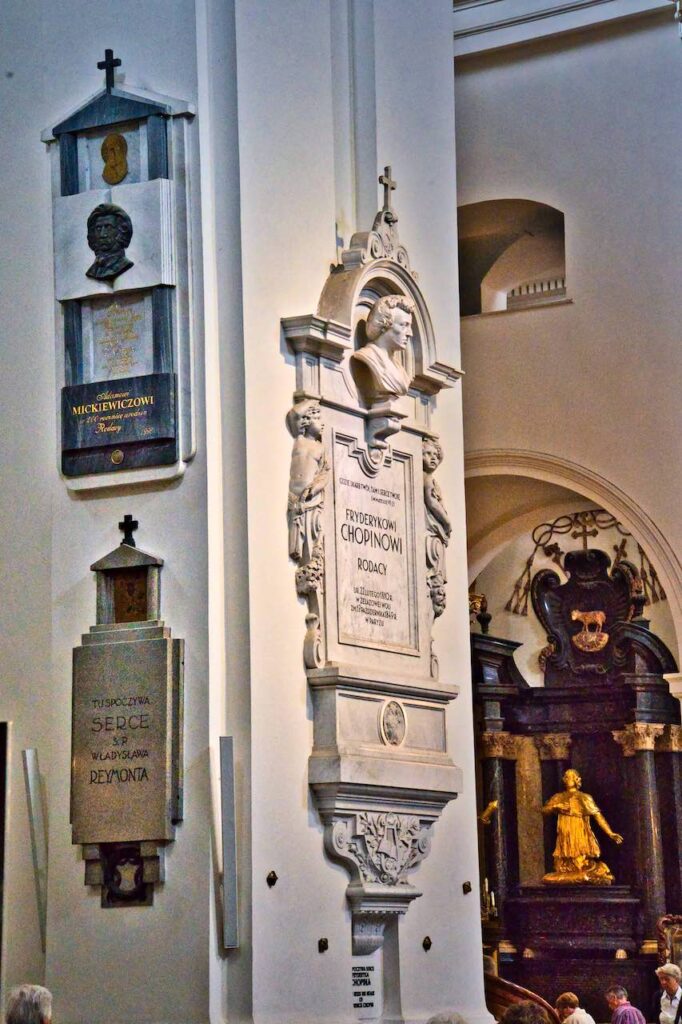
One of the interesting places on the Royal Route was the Holy Cross Church, where embedded inside one of the pillars lies the heart of Chopin, the renowned music composer. What a way to preserve his memory! The heart is pickled in a bottle of cognac. It is believed to be in perfect condition even today.
.
.
The Holy Cross Church has a long history, dating back to a wooden church on this site in the 16th century. It was damaged many times, converted for other uses and finally blown up by the Nazis in World War 2.
Opposite the Holy Cross Church is the University of Warsaw, through whose huge campus we walked. Before moving to the last, and major landmark of the tour – the Tomb of the Unknown Soldier.
.

.
The Tomb of the Unknown Soldier is dedicated to the unknown soldiers who have given their lives for Poland. It is one of many such national tombs of unknowns that were erected after World War I, and the most important such monument in Poland.
.

.
The monument, located at Piłsudski Square, is the only surviving part of the Saxon Palace that occupied the spot until World War II. Since 1925, the tomb houses the unidentified body of a young soldier who fell during one of the battles. Earth from numerous battlefields where Polish soldiers have fought has been added to the urns housed under the surviving pillars of the Saxon Palace. The granite slabs on the columns record every battle in which Polish forces have taken part since 972 CE! The Palace was demolished by the Nazis as a reprisal in the aftermath of the 1944 Uprising, however, the tomb itself miraculously remained untouched even though the structures on either side and above it were demolished.
.


.
The changing of the guard takes place on the hour of every hour daily.
On the way back from the walking tour, we walked across to another landmark of Warsaw, the Soviet-era Palace of Science and Culture. Built in typical Communist-style architecture, it is a massive multi-functional building that houses everything from companies to entertainment venues. Constructed in 1955, the high-rise building – at 237 metres, the tallest in Poland — features a spire that reaches into the sky. This ‘gift of the Soviet people to the Polish nation’, offered by Joseph Stalin himself, is one of the city’s most widely recognised symbols.
.

.
There is an observation terrace at the 30th floor which provides an excellent panoramic view of the city.
.

.
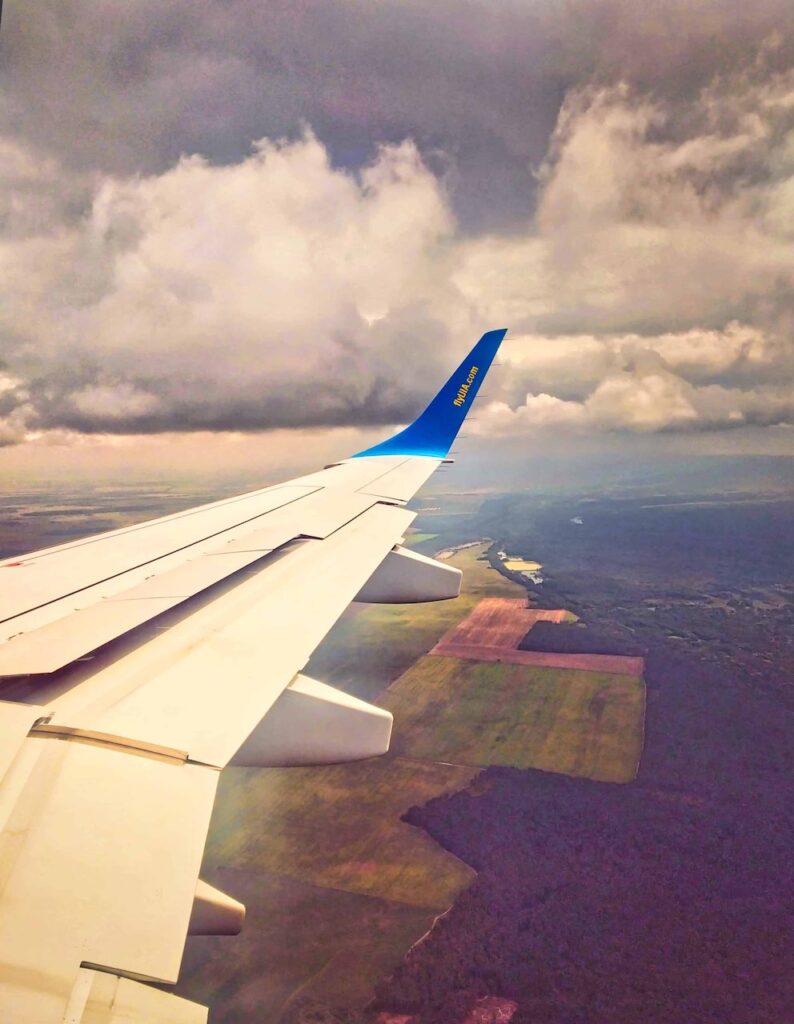
Our Europe trip was coming to an end, and both Harsh and myself were tired of continuously travelling for 5 weeks, dragging our (quite considerable) baggage around in buses, trams and sidewalks for kilometres. And roughing it out – sleeping on floors and couches. It was with a (small) sigh of relief we caught our flight on 3 August 2019 for Delhi, via Kyiv.
.
.
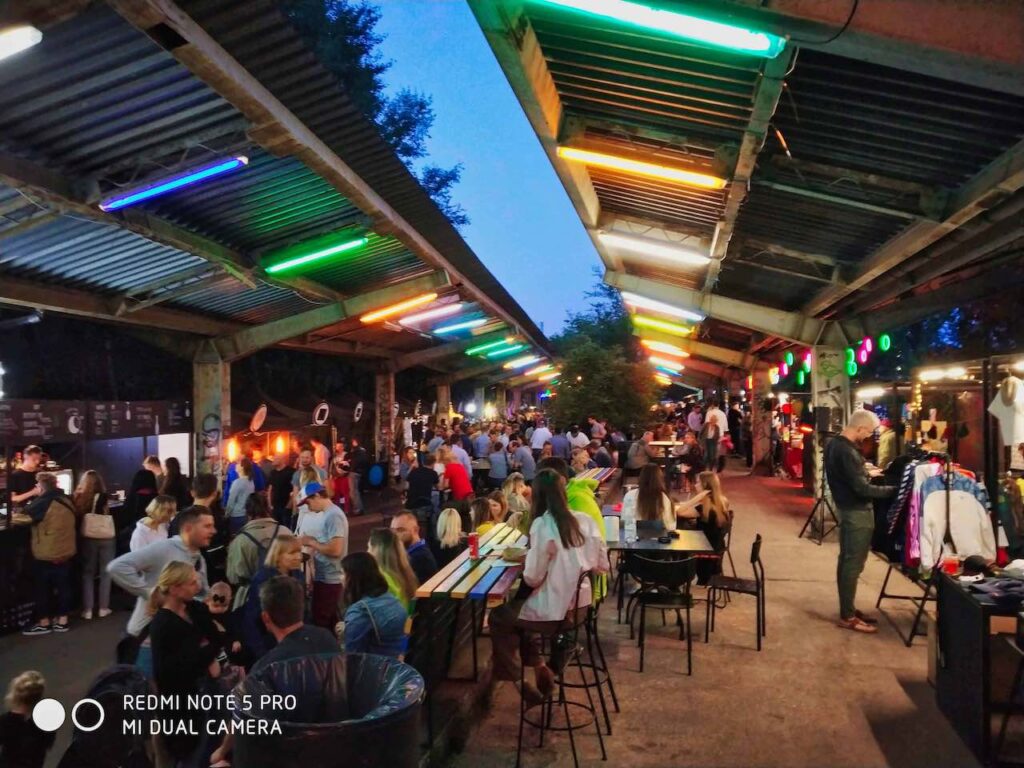
But not before experiencing the popular night sight of Warsaw – the Nocny Night Market! It is actually an open-air pub with food stalls and opens only at night. A variety of exotic dishes were available and we found it difficult to understand the menus, especially Harsh who was a vegetarian! For a change language was not a barrier here because of the large number of tourists visiting the place. Its location was quite unique – it was situated on a disused railway platform.
.

.
The crowd, drinks and food were superb, worth the effort to visit on our last night in the city!
.


.
The next morning it was time to catch our flight. We were both definitely looking forward to getting back home. Our 5-week trip had been exceptional, a once-in-a-lifetime experience. We had met so many people from different countries and cultures, seen so many wondrous places and sights, tasted a variety of cuisines, and the best of all made many new friends.
.
.
This concluding 7th blog of my Scandinavian and Baltic series has been an endeavour to record my experiences and put across what I saw through photographs. As a traveller succinctly put it – travel makes you realize that no matter how much you know, there’s always more to learn.
Those wanting to read the 1st blog of the series, which commenced in Norway, click here. The links to all the blogs in the series are listed below:-
- Norway – https://collectingmoments.in/my-trip-to-norway/
- Sweden – https://collectingmoments.in/fascinating-sweden/
- Finland – https://collectingmoments.in/stunning-finland/
- Estonia – https://collectingmoments.in/exploring-estonia/
- Latvia – https://collectingmoments.in/latvia/
- Lithuania – https://collectingmoments.in/lithuania-the-land-of-a-forgotten-past-and-the-romuva/
.


8 Responses
Nicely articulated Ajai Sir. Loved each word of the entire series. The Auschwitz part of the blog was so real, not many can write about the Nazi horrors the way you did. My Respect.
Thank you for the comments. The visit to Auschwitz was a life-long dream come true.
Awesome. We must learn from the Polish how to preserve a country’s rich heritage.
Yes, its incredible how they have rebuilt their country.
Dear Ajai Sir,
You have had an exciting life but the credit is that you have taken so much of pain to walk us through. We almost felt as if we were walking with you in those exotic and beautiful places.
Really enjoyed the trip to Poland.
Preserving the link to travel to other destinations with you one by one.
Regards
Thanks for the comments. I hope you have subscribed, which will get you monthly emails on my new blog postings. Of which there are many planned.
Dear Sir …
Ur photography skills are too good … thoroughly enjoyed reading the blog …wish u all the best
Thanks.